
UAE
When will UAE fuel prices start dropping?
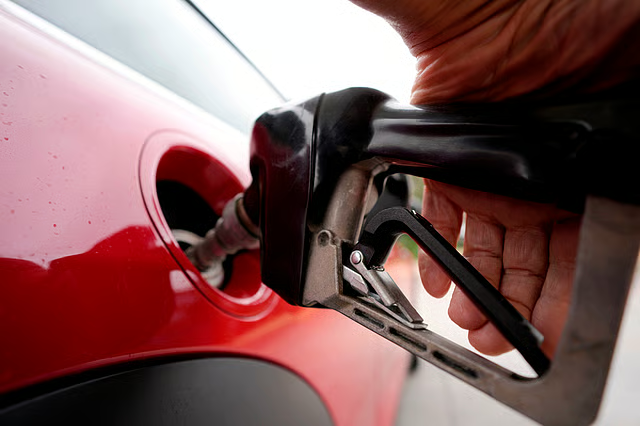
After four consecutive months of fuel price increases, many UAE motorists are hoping relief is finally around the corner.
There are signs that global oil markets are cooling. Brent crude, the international benchmark, is trading around $97 a barrel, down from the $110-$120 levels seen earlier this year when disruptions to Gulf shipping routes sent energy prices soaring.
But economists warn that a return to significantly cheaper fuel may still be some distance away. The UAE raised petrol prices again for June, taking Super 98 to Dh3.95 a litre, Special 95 to Dh3.83, and E-Plus 91 to Dh3.76. Diesel, meanwhile, eased to Dh4.33 per litre after reaching much higher levels in previous months.
For motorists, that means fuel remains substantially more expensive than it was at the start of the year. Super 98 has climbed from Dh2.45 per litre in February to Dh3.95 in June, a jump of more than 61% in just four months.
For a typical driver filling a 60-litre tank, that translates into a fuel bill of about Dh237 today versus Dh147 in February — roughly Dh90 more every time they refuel.
Why prices are still high
The main reason is oil. Although crude prices have retreated from their recent peaks, they remain elevated because of continuing uncertainty surrounding the conflict involving Iran and the future of shipping through the Strait of Hormuz.
The waterway handles roughly 20% of global oil supplies, making it one of the most important energy routes in the world.
Recent optimism surrounding US-Iran negotiations and ceasefire efforts has helped push oil below $100 a barrel. Markets are increasingly betting that a diplomatic solution could eventually allow shipping flows to normalise.
That has reduced some of the panic buying that drove crude sharply higher earlier this year. Yet economists say lower oil prices are likely to arrive gradually rather than suddenly.
Slower path to lower prices
Gita Gopinath, Deputy Managing Director of the International Monetary Fund and formerly its Chief Economist, said oil prices are unlikely to return quickly to the levels seen before the conflict.
“We are not going to see the price of oil come down all the way very quickly,” Gopinath said. “It’s going to take probably till the middle of next year for oil to come back to say $70 or $75 a barrel.” She added: “There is going to be an effect lasting into next year.”
That timeline is important for UAE motorists because fuel prices are directly linked to global oil markets through the country’s monthly fuel-pricing mechanism.
That has reduced some of the panic buying that drove crude sharply higher earlier this year. Yet economists say lower oil prices are likely to arrive gradually rather than suddenly.
Slower path to lower prices
Gita Gopinath, Deputy Managing Director of the International Monetary Fund and formerly its Chief Economist, said oil prices are unlikely to return quickly to the levels seen before the conflict.
“We are not going to see the price of oil come down all the way very quickly,” Gopinath said. “It’s going to take probably till the middle of next year for oil to come back to say $70 or $75 a barrel.” She added: “There is going to be an effect lasting into next year.”
That timeline is important for UAE motorists because fuel prices are directly linked to global oil markets through the country’s monthly fuel-pricing mechanism.
What could happen next?
Based on current oil market trends, the most likely scenario is a gradual easing rather than a sharp drop. If Brent crude remains below $100 a barrel and tensions continue to ease, UAE fuel prices could begin seeing modest downward adjustments over coming months.
The pace of any decline will depend on how quickly global oil supplies recover and whether shipping activity through the Strait of Hormuz returns to normal levels.
Because UAE fuel prices are based on monthly average oil prices rather than daily movements, changes in crude prices typically take time to filter through to consumers.
That means even if oil falls further this month, motorists may need to wait several pricing cycles before seeing a meaningful difference at the pump.
Risk that could delay relief
Economists are also warning against assuming the crisis is over. Gopinath cautioned that markets may be underestimating the risk of a prolonged disruption.
“If this continues for another month, we’re looking at oil prices that could go up to like $120 and $140 a barrel and could stay there for much longer,” she said. Such a scenario would likely push fuel prices higher again and add pressure to inflation globally.
The warning is echoed by the OECD (Organisation for Economic Co-operation and Development). The 38-member intergovernmental organization says the global economy remains highly exposed to prolonged energy disruptions. “The longer the disruption lasts, the greater the economic, but also the social cost of this crisis,” said Stefano Scarpetta.
The OECD forecasts global growth slowing to 2.8% in 2026 if Gulf oil and gas exports return to pre-conflict levels later this year. If disruptions continue into 2027, global growth could slow sharply to 2.1%, with some economies facing recession risks.
When will motorists get relief?
The answer depends largely on one number: oil. If crude prices continue moving lower and remain below $100 a barrel, UAE motorists could begin seeing fuel prices stabilise and gradually ease in the months ahead
But based on current forecasts from economists and international organisations, a return to the much lower fuel prices seen at the beginning of 2026 is unlikely in the near term.
For now, the sharp spikes appear to be over. The next phase is more likely to be gradual cooling rather than a rapid drop.
GN
UAE
When will summer end in the UAE?
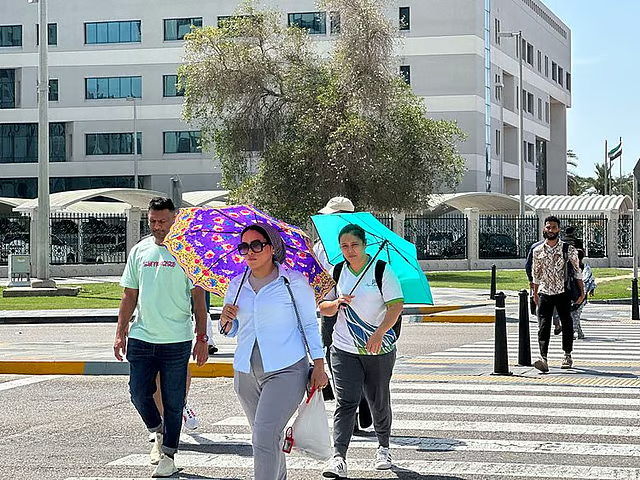
The UAE’s astronomical summer will come to an end on September 23, when the autumnal equinox marks the official start of autumn, although meteorologists classify September as the first month of the autumn season, according to Ibrahim Al Jarwan, Chairman of the Emirates Astronomical Society and a member of the Arab Union for Astronomy and Space Sciences.
Al Jarwan said the country’s hottest period, known in Arabic as Al Qayz, begins to ease in the final third of August with the rising of the star Suhail, long regarded across the region as a traditional sign of gradually cooler weather.
He explained that while temperatures remain high through September, the Indian seasonal low-pressure system weakens progressively during the month.
The UAE continues to be influenced by thermal low-pressure systems extending from central Arabia, bringing active winds that can raise dust and reduce visibility.
At the same time, conditions remain favourable for the formation of convective clouds, particularly over the eastern mountains, with thunderstorms and rainfall occasionally extending into inland parts of the country.
September also sees a seasonal shift in wind patterns, with south-easterly winds prevailing overnight and during the morning before giving way to north-westerly sea breezes in the afternoon and evening.
Humidity gradually increases compared with August, particularly during the second half of the month, creating more favourable conditions for fog and mist to develop in scattered areas across the UAE.
Al Jarwan noted that astronomical summer began with the summer solstice on June 21 and lasts for three months until the autumnal equinox on September 23. During the first half of summer, temperatures typically range between 41°C and 43°Cduring the day but can exceed 50°C in some areas during heatwaves.
In the latter half of the season, from August 11 onwards, higher humidity combines with persistent heat and the seasonal Kous winds to support the formation of towering thunderclouds over the Hajar Mountains, producing the localised summer thunderstorms known as Al Rawayeh.
With much of the summer still ahead, residents are continuing to adapt their routines to the season’s intense heat by shifting outdoor activities to the early morning and evening hours, while increasingly turning to air-conditioned leisure and fitness venues during the day.
Dubai Mallathon, running from 15 June to 15 September, has become one of the city’s flagship summer initiatives, allowing residents to walk and run along designated indoor routes across participating shopping malls during the cooler morning hours. The programme is designed to encourage physical activity throughout the summer despite the high temperatures.
Beyond organised fitness events, shopping malls, indoor attractions, museums, aquariums, family entertainment centres and beaches during the cooler hours remain among the most popular destinations for residents and visitors. As temperatures gradually begin to ease towards late August, outdoor parks, mountain areas in the east of the country and desert destinations are also expected to see increasing numbers of visitors.
GN
UAE
UAE suspends new visas for 3 countries over Ebola

The UAE has announced a series of additional precautionary measures affecting travellers arriving from three African countries as part of efforts to strengthen national preparedness against potential Ebola virus outbreaks.
The measures, jointly announced by the National Emergency Crisis and Disasters Management Authority (NCEMA) and the Federal Authority for Identity, Citizenship, Customs and Port Security (ICP), apply to arrivals from the Democratic Republic of the Congo, Uganda and South Sudan.
Authorities said the decision is part of the country’s preventive and proactive strategy to address developments related to the Ebola virus and safeguard public health.
Under the new measures, all new visas for nationals of the three countries, including visit visas, will be suspended.
Entry into the UAE will also be restricted for travellers arriving from the affected countries, including those who transit through other destinations before reaching the Emirates.
Travellers who have spent more than 21 consecutive days outside the listed countries prior to their arrival in the UAE will be exempt from the restrictions and permitted entry, according to the authorities.
The measures are scheduled to take effect at 1 p.m. on Saturday, 6 June 2026, and may be extended depending on developments in the global health situation.
Despite the restrictions, cargo operations between the UAE and the three countries will continue without interruption. Transit flights will also remain operational, ensuring the continued movement of goods and international air traffic.
The announcement comes as governments around the world continue to monitor Ebola-related developments in parts of Africa.
The disease, which causes severe viral haemorrhagic fever, has prompted heightened surveillance and preparedness measures in several countries whenever outbreaks emerge.
NCEMA and ICP said they would continue to closely monitor global health developments in coordination with local and international partners.
Authorities will assess any potential implications for other countries and implement further measures when necessary, based on approved health standards and risk assessments.
GN
Business
Hormuz relief may take time for UAE shoppers
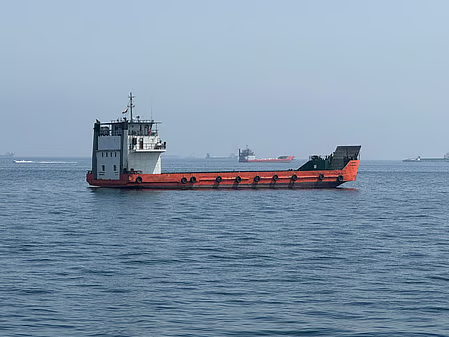
The impact of lower oil and shipping costs could begin to appear within a few weeks, but it may take several months for these savings to fully pass through to retail prices and consumer goods, depending on supply chains and existing contracts, industry experts said.
The reopening and stabilisation of shipping through the Strait of Hormuz is expected to ease pressure on energy and freight costs, giving UAE residents the prospect of more stable fuel prices and gradual relief on some imported goods.
Consumers, however, should not expect an immediate drop in supermarket bills or retail prices. Many businesses are still working through stock bought when shipping costs were higher, while suppliers, insurers and freight companies will want to see stability hold before fully resetting prices and operations.
Haris Shaikh, CEO of Gallop Shipping in Dubai, said the reopening of the Strait of Hormuz allows oil, gas and goods to move normally again through one of the world’s most important trade routes, reducing concerns about supply disruption and easing pressure on energy and shipping costs.
“The impact of lower oil and shipping costs could begin to appear within a few weeks. However, it may take several months for these savings to fully pass through to retail prices and consumer goods, depending on supply chains and existing contracts,” he said.
The first signs of relief are likely to be felt in fuel and shipping costs, followed by goods that depend heavily on transport and energy expenses. Food products, transportation services and travel costs could also see some benefit over time if lower oil and freight costs are sustained.
Shaikh said UAE consumers should expect greater market stability and less price volatility in the coming weeks, but not “immediate or significant reductions in all prices,” because lower costs take time to move through the wider economy.
UAE ports stand to benefit
The deal is also expected to support the UAE’s trade and logistics sector by making shipping routes in the Gulf safer and more reliable.
Hiba Alemadi, CEO and Founder of Queen Gulf Capital, said safer routes should help lower shipping costs and increase the amount of cargo moving through UAE ports, although the return to normal operations will be gradual.
“The deal is good news for the UAE because it makes shipping routes in the Gulf safer and more reliable. This should help lower shipping costs and increase the amount of cargo moving through UAE ports. However, things may not return to normal right away. Shipping companies, insurers, and businesses will want to see stability over time before fully restoring operations,” she said.
In the longer term, she said the UAE is in a strong position to benefit from higher trade volumes because of its ports and logistics network, which can support growing regional business activity.
Freight rates may not fall quickly
Freight rates have increased significantly since March as businesses dealt with regional uncertainty, higher risk costs and disruption-related charges. Even with Hormuz reopening, industry executives expect the adjustment to be slow.
Alemadi said some exceptional charges, including drop-off, internal shifting and related operational costs, could reduce gradually if the situation stabilises. A significant reduction in freight rates, however, is unlikely in the immediate future.
This significantly impacts retailers and shoppers, as higher shipping costs are already built into the prices of many goods on shelves. Importers and retailers may need several delivery cycles before lower freight costs begin to show up in consumer pricing.
“The reopening of the Strait of Hormuz is good news for UAE retailers and shoppers, but the benefits will not happen right away. Businesses need time to adjust, and many retailers are still selling products bought when shipping costs were higher. If the situation remains stable, shoppers could see more stable prices and better product availability over the next few months,” Alemadi said.
DP World prepares for higher vessel calls
DP World GCC said the de-escalation in regional tensions is an encouraging development for trade, with teams staying in contact with customers and shipping line partners as conditions evolve.
“At Jebel Ali, we have prepared extensively for the return of sea freight volumes through the Strait of Hormuz and our teams are primed and ready to manage the increase in vessel calls once shipping schedules begin to normalise,” said Ahmad Yousef Al-Hassan, CEO and Managing Director of DP World GCC.
He added that DP World’s immediate priority remains “keeping cargo moving safely and reliably” through its regional multimodal network, while giving customers the flexibility and visibility they need during this period.
A smoother return of vessels through Hormuz would support port activity, warehousing, trucking, re-exports and regional distribution, all of which are central to Dubai and the wider UAE’s role as a trade hub.
Oman and Iran back safe passage
The commercial outlook follows a joint statement issued by Oman and Iran after talks in Muscat during the visit of Iranian Parliament Speaker Dr. Mohammad Bagher Ghalibaf and Foreign Minister Dr. Abbas Araghchi.
Oman affirmed its support for the Islamabad Memorandum of Understanding signed between the United States and Iran, and said continued dialogue and coordination were important for its successful implementation.
Oman and Iran, the two coastal states bordering the Strait of Hormuz, reaffirmed their commitment to ensuring safe passage through the Strait in line with international law, while also stressing their sovereignty and sovereign rights over their respective territorial waters.
The two countries agreed to sustain dialogue through a joint working group between their foreign ministries. The group will discuss the future management of navigation in the Strait, including services and associated costs, while also engaging with littoral states in the region and other related parties.
What residents should expect now
The near-term impact for UAE residents is likely to be confidence and stability first, followed by gradual cost relief if the situation holds.
Lower uncertainty across global markets can support trade, investment and business planning. It can also help reduce pressure on household budgets if oil and shipping costs remain lower for an extended period.
The most evident consumer benefit over the next few months may be steadier prices and stronger availability, especially for imported goods that rely on shipping schedules. Significant price cuts will depend on how long the route remains stable, how quickly freight rates adjust, and when retailers replace higher-cost inventory with new shipments bought at lower logistics costs.
GN


Beyond Uniforms and Lunchboxes: Is Your Child Healthy and Ready for School?

Back to the Heat: Why Returning to the UAE Can Leave Holidaymakers Feeling Exhausted


UAE’s café culture keeps growing despite price pressure

Araghchi, Oman Sultan discuss transit, stability in Muscat

Is February 2026 really a once-in -283-years MiracleIn?
-
 UAE8 months ago
UAE’s café culture keeps growing despite price pressure
-
 politics4 months ago
Araghchi, Oman Sultan discuss transit, stability in Muscat
-
Discover7 months ago
Is February 2026 really a once-in -283-years MiracleIn?
-
 Entertainment7 months ago
Netflix to Livestream BTS Comeback Concert
-

 Football8 months ago
Algeria, Burkina Faso, Côte d’Ivoire win AFCON 2025 openers
-

 Health8 months ago
NMC Royal Hospital, Khalifa City, performs rare wrist salvage, restoring function for young patient
-

 Health8 months ago
Bascom Palmer Eye Institute Abu Dhabi and Emirates Society of Ophthalmology Sign Strategic Partnership Agreement
-

 Health9 months ago
Emirates Society of Colorectal Surgery Concludes the 3rd International Congress Under the Leadership of Dr. Sara Al Bastaki