
world
Macron wearing shades during Davos
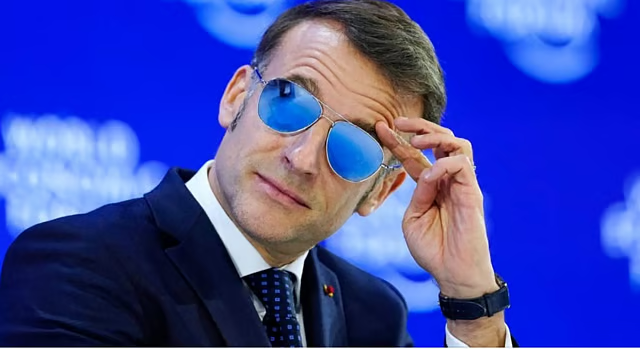
During his address to global bigwigs at the World Economic Forum (WEF) in Davos, Switzerland, French President Emmanuel Macron came rocking sunglasses like a secret agent at a ski resort — and international media lost their minds over it.
Global headlines exploded: “Macron’s mystery shades!”
From CNN to BBC to The Hill, everyone zoomed in on the eyewear enigma while he roasted protectionism.
‘Harmless’
Media reports stated that he was first spotted January 15 at a French airbase with a bloodshot eye, he downplayed it as “completely harmless” and “l’oeil du tigre” (eye of the tiger), a Rocky III nod symbolising determination.
The aviator shades were likely Louis Vuitton Pilot Attitude with blue-tinted, mirrored lenses.
Macron stayed on indoors during his WEF speech on Tuesday (January 20), amid critiques of Trump’s tariffs and Greenland threats.
In his speech, the French head of state assailed Trump’s policies, accusing the US leader of actions that “openly aim to weaken and subordinate Europe.”
Meanwhile, Macron’s office confirmed the accessory necessity “for a while,” painless and vision-unaffected, resolving in 1-2 weeks. It has no impact on vision, and is common from strain/sneezing.
GN
world
Tanzanian Conjoined Twins Arrive in Riyadh for Treatment
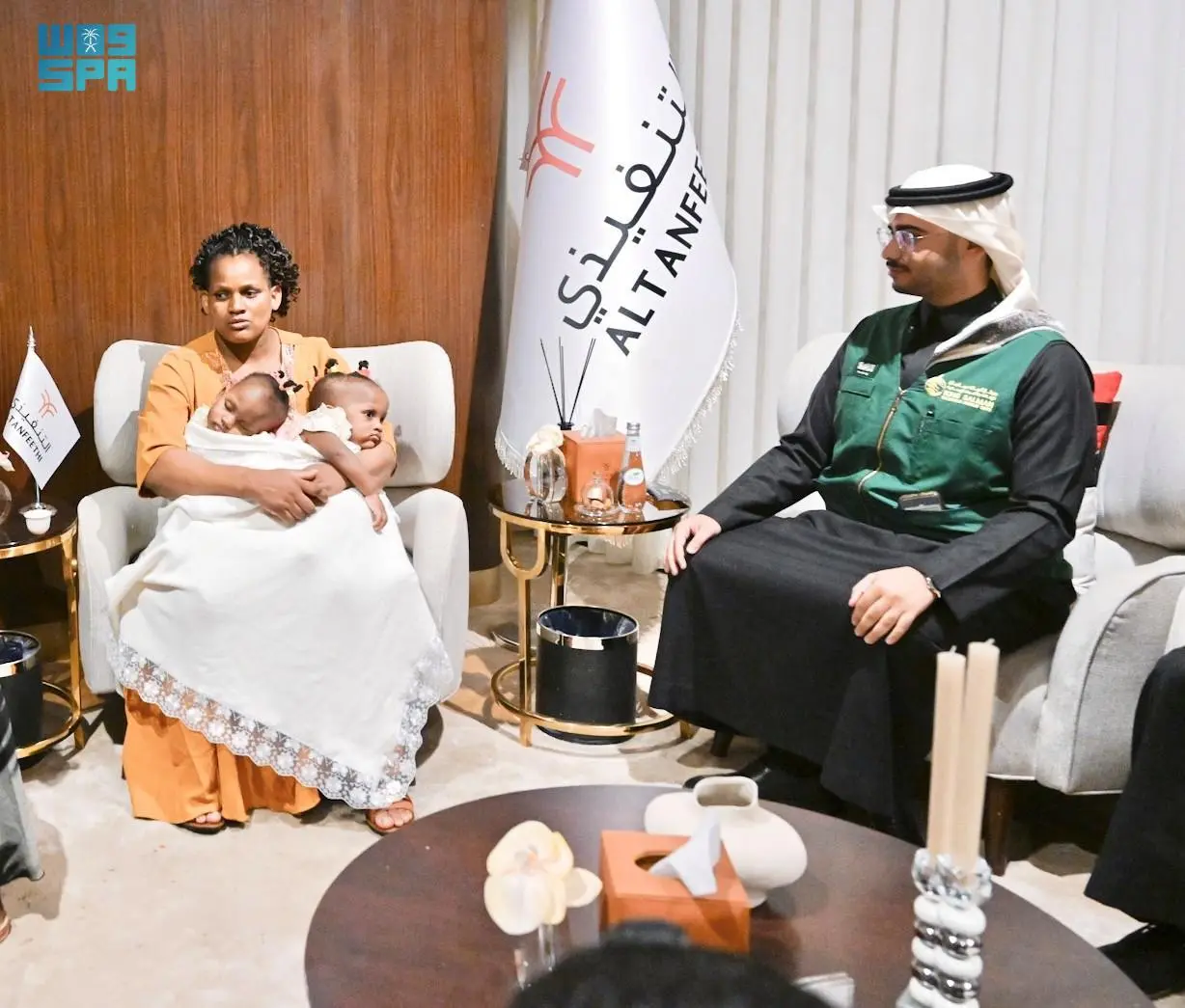
Following the directives of Custodian of the Two Holy Mosques King Salman bin Abdulaziz Al Saud and His Royal Highness Prince Mohammed bin Salman bin Abdulaziz Al Saud, Crown Prince and Prime Minister, Tanzanian conjoined twins Lightness and Loveliness arrived today at King Khalid International Airport in Riyadh.
Accompanied by their parents, the twins were transferred to King Abdullah Specialist Children’s Hospital for medical evaluation and to determine the possibility of separation surgery.
King Salman Humanitarian Aid and Relief Center (KSrelief) Supervisor General and head of the medical team Dr. Abdullah Al Rabeeah emphasized the Kingdom’s commitment to humanitarian values.
He expressed gratitude to the Saudi leadership for their ongoing support of the Saudi Conjoined Twins Program and global humanitarian efforts, highlighting the program’s excellence and the Kingdom’s prominent international standing in the medical sector.
The twins’ parents expressed heartfelt appreciation for the warm reception and generous hospitality extended by the government and people of Saudi Arabia, as well as for the prompt response to their children’s needs.
— SPA
world
World is short of nearly a million midwives
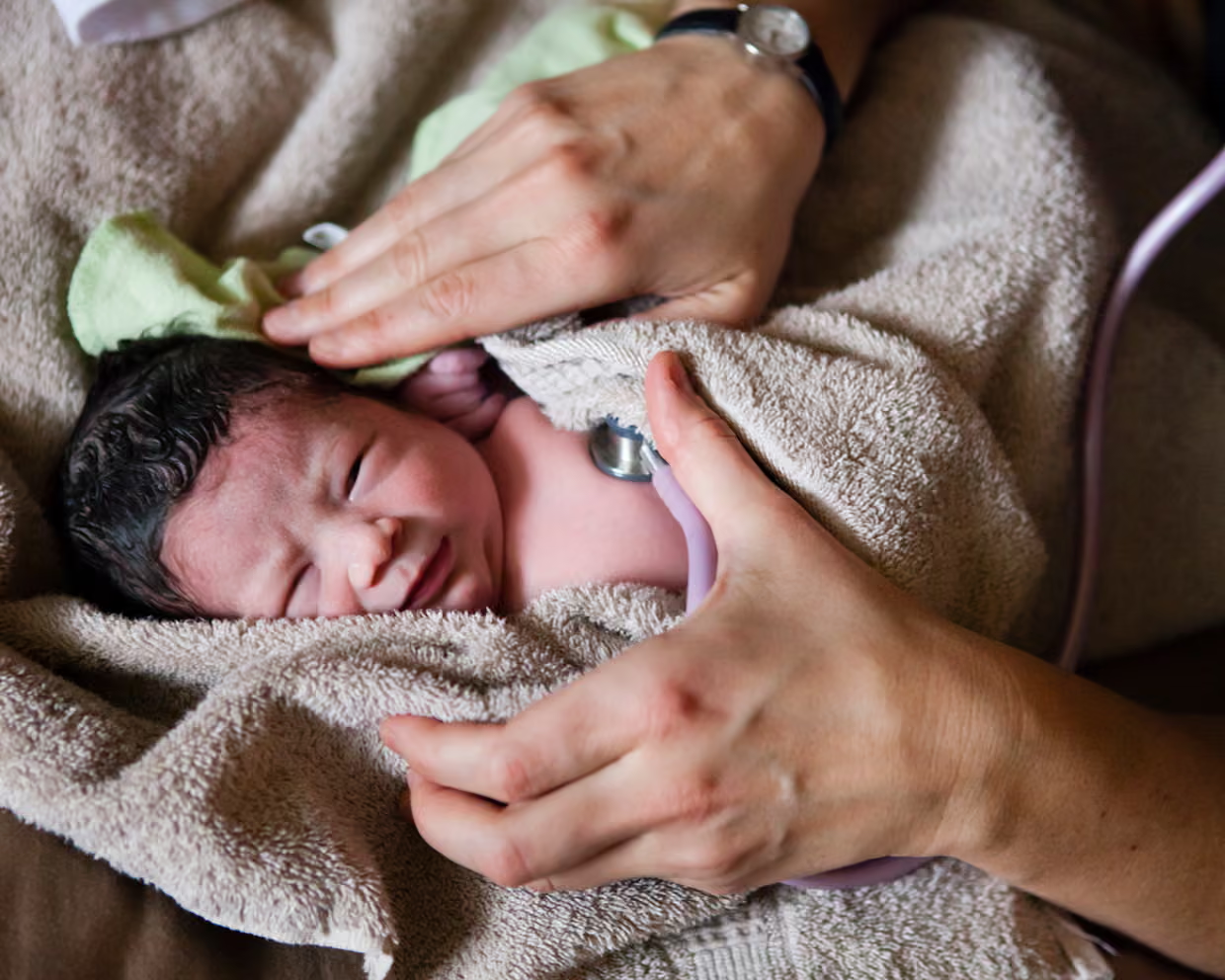
A global shortage of nearly a million midwives is leaving pregnant women without the basic care needed to prevent harm, including the deaths of mothers and babies, according to new research.
Almost half the shortage was in Africa, where nine in 10 women lived in a country without enough midwives, the researchers said.
Anna af Ugglas, chief executive of the International Confederation of Midwives (ICM) and one of the study’s authors, said: “Nearly 1 million missing midwives means health systems are stretched beyond capacity, midwives are overworked and underpaid, and care becomes rushed and fragmented.
“Intervention rates rise, and women are more likely to experience poor-quality care or mistreatment,” she said. “This is not only a workforce issue, it is a quality and safety issue for women and babies.”
For all women to receive safe, good-quality care before, during and after pregnancy, an additional 980,000 midwives would be needed across 181 countries, the study found.
According to previous research, universal access to midwife-delivered care could prevent two-thirds of maternal and newborn deaths and stillbirths, saving 4.3 million lives annually by 2035.
The ICM said the issue was not only a lack of training places for midwives, but also a failure in many countries to employ trained midwives where they were needed and to retain those who were working in health services.
Prof Jacqueline Dunkley-Bent, ICM’s chief midwife and another of the report’s authors, said: “In many settings, midwives are educated but not absorbed into the workforce or not enabled to practise fully, compounding this already serious and universal shortage of midwives, and still leaving women without access to the care that midwives are trained to provide.”
More than 90% of the global midwife shortage was in low- and middle-income countries.
Africa has only 40% of the midwives it needs, the eastern Mediterranean only 31%, and the Americas just 15%, researchers found. Shortfalls were much smaller, although still present, in other regions including south-east Asia and Europe.
The study, published in the journal Women and Birth, estimated the number of midwives who would be needed to carry out a list of basic midwifery tasks for all eligible women and babies in 181 countries. The tasks included counselling on contraception, antenatal care and screening, and care during childbirth.
It then compared that total with current workforce numbers. The researchers noted some uncertainty because of the lack of adequate data.
Although midwife numbers were increasing, the gap between what was needed and the available workforce looked likely to “persist well into the next decade”, the researchers said – beyond the 2030 deadline set by global sustainable development goals to reduce maternal mortality and end preventable deaths of newborns and under-fives.
The ICM called on governments to take urgent action to strengthen midwifery workforces in their countries, calling for signatures on a global petition urging investment in the profession.
“When midwifery is a respected and well-supported profession, more women are motivated to train and stay in the workforce,” said af Ugglas. “That is how countries improve health outcomes and build stronger, more sustainable health systems.”
The Guardian
Business
Japan tourist arrivals hit record 42.7 million in 2025

Tourists to Japan hit a record 42.7 million in 2025, exceeding 40 million for the first time, Japan’s Tourism Minister, Yasushi Kaneko, told a press conference.
Total spending by inbound tourists reached 9.5 trillion yen ($60 billion) over the year, also a record high.
WAM

Syria, Saudi Arabia sign joint airline deal, $1bn telecoms push
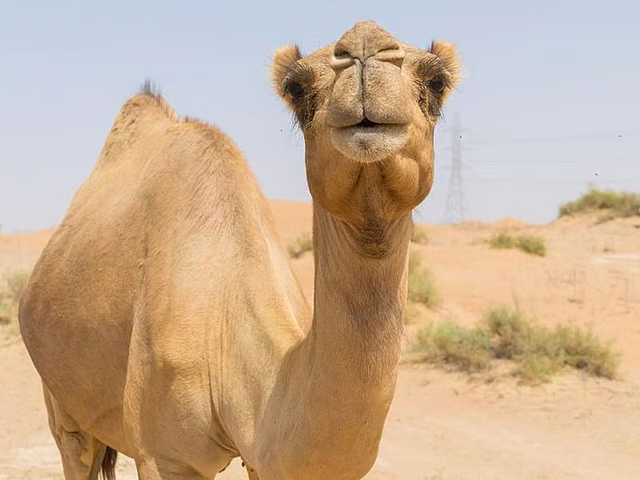
Saudi Arabia to issue passports for millions of camels

STRANGE THINGS ABOUT KATE MIDDLETON’S FAMILY

Is February 2026 really a once-in -283-years MiracleIn?

Algeria, Burkina Faso, Côte d’Ivoire win AFCON 2025 openers

Bascom Palmer Eye Institute Abu Dhabi and Emirates Society of Ophthalmology Sign Strategic Partnership Agreement
-
Discover3 weeks ago
Is February 2026 really a once-in -283-years MiracleIn?
-
 Football2 months ago
Algeria, Burkina Faso, Côte d’Ivoire win AFCON 2025 openers
-
 Health2 months ago
Bascom Palmer Eye Institute Abu Dhabi and Emirates Society of Ophthalmology Sign Strategic Partnership Agreement
-
 Health1 month ago
NMC Royal Hospital, Khalifa City, performs rare wrist salvage, restoring function for young patient
-

 Health3 months ago
Emirates Society of Colorectal Surgery Concludes the 3rd International Congress Under the Leadership of Dr. Sara Al Bastaki
-

 Football3 months ago
Globe Soccer Awards 2025 nominees announced as voting opens in Dubai
-

 Health3 months ago
Born Too Soon: Understanding Premature Birth and the Power of Modern NICU Care
-
 Health2 months ago
Decline in Birth Rate in the UAE