
Beauty
Beauty industry targets ‘old lady hands’ fears with new treatments
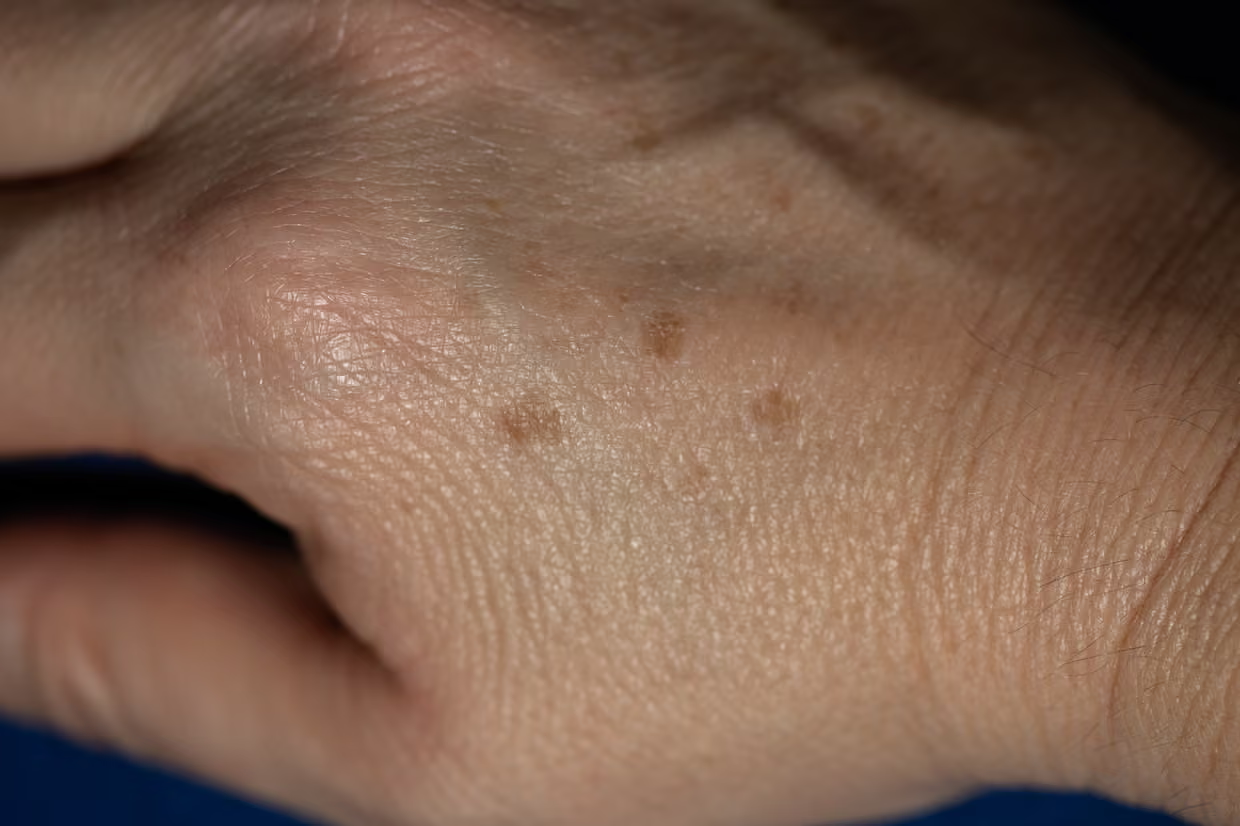
Ilay my hands on the table, palms down, for inspection. I’m in the consulting room of the president of the British College of Aesthetic Medicine (BCAM) in London. Like most people, I use my hands a lot. I type for hours a day. I go bouldering, which means I have a lot of calluses. I cook, clean, cup my chin while staring out the window. What I’ve never done is to look at my hands as objects of interest in their own right. They’re an afterthought. The means to an end. But now that Dr Sophie Shotter has picked them up in hers and is weighing my flesh and pushing at the skin with her thumbs to see how it moves, I can see faint ripples of diamonds, the texture of crepe paper.
“Your facial skin is very clear, very smooth. When we look at your hands, you’ve got a bit more of that laxity going on,” Shotter says. “You don’t have pigmentation. You’re not covered in sunspots. But the veins and tendons testify to a loss of volume. The extreme end of that is one day we get what people describe as ‘old lady hands’ – significant volume loss with skin fragility overlying it.”
This dissonance between a person’s “face age” and “hand age” has long captured the imagination. Tabloids have “hand-shamed” female celebrities for at least a decade. Not a huge amount has changed between tabloid photographs of Joan Collins, Madonna, Sarah Jessica Parker, showing their hands in shot with their faces, and the Daily Mail’s assertion in February that “hands don’t lie” but disclose our true, undoctored age. From here, it is a short hop to accusing women – Kris Jenner, for instance – of hiding their hands from public view to avoid the comparison.
The belief that our hands somehow give us away, tell the truth about us no matter how much care we take of our faces, is driving a kind of facialisation of handcare. Two years ago, Vogue reported that hand creams were “the new status symbol”. Increasingly, they boast the same premium ingredients as facial skincare: retinol, vitamin C, hyaluronic acid, collagen and PDRN (derived from salmon sperm), a trending ingredient in Korean beauty. They come in tactile packages shaped like pods or pebbles, crying out to be handled, or clipped on to a handbag. In 2022 global sales of premium handcare jumped to $724m (£544m), up 23.5% from $586m in 2019, according to Euromonitor.
There are also LED hand masks and mitts, microcurrent devices and gel gloves. Or, at the more extreme end, laser pigmentation removal for sunspots, and surgical “fat transfer” procedures – taking tissue from another part of the body and injecting it into the hands. This is more expensive, and carries a risk of infection or aesthetically displeasing results, but one cosmetic surgeon in the US told the Wall Street Journal recently that fat transfer to the hands “is now a near-constant add-on for his facelift patients, for an extra five-figure price”.
“One thing we can predict, from what we see in terms of launches and interest in aesthetic treatments, is more spending on hands,” says Georgia Stafford, a beauty analyst at Mintel, which estimated the UK handcare market at £174m in 2025.
“If you think beyond the face and neck, hands are the part of ourselves that are most on display. They’ve definitely entered consumer awareness more,” Shotter says. And Dev Patel, an aesthetic doctor based in the UK, agrees: “There’s a growing awareness that hands play into the perception someone is going to have when they’re judging your age,” he says.
There are biological reasons for this. The skin on our hands has fewer oil glands than the skin on our faces. It’s more prone to dryness, and that’s even without factoring in the multiple daily washes. The skin is thinner than on other parts of the body, because our hands need to be flexible. It also contains less collagen – the main protein that provides structure and support to our bodies.
When it comes to anti-ageing and rejuvenation treatments, “the magic word is harmony”, Patel says. “We have four faces: face, neck, chest and hands. There’s no point just working on one. If it’s not matching and there’s no harmony, then we pick up on something else, which is a lack of authenticity. I liken it to a car. You wouldn’t clean the front half of your car and leave the back half.”
Stafford says that ageing prevention is “one of the big trends in facial skincare” in the UK, especially among 25- to 44-year-old women. She thinks that consumers have learned about ingredients in facial skincare and are keen to “bring them down below the neck”.
Neither Patel nor Shotter will be drawn on my hand age v my face age, but Shotter suggests an injectable moisturiser and half a syringe of a filler containing collagen, fanned out “to help stimulate some skin tightening and give a very gentle volume”, which would supposedly make my hands harmonise better with my face. She also recommends potential patients use BCAM’s Vet It Before You Get It questionnaire to ensure the safety of any procedure considered.
The foundations for this market growth may have been laid during the pandemic, when sanitiser became a hero product, often in short supply – and alongside it came a growing awareness of the part our hands play in our health. We washed them observantly, slathered them in sanitiser, and became hypervigilant about where we put them. And the more sanitiser we applied, the drier the skin on our hands became.
The year before Covid struck, Amy Welsman, who founded the handcare brand Paume (French for palm), became a parent, and found herself pumping squirts of astringent sanitiser on to her hands dozens of times a day. She began to fantasise about a “luxurious hand sanitiser product that smelled really good and was skin-nourishing and had plant-based ingredients that were healthier for us”.
“I thought: there’s an opportunity to create products that are formulated like we would formulate products for our face.” Expensive hand cream used to be all about the perfume – Chanel launched its egg-shaped product in 2017, turning hand cream into an accessory in its own right – but now, Welsman says, “bodycare brands are leading with ingredients”.
The idea that our hands tell the truth about us is “everybody’s story”, she says. “That was certainly what inspired the line. They’re our second most exposed body part but we totally neglect them.”
Welsman would like us to approach our hands as mindfully, and with the same sense of ritual and benefit, as we do our faces. She performs her own routine nightly. First, she exfoliates. Sometimes a nail brush follows. Then comes Paume’s serum, followed by the cuticle and nail cream. Once a week, she slathers a mask all over her hands and sleeps in cotton gloves. If this sounds expensive, Welsman often uses her hand products on her face – they are cheaper than the facial equivalents.
But do consumers really have time to take on another self-care responsibility? At retailers Sephora and Cult Beauty, hand-specific products remain a lowly subcategory of bodycare, lumped in with feet.
Ah, feet. Less exposed than hands, granted – but for many of us they are even more of a dark secret, shrouded in socks for months at a time, a scaly hinterland that body lotion rarely reaches. It is only a matter of time.
The Guardian
Beauty
Melania Trump’s ‘Porcelain’ Smile Likely Veneers
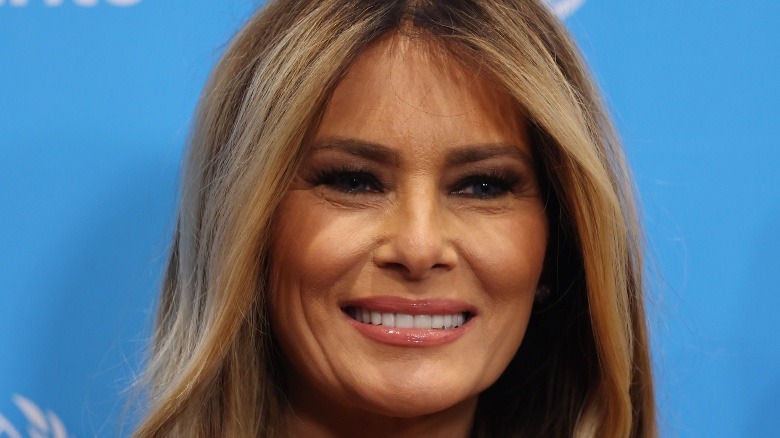
Melania Trump often displays a sour expression that adds fuel to the speculation about the health of her marriage to Donald Trump. But she occasionally smiles for the camera, and when she does, it shines — literally. Melania has white teeth so perfect that we wondered if the first lady is among the high-profile figures who have veneers. Dr. Tyler Hales, celebrity cosmetic dentist and founder of Hales Aesthetic, believes she is. After reviewing a number of photos for Nicki Swift, including the image below, he analyzed the shape of her teeth and how they reflect light to reach his conclusions.
“A key indicator for me is that her smile appears brighter than the whites of her eyes, which strongly suggests veneers,” Hales told us. That wasn’t the only giveaway, though. Hales also noticed an unevenness that generally points to veneers because of a technical difficulty. “Upon closer inspection, the lower teeth appear slightly thicker. This is common with lower veneers, as many labs struggle to maintain a natural thickness in that area,” he explained.
The color of Melania’s teeth also helped Hales determine exactly what kind of veneers he believes she got. “While her teeth are very white, they have a slight grayish undertone. This leads me to believe she likely has Emax porcelain veneers on both her upper and lower teeth,” he said. The suspicion that she has veneers doesn’t surprise us. After all, Melania has undergone a major transformation between her modeling and first lady days.
Melania Trump has sparked plastic surgery rumors for years
Melania Trump’s smile may not be the same today, but that isn’t the only aspect of her physical appearance that has changed since she became a public figure through her relationship with Donald Trump. Melania has changed so much that many have issues seeing any reminiscent traits of her early modeling days from 1987 in her current face. “I cannot recognize her at all in these pics. My brain can’t even make the connection,” a Reddit user wrote in a 2023 post.
Many others echoed similar sentiments. “I can BARELY see it in her eye shape, even knowing who it is. Wow,” a second Redditor commented. In response to this comment, another netizen pointed out how different her smile has become. “Also, super weird to see her smiling and not just baring her teeth,” the user noted. Of course, most believe the differences are the result of plastic surgery, but they struggled to nail down which procedures given just how different she looks now. “I’m trying to pinpoint everything she must have had done but like… all of it???” a Redditor wrote.
Melania has denied plastic surgery rumors in the past, but not very many people buy it — not even professionals. Plastic surgeon Dr. Dan Yamini told our sister site The List that her almond-shaped eyes and chiseled cheekbones are most likely the result of a facelift and eyelid surgery, while her nose seems altered by rhinoplasty. That’s not to mention fillers and other nonsurgical procedures. She may not like it, but people will believe what they will.
Nicki Swift
Beauty
Gucci owner to sell beauty division to L’Oréal for €4bn
The Gucci owner, Kering, is selling its beauty division to L’Oréal for €4bn (£3.5bn), as its new chief executive, Luca de Meo, seeks to turn around the French luxury company.
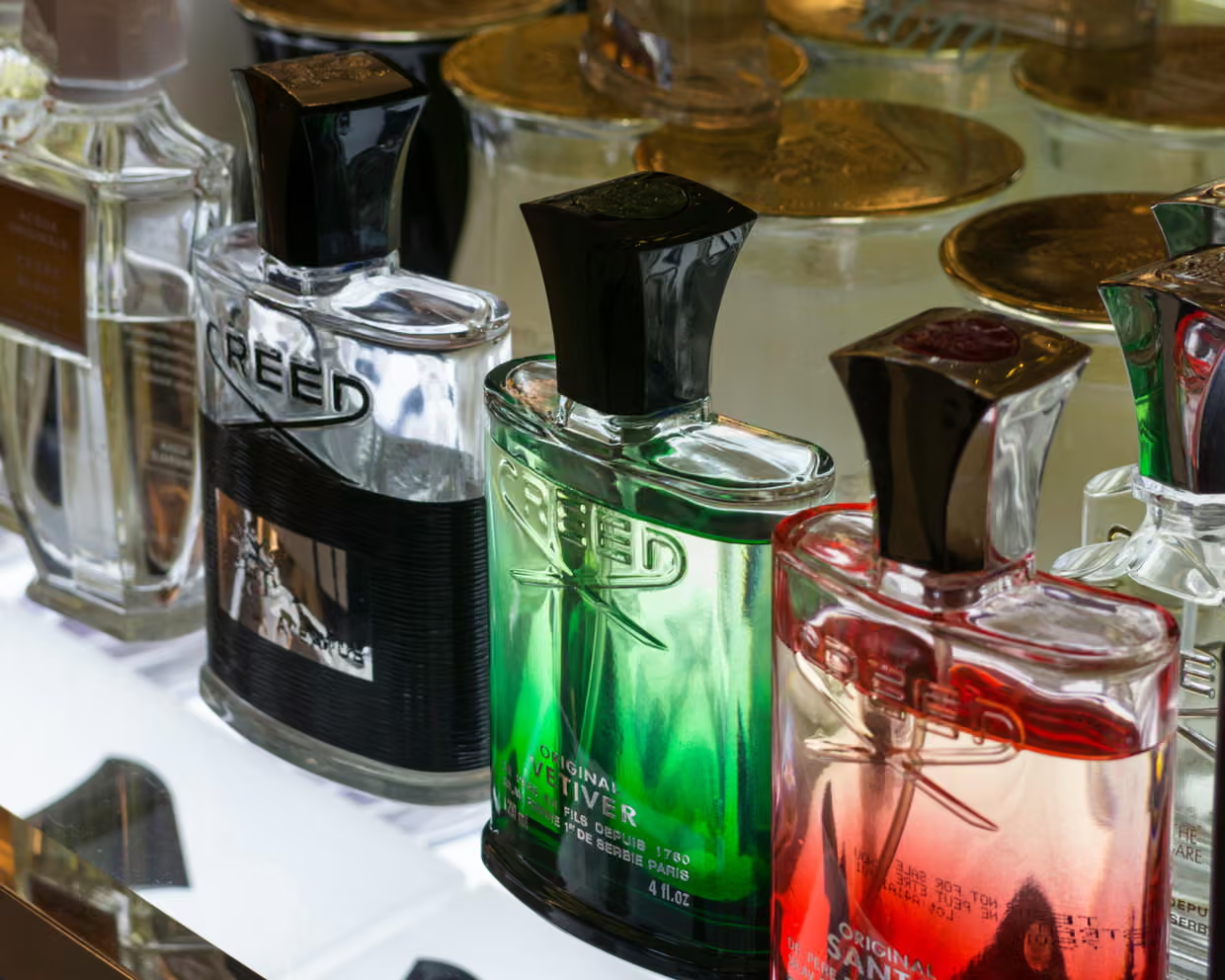
The deal will give the French beauty group L’Oréal Kering’s fragrance line Creed, which was founded in 1760. The deal also includes rights to develop fragrance and beauty products under Kering’s fashion labels Gucci, Bottega Veneta and Balenciaga under a 50-year exclusive licence.
In a significant shift in strategy, de Meo is trying to reduce Kering’s debt burden and refocus on its core fashion business.
The new 50-year deal with L’Oréal will start once Kering’s current deal with Coty for Gucci fragrances expires in 2028.
The sale will help reduce Kering’s net debt, which totalled €9.5bn at the end of June, on top of €6bn of long-term lease liabilities, easing concerns among investors.
It is de Meo’s first big move since he took the helm less than two months ago, as he pivots away from the strategy of his predecessor François-Henri Pinault, whose family controls the group.
Kering set up its beauty business in 2023 after acquiring the perfume maker Creed for €3.5bn to reduce its reliance on its Gucci brand, which makes up most of its profits. But the luxury group has struggled to ramp up the business, posting a €60m operating loss for the first half of the year.
The company has also been battling declining growth at its largest brand, Gucci, as demand from the key Chinese market has slowed sharply in recent years. Gucci’s revenues fell by 25% in the latest quarter.
The Italian fashion house underwent a shake-up under new management and creative director, Sabato de Sarno, but he was abruptly let go just two weeks before Milan fashion week in February. He has been replaced by Demna, who left his post at Balenciaga in the summer and last month presented his first Gucci collection, ditching the traditional catwalk format for a film by Spike Jonze.
Analysts at Jefferies estimate the beauty division’s potential sales at €800m and an operating profit of €280m, assuming a licence fee of 10% on Gucci sales. “This is likely to be taken positively for L’Oréal, another ‘buy and roll’ transaction in what is still a ‘hot’ fragrance category,” they said.
Analysts at Bernstein said: “We believe selling Kering Beauté at around the same price paid for Creed two years ago is a bitter but necessary medicine.”
The Kering share price increased by 5% in early trading in Paris, while L’Oréal rose nearly 1%.
The Guardian
Beauty
Estée Lauder, audacity and expertise
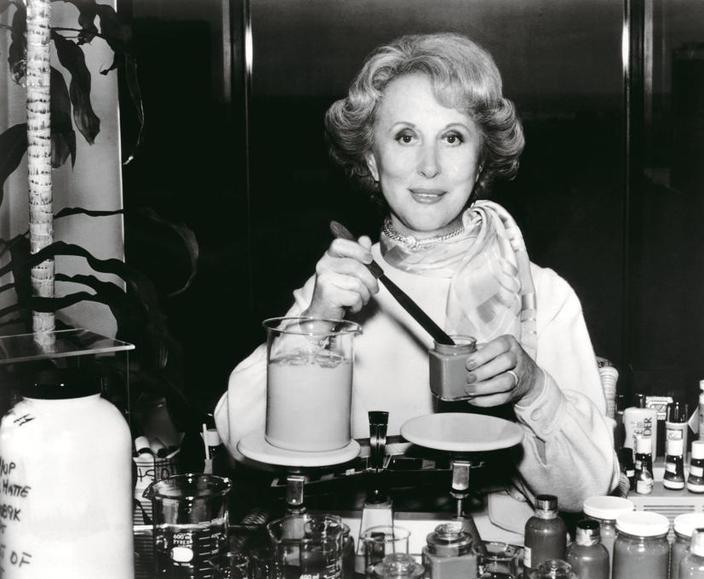
The beginnings. Born in 1908 to Hungarian Jewish immigrant parents, young Josephine Esther Mentzer became interested in the composition of beauty creams thanks to her chemist uncle, who had come from Vienna to live with her and her family in Queens, New York. Estée (a variation of her childhood nickname, Etsy—with an added accent for a chic, French touch!) had a knack for business. In the city’s beauty salons, where she was quickly noticed for her exquisite complexion, she demonstrated her products, often concocted in her kitchen. In 1946, she launched her brand with her husband, Joseph Lauter (they changed the “t” to a “d”). A year later, the couple signed their first contract with the Saks Fifth Avenue department store—an $800 order for products. The business was launched.
The empire. Estée Lauder has the soul of an entrepreneur, and above all, a remarkable gift of gab. She says: “In a perfect world, we should all be judged on the beauty of our souls, but in our less-than-perfect world, the beautiful woman has a definite advantage, and often the last word.” In nearly seventy years, the brand has become a beauty behemoth, notably under the leadership of one of Estée’s sons, Leonard Lauder, who passed away in 2025.
The secret formula. In her shops, which she visits assiduously, the boss repeats her mantra, the three Ts: “Telephone, Telegraph, Tell a woman ” – “Telephone, telegraph, tell a woman,” which basically means that word-of-mouth remains the best form of advertising.
The anecdote. One of the founder’s key ideas? To offer each customer a free sample of one of the brand’s products. Unheard of at the time.
The legacy. The group that bears his name, and also owns the brands Clinique, La Mer, Tom Ford Beauty or MAC makeup, is today in the world’s top 3 in cosmetics, after L’Oréal.
Story by Madame Figaro


Three keys to cutting your risk of heart attack and stroke

More and more men are getting cosmetic procedures

Want to slow brain aging? Follow this diet

Is February 2026 really a once-in -283-years MiracleIn?

Algeria, Burkina Faso, Côte d’Ivoire win AFCON 2025 openers

NMC Royal Hospital, Khalifa City, performs rare wrist salvage, restoring function for young patient
-
Discover3 months ago
Is February 2026 really a once-in -283-years MiracleIn?
-
 Football4 months ago
Algeria, Burkina Faso, Côte d’Ivoire win AFCON 2025 openers
-
 Health3 months ago
NMC Royal Hospital, Khalifa City, performs rare wrist salvage, restoring function for young patient
-

 Health4 months ago
Bascom Palmer Eye Institute Abu Dhabi and Emirates Society of Ophthalmology Sign Strategic Partnership Agreement
-

 Health5 months ago
Emirates Society of Colorectal Surgery Concludes the 3rd International Congress Under the Leadership of Dr. Sara Al Bastaki
-

 Health5 months ago
Born Too Soon: Understanding Premature Birth and the Power of Modern NICU Care
-

 Lifestyle5 months ago
Saudi Arabia Lifestyle Trends 2025: What You Need to Know About Fitness, Wellness, Healthy Eating & Self-Care Growth
-

 Football5 months ago
Globe Soccer Awards 2025 nominees announced as voting opens in Dubai