
Discover
Things you should never say to someone with ADHD
Things you should never say to someone with ADHD
Attention deficit hyperactivity disorder, or ADHD, is a developmental disorder that affects approximately 2–5% of adults worldwide. Symptoms of the condition usually appear before the age of 12, and those with ADHD typically demonstrate problems with concentration and sitting still, among other characteristics.
The misconceptions surrounding ADHD often provoke questions from uninformed people that can hurt the feelings of those with the disorder. So, what things should you never say to someone with ADHD?
Click through and learn more about the condition and the questions and comments you should never voice.
What is ADHD?
Attention deficit hyperactivity disorder (ADHD) is a developmental disorder the symptoms of which usually start before the age of 12
Consequences of ADHD
These symptoms involve a person’s ability to pay attention to things (being inattentive), having high energy levels (being hyperactive), and their ability to control their impulses (being impulsive).
Signs and symptoms
Signs and symptoms of ADHD in kids and teenagers include an inability to sit still, especially in calm or quiet surroundings.
Overactive personality
A youngster who’s constantly fidgeting and displaying overactive physical movement may be demonstrating symptoms of ADHD.
Excessive personality
Excessive talking, interrupting conversations, and being unable to wait their turn is typical of people with ADHD.
Limited concentration
Difficulty in concentrating on tasks, even for short periods of time, is another sign that a person may have ADHD.
Hyperactive behavior
Not paying attention and being impulsive or overtly hyperactive are also symptoms associated with the conditio
Other character flaws
And finding it hard to listen to others, acting without thinking, or the incapacity to follow instructions are other character flaws linked to ADHD.
Treatment and management
Standard treatments for ADHD in adults typically involve medication, education, skills training, and psychological counseling.
Misconceptions and what not to say
But misconceptions about ADHD are common and can lead to even well-informed people sometimes using hurtful, unproductive comments and clichéd phrases when trying to be supportive of someone with the disorder.
Unproductive comments
Even if your intentions are good, some of these expressions can be terribly frustrating and even offensive to a person with an ADHD diagnosis.
“ADHD isn’t a real disorder”
For example, insisting that ADHD isn’t a real disorder can be very detrimental to someone with the condition.
“Isn’t everyone a little ADHD?”
Claiming that everyone is a little ADHD only compounds the issue and can be hurtful for several reasons. Flippantly describing everyone’s life experiences as “a little ADHD” implies that you have no idea of the serious difficulties that someone with ADHD faces every day.
“Everyone gets distracted sometimes”
Similarly, telling somebody with ADHD that everyone gets distracted once in a while can come across as very disparaging to a person struggling with the condition.
“ADHD is a problem only kids have”
ADHD was originally called “hyperkinetic reaction of childhood,” and historically was often seen as a childhood disorder that people grew out of. Advances in medical research have since determined that the condition can persist into adulthood. To claim that it’s a problem only kids have can create challenges for those with ADHD in school, at their workplace, and in their home lives.
“ADHD is just an excuse for not doing well at school”
Blaming someone diagnosed with ADHD for falling short academically is unfair and demonstrates a complete lack of understanding as to the complexities of the condition. ADHD is certainly not an excuse for not doing well at school. Instead, it’s something that affects your entire life in making decisions, completing tasks, and carrying out simple everyday things.
“People with ADHD are just less intelligent or lazy”
Similarly, anyone who believes people with ADHD are less intelligent or just lazy are failing to recognize that the condition affects their executive functions. These are skills that you use to manage everyday tasks like making plans, solving problems, and adapting to new situations. To accuse people with ADHD of not pulling their weight or being stupid is quite wrong and plainly inaccurate.
“Why can’t you just focus?”
A comment like “Why can’t you just focus” implies that concentrating is simply a matter of will power. But to say so totally disregards the neurological challenges that individuals with ADHD face. With ADHD, the inability to focus doesn’t mean a lack of desire to do so, and to be called out like this can make the person feel judged, frustrated, and misunderstood.
“You only focus on what you want to”
Conversely, some people with ADHD also experience what’s called “hyperfocus.” This refers to an intense fixation on an interest or activity for an extended period of time, and happens with activities the person finds interesting or exciting. Telling someone with ADHD that they only focus on what they want to implies that they’re simply choosing not to focus on certain tasks, which is untrue.
“You don’t seem to have a problem focusing on TV/video games/mobile devices”
For example, the ADHD brain can focus for long periods on a television broadcast or video game. But telling someone that they don’t appear to have a problem doing so is to miss the point and the complex reasons behind the phenomenon known as hyperfocus.
“You aren’t even trying”
ADHD can also cause hyperfocus on the negatives. “You aren’t even trying” is a common response by those who assume that someone with the condition just isn’t pulling their socks up. And the worst aspect of this accusation is that a person can start believing it themselves.
“You just need to be a better listener”
For adults with ADHD, listening can be a challenge. Inattention and being easily distracted are two well-known symptoms of the condition that make focusing on a conversation or a lecture doubly difficult.
“It’s not that big of a deal”
For adults and children alike, being told that ADHD is not serious can be upsetting and, frankly, insulting. The consequences of living with ADHD can cause a huge amount of distress to those diagnosed with the condition.
“You don’t need extra time, you just need to work faster”
ADHD can at times be totally overwhelming. So much so that it can take forever to get just one thing done. This is due to what’s known as “sluggish cognitive tempo,” the result of under-arousal in the part of the brain associated with focus and planning. Anyone who believes those with ADHD should work faster needs to step back and allow them more time to accomplish tasks.
“Stop overreacting”
Emotional imbalance is a core ADHD symptom. Being told to stop overreacting only serves to further fuel this kind of response in people with the condition. Even the smallest of setbacks and challenges can make someone react disproportionately.
“You’re trying to be difficult”
To the uneducated eye, people with ADHD can appear as if they’re behaving the way they do to bother you, as if on purpose. But they are not trying to make you mad or interrupt you. It’s just that their brains simply work differently. They are not trying to be difficult.
“How could you forget about something so important?”
To accuse a person with ADHD of forgetfulness is to dismiss a fundamental symptom of the condition. The ADHD brain tends to process information in a disorganized manner. While people with ADHD do their best to remember, obligation and responsibility often fall through th
“Have you tried using a to-do list/planner?”
Even the best intentions can backfire. Ordinarily a reasonable question to ask, suggesting that someone with ADHD should trying using a to-do list is to overlook the fact that organization can be especially challenging to a person with ADHD. Again, it’s a problem rooted in executive functioning.
“Nobody needs to know you have ADHD”
While it’s certainly true that people don’t need to disclose their ADHD diagnosis to anyone, it’s their decision to make and theirs alone. Suggesting that someone with ADHD should keep their condition a secret can be very damaging. It can make them feel ashamed of their ADHD and cause embarrassment and distress.
Don’t criticize ADHD symptoms
The takeaway is not to criticize ADHD symptoms. Uniformed people can hurt feelings and cause distress by uttering the most offhand of remarks. To avoid anger, resentment, and embarrassment, don’t connect ADHD to a character flaw.
Sources: (Everyday Health) (NHS) (CDC) (Attention Deficit Disorder Association) (World Federation of ADHD) (HuffPost) (Healthline)
Discover
Do Vitamin C Serums Boost Sun Protection?

Sunscreen does two important jobs. It is largely used for its UVB protection benefits – blocking the rays that cause sunburn and are a major contributor to the development of skin cancer. But it also blocks UVA radiation, filtering out the rays that lead to signs of ageing.
Vitamin C does neither of these things, says Rosalind Simpson, a professor of dermatology at the University of Nottingham. That said, it is thought to help prevent sun damage in a different way.
“Antioxidants such as vitamin C have become a hot topic,” Simpson says. “People are really interested in whether they can improve skin appearance by neutralising free radicals created by UV exposure and pollution. Those free radicals contribute to the breakdown of collagen and loss of skin firmness.”
Whereas sunscreen acts as a kind of UV filter, antioxidants are thought to provide an additional line of defence. UVA exposure generates unstable free radicals in the skin, which can damage cells by disrupting their structures, and Vitamin C is believed to stop them doing this.
A 1996 study examined the effectiveness of antioxidants, including vitamins C and E, with and without sunscreen, in protecting against UV-induced skin damage. It found that vitamin C appeared to enhance protection against UVA-induced skin damage, but only when used alongside sunscreen. The researchers concluded that antioxidants may provide additional protection when combined with established sun-protection products.
“Nothing is a substitute for a good quality, broad-spectrum sunscreen with UVA and UVB protection and sensible habits when in the sunshine,” says Simpson.
That means wearing sunscreen, reapplying it regularly, and limiting direct sun exposure during the hottest parts of the day.
The Guardian
Discover
Five-second rule is a myth
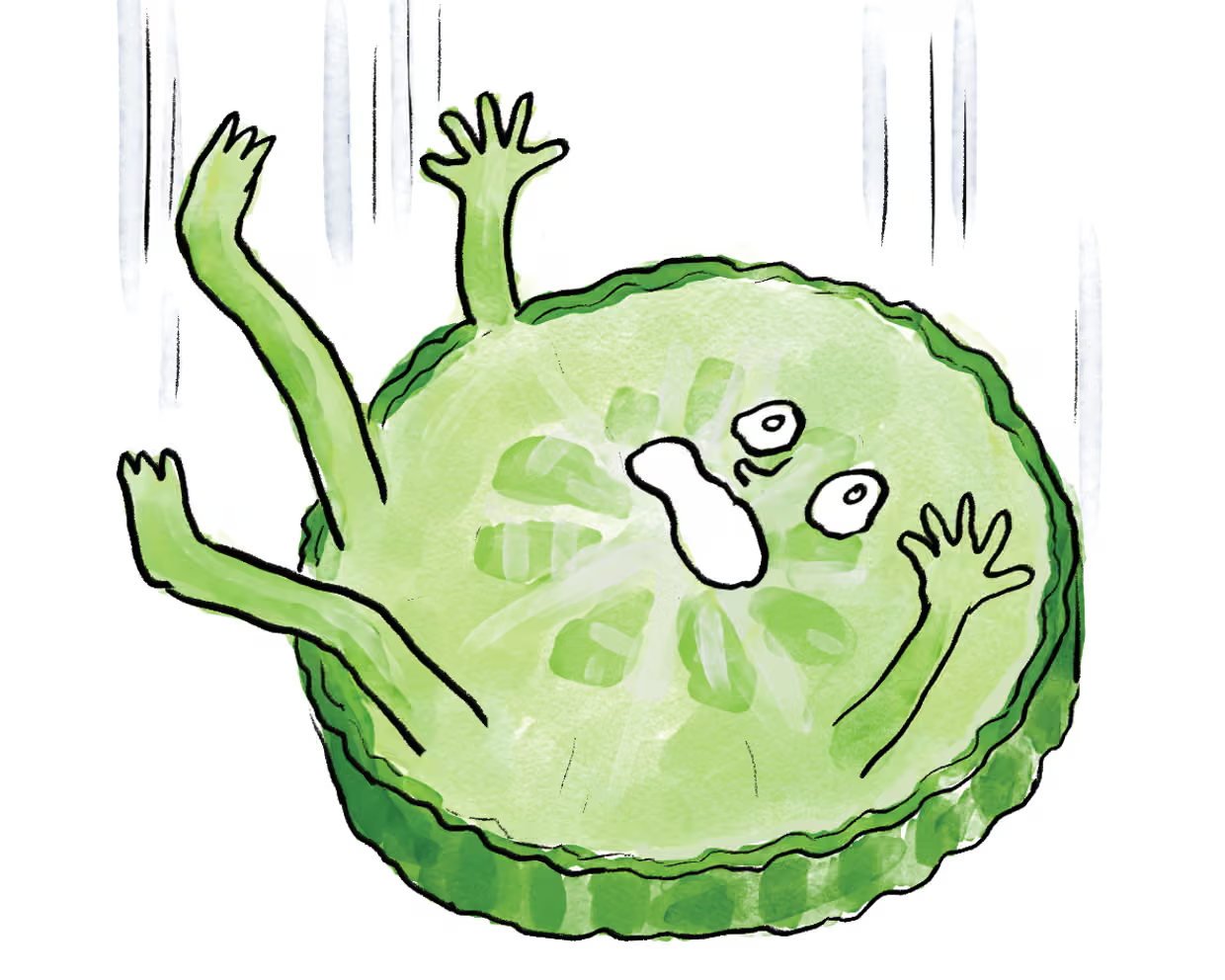
You drop a piece of cucumber on the floor. Do you immediately throw it in the bin or reassure yourself of the age-old “five-second rule” and reckon it’s fine to pop it in your mouth after a quick rinse?
If you fall into the latter camp, John Tregoning, professor of vaccine immunology at Imperial College London, has some bad news. He refers to three studies into bacteria transfer that all point towards the rule being false.
In the first, scientists looked at what happens when a range of foods (bread, buttered bread, watermelon and gummy bears) were dropped on a range of surfaces (tile, steel, wood, and carpet) that had been coated with bacteria. “They transferred almost immediately,” he says, adding that the worst combination for transfer happened when wet food hit a solid surface (watermelon on tile or steel).
Another study – where cooked sausage was dropped on to surfaces – showed that bacteria transferred on to the meat even if they had been applied to the surface hours earlier. It showed that “if you put a piece of contaminated chicken on to a work surface and then, two hours later, drop your piece of bread on to it, you can still pick up bacteria from it. It’ll be there for about 24 hours,” he says.
The final paper looked at the “five-second rule” for medical objects in the operating room. Perhaps unsurprisingly, it found that if surgeons drop something on the floor, they need to wash that instrument with detergent for it to be safe to use again.
What does all this mean for your fallen cucumber? “I think you have to accept it’s gone,” says Tregoning. Rinsing it with water won’t be enough to guarantee it’s clean. That’s especially the case if you’re particularly susceptible to infections, or if your dog might have walked something terrible through the house (even hours earlier).
THE GUARDIAN
Discover
Saudi Arabia’s Tawakkalna app offers Hajj services in 19 languages

Saudi Arabia’s national digital platform Tawakkalna is providing Hajj-related government services in 19 languages for pilgrims and workers during the 1447H Hajj season, as part of wider efforts to improve the pilgrimage experience through advanced digital solutions.
The initiative comes within the efforts of the Saudi Data and Artificial Intelligence Authority to strengthen integration between government service entities during Hajj and support pilgrims throughout their journey, from arrival in the Kingdom and entry into Mecca and the holy sites to visits to the Prophet’s Mosque in Madinah and departure back to their home countries.
The app supports Arabic, English, Indonesian, Hindi, Urdu, Turkish, French, Bengali, Persian, Malay, Russian, Chinese, Filipino, German, Dutch, Japanese, Italian, Spanish and Portuguese.
Pilgrims can access a range of services through the platform, including Hajj permits linked to the unified digital Hajj permit platform “Tasreeh”, as well as permits related to entering Mecca, work authorisations, volunteer permits and vehicle permits issued by various government entities.
According to officials, Tawakkalna is designed to serve as a trusted digital companion for pilgrims by supporting daily movement and offering a smoother and safer digital experience during Hajj and visits to Madinah after the pilgrimage.
The app also allows users to book visits to Al Rawdah Al Sharifah through the Nusuk gateway service integrated into the platform.
Additional services available during Hajj include multilingual access to the Arafah sermon, an emergency assistance service called “Assefni”, live weather updates for the holy sites, Qibla direction, prayer times and digital Quran services.
Saudi authorities said the services are part of broader efforts aligned with the Pilgrim Experience Programme under Saudi Vision 2030, which prioritises improving services for pilgrims and Umrah performers through smart technology solutions.
The Tawakkalna platform currently offers more than 1,300 services in cooperation with over 350 government entities across sectors including health, education, justice, tourism and professional services, with more than 35 million users registered on the app.
GN


Emirates Specialty Hospital Expands Cancer Care Services in Dubai with Opening of Dedicated Chemotherapy Unit

When Rheumatoid Arthritis Threatened Her Independence: How the Right Diagnosis Helped Her Get Her Life Back

Saudi German Hospital Dubai Launches Mental Health and Wellness Center for Children and Adolescents

Araghchi, Oman Sultan discuss transit, stability in Muscat

UAE’s café culture keeps growing despite price pressure

Netflix to Livestream BTS Comeback Concert
-
 politics6 months ago
Araghchi, Oman Sultan discuss transit, stability in Muscat
-
 UAE10 months ago
UAE’s café culture keeps growing despite price pressure
-
 Entertainment9 months ago
Netflix to Livestream BTS Comeback Concert
-
 Discover9 months ago
Is February 2026 really a once-in -283-years MiracleIn?
-

 Football10 months ago
Algeria, Burkina Faso, Côte d’Ivoire win AFCON 2025 openers
-

 Health10 months ago
NMC Royal Hospital, Khalifa City, performs rare wrist salvage, restoring function for young patient
-

 Health10 months ago
Bascom Palmer Eye Institute Abu Dhabi and Emirates Society of Ophthalmology Sign Strategic Partnership Agreement
-

 Health11 months ago
Emirates Society of Colorectal Surgery Concludes the 3rd International Congress Under the Leadership of Dr. Sara Al Bastaki