
Discover
The best restaurants in Riyadh
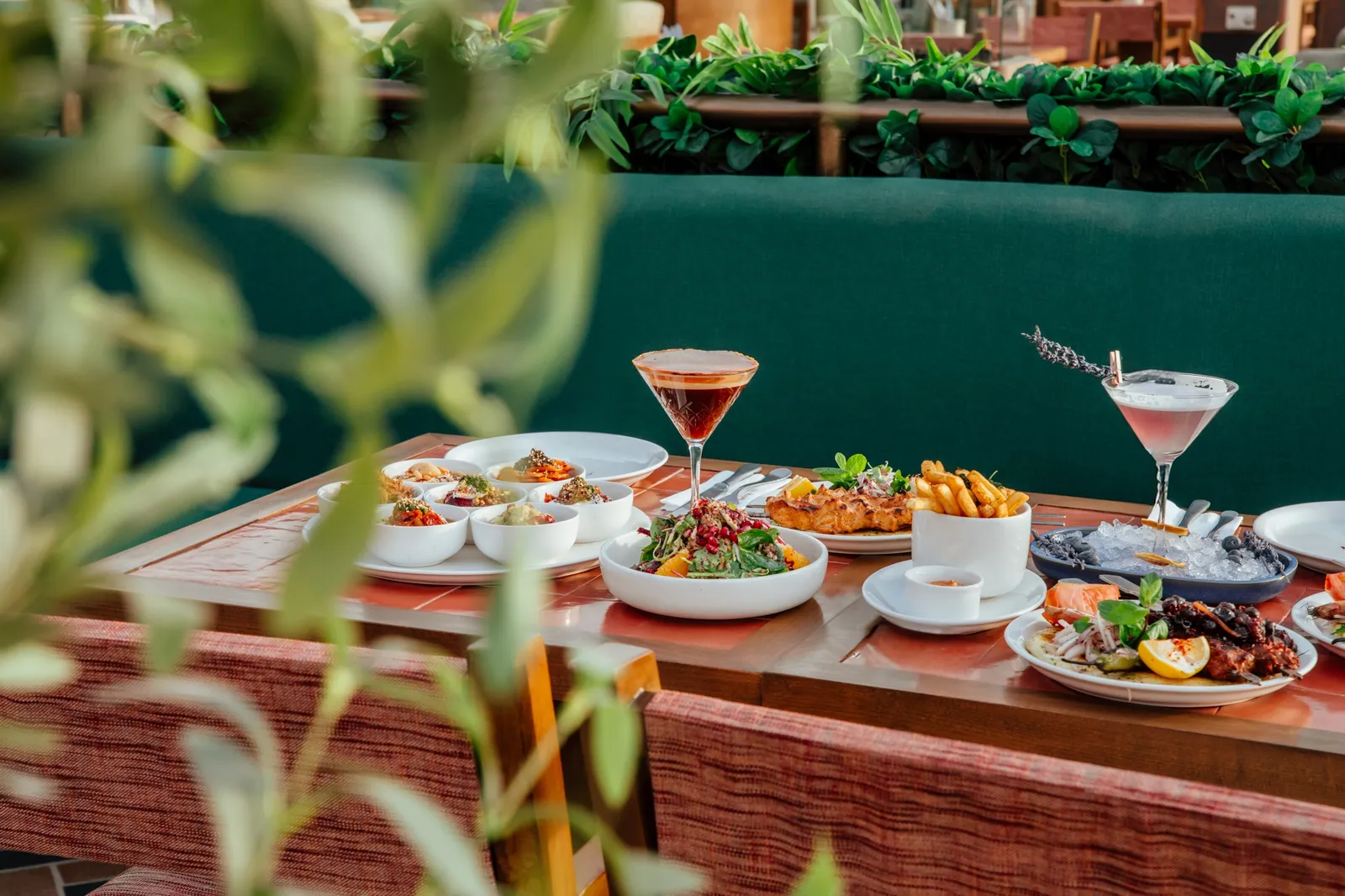
Riyadh’s restaurant scene is evolving at rapid speed, but our tried-and-tested picks are a good place to start
Riyadh’s restaurant scene has never been hungrier for attention. What was once a city of simple shawarma joints and kabsa spots has reinvented itself into one of the most exciting culinary capitals in the Middle East — a playground for celebrity chefs, global fine-dining heavyweights and homegrown culinary trailblazers alike.
With the long-awaited metro system unlocking new pockets of the city, and Riyadh Season bringing dozens of exciting pop-ups, there’s never been a better time to eat out in the Saudi capital. Here are the best restaurants to check out in Riyadh in 2025.
apital. Here are the best restaurants to check out in Riyadh this year.
Al Mamlaka Social Dining
Struggling to pick between Riyadh’s restaurants? Al Mamlaka Social Dining solves that dilemma by bringing almost two dozen of the city’s best under one roof. Tucked beneath Olaya’s Kingdom Centre, this green-hued food hall – anchored by a bar shaking up non-alcoholic cocktails – is a smorgasbord of coffee shops, desert stops and street food spots, including scaled-down outposts of Easy Bakery (don’t miss those swirly chocolate croissant wheels), Nozomi, Overjar, Burger Boutique and Hanoverian. For something heavier, head to the sit-down spots: the first Middle East branch of El Ta’koy slings flavour-packed Hawaiian bowls and bao buns, while Assembly by Chef Tommy – of Beirut’s beloved Baron – elevates traditional Lebanese-Armenian shish skewers with contemporary twists (splurge $27 for a stick of meat and an hour of unlimited mezze). The queues can be long on weekends when the food hall is open until 3am, but it’s a feast that’s well worth waiting for.
Address: Kingdom Centre, Olaya St, Al Olaya
Al Orjouan
Forget everything you think you know about hotel buffets at The Ritz-Carlton’s Al Orjouan, which lays out a feast fit for a king in the grand halls of a former royal palace. The variety of dishes is dazzling, from mini cocottes of scrambled eggs with rich truffle oil at breakfast to authentic ful medames served throughout the day, plus a curated selection of dates including the finest local and international varieties. An Arabian-inspired beverage menu features the Desert Rose – combining pomegranate syrup, rose water and honey – and the Green 600, an inventive mix of green apple, cucumber, spinach juice and an olive syrup “ice cube” that celebrates the ancient olive tree in the hotel’s grand courtyard.
Address: The Ritz-Carlton, Riyadh, Al Hada
Attaché
In a former horse stable on the edge of Riyadh’s walled-in Diplomatic Quarter, this hush-hush member’s club from the team behind MDLBEAST sees foreign officials rubbing shoulders over a multicultural menu that’s equal parts style and substance. Dining reservations are open to all, with winning dishes like twice-baked Swiss comte souffle, locally caught sea bass and a glistening strawberry dome – revealed beneath a cloud of candy floss with a blowtorch – crowning the indoor-to-outdoor space. As the night rolls on, the party spills into Unstable, the restaurant’s clubby alter ego next door. Moody low ceilings and edgy beats keep the after-hours crowd going until late, although in keeping with the diplomatic theme, you’ll need to apply for a “visa” online first to get inside.
Address: Al Safarat
Barbar
What began as a humble Lebanese bakery has since expanded across the Middle East to Riyadh, where hot Arabic breads and generously sized shawarma platters are served from roaring ovens 24 hours a day, seven days a week. The canteen-style dining room is unpretentious, putting the focus entirely on dishes like the akkawai cheese man’ousheh, chilli-spiced Beiruti hummus drizzled with tahini and sandwiches stuffed full of meat, fish or fried vegetables. It’s also one of the cheapest places to eat in the city — a chicken shawarma loaded with cucumber pickles, fries and garlic sauce will set you back just $2.67.
Address: Prince Muhammad Ibn Abd Al Aziz Street, Al Olaya
Café Bouloud
At Riyadh’s first cheese cave, maître fromager Philippe Caillouet works his magic, carving and spiralling wheels of gruyere, wedges of Fourme d’Ambert and his signature Paris Medina goat’s cheese, stuffed with fresh mint from Saudi’s second-holiest city. It’s a fittingly French amuse bouche for celebrated chef Daniel Boulud’s first Saudi restaurant, which delivers a roll call of continental classics flecked with local flavours in a mid-century dining room wrapped in hand-drawn murals of Arabian horses in Central Park. The Café Riyadh pot de crème, paired with saffron biscuits and wafer-thin curls of caramel, is a must-try, while the thyme-slicked Dover sole Grenobloise and lavender-honey glazed duck breast speak to the kitchen’s delicate hand. The restaurant’s non-alcoholic wine library – overseen by Caillouet when he’s not tending to the cheeses – is equally impressive, with bottles matched to dishes or folded into the cooking itself.
Address: Four Seasons Hotel Riyadh at Kingdom Centre, Kingdom Centre, Olaya Street, Al Olaya
Carbone
Riyadh is the first global outpost for this New York celebrity favourite, where stars from David Beckham to Kim Kardashian come for cuisine that pays homage to the great Italian-American restaurants of the mid-20th century. The original in Greenwich Village is so popular with A-listers that George and Amal Clooney are said to have once failed to secure a last-minute reservation. While the lavish dark blue and red velvet interiors in Riyadh are far more elegant than in the low-key New York original, the menu remains full of classics. There’s an alcohol-free spin on the restaurant’s famous Spicy Rigatoni, direct from Mario Carbone’s family recipe book — plus the kitchen’s signature shell-shaped carrot cake with thick frosting that swirls around the plate.
Address: Mansard Riyadh, A Radisson Collection Hotel, Prince Mohammed bin Salman bin Abdulaziz Road, Ar Rabi
Chi Spacca
American breadmaker-turned-chef Nancy Silverton’s temple to the art of butchery flaunts a West Coast vibe in a sophisticated space where slow food takes centre stage. The restaurant’s brick-walled dining room is bathed in the glow of a wood-fired open grill, which turns out tender dry-aged steaks, beef and bone marrow pies (a signature from the original restaurant in Los Angeles) plus whole sea bass drizzled with charred lemon. Although Chi Spacca is mainly for meat-lovers, vegetarians are well catered for too — the surprisingly juicy portobello mushroom, with its carefully charred edges and lashings of cheese, is a standout in its own right. Silverton herself is known to swing by when she’s in the region.
Address: VIA Riyadh, Makkah Al Mukarramah Road, Al Hada
Il Baretto
One of the first restaurants to open among the gleaming towers of Riyadh’s King Abdullah Financial District, this art-deco-styled restaurant continues to impress. Take a seat on one of the red-leather stools at the bar, in the heart of the space, for some mean non-alcoholic cocktails (we’ve nursed many a ‘No-groni’ there on a weekend afternoon). Like the London flagship, Il Baretto is classic Italian: beef carpaccio with black truffle; homemade pappardelle with lamb ragu; and wood-fired pizzas. Watch for evenings with live jazz – the venue, with its teal walls and black and white photos, seems made for it.
Address: King Abdullah Financial District
LPM Riyadh
If the ladies from And Just Like That… had a regular lunch spot in Riyadh, LPM would be it. This classic Mediterranean bistro has made many a person’s day with its burrata, although our personal favourite is the homemade rigatoni with cream and mushrooms. Meals are served on crisp linen tablecloths by remarkably polished waiters; beige walls and banquettes are brightened by colourful pops of modern art. Reserve ahead; the weekends are hopping.
Address: Al Motassem Street, Al Olaya
Maiz
Among all the restaurants to open as part of Bujairi Terrace, a tradition-inspired village in Diriyah overlooking At-Turaif, Maiz is the most authentic choice. It showcases the best Saudi food from the kingdom’s various regions, with contemporary twists on classics such as lamb khabsa, chicken saleeg and massabeeb, a dessert with mascarpone, Arabic coffee and Saudi farm honey. The design is contemporary, with nods to tradition in the sadu pillows and gahwa cups. Access to Bujairi Terrace is free in the summer; otherwise check Diriyah’s website to book tickets.
Address: Bujairi Terrace, Ad Diriyah
Mamo Michelangelo
This little piece of Provence in Saudi Arabia is a popular branch of the Michelangelo restaurant that Italian chef Mamo started in Southern France and is now at home in the Mandarin Oriental Al Faisaliah. Amid the lemon trees, “planted” in an indoor tiled terrace, beneath terracotta-painted arches, waiters serve risotto al tartufo in copper pans and wood-fired pizzas on colourful crockery. Whatever you enjoy for the first or main course, keep some room for the tiramisu, served in a large bowl with “Mamo” emblazoned in cocoa – always an Instagram crowd-pleaser.
Address: Mandarin Oriental Al Faisaliah, King Fahd Road, Al Olaya
Myazu
While global restaurant brands are fanning out all over the city, perhaps one of the best restaurants in Riyadh is actually homegrown. Myazu, which also has a location in Jeddah, is next-level Japanese food in a dramatically lit, contemporary Zen space designed by Noriyoshi Muramatsu. Dishes from the sushi counter and robata grill range from the light marinated yellowtail sashimi with ponzu dressing to the Wagyu sando with katsu sauce. The mushroom takikomi-gohan, its signature rice dish cooked in a clay pot, is comfort food at its most luxurious.
Address: Musad Bin Jalawi, As Sulimaniyah
NUE by Nomad
Bahrain’s beloved Nomad has finally landed in Riyadh, bringing its signature copper accents and chic, laid-back vibe to a curving, glass-fronted space tucked behind greenery on Olaya Street. Downstairs, trendy shoppers from nearby Centria Mall spill in for pillowy short rib bao buns, frothy mastiqua spritzers, and an expanded bakery selection (though sadly the marmite butter cornbread didn’t make it across the Gulf). Upstairs offers a quieter escape, with a small balcony of tucked-away tables perfect for lingering over a flat white or watching Riyadh’s fast-paced world go by.
Address: 3074 Prince Muhammad Ibn Abd Al Aziz, Al Olaya
Roma Restaurant
Long before Saudi flung open its doors to tourists and its dining scene erupted in a frenzy of new openings, there was Roma Restaurant. Tucked at the base of an office building in Olaya since 1991, this unassuming Italian stalwart has been the city’s go-to for honest plates of pizza, pasta and tiramisu for nearly 35 years. While a flashier outpost now graces the Boulevard, the original still reigns supreme, with a menu that swings from the hearty truffle-laden dishes of the north to crispy golden arancini balls from the south. The pasta selection is immense, split between perfectly al dente dry varieties and fresh handmade options — you can’t go far wrong with a bowl of Bolognese or the bright and buttery pasta al limone.
Address: Ceiricon Buildings, Shubah Ibn Al Hajjaj, Al Olaya
Sobhy Kaber
Sobhy Kaber is renowned for its generous portions of succulent Egyptian kofta, aromatic tagine and creamy baba ghanoush — plus cow’s trotters, pigeon grits soup and crispy fried veal liver for more daring diners. The restaurant is an offshoot of the wildly popular original branch in Cairo’s Rod El Farag neighbourhood, where queues for tables often run out the door well into the early hours. Its legendarily low prices continue in Riyadh, with salads starting at $2.13 and clay pots full of spicy tagine based on traditional Egyptian recipes costing around $12 for a portion that could easily feed four.
Address: Al Takhassousi, Al Mathar Ash Shamali
Urth Caffé
Organic coffee, free-range eggs and leafy green trees as decor: with such good vibes, it’s little surprise California’s Urth Caffé has rapidly spread its roots since opening its first Arabian Gulf branch in Riyadh in 2017. It can be hard to find a casual breakfast spot outside of hotels early on a Friday morning, so Urth is a welcome option. Highlights of the breakfast menu, which includes vegan and gluten-free options, are avocado toast, shakshuka and, of course, granola.
Address: 5090 Prince Muhammed Bin Abdulaziz Road, As Sulaimaniya District
Villa Mamas
This celebrated restaurant – the fourth outpost launched by Bahraini chef Roaya Saleh, adding to London, Abu Dhabi and the original branch in Saar – aims to evoke the feeling of home through rustic wood-panelled interiors and a menu that makes use of fresh, seasonal ingredients. Traditional tabbouleh and pomegranate salads give way to creative twists on classic Gulf dishes that see medallions of minced lamb teetering atop balls of mashed potato and chicken tahchin swirled with barberries and rose petals. Yet it’s the herb-garnished skewers of tandoori shish with yoghurt and scalding hot bowls of dum biryani, revealed by breaking apart the dough sealing in the spice, that really steal the show.
Address: Bujairi Terrace, Ad Diriyah
Yauatcha
At Yauatcha’s open-air rooftop, delicate dim sum parcels served in classic bamboo baskets offer a more “accessible” take on Cantonese cuisine from the team behind high-end Hakkasan. The menu features dozens of varieties of yum cha (with plenty of options for vegetarians) served baked, fried, steamed or grilled amid smart, airy surroundings dotted with cherry blossom trees and touches of greenery. Order the colourful steamed platter for a selection of the greatest hits, including translucent crystal shrimp har gau, sea bass wrapped in sunbeam yellow shells and plump pink seafood dumplings.
Address: Al Faisaliah Mall, Prince Sultan Bin Abdulaziz Road, Al Olaya
Zuma
After years of anticipation, Zuma has finally landed in Riyadh, bringing the same magnetic glamour to the Saudi capital as its ultra-trendy siblings in places like London, Dubai, Bodrum and Mykonos. Occupying a sleek, soaring space in King Abdullah Financial District, the perpetually packed dining room is a showstopper, flanked with sweeping staircases, glowing amber walls and a head-turning mix of wood and stone. The izakaya-style menu is equally as dramatic: miso-marinated black cod that melts like butter, rock shrimp tempura you’ll fight over and Riyadh exclusives like yuzu-drizzled lobster carpaccio and beef gyoza stuffed with earthy seasonal mushrooms. Upstairs, the glowing bar, flanked by suspended glassware, shakes up zero per cent cocktails for the baying crowds as they wait for tables — try the Rikka Tonic for a zingy burst of yuzu and grapefruit, or the strawberry-sweet Ozaka Spritz.
Address: Metro Boulevard, King Abdullah Financial District
By Mo Gannon and Scott Campbell
Discover
Do Vitamin C Serums Boost Sun Protection?
Sunscreen does two important jobs. It is largely used for its UVB protection benefits – blocking the rays that cause sunburn and are a major contributor to the development of skin cancer. But it also blocks UVA radiation, filtering out the rays that lead to signs of ageing.
Vitamin C does neither of these things, says Rosalind Simpson, a professor of dermatology at the University of Nottingham. That said, it is thought to help prevent sun damage in a different way.
“Antioxidants such as vitamin C have become a hot topic,” Simpson says. “People are really interested in whether they can improve skin appearance by neutralising free radicals created by UV exposure and pollution. Those free radicals contribute to the breakdown of collagen and loss of skin firmness.”
Whereas sunscreen acts as a kind of UV filter, antioxidants are thought to provide an additional line of defence. UVA exposure generates unstable free radicals in the skin, which can damage cells by disrupting their structures, and Vitamin C is believed to stop them doing this.
A 1996 study examined the effectiveness of antioxidants, including vitamins C and E, with and without sunscreen, in protecting against UV-induced skin damage. It found that vitamin C appeared to enhance protection against UVA-induced skin damage, but only when used alongside sunscreen. The researchers concluded that antioxidants may provide additional protection when combined with established sun-protection products.
“Nothing is a substitute for a good quality, broad-spectrum sunscreen with UVA and UVB protection and sensible habits when in the sunshine,” says Simpson.
That means wearing sunscreen, reapplying it regularly, and limiting direct sun exposure during the hottest parts of the day.
The Guardian
Discover
Five-second rule is a myth
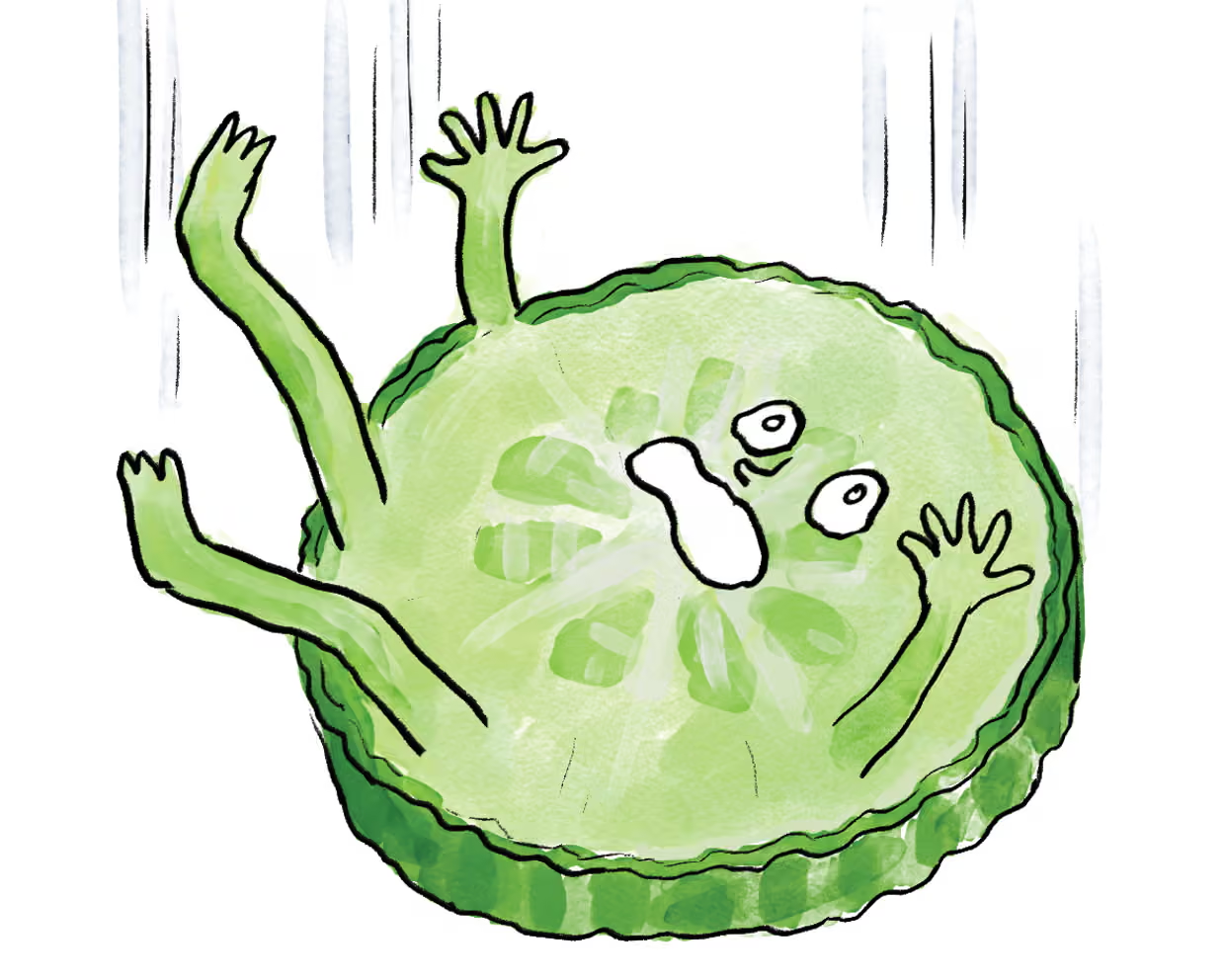
You drop a piece of cucumber on the floor. Do you immediately throw it in the bin or reassure yourself of the age-old “five-second rule” and reckon it’s fine to pop it in your mouth after a quick rinse?
If you fall into the latter camp, John Tregoning, professor of vaccine immunology at Imperial College London, has some bad news. He refers to three studies into bacteria transfer that all point towards the rule being false.
In the first, scientists looked at what happens when a range of foods (bread, buttered bread, watermelon and gummy bears) were dropped on a range of surfaces (tile, steel, wood, and carpet) that had been coated with bacteria. “They transferred almost immediately,” he says, adding that the worst combination for transfer happened when wet food hit a solid surface (watermelon on tile or steel).
Another study – where cooked sausage was dropped on to surfaces – showed that bacteria transferred on to the meat even if they had been applied to the surface hours earlier. It showed that “if you put a piece of contaminated chicken on to a work surface and then, two hours later, drop your piece of bread on to it, you can still pick up bacteria from it. It’ll be there for about 24 hours,” he says.
The final paper looked at the “five-second rule” for medical objects in the operating room. Perhaps unsurprisingly, it found that if surgeons drop something on the floor, they need to wash that instrument with detergent for it to be safe to use again.
What does all this mean for your fallen cucumber? “I think you have to accept it’s gone,” says Tregoning. Rinsing it with water won’t be enough to guarantee it’s clean. That’s especially the case if you’re particularly susceptible to infections, or if your dog might have walked something terrible through the house (even hours earlier).
THE GUARDIAN
Discover
Saudi Arabia’s Tawakkalna app offers Hajj services in 19 languages
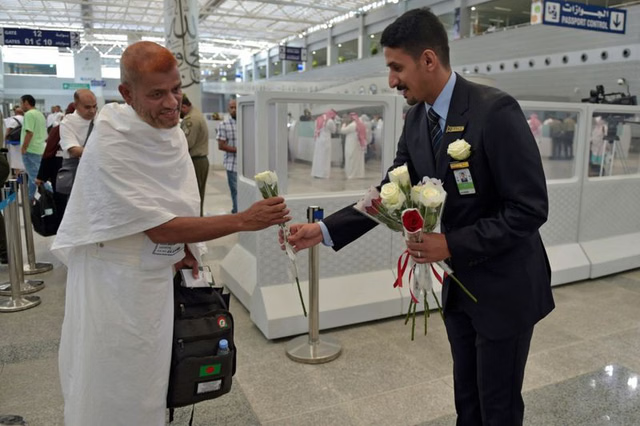
Saudi Arabia’s national digital platform Tawakkalna is providing Hajj-related government services in 19 languages for pilgrims and workers during the 1447H Hajj season, as part of wider efforts to improve the pilgrimage experience through advanced digital solutions.
The initiative comes within the efforts of the Saudi Data and Artificial Intelligence Authority to strengthen integration between government service entities during Hajj and support pilgrims throughout their journey, from arrival in the Kingdom and entry into Mecca and the holy sites to visits to the Prophet’s Mosque in Madinah and departure back to their home countries.
The app supports Arabic, English, Indonesian, Hindi, Urdu, Turkish, French, Bengali, Persian, Malay, Russian, Chinese, Filipino, German, Dutch, Japanese, Italian, Spanish and Portuguese.
Pilgrims can access a range of services through the platform, including Hajj permits linked to the unified digital Hajj permit platform “Tasreeh”, as well as permits related to entering Mecca, work authorisations, volunteer permits and vehicle permits issued by various government entities.
According to officials, Tawakkalna is designed to serve as a trusted digital companion for pilgrims by supporting daily movement and offering a smoother and safer digital experience during Hajj and visits to Madinah after the pilgrimage.
The app also allows users to book visits to Al Rawdah Al Sharifah through the Nusuk gateway service integrated into the platform.
Additional services available during Hajj include multilingual access to the Arafah sermon, an emergency assistance service called “Assefni”, live weather updates for the holy sites, Qibla direction, prayer times and digital Quran services.
Saudi authorities said the services are part of broader efforts aligned with the Pilgrim Experience Programme under Saudi Vision 2030, which prioritises improving services for pilgrims and Umrah performers through smart technology solutions.
The Tawakkalna platform currently offers more than 1,300 services in cooperation with over 350 government entities across sectors including health, education, justice, tourism and professional services, with more than 35 million users registered on the app.
GN


Emirates Specialty Hospital Expands Cancer Care Services in Dubai with Opening of Dedicated Chemotherapy Unit

When Rheumatoid Arthritis Threatened Her Independence: How the Right Diagnosis Helped Her Get Her Life Back

Saudi German Hospital Dubai Launches Mental Health and Wellness Center for Children and Adolescents

Araghchi, Oman Sultan discuss transit, stability in Muscat

UAE’s café culture keeps growing despite price pressure

Netflix to Livestream BTS Comeback Concert
-
 politics6 months ago
Araghchi, Oman Sultan discuss transit, stability in Muscat
-
 UAE10 months ago
UAE’s café culture keeps growing despite price pressure
-
 Entertainment9 months ago
Netflix to Livestream BTS Comeback Concert
-
 Discover9 months ago
Is February 2026 really a once-in -283-years MiracleIn?
-

 Football10 months ago
Algeria, Burkina Faso, Côte d’Ivoire win AFCON 2025 openers
-
 Health10 months ago
NMC Royal Hospital, Khalifa City, performs rare wrist salvage, restoring function for young patient
-
 Health10 months ago
Bascom Palmer Eye Institute Abu Dhabi and Emirates Society of Ophthalmology Sign Strategic Partnership Agreement
-

 Health11 months ago
Emirates Society of Colorectal Surgery Concludes the 3rd International Congress Under the Leadership of Dr. Sara Al Bastaki