
travel
Single visa to reshape Gulf travel and security
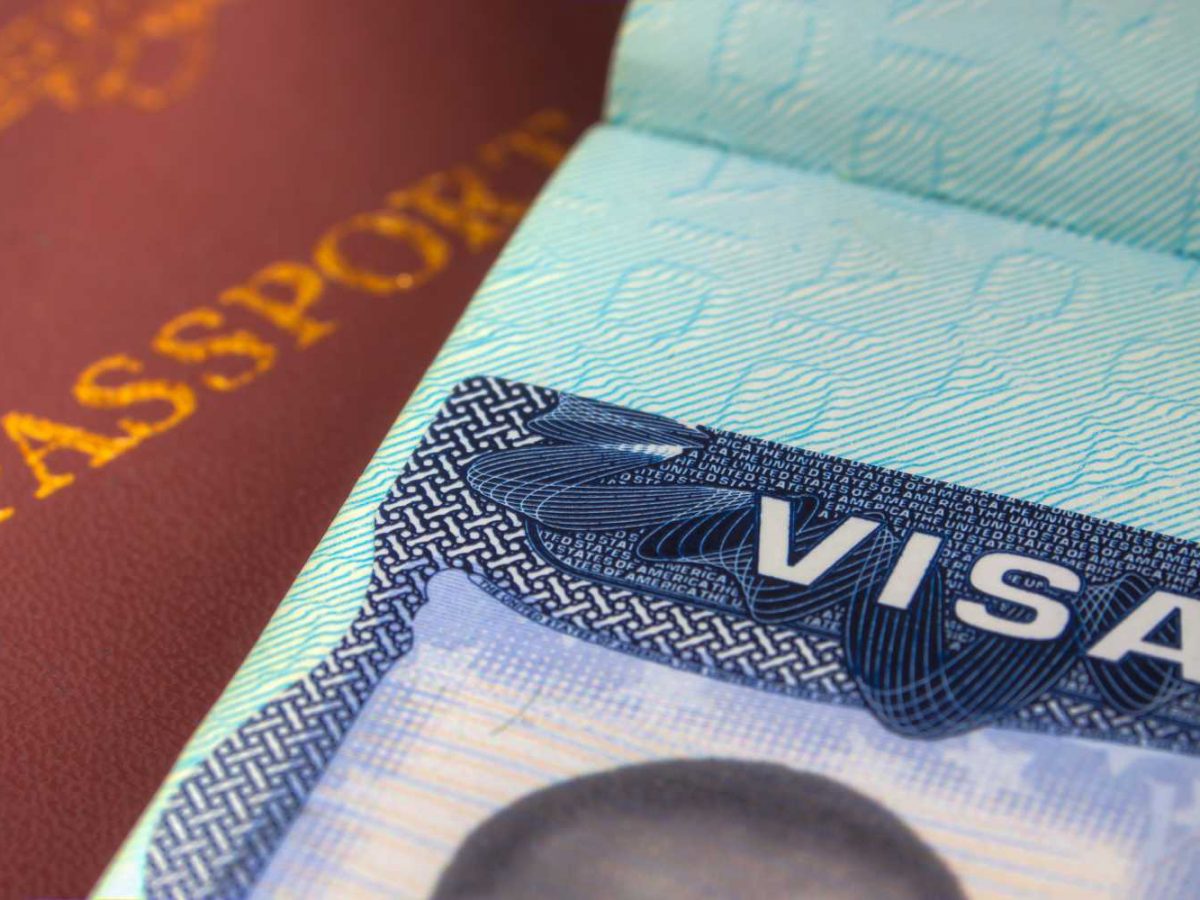
The forthcoming Unified GCC Tourist Visa represents one of the most concrete steps yet toward functional regional integration in the Gulf. While often compared to Europe’s Schengen system, the initiative is best understood as a targeted response to a long-standing structural problem: bureaucratic fragmentation that discourages multi-country travel in a region that increasingly markets itself as interconnected.
Under the new framework, visitors would apply once through a unified digital platform and gain access to all six GCC states, namely the United Arab Emirates, Saudi Arabia, Qatar, Oman, Bahrain, and Kuwait, on a single short-stay visa. Current planning points to a 30-day validity period, with a projected fee in the range of $90–130. The intent is to facilitate multi-destination itineraries that have so far been constrained by separate national visa regimes.
This shift aligns directly with the region’s economic diversification strategies, where tourism has emerged as a critical non-oil growth sector. By lowering administrative barriers, the GCC is effectively repositioning itself as a single interlinked tourism space, rather than six adjacent but disconnected markets.
Why the launch has taken time
The repeated postponements of the unified visa’s rollout reflect not a lack of political commitment, but the complexity of aligning security governance across six sovereign states. A system that permits region-wide movement after a single-entry screening requires a high degree of trust among participating authorities.
This trust is built through technical integration: shared biometric databases, interoperable entry-exit systems, and a unified regional watchlist or “blacklist.” Without these mechanisms, mutual recognition of visa decisions would expose member states to security blind spots. The unified visa is therefore as much a security infrastructure project as it is a tourism initiative.
A Schengen-inspired but distinct model
Comparisons with Europe’s Schengen area are inevitable, but the differences are instructive. Schengen spans 29 countries, largely abolishes internal border checks, and is embedded within the European Union’s broader framework of freedom of movement. The GCC model is narrower in scope and more conservative by design.
Physical border controls will remain in place, and the unified visa does not confer rights to work, reside, or settle. It does not harmonise labour markets or immigration law. Instead, it focuses on short-term mobility for tourism and related activities. In this sense, it is a mobility facilitation tool, not a political integration project.
Compliance, overstay penalties, and regional security
One of the most consequential, though less visible, features of the unified visa is its enforcement architecture. Overstay violations are expected to trigger harmonised and escalating penalties, including daily fines, possible travel bans, and automatic flagging across GCC-wide databases.
This approach strengthens regional security in several ways. First, it eliminates jurisdictional loopholes. Under current arrangements, an individual who overstays or violates visa conditions in one Gulf state may still be able to enter another. Under the unified system, a violation in one country would be visible to all six, ensuring consistent enforcement.
Second, shared data improves risk assessment. For example, if a visitor enters through Dubai, overstays in one member state, and attempts to re-enter the region at a later date through another entry point, the unified database would immediately flag the prior violation. This not only deters abuse but also enhances early identification of individuals who may pose broader security or compliance risks.
In this sense, the unified visa expands mobility while simultaneously tightening accountability, a balance that is central to modern border governance.
Implications for the UAE and the wider GCC
For the UAE, the unified visa reinforces its position as the region’s primary aviation and mobility gateway. Given its airline networks and infrastructure, it is likely to serve as a principal entry point where initial biometric and security screening is conducted on behalf of the wider bloc. This elevates the UAE’s strategic role but also underscores the need for sustained investment in border management technologies.
For residents and expatriates across the GCC, the visa promises a meaningful improvement in regional mobility, replacing fragmented national procedures with a single, predictable framework. For the region as a whole, it operationalises long-standing ambitions to translate political coordination into tangible economic and social outcomes.
A measured but meaningful step forward
The Unified GCC Visa is not a Middle Eastern Schengen, nor is it intended to be. Its importance lies in its pragmatism. By reducing bureaucratic friction, aligning tourism ambitions, and embedding mobility within a shared security framework, the GCC is taking a measured but significant step toward deeper functional integration.
If implemented effectively, the unified visa could become one of the most visible manifestations of Gulf cooperation, experienced not through policy declarations, but through smoother travel, longer stays, stronger compliance, and a region that increasingly functions as a coherent and competitive destination.
GN
travel
World Cup travel boost yet to reach U.S. businesses

The 2026 World Cup is expected to bring a wave of global soccer fans to North America. But the travel boom is shaping up to look less like one uniform surge and more like a city-by-city, match-by-match test of pricing power.
“Demand is real and positive, but it’s not evenly distributed across host cities,” said Jay Wardle, president of travel data intelligence company Sojern.
New flight-booking data from Sojern shows most U.S. and Canadian host cities are seeing year-over-year gains for the tournament window, led by Houston and Dallas. But Seattle and all three Mexican host cities are trailing last year’s pace.
The tournament kicks off Thursday in Mexico City and runs through mid-July, ending with the final at New York New Jersey Stadium — better known as MetLife Stadium — in East Rutherford, New Jersey. It is the biggest World Cup ever, with 48 teams, 104 matches and games across the United States, Canada and Mexico.
For hotels, restaurants, airlines, ride-sharing companies and host cities, the pitch has been straightforward: more teams, more games, more fans and more spending.
FIFA has projected the event could contribute up to $17.2 billion to U.S. GDP.
But Deutsche Bank said even if it brings 1.2 million international fans to North America, the overall economic impact will likely be limited in a U.S. economy of this size — amounting to a short-term GDP lift of roughly 0.05% if FIFA’s estimate is reached.
The financial bonanza is likely to be split unevenly among cities, hotels, restaurants and other tourism-dependent businesses.
Airbnb said it is expecting its best event ever, surpassing the 2024 Paris Olympics. The company expects to benefit from families and groups looking for larger accommodations or lower per-person costs.
It could also benefit from how long travelers are staying. Sojern’s data shows more than three-quarters of World Cup travelers plan to spend six to 12 nights at their destination.
“We’re pretty enthusiastic about the impact of FIFA as we look at booking patterns coming into the summer,” Marriott CEO Tony Capuano told CNBC. “We’re seeing really strong demand patterns in both FIFA and non-FIFA cities in the U.S.”
Capuano said Marriott expects the World Cup to lift U.S. revenue per available room by about 40 basis points.
Marriott, the world’s largest hotel chain, said it’s particularly well-positioned because of its brand recognition and rewards ecosystem.
“Because of the breadth of our global footprint, we have deep experience, whether it’s FIFA, whether it’s the Olympics, Super Bowl,” Capuano said. “The booking patterns we’re seeing are tracking pretty closely with our expectations.”
Capuano said some release of FIFA room blocks had been anticipated and that current bookings are “right on track” with Marriott’s forecast. The bigger variable, he said, will be the later rounds, when travel demand could shift depending on which national teams advance.
Jim Allen, chairman of Hard Rock International and CEO of Seminole Gaming, said South Florida is already seeing World Cup-related momentum. Allen said more than half of tickets for games in the Miami area are being purchased by locals, while the rest are coming from tourists.
He said Miami’s deep ties to Central and South America are helping drive demand, along with the region’s existing tourism infrastructure and soccer culture.
For Hard Rock, Allen said the World Cup is already producing high-end international traffic. He said the company is seeing guests from multiple continents, including some staying at Hard Rock properties for the first time.
He also said casino play tied to the event is exceeding normal levels and rivaling the kind of activity Hard Rock sees around major events such as the Super Bowl and Formula One.
‘Still finalizing plans’
Sojern’s flight booking data shows nearly an 8% increase in Miami, with New York showing nearly the same boost. Dallas-Fort Worth is seeing a roughly 10% jump and nearly 13% increase in Houston.
But not all cities are seeing the same lift. For instance, Seattle’s flight bookings are nearly 21% lower than this time last year.
The expanded World Cup format means more inventory and more tickets to sell across more matches. Marquee games, host-nation matches and the final are still expected to command premium demand. But lower-profile group-stage matches in large NFL stadiums have been harder to fill, especially with ticket prices remaining high, on par with Super Bowl-level scarcity.
That creates a pricing challenge. Host cities and hotel owners prepared for a once-in-a-generation event. But fans are making practical decisions: which match is worth the trip, how far they are willing to travel, whether to stay in a hotel or short-term rental, and whether prices still make sense.
Rosanna Maietta, president and CEO of the American Hotel & Lodging Association, said hotel demand in host cities has “evolved differently than many initially anticipated,” driven in part by lower-than-expected international visitation.
A survey by the industry group in April showed 80% of respondents reported reservations weren’t meeting expectations. Some were furious that FIFA had canceled large room blocks it had previously booked.
But she said AHLA members are now seeing demand pick up, consistent with shorter booking windows for major events.
“Unlike typical leisure travel, many visitors are still finalizing plans and securing tickets,” Maietta said. “The industry expects some acceleration of late bookings in the lead-up to individual games and we believe stadium attendance will be strong.”
Sojern said 35% of hotel bookings in World Cup host cities historically occur in the final seven days before travel.
FIFA President Gianni Infantino downplayed any concerns about disappointing results in travel. He told CNBC’s Sara Eisen on Tuesday, “We should make the analysis after the end of the World Cup. We have never seen so many ticket requests. ”
Deutsche Bank said hotel real estate investment trusts with greater exposure to full-service hotels could benefit from World Cup demand as team delegations, sponsors and business groups use not just rooms, but meeting spaces and food-and-beverage outlets. The firm has generally baked a 50- to 75-basis-point revenue per available room lift into its hotel REIT models tied to the tournament. It also expects luxury hotels to benefit more than economy properties.
Restaurants may be better positioned to benefit broadly. Deutsche Bank said foodservice companies should get a lift from both tourism and watch parties, especially restaurants near stadiums and host cities, delivery-heavy concepts such as pizza and wings, and sports bars showing games during North American time zones.
Derek Evans, CEO of the Marcus Samuelsson Group, told CNBC that in the restaurant business, it’s too early to count his chickens.
“You haven’t seen fandom really kick in yet,” he said. “When your country’s team starts winning that’s when travel budgets go out the window.”
Rideshare companies such as Uber and Lyft could also see increased demand around matches.
The key question for host cities is whether even the biggest sporting event in the world has a price ceiling.
CNBC
Business
France fines Shein $26 million

(Reuters) – France has fined fast-fashion firm Shein about €22 million ($26 million) over issues with returns, product information and order confirmations, a penalty the company described as disproportionate and vowed to challenge.
The Directorate General for Competition, Consumer Affairs, and Fraud Control said on Wednesday it had fined Shein €16.7 million for the order confirmation issues and €5.8 million for issues with returns and environmental quality information.
“Technical issues, with no impact on consumers and already addressed where necessary, have been used as the basis for an exceptional penalty,” a Shein spokesperson said in a statement. “We therefore intend to strongly contest both sanctions in their entirety.”
France fined Shein €40 million for misleading discounts in July. Authorities also sought to suspend its marketplace, but Paris’ Court of Appeals rejected that move in March.
Shein, which has won over millions of cash-strapped shoppers around the world with rock-bottom prices on clothes, gadgets and accessories, has faced heightened scrutiny in France since November, when the consumer watchdog found sex dolls resembling children and banned weapons for sale on its site.
Since the discovery, “we have decided not to leave these platforms alone, and we will continue to take action until they completely change their practices – or leave our market,” Serge Papin, minister for small and medium-sized businesses, said in a post on X.
($1 = 0.8615 euros)
CNBC
travel
Many airlines continue to suspend routes
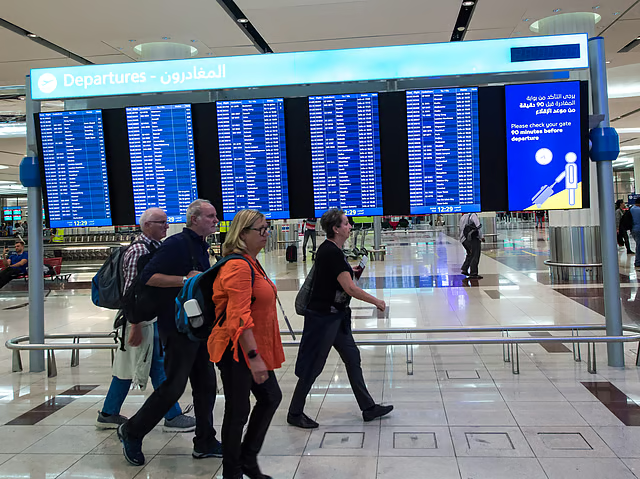
Passengers flying to and from Dubai are facing schedule changes after several international airlines suspended, cancelled or delayed the resumption of services because of the ongoing situation in the Middle East.
The disruption, which began at the start of the conflict on February 28, affects carriers across Europe, North America and Asia, with some Dubai routes paused until August, September or the end of the summer season. Travellers with confirmed bookings are being advised to check airline websites and apps before heading to the airport, as schedules remain subject to further changes.
Aegean Airlines has cancelled flights to and from Dubai until August 31, while Air Canada has cancelled flights to Dubai and Tel Aviv until September 7. Cathay Pacific has suspended Dubai and Riyadh flights until August 31, and Singapore Airlines has extended the suspension of its Singapore-Dubai service until August 2.
British Airways has pushed back several Middle East routes, with flights to Dubai, Tel Aviv, Bahrain and Amman paused until the end of the summer season and scheduled to resume on October 25. The airline is also expected to return with a reduced schedule on some routes, including Dubai.
European carriers pull back
The biggest disruption is coming from European carriers, as airlines are still adjusting capacity across the Middle East due to airspace risk remaining a concern.
Air France has suspended flights to Dubai and Beirut until June 17, while KLM has suspended flights to Dubai until August 2. KLM flights to Riyadh and Dammam are suspended until July 12.
Lufthansa Group carriers are also maintaining a wide range of suspensions in the Middle East. Lufthansa, SWISS and ITA Airways will continue to suspend flights to Dubai until September 13, while Lufthansa, SWISS, Austrian Airlines and Brussels Airlines have suspended flights to Abu Dhabi, Amman, Beirut, Dammam, Riyadh, Erbil, Muscat and Tehran until October 24.
Eurowings, the Lufthansa Group’s low-cost carrier, has suspended flights to Dubai, Abu Dhabi and Amman until October 24.
Wizz Air has suspended flights from mainland Europe to Dubai, Abu Dhabi and Amman until mid-September, while flights to Medina have been cancelled indefinitely.
Some routes are returning
The disruption is not uniform across the market, with some airlines gradually restoring flights while others remain cautious.
Air Astana is set to resume regular flights from Almaty to Dubai from June 20, with Astana-Dubai services beginning on July 10. The airline has adjusted flight paths to operate via Pakistan because of the closure of Iranian airspace, saying the change is aimed at maintaining safety and reliability.
The Almaty-Dubai route is expected to increase from limited weekly services to daily flights by July 6, while Astana-Dubai will start with three weekly flights from July 10 before expanding to daily services by August 3.
Passengers holding rebooked tickets for departures up to July 31 can change bookings free of charge to earlier flights from June 20 for Almaty departures and from July 10 for Astana departures.
Aegean said it is continuing to monitor developments in line with instructions from aviation authorities and will keep adjusting its schedule on affected routes. Passengers whose flights are cancelled can request a refund or credit voucher, or change their tickets through the airline’s call centre without a reissue charge or fare difference.
What passengers should do
Passengers booked on affected Dubai flights should check their airline’s website or app before leaving for the airport, because schedules are changing by carrier and by route.
Those travelling during the summer should also check whether their airline is offering a refund, credit voucher, free date change or rerouting through another hub. Airlines including Aegean, Cathay Pacific and Air Astana have set out options for affected customers, although policies differ depending on ticket type, travel date and point of purchase.
Cathay Pacific said customers booked to travel during the affected period may rebook, reroute or refund tickets under its waiver policy. “We are monitoring the situation closely and will remain agile in our response. The safety of our customers and people guides every decision we make,” the airline said in a statement.
Virgin Atlantic has also brought forward the end of its seasonal London-Dubai operation, saying, “The recent escalation in the Middle East has brought forward the end of our operation for this season.”
GN With inputs from Reuters.


UAE Cycling Federation and AB Investment Sign Partnership to Support National Teams and Emerging Talent

Emirati Women’s Day: Hamda Al Mansoori takes UAE-grown ventures from AI and manufacturing to cross-border partnerships

Beyond Uniforms and Lunchboxes: Is Your Child Healthy and Ready for School?

UAE’s café culture keeps growing despite price pressure

Araghchi, Oman Sultan discuss transit, stability in Muscat

Netflix to Livestream BTS Comeback Concert
-
 UAE9 months ago
UAE’s café culture keeps growing despite price pressure
-
 politics5 months ago
Araghchi, Oman Sultan discuss transit, stability in Muscat
-
 Entertainment7 months ago
Netflix to Livestream BTS Comeback Concert
-
 Discover8 months ago
Is February 2026 really a once-in -283-years MiracleIn?
-

 Football9 months ago
Algeria, Burkina Faso, Côte d’Ivoire win AFCON 2025 openers
-
 Health8 months ago
NMC Royal Hospital, Khalifa City, performs rare wrist salvage, restoring function for young patient
-

 Health9 months ago
Bascom Palmer Eye Institute Abu Dhabi and Emirates Society of Ophthalmology Sign Strategic Partnership Agreement
-
 travel9 months ago
Rail routes connecting Saudi Arabia, UAE, Oman, Qatar, Kuwait and Bahrain