
COMMUNITY
Winter officially begins in Saudi Arabia
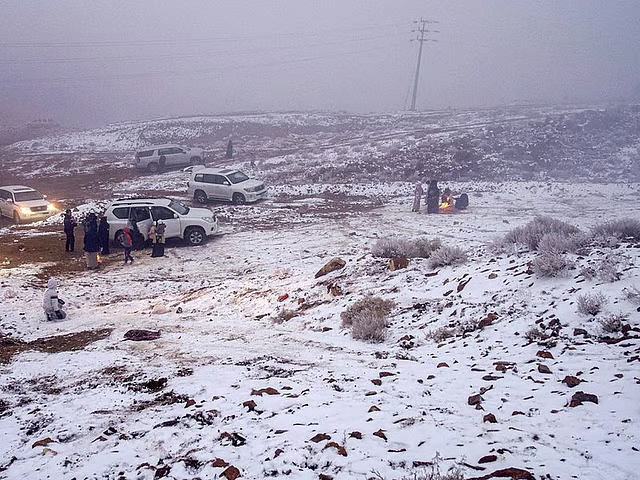
Saudi Arabia will officially entered meteorological winter on Monday, December 1, the National Center for Meteorology (NCM) has confirmed.
Temperatures are expected to gradually drop across the Kingdom, reports Saudi Gazette.
Rainfall expected in multiple regions
“Several areas are likely to see continued rainfall over the coming days,” said Hussein Al Qahtani, NCM spokesperson, quoted by Saudi Gazette.
The first rainy spell of December is expected to start next Sunday, bringing moderate to heavy showers to regions recently affected, including Madinah, Hail, the Makkah highlands, the southern Makkah coast, and other parts of the country.
Thunderstorms, hail and fog in some regions
The NCM has also warned of moderate thunderstorms with hail and strong winds in Jazan, Asir, and Al Baha.
Fog may form in these regions as well as in the Eastern Province. Dust and sand stirred up by surface winds are expected in Makkah, Madinah, Hail, Tabuk, and Al Jouf.
Red Sea conditions to watch
Over the Red Sea, winds will blow northwesterly to northerly at 10–28 km/h in the northern and central parts, and southerly to southeasterly at 15–40 km/h in the south.
Gusts could reach 50 km/h near rain-bearing thunderstorms close to the Bab el-Mandeb Strait. Wave heights will range from 0.5–1 metre in the north and central parts, and 1–2 metres in the south, exceeding 2 metres near thunderstorms.
The sea state will be slight in the north and central areas, and moderate to rough in the south.
Overall weather remains pleasant
Al Qahtani said that while most of the Kingdom will enjoy relatively stable and pleasant weather, residents should stay alert for localized storms, heavy rainfall, and strong winds in affected areas.
Gulf News
COMMUNITY
Makkah deputy governor launches 10 road projects
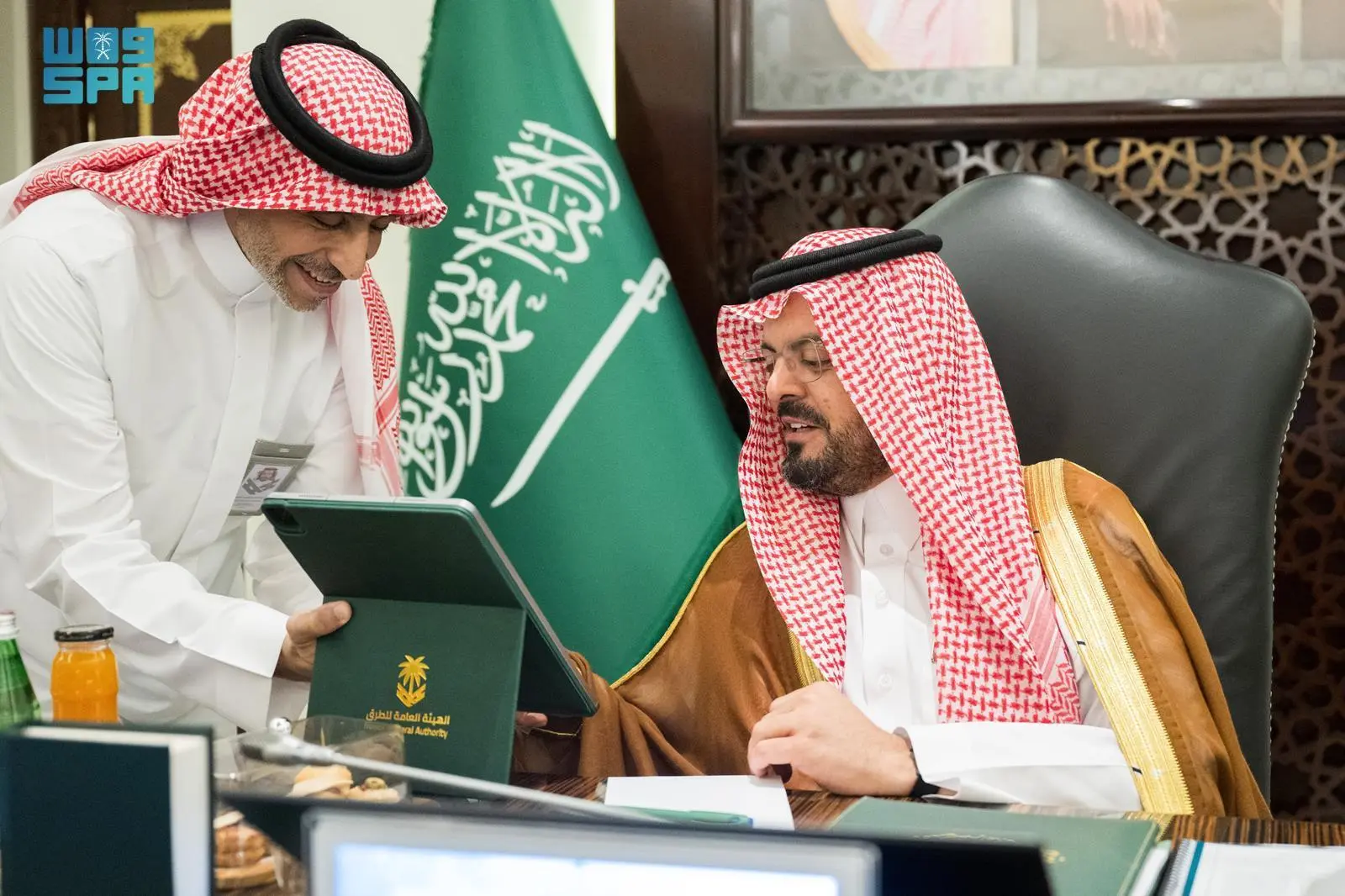
Deputy Governor of Makkah Region Prince Saud bin Mishaal bin Abdulaziz inaugurated 10 vital road projects in the region, with a total cost of SAR553 million and a combined length of 109 kilometers. The inauguration took place during a meeting attended by Minister of Transport and Logistic Services and Chairman of the Board of the Roads General Authority (RGA) Saleh Al-Jasser and several senior officials from the transport and logistics ecosystem.
The projects reflect the leadership’s support for the transport and logistics sector. They contribute to enhancing mobility across the region and serving visitors to the Grand Mosque. The projects were implemented according to the highest safety and quality standards and in line with the Saudi Road Code, supporting the region’s road network, which exceeds 8,623 kilometers.
During the meeting, the deputy governor also launched the region’s “Distinctive and Safe Roads” campaign. The initiative aims to conduct a comprehensive survey and assessment of road networks outside urban areas by identifying observations and addressing them in cooperation with government entities and the community.
He was briefed on the campaign, which targets road networks exceeding 8,600 kilometers. The campaign is implemented using one of the world’s largest surveying and evaluation fleets, supported by artificial intelligence technologies, drones, and geographic information systems (GIS), contributing to improved road efficiency and enhanced infrastructure quality and safety.
Previous editions of the campaign contributed to identifying and addressing more than 100,000 observations across the Kingdom. Related projects and initiatives also helped reduce road accident fatalities by around 60% and advanced the Kingdom to fourth place among G20 countries in the road quality index.
— SPA
COMMUNITY
Saudi warns visa overstayers face jail, fines, deportation
Saudi Arabia’s Ministry of Interior Saudi Arabia has reiterated that expatriates who overstay their entry visas will face strict penalties, including up to six months in prison, fines of up to SR50,000 and deportation.
In a statement, the ministry urged all visitors to comply with regulations governing this year’s Hajj season, underscoring the importance of cooperation with authorities to ensure the safety and security of pilgrims.
The ministry also called on the public to report violators by dialling 911 in the regions of Mecca, Medina, Riyadh and the Eastern Province, and 999 in other parts of the Kingdom.
GN
COMMUNITY
Hajj 2026: Registration, health and spiritual prep guide

With less than two months remaining until the start of Hajj 2026, preparations are accelerating across the Muslim world as millions prepare for the annual pilgrimage to Mecca, one of the largest religious gatherings on Earth.
Hajj, the fifth pillar of Islam, is an obligation upon every Muslim who is physically and financially capable of undertaking the journey at least once in their lifetime. More than just a series of rituals, it is considered a transformative experience that symbolises humility before God and unity among Muslims regardless of nationality, wealth or social status.
The pilgrimage takes place annually during the Islamic month of Dhul Hijjah, with Hajj 2026 expected to begin around May 25, corresponding to the 8th of Dhul Hijjah. The Day of Arafah is likely to fall on May 26, followed by Eid Al Adha on May 27, with the main Hajj rituals expected to conclude around May 29-30, although all dates remain subject to the official moon sighting.
Hajj history
The origins of Hajj trace back thousands of years to the time of Prophet Ibrahim (Abraham), whose devotion and sacrifices form the foundation of many of the rituals performed today. Muslims believe the pilgrimage commemorates key events in the lives of Prophet Ibrahim, his wife Hajar, and their son Ismail, while also following the practices established by Prophet Muhammad during his farewell pilgrimage more than 1,400 years ago.
Each year, the pilgrimage draws around two million people from across the globe, creating one of the largest annual gatherings anywhere in the world. Despite differences in language, culture and background, pilgrims dress in similar simple clothing, reinforcing the Islamic concept that all people stand equal before God.
The requirement to perform Hajj applies only to Muslims who are adults, mentally sound, and able to afford the journey without causing hardship to their families. Those who are ill, financially unable or otherwise incapable are exempt from the obligation.
Understanding the types of Hajj
While the goal of every pilgrim is the same, there are different ways in which Hajj can be performed. The most common form is known as Hajj Tamattu, in which pilgrims perform Umrah first, exit the state of Ihram temporarily, and then re-enter it to complete the Hajj rituals.
Another form, Hajj Qiran, involves performing Umrah and Hajj together without leaving the sacred state, while Hajj Ifrad involves performing only the Hajj rituals without Umrah.
Scholars often recommend Hajj Tamattu for first-time pilgrims because it allows greater flexibility and reflects the practice followed by the Prophet Muhammad during his farewell pilgrimage.
The beginning of the pilgrimage
The pilgrimage begins with pilgrims entering a sacred state known as Ihram before reaching Mecca. Men wear two simple white garments, while women dress modestly according to Islamic guidelines. The clothing is intentionally simple, symbolising the removal of worldly distinctions.
While in Ihram, pilgrims must avoid cutting their hair, using perfumes, engaging in arguments or harming others. The purpose of these restrictions is to promote patience, discipline and mindfulness throughout the journey.
Upon arrival in Mecca, pilgrims perform Tawaf, the act of circling the Kaaba seven times. This act symbolises the centrality of faith in a Muslim’s life. Many pilgrims also attempt to touch or gesture towards the Black Stone as part of the ritual, although this is not mandatory.
Following Tawaf, pilgrims perform Sa’i, walking seven times between the hills of Safa and Marwa, commemorating Hajar’s desperate search for water for her infant son.
The most important day: Arafah
The most significant moment of Hajj comes on the Day of Arafah, when pilgrims gather on the plains of Arafah in prayer and reflection. This day is considered the spiritual peak of the pilgrimage, and missing it invalidates the Hajj.
From Mina to Arafah and then to Muzdalifah, pilgrims follow a sequence of movements that reflect both the historical traditions of the pilgrimage and the spiritual journey of repentance and devotion. Pilgrims spend the night in Muzdalifah, collecting small stones used later in the symbolic stoning of the Jamarat, representing the rejection of evil.
The following days include the ritual stoning, the sacrifice of animals commemorating Prophet Ibrahim’s willingness to sacrifice his son in obedience to God, and the shaving or trimming of hair to mark spiritual renewal.
The pilgrimage concludes with a farewell Tawaf before pilgrims depart Mecca.
The practical side: registration and quotas
Behind the spiritual journey lies a complex logistical process. Each year, Saudi Arabia allocates country-specific quotas to manage the number of pilgrims. Registration procedures differ depending on where pilgrims live, but most involve applying through government-approved Hajj authorities or licensed travel operators.
International pilgrims often register through official platforms or authorised agencies, submit required documentation and select travel packages based on budget and services offered.
The cost of performing Hajj
The cost of Hajj varies significantly depending on the country of departure, package type and level of accommodation. Domestic Saudi packages can begin at roughly SAR 8,000 (Dh7,826 approx) for basic arrangements, while luxury domestic options may exceed SAR 52,000 (Dh50,869 approx). International packages are typically more expensive, with prices ranging from around $11,000 for economy options to more than $27,000 for premium experiences.
Packages are generally divided into standard, premium and luxury categories, with differences mainly relating to hotel quality, distance from holy sites, transport arrangements and duration of stay.
Preparing for the journey
Preparation for Hajj is often described as spiritual as much as logistical. Scholars advise pilgrims to learn the rituals thoroughly beforehand to avoid mistakes that could invalidate the pilgrimage. Physical preparation is also recommended, as pilgrims may walk long distances in high temperatures.
Health authorities typically require vaccinations and recommend carrying essential medications. Pilgrims are also advised to pack practical items such as comfortable footwear, unscented toiletries and copies of important documents.
Beyond logistics, however, many scholars emphasise that the most important preparation is sincerity of intention. Pilgrims are encouraged to focus on worship, avoid disputes and approach the journey with humility.
Common mistakes to avoid
Despite careful preparation, some pilgrims make avoidable errors, such as leaving Arafah early, misunderstanding certain rituals or focusing excessively on photography and social media rather than worship. Religious guides often stress the importance of patience, cooperation and respect for fellow pilgrims.
For millions of Muslims, Hajj is a dream they carry in their hearts for years, sometimes for a lifetime. It is a journey people save for, pray for, and wait patiently to experience. Those who perform it often describe it as a moment of spiritual cleansing, a chance to leave behind past mistakes and return with a lighter heart and stronger faith.
Muslims believe that Hajj is not the end of a journey, but the beginning of a new, more mindful chapter in their lives.
GN


Emirates Specialty Hospital Expands Cancer Care Services in Dubai with Opening of Dedicated Chemotherapy Unit

When Rheumatoid Arthritis Threatened Her Independence: How the Right Diagnosis Helped Her Get Her Life Back

Saudi German Hospital Dubai Launches Mental Health and Wellness Center for Children and Adolescents

Araghchi, Oman Sultan discuss transit, stability in Muscat

UAE’s café culture keeps growing despite price pressure

Netflix to Livestream BTS Comeback Concert
-
 politics6 months ago
Araghchi, Oman Sultan discuss transit, stability in Muscat
-
 UAE10 months ago
UAE’s café culture keeps growing despite price pressure
-
 Entertainment9 months ago
Netflix to Livestream BTS Comeback Concert
-
 Discover9 months ago
Is February 2026 really a once-in -283-years MiracleIn?
-

 Football10 months ago
Algeria, Burkina Faso, Côte d’Ivoire win AFCON 2025 openers
-

 Health10 months ago
NMC Royal Hospital, Khalifa City, performs rare wrist salvage, restoring function for young patient
-
 Health10 months ago
Bascom Palmer Eye Institute Abu Dhabi and Emirates Society of Ophthalmology Sign Strategic Partnership Agreement
-

 Health11 months ago
Emirates Society of Colorectal Surgery Concludes the 3rd International Congress Under the Leadership of Dr. Sara Al Bastaki