
REAL ESTATE
Why Indian developers are expanding in the UAE
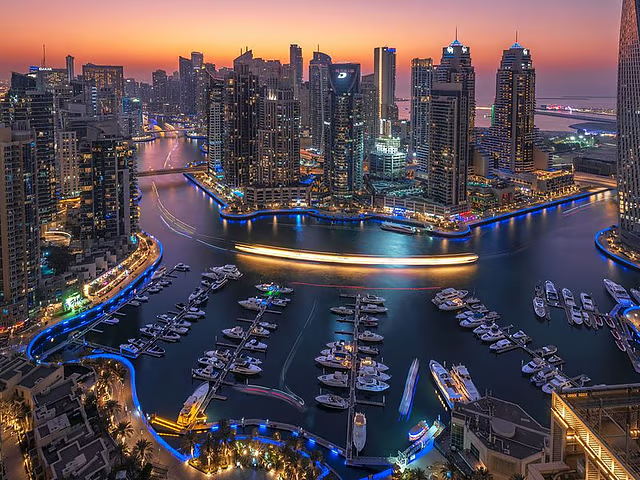
Indian property developers are expanding their presence in the UAE at a faster pace, drawn by regulatory clarity, strong demand from global buyers and a market structure that rewards execution over scale.
Executives from Indian real estate firms say the UAE has moved from being an opportunistic overseas market to a strategic base for long-term growth. Developers are setting up local operations, securing land banks and planning multi-project pipelines rather than launching one-off developments.
The shift reflects both changes in the UAE market and evolving priorities among Indian developers, particularly those focused on premium and luxury housing.
Indian developers are increasingly establishing themselves in the UAE because it is widely considered a second home for Indians, who form the largest end-user base across the country. People from almost every Indian state are strongly represented in the UAE, giving developers immediate market confidence and buyer familiarity. The UAE also offers ease of business setup, strategic tax advantages, and low initial operational costs. Strong escrow regulations, disciplined banking systems, low default rates, and access to HNIs with global reach further make the UAE a highly secure, scalable, and attractive market for experienced developers.
Regulatory clarity and speed drive decisions
Developers point first to the UAE’s regulatory framework. Compared with India and many other global markets, the UAE offers clearer licensing rules, predictable approval timelines and a well-established escrow and registration system.
Kamal Khetan, Chairman and Managing Director of Sunteck Realty, said Dubai offers an operating environment that allows developers to plan with greater certainty.
“The UAE offers a unique combination of global demand, market speed and regulatory clarity that few cities provide,” he said. For developers focused on large, branded projects, he added, Dubai functions as an effective launchpad with immediate global visibility.
Industry executives say the ability to move quickly from land acquisition to launch is a key differentiator. Faster execution reduces holding costs and allows developers to respond to market demand without long delays.
Wealth migration strengthens demand
The expansion also coincides with a rise in high-net-worth individuals relocating to the UAE. Global wealth migration data shows the UAE attracting close to 10,000 millionaires annually, including a significant number from India.
That concentration of capital supports demand for high-end residential projects and improves sales visibility for developers entering the market.
Khetan said the density of wealth in Dubai aligns closely with the ultra-luxury segment that Indian developers are increasingly targeting. “It is where global capital, architectural ambition and luxury consumption converge,” he said.
Developers note that demand is not limited to local buyers. International investors, family offices and expatriate residents form a broad buyer base that reduces reliance on any single nationality.
Indian buyers remain central to the market
Indian nationals continue to rank among the top foreign property buyers in the UAE, particularly in Dubai. Their long-standing presence has shaped product design, pricing strategies and service expectations across the market.
Executives say Indian buyers are no longer primarily speculative. Many are experienced investors who already hold property in India, the UAE or other global cities.
Khetan said Indian buyers increasingly view Dubai as a base for long-term wealth planning, combining primary residences, second homes and income-generating assets. Trust in the UAE’s governance and legal framework plays a central role in that decision-making.
Celebrity endorsements reflect buyer concentration
The growing use of Indian celebrities in UAE property marketing reflects buyer demographics rather than branding trends, developers say.
Indian celebrities command recognition and credibility among a buyer group that accounts for a significant share of luxury transactions. Their presence helps amplify reach, particularly during launches.
However, developers stress that endorsements do not replace fundamentals. Khetan said sales conversion ultimately depends on product quality, delivery track record and lifestyle offering. Celebrity partnerships may attract attention, but they do not compensate for weak execution.
Casagrand Dubai director Luthfulla K echoed that view, noting that visibility must be backed by reliability. Buyers, he said, place strong emphasis on timely delivery and build quality.
Preferred locations remain consistent
Indian buyers continue to prioritise established locations with strong connectivity, resale potential and brand value.
Downtown Dubai remains a key destination for high-net-worth buyers seeking centrality and established infrastructure. Other areas drawing sustained interest include Dubai Marina, Business Bay, Palm Jumeirah and Jumeirah Lake Towers.
Waterfront locations are gaining further traction. Luthfulla said areas such as Palm Jumeirah, Dubai Islands and Al Marjan Island appeal because they combine tourism demand with long-term scarcity.
“Waterfront destinations are always premium,” he said, citing their strategic positioning within Dubai’s growth corridors and strong appreciation potential.
Buyer expectations shift toward end use
Developers report a shift toward end-user purchases, particularly among families relocating to Dubai for long-term living.
While rental yields remain attractive, buyers are increasingly focused on quality of life, access to education, and community planning. Safety, global connectivity and residency stability are key considerations.
Ankit Gupta, Managing Director of Mantra Properties, said buyer preferences have evolved beyond amenity checklists.
“Amenities today are not just additions,” he said. Buyers now seek homes that support daily living, wellness and privacy, rather than purely decorative features.
This has led developers to focus on lower-density layouts, better spatial planning and service-led offerings.
Investors still active, but behaviour has changed
Despite the rise in end-user demand, investor activity remains strong. Prime locations continue to deliver steady rental demand, attracting buyers focused on long-term income rather than short-term flips.
Gupta said many buyers now balance personal use with investment considerations, choosing locations that offer both lifestyle value and rental resilience.
Developers say this mix has contributed to a more stable market, with longer holding periods and reduced speculative volatility compared with earlier cycles.
Will Indian developers dominate the market?
Industry executives caution against viewing the trend in terms of dominance. The UAE remains one of the most competitive real estate markets globally, with developers from multiple regions active across segments.
Luthfullla said success will depend on differentiation rather than origin. “What will stand the test of time is quality, timely delivery and customer satisfaction,” he said.
Khetan added that Indian developers who bring global design sensibilities, disciplined execution and strong governance can secure a lasting presence.
The UAE market, executives agree, rewards consistency and performance. Indian developers are expanding because conditions support scale, but long-term success will be determined by execution rather than nationality.
Story by Gulf News
REAL ESTATE
Dubai’s Shangri-La sold for Dh1.1b
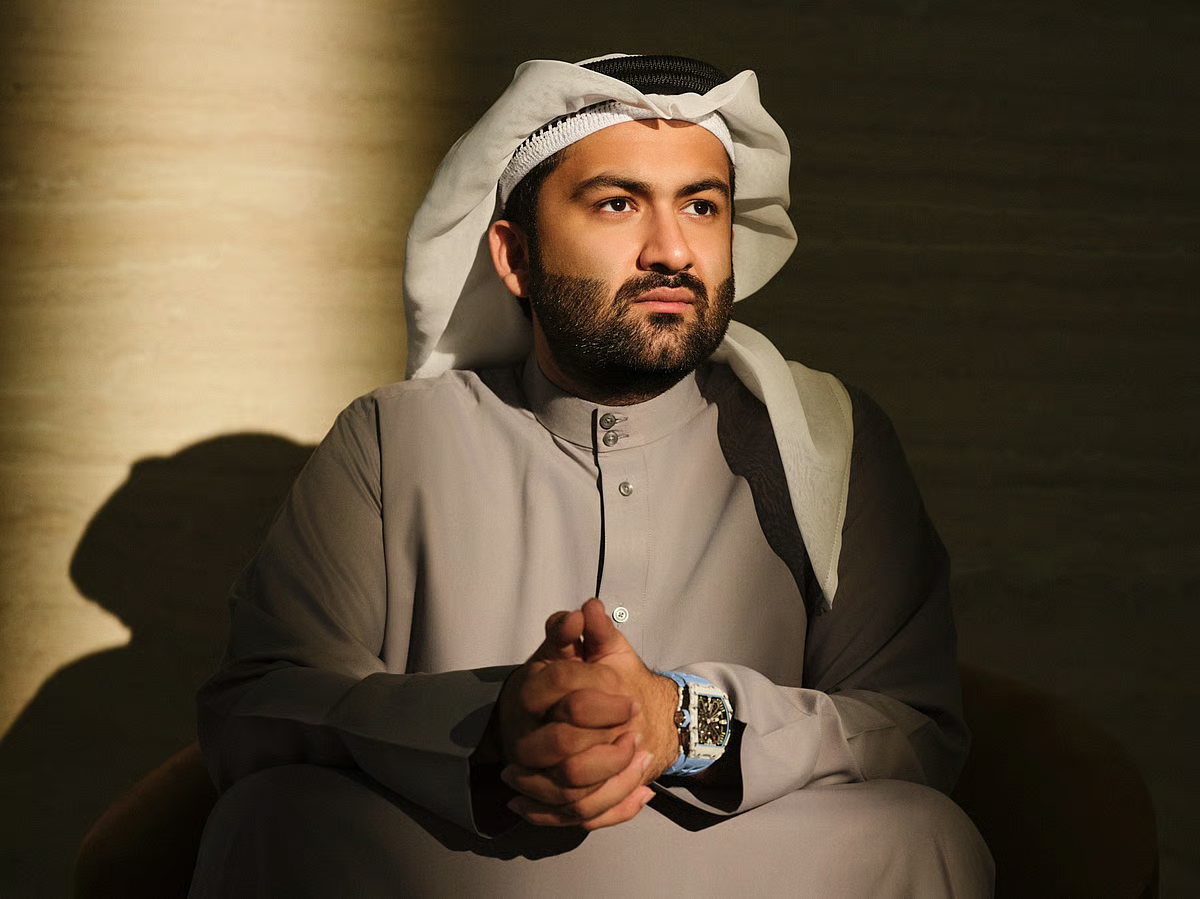
Dubai’s luxury real estate market has recorded another major deal after AHS Properties acquired the Shangri-La Dubai hotel property on Sheikh Zayed Road for an eye-watering Dh1.1 billion.
the acquisition marks one of Dubai’s largest single-asset real estate transactions in recent years, according to the company. The deal also highlights growing investor appetite for prime assets along Sheikh Zayed Road — one of the city’s most established commercial and luxury corridors.
The property was previously sold in 2020 for Dh700.2 million through an online auction linked to debt recovery proceedings involving the Al Jaber Group. The latest transaction reflects a roughly 57 per cent increase in value over six years.
The 42-storey mixed-use property includes a luxury hotel, apartments and office space.
The 26-year-old billionaire founder and CEO of AHS Properties said no final decision has been made on the future of the Shangri-La Dubai asset, although the company plans to upgrade and enhance parts of the building to improve its long-term value.
What happens to Shangri-La
Sajwani said the company has not yet finalised its long-term strategy for the Shangri-La Dubai asset, but plans to enhance and reposition parts of the mixed-use property to unlock additional value.
“AHS focus is luxury real estate, whether it’s residential, commercial, or hospitality,” he said. “We see how we can enhance the project the most, and how we can get the most value-added services from them.”
Sajwani said the company is evaluating several options for the property, including renovating offices, upgrading parts of the development and improving income generation.
“This project hit all those requirements,” he said. “The strategy has many different options of things we can do, so we’re still deciding on that, but the asset was key.”
He added that the company continues expanding its Sheikh Zayed Road presence, with AHS Tower under development and another major mixed-use project planned for launch later this year.
“We have another plot, which we own, which we will launch at the end of the year,” he said. “That will be the biggest project on Sheikh Zayed Road — it’s a Dh25 billion project.” He said details of this project will be announced later in the year.
Sheikh Zayed Road land scarcity
Sajwani also said that Dubai’s prime locations are expected to continue appreciating because of limited land availability. “Dubai will just continue to grow, and the prime will always stay prime,” he said.
“There’s no more lands on Sheikh Zayed Road, and you cannot come up with a new land. So, these assets will continue to rise long term,” said Sajwani. He added that demand for premium office and residential space in the area remains strong.
The acquisition strengthens AHS Properties’ growing footprint on Sheikh Zayed Road, where it already has projects including AHS Tower and AHS City.
Sajwani also confirmed the company plans to launch another mixed-use development on Sheikh Zayed Road later this year. He described it as a Dh25 billion project currently under design.
Under Sajwani’s leadership, the firm expanded into commercial real estate, acquiring and rebranding Dubai’s long-vacant “Big Ben” tower on Sheikh Zayed Road (now AHS Tower) for $120 million.
Mixed-use developments
While the Shangri-La Dubai acquisition includes hospitality assets, Sajwani said the company is not shifting solely into hotels.
“AHS focus is luxury real estate, whether it’s residential, commercial, or hospitality,” he said. He said the company is still evaluating different strategies for the property, including renovations and upgrades to improve long-term returns.
“This project hit all those requirements,” he said, adding that the company sees “huge potential” in the asset.
Founded in 2021, AHS Properties has rapidly expanded in Dubai’s ultra-luxury property market with projects focused on waterfront and premium urban locations.
Last year, the company launched Casa AHS, a Dubai Water Canal development valued at around $750 million, featuring ultra-luxury residences including Sky Villas and Sky Mansions.
Dubai luxury market
Sajwani said Dubai’s ultra-luxury market has seen buyers taking longer to make purchasing decisions in recent months, although demand remains intact.
“We still see transactions,” he said. “It is just people are taking longer to decide.”
He added that the summer period traditionally slows activity but expects demand to strengthen again after September.
According to Sajwani, wealthy international buyers continue relocating to Dubai because of the emirate’s infrastructure, lifestyle, education system and long-term economic policies.
“People are still moving to Dubai, people are still looking for investments and looking for opportunities,” he said.
He also said Dubai’s commercial real estate segment remains undersupplied, particularly for Grade A office space.
“Commercial is very strong,” Sajwani said. “There is currently a lack of supply.”
Prime Dubai districts expected to outperform
Sajwani said Dubai’s established luxury districts are likely to remain the strongest performers in the years ahead.
He identified Sheikh Zayed Road, Downtown Dubai, Dubai Water Canal, Palm Jumeirah and Bulgari Island among the locations expected to continue attracting luxury demand.
“I think the prime will continue to rise in a big way,” he said.
He added that Dubai’s long-term population growth and tourism expansion would continue supporting demand across residential, office and hospitality sectors.
AHS Properties expects its gross development value to reach around Dh50 billion by the end of this year, according to Sajwani.
Dubai’s real estate market has largely remained resilient — but the pace of transactions, especially in the luxury segment, has slowed compared to the rapid growth seen over the past three years.
Brokers and consultancies reported that high-net-worth investors began taking longer to close deals, particularly for ultra-luxury homes above Dh20 million. Many adopted a temporary “wait-and-watch” approach amid geopolitical uncertainty.
GN
REAL ESTATE
Dubai removes minimum property value for solo investor visas
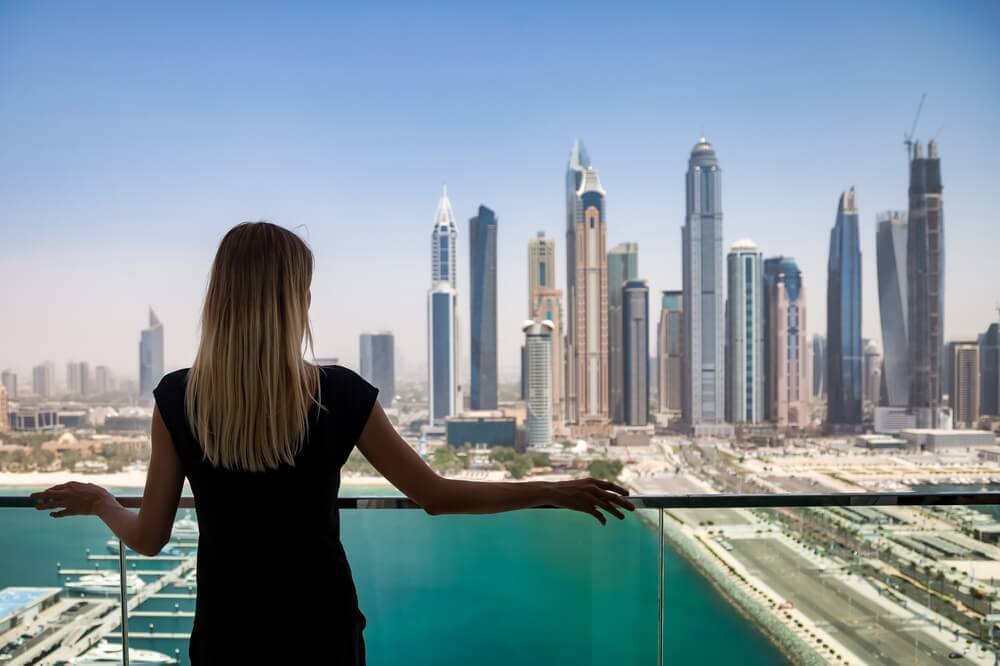
Dubai has eased requirements for its two-year property-linked residency visa, removing the minimum property value for sole owners while introducing a Dh400,000 minimum share per investor for jointly owned assets.
The update, issued by the Dubai Land Department (DLD) through its Cube platform, replaces the earlier Dh750,000 threshold for individual buyers with a more flexible ownership-based approach.
No minimum for sole ownership
Under the new rules, applicants who fully own a property can qualify for the two-year investor visa regardless of the asset’s value, provided ownership is clearly registered.
“If you are the sole owner of a property in Dubai, you can apply for the 2-year residence visa with no minimum property value requirement,” the DLD Cube website updated.
The shift opens the scheme to lower-budget investors and smaller property purchases that previously fell below the minimum requirement.
New joint ownership threshold
For jointly owned properties, authorities have set a Dh400,000 minimum stake per investor. The rule applies even in equal ownership splits, effectively requiring each partner’s share to meet the threshold independently.
“If the property is jointly owned, each owner must hold a minimum share of Dh400,000 to be eligible,” the DLD Cube website further detailed.
The change is expected to influence how investors structure joint property purchases, particularly where multiple buyers combine funds to meet residency criteria.
By setting a Dh400,000 minimum share per investor for jointly owned properties, each applicant must hold a stake above that level to qualify. Without such a floor, investors could divide ownership into smaller portions to meet residency requirements at lower individual cost. The threshold prevents that, ensuring each applicant maintains a minimum level of investment exposure.
Unified visa framework
The changes come as the UAE continues to streamline its property-linked residency framework under a unified digital platform managed by the General Directorate of Residency and Foreigners Affairs and the DLD.
- A 10-year Golden Visa requiring a minimum Dh2 million property investment, including off-plan and mortgaged assets, with no minimum stay requirement outside the UAE
- A two-year investor visa aimed at entry-level buyers, now updated to remove the minimum value for sole ownership
- A five-year retiree visa for individuals aged 55 and above, requiring Dh1 million in fully paid property or alternative financial criteria
As per federal policy circular issued in February 2026, authorities also removed the Dh1 million upfront payment requirement for Golden Visa eligibility, implemented by the DLD and the GDRFA. This allows investors to qualify based on total property value as recorded in title deeds or Oqood contracts.
Market implications
Dubai has steadily adjusted property visa rules to align with market conditions and attract a broader investor base, as competition among global real estate hubs intensifies.
The latest change reflects Dubai’s push to expand access while maintaining eligibility controls. It is expected to support demand in lower- and mid-tier property segments and influence how investors choose between sole ownership and joint structures under the new thresholds.
GN
Business
Major Developments and Mortix Mortgage Broker Join Hands to Make UAE Property Investment Simpler, Smarter, and More Accessible.

Dubai, UAE, 29 March 2026
Major Developments hosted the official partnership signing ceremony with Mortix Mortgage Broker at its Dubai headquarters, marking a strategic step toward making homeownership and real estate investment more seamless for clients across the world.
The partnership brings together Major Developments’ high-demand portfolio with Mortix’s mortgage expertise, allowing Major Developments’ clients to access free mortgage services as part of a broader, more investor-friendly purchase journey. Mortix is a digital mortgage and home finance platform in the UAE that supports both residents and non-residents, working with 20+ leading UAE banks across solutions, including home loans, refinancing, handover payments, and equity release. Its brokerage support is offered free of charge, making financing guidance more accessible at a crucial stage of the transaction.
For Major Developments, this collaboration reflects a larger vision: building an ecosystem around ownership, not merely developing property. As international demand continues to build around projects such as Manta Bay on Al Marjan Island and Colibri Views in RAK Central, the partnership is designed to help investors move from intent to action with greater speed and confidence.
The timing is especially significant. Mortix’s 2026 UAE mortgage market review highlights that Dubai recorded approximately 44,000 mortgage transactions in 2025, with total mortgage volumes reaching AED 89.6 billion, while fixed mortgage rates at the end of 2025 stood in the 3.75% to 4.25% range.
With another anticipated launch, Ice Beach on Marjan Beach, set to further expand Major Developments’ footprint in the UAE, this partnership stands as a meaningful bridge between aspiration and acquisition, helping investors enter fast-moving markets earlier and more efficiently.
Oleg Ilyin, CEO and Co-founder of Mortix Mortgage Broker, said, “This partnership reflects exactly where the UAE property market is headed, toward a more connected, transparent, and investor-ready experience. Major Developments has created projects that are drawing strong international attention, and Mortix is proud to support that momentum by making mortgage access simpler, faster, and more approachable for buyers across different markets.”
Andrei Charapenak, CEO of Major Developments, said, “At Major Developments, the vision has always been larger than delivering exceptional real estate. It has been about creating the right environment around ownership, one that makes the journey clearer, more supported, and more confidence-led for every investor who chooses to enter this market with us. The partnership with Mortix is a natural extension of that thinking. As interest in the UAE continues to grow, especially in high-potential destinations such as Ras Al Khaimah, this collaboration allows Major Developments to serve clients more meaningfully, not only by offering distinctive developments, but by helping simplify the path that leads to them.”
As the UAE continues to attract a new generation of globally minded investors, partnerships such as this underline a larger shift in the market, where the value lies not only in what is being developed, but in how thoughtfully the entire ownership journey is being shaped. For Major Developments, the partnership with Mortix signals a continued commitment to making investment in the UAE more intuitive, supported, and future-ready.


UAE Cycling Federation and AB Investment Sign Partnership to Support National Teams and Emerging Talent

Emirati Women’s Day: Hamda Al Mansoori takes UAE-grown ventures from AI and manufacturing to cross-border partnerships

Beyond Uniforms and Lunchboxes: Is Your Child Healthy and Ready for School?

Araghchi, Oman Sultan discuss transit, stability in Muscat

UAE’s café culture keeps growing despite price pressure

Netflix to Livestream BTS Comeback Concert
-
 politics5 months ago
Araghchi, Oman Sultan discuss transit, stability in Muscat
-
 UAE9 months ago
UAE’s café culture keeps growing despite price pressure
-
 Entertainment8 months ago
Netflix to Livestream BTS Comeback Concert
-
 Discover8 months ago
Is February 2026 really a once-in -283-years MiracleIn?
-

 Football9 months ago
Algeria, Burkina Faso, Côte d’Ivoire win AFCON 2025 openers
-
 Health9 months ago
NMC Royal Hospital, Khalifa City, performs rare wrist salvage, restoring function for young patient
-
 Health9 months ago
Bascom Palmer Eye Institute Abu Dhabi and Emirates Society of Ophthalmology Sign Strategic Partnership Agreement
-
 travel9 months ago
Rail routes connecting Saudi Arabia, UAE, Oman, Qatar, Kuwait and Bahrain