
Discover
Saudi Arabia’s blue holes: Geological wonders

Saudi Arabia establishes the Blue Holes Protected Area to preserve unique marine sites

These blue holes form vibrant ecological systems, sheltering turtles, fish, marine mammals and a wide range of invertebrates.
Saudi Arabia’s Blue Holes — a chain of deep-sea sinkholes stretching along the southwestern coastline between Makkah and Jazan — are quickly gaining recognition as one of the Kingdom’s most remarkable natural features. These striking circular depressions, visible as dark blue pools against the Red Sea’s lighter turquoise waters, offer a rare glimpse into geological processes that have unfolded over millions of years.
Formed through rock fissures, limestone dissolution, tectonic shifts, and the gradual collapse of ancient underwater cave systems, the blue holes are considered invaluable geological archives. Their steep vertical walls and layered sediments allow scientists to study past climate patterns, sea-level changes, and long-term developments within the Red Sea basin. For researchers, each sinkhole is a natural time capsule preserving evidence of marine evolution.
What are blue holes?
Blue holes are deep, vertical underwater sinkholes found in carbonate rock formations around the world, including well-known examples in Belize, China, and even a modest one in the UAE. They form unique ecosystems rich in biodiversity and serve as havens for sea turtles, reef fish, marine mammals, invertebrates, and specialised organisms that thrive in low-light, low-oxygen environments. Their depth and isolation often result in distinct water chemistry, creating conditions that are unlike those of the surrounding seas.

Recognising their ecological and scientific importance, Saudi Arabia designated the Blue Holes Protected Area, now one of the Kingdom’s largest marine conservation zones. Spanning more than 16,500 square kilometres and including over 20 islands, the protected area shelters coral reefs, migratory species, and sensitive coastal habitats vital to Red Sea biodiversity.
This conservation effort aligns with Saudi Arabia’s Vision 2030 goals, which prioritise expanding protected natural areas, enhancing sustainability, and fostering responsible eco-tourism. By safeguarding these underwater formations, the Kingdom aims to support scientific research while opening opportunities for nature-based tourism and community engagement.

Silent, ancient, and visually captivating, Saudi Arabia’s blue holes remain among the Red Sea’s most incredible natural wonders — still holding secrets waiting to be uncovered.
Story by Gulf News & inputs from SPA
Discover
Humans may have 33 senses, not 5

For decades, humans know about the five traditional senses famously described by Aristotle. However, a new research study has challenged the long-held notion, claiming that humans could have 22-33 senses.
According to the study, humans experience multisensory input even during the daily routines, thereby revealing a much more complex and interconnected sensory world.
As per researchers’ observations, senses do not work separately, in fact they blend into a unified perception of the world.
How senses interact
Senses are known to influence one other, like what humans see, feel, hear, and smell changes overall perception. For instance, through smell and texture, humans can imagine or perceive different characteristics of products.
Senses beyond traditional five
According to professor Charles Spence from the Crossmodal Laboratory in Oxford, other senses include proprioception, interoception, vestibular system, and agency & ownership.
Proprioception: It gives the awareness of body position
Interoception: Sensing internal bodily changes, such as hunger or heart rate.
Vestibular system: The sense of balance, managed by the ear canals. It can affect visual perception, such as how airplane cabins appear during takeoff.
Agency & Ownership: The feeling that your body parts belong to you and that you are the one moving them.
The study also states that flavor comes from taste, touch, and smell, not taste alone. Similarly, gustation detects basic tastes, including sweet, salty, umami, bitter and sour. Smell contributes the largest share of flavor perception, especially through odors traveling from mouth to nose during eating.
Sound, such as aircraft noise, can change taste perception, thereby making umami-rich foods like tomato juice taste better on planes.
The News Digital
Discover
Vital Water Sources in Arid Environments

At the edges of the valley rocks and mountain folds in Tabuk, a natural phenomenon known locally as “alqultat” stands out—rock cavities formed by erosion that collect and trap water, creating natural reservoirs during rainy seasons.
Scattered across rocky areas, alqultat vary in size and depth based on the region’s geology, serving as vital water sources in dry and semi-arid environments.
These formations have ecological and historical significance. Throughout history, they’ve provided water for human seasonal movements, migrating birds, and local wildlife, especially during dry periods. Alqultat are a testament to how the rocky environment in Tabuk adapts to the climate, with the rock’s composition reducing evaporation and keeping water longer than open streams.
Today, alqultat remain an important natural resource, reflecting the region’s rich landscape and the need to preserve it for future generations.
— SPA
Discover
The potential dangers of disposable e-cigarettes
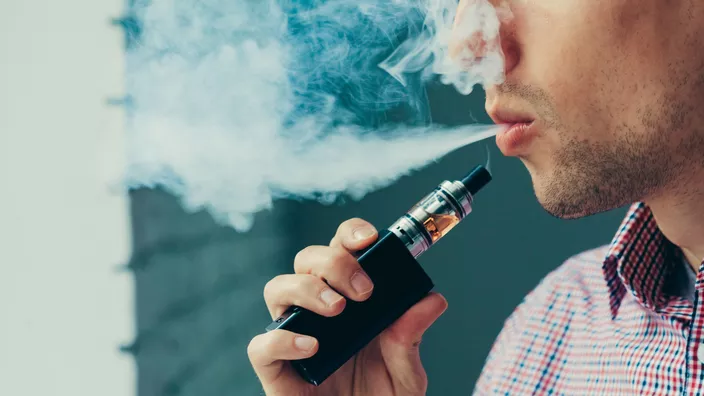
Many e-cigarette products have been removed from the U.S. market, but disposable e-cigarettes are still available. Disposable e-cigarettes are not meant to be refilled or recharged, but they can be easily opened using instructions found on the internet. Exposure to the liquid contents of e-cigarettes can result in vomiting, tremors, and even death.
What are e-cigarettes?
Electronic cigarettes (e-cigarettes) are devices that heat and aerosolize mixtures of nicotine, flavorings, and other ingredients. Inhalation of e-cigarette vapor is known as “vaping.” E-cigarettes were initially intended to help people stop smoking traditional cigarettes, but the introduction of flavored e-cigarettes has led to the expanded use of these products by adolescents. Over the last decade, flavored e-cigarettes have become very popular among young people, even though e-cigarette sales are supposed to be limited to those at least 21 years of age. A 2021 study found that e-cigarettes were the most used tobacco product among middle- and high-school students. Since the adolescent brain is still growing and is quite sensitive to the pleasant effects of sweet-tasting items, the use of flavored e-cigarettes might result in increased dependence on these products in adolescents, as well as nicotine addiction.
Aren’t e-cigarettes banned?
In response to the increased use of e-cigarettes by minors, in January 2020, the U.S. Food and Drug Administration (FDA) restricted the sale of most flavored, cartridge-based e-cigarettes. This ban meant that major e-cigarette companies like JUUL were no longer able to sell most of their flavored e-cigarette devices. As of October 2021, the only JUUL products that remain available for purchase are the Menthol and Virginia Tobacco pods. A rule prohibiting the use of menthol as a flavoring in cigarettes is currently under consideration. Those who support the 2020 FDA ban argue that the legislation should reduce the use of e-cigarettes by children and adolescents.
What about disposable e-cigarettes?
While the 2020 FDA ban restricted the sale of most JUUL and other cartridge-based e-cigarettes, it did not prohibit the sale of disposable e-cigarettes. Unlike cartridge-based products, disposable e-cigarettes (sold under the brand names Puff Bar, EonSmoke, Posh, and others) are not meant to be refilled. They are battery-powered and do not require external charging. Many disposable e-cigarettes are brightly colored and feature flavors (including cotton candy, watermelon, and sour gummy) that are appealing to children and adolescents. These products are currently legal and can be purchased online as well as at tobacco retailers and are now increasingly popular among adolescents. There are many videos on TikTok that feature the use of disposable e-cigarettes; some of those videos have had millions of views.
Although disposable e-cigarettes are not meant to be refilled and have finite battery lives, there are multiple websites and social media posts that provide detailed instructions for refilling and recharging them. Because these products can be manipulated, opened, and refilled, the potential for exposure to liquid nicotine remains a concern. Some disposable e-cigarettes contain up to 7% nicotine, which is higher than the amount typically found in JUUL pods. Swallowing the liquid contents of a disposable e-cigarette can be very dangerous, especially for young children. Symptoms of nicotine poisoning can include nausea, vomiting, tremors, and heart palpitations. In severe cases, seizures and death can occur.
For now, flavored disposable e-cigarettes remain legal in the US, and these products will likely continue to be used by adolescents and other vulnerable populations. Until additional laws are passed to restrict the use of these products, the potential for toxic effects from them (as well as nicotine addiction) remains a concern.


Private Credit Investors Rush to Withdraw

UAE moves spring break for schools and universities

How Etihad Rail ferried 350+ UAE passengers back home with Saudi help

Is February 2026 really a once-in -283-years MiracleIn?

Algeria, Burkina Faso, Côte d’Ivoire win AFCON 2025 openers

Bascom Palmer Eye Institute Abu Dhabi and Emirates Society of Ophthalmology Sign Strategic Partnership Agreement
-
Discover1 month ago
Is February 2026 really a once-in -283-years MiracleIn?
-
 Football2 months ago
Algeria, Burkina Faso, Côte d’Ivoire win AFCON 2025 openers
-
 Health3 months ago
Bascom Palmer Eye Institute Abu Dhabi and Emirates Society of Ophthalmology Sign Strategic Partnership Agreement
-

 Health2 months ago
NMC Royal Hospital, Khalifa City, performs rare wrist salvage, restoring function for young patient
-

 Health4 months ago
Emirates Society of Colorectal Surgery Concludes the 3rd International Congress Under the Leadership of Dr. Sara Al Bastaki
-

 Health4 months ago
Born Too Soon: Understanding Premature Birth and the Power of Modern NICU Care
-

 Football3 months ago
Globe Soccer Awards 2025 nominees announced as voting opens in Dubai
-

 Health2 months ago
Decline in Birth Rate in the UAE