
Books
Read this and you will be happier
Find love
Chosen by Philippa Perry
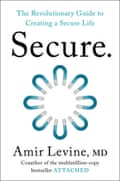
Amir Levine’s Secure, to be published in April, is grounded in attachment theory, in which there are four main styles of bonding: anxious (craving closeness, but fearing rejection), avoidant (preferring independence over closeness), fearful avoidant (a mix of the two), and secure (comfortable with closeness and easy-going). Psychiatrist Amir Levine gives us a set of tools to help us feel more secure in all our relationships, not just romantic ones, but with colleagues, friends, family and even with ourselves. This is not a fanciful book but is grounded in research and neuroscience. I believe if you follow its principles, you will in time become more secure. But any psychological work is not like rubbing on cream – it wouldn’t be enough just to read the book. You’d have to do the work and then keep up the practice. Secure can help you know yourself better, and self‑awareness is the first step towards positive change, in this case becoming more open and relaxed in all your relationships. If you can’t wait until April, my runner-up is his first book, Attached, written with Rachel Heller.
Philippa Perry is a psychotherapist. Her latest book is The Book You Wish Your Parents Had Read.
Have better conversations
Chosen by Hannah Critchlow
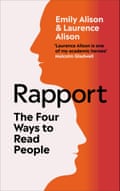
Emily and Laurence Alison’s Rapport is fantastic at helping us to understand other people, and showing how we can work with them to increase our own cognitive power. There’s evidence that a huge part of our species’ success has been due to our ability to cooperate. We constantly take shortcuts in our information processing, accumulate biases throughout our lifetimes, and have genetic predispositions to seeing the world in different ways. But when you get a group of people together and allow them to communicate freely, it can balance out biases so they can start to see the world more accurately. And from that, we can start to solve problems and move forward in a positive way.
The authors draw on their own experiences as forensic psychologists, working in dangerous, hostile situations, and set out four personality categories – monkey, T rex, lion or mouse – each with communicative strengths and weaknesses. This provides a roadmap to understand yourself and others too. I think it’s incredibly important in the modern world that we continue to build these interpersonal skills, creating rapport even with those who think differently to us, as opposed to just hiding behind our screens.
Hannah Critchlow is a neuroscientist at Magdalene College, Cambridge University. Her new book, The 21st-Century Brain, will be published in April.
Sustain a long-term relationship
Chosen by Orna Guralnik
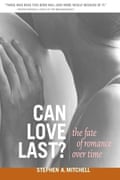
Stephen Mitchell was, in a way, the founder of the relational school of psychoanalysis, which is a more contemporary school of psychoanalysis – and Can Love Last? is a very useful book for couples to read. He talks openly, in accessible language, about the underlying unconscious dilemmas that love poses, the risks of vulnerability, dependency and unpredictability and the ways in which we try to avoid risk and dampen love to feel safer. It helps people get in touch with their more fundamental motivations, allowing them to be more courageous in their loving.
Rather than offering “three things you can do tomorrow”, it goes deeper. Mitchell gives engaging examples. I love that he speaks intelligently about this intense experience that we all go through; forming relationships, falling in love, struggling with it when often we feel like we don’t understand what’s happening to us. And he speaks beautifully to the tension between the need for safety and the need for adventure.
Orna Guralnik is a New York-based clinical psychologist and psychoanalyst, best known for the television show Couples Therapy.
Stop being a people pleaser
Chosen by Alex Curmi
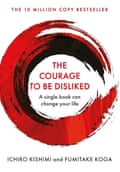
The Courage to Be Disliked by Ichiro Kishimi is different from any other self-help book I’ve ever read, with the format of a philosopher talking to a young, frustrated student really drawing you in. Everyone can relate to being that young person trying to figure things out. And I think everyone feels like they have that older, wiser person in them somewhere too. The book is intended to introduce readers to the work of Austrian psychoanalyst Alfred Adler. He felt that at any point you can decide to change your life.
People pleasers often unconsciously take on the responsibilities of not just their own life but of other people’s, because they feel if they don’t put in that extra effort, other people are going to dislike them. Kishimi introduces the Adlerian idea of the separation of tasks, where you decide which tasks you are responsible for and then let other people get on with their own tasks.
That’s extremely liberating. Of course, the huge irony is that when you live without fear of dislike, people tend to like you much more because they intuit that you have a lot more self respect and you’re being more genuine, and genuineness and authenticity are very appealing.
Dr Alex Curmi is a consultant psychiatrist and host of the Thinking Mind Podcast.

Be happier
Chosen by Paul DolanI first encountered Oliver Burkeman’s writing when he wrote a series for the Guardian called This Column Will Change Your Life. He doesn’t take himself too seriously and I admire his self-deprecation. You can be serious and say things that are important and robust and also have some levity. Four Thousand Weeks is enjoyable to read and consistent with what I’ve always said about one of the key ways to be happier or live better, which is just to get over ourselves about stuff. Burkeman talks about the fact that we’ve got a limited amount of time, hence the title. So, never mind next week. What are you going to do this week to make it just that little bit better? Focus on the small stuff, not the big stuff, do things now rather than later, stop worrying about making next week perfect.
It’s fundamentally about happiness, because that is the ultimate achievement. It’s interesting when people say they want to be successful. What is the point of success? It’s a cliched thing to say, but it’s about the journey.
Paul Dolan is professor of behavioural science at London School of Economics. His latest book is Beliefism: How to Stop Hating People We Disagree With.
Navigate trauma
Chosen by Lisa Feldman-Barrett
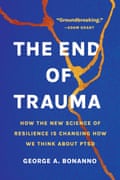
George Bonanno has studied trauma in many forms for over three decades, and in The End of Trauma he challenges some conventional, outdated beliefs. Stories and case studies show that trauma is personal: it varies across people and contexts. It’s not a feature of an event, but an experience. Adverse events can happen to people and they might not be traumatised, but equally, something that would not be traumatic for many can authentically be traumatic for you. Trauma doesn’t mean “I feel really, really bad”. It means “I’m having intrusive thoughts and can’t connect with the pleasures of the moment. I’m feeling so bad that I can’t function.” Still, most people are surprisingly resilient and do not develop PTSD – even after terrible events such as 9/11, rape or war. People are distressed, they get angry, they grieve, but most can function in their everyday lives.
Bonanno also shows that resilience to trauma is rooted in how flexibly you cope. Sometimes it helps to talk about your experience, but other times it helps to distract yourself. Sometimes you should seek company, but other times it’s better to take a hot bath and go to bed, hoping tomorrow will be a better day. It’s always possible to look at the event from different angles, which ultimately gives you more choice in how to feel. Flexibility is a skill that can be learned and practised like any other. Ultimately, you have agency over how you deal with the slings and arrows you encounter in life. With agency there is hope.
Handle stress
Chosen by Robert Sapolsky
I’d recommend Dopamine Nation by a colleague of mine, Anna Lembke (a professor of psychiatry at Stanford University). I don’t recall if the word “stress” appears in the book, but it’s ultimately about that in a very meaningful way. Her focus is the biology and psychology of why our cultures leave us so empty and prone to addiction, why the more we eat, the hungrier we get. She emphasises how we, in our privileged lives in the west, have been led to believe that we should never feel pain, failure, defeat, discouragement: “everyone’s a winner”. What this does, for one thing, is make us pathetic and unprepared when it comes to really tough circumstances. She has a model according to which, in the absence of any capacity to tolerate pain and being hypersensitised to the kinds of pain that are inevitable in any life, we get a hypersensitised craving for reward that leads to addiction. The take-home message for me is to remember the consequences of having the goal of a pain-free life with no setbacks or adversity.
Robert Sapolsky is professor of biology, neuroscience and neurosurgery at Stanford University. His latest book is Determined: A Science of Life Without Free Will.
Tackle narcissism
Chosen by Linda Blair
Today we tend to want to label everything, and I don’t think that’s always the most effective way to create change and wellbeing. Narcissism is a term that people love to throw around as an insult: “They’re such a narcissist.” What they actually mean is, “I don’t think they value me enough, and I don’t think they see my point of view, and for that reason they’re annoying me.” Well, guess what? That is narcissism, too. And by focusing on it, either in yourself or in others, you are simply making it worse.
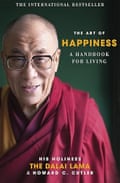
To treat a diagnosis of narcissistic personality disorder, the most important thing is working on deepening and strengthening your relationships. What that comes back to is not just thinking about other people’s point of view, but getting more realistic about your own. So – like the Dalai Lama – try to think of everybody as being equally important, including yourself, and spend your time trying to understand them rather than judge. In the blink of an eye, you’ve begun to solve narcissism, either in yourself or in your tendency to call it out in others, and you will emerge happier. The Art of Happiness is a dialogue between a western psychiatrist, Howard Cutler, and the Dalai Lama and I think it’s a winner. It may have been published in 1998 but the wisdom isn’t dated and the Dalai Lama, of course, is still going strong.
Linda Blair is a clinical psychologist. Her latest book is Siblings.
Become a better parent
Chosen by Emily Oster
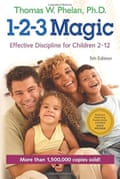
Thomas Phelan’s 1-2-3-Magic is an older book but it is fundamentally sensible and I think it would help a lot of people enormously. It’s a bit of a corrective to some of the more intense and exhausting parenting books we have had lately.
The intention is to give you a system, and tell you how to implement it – so it’s very no-nonsense, with a lot of worked-up examples. It feels like good, sensible advice, structured so you can be successful. The crux of it is that, when thinking about behaviour change, kids respond well to a consistently implemented system of rewards and punishments. And – maybe more importantly – if you get to a better place, family life will be easier and there will be more space for fun.
Emily Oster is professor of economics at Brown University. Her latest book is The Unexpected: Navigating Pregnancy During and After Complications.
Understand neurodiversity
Chosen by Almuth McDowall
Approaching Autistic Adulthood by Grace Liu is one of my favourite books. Grace is mixed race and a lesbian, and beautifully illuminates the intersectional perspective. She does a great job of describing her journey to adulthood and the difficulties she has experienced without sugar‑coating or judging others. Some of it makes me laugh out loud, such as her description of “neurotypical‑splaining”, as in when people who are not autistic try and tell autistic people what it is like. The book gives real-life insight into the autistic mind. It’s a great read for autistic people (“You are not alone! Here are some things for you to think about to navigate life better”) and for people who come in contact with autistic people, which given population prevalence means all of us at some point (“This is how you can respond appropriately, without patronising or belittling people”).
It’s an easy and poignant read with many anecdotes. Grace’s approach is also evidence based – she tries to address the double empathy problem: that autistic people understand each other, and neurodivergent people understand each other, but communication across the two neurotypes often results in misunderstanding. She debunks some of the myths and is honest and authentic in her writing.
Almuth McDowall is a psychology professor at Birkbeck College, London, specialising in neurodivergence research.
Maintain focus
Chosen by Oliver Burkeman
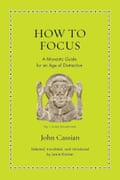
How to Focus by John Cassian, translated by Jamie Kreiner,is from a series published by Princeton called Ancient Wisdom for Modern Readers. Cassian was a fourth-century Christian monk but the translation is informal, refreshing and modern. It’s about the problem of concentration and distraction, which they figured was partly because of demons but also because of the vagaries of how human attention works, which they could do something about.
First, know that distraction is a perpetual challenge, and it makes a lot more sense to just accept that. Second, prioritise having interesting things to focus on instead of the other tempting distractions that lure you away. So it’s not a self-punishing, “I will not spend an hour doomscrolling”, it’s, “how can I make sure that I am spending some of my time and my life on things that naturally draw me to them, and I prefer to do than spending all that time doomscrolling?”
The most borrowable solution offered is the idea of making a daily practice, something that you can keep coming back to, and learning to forgive yourself when your focus is less than what you would have it be. You’re still working the muscle of concentration.
There is something profound about any opportunity to glimpse that whatever torments us today might actually, in some way, be a timeless part of the human condition. I feel lifted up or supported somehow by these people. We’re all just chipping away at it and that’s why you don’t need to beat yourself up for not having done more than that.
Oliver Burkeman is a writer. His latest book is Meditations for Mortals.
SOURCE : The Guardian
Books
King Fahad National Library Selects Face to Face with ISIS as “Book of the Day”
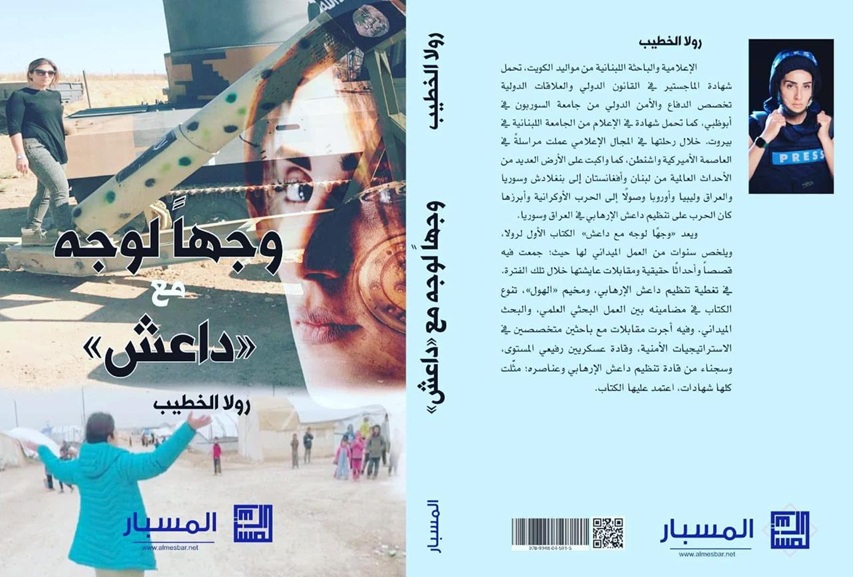
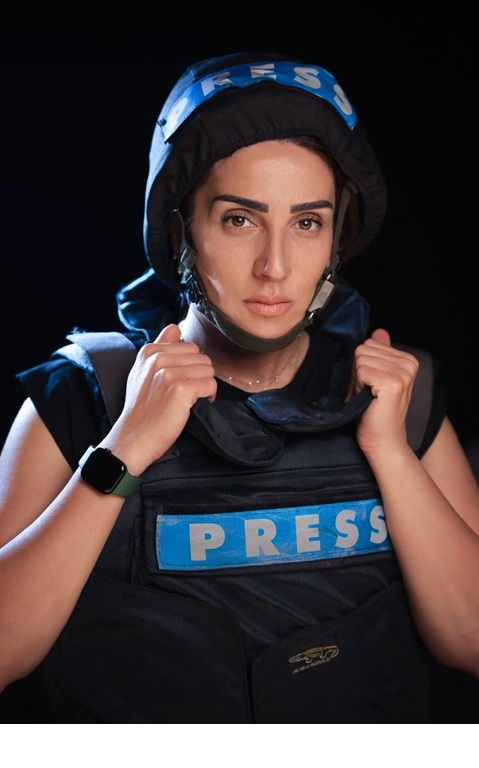
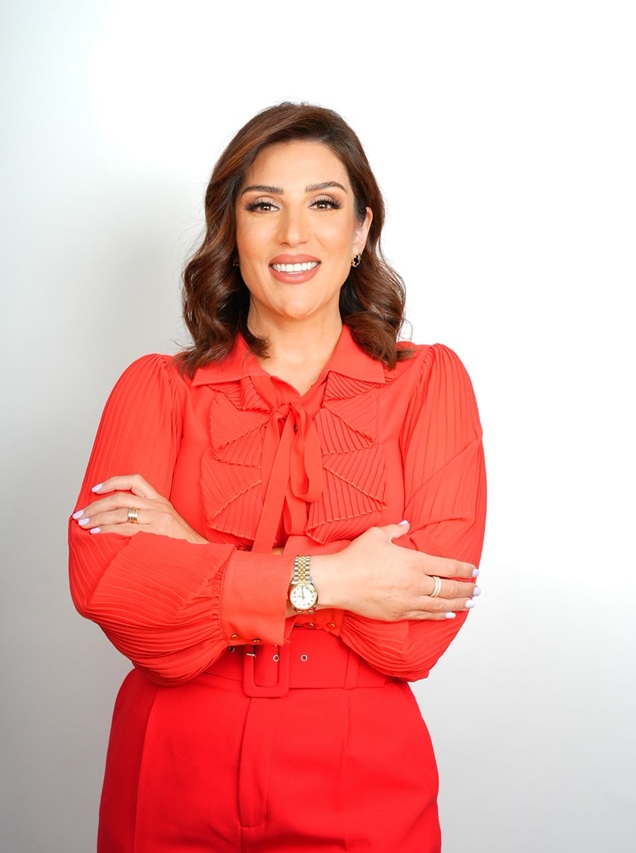
The King Fahad National Library in the Kingdom of Saudi Arabia has selected Face to Face with ISIS, authored by Lebanese journalist and researcher Rola Al Khatib, as its “Book of the Day”—a recognition highlighting works that contribute to knowledge and public awareness on issues of strategic importance.
The book draws on Al Khatib’s years of firsthand field reporting from the frontlines of the war against ISIS in Iraq and Syria, combined with extensive academic research examining the international campaign against the terrorist organization.
One of the book’s central arguments is that military action, while necessary, is not sufficient on its own to defeat terrorism. Rather, it should serve as the first step in a broader strategy that must be followed by intellectual, educational, social, economic, and security measures aimed at addressing the root causes of extremism and preventing its resurgence.
The selection by King Fahad National Library reflects the growing recognition of research that bridges field experience and academic analysis, contributing to a deeper understanding of terrorism and more comprehensive approaches to countering violent extremism.
Medica contact
Rola Al Khatib
Books
10 of the best books of 2026 so far
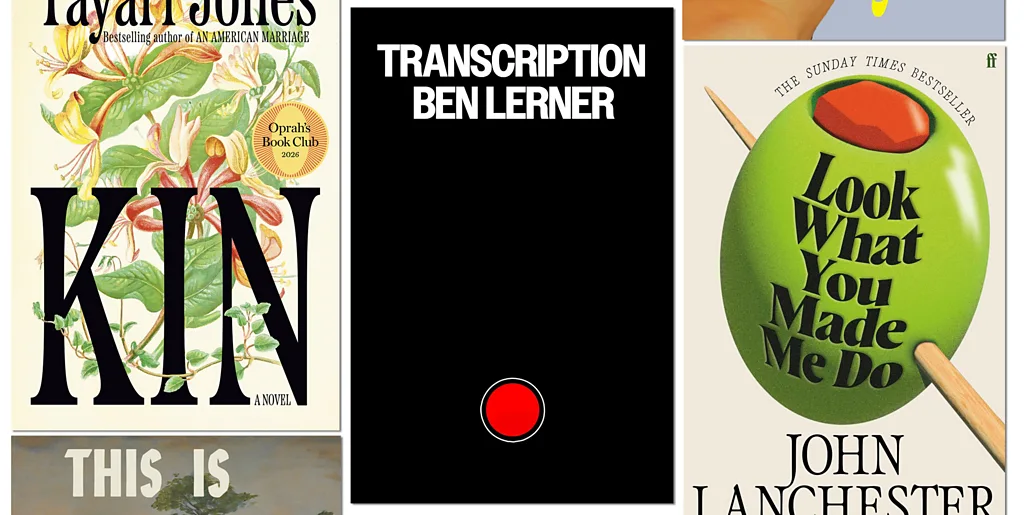
From a darkly comic tale of revenge to a beautiful contemplation on friendship, here are the year’s most acclaimed works of fiction so far.
Yesteryear by Caro Claire Burke
“Daring, deranged, cleverly written,” is how Vogue describes the buzzy debut by Caro Claire Burke. In this satirical thriller, tradwife influencer Natalie inexplicably wakes up in the year 1855 in a crumbling homestead. The harsh reality of rural existence in the 19th Century soon becomes clear. Yesteryear, says the LA Times, “offers a bitingly funny and occasionally heartbreaking twist on the classic Instagram-versus-reality story”. Natalie is “a deliciously unlikable protagonist” who is “objectively off-putting, which makes her bitingly human”. The novel is due to be adapted for film, with Anne Hathaway producing and starring. (LB)
Transcription by Ben Lerner
In Transcription, an unnamed middle-aged writer travels from New York to Providence, Rhode Island, to interview Thomas, a 90-year-old former mentor and revered writer and film-maker. The stakes are high – Thomas’s recent bout of Covid means this interview could be his last – and the writer breaks his phone just before the interview, rendering him unable to record the esteemed artist’s words. What follows is a reflection on technology, storytelling and memory that The Guardian says is “intricate, uncanny, sometimes breathtakingly realistic”, while The New Yorker writes: “Nothing in this exquisite, shape-shifting novel is what it seems – words least of all.” (RL)
Look What You Made Me Do by John Lanchester
“Gleefully nasty,” is how The Times describes John Lanchester’s widely acclaimed fifth novel, a black comedy of betrayal, revenge, resentment and entitlement. At its centre are affluent boomer Kate and younger screenwriter Phoebe. A rivalry between them begins when Kate recognises intimate secrets from her 30-year marriage in a hit TV series. The novel “seethes with female animosity and vengeance,” says the Literary Review. “Skewed scenarios and retaliatory stratagems are craftily deployed in a novel that’s a kaleidoscope of tilting perspectives.” Look What you Made Me Do, it concludes, is “a gleamingly accomplished black comedy”. (LB)
The Keeper by Tana French
French is a bestselling author described by The New York Times as “one of the most consistently exciting mystery writers around”. The Keeper is the final instalment in a trilogy that stars retired Chicago cop Cal Hooper, who becomes enmeshed in the intrigue of the fictional Irish village of Ardnakelty. As the body of a young woman is found in a river, Hooper is drawn into investigating the case. Amid the town’s bitter feuds and long-standing grudges, he grapples with the future of this rural community. “Dense, compelling and superbly atmospheric,” says The Guardian. (RL)
Departure(s) by Julian Barnes
Blending memoir and fiction to explore memory, ageing and love, Julian Barnes’s self-declared swansong Departure(s) is brief, and with only a sketchy plot. One of the book’s threads is a romance between the narrator’s friends Stephen and Jean, who were in love in their university days, then reconnected again in old age. The narrator, meanwhile, reflects on memory, ageing and love. Departure(s) is a “valedictory flourish” says The Atlantic. “The whole package is a culmination of sorts, shimmering with his silky, erudite prose; beneath the suave surface is an earnest investigation into the mysterious ways of the human heart.” (LB)
Questions 27 & 28 by Karen Tei Yamashita
Yamashita’s first novel in 16 years centres on a dark period of US history – the internment of Japanese immigrants during World War Two. Under the order of President Franklin D Roosevelt, hundreds of thousands of people were taken from their homes on the West Coast and put in camps throughout the US. Questions 27 and 28 were part of a questionnaire prisoners were given to assess their loyalty. Yamashita’s historical novel – which blends real and fictional events with composite characters – examines the period and the ensuing internal battles that arose around the loyalty test. “Yamashita is at her best when she zooms out… and meditates on the greater stakes of these scattered lives,” writes Hua Hsu in the New Yorker. “We feel the weight of the past, all these accumulated voices and perspectives, within and between Yamashita’s novels, as well as the process through which disparate stories, anecdotes, or experiences might coalesce as history.” (RL)
This is Where the Serpent Lives by Daniyal Mueenuddin
Having been a Pulitzer finalist back in 2010 for short story collection In Other Rooms, Other Wonders, Daniyal Mueenuddin now returns with a highly acclaimed novel. Exploring how power, class and the legacy of feudalism shape lives in modern Pakistan, the novel follows overlapping narratives of the landowners and staff of a family-run farm. This is Where the Serpent Lives is “sensitive and powerful” says the New York Times. “Mueenuddin makes the reader care about the romantic relationships, and the pages turn themselves.” It is “a serious book that you’ll be hearing about again, later in the year, when the shortlists for the big literary prizes are announced”. (LB)
Kin by Tayari Jones
Announcing Kin as one of her Book Club picks, Oprah Winfrey described Tayari Jones’s fifth novel as “a masterpiece… that contemplates the meaning [and] complications of friendship”. Motherless since they were infants, Vernice and Annie are “cradle friends”, who come of age in Honeysuckle, Louisiana in 1950s US. As they grow, the friends drift apart – one goes down the path of college and relationships; the other in pursuit of the mother who abandoned her. “A lush, beautiful novel”, writes Radhika Jones in The New York Times. “When reading Kin, I wanted nothing more than to keep reading it.” (RL)
The Things We Never Say by Elizabeth Strout
Pulitzer-winning author Elizabeth Strout is known for her series of novels featuring iconic characters Olive Kitteridge and Lucy Barton, and her deft portrayals of small-town life in all its fraught, familial complexity. The Things we Never Say is a stand-alone novel about Artie Dam – a high-school history teacher who is navigating loneliness and a changing world – as he confronts a life-altering secret. “There is so much here to explore, so many endless human mysteries,” says The Guardian. “Let’s hope that this fine author continues steadily along her path, delivering unto her loyal readers story upon story, gift upon gift.” (LB)
The Palm House by Gwendoline Riley
“Full of pathos and humour,” according to The Times, The Palm House centres on a pair of spiky middle-aged colleagues, Laura Miller, a writer and the novel’s narrator, and Edmund Putnam, an older editor who is leaving his job at a highbrow literary magazine. The friends’ conversations in London pubs over drinks and shared packets of crisps are interspersed with often heartbreaking recollections about their pasts. Critics have praised the novel’s dialogue, which Riley, writes the LRB, “wields… like a Swiss army knife, now corkscrewed, now serrated, but always coming to a short, sharp point.” (RL)
BBC
Books
Literacy push harms reading pleasure

The “relentless” focus on measuring literacy progress in schools has “pushed reading for pleasure to the margins”, according to a new report.
“Parents and schools both recognise that reading for pleasure matters, but their understandable focus on literacy skills is actively undermining it,” found the study, which analysed survey data on reading trends among UK children, drawing on data from HarperCollins, NielsenIQ and The Reading Agency.
Daily reading for pleasure among five to 17-year-olds fell from 39% in 2012 to 25% in 2025, data shows, while the proportion of children who rarely or never read for pleasure tripled from 5% to 15%.
However, the study also found that both daily and weekly reading for pleasure increased between 2024 and 2025 among 11- to 17-year-old boys and girls. For 14- to 17-year-old boys, who researchers claim are the “among the hardest-to-reach” in terms of encouraging reading, those who never read fell from 36% to 30% year-on-year.
The data suggested that fewer teens think “books aren’t cool” (down from 45% to 38% between 2024 and 2025 for the 11-17 age group), and fewer say they’d “rather watch TV, play video games or go online than read” (down from 76% to 69% for 14- to 17-year-olds).
Social media is helping teenagers discover books they enjoy, with the proportion reporting finding books via BookTok rising from 23% in 2024 to 27% in 2025 among 14- to 17-year-olds. Among 11- to 17-year-olds, discovery via YouTube rose from 25% to 30%.
The results for younger children were less encouraging. Only 32% of five to 10-year-olds read daily for pleasure last year, a level unchanged for three years and down from 55% in 2012. The proportion of five to 7-year-olds who rarely or never read for pleasure rose from 8% to 11% in a single year.
Barriers to children reading for pleasure include struggling to discover books they enjoy and screens winning their attention.
Removing pressure and making reading a social activity could encourage children to pick up a book more often, researchers said. The report also claimed being read to throughout childhood has a significant impact on a child’s reading habits. Children “who are read to daily are three times more likely to choose to read independently, daily, than if they are read to weekly by their parents,” said HarperCollins consumer insight director Alison David.
Three-fifths of three to seven-year-olds are not read to daily, according to the data. Despite this, 71% of parents with children aged 13 and under said they wished their children would spend more time reading books, an increase from 65% in 2019. Nearly half (41%) of parents believe that reading for pleasure is more important than ever.
When parents with five to 10-year-old children were asked why they read to them, the top two reasons were literacy-focused, and 58% of parents did not select enjoyment as a reason. Parents need to understand “the difference between literacy and reading for pleasure”, stated the report.
Focus groups identified a “fatalistic” attitude among parents, who assume that some children will enjoy reading and others simply won’t. Some parents also believe that reading to their child will make them lazy and less likely to be independent readers.
The report emphasised the importance of reading to children beyond the age when they can “decode” the language themselves. “They still need to be read to for the enjoyment it brings, for habit forming and for encouragement to read independently.”
David suggests that beyond bedtime reading, parents should read to children “often and anywhere” by taking a book to the park, on the bus, or to a coffee shop. “Read to children when they are in the bath, or eating lunch. Make a den, put a blanket over a table and sit in there to read. Build excitement – talk about how excited you are to continue the story to find out what happens next.”
“When you are out, point out things that you see and relate back to books, and use it as a trigger to read again later”, she said, adding that if you see a cat, you might suggest reading a Mog book – the popular series by Judith Kerr – later on. She also suggests putting on “funny voices and accents, really ham it up”, as children “love it”.
The report suggests that by helping parents understand that encouraging reading for pleasure “requires a different approach from supporting literacy – that both are essential, both are achievable – and by giving them practical tools and compelling reasons to act, we can make change happen”.
The Guardian


When Rheumatoid Arthritis Threatened Her Independence: How the Right Diagnosis Helped Her Get Her Life Back

Saudi German Hospital Dubai Launches Mental Health and Wellness Center for Children and Adolescents

Dubai Gold Designers Business Group unveils strategy to expand global market access for Dubai-based jewellery designers

Araghchi, Oman Sultan discuss transit, stability in Muscat

UAE’s café culture keeps growing despite price pressure

Netflix to Livestream BTS Comeback Concert
-
 politics6 months ago
Araghchi, Oman Sultan discuss transit, stability in Muscat
-
 UAE10 months ago
UAE’s café culture keeps growing despite price pressure
-
 Entertainment8 months ago
Netflix to Livestream BTS Comeback Concert
-
 Discover9 months ago
Is February 2026 really a once-in -283-years MiracleIn?
-

 Football10 months ago
Algeria, Burkina Faso, Côte d’Ivoire win AFCON 2025 openers
-

 Health9 months ago
NMC Royal Hospital, Khalifa City, performs rare wrist salvage, restoring function for young patient
-
 Health10 months ago
Bascom Palmer Eye Institute Abu Dhabi and Emirates Society of Ophthalmology Sign Strategic Partnership Agreement
-

 Health11 months ago
Emirates Society of Colorectal Surgery Concludes the 3rd International Congress Under the Leadership of Dr. Sara Al Bastaki