Books
inside the Ozempic revolution

Few aspects of being human have generated more judgment, scorn and condemnation than a person’s size, shape and weight – particularly if you happen to be female. As late as 2022, the Times’scolumnist Matthew Parris published a column headlined “Fat shaming is the only way to beat the obesity crisis” in which he attributed Britain’s “losing battle with fat” to society’s failure to goad and stigmatise the overweight into finally, shamefacedly, eating less. The tendency to equate excess weight with poor character (and thinness with grit and self-control) treats obesity as a moral as well as physical failing – less a disease than a lifestyle choice.
One of the great strengths of Reuters journalist Aimee Donnellan’s first book is its insistence on framing the discovery of the new weight-loss drugs within the fraught social and cultural context of beauty norms, body image and health. For those who need them, weekly injections of Ozempic, Wegovy or Mounjaro can be revolutionary. Yet for every person with diabetes or obesity taking the drugs to improve their health, others – neither obese nor diabetic – are obtaining them to get “beach-body” ready, fit into smaller dresses, or attain the slender aesthetic social media demands of them. Small wonder some commentators have likened the injections to “an eating disorder in a pen”.
Donnellan opens the book with a case in point, a poignant interview with “Sarah”, a 34-year-old marketing executive from Michigan. She recounts a summer of unprecedented success at work – suddenly being included in important meetings, being assigned new management responsibilities and receiving a raise. Yet nothing had changed about her behaviour at work. It was her appearance – after six months on Ozempic – that had undergone a metamorphosis. In the eyes of her employers, shedding five stone (32kg) of weight had transformed her worth: Sarah mattered more because she weighed less.
Like all great tales of scientific discovery, the weight loss saga is rich in serendipity, rivalry and obsession – all of which Donnellan recounts with relish. Wonderfully, it includes a starring role for the only venomous lizard in the US, the Gila monster, though I will refrain from spoilers here. Another key protagonist is Svetlana Mojsov, a young Macedonian immigrant to the US who arrived at New York’s Rockefeller University in 1972 to do post-grad chemistry. (Today, one imagines, ICE would probably deport her.) At this time, the causes of obesity were seen as self-evident – eating too much and exercising too little – and therefore unfit for serious scientific inquiry. Mojsov disagreed. She was fascinated by why some people seemed to feel sated earlier than others, or metabolised food more quickly. Her research – for which she is tipped to win a future Nobel prize – successfully engineered a synthetic version of a natural hormone, glucagon-like peptide (GLP-1), which helps control blood sugar.
Scientists at Danish pharma giant Novo Nordisk seized on GLP-1 as a potential new treatment for diabetes. Decades of effort at last culminated in a drug, semaglutide, that people with diabetes could administer once weekly, unlike multiple daily injections of insulin. But the drug trials revealed something unprecedented. Not only did semaglutide control blood sugar beautifully, it caused participants to lose up to 20% of their body weight, seemingly without even trying. Novo Nordisk had stumbled across the holy grail – a safe chemical treatment for obesity that worked to astonishing effect. As word of the miracle jab leaked, celebrities began to seek it out. When a newly svelte Oprah Winfrey told her podcast fans that taking the drug was the cause, suddenly everyone was clamouring for Ozempic. That this had occurred in her lifetime, said Winfrey, “felt like relief, like redemption, like a gift”. It was certainly a gift to Novo Nordisk, whose market value is now, thanks to Ozempic, bigger than the entire GDP of Norway.
Commendably, Donnellan is careful not to treat the GLP-1 drugs an unalloyed good. She addresses their side-effects, such as severe nausea, and their use by non-obese people to the potential detriment of their health. The one omission is that she doesn’t dig into what is surely the most intriguing aspect of weight-loss drugs: incredibly, scientists simply don’t know why they excel at treating obesity, beyond the fact that GLP-1 receptors are present in the brain. It appears that saturating the brain with abnormally high levels of the hormone dials down people’s craving for food. A lifetime of incessant chatter about eating is dampened. Restraint becomes easy, effortless. Does this mean drugs like Ozempic will be licensed in the future to treat drug, alcohol, gambling and sex addiction? What would that do to our concept of free will? Ozempic is a miracle drug, a rebuke to a century of condemnation of those who are obese, and a profound challenge to the very definition of what it means to be human. Watch this space.

Books
King Fahad National Library Selects Face to Face with ISIS as “Book of the Day”
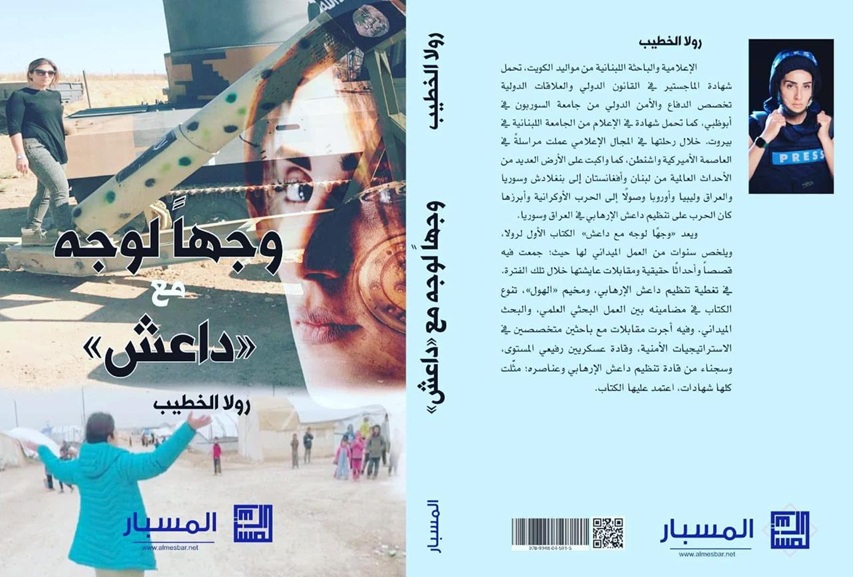
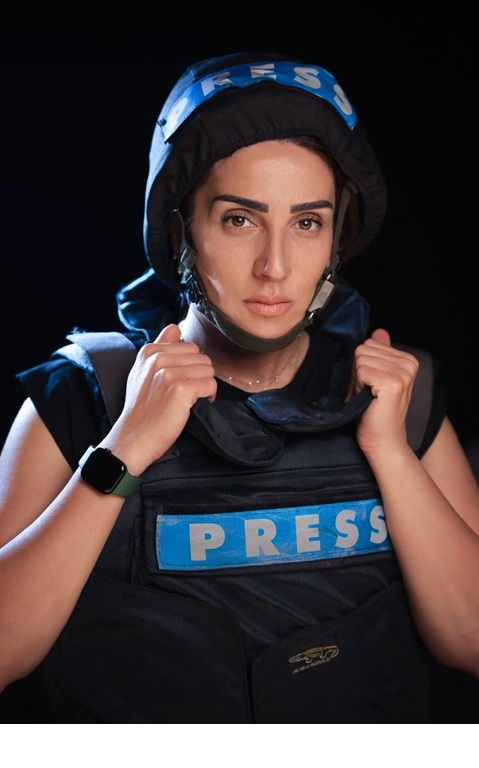
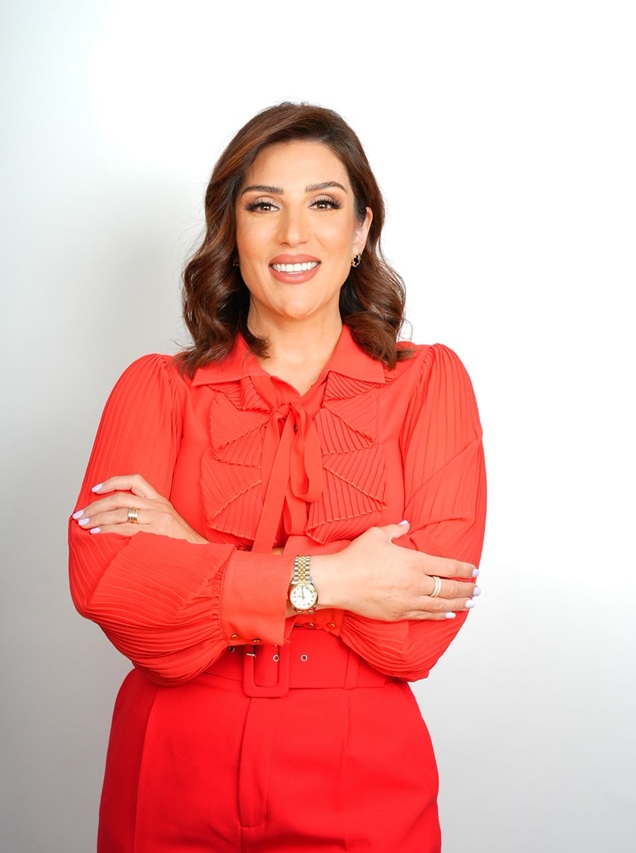
The King Fahad National Library in the Kingdom of Saudi Arabia has selected Face to Face with ISIS, authored by Lebanese journalist and researcher Rola Al Khatib, as its “Book of the Day”—a recognition highlighting works that contribute to knowledge and public awareness on issues of strategic importance.
The book draws on Al Khatib’s years of firsthand field reporting from the frontlines of the war against ISIS in Iraq and Syria, combined with extensive academic research examining the international campaign against the terrorist organization.
One of the book’s central arguments is that military action, while necessary, is not sufficient on its own to defeat terrorism. Rather, it should serve as the first step in a broader strategy that must be followed by intellectual, educational, social, economic, and security measures aimed at addressing the root causes of extremism and preventing its resurgence.
The selection by King Fahad National Library reflects the growing recognition of research that bridges field experience and academic analysis, contributing to a deeper understanding of terrorism and more comprehensive approaches to countering violent extremism.
Medica contact
Rola Al Khatib
Books
10 of the best books of 2026 so far
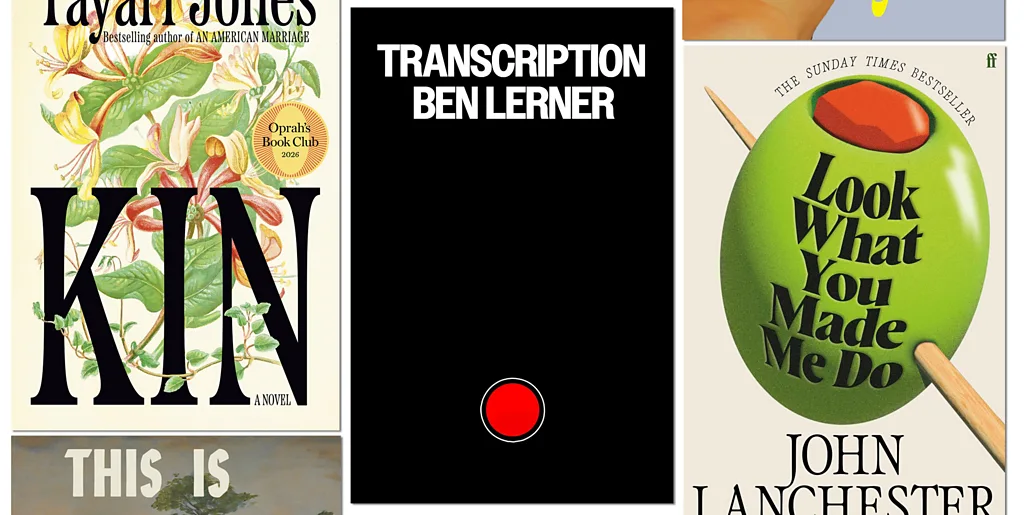
From a darkly comic tale of revenge to a beautiful contemplation on friendship, here are the year’s most acclaimed works of fiction so far.
Yesteryear by Caro Claire Burke
“Daring, deranged, cleverly written,” is how Vogue describes the buzzy debut by Caro Claire Burke. In this satirical thriller, tradwife influencer Natalie inexplicably wakes up in the year 1855 in a crumbling homestead. The harsh reality of rural existence in the 19th Century soon becomes clear. Yesteryear, says the LA Times, “offers a bitingly funny and occasionally heartbreaking twist on the classic Instagram-versus-reality story”. Natalie is “a deliciously unlikable protagonist” who is “objectively off-putting, which makes her bitingly human”. The novel is due to be adapted for film, with Anne Hathaway producing and starring. (LB)
Transcription by Ben Lerner
In Transcription, an unnamed middle-aged writer travels from New York to Providence, Rhode Island, to interview Thomas, a 90-year-old former mentor and revered writer and film-maker. The stakes are high – Thomas’s recent bout of Covid means this interview could be his last – and the writer breaks his phone just before the interview, rendering him unable to record the esteemed artist’s words. What follows is a reflection on technology, storytelling and memory that The Guardian says is “intricate, uncanny, sometimes breathtakingly realistic”, while The New Yorker writes: “Nothing in this exquisite, shape-shifting novel is what it seems – words least of all.” (RL)
Look What You Made Me Do by John Lanchester
“Gleefully nasty,” is how The Times describes John Lanchester’s widely acclaimed fifth novel, a black comedy of betrayal, revenge, resentment and entitlement. At its centre are affluent boomer Kate and younger screenwriter Phoebe. A rivalry between them begins when Kate recognises intimate secrets from her 30-year marriage in a hit TV series. The novel “seethes with female animosity and vengeance,” says the Literary Review. “Skewed scenarios and retaliatory stratagems are craftily deployed in a novel that’s a kaleidoscope of tilting perspectives.” Look What you Made Me Do, it concludes, is “a gleamingly accomplished black comedy”. (LB)
The Keeper by Tana French
French is a bestselling author described by The New York Times as “one of the most consistently exciting mystery writers around”. The Keeper is the final instalment in a trilogy that stars retired Chicago cop Cal Hooper, who becomes enmeshed in the intrigue of the fictional Irish village of Ardnakelty. As the body of a young woman is found in a river, Hooper is drawn into investigating the case. Amid the town’s bitter feuds and long-standing grudges, he grapples with the future of this rural community. “Dense, compelling and superbly atmospheric,” says The Guardian. (RL)
Departure(s) by Julian Barnes
Blending memoir and fiction to explore memory, ageing and love, Julian Barnes’s self-declared swansong Departure(s) is brief, and with only a sketchy plot. One of the book’s threads is a romance between the narrator’s friends Stephen and Jean, who were in love in their university days, then reconnected again in old age. The narrator, meanwhile, reflects on memory, ageing and love. Departure(s) is a “valedictory flourish” says The Atlantic. “The whole package is a culmination of sorts, shimmering with his silky, erudite prose; beneath the suave surface is an earnest investigation into the mysterious ways of the human heart.” (LB)
Questions 27 & 28 by Karen Tei Yamashita
Yamashita’s first novel in 16 years centres on a dark period of US history – the internment of Japanese immigrants during World War Two. Under the order of President Franklin D Roosevelt, hundreds of thousands of people were taken from their homes on the West Coast and put in camps throughout the US. Questions 27 and 28 were part of a questionnaire prisoners were given to assess their loyalty. Yamashita’s historical novel – which blends real and fictional events with composite characters – examines the period and the ensuing internal battles that arose around the loyalty test. “Yamashita is at her best when she zooms out… and meditates on the greater stakes of these scattered lives,” writes Hua Hsu in the New Yorker. “We feel the weight of the past, all these accumulated voices and perspectives, within and between Yamashita’s novels, as well as the process through which disparate stories, anecdotes, or experiences might coalesce as history.” (RL)
This is Where the Serpent Lives by Daniyal Mueenuddin
Having been a Pulitzer finalist back in 2010 for short story collection In Other Rooms, Other Wonders, Daniyal Mueenuddin now returns with a highly acclaimed novel. Exploring how power, class and the legacy of feudalism shape lives in modern Pakistan, the novel follows overlapping narratives of the landowners and staff of a family-run farm. This is Where the Serpent Lives is “sensitive and powerful” says the New York Times. “Mueenuddin makes the reader care about the romantic relationships, and the pages turn themselves.” It is “a serious book that you’ll be hearing about again, later in the year, when the shortlists for the big literary prizes are announced”. (LB)
Kin by Tayari Jones
Announcing Kin as one of her Book Club picks, Oprah Winfrey described Tayari Jones’s fifth novel as “a masterpiece… that contemplates the meaning [and] complications of friendship”. Motherless since they were infants, Vernice and Annie are “cradle friends”, who come of age in Honeysuckle, Louisiana in 1950s US. As they grow, the friends drift apart – one goes down the path of college and relationships; the other in pursuit of the mother who abandoned her. “A lush, beautiful novel”, writes Radhika Jones in The New York Times. “When reading Kin, I wanted nothing more than to keep reading it.” (RL)
The Things We Never Say by Elizabeth Strout
Pulitzer-winning author Elizabeth Strout is known for her series of novels featuring iconic characters Olive Kitteridge and Lucy Barton, and her deft portrayals of small-town life in all its fraught, familial complexity. The Things we Never Say is a stand-alone novel about Artie Dam – a high-school history teacher who is navigating loneliness and a changing world – as he confronts a life-altering secret. “There is so much here to explore, so many endless human mysteries,” says The Guardian. “Let’s hope that this fine author continues steadily along her path, delivering unto her loyal readers story upon story, gift upon gift.” (LB)
The Palm House by Gwendoline Riley
“Full of pathos and humour,” according to The Times, The Palm House centres on a pair of spiky middle-aged colleagues, Laura Miller, a writer and the novel’s narrator, and Edmund Putnam, an older editor who is leaving his job at a highbrow literary magazine. The friends’ conversations in London pubs over drinks and shared packets of crisps are interspersed with often heartbreaking recollections about their pasts. Critics have praised the novel’s dialogue, which Riley, writes the LRB, “wields… like a Swiss army knife, now corkscrewed, now serrated, but always coming to a short, sharp point.” (RL)
BBC
Books
Literacy push harms reading pleasure

The “relentless” focus on measuring literacy progress in schools has “pushed reading for pleasure to the margins”, according to a new report.
“Parents and schools both recognise that reading for pleasure matters, but their understandable focus on literacy skills is actively undermining it,” found the study, which analysed survey data on reading trends among UK children, drawing on data from HarperCollins, NielsenIQ and The Reading Agency.
Daily reading for pleasure among five to 17-year-olds fell from 39% in 2012 to 25% in 2025, data shows, while the proportion of children who rarely or never read for pleasure tripled from 5% to 15%.
However, the study also found that both daily and weekly reading for pleasure increased between 2024 and 2025 among 11- to 17-year-old boys and girls. For 14- to 17-year-old boys, who researchers claim are the “among the hardest-to-reach” in terms of encouraging reading, those who never read fell from 36% to 30% year-on-year.
The data suggested that fewer teens think “books aren’t cool” (down from 45% to 38% between 2024 and 2025 for the 11-17 age group), and fewer say they’d “rather watch TV, play video games or go online than read” (down from 76% to 69% for 14- to 17-year-olds).
Social media is helping teenagers discover books they enjoy, with the proportion reporting finding books via BookTok rising from 23% in 2024 to 27% in 2025 among 14- to 17-year-olds. Among 11- to 17-year-olds, discovery via YouTube rose from 25% to 30%.
The results for younger children were less encouraging. Only 32% of five to 10-year-olds read daily for pleasure last year, a level unchanged for three years and down from 55% in 2012. The proportion of five to 7-year-olds who rarely or never read for pleasure rose from 8% to 11% in a single year.
Barriers to children reading for pleasure include struggling to discover books they enjoy and screens winning their attention.
Removing pressure and making reading a social activity could encourage children to pick up a book more often, researchers said. The report also claimed being read to throughout childhood has a significant impact on a child’s reading habits. Children “who are read to daily are three times more likely to choose to read independently, daily, than if they are read to weekly by their parents,” said HarperCollins consumer insight director Alison David.
Three-fifths of three to seven-year-olds are not read to daily, according to the data. Despite this, 71% of parents with children aged 13 and under said they wished their children would spend more time reading books, an increase from 65% in 2019. Nearly half (41%) of parents believe that reading for pleasure is more important than ever.
When parents with five to 10-year-old children were asked why they read to them, the top two reasons were literacy-focused, and 58% of parents did not select enjoyment as a reason. Parents need to understand “the difference between literacy and reading for pleasure”, stated the report.
Focus groups identified a “fatalistic” attitude among parents, who assume that some children will enjoy reading and others simply won’t. Some parents also believe that reading to their child will make them lazy and less likely to be independent readers.
The report emphasised the importance of reading to children beyond the age when they can “decode” the language themselves. “They still need to be read to for the enjoyment it brings, for habit forming and for encouragement to read independently.”
David suggests that beyond bedtime reading, parents should read to children “often and anywhere” by taking a book to the park, on the bus, or to a coffee shop. “Read to children when they are in the bath, or eating lunch. Make a den, put a blanket over a table and sit in there to read. Build excitement – talk about how excited you are to continue the story to find out what happens next.”
“When you are out, point out things that you see and relate back to books, and use it as a trigger to read again later”, she said, adding that if you see a cat, you might suggest reading a Mog book – the popular series by Judith Kerr – later on. She also suggests putting on “funny voices and accents, really ham it up”, as children “love it”.
The report suggests that by helping parents understand that encouraging reading for pleasure “requires a different approach from supporting literacy – that both are essential, both are achievable – and by giving them practical tools and compelling reasons to act, we can make change happen”.
The Guardian


When Rheumatoid Arthritis Threatened Her Independence: How the Right Diagnosis Helped Her Get Her Life Back

Saudi German Hospital Dubai Launches Mental Health and Wellness Center for Children and Adolescents

Dubai Gold Designers Business Group unveils strategy to expand global market access for Dubai-based jewellery designers

Araghchi, Oman Sultan discuss transit, stability in Muscat

UAE’s café culture keeps growing despite price pressure

Netflix to Livestream BTS Comeback Concert
-
 politics6 months ago
Araghchi, Oman Sultan discuss transit, stability in Muscat
-
 UAE10 months ago
UAE’s café culture keeps growing despite price pressure
-
 Entertainment8 months ago
Netflix to Livestream BTS Comeback Concert
-
 Discover9 months ago
Is February 2026 really a once-in -283-years MiracleIn?
-

 Football10 months ago
Algeria, Burkina Faso, Côte d’Ivoire win AFCON 2025 openers
-
 Health9 months ago
NMC Royal Hospital, Khalifa City, performs rare wrist salvage, restoring function for young patient
-

 Health10 months ago
Bascom Palmer Eye Institute Abu Dhabi and Emirates Society of Ophthalmology Sign Strategic Partnership Agreement
-

 Health11 months ago
Emirates Society of Colorectal Surgery Concludes the 3rd International Congress Under the Leadership of Dr. Sara Al Bastaki