
Business
Iran war risks ‘catastrophic’ oil market impact: Aramco CEO
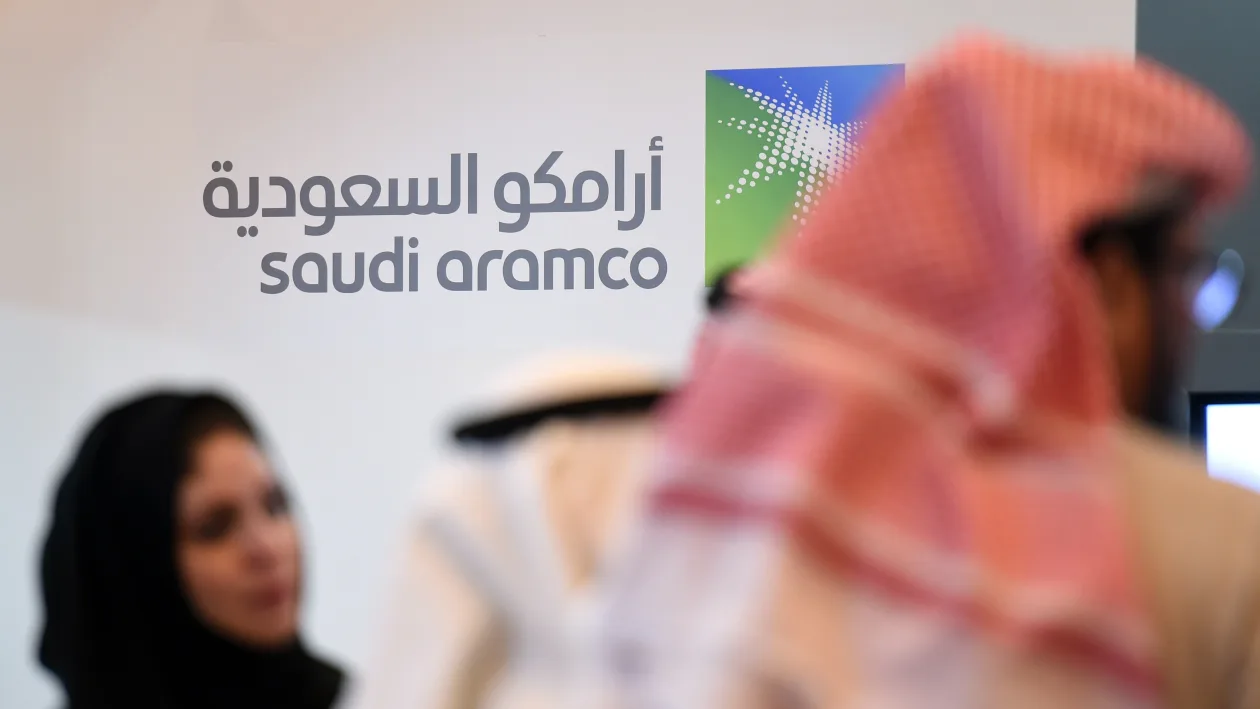
The Iran war threatens “catastrophic consequences” for the global oil market, the CEO of Saudi oil giant Aramco has warned.
Amin Nasser told an earnings call on Tuesday that the war had caused “a severe chain reaction” and “a drastic domino effect” beyond shipping, “on aviation, agriculture, automotive, and other industries.”
“There will be catastrophic consequences for the world’s oil market. The longer the disruption goes on and the more drastic the consequences for the global economy,” he said, adding that it was “by far the biggest crisis” faced by the region’s oil and gas industry.
Aramco’s Ras Tanura refinery was hit by a projectile last week, amid widespread Iranian drone and missile attacks on the Gulf states in response to U.S. and Israeli strikes on it.
The price of oil surged amid supply fears but fell after U.S. President Donald Trump said the U.S. would hit Iran “twenty times harder” if it attempted to halt oil flows through the Strait of Hormuz.
Speaking after Saudi Aramco reported full-year 2025 earnings that beat analysts’ estimate, Nasser warned: “With the current geopolitical crisis, global inventories, which are already at a five-year low, would see downwards at a faster rate.
“Global spare capacity is mostly concentrated in this region, so it is absolutely critical that shipping resumes in the Strait of Hormuz.”
On Monday, the spokesman for Iran’s Ministry of Foreign Affairs told CNBC that oil tankers passing through the Strait of Hormuz “must be very careful.”
“As long as the situation is insecure, I think all tankers, all maritime navigation, must be very careful,” said Esmail Baghaei, who is also head of the Center for Public Diplomacy.
Aramco’s full-year earnings
The Saudi state oil giant reported a full‑year adjusted net income of $104.7 billion, which it described as “robust growth” despite a year of oil‑price volatility.
Fourth‑quarter adjusted profit came in at $25.1 billion, slightly above the median consensus estimate of $24.8 billion compiled by the company.
Free cash flow for the year reached $85.4 billion.
The company also declared a base dividend of $21.89 billion for the fourth quarter, up 3.5% from a year earlier, to be paid in the first quarter of 2026. The company remains one of the world’s biggest dividend payers and a crucial source of income for the Saudi state.
Total shareholder distributions for the year reached $85.5 billion, as the company continued to prioritize payouts despite easing crude prices in 2025.
Aramco also announced a share buyback program of up to $3 billion over 18 months.
Shares of Aramco have risen sharply in recent sessions as oil prices surged amid fears of supply disruptions in the Middle East.
Cash flow
Aramco generated $136.2 billion in operating cash flow last year, driven by what the company said was steady production and strong downstream results. Capital investments totaled $52.2 billion, in line with company guidance and slightly below 2024 levels.
“Our disciplined capital allocation, combined with lower‑cost and highly reliable operations, drove strong financial performance in a year marked by price volatility,” Nasser said in the earnings release.
Crude prices during 2025 fell to $69.2 per barrel, from $80.2 in 2024, reflecting a softer oil market and rising global supply. In recent days, though, crude spiked to nearly $120 per barrel as war in the Middle East escalated.
CNBC
Business
Bitcoin is doing something major assets haven’t done since Iran war
Main Management founding partner and CEO Kim Arthur thinks bitcoin is in a classic crypto winter — a so-called phenomenon that tends to happen every four years. According to Arthur, it’s in the bottoming stage.
“Bitcoin was trading at $125,000 five months ago. So, it was down 50-plus percent when this conflict erupted,” he said in the same interview. “I do like the fact that it’s outperformed a lot of other asset classes [since the war,] but… you have to widen the lens a little bit on that.”
Arthur, who has exposure to bitcoin, indicates he’s taking a passive investing approach to the cryptocurrency right now.
“For myself as an asset allocator and a portfolio manager… I look at bitcoin as my benchmark, and then I bench everything else against that,” said Arthur, who added bitcoin has been an extremely difficult master to beat particularly since 2021.
The digital currency has gained about 15% over the past five yeA bitcoin comeback may be underway.
Just as the cryptocurrency was kicking off its latest winning week, ProShares’ Simeon Hyman was emphasizing a bullish bitcoin trend on CNBC’s “ETF Edge.”
“If you look at bitcoin, it’s up a little bit and equities are down [since the Iran war began,]” the firm’s global investment strategist said on Monday.” “So, I think the diversification story really holds in in this current environment.”
As of Friday’s market close, bitcoin gained 5% this week — with most of the gains coming over a 24-hour period. Plus, it’s up roughly 8% since the Iran war started on Feb. 28.
Meanwhile, the S&P 500 and gold are down more 3% since the war with Iran began, and the tech-heavy Nasdaq is off more than 2%.
ProShares is active in the cryptocurrency space — operating more than a dozen cryptocurrency ETFs. It launched the ProShares CoinDesk 20 Crypto ETF (KRYP) last month. It’s up nearly 5% since the Iran war began, but the fund is off about 7% since its early February debut.
Despite bitcoin’s recent strength, it’s still down more than 40% from its record high of $126,198 reached last October.
Main Management founding partner and CEO Kim Arthur thinks bitcoin is in a classic crypto winter — a so-called phenomenon that tends to happen every four years. According to Arthur, it’s in the bottoming stage.
“Bitcoin was trading at $125,000 five months ago. So, it was down 50-plus percent when this conflict erupted,” he said in the same interview. “I do like the fact that it’s outperformed a lot of other asset classes [since the war,] but… you have to widen the lens a little bit on that.”
Arthur, who has exposure to bitcoin, indicates he’s taking a passive investing approach to the cryptocurrency right now.
“For myself as an asset allocator and a portfolio manager… I look at bitcoin as my benchmark, and then I bench everything else against that,” said Arthur, who added bitcoin has been an extremely difficult master to beat particularly since 2021.
The digital currency has gained about 15% over the past five years.
CNBC
Business
Gold prices fall on firmer dollar
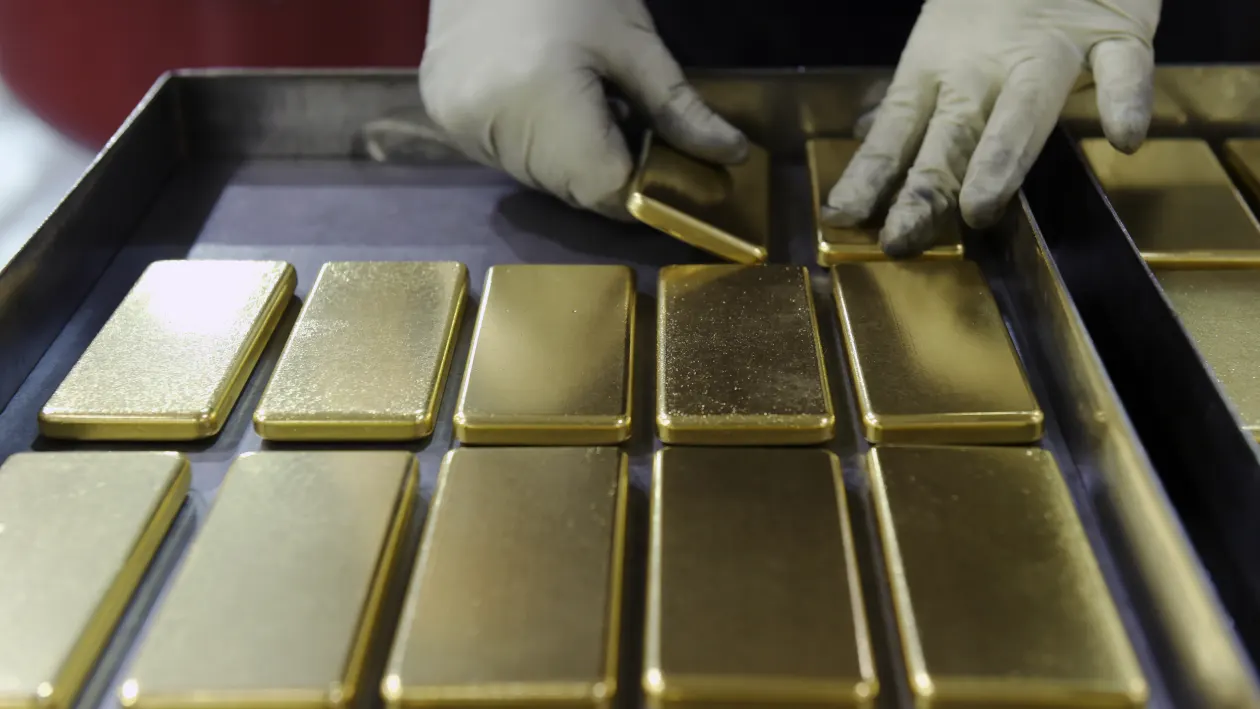
Gold fell about 2% on Monday, as a stronger U.S. dollar weighed on the greenback-priced bullion, while higher energy costs fueled inflation concerns and further dimmed the prospects for near‑term reductions in interest rates.
Spot gold was down 1.7% at $5,082.51 per ounce, as of 0233 GMT. U.S. gold futures for April delivery were down 1.4% at $5,099.40.
The dollar rose to a more-than-three-month high, making bullion more expensive for holders of other currencies.
The U.S. 10‑year Treasury yields climbed to a one-month high, raising the cost of holding non‑yielding gold.
“Gold is on the back foot today despite the market tumult, with triple-digit oil prices boosting the dollar on inflation fears and scaled back rate-cutting expectations,” said Tim Waterer, KCM Trade chief market analyst.
Crude oil prices surged more than 20% to above $110 per barrel as the expanding U.S.-Israeli war with Iran led some major Middle Eastern oil producers to cut supplies amid fears of prolonged disruption to shipping through the Strait of Hormuz.
“Much of gold’s price rise over the last 12 months was predicated on a dovish outlook for U.S. interest rates, but given the inflation risk presented by $100 per barrel oil, rate cuts are no longer a given and gold has repriced accordingly,” Waterer said.
Investors expect the U.S. Federal Reserve to keep interest rates steady at the end of its two-day meeting on March 18, as per CME Group’s FedWatch tool. The odds of a June hold, which were below 43% last week, climbed to more than 51%.
Bullion tends to thrive in a low-interest-rate environment as it is a non-yielding asset.
Meanwhile, raising geopolitical tensions in the Middle East, Iran on Monday named Mojtaba Khamenei to succeed his father, Ali Khamenei, as supreme leader, signalling that hardliners remain firmly in charge.
Spot silver dropped 2.2% to $82.50 per ounce. Spot platinum fell 2.8% to $2,076.07, and palladium was down 1.2% at $1,605.12.
CNBC
Business
Why 2026 could set a new high score for the video game industry

Gaming’s not just for kids anymore. The majority of Baby Boomers play video games every week, too, and Candy Crushing grandparents also contribute to the $60 billion-plus industry.
We’re on track to spend more on video games this year in the United States than ever before.
2025 was the video game industry’s second-biggest year on record, according to data from the Entertainment Software Association, Circana and Sensor Tower. We only spent more on games when we were locked down with nothing to do but play Animal Crossing in 2020.
And 2026 could be even bigger.
It used to be a real boom-or-bust industry. Like Hollywood, but instead of everyone rushing to go see “Wicked,” everyone would rush to buy the newest PlayStation or Nintendo gaming system, and wait for months or years for the next installment of “Zelda” or “Star Wars” or “Madden.”
Those booms still happen. There was a boom when the Nintendo Switch came out last June.
But there aren’t as many busts anymore.
“Pretty much everybody who wants to play can now, because of the proliferation of smartphones all over the world and the drop in costs for bandwidth and access,” said Dmitri Williams, communications professor at the University of Southern California.
And most people do want to play. One in three people over 80 years old and the majority of Baby Boomers play video games every week.
“This is not one demographic. Young kids don’t spend enough to spend $60.7 billion by themselves,” said Aubrey Quinn with the Entertainment Software Association, a trade group. “I feel like every time I sit on a plane next to a woman 50 or older, she’s got her iPad out or her phone out, and she is doing some sort of puzzle-matching-something game.”
The 8-year-old Roblox warriors and the 80-year-old Candy Crush-ers are primarily spending on free-to-play games. These are the ones where you can grind for hours without paying a cent, but you get interrupted every five minutes with an ad, and if you just spent $4.99 per month you could get rid of the ads and unlock this special currency that would make building your virtual garden go way faster. If you’ve ever done that, you added to the $60.7 billion gaming industry.
The other growing model is gaming subscriptions. Just like you pay for Spotify and Netflix, you might buy a season pass that unlocks cool costumes and catchphrases for your character.
Even as these other revenue sources have grown, 2025 also got a good old fashioned boost from the new Nintendo console.
And this year is set to get a boost too.
“‘Grand Theft Auto VI’, that’s something that we’ve been waiting for over a decade,” said Sam Aune with the digital analytics group Sensor Tower. “Everyone thinks that ‘GTA VI’ is going to be one of the hugest moments in maybe gaming history when it comes out later this year. Fingers crossed.”
“Grand Theft Auto” has a little bit of everything that makes games profitable. You’ll pay a lot of money for it, you can play online and pay money for cool bells and whistles, there’ll be clips on social media from content creators which act as free advertising, and it’ll generate the same everybody’s-doing-it fervor as dressing in pink and going to see the Barbie movie.
“The one big tent pole sometimes is something that people are rallying around the way that you’d say, ‘Well, nobody watches the same thing anymore, except for the Academy Awards and the Super Bowl. Sometimes that’s the equivalent in games,’” Williams said.
Market place


How countries are coping with the Iran war energy shock

Iran war risks ‘catastrophic’ oil market impact: Aramco CEO

Eli Lilly unveils multi-dose Zepbound pen

Is February 2026 really a once-in -283-years MiracleIn?

Algeria, Burkina Faso, Côte d’Ivoire win AFCON 2025 openers

Bascom Palmer Eye Institute Abu Dhabi and Emirates Society of Ophthalmology Sign Strategic Partnership Agreement
-
Discover2 months ago
Is February 2026 really a once-in -283-years MiracleIn?
-
 Football3 months ago
Algeria, Burkina Faso, Côte d’Ivoire win AFCON 2025 openers
-
 Health3 months ago
Bascom Palmer Eye Institute Abu Dhabi and Emirates Society of Ophthalmology Sign Strategic Partnership Agreement
-

 Health2 months ago
NMC Royal Hospital, Khalifa City, performs rare wrist salvage, restoring function for young patient
-

 Health4 months ago
Emirates Society of Colorectal Surgery Concludes the 3rd International Congress Under the Leadership of Dr. Sara Al Bastaki
-

 Health4 months ago
Born Too Soon: Understanding Premature Birth and the Power of Modern NICU Care
-

 Football4 months ago
Globe Soccer Awards 2025 nominees announced as voting opens in Dubai
-

 Health3 months ago
Decline in Birth Rate in the UAE