
politics
UAE downs 9 ballistic missiles, 33 drones on March 14
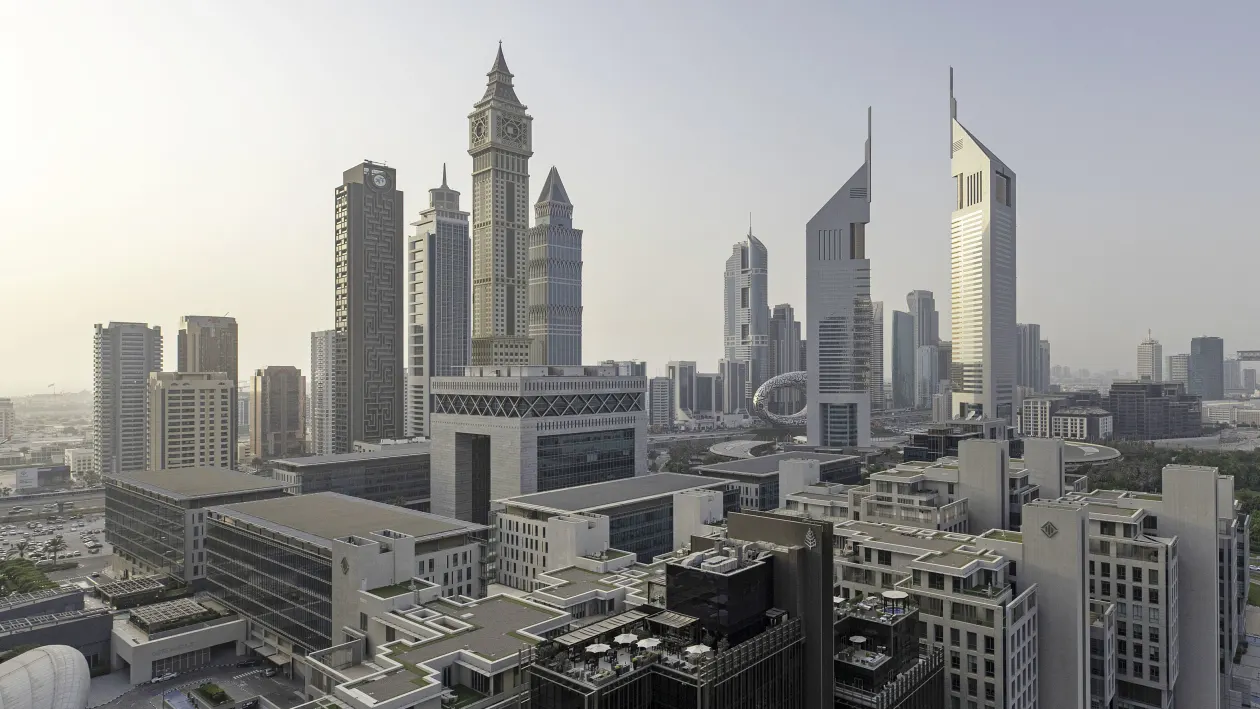
The UAE’s air defence systems intercepted nine ballistic missiles and 33 drones on 14 March 2026, which authorities said were launched from Iran, according to a statement from the Ministry of Defence.
The ministry said that since the start of the Iranian attacks, the country’s air defences have dealt with a total of 294 ballistic missiles, 15 cruise missiles and 1,600 drones.
According to the statement, the attacks have resulted in six deaths involving individuals of Emirati, Pakistani, Nepali and Bangladeshi nationalities.
Authorities also reported 141 injuries ranging from minor to moderate among individuals of multiple nationalities, including Emirati, Egyptian, Sudanese, Ethiopian, Filipino, Pakistani, Iranian, Indian, Bangladeshi, Sri Lankan, Azerbaijani, Yemeni, Ugandan, Eritrean, Lebanese, Afghan, Bahraini, Comorian, Turkish, Iraqi, Nepali, Nigerian, Omani, Jordanian, Palestinian, Ghanaian, Indonesian and Swedish nationals.
The Ministry of Defence said it is fully prepared to deal with any threats and to respond decisively to any actions that could undermine the country’s security, adding that efforts continue to safeguard the UAE’s sovereignty, stability and national interests.
Gulf News
politics
US-Iran talks end in Doha, focus on Hormuz
Iran and the United States concluded a round of indirect talks on Wednesday with no sign they had made headway toward a lasting peace, focusing instead on issues that they said had been resolved when an interim agreement was announced two weeks ago.
Sources familiar with the discussions said negotiators for the two countries spent two days in Doha discussing maritime traffic in the Strait of Hormuz and unfreezing Iran’s funds, two critical issues under the initial agreement.
The next meeting will take place after funeral processions for Iran’s late Supreme Leader Ayatollah Ali Khamenei, who is due to be buried on July 9, Qatar’s Foreign Ministry said.
The Doha discussions produced “positive progress” on issues related to the memorandum that halted the war in June and were “building on the outcomes” of a summit in Switzerland, the ministry spokesperson said in a post on X.
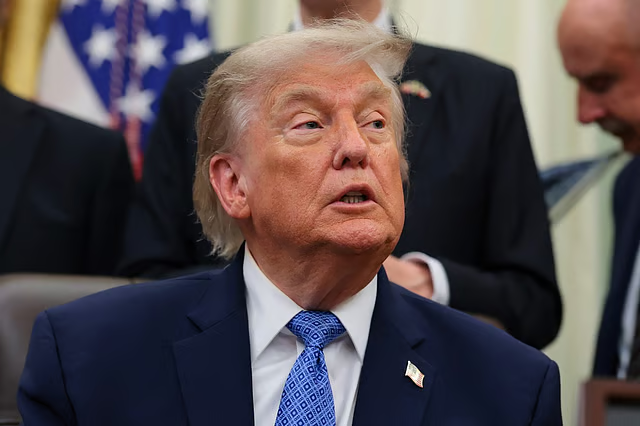
In Washington, U.S. President Donald Trump said the two sides were making progress on possible limits to Iran’s nuclear program — the main reason he launched the war along with Israel in February. “The denuclearization of Iran is moving along well,” he told reporters. “They’ve had very good meetings, and we’ll see.”
But the sources said the nuclear program did not come up in the talks, which were technical in nature.
U.S. Vice President JD Vance said that matter would be addressed later. “Obviously, we’re worried about the nuclear issue, we’re going to start talking about that,” he told reporters.
American and Iranian negotiators held separate meetings with Qatari and Pakistani mediators, Qatar’s foreign ministry said.
Trump’s son-in-law Jared Kushner and top U.S. envoy Steve Witkoff, dispatched to the region for what the White House had billed as “high-level” talks, did not attend the sessions, according to a source who spoke on condition of anonymity.
The leader of Iran’s delegation, Deputy Foreign Minister Kazem Gharibabadi, said the talks concluded. Neither side said whether they had managed to bridge any of their differences.
WHO CONTROLS THE STRAIT?
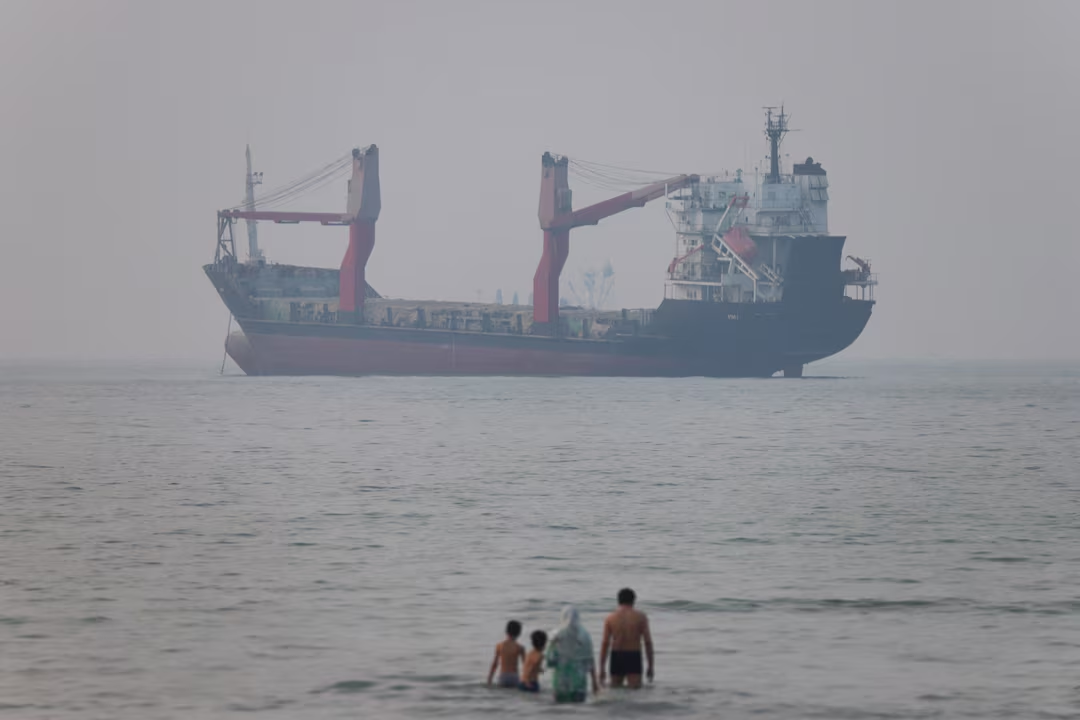
The initial deal calls for Iran and the United States to allow shipping to resume through the Strait of Hormuz, which handled one-fifth of global oil and liquid natural gas trade before the war. Though traffic has partially resumed, the status of the strategic waterway remains unclear and the two countries exchanged strikes last weekend following an Iranian attack on a cargo ship.
Iran is determined to win international recognition of its control over the strait even if it has to do so by force, two senior Iranian sources said, and has repeatedly said it will assess tolls on shipping starting in mid-August, after a toll-free period specified by the initial agreement expires.
Trump’s comments on Wednesday played down the possibility of a return to all-out war with Iran. “I think they’ve come a long way,” he said.
Oil prices fell to their lowest level in four months following Trump’s remarks, and analysts cut their price forecasts for the first time since the war began.
Iran’s state media said on Wednesday that a foreign container ship had run aground in shallow waters outside the shipping route designated by Iranian authorities.
“Hormuz continues to reopen but it’s patchy, unpredictable, and not fully transparent,” said Vandana Hari, founder of oil market analysis provider Vanda Insights.
Several European countries have offered to help clear mines from the Strait, but Germany’s defense minister Boris Pistorius said he did not expect his country to participate, citing Iran’s unwillingness to cooperate with other countries.
GN
politics
Trump says Iran talks begin as Tehran denies meeting
Mixed signals over US-Iran diplomacy kept the Middle East on edge after President Donald Trump announced talks in Qatar would begin on Tuesday, only for Tehran to deny any negotiations were planned. The uncertainty came as commercial shipping slowly resumed through the Strait of Hormuz, though traffic remained below normal levels. Meanwhile, Iran confirmed the death of a senior IRGC Navy official in a vehicle accident as efforts continued to preserve the fragile US-Iran ceasefire agreement. Follow our live updates:
06:33 AM, 30 June 2026
Trump says Iran meeting to take place in Qatar
US President Donald Trump said Iran has requested a meeting that will be held Tuesday in Qatar, despite Tehran denying any direct negotiations were planned with Washington on the deal aimed at ending the Middle East war.
The announcement came after Iran held its first talks with Oman on managing the Strait of Hormuz since the US-Iran deal was signed, and as Washington and Tehran agreed to halt their attacks, which had strained the agreement.
“IRAN HAS REQUESTED A MEETING. IT WILL TAKE PLACE TOMORROW IN DOHA!” Trump posted Monday on his Truth Social platform, without specifying the participants.
05:26 AM, 30 June 2026
IRGC Navy spokesperson Mohammad Akbarzadeh dies in reported ‘car rollover’
Mohammad Akbarzadeh, political deputy (and spokesperson) of the IRGC Navy, died in reported vehicle rollover accident in Iran’s Kerman province.
Iranian state-affiliated media, including Fars News Agency (IRGC-linked), reported that Akbarzadeh, political deputy (and spokesperson) of the IRGC Navy, died after his vehicle overturned on a road in Kerman province (southeastern Iran, on the route from Yazd).
Emergency responders transported him to a medical center, where he succumbed to his injuries.
Authorities have launched an investigation into the cause and circumstances.
This is corroborated by multiple outlets carrying the Iranian reporting, including Iran International, RIA Novosti/Sputnik affiliates, and social media summaries from observers.
03:45 AM, 30 June 2026
Lebanon state media says Israeli strike hits south
Lebanese state media on Monday said an Israeli strike hit the country’s south, despite a framework accord signed by the two countries last week aimed at securing a peace deal.
“Israeli warplanes carried out an airstrike targeting the area between the southern Lebanese towns of Qantara and Deir Seryan,” the state-run National News Agency said.
03:07 AM, 30 June 2026
Iran says ‘expert delegation’ heading to Qatar this week
Iran said a delegation of experts would travel to Doha this week for discussions on the implementation of the memorandum of understanding signed with the United States earlier this month.
“An expert delegation from the Islamic Republic of Iran will travel to Doha later this week” to discuss the implementation of clauses of the memorandum, foreign ministry spokesman Esmaeil Baqaei said.
“We have not yet entered the stage of negotiating a final agreement,” he said, noting that “over the coming days, we will not have any negotiation meetings with the US side at any level”.
01:14 AM, 30 June 2026
Conflicting US-Iran signals keep Mideast on edge
Mixed signals over planned US-Iran negotiations injected fresh uncertainty into Middle East diplomacy, as Tehran denied that any talks were scheduled despite President Donald Trump’s announcement that American and Iranian officials would meet in Qatar this week.
Iran’s Foreign Ministry said no negotiations with the US were planned “at any level” in the coming days, contradicting Trump’s statement that talks would begin Tuesday. The conflicting messages have raised questions about the status of diplomatic efforts following weeks of heightened tensions in the region.
The uncertainty comes as negotiators seek to build on a fragile US-Iran memorandum of understanding intended to reduce hostilities and pave the way for a broader agreement addressing Iran’s nuclear program, regional security and sanctions relief.
01:02 AM, 30 June 2026
Shipping through Hormuz inches higher: tracking data
More than two dozen commercial vessels transited the Strait of Hormuz over the past 24 hours, according to MarineTraffic data, as global shipping companies cautiously resumed operations ahead of expected US-Iran peace talks that President Donald Trump said are scheduled to begin Tuesday.
The vessel count remains well below pre-conflict levels, underscoring continued concerns over security in one of the world’s most strategically important maritime chokepoints.
MarineTraffic data showed that 25 commercial ships passed through the strait during the latest 24-hour period. The outbound traffic from the Persian Gulf included six oil tankers and eight cargo vessels, while five tankers and six cargo ships entered the Gulf.
12:53 AM, 30 June 2026
Iran says implementation of MoU underway, final talks not yet started
Iran’s Foreign Ministry Spokesperson Esmail Baghaei has briefed reporters on developments related to the implementation of a memorandum of understanding (MoU), outlining progress on key provisions, according to official remarks.
He said the United States has issued the necessary authorisations under Article 10 of the MoU, related to oil sales, and that Iran is monitoring the implementation process.
Baghaei added that steps are also underway regarding the release of Iran’s frozen assets.
However, he clarified that negotiations on a final agreement have not yet begun.
He further said any visit by US representatives to Qatar is unrelated to the Iranian delegation’s trip, which is focused solely on follow-up implementation issues, including Article 11 of the MoU.
12:39 AM, 30 June 2026
Israel says Trump linked Iran and Lebanon conflicts during talks
US President Donald Trump pushed to link the wars in Lebanon and Iran during ceasefire discussions, despite Israel’s preference to treat them as separate conflicts, Israeli Defence Minister Israel Katz said, according to a CNN report.
Katz said he regretted the linkage but noted it “served an American interest,” adding that Washington wanted to advance negotiations with Iran and saw the Lebanon front as an obstacle.
He also said Israel had no territorial ambitions in Lebanon but remains in place with US backing until Hezbollah is fully disarmed.
According to Katz, Israel has destroyed large parts of border villages and said displaced residents from southern Lebanon will not be allowed to return.
He also reiterated that Israel would strike Beirut’s Dahiyeh district if Hezbollah attacks northern Israel and said it is prepared to resume operations against Iran if diplomacy fails or if Iran attacks Israel.
12:19 AM, 30 June 2026
UAE allows citizens to travel to Lebanon
The UAE Ministry of Foreign Affairs has announced that Emirati citizens will be allowed to travel to Lebanon from Monday, June 29, 2026.
The ministry said registration through the Tawajudi service is mandatory before travel, adding that citizens will not be allowed to leave UAE ports of departure before completing the registration process to avoid travel procedures being suspended or legal accountability.
In a statement posted on Instagram, the ministry said UAE citizens must also notify the relevant authorities of their return through Tawajudi.
It urged citizens to contact the ministry in emergencies on +97180024.
The decision follows an earlier travel ban announced on April 30, 2026, when the ministry barred UAE citizens from travelling to Iran, Lebanon and Iraq due to regional developments and called on citizens already in those countries to leave and return to the UAE as soon as possible.
GN
world
Qatar vessel incident: One killed, one injured
The Ministry of Interior of Qatar has confirmed that maritime search operations were carried out after a vessel carrying two individuals failed to return at its scheduled time, prompting an immediate response from the General Directorate of Coasts and Borders Security.
According to an official statement, routine monitoring and verification procedures first flagged the delay, following which maritime patrols launched a search operation on the evening of Saturday, June 27, 2026
The Maritime Search and Rescue Team located the vessel in the early hours of Sunday, June 28, the ministry said.
One killed, one injured in incident
The ministry confirmed that a Qatari citizen was killed after sustaining injuries from shrapnel linked to military activity in the area.
An Arab resident on board was also injured and has been hospitalised in stable condition.
Condolences and ongoing investigation
The Ministry of Interior extended its condolences to the family of the deceased, praying for mercy upon him, and wished a swift recovery for the injured individual.
It added that investigations are ongoing in accordance with established legal procedures.
GN


Emirates Specialty Hospital Expands Cancer Care Services in Dubai with Opening of Dedicated Chemotherapy Unit

When Rheumatoid Arthritis Threatened Her Independence: How the Right Diagnosis Helped Her Get Her Life Back

Saudi German Hospital Dubai Launches Mental Health and Wellness Center for Children and Adolescents

Araghchi, Oman Sultan discuss transit, stability in Muscat

UAE’s café culture keeps growing despite price pressure

Netflix to Livestream BTS Comeback Concert
-
 politics6 months ago
Araghchi, Oman Sultan discuss transit, stability in Muscat
-
 UAE10 months ago
UAE’s café culture keeps growing despite price pressure
-
 Entertainment9 months ago
Netflix to Livestream BTS Comeback Concert
-
 Discover9 months ago
Is February 2026 really a once-in -283-years MiracleIn?
-

 Football10 months ago
Algeria, Burkina Faso, Côte d’Ivoire win AFCON 2025 openers
-

 Health10 months ago
NMC Royal Hospital, Khalifa City, performs rare wrist salvage, restoring function for young patient
-

 Health10 months ago
Bascom Palmer Eye Institute Abu Dhabi and Emirates Society of Ophthalmology Sign Strategic Partnership Agreement
-

 Health11 months ago
Emirates Society of Colorectal Surgery Concludes the 3rd International Congress Under the Leadership of Dr. Sara Al Bastaki