
People
inside Coco Chanel’s sun-kissed sanctum for art’s superstars
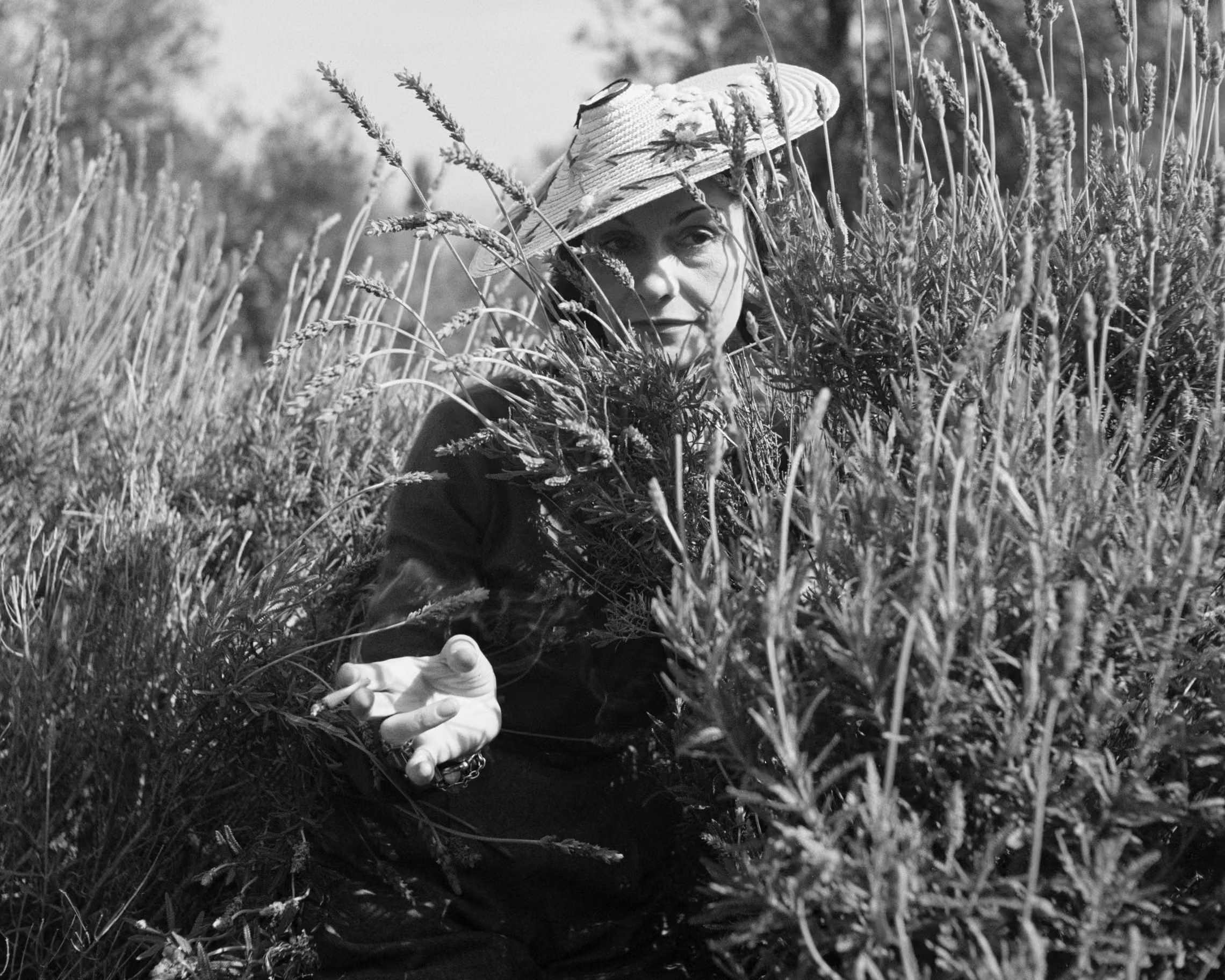
The French fashion designer’s lavish Mediterranean villa was frequented by everyone from Dalí to Garbo to Stravinsky to Churchill. It has now been lovingly restored – with a thrillingly bolstered library
It is the place where Salvador Dalí painted The Enigma of Hitler, a haunting landscape featuring a giant telephone receiver that seems to be crying a tear over a cutout picture of the Fuhrer. Conceived in 1939, the work seems to anticipate war. It is also the place where Winston Churchill penned parts of his multi-volume A History of the English-Speaking Peoples, and painted its dappled-light view. Somerset Maugham would visit, too, as well as novelist Colette, composer Igor Stravinsky and playwright Jean Cocteau, partaking in lunches that lasted all day and night, with debates and discussions around artistic ideas.
This place is La Pausa: the Mediterranean villa in the hills of Roquebrune-Cap-Martin, once owned by husband-and-wife writing duo Charles Norris Williamson and Alice Muriel Williamson, followed by French fashion designer Gabrielle “Coco” Chanel, who had it rebuilt from scratch at the end of the 1920s. She later sold it to an American publishing couple, Emery and Wendy Reves.
Sprawling yet monastic, the white-walled house – with blue shutters and black crittall windows clustered in groups of five in homage to Chanel’s No 5 – has just been restored to its original specification, after being bought back by the luxury fashion brand in 2015. Architect Peter Marino studied countless photographs to get it right: from the concrete squares that sit in a quilt-like grid atop the lawn, to the potted cacti at the foot of the staircase. Original bedframes were bought, too, as well as the installation of an entirely mirrored bathroom, not unlike the one at 31 Rue Cambon, Coco’s address in Paris.
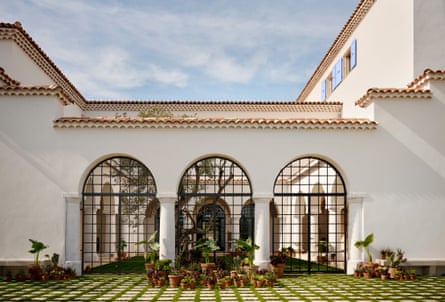
Revived … La Pausa, the Mediterranean villa in the hills of Roquebrune-Cap-Martin, in 2025. Photograph: Jason Schmidt/Chanel
But when you’re restoring a place with such a rich past, how do you capture its spirit and honour its history, bringing to life the words and minds of its illustrious guests to create the most multi-layered portrait of all? Simple. You build a library.
Bookshelves are, after all, a record of the knowledge, characters and ideas that have swirled around someone’s mind, reflecting their interests, desires, and – often in the case of artists or writers – their friends. Whenever I go to an artist’s studio, or visit someone’s house, I am always intrigued about what lives on their shelves – especially if the writers are no longer alive. It’s an intimate way to get to know someone. It deepens our understanding of them, gives us access to their interior worlds, takes us to places we didn’t know they’d been to.
I remember visiting Alice Neel’s Manhattan apartment and seeing her many books on topics that ranged from socialism to psychoanalysis. And Leonora Carrington’s Mexico City home was filled with texts on Buddhism, magic, Celtic history, as well as books on loneliness.
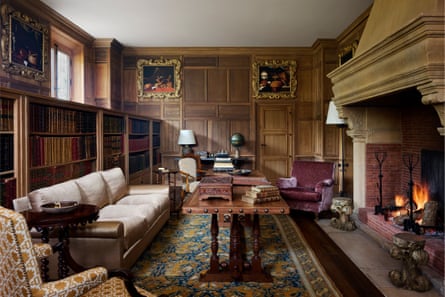
‘We believe the future is made with fragments of the past’ … La Pausa’s library after Peter Marino’s restoration. Photograph: Jason Schmidt/Chanel
But what if someone’s library could continue to grow after they had gone? Had the residents of La Pausa lived on, what books would they continue to read, and how might we perceive them in the present day?
This was the challenge set by Chanel during the restoration, aided by the specialist booksellers at Hatchards in London (where Coco’s lover, the Duke of Westminster, had an account) and 7L in Paris. Given a list of 100 books that Chanel was known to have cherished and read, the team set about choosing titles in line with her scholarship. But they also wanted to create a broader portrait of her friends and interests, and who and what passed through La Pausa. “And what has happened since, across music, architecture and fiction,” says Yana Peel, president of arts, culture and heritage at Chanel.
Entering the wood-panelled library was like stepping into the minds and worlds of those who stood there before me. Adorning the shelves were biographies of Picasso by John Richardson, rare editions of Cecil Beaton’s Scrapbook, dust jackets designed by Vanessa Bell for her sister Virginia Woolf’s book, The Waves; plus first editions of those who frequented the French Riviera, such as F Scott Fitzgerald and Ernest Hemingway. There were also books by (or about) guests who visited the villa, from Somerset Maugham to Greta Garbo, as well as glimpses into their private worlds, with the bounded volumes of Jean Cocteau’s letters.
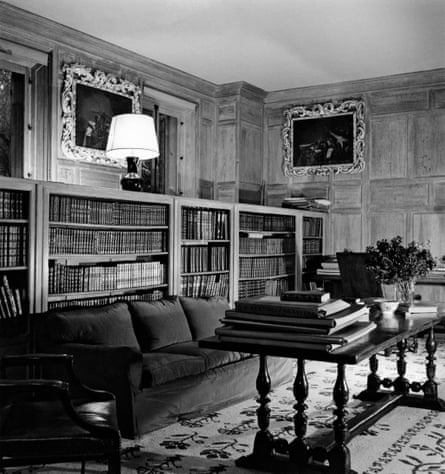
Glimpses into private worlds … the La Pausa library. Photograph: Roger Schall © Schall Collection
“We believe the future is made with fragments of the past,” says Peel, which is why the library is also brought up to date with works by Hilary Mantel, Margaret Atwood, Zadie Smith and Rachel Cusk. To make it even more contemporary, says Peel, “as our guests come to visit, they will leave their own books”.
Standing back and admiring the library as a whole, you sense a sprawling web of artists who worked, conversed, inspired and consumed each other’s works – directly and indirectly – across centuries. And at its centre was a woman who shaped, and is still shaping, culture today. But why would a library be important to her?
Books were the very medium Coco harnessed to escape from her hard and humble beginnings. Aged 11, she was left parentless after her mother died of tuberculosis and her father abandoned his daughters at an orphanage run by Cistercian nuns at the abbey of Aubazine. Never with much money, she found canny ways to access books: “I read everything … We never bought books at home; we cut out the serial from the newspaper and we sewed together long sheets of yellow paper. That’s what little Coco lapped up in secret … I copied down whole passages from novels … [they] taught me about life.”
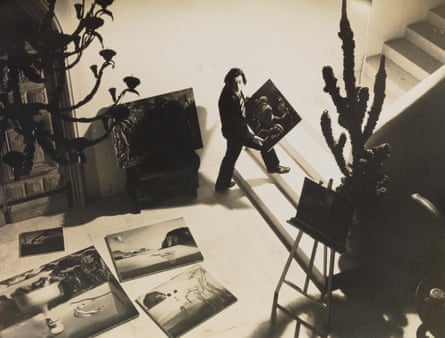
Salvador Dalí at La Pausa in the 1930s. Photograph: Photo Wolfgang Vennemann. © Fundació Gala–Salvador Dalí © Salvador Dalí, Fundació Gala–Salvador Dalí/ADAGP, Paris 2025
Books were a place of refuge, a conduit for Coco to dream about being the heroine in her own fabulous tale and imagine countless other lives for herself. One has to remember how difficult it would have been for her as a woman to build an empire from scratch, decades before women even got the vote in France. It would have required huge amounts of imagination and storytelling. As she said: “Books have been my best friends.”
So when it came to restoring La Pausa, the library was to be its beating heart and pensive mind, the place that held everything together. In many ways, aren’t all of our bookshelves? They reflect back to us what we’ve done, learned, and have stored inside of us; who we’ve met (sometimes literally as well as imaginatively) and how we’ve escaped. As with Neel’s and Carrington’s, they reveal our curiosities, secrets and desires. Memory palaces housing our sprawling inner worlds, they can be the most intimate portraits of all. Take a look at your own bookshelves and ask: “What do they say about me?”
Story by The Guardian
People
Elon Musk shares heartfelt post on Father’s Day
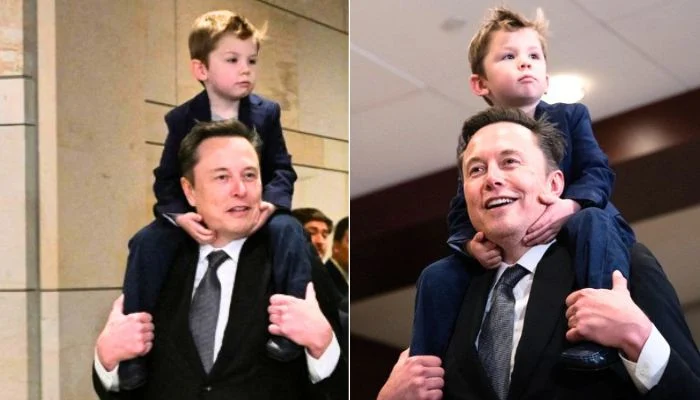
Elon Musk shared a heartfelt post on Father’s Day today.The SpaceX, Grok and Tesla Boss shared an adorable picture with his family to cherish sweet memories on this special day.
The news came after Musk’s mother Maye Musk posted a picture with two of her sons-Elon Musk and his brother Kimbal Musk.
Kimbal is a well-known South African-American restaurateur, chef, and entrepreneur. He is famous for co-founding software companies with Elon in the 1990s, serving on the Tesla board of directors.
Maye Musk also posted a Father’s Day tribute on X that included her family photos celebrating her own father.
Additionally, Musk also tweeted a separate post for wishing everyone a very Happy Father’s Day and then followed up in a reply to the tweet with “I love all my kids so much.”
Elon Musk and his father, Errol Musk, are widely reported to have a strained and largely estranged relationship and he rarely post anything with him.
Importantly, the Grok founder also introduced a cute feature after he updated the platform’s layout on X today so that clicking the “Like” button triggered a special Father’s Day animation, causing many users to share older family pictures to test it out.
Father’s Day is celebrated on the third Sunday of June each year in many countries, including the UK and the US.
The Int’l News
People
Trump turns 80, faces a foe he can’t defeat
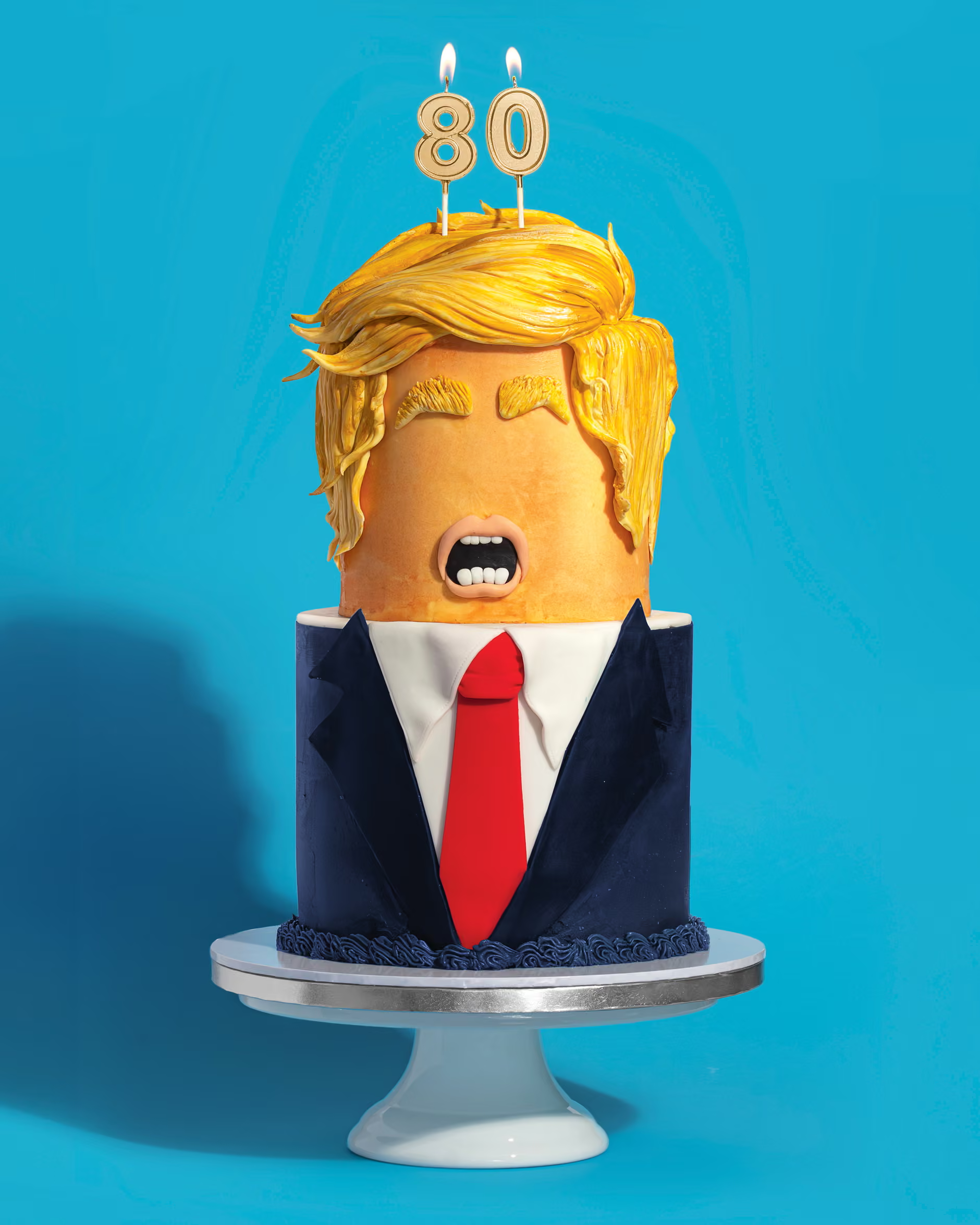
The main Nuremberg trial ended, Winston Churchill warned of an iron curtain descending across Europe, It’s a Wonderful Life received its premiere and, at Jamaica hospital in the borough of Queens, New York, Donald John Trump was born.
It was 1946, also the birth year of George W Bush and Bill Clinton, but on Sunday the current US president celebrates his 80th birthday in a style uniquely his own. Trump will stage a night of cage fighting on the once-pristine White House south lawn as part of events marking the 250th anniversary of US independence.
The blend of visceral bloodsport with political spectacle under metal scaffolding may offer brief respite for a president also consumed with an unpopular war, rising inflation, plunging poll numbers and a foe not even he can bully, bomb or outrun: Father Time.
“Donald Trump has been showing signs of his age for quite some time,” said Tara Setmayer, a former Republican communications director on Capitol Hill. “It’s on display almost daily as he struggles to stay awake during official meetings, he is more irritable and going on rage tangents and throwing temper tantrums when he doesn’t get his way. These are not signs of a well-adjusted adult approaching 80 years old.”
Trump is the oldest US president sworn into office and, some critics say, showing alarming evidence of decline as he becomes an octogenarian, a status that more than half his predecessors never achieved and that found Gerald Ford playing golf, Jimmy Carter immersed in humanitarian work and Ronald Reagan organising his memoirs.
A Reuters/Ipsos poll in February found 61% of Americans thought Trump had become more erratic with age, and another survey in April showed a majority concerned about his temperament and mental sharpness.
The physical evidence is increasingly difficult for his aides to conceal, though they aggressively project a narrative of vigour. The president has been photographed with bruised hands and swollen ankles, ailments his medical staff continually brush off as a “slight” issue. He sees 22 medical specialists, an apparent new bar for presidents.
His public calendar has grown notably sparse, dominated by hours of nebulous “executive time” and behind-closed-doors policy meetings. After a flurry of travel early in the year, he has largely retreated to the cocoons of the White House and his clubs in Florida and New Jersey since launching the Iran war in February.
Then there is the sleeping. Trump has increasingly been caught on camera apparently nodding off at public events, most recently at an NBA basketball finals game at New York’s Madison Square Garden. When clips of his shut eyes go viral, his aides claim he was merely blinking or listening intently.
The White House spokesperson Davis Ingle has insisted that Trump remains “the sharpest and most accessible president in American history”. The president himself frequently boasts of “acing” cognitive tests that would have flummoxed past presidents.
But to observers the spin is not only unconvincing but counterproductive. Kurt Bardella, a political commentator and former congressional aide, said: “It’s not surprising that someone who’s on the doorstep of being octogenarian is showing signs of ageing. Father Time is undefeated: that applies to everybody including Donald Trump and I would have more confidence in him as commander-in chief if he would just admit that rather than try to hide it.”
Bardella added: “Hiding it is a sign of weakness. Being transparent, forthright, honest about it would actually be a sign a strength. The fact the White House seems to be going to all these ridiculous and laughable measures to try to convince us that he’s not actually ageing is insulting to American people, it’s idiotic, it reeks of desperation, and it makes everyone believe that there’s more going on than meets the eye. And what meets the eye isn’t that great. Secrecy breeds mistrust.”
If that complaint sounds familiar it is because Trump’s predecessor, Joe Biden, who was 78 when he took office in 2021, faced similar charges. White House officials were accused of covering up Biden’s failing capacities. Jill Biden, the former first lady, wrote in a new memoir that she feared her husband had had a stroke when he delivered a feeble debate performance that forced him to abandon his campaign for reelection.
Bill Whalen, a policy fellow at the Hoover Institution thinktank in Stanford,
California, said: “It’s very difficult, if not a double standard, for every Democrat to criticise Donald Trump as too old and too out of touch, with Democrats having basically zipped their lips in 2024 and not dared say the same about Joe Biden. In this age of whataboutism it is another bad case of whataboutism.”
Trump’s critics, however, reject the comparison, contending that the concerns around him are greater by orders of magnitude.
Setmayer, who now runs the Seneca Project, a female-led political action committee, said: “There is a fair discussion to be had about a president’s physical and emotional condition, no matter what age they are. However, if Joe Biden was exhibiting the same level of cognitive incoherence and physical decline in public the way Donald Trump currently is, the apoplexy on the right would be palpable.”
Such commentators argue that Trump’s already volatile psyche is fraying as his stamina wanes. Even with the nation at war with Iran and citizens strained by the cost of living, he touts a $1.4bn White House ballroom, revamp of the Lincoln Memorial reflecting pool and plans for a huge triumphal arch.
His speeches, which have long been rife with non sequiturs and long stories, increasingly ramble, repeat and take baffling tangents. He is prone to more scattergun statements that give Republican strategists heartburn, such as “I don’t think about Americans’ financial situation”, “I don’t care about the midterms and “I love the inflation”. At dead of night he pushes election conspiracy theories and torrents of AI slop on social media.
Nowhere was this more evident than during an explosive confrontation last week with the journalist Kristen Welker on the NBC show Meet the Press. Factchecked on his false claims of election rigging, Trump flew off the handle and said Welker was either “crooked” or “stupid”, then abruptly ended the interview: “Let’s call it quits because I’ve had enough. Thank you darling. Have a good time.”
Larry Sabato, the director of the Center for Politics at the University of Virginia, watched the broadcast with genuine alarm. “The man was out of control,” he said. “How he kept himself from having a heart attack or stroke, I don’t know. You saw his face. He’s orange at the best of times but he was oscillating between red and orange. I really did think he was going to have a heart attack.”
As for Trump’s penchant for napping, Sabato offers a silver lining of sorts. “You shouldn’t laugh but it’s the only time he looks peaceful,” he quipped. “It’s the only time his mouth is shut and he’s not saying something obnoxious, so I’m always grateful when he nods off.
“But what that proves to me is there’s nobody in his family or his staff that can control him in any way. There’s no way somebody his age should be staying up practically the whole night or intermittently waking up and sending out these crazy memes – dozens of them sometimes. It’s unbelievable.”
The prospect of such a man having access to the nuclear codes would typically prompt discussion of his cabinet invoking the 25th amendment to the constitution to remove him from office. No one expects Trump’s team of loyalists to even remotely consider such an option. Republicans in Congress have shown flickers of dissent lately but preserved a conspiracy of silence around the age issue.
Trump is therefore expected to remain in office for his 81st and 82nd birthdays, potentially as a lame duck president facing political mortality if Democrats win one or both chambers of Congress. For many people such age
brings wisdom, wistfulness and a softening of hard edges, but for Trump it seems only to exacerbate his character and make him more truly himself.
Gwenda Blair, a Trump biographer, said: “Any sign of grace? Perspective? Those have not emerged. Those are the kind of rewards of being older that many people experience but not him. Instead he’s doubling down on the exact same behaviour patterns that he has always had: what’s in it for me and how can I get the maximum out of it and then more than that?”
The questions over the judgment and temperament of the world’s most powerful man, and the potential risks to the global order, will only grow louder in the coming years, according to Larry Jacobs, the director of the Center for the Study of Politics and Governance at the University of Minnesota.
“The recklessness of decisions, the failure to think in a logical evidence-based way, the acting on impulse, the losing track of reality versus the talking points – all these things are being accelerated by Trump’s age. Most presidents’ skill set begins to fade as they age; Trump has got such a limited toolkit that it’s putting him over the edge.”
Jacobs warned: “America and the world are in for a frightening two years. Trump has too much power for someone with so little connection to reality. Age is making Trump an even more dangerous president.”
David Smith– the Guardian
People
Christopher Lane noticed a ‘sketchy’ detail early in relationship with Wade Wilson
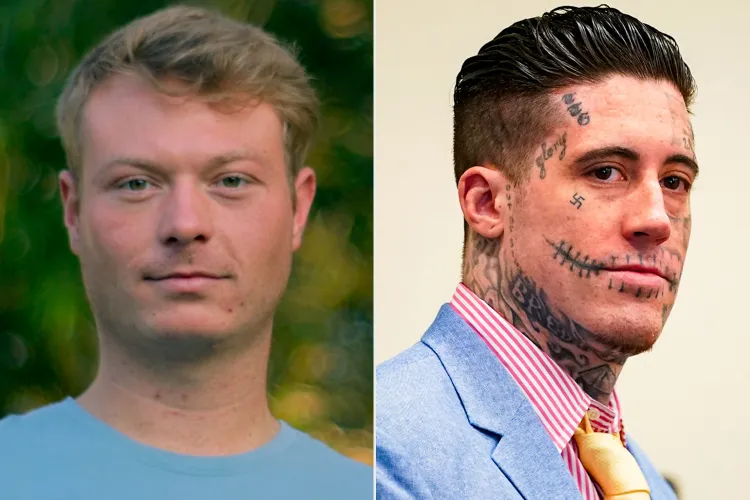
Months before he brutally murdered two women in one day, Wade Wilson began a brief romance with a man named Christopher Lane.
“This was my first relationship with a guy,” Lane said during season 2 of Netflix’s docuseries Worst Ex Ever, which premiered in May 2026. “We enjoyed being together. We did a lot of stuff together. We had fun.”
The two men dated for over a month, during which time Lane claimed that Wilson — who would later be known as the “Deadpool Killer” because of the name he shared with the Marvel character — physically assaulted him with a knife on at least one occasion.
This act of violence, in hindsight, foreshadowed what was to come.
Five months after their relationship ended, Wilson strangled 35-year-old Kristine Melton while she slept after meeting her in a bar in Fort Myers, Fla. Hours later, he lured 43-year-old Diane Ruiz into his car and choked her while he was driving, Gulf Coast News Now reported. He then ran over her body multiple times.
Wilson was convicted of two counts of first-degree murder in June 2024 and received two death sentences.
So, where is Christopher Lane now? Here’s everything to know about his relationship with Wade Wilson and his life after dating the “Deadpool Killer.”
Lane briefly dated Wilson months before his killing spree
The two men met in March 2019 while working at a carnival in Inverness, Fla. A week after being introduced, Wilson moved into Lane’s RV, and they started dating soon after.
He even asked Lane to make their relationship Facebook official, which came as a surprise, given that Wilson had been “so skeptical about being with a guy.”
“Wade said that he was straight when I met him,” Lane said on Worst Ex Ever. “But I was like ‘That seems a little sketchy.’ If you’re straight, you don’t move into a guy’s house with a guy and then want to sleep in his bed.”
He claimed that Wilson attacked him with a knife
After a night of partying and taking a substance Lane believed to be bath salts, Wilson allegedly began “flipping out” over someone breaking into the RV — then threatened to slit Lane’s throat with a knife.
What followed, Lane claimed, was a four-hour altercation in which Wilson choked and stabbed him multiple times in the chest and hand, before throwing him through a pair of sliding glass doors.
Wilson fled, only to return the next day alongside Lane’s sister, covered in blood.
“My sister calmed the situation down, and like, he showed back up with blood all over him and apologized,” Lane said on Worst Ex Ever. “He seemed sincere.”
Wilson wasn’t charged with attacking Lane
Lane didn’t report the incident to the police, and they moved to Key West a month later.
He broke up with Wilson after learning that he had been lying to people about the nature of their relationship.
At the time Worst Ex Ever was released in May 2026, no charges had been brought against Wilson in connection with Lane’s alleged assault.
Where is Christopher Lane now?
According to his Instagram page, Lane still resides in Florida and works in the carnival circuit.
Though he’s mostly kept his history with Wade private, he shared a screenshot on Instagram of his profile views increasing in August 2024 with the caption, “When people find out your the til tok killerWade Wilson’s ex boyfriend lol.”
Worst Ex Ever marked the first time Lane opened up about his relationship with the “Deadpool Killer.”
“Looking back, the night Wade stabbed me could have ended up very differently,” he said on Worst Ex Ever. “I could have been dead.”
PEOPLE


Emirates Specialty Hospital Expands Cancer Care Services in Dubai with Opening of Dedicated Chemotherapy Unit

When Rheumatoid Arthritis Threatened Her Independence: How the Right Diagnosis Helped Her Get Her Life Back

Saudi German Hospital Dubai Launches Mental Health and Wellness Center for Children and Adolescents

Araghchi, Oman Sultan discuss transit, stability in Muscat

UAE’s café culture keeps growing despite price pressure

Netflix to Livestream BTS Comeback Concert
-
 politics6 months ago
Araghchi, Oman Sultan discuss transit, stability in Muscat
-
 UAE10 months ago
UAE’s café culture keeps growing despite price pressure
-
 Entertainment9 months ago
Netflix to Livestream BTS Comeback Concert
-
 Discover9 months ago
Is February 2026 really a once-in -283-years MiracleIn?
-

 Football10 months ago
Algeria, Burkina Faso, Côte d’Ivoire win AFCON 2025 openers
-

 Health10 months ago
NMC Royal Hospital, Khalifa City, performs rare wrist salvage, restoring function for young patient
-

 Health10 months ago
Bascom Palmer Eye Institute Abu Dhabi and Emirates Society of Ophthalmology Sign Strategic Partnership Agreement
-

 Health11 months ago
Emirates Society of Colorectal Surgery Concludes the 3rd International Congress Under the Leadership of Dr. Sara Al Bastaki