
REAL ESTATE
Dubai villa prices jump 206% since the COVID.
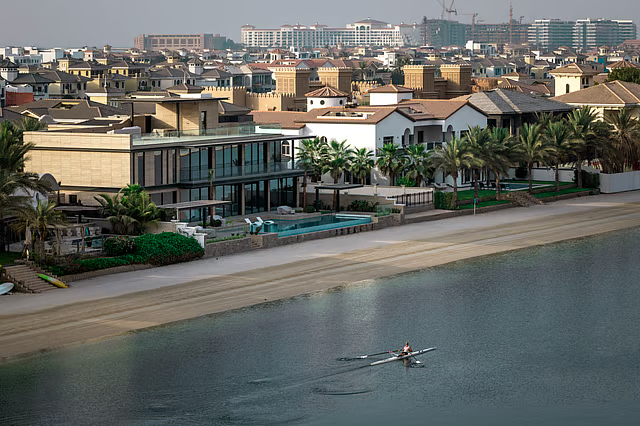
Average freehold villa values in Dubai are now 206% higher than post-pandemic levels, according to data from ValuStrat, and stand 86% above the 2014 market peak. The figures highlight a market that has not only rebounded but also undergone a structural reset.
Badar Rashid AlBlooshi, chairman of Arabian Gulf Properties, said the scale and consistency of the gains signal Dubai’s transition into a more mature and sustainable real estate cycle.
“The 206% increase in average freehold villa values in Dubai compared to post-pandemic levels, and their rise beyond the 2014 market peak by 86%, reflects a structural shift in demand,” AlBlooshi said. “Investors and end users are increasingly focused on quality, location and enduring value.”
Villas lead, apartments catch up
ValuStrat data shows annual capital growth for villas reached 25.5% in 2025, placing them firmly ahead of apartments for another year. However, apartments have reached a milestone of their own.
“Apartment prices have surpassed the 2014 peak for the first time, which represents a healthy indicator of market balance,” AlBlooshi said, adding that the current cycle is “more sustainable than previous cycles”.
Mid-market apartment communities such as Remraam, Dubai Silicon Oasis, The Greens and Dubai Land Residence Complex have recorded some of the strongest annual gains, reflecting steady population growth and demand from both end users and investors.
Prime neighbourhoods drive outsized gains
On the villa side, price growth has been most pronounced in well-established, supply-constrained communities. ValuStrat highlighted Jumeirah Islands, Palm Jumeirah, Green Community West, The Meadows, Victory Heights and Mudon as the top performers.
These areas share a common thread: integrated master planning, mature infrastructure and limited new supply. In an increasingly selective market, these attributes have become decisive.
Luxury districts have also maintained momentum. Palm Jumeirah, Dubai Hills Estate, Al Barari, Downtown Dubai and Business Bay continue to attract capital from global buyers seeking long-term security rather than short-term speculation.
Five years of uninterrupted growth
Independent data from global consultancy Knight Frank reinforces the picture of sustained strength.
Dubai’s residential market has now logged five consecutive years of quarterly price growth, with average values rising 10% year-on-year by the end of Q3 2025. Transaction volumes have reached historic levels, with more than 148,000 home sales worth Dh401.7 billion recorded in the first nine months of the year.
“This extraordinary level of activity underscores Dubai’s growing appeal among both domestic and international investors,” said Faisal Durrani, partner and head of research for MENA at Knight Frank.
After years of rapid acceleration, however, the pace of growth is beginning to moderate.
“After an uninterrupted five-year property price rally, we are starting to see a slowing in the rate of quarterly rises,” Durrani said, noting that this is typical of a maturing cycle rather than a reversal.
Luxury market remains the global outlier
Dubai’s ultra-prime segment continues to defy global trends. In Q3 alone, 103 homes sold for more than $10 million, generating transaction values above $2 billion, a 54% annual increase.
The highest sale of the quarter was a seven-bedroom mansion at Asora Bay in La Mer, which changed hands for Dh350 million.
Will McKintosh, Knight Frank’s head of residential for MENA, said the luxury market is now supported by long-term holders rather than speculative churn.
“Dubai’s luxury market has cemented its status as a safe haven,” he said. “High-net-worth individuals have anchored demand, while a maturing base of resident end users has provided stability across the mainstream sector.”
Supply risks emerging, but unevenly
While demand remains robust, analysts are watching supply more closely. Knight Frank estimates that nearly 331,000 homes could be completed between 2026 and 2030, well above historical delivery rates.
The risk, however, is not evenly distributed.
“There has been a 14% reduction in listings below Dh1 million, while sales in that segment have increased,” said Shehzad Jamal, partner for strategy and consultancy at Knight Frank. “In contrast, stock above Dh25 million is rising faster than transactions.”
That divergence suggests that any market cooling would likely surface first in specific price bands rather than across the board.
What this means for buyers and investors
Freehold ownership remains a core draw, offering full control, rental income potential and eligibility for long-term residency visas, including the 10-year Golden Visa for properties valued above Dh2 million.
AlBlooshi said Dubai’s regulatory framework and economic vision continue to reinforce confidence.
“The emirate’s real estate sector is operating from a position of strength rather than exuberance,” he said.
Knight Frank expects further moderation next year, not reversal. Prime residential prices are forecast to rise around 3% in 2026, while the broader market is expected to grow closer to 1%.
Story by Gulf News
REAL ESTATE
UAE to add 390,000 new homes by 2030 — What it means for prices, rents
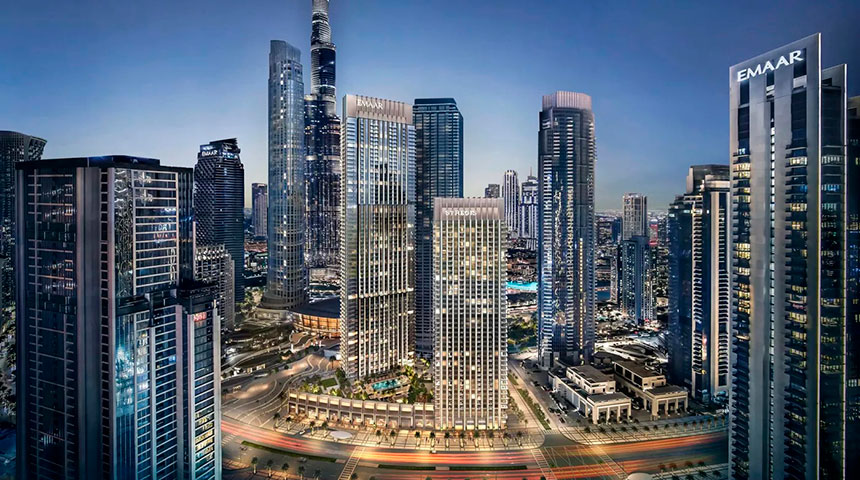
The UAE is set to add around 390,000 new homes by 2030, marking one of the largest residential expansion cycles in recent years, according to a new industry report. The first-ever Alpen GCC Real Estate 2026 report by Alpen Capital shows the country’s residential stock rising from approximately 1.08 million units to about 1.47 million units by the end of the decade.
Dubai is expected to account for the majority of this pipeline, with apartment-led mixed-use communities continuing to dominate new launches, while Abu Dhabi focuses more on premium villas and waterfront neighbourhoods.
Across the GCC, residential supply is expected to increase from approximately 6.26 million units in 2025 to 7.28 million units by 2030, with Saudi Arabia and the UAE accounting for the bulk of the supply.
Saudi Arabia’s residential supply is estimated to grow by 499,000 units between 2025 and 2030, reaching 3.45 million by 2030. Giga projects in Riyadh and Jeddah are expected to fuel this growth.
Sustained growth
According to the report, the GCC’s real estate landscape has undergone a transformation, driven by national agendas to diversify and build a resilient economy. “Dubai has led this transformation, establishing itself as a global metropolis fuelled by foreign ownership, massive infrastructure investments and ambitious strategies,” said Sameena Ahmad, Managing Director, Alpen Capital.
“Over the next few years, the region’s real estate industry is expected to witness a steady supply across the residential, commercial, hospitality and retail segments, largely supported by continued government spending and investments in building a world-class infrastructure,” she added.
But what does this mean for rents?
A supply increase of this scale typically shifts the balance between landlords and tenants. The report stated that supply growth in the GCC is becoming more “structured” and increasingly aligned with demand rather than speculative expansion. That could reduce the risk of sharp, sudden corrections.
However, with nearly 390,000 additional homes entering the UAE market over five years, rental growth is likely to moderate if deliveries outpace new household formation.
The study highlights that population growth, expatriate inflows and urbanisation remain strong demand drivers.
The UAE’s population, according to Worldometer, has surpassed 11 million in 2025. There isa continued inflow of expatriates and high-net-worth individuals supporting both mid-tier and luxury segments
If those inflows remain steady, the additional supply may ease pressure without triggering a widespread rent correction. But in sub-markets where deliveries cluster heavily, tenants could gain greater negotiating power. Will property prices grow or drop
The report from Alpen stated that supply across the GCC is entering a more disciplined phase, with greater emphasis on mixed-use developments, asset quality and long-term livability.
“Over the coming years, we expect supply–demand dynamics across the GCC to become more balanced. Large-scale developments are being phased more strategically, with a clear emphasis on quality, mixed-use formats, and demand-led execution. We are witnessing that development trends are shifting towards master-planned, sustainable, and technology-enabled communities focused on long-term liveability,” said Sharmin Karanjia, Executive Director, Alpen Capital.
“While certain sub-markets may experience short-term oversupply pressures, well-located and high-quality projects are likely to continue seeing strong absorption and pricing support,” she said.
“Going forward, as major development zones reach operational maturity, investors will have a broad base of high-quality assets maintaining interest from both regional and international buyers”, said Sharmin.
What’s next?
High disposable incomes, steady population growth, expatriate inflows, and a favourable tax environment will remain key demand drivers across the region.
The report stated that future development pipelines will feature mixed-use projects, enhanced asset quality, sustainability, and the integration of residential, commercial and lifestyle components.
Saudi Arabia and the UAE are expected to account for the majority of the upcoming supply, while other GCC markets pursue more targeted and selective growth strategies.
In the commercial segment, office supply across the GCC is estimated to expand from 33.3 million sqm in 2025 to 42.4 million sqm by 2030, with over 65 per cent of new supply delivered in Saudi Arabia and the UAE, as per the existing pipeline.
GN
REAL ESTATE
Buying Property in Saudi Arabia: What to Know in 2026
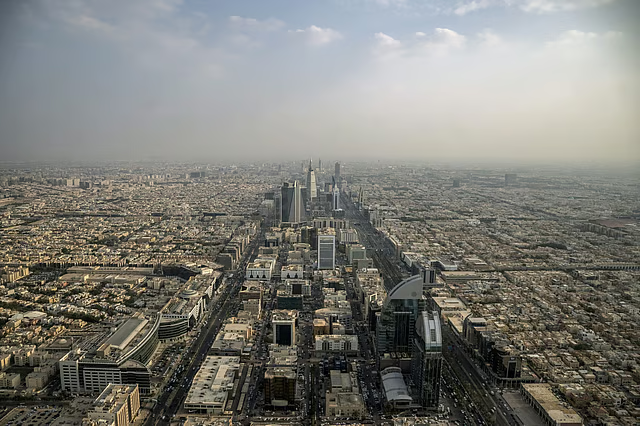
Foreigners, for the first time, are allowed to buy property in Saudi Arabia from January 2026, marking one of the most significant shifts in the Kingdom’s real estate policy in decades. The new law, approved in July 2025, permits non-Saudis to own property within designated zones, opening the door to expats, regional investors and international buyers who until now could only rent or access limited ownership structures.
Who moves first when ownership opens
Early demand is expected to come from expats already living and working in the Kingdom. High-income professionals in Riyadh and Jeddah face sustained rental pressure and now see a realistic path to ownership.
“The earliest beneficiaries are likely to be well-established expats already living and working in Saudi Arabia, particularly higher-income professionals in Riyadh and Jeddah who are facing sustained rental pressure and now have a viable path to ownership,” said Arran Summerhill, COO and co-founder of Holo.
This group already understands local neighbourhoods, employment conditions and regulatory expectations, lowering the friction that often slows first-time buyers in new markets. Rental pressures have been strong enough to prompt authorities to introduce a five-year rent cap in Riyadh, highlighting how tight the residential market has become.
A second wave is likely to include regional and international investors, particularly from the GCC, seeking early exposure to Saudi Arabia’s long-term growth under Vision 2030. These buyers are expected to move carefully, prioritising regulatory clarity, asset quality and long-term fundamentals over short-term gains.
A third segment includes Muslim buyers globally, where ownership in the Kingdom carries both financial and personal significance. “From our perspective, having been active in the Saudi market for over two years, early demand patterns point clearly toward capitalised, intentional buyers who value process certainty and asset quality over speed,” Summerhill said.
No rush, but steady uptake
Despite the scale of the policy shift, expectations of a sudden buying surge may be misplaced. The Saudi framework is more controlled, with ownership opening within designated zones rather than across wide swathes of the market.
“This is more likely to be a measured, selective uptake rather than a sudden surge,” Summerhill said. Resident expats with stable income streams are expected to lead during the first year, while international buyers observe how approvals, financing and resale rules function in practice.
Economic conditions support steady rather than speculative demand. The IMF forecasts Saudi Arabia’s real GDP growth at about 4.0% in 2026, driven largely by non-oil sectors. That backdrop supports household formation and long-term housing demand, rather than rapid trading activity.
Momentum could broaden in the second year if transaction processes smooth out and lenders become more comfortable offering mortgages to foreign buyers. Even then, demand is expected to remain fundamentals-led.
Riyadh first, Jeddah next
Geography will matter. Riyadh is widely expected to feel the earliest impact, combining job creation, income concentration, population growth and rental pressure. Residential momentum has already been strong, with villa prices rising more than 11% year on year in 2025 and transaction volumes increasing quarter on quarter.
Jeddah is likely to follow, appealing to lifestyle-driven buyers and international demand. Transaction volumes in the coastal city rose more than 10% year on year in 2025, while price growth remained more moderate, often making it an attractive entry point for foreign buyers.
Demand is expected to focus overwhelmingly on residential property, particularly homes within professionally managed communities. Commercial and mixed-use assets may draw institutional interest later, but individual expat buyers are likely to prioritise homes over income-producing assets in the early phase.
Designated zones matter
Foreign ownership will initially be limited to designated geographic zones overseen by the Real Estate General Authority. These zones act as a gateway, allowing Saudi Arabia to attract foreign capital while maintaining market stability and regulatory control.
Once the final list of zones and implementing regulations is confirmed, demand is expected to concentrate in a small number of locations offering transaction clarity, community standards and resale confidence. Broader expansion is likely to come gradually as the market matures.
Risks buyers should not ignore
Before making the purchase, the buyers should be aware of the process, as assumptions present the biggest risk. While the law creates a legal pathway, clarity around approvals, fees, ownership structures and resale rights will determine how smooth the experience is in practice.
Liquidity also deserves attention. Early-stage ownership markets tend to have thinner resale depth, making a longer-term holding horizon more realistic than quick exits. “This is where local execution experience matters,” Summerhill said, pointing to the importance of understanding how policy translates into transactions on the ground.
How it compares to the UAE
UAE citizens and expats are eligible to buy under the new framework, according to Zacky Sajjad, director of business development and client relations at Cavendish Maxwell. Ownership is permitted within approved areas, while certain locations, including Makkah and Madinah, remain subject to tighter restrictions.
“Saudi Arabia’s model is newer and more regulated,” Sajjad said. Buyers should expect greater emphasis on approvals, compliance checks and evolving guidance. The UAE, by contrast, offers a more mature and globally familiar investment environment.
Sajjad advises UAE-based buyers to approach Saudi Arabia with a long-term mindset. Due diligence remains critical, particularly around approved zones, resale rules, taxation, registration and financing availability.
A shift in how expats plan their lives
Ownership has the potential to reshape how expats think about living in the Kingdom. Property ownership shifts Saudi Arabia from a temporary posting to a place where longer-term wealth planning becomes viable.
This aligns with national goals. Saudi Arabia targets a 70% homeownership rate by 2030, with official data showing the figure reached about 65% by 2024. Foreign ownership adds market depth and supports a more institutionalised residential ecosystem.
“This reform should be viewed less as a short-term demand catalyst and more as a structural step in the long-term maturation of Saudi Arabia’s real estate market,” Summerhill said.
Saudi Arabia is expected to require more than 1.5 million new housing units by 2030, with nearly half of that demand concentrated in Riyadh. Clear zone definitions, consistent transaction processing and confidence in resale markets will matter a lot.
Handled carefully, foreign ownership could reposition Saudi Arabia as a credible long-term residential market for residents and international buyers alike, encouraging deeper settlement, capital formation and a more sustainable housing ecosystem over the next decade.
GN
REAL ESTATE
Dubai Property Market 2025

Dubai, UAE: Dubai’s real estate sector remained firmly on a growth trajectory in 2025, supported by steady demand and expanding supply. Reflecting these dynamics, dubizzle, the UAE’s leading online marketplace, has released its Annual Dubai Property Market Report, delivering a data-driven assessment of the emirate’s real estate market performance in 2025.
dubizzle’s report showed sustained transactional activity and overall stability across core market segments, including off-plan sales and short-term rentals.
Commenting on the latest market trends, the CEO of Bayut & dubizzle and CEO of Dubizzle Group MENA, Haider Ali Khan, said: “Dubai’s real estate market kept up its momentum throughout the year, with steady demand across the board. We’ve also seen the industry evolve, supported by stronger regulation, new partnerships and emerging innovations like real estate tokenisation, which are adding more confidence and depth to the market. In a fast-moving environment like this, having reliable information really makes a difference. At dubizzle, we focus on bringing verified listings and data-led insights to the table, so buyers, investors and renters can make decisions with clarity and confidence. With a strong pipeline of handovers and new launches ahead, the coming months should offer a clear view of how the next phase of the market takes shape.”
READY SALES: TOP AREAS AND MARKET TRENDS
Investor and buyer activity continued at a steady pace across Dubai’s most sought-after ready property locations.
- Dubai Marina led the luxury apartment segment, while Jumeirah Village Circle (JVC) and International City emerged as the top-performing mid-tier and affordable apartment markets, respectively.
- DAMAC Lagoons remained the top choice for luxury villas, while Al Furjan and DAMAC Hills 2 led the mid-tier and affordable segments.
- Dubai Investment Park (DIP) recorded the highest increase in the villa segment, with the average price reaching AED 2.17M.
- The per-square-foot price for villas in Dubai Investment Park (DIP) recorded the highest surge, reaching AED 773. Meanwhile, Dubai Silicon Oasis (DSO) saw the sharpest rise in per-square-foot price for apartments, reaching AED 1,501.
- Town Square delivered the highest ROI for mid-tier apartments at 7.72%, while DAMAC Lagoons led the villa segment with a 10.46% return.
OFF-PLAN SEGMENT: DIVERSE OPTIONS AND GROWING INVESTOR INTEREST
Dubai’s off-plan property segment continued to drive growth in 2025, supported by a steady pipeline of new launches and substantial demand.
- Off-plan apartments saw strong demand across established and emerging communities, led by luxury projects in Dubai Marina, Dubai Hills Estate and Dubai Creek Harbour, mid-tier developments in Business Bay, Jumeirah Village Circle and Al Furjan and affordable options in Dubai Investment Park, Dubai Land Residence Complex and Dubai South.
- Off-plan villa interest remained concentrated in master-planned communities, with high-end projects in DAMAC Lagoons, The Valley by Emaar and Mohammed Bin Rashid City, mid-tier developments in Arabian Ranches 3, Mudon and Nad Al Sheba and affordable villa projects gaining traction in R. Hills, Chevalia Estate and Verona.
RENTAL MARKET: STEADY DEMAND, DIVERSE SUPPLY
The rental market in Dubai continued to grow steadily in 2025, fueled by active demand across various neighbourhoods.
- Dubai Marina maintained its status as the preferred choice for luxury apartments, with JVC and International City emerging as the leading destinations in the mid-tier and affordable segments.
- In International City, an affordable apartment community, average rents surged to AED 53k, marking the highest increase in the segment.
- For villa rentals, Al Barsha led the luxury segment. On the other hand, Al Furjan and DAMAC Hills 2 dominated the mid-tier and affordable segments.
- The rent of mid-tier villas in Arabian Ranches 3 surged 45.98% driven specifically by new inventory in Caya, reaching an average of AED 254k. The 4-bedroom villas led the gains, surging by 69%.
SHORT-TERM MARKET: EXPANDING INTEREST AND HEALTHY OCCUPANCY TRENDS
Dubai’s short-term rental market remained strong, driven by steady tourism, flexible living trends and rising demand for quality short-stay options.
- The interest for luxury short-term rentals remained concentrated in prime locations, with significant monthly apartment demand in Dubai Marina, Downtown Dubai and Meydan City, while Palm Jumeirah, Dubai Hills Estate and DAMAC Hills led the segment for high-end villa short-term rentals; the demand for daily luxury apartments stayed anchored in Dubai Marina, Downtown Dubai and JBR.
- JVC, Business Bay and Al Barsha experienced high demand for both monthly and daily apartments, while Arabian Ranches 3 and The Springs witnessed a strong short-term villa rental interest.
- The interest for affordable vacation rentals continued to centre around established districts, with International City, Bur Dubai and Deira dominating the monthly apartment segment, DAMAC Hills 2 led the demand for affordable short-term villas and Bur Dubai, Deira and DSO emerged as key areas for daily rentals.
About dubizzle:
dubizzle, the well-known online classifieds giant in the UAE, is an integral part of homegrown unicorn, Dubizzle Group Holdings Limited. As the UAE’s largest classifieds site, dubizzle plays a pivotal role in connecting buyers and sellers across diverse categories such as properties, cars, jobs, and various goods.
The user-friendly platform, coupled with innovative features, has solidified dubizzle as the go-to destination for both buyers and sellers to effortlessly connect and transact. dubizzle takes pride in the unwavering commitment to values of transparency, authenticity and consumer protection, positioning dubizzle as a preeminent platform for ethical online commerce in the UAE.


Private Credit Investors Rush to Withdraw

UAE moves spring break for schools and universities

How Etihad Rail ferried 350+ UAE passengers back home with Saudi help

Is February 2026 really a once-in -283-years MiracleIn?

Algeria, Burkina Faso, Côte d’Ivoire win AFCON 2025 openers

Bascom Palmer Eye Institute Abu Dhabi and Emirates Society of Ophthalmology Sign Strategic Partnership Agreement
-
Discover1 month ago
Is February 2026 really a once-in -283-years MiracleIn?
-
 Football2 months ago
Algeria, Burkina Faso, Côte d’Ivoire win AFCON 2025 openers
-
 Health3 months ago
Bascom Palmer Eye Institute Abu Dhabi and Emirates Society of Ophthalmology Sign Strategic Partnership Agreement
-
 Health2 months ago
NMC Royal Hospital, Khalifa City, performs rare wrist salvage, restoring function for young patient
-

 Health4 months ago
Emirates Society of Colorectal Surgery Concludes the 3rd International Congress Under the Leadership of Dr. Sara Al Bastaki
-

 Health4 months ago
Born Too Soon: Understanding Premature Birth and the Power of Modern NICU Care
-

 Football3 months ago
Globe Soccer Awards 2025 nominees announced as voting opens in Dubai
-

 Health2 months ago
Decline in Birth Rate in the UAE