
Business
Dubai gold dips on Hormuz jitters
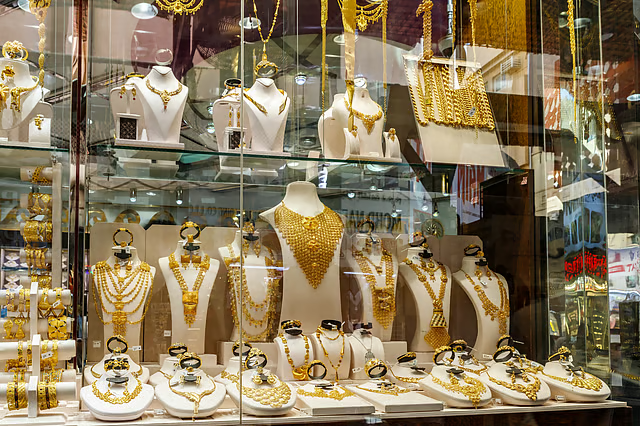
Gold prices in Dubai edged lower on Monday morning, tracking a cautious global market mood shaped by rising geopolitical tensions and renewed inflation concerns.
At 9:19am, 24-karat gold was priced at Dh569 per gram, down from Dh572.25 on Sunday. The 22-karat variant fell to Dh526.75 from Dh529.75 a day earlier, reflecting a steady pullback after last week’s gains.
The latest move comes as investors reassess risk across markets following developments around the Strait of Hormuz, with global cues feeding directly into local bullion pricing. (Check latest UAE gold prices here, alongside prices in Saudi Arabia, Oman, Qatar, Bahrain, Kuwait, and India.)
April trend shows uneven recovery
Price action through April has been far from linear, with gold moving in tight ranges before slipping in recent sessions.
The month opened with 24K gold at Dh573 per gram on April 1, before easing into the Dh563 to Dh566 range over the next few days. A brief recovery saw prices climb to Dh577.25 by April 9, marking the highest level this month, before reversing direction again. Since then, prices have softened, with the current Dh569 level reflecting a gradual cooling from those peaks.
A similar pattern has played out in 22K gold, which moved from Dh530.75 at the start of the month to a high of Dh534.50, before easing back below Dh527 in recent sessions.
This pattern points to a market attempting to stabilise, but still reacting sharply to global triggers.
Geopolitics drives cautious tone
Global markets began the week in a defensive posture after the US signalled plans to blockade the Strait of Hormuz, a key artery for global energy supplies.
Michael Brown, Senior Research Strategist at Pepperstone, said markets are “trading in rather ‘textbook’ risk-off fashion, as participants reach once more for the ‘conflict escalation’ playbook.”
Energy markets have reacted immediately, with crude prices pushing back above $100 a barrel, adding to inflation pressures that are already building across major economies.
Inflation and rates cap upside
Recent US data showed inflation rising at its fastest monthly pace in nearly four years, driven largely by energy costs. That has reinforced expectations that central banks may hold rates higher for longer.
Higher borrowing costs tend to weigh on gold, which does not offer yield, making it less attractive relative to interest-bearing assets.
Brown noted that policymakers are likely to remain cautious, with limited evidence so far of broader inflation spillovers. “The potential for second-round effects remains limited,” he said, pointing to relatively stable core inflation.
At the same time, the dollar has strengthened, adding another layer of pressure on bullion prices globally and feeding into local rate movements in Dubai.
Liquidity and positioning in focus
Gold’s recent moves also reflect broader positioning across markets, where investors have been adjusting exposure amid cross-asset volatility.
Bullion had already seen a sharp correction since late February, falling close to 11% at one stage as investors sold holdings to cover losses elsewhere. While some recovery followed, the current environment suggests that liquidity conditions continue to play a key role in short-term price direction.
GN
Business
Luxury stocks fall on Iran war; Hermès -8%.
Luxury stocks tanked early Wednesday after Gucci-owner Kering and Hermes reported first-quarter earnings that disappointed investors amid a conflict in the Middle East that is hitting luxury sales.
Shares of Hermes plummeted 8.2%, while Kering closed 9.3% lower. The companies’ updates also weighed on the broader luxury sector, with Burberry, Christian Dior, and Moncler all finishing Wednesday’s session lower.
“Despite the slowdown in tourist flows linked to the situation in the Middle East, sales in the group’s stores increased by 7%,” Hermes said Wednesday as it reported sales of 4.1 billion euros ($4.8 billion) in the first quarter, as total sales grew 5.6% year-on-year. Analysts had expected growth of 7.1%.
“Wholesale activity was significantly affected by lower sales to concession stores, particularly in the Middle East and in airports,” the company added.
Hermes shares’ move lower reflects two fears, said Jefferies analyst James Grzinic: a heavily challenged Middle East exposure and concerns around a slowing Chinese momentum.
Meanwhile, Kering reported sales below expectations late Tuesday, as the luxury conglomerate’s biggest brand, Gucci, remained a drag despite efforts by new CEO Luca de Meo to turn the company’s fortunes around.
Gucci sales drop as Kering eyes turnaround
Kering reported first-quarter revenue of 3.57 billion euros, down 6% year-on-year on a reported basis, and flat on a comparable basis at constant exchange rates.
Gucci’s organic sales fell by 8%, a bigger drop than the 6% decline seen in a sell-side consensus cited by analysts.
Kering, which also owns brands Yves Saint Laurent, Bottega Veneta and Balenciaga, also said retail revenue in the Middle East declined by 11% in the first quarter, following growth over the first two months of the year.
With 79 stores in the region, the Middle East represents around 5% of retail revenue.
While results underwhelmed, investors’ attention is firmly on the company’s Capital Markets Day on Thursday, where de Meo will present Kering’s strategic roadmap “ReconKering.”
“Gucci remains our top priority. A comprehensive turnaround is underway, with decisive actions across client, distribution and, above all, the offer,” de Meo said in a statement after the bell on Tuesday.
Bernstein analyst Luca Solca described the results as a “reality check.”
“The 1Q26E update shows what we have observed several times over with self-help stories: it is easier and faster for the market to believe in a revival, than it is for management to produce it,” the analyst said.
It comes as Kering, like many of its luxury peers, has seen years of contraction following a boom that ended in 2022. Demand spiked during the Covid-19 pandemic, leading to price hikes that eventually alienated customers. Coupled with weak demand in China, formerly one of the sector’s main growth drivers, businesses suffered.
Last year, Kering appointed de Meo to get the company back on a growth track. While he was a surprising choice for many, given his background in the auto industry, the stock is up about 10% since he officially took on the role on Sept. 15, outperforming most peers as investors become increasingly optimistic about his turnaround plans.
Middle East impact
While the Middle East region accounts for a relatively small share of big luxury companies’ top lines — typically around mid-single digits — it has been a bright spot in an otherwise mostly sluggish sector where many have struggled to return to growth.
Even so, stocks have fallen markedly since the U.S. and Israel first struck Iran on Feb. 28. Global markets remain volatile as an energy crisis unfolds with the effective closure of the Strait of Hormuz.
“Elevated global uncertainty has generated significant investor anxiety, particularly among those who had been anticipating a long-awaited recovery in luxury demand this year,” said UBS analyst Zuzanna Pusz in late March.
On Monday, industry bellwether LVMH said that the Middle East conflict had a 1% negative impact on organic growth in the quarter.
“When the conflict started, and in the month of March, there was a shortfall and a deterioration of demand between 30% and 70%, depending on the malls, depending on the businesses,” LVMH CFO Cécile Cabanis said.
Analysts, however, noted underlying improvements, including strong spending by customers in the U.S. and China.
CNBC
Business
How is food reaching you despite regional tensions?
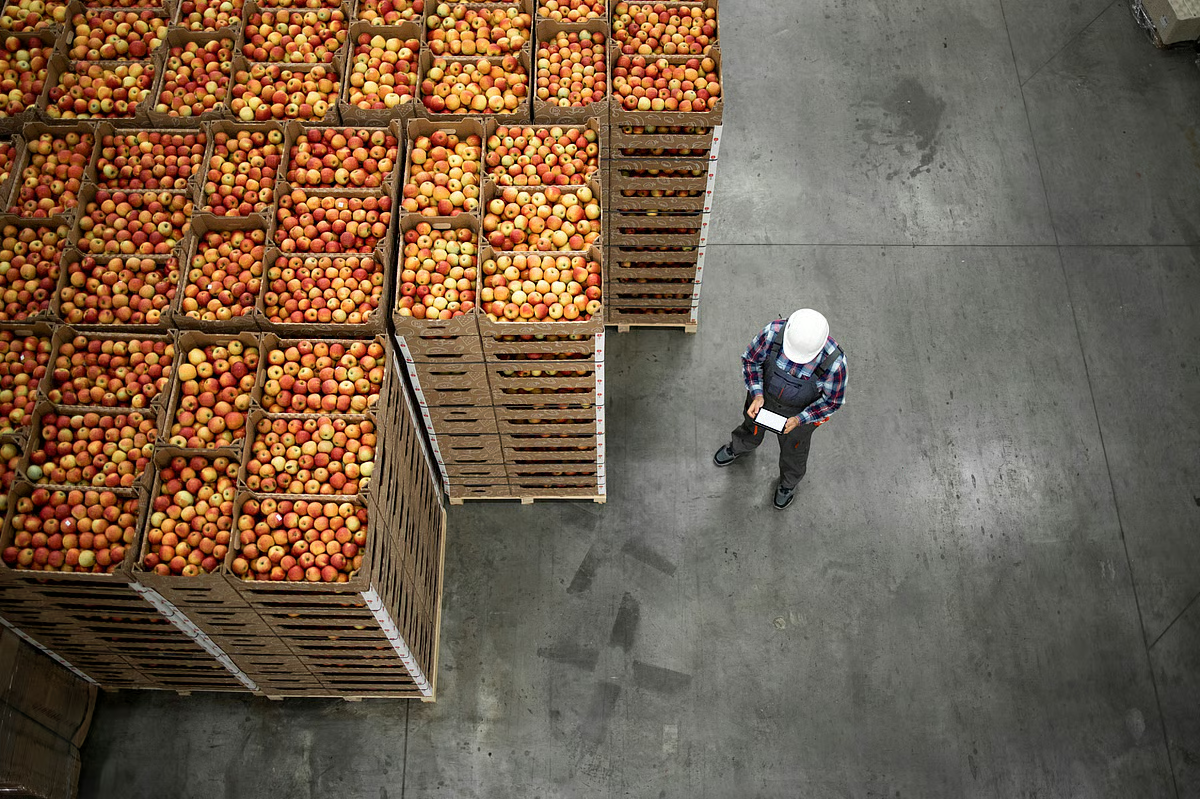
Keeping supermarket shelves stocked has become a logistics exercise playing out across ports, highways and international corridors, with operators reworking supply chains to ensure food and essential goods continue to reach the UAE without disruption.
At the centre of that effort is DP World, which has been prioritising critical cargo from the outset, working closely with government entities, traders and manufacturers to keep imports moving even as traditional shipping patterns face pressure.
In an exclusive interview with Gulf News, Ahmad Yousef Al Hassan, CEO and Managing Director of DP World GCC, said the approach has been structured around a clear hierarchy of needs, starting with food, pharma and agricultural inputs before moving to industrial supply chains that keep local production running.
“We work very closely with the government, especially a lot of the ministries, on the essential goods for the UAE. They fall into food and beverages, along with categories like milk, rice, animal feed and pharma,” he said.
Jebel Ali alone handled about 750,000 TEUs of essential goods last year, with roughly two-thirds tied to food and beverage shipments, providing a baseline for how much cargo needs to be protected during periods of disruption.
Mapping supply, not stockpiling
Instead of stockpiling, the focus has been on mapping demand and ensuring continuity of supply. Traders and manufacturers are being asked to identify their most critical imports, allowing DP World to prioritise cargo and route it through the fastest available channels.
“There’s enough essential goods, there’s no panic,” Al Hassan said, adding that the emphasis remains on keeping trade moving rather than building excess inventory.
That approach extends to sourcing as well. Where traditional suppliers face delays, alternative markets in India and Pakistan are being lined up, with feeder vessels used to move goods quickly into UAE ports. Other feeder operators have also been encouraged to follow the same prioritisation model to ease congestion and speed up turnaround times.
Cold chain gets added support
The fresh food supply has required additional intervention, particularly along longer inland routes. DP World has expanded refrigerated container capacity and introduced stopover solutions to maintain temperature control.
For instance, a dedicated inland facility has been introduced that allows refrigerated containers to plug in and stabilise before continuing their journey, reducing the risk of spoilage during extended transit.
“We have this reefer pit stop that will help out as well,” Al Hassan said, pointing to a broader push to reassure traders that temperature-sensitive cargo can be handled reliably.
Additional generator units have also been deployed to power refrigerated containers on trucks, giving logistics teams more flexibility across different corridors.
Global network steps in
The company’s international footprint is playing a central role in rerouting cargo flows. Ports in India and Pakistan are being used as staging points for transshipment, helping to keep eastern Gulf ports from becoming congested. For F&B alone, India and Pakistan together account for nearly 30% of the imports through Jebel Ali.
DP World is also using its integrated shipping and logistics solutions to design alternative routes and keep critical cargo moving efficiently across markets.
“This global network is what really pushes people to call us right away,” Al Hassan said, describing how customers are seeking real-time solutions to move construction materials, raw materials and food-related agricultural products.
Corridors expand across the region
Closer to home, multiple corridors are being activated to keep trade flowing. Routes through Fujairah and Khorfakkan are already operational, while discussions continue with Sohar Port in Oman to expand capacity and streamline processes.
Further north, DP World’s terminal in Jeddah is being used to absorb additional cargo, supported by ongoing talks between UAE and Saudi authorities to establish a bonded corridor that would allow smoother movement of goods between the two markets.
Each additional route adds flexibility for traders, reducing reliance on any single port or shipping lane.
Managing congestion to control costs
Even with supply holding steady, shipping and logistics costs have come under broader market pressure as diesel prices, insurance premiums, freight rates and other cost drivers evolve.
Al Hassan said that DP World’s focus is on keeping trade flowing efficiently and reducing congestion.
Faster clearance, better routing and coordinated planning help to ease pressures across the wider supply chain and limit the knock-on effect on end consumers.
Authorities are also closely monitoring prices, drawing on mechanisms developed during previous disruptions to maintain oversight across key categories.
Keeping the system balanced
The challenge is not only about moving food. Industrial supply chains must also remain active, from raw materials for manufacturing to equipment needed for ongoing projects.
Balancing these competing demands has required constant coordination among regulators, port operators, and private-sector players, ensuring that essential goods move first while maintaining sufficient capacity for broader trade.
The system has held so far, supported by a combination of planning, infrastructure and rapid decision-making.
That, according to Al Hassan, is what keeps shelves stocked without tipping into panic or shortage, even in a strained operating environment.
GN
Business
Wall Street firm sends analyst to Hormuz, shares findings
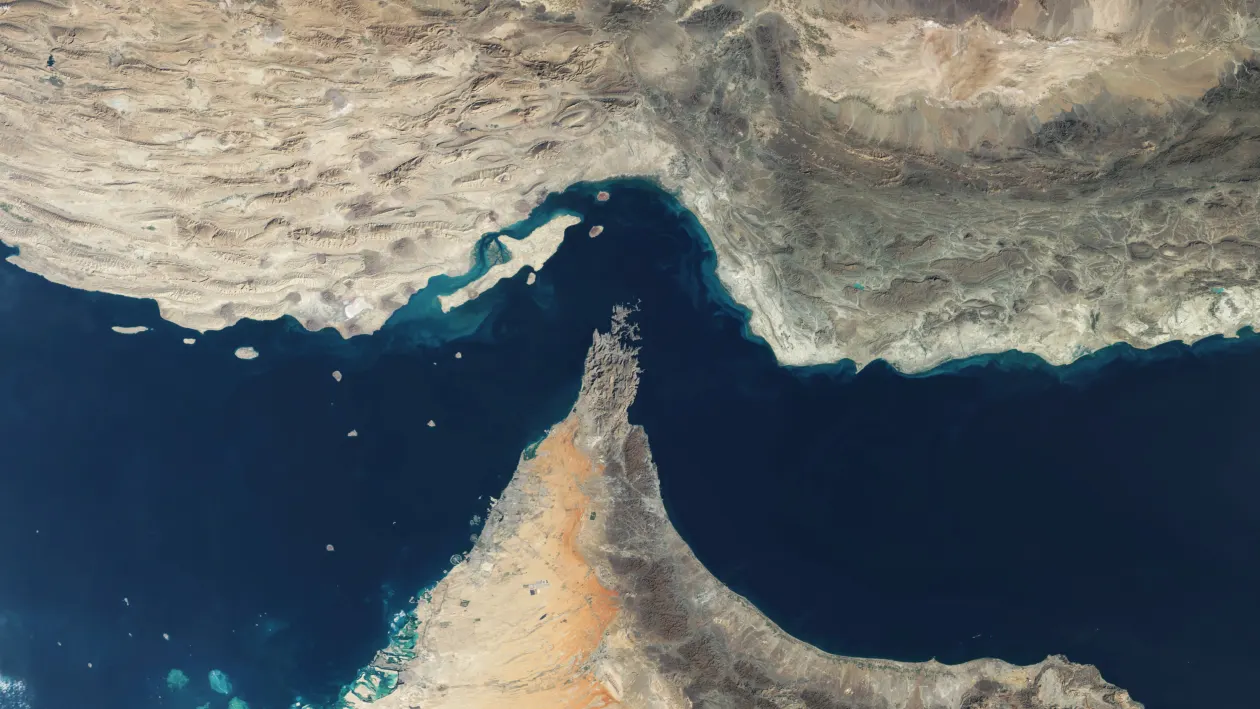
As the world’s oil traders parsed satellite images and official statements for clues on the fate of the Strait of Hormuz, one research firm seems to have taken a different approach: It says it sent an analyst directly into the conflict zone.
Citrini Research, which issued a market-shaking bearish call on artificial intelligence earlier this year, said it dispatched an analyst to Oman’s Musandam Peninsula, where the person traveled by boat to observe shipping activity firsthand amid escalating tensions between Iran and the U.S. What the analyst claims to have found challenges the dominant narrative gripping global markets that the critical oil artery is effectively shut.
Instead, the analyst, whom the firm did not name due to the sensitivity of the activity, found that vessels are still moving through the strait, with traffic picking up in recent days to roughly 15 ships per day, according to the firm’s report posted on Substack. While far below normal levels, the flow suggests the disruption is partial and evolving rather than absolute.
“Tankers passing through four or five a day, completely dark on AIS. The volume, they said, is higher than what the data suggests, and it’s been accelerating in the past couple days through the Qeshm channel,” Citrini’s post said.
AIS is a ship-tracking system that broadcasts a vessel’s location, speed, identity and route. Citrini asserts that the actual shipping volume is higher than reported data as many ships turn off their transponders and are not visible on official tracking systems.
Citrini didn’t immediately respond to CNBC’s request for comment.
Based on the Substack post, the analyst’s interviews with fishermen, smugglers and regional officials point to a system in which Iran is selectively allowing ships to pass. Tankers are required to secure approval before transiting waters near Iranian territory, creating what the firm described as a “functional checkpoint” rather than a blockade, Citrini said in its post.
“This should drive home that what we’ve described as our view of the conflict is nuanced — it doesn’t fit neatly into ‘strait open crude down’ or ‘strait closed crude parabolic,’” the firm said.
To be sure, the findings are based on a single field trip and anecdotal accounts that are difficult to independently verify, particularly given limited transparency in the region.
The firm said it expects a more prolonged disruption that embeds a lasting risk premium into oil markets. That view underpins a preference for longer-dated crude exposure, with the firm favoring December 2026 WTI contracts over the front month.
“We think the disruption is longer and the new normal involves a permanent risk premium, but that we’ll likely see as high as 50% of pre-conflict traffic within the next 4-6 weeks,” Citrini said.
CNBC


Thunderstorms to batter Saudi Arabia until Sunday

Distance learning continues for some UAE schools Monday

Lebanon-Israel 10-day ceasefire begins

Is February 2026 really a once-in -283-years MiracleIn?

Algeria, Burkina Faso, Côte d’Ivoire win AFCON 2025 openers

NMC Royal Hospital, Khalifa City, performs rare wrist salvage, restoring function for young patient
-
Discover3 months ago
Is February 2026 really a once-in -283-years MiracleIn?
-
 Football4 months ago
Algeria, Burkina Faso, Côte d’Ivoire win AFCON 2025 openers
-
 Health3 months ago
NMC Royal Hospital, Khalifa City, performs rare wrist salvage, restoring function for young patient
-

 Health4 months ago
Bascom Palmer Eye Institute Abu Dhabi and Emirates Society of Ophthalmology Sign Strategic Partnership Agreement
-

 Health5 months ago
Emirates Society of Colorectal Surgery Concludes the 3rd International Congress Under the Leadership of Dr. Sara Al Bastaki
-

 Health5 months ago
Born Too Soon: Understanding Premature Birth and the Power of Modern NICU Care
-

 Lifestyle5 months ago
Saudi Arabia Lifestyle Trends 2025: What You Need to Know About Fitness, Wellness, Healthy Eating & Self-Care Growth
-

 Football5 months ago
Globe Soccer Awards 2025 nominees announced as voting opens in Dubai