Education
Countries with the most stressful education systems
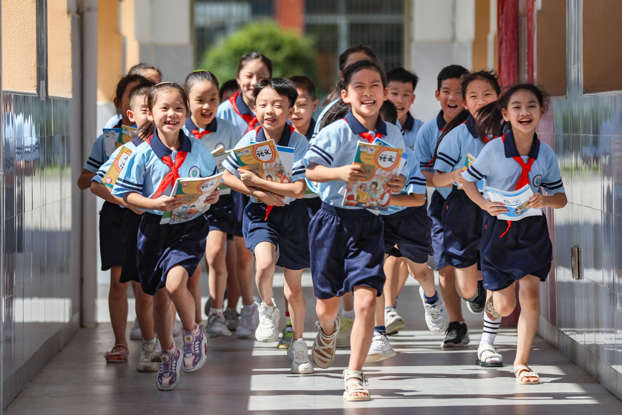
Education systems vary in different parts of the world, but one thing is common across the board. Education is seen as a way to achieve success and a better quality of life, especially in emerging economies. Unfortunately, it has become a source of immense pressure for students of all ages.
Be it high expectations, the constant stress of exams, or high-stakes entrance tests that determine their admission to prestigious universities, academic excellence comes at a steep cost for many.
In this gallery, we take a look at the education systems of countries around the world, as well as their most difficult exams and their effect on students’ lives. Curious? Click to know more.
South Korea
Schooling in South Korea consists of four important stages. It includes six years of elementary school, three years of middle school, three years of high school, and two years of junior college or four years of general college education.
The big gatekeeper
South Korea has one of the toughest exams in the world, the Suneung, or College Scholastic Ability Test (CSAT). It is an important milestone in a student’s life as it decides which universities they are eligible for in the future.
Endurance test
Students spend a grueling eight hours attempting the exam, which tests their knowledge and understanding of various subjects. On average, South Korean students spend more than 12 hours per day in their high school years preparing for the exam.
Mental toll
A 2022 survey found that nearly 35% of students experience stress during their schooling years. College students reported higher stress when compared to students of elementary, middle, and high school
Finland
The Finnish school system is lauded for its anti-exam model. Students here consistently outperform peers in the Programme for International Student Assessment (PISA).
Structured path
The education system employs a 9-3-3 structure. Students have to go through a compulsory nine-year mandatory schooling, a three-year upper secondary education, and a three-year university education phase.
Low stress, high stakes
The hardest exam students have to face is the Matriculation Examination, or the Ylioppilastutkinto. This is a nationwide test taken at the end of secondary schooling, and based on the scores, students qualify for university education.
Quiet struggles
University students experience the highest amount of stress. Some reports suggest that about 40% of female students and 28% of male students experience stress and anxiety.
Singapore
In Singapore, education consists of six years of compulsory primary schooling, followed by four to six years of secondary schooling, and one to three years of post-secondary education. At the end of primary education, students have to take the Primary School Leaving Examination (PSLE) to progress to secondary school.
A difficult challenge
One of the toughest exams in the country is the Singapore-Cambridge GCE A-Level.
High achievers
In 2024, the standard pre-university examination was taken by 10,889 students. Out of these, 10,255, or 94.2% of the students, achieved a passing grade in at least three H2-level subjects that cover a wide variety of topics.
Race for grades
The desire to excel and achieve good grades is one of the most common reasons for stress among students. A 2022 study reported that 90% of secondary school students experienced stress at some point in their education.
India
The Indian school system is one of the most stressful in the world. There are state-specific education systems, a nationwide Central Board of Secondary Education (CBSE), and international education systems.
A stepping stone
Students have to appear for the matriculation exam after completing 10 years of primary and secondary education. The grades allow them to choose a career path in science
Make it or break it
The toughest exam is the Joint Entrance Exam, which prepares students for a university education in STEM subjects. Nearly 1.3 million students attempted the 2025 exam, but only 54,378, or 24% of the applicants, qualified.
China
Schooling starts at the age of six, with the elementary schooling lasting until the age of 12. This is followed by three years of middle school and another three years of high school.
Under pressure
The Gaokao, or the Nationwide Unified Examination for Admissions to General Universities and Colleges, is one of the most important exams in the country. It is a crucial step for students who want to pursue undergraduate programs in some of the nation’s elite institutions.
Millions compete
In 2025, nearly 13.35 million students attempted the Gaokao. It spans for two to four days, depending on the province, and tests students’ academic knowledge and intelligence on several subjects.
Affects on mental health
There’s a high expectation from students to perform in the test, which leads to high levels of stress. A 2022 study suggests up to 64% of college students suffer from stress and anxiety, indicating the prevalence of academic pressure beyond the Gaokao.
United States
The United States follows the K-12 education that refers to 12 years of school after a year of kindergarten. This is followed by an optional four years of university or college education.
College entry
The Scholastic Assessment Test, or the SAT, assesses students based on their reading, writing, and math skills. It is a key determinant for undergraduate admissions in the country.
The competition
The exam is administered by the College Board and offered eight times a year. In 2024, 1.97 million students sat for the exam at least once.
Taiwan
The education system consists of a mandatory six years of elementary school and three years of junior high school. This is followed by another three years of senior high school and a four-year college or university education.
Tested on all fronts
Taiwan’s GSAT, or the General Scholastic Ability Test, is a crucial college entrance exam for students. They are assessed on their performance in five core subjects: Chinese, English, Mathematics, Social Studies, and Science.
Heavy workload
The test comes in various formats depending on the subject. Students have to attempt multiple-choice questions and essay writing, which determines analytical and reasoning abilities.
Conclusion
One may argue that a highly competitive education system produces talented and resilient students and professionals. However, its toll on mental and physical well-being is often overlooked.
Source:StarInsider

Education
UAE moves spring break for schools and universities
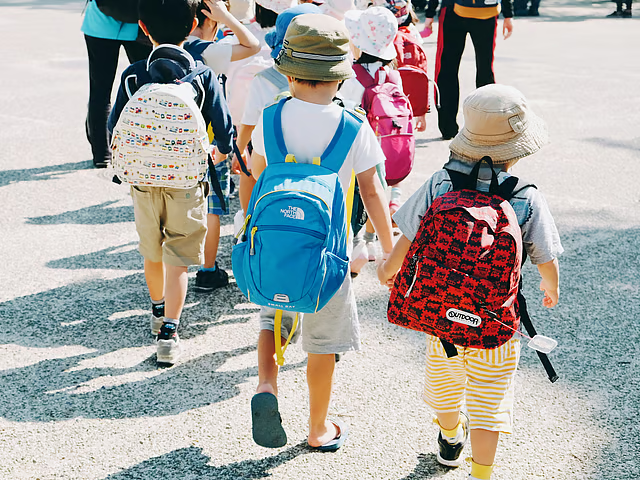
The UAE on Wednesday announced an early spring break for students in schools and universities.
The Ministry of Education and the Ministry of Higher Education and Scientific Research on Wednesday announced that spring break will begin for schools and universities from Monday, March 9, until Sunday, March 22.
The break applies to all students and academic and administrative staff across public and private schools as well as universities. Classes and official working hours will resume on Monday, March 23.
The Ministry of Education and the Ministry of Higher Education and Scientific Research Announce Spring Break for Students and Academic and Administrative Staff Across Schools and Universities in UAE
This follows the approval of the Education, Human Development and Community Development Council (EHCD).
Earlier dates
In 2025, the UAE introduced a unified school calendar covering both public and private schools nationwide.
The previously approved spring break was from March 16 to 29 as per the official school calendar for the 2025–2026 academic year applying to all public and private schools across the country. The last day of class before the break was March 13.
The new decision taken amid the blatant Iranian aggression on the country will see students ending their online classes this weekend and moving on to the spring break.
On Tuesday, the Ministry of Education and the Ministry of Higher Education and Scientific Research had extended distance learning across the country until Friday, March 6 with teaching and learning to continue remotely under ongoing assessment frameworks.
Safe environment
The government had clarified that it wants the education process to continue in a safe environment for the student community.
“We’re making sure education isn’t missing a beat by rolling out remote learning systems, guaranteeing students stay on track in their academic journey across all grades,” Dr Saif Al Dhaheri, official spokesperson for the National Crisis and Emergency Management Authority (NCEMA), had said during a government media briefing on the current developments in the country on Tuesday.
“We want our students to keep learning in a safe and steady environment, ensuring that education never skips a beat,” he added.
GN
Education
UNESCO selects Sharjah for pioneering early childhood education initiative
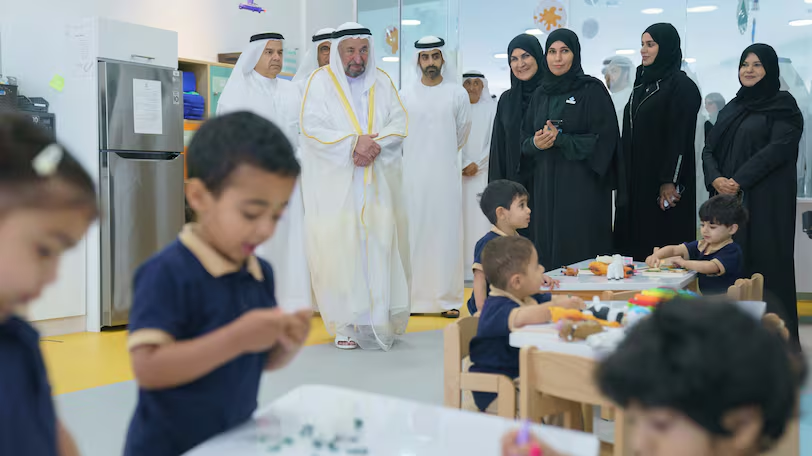
Sharjah has been chosen by the United Nations Educational, Scientific and Cultural Organization (UNESCO) to participate in the pilot phase of its Early Childhood Care and Education – Progress Assessment and Transformation Tool (ECCE-PATT), marking a major milestone for the Emirate’s early childhood sector.
The selection highlights Sharjah’s continuous efforts to strengthen early childhood systems through evidence-based policies, effective governance, and high-quality care and education services. It also underscores the Emirate’s reputation as a regional model for early childhood development.
This recognition follows Sharjah’s role in hosting the Regional Conference on Early Childhood Care and Education in the Arab States in June 2023. The event, held under the patronage of the Sharjah Family and Community Council, in collaboration with UNESCO’s Multisectoral Regional Office for the Arab States, brought together key stakeholders including the Sharjah Private Education Authority, the Sharjah Education Academy, and the Sharjah Child Friendly Office.
Sharjah’s integrated approach earns global recognition
UNESCO’s invitation reflects the Emirate’s comprehensive approach to early childhood development, combining supportive policies, strong governance, quality education provision, and close coordination among institutions. The ECCE-PATT pilot in Sharjah will produce a detailed self-assessment of the early childhood sector, documenting achievements, identifying gaps, and sharing promising practices as a reference for the region.
Dr. Muhadditha Al Hashimi, Chairperson of the Sharjah Private Education Authority and President of the Sharjah Education Academy, said: “UNESCO’s selection of Sharjah for this pilot aligns with the vision of His Highness Sheikh Dr. Sultan bin Muhammad Al Qasimi. We are committed to advancing excellence in early childhood education. The outcomes of this assessment will guide targeted improvements, ensuring our children benefit from the highest international standards, in close collaboration with UNESCO.”
Dr. Borhene Chakroun, Director of the Division for Policies and Lifelong Learning Systems at UNESCO, added: “Lifelong learning starts in the earliest years. Sharjah’s pilot of the ECCE-PATT tool will provide the evidence needed to strengthen early childhood systems, support school readiness, and enhance lifelong learning opportunities. This initiative demonstrates Sharjah’s leadership in placing early childhood at the heart of education transformation.”
High-level dialogue to shape regional policies
In a related development, the Sharjah Private Education Authority and the Sharjah Education Academy, in partnership with UNESCO, will host a high-level closed policy dialogue during the Pre-Conference Day of the Sharjah International Summit on Improvement in Education, scheduled for February 14–15, 2026 at the Sharjah Education Academy campus.
The session will bring together senior policymakers, experts, and representatives from the UAE, the Gulf region, and the Arab world, alongside international organisations and academic institutions. Participants will discuss Sharjah’s pilot findings, share knowledge, and develop actionable recommendations to strengthen early childhood systems, curriculum, and policy alignment across the region.
With these initiatives, Sharjah reaffirms its commitment to placing children at the centre of development, creating an education system that nurtures growth, learning, and the future success of the next generation.
GN
Education
Middlesex University-owner eyes bigger growth in Saudi Arabia
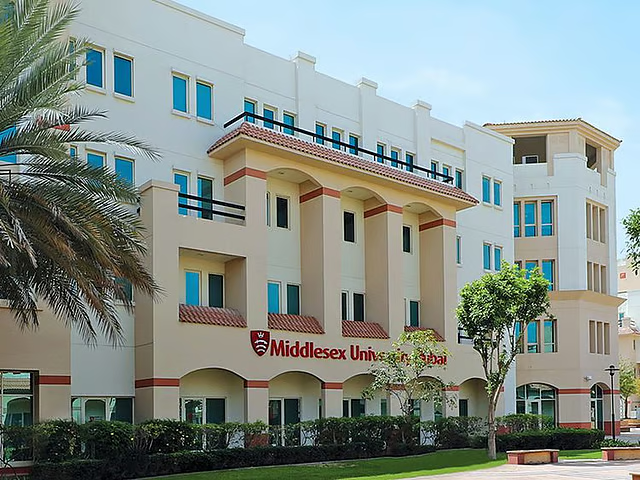
Saudi Arabia-listed Almasar Alshamil Education has unveiled plans to expand its special needs education network across Saudi Arabia and bring international universities into the Kingdom, as it accelerates regional growth following its Tadawul listing.
The company said its 2026 agenda centres on scaling physical infrastructure, broadening academic offerings, and deepening partnerships across Saudi Arabia and the UAE.
The roadmap follows Almasar’s decision late last year to list 30 per cent of its share capital on the Saudi Exchange. The group operates across special needs education and care services in Saudi Arabia and private higher education in the UAE.
Majed Al Mutairi, chief executive officer of Almasar Alshamil Education, said the listing has strengthened the company’s platform for expansion across both markets. “The beginning of a new year is a moment to reflect on responsibility and opportunity. Following our successful listing on the Saudi Exchange, we enter the year with a strong platform for growth and a clear mandate to deliver impact.
“As education continues to play a central role in Saudi Arabia’s Vision 2030 and UAE Vision 2030, our focus remains on scaling inclusive, future-ready education that delivers real outcomes for learners and society,” he said.
Special needs expansion
Saudi Arabia will remain the primary growth market, with Almasar planning to open new Special Needs Education and Care centres and schools in multiple regions. The expansion builds on its Human Development Company platform, which currently operates 39 daycare centres, 14 schools and three clinics serving about 8,000 beneficiaries.
The company said new facilities will focus on specialised education, rehabilitation and residential services. It also plans to expand digital systems used for standardised rehabilitation programmes, outcome measurement and personalised care delivery.
Almasar said it intends to bring reputed international universities into Saudi Arabia in the coming years as part of a broader higher education push. The company did not disclose potential partners, capital commitments or timelines.
Higher education build-out
The move would mark a shift beyond its current Saudi focus on special needs education into mainstream higher education provision. Almasar positioned the plan as aligned with national efforts to expand domestic university capacity.
In the UAE, Almasar plans to expand programmes across its university portfolio, which includes Middlesex University Dubai, Abu Dhabi University and Liwa University. The group said it will continue building degrees in artificial intelligence, business analytics, cybersecurity and applied sciences.
New programmes linked to labour market demand are also in development. The company said employability, applied learning and internationalisation will remain core priorities supported by industry partnerships and work-integrated learning.
Technology, partnerships
Almasar said AI-enabled learning tools, data analytics platforms and digital research systems will play a larger role in teaching and student services. It positioned technology as central to both higher education delivery and special needs care operations.
The company also said partnership development will underpin growth across Saudi Arabia and the UAE. Planned collaboration areas include international academic alliances, private-sector training partnerships and public-sector engagement.
Almasar reported revenue of SAR 336 million in the first nine months of 2025, representing 24 percent year-on-year growth, with EBITDA of SAR 129 million. Total students and beneficiaries reached about 28,000 across Saudi Arabia and the UAE.
The company said the Tadawul listing strengthens its ability to fund expansion across special needs education and higher education. Its longer-term strategy centres on building an integrated education platform spanning early intervention, schooling, university education and workforce pathways.
GN


Private Credit Investors Rush to Withdraw
UAE moves spring break for schools and universities

How Etihad Rail ferried 350+ UAE passengers back home with Saudi help

Is February 2026 really a once-in -283-years MiracleIn?

Algeria, Burkina Faso, Côte d’Ivoire win AFCON 2025 openers

Bascom Palmer Eye Institute Abu Dhabi and Emirates Society of Ophthalmology Sign Strategic Partnership Agreement
-
Discover1 month ago
Is February 2026 really a once-in -283-years MiracleIn?
-
 Football2 months ago
Algeria, Burkina Faso, Côte d’Ivoire win AFCON 2025 openers
-
 Health3 months ago
Bascom Palmer Eye Institute Abu Dhabi and Emirates Society of Ophthalmology Sign Strategic Partnership Agreement
-
 Health2 months ago
NMC Royal Hospital, Khalifa City, performs rare wrist salvage, restoring function for young patient
-

 Health4 months ago
Emirates Society of Colorectal Surgery Concludes the 3rd International Congress Under the Leadership of Dr. Sara Al Bastaki
-

 Football3 months ago
Globe Soccer Awards 2025 nominees announced as voting opens in Dubai
-

 Health4 months ago
Born Too Soon: Understanding Premature Birth and the Power of Modern NICU Care
-
 Health2 months ago
Decline in Birth Rate in the UAE