
Business
Buffett may halt Gates donations over Epstein ties
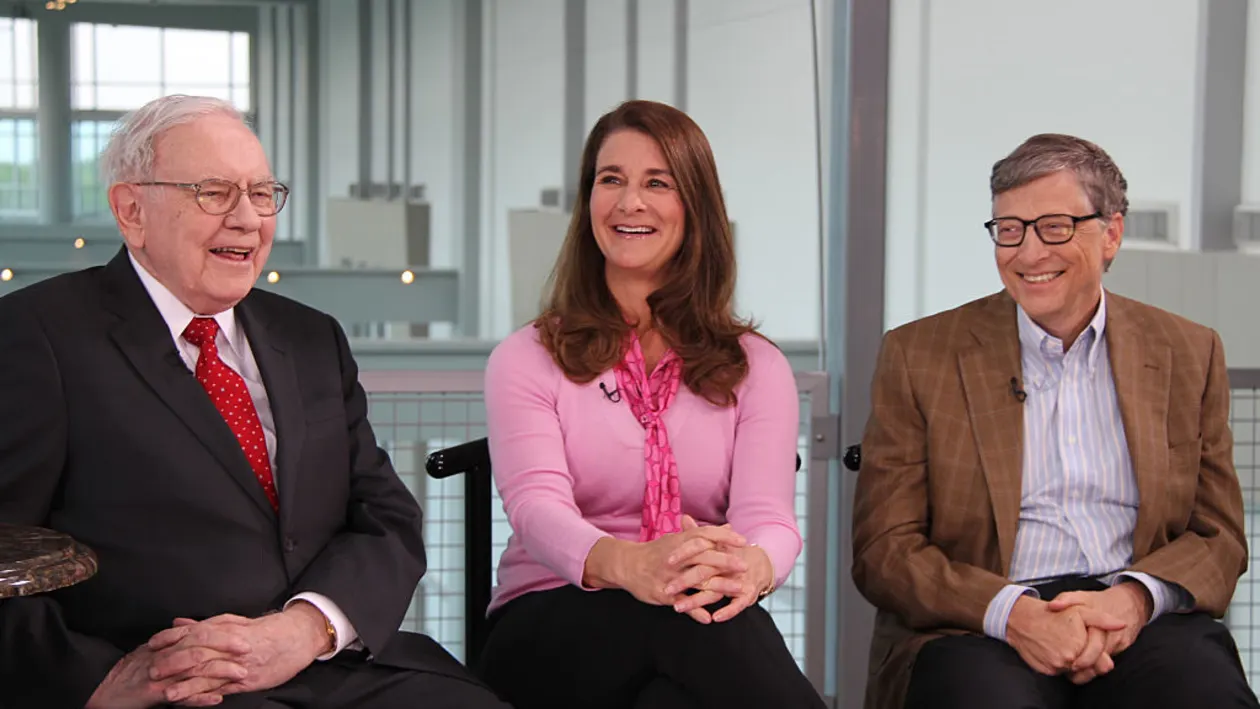
Revelations in the Jeffrey Epstein files about the notorious sex offender’s connections to Bill Gates have severely strained, and perhaps ended, the Microsoft co-founder’s famous friendship with Warren Buffett.
They could also prompt Buffett to cut off his annual multi-billion-dollar donations to the Gates Foundation.
In a one-hour-plus sit-down interview (full audio and transcript appear below) that aired on Tuesday’s “Squawk Box,” Buffett told Becky Quick he has not talked to Gates “at all since the whole thing was unveiled.”
Asked if he is still “good friends” with Gates, Buffett replied they’d had “great times together,” but “until it gets cleared up … I just don’t think it makes sense to do a lot of talking.”
Noting that his “memory is no good anymore,” Buffett added, “I don’t want to be under oath, in terms of trying to remember everything over 30 years, or 20 years, the foundation’s done, or anything like that.”
“I didn’t have anything to do with it, except I put money in it.”
In response to Quick’s question on whether he will continue to give money to the Gates Foundation, Buffett said, “I’ll wait and see what unfolds … I don’t have to make that decision today. And I haven’t made it today.”
“I’ve learned things I didn’t know about something for all these years.”
Buffett said he doesn’t think “Bill had anything to do with girls or the island or anything like that,” but he still wants to learn more as revelations continue.
Buffett is relieved he “never came near” Epstein, calling him a “sensational conman” who preyed on others’ weaknesses, although that “doesn’t excuse the people on the other end.”
In 2006, Buffett wrote to Bill and Melinda Gates that he was “irrevocably committing” to make annual gifts of Berkshire shares to their foundation “throughout my lifetime,” as long as at least one of them was actively involved, the gifts did not become subject to a tax, and the foundation actively spent the contributions on its philanthropic activities.
The letter also said Buffett’s will would “provide for a continuation of this commitment … after my death.”
Two years ago, however, Buffett confirmed to the Wall Street Journal the Gates Foundation “has no money coming after my death.”
The previous November, he had announced that his three children would be jointly responsible for giving away almost all his wealth after he dies.
Buffett: I sold Apple shares ‘too soon’
In the interview, Buffett conceded he started reducing Berkshire’s massive Apple stake “too soon,” but added with a laugh, “I bought it even sooner. So, it worked out.”
As of the end of December, the position had been cut by 75% since sales began in the fourth quarter of 2023.
Over that time, Apple’s stock price has increased by almost 50%.
Even after the selling, however, Apple remains Berkshire’s largest equity position with a market value of $58.3 billion, which is roughly 18% of the portfolio.
If Berkshire had kept the 915.6 million shares it held as of Sept. 30, 2023, the stake would be worth more than $234 billion.
In that hypothetical, it would be almost 48% of the portfolio.
Buffett said, “I’m very happy to have it be our largest holding. I was not happy to have it be as large as almost everything else combined.”
“It’s not impossible that Apple would get to a price [where] we would buy a lot of it,” he added. “But not in this market. I mean, it just isn’t going to happen in this market.”
Buffett still has a hand in Berkshire’s investing decisions
Buffett said that even though he stepped down as CEO at the end of last year, he still comes into Berkshire’s offices every day as chairman and is involved in some investing decisions.
But, he added, “I won’t make any that [new CEO] Greg [Abel] thinks are wrong.”
Buffett said he had made “one tiny purchase,” but he’s not finding many potential buys despite the stock market’s recent declines, which he said aren’t substantial and “nothing to make you excited.”
Fed should have a ‘zero’ inflation target
Buffett says he “wouldn’t want the responsibility” of running the Federal Reserve, but he wishes the central bank “had a zero inflation target” instead of its current goal of a 2% annual increase.
“Once you start saying you’re going to tolerate 2%, that compounds pretty dramatically over time… I don’t like that particular goal.”
In the government’s most recent report, the February consumer price index was up 2.4% versus the same month last year.
Buffett: Iranian atomic bomb would raise risk of nuclear catastrophe
For a long time, Buffett has been concerned about nuclear proliferation, calling it “the ultimate problem of mankind” in 2006.
While he doesn’t know how to fix the problem, he does know that “it’ll be more difficult if Iran has the bomb than [if] they don’t.”
Buffett, however, wouldn’t say whether he thinks the U.S. should try to seize Iran’s enriched uranium.
Buffett revives charity auction with NBA star, may get hoops lesson
Warren Buffett is teaming up with the Golden State Warriors’ Stephen Curry and his wife, lifestyle entrepreneur Ayesha Curry, for a charity auction.
The winning bidder for “A Seat at the Table,” and up to seven guests, will share a June 24 lunch in Omaha with the trio.
The eBay auction starts May 7 at 7:30 p.m. PT and ends exactly one week later.
Proceeds will be split between San Francisco’s Glide Foundation and the Currys’ Eat. Learn. Play. Foundation that is “working to transform the school experience for a generation of Oakland students.”
In his CNBC interview, Buffett revealed that he will personally make matching donations to the two groups.
“Steph is the hero of millions and millions of people. So, I really think it’ll work.”
AP reports that in a video call with reporters this week as he prepared to resume playing after missing more than two dozen games due to a knee injury, Curry, 38, said Buffett, 95, wants a lesson on how to shoot a basketball.
“If not a permanent basketball hoop, I’m pretty sure there’s going to be a mobile one out there so I can make good on my promise to teach him some form.
“We’ll see how he can do. I haven’t seen any video of a Warren Buffett jump shot, but we’ll see.”
Buffett’s lunch auctions raised more than $53 million for Glide over two decades. In 2022, what was then called the “grand finale” of the series was won by an anonymous bidder for $19 million.
In this week’s interview, Buffett said he had “run out of gas” but revived his participation in the auction, at least for this year, because it had “fizzled” without him and “it would have killed me to have it just die off.”
Berkshire shares start week with a win, ending 8-day losing streak
Shares of Berkshire Hathaway ended Monday with a 1.3% gain, breaking a string of eight consecutive daily losses that began on March 18.
It was their longest losing streak in more than seven years.
Both the Class A and Class B shares also advanced on Tuesday and fell Wednesday.
On Thursday, BRKA managed a very small gain, while BRKB dropped slightly.
The U.S. stock market was closed for Good Friday.
The eight-day losing streak pushed the A shares down 4.7% and the B shares fell 4.9%.
They erased a bit more than a third of those losses this week.
The full Buffett interview
The entire 70-minute interview with Buffett is available in video form for CNBC Pro subscribers.
There is also audio of the entire conversation in this episode of “Squawk Pod.”
CNBC
Business
AI agents set to unlock US$450bn in economic value by 2028 as Outworks challenges Middle East institutions to go agentic in 30 days

Abu Dhabi, United Arab Emirates
Artificial intelligence is entering a defining new era. Across the Middle East, the conversation has shifted from whether organisations should adopt AI to how quickly they can deploy it securely, responsibly and at scale.
The urgency is backed by compelling numbers. According to the Capgemini Research Institute, AI agents are expected to unlock up to US$450 billion in economic value globally by 2028 through increased productivity, operational efficiencies and new revenue opportunities. Yet despite this enormous potential, only 2% of organisations worldwide have successfully scaled AI agent deployments across their operations, highlighting a significant gap between AI ambition and real-world execution.
Against this backdrop, Outworks has introduced Sprint 30, a structured programme challenging governments and large enterprises across the Middle East and Africa to move from AI strategy to fully operational, governed AI agents within 30 days. Rather than focusing on lengthy pilots and proof-of-concept projects, Sprint 30 is designed to help organisations deploy AI agents inside live business environments, delivering measurable outcomes while maintaining security, governance and data sovereignty.
The initiative comes as the UAE continues to strengthen its position as one of the world’s leading AI economies through ambitious national strategies that are accelerating the adoption of advanced technologies across government and business. As organisations increasingly seek to operationalise AI, the emphasis has shifted from experimentation to enterprise-wide deployment.
“The Middle East is entering one of the most significant technology transformations in its history. The conversation has moved beyond whether organisations should adopt artificial intelligence; today the real question is how quickly they can put it to work,” said Hamda Al Mansoori, Founder & Chairwoman of Outworks.
“At Outworks, our mission is to help governments and enterprises transform AI from strategy into execution, delivering measurable impact in weeks rather than months. We believe the organisations that will lead the next decade are those that operationalise AI responsibly, securely and at scale—creating environments where people and intelligent agents work together to unlock entirely new levels of productivity, innovation and value.”
Sprint 30 has been engineered to eliminate many of the barriers that have traditionally slowed enterprise AI adoption. Instead of spending months developing infrastructure before deployment begins, organisations follow a structured implementation framework that moves from assessment and solution design to production-ready AI agents operating inside real workflows within just one month.
The programme enables organisations to deploy AI agents on infrastructure they own and control, ensuring compliance with data sovereignty requirements while maintaining governance, transparency and human oversight throughout the deployment lifecycle.
Ahmed Ashoor, Founder & Chief Technology Officer, said the programme reflects a fundamentally different approach to enterprise AI implementation.
“Thirty days is not a marketing promise. It is an engineering decision. We have already built the deployment architecture, governance framework and operating model, allowing organisations to focus on transforming their operations rather than spending months building technology foundations. By the end of Sprint 30, AI agents are already delivering measurable work inside production environments.”
Outworks operates through its integrated Advise, Build and Run transformation model, helping organisations identify high-impact AI opportunities, build secure technology foundations and operate intelligent systems that continue evolving alongside business requirements. Every deployment is designed around sovereign infrastructure, ensuring organisations retain full control of their data while meeting regulatory, security and compliance requirements.
The company believes the future of enterprise performance will depend not simply on adopting artificial intelligence, but on integrating it into the way organisations operate every day. Rather than replacing human expertise, AI agents are expected to augment decision-making, automate repetitive and complex processes, and enable employees to focus on higher-value work that drives innovation and growth.
Founded by four leaders with expertise spanning government transformation, enterprise technology, artificial intelligence, commercial development and strategic partnerships, Outworks is focused on helping governments and large enterprises across the Middle East and Africa accelerate their transition from AI ambition to enterprise-scale execution.
As organisations race to capture the economic value of artificial intelligence, initiatives such as Sprint 30 demonstrate how the competitive advantage of the coming decade will be determined not by who has access to AI, but by who can deploy it faster, govern it responsibly and translate it into measurable business outcomes.
About Outworks
Outworks is an AI-native transformation company headquartered in Abu Dhabi Global Market (ADGM), United Arab Emirates. The company helps governments and large enterprises across the Middle East and Africa move from AI ambition to production-ready intelligent systems through its integrated Advise, Build and Run model.
Founded by Hamda Al Mansoori (Founder & Chairwoman), Ahmed Ashoor (Founder & Chief Technology Officer), Islam Shaban (Founder & Chief Commercial Officer), and Ahmed Shaban (Founder & Chief Strategy Officer), Outworks combines expertise in artificial intelligence, enterprise transformation, technology and strategic partnerships to deliver sovereign, enterprise-scale AI solutions.
Business
White and Black Events & PR Announces New Expansion Phase Led by Nagham Amer, Including Regional Market Growth and the Launch of a Skincare Brand
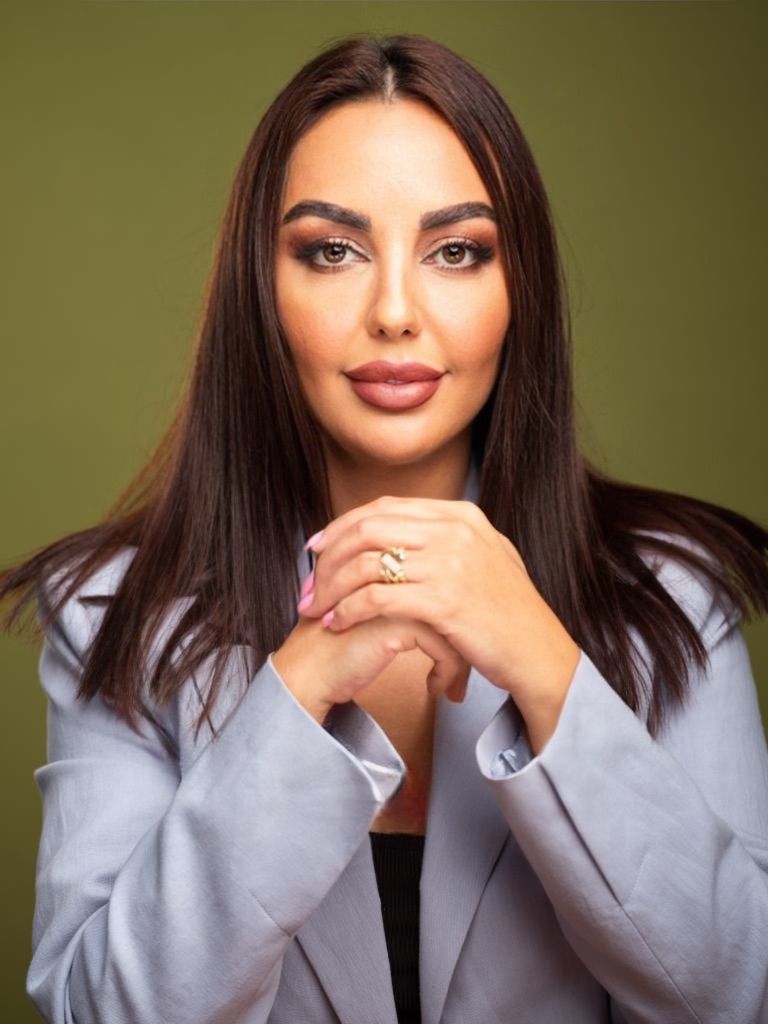
Dubai, United Arab Emirates – Black & White PR & Events has announced the start of a new phase of growth and expansion as part of a strategic plan aimed at strengthening its presence across regional markets and broadening its portfolio of services in line with the rapidly evolving public relations and marketing landscape.
Nagham Amer, Founder and Managing Director of Black & White PR & Events, said that the company’s next chapter will focus on expanding into high-potential markets, particularly Saudi Arabia and Libya, while further strengthening its presence in the UAE. This will be achieved through strategic partnerships and the delivery of integrated solutions across public relations, influencer marketing, event management, and media production.
Amer said:
“We believe that real growth is not defined solely by geographical expansion, but also by continuously enhancing our services and developing innovative solutions that meet the evolving needs of the market. Our goal is to build a strong presence across regional markets while maintaining the quality and excellence that define everything we do.”
She added that the company is currently diversifying its service offering to include new areas within the beauty and lifestyle sectors, leveraging its extensive experience in managing marketing and communications campaigns for both regional and international brands.
Reflecting its long-term vision, Amer also revealed that the company is exploring the launch of its own skincare brand targeting the GCC and wider Arab markets. The initiative forms part of a broader strategy to evolve beyond providing marketing services into developing and managing proprietary brands, creating additional value and supporting sustainable long-term growth.
Over the past several years, Black & White PR & Events has successfully delivered integrated marketing and media campaigns for leading brands across the beauty, fragrance, healthcare, and jewellery sectors. The company has also managed high-profile events and collaborations with some of the region’s most prominent influencers and celebrities, further strengthening its position as a strategic communications partner for brands seeking to expand across the GCC and the Arab world.
Concluding her remarks, Amer emphasized that the company’s next phase will focus on innovation, expanding its regional partnership network, and investing in high-impact projects that reinforce Black & White PR & Events’ position as one of the region’s leading public relations and marketing firms.
Business
Adidas narrows gap with Nike in World Cup sales
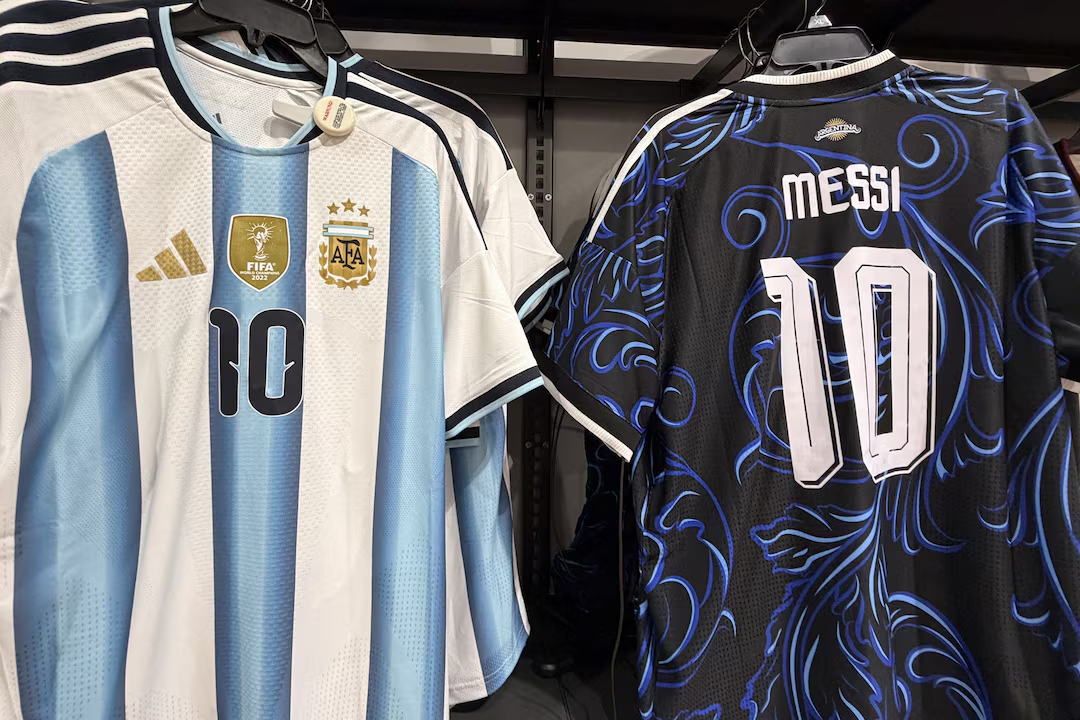
As the World Cup brand battle heats up, sportswear giant Adidas (ADSGn.DE), opens new tab appears to be getting a bigger boost than rival Nike, early data show.
Both companies are investing heavily in the tournament, but Nike (NKE.N), opens new tab is relying on it for sales and visibility as it tries to right its ship amid years of steadily leaking market share. Investors will be looking for signs of progress next week when Nike reports fourth-quarter earnings.
Adidas, an official World Cup sponsor and a brand long associated with soccer, is sponsoring 14 teams and supplying the coveted match ball.
Nike is outfitting 12 national teams, partnering with local street-wear designers, and refreshing soccer merchandise at more than 5,000 Nike and wholesale stores globally.
But while both brands are poised to get a World Cup boost to their apparel businesses, Adidas is benefiting “to a greater degree thus far,” said Drake MacFarlane, a research analyst at M Science.
Spending on Adidas apparel surged 70% in May from the previous year and stayed strong into June, according to M Science data. MacFarlane attributed the trend to “substantial growth” in jersey sales ahead of the World Cup.
Nike’s apparel business is growing as well, he added, but that growth is being outpaced by Adidas, which has “the right set of product for the consumer.”
Foot traffic data tell a similar story.
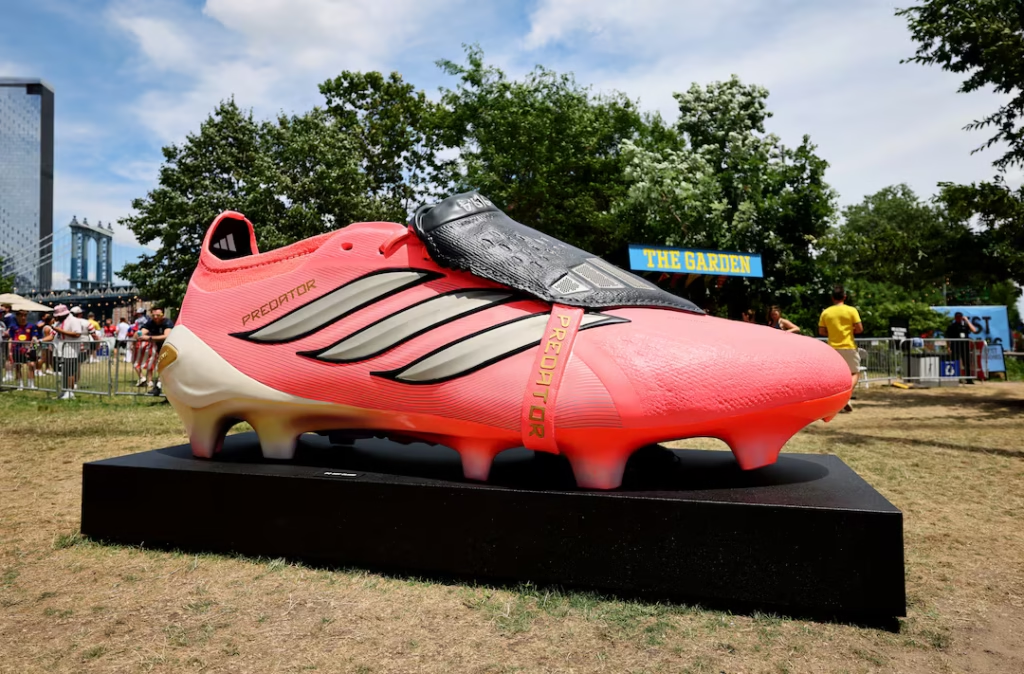
Visits to Adidas’ U.S. stores surged 47% during the first week of the World Cup compared to 2026 averages, versus an 11% jump at Nike’s U.S. factory stores, according to data from Placer.ai, shared with Reuters.
For Adidas, those visits represented a 16% jump versus the same week last year — but for Nike, they represented a drop, Placer.ai found.
While the Nike data only covers outlet stores, the overall findings still indicate that Adidas “has been top of mind for shoppers and may have done a good job in its store activation around the event,” said Elizabeth Lafontaine, Placer.ai’s director of research.
British retailer JD Sports (JD.L), opens new tab said Mexico jerseys – which are supplied by Adidas – were its best-selling team kit during the week beginning June 15. Nike’s U.S. team jerseys took the second spot in total sales, the retailer said.
A bright spot for Nike: 28% of its World Cup merchandise in the U.S. sold out during the first two weeks of the tournament – well above Adidas’ 7%, according to a report from LSEG this week.
FOOTWEAR IN FOCUS
Nike has had a strong presence at the World Cup.
A Reuters analysis found that 232 of the 528 World Cup starters so far have worn Nike boots, with Adidas close behind at 218. “Nike is right there” despite Adidas’ close association with FIFA, said David Swartz, an equity analyst at Morningstar. “Strong visibility … is good for its brand strength.”
World soccer’s governing body FIFA runs the tournament.
Nike could use the win: sales have fallen as demand for classic lines like Dunk and Air Jordan has cooled. Competition from newer players like On and Deckers (DECK.N), opens new tab has intensified, and analysts say the company has been slow to pivot to new styles.
While World Cup visibility can’t hurt, “at the end of the day it’s really all about the product,” said Mari Shor, senior equities analyst at Columbia Threadneedle, which holds Nike stock. “If [Nike’s] product isn’t resonating, the rest of it doesn’t matter.”
Nike’s share of the global sports footwear market has fallen from 29.2% in 2022 to 22.9% last year, according to Euromonitor International data, obtained by Reuters.
Nike and Adidas have lately traded blows.
In April, Nike entered exclusive talks to provide balls for certain UEFA soccer matches, a role that was Adidas’ for 25 years. Later that month, though, Kenyan Sabastian Sawe wearing new, ultra-light shoes from Adidas broke the two-hour marathon barrier, a coup as the two companies battle for sports innovation.
Nike CEO Elliott Hill, who took the helm in 2024, vowed to refocus Nike on key sports like soccer and running, saying the company had “lost its obsession with sport.”
Yet it remains the larger company by far, its footwear market share still nearly double second-place Adidas.
It’s “the biggest dog in the fight,” said Sarah Henry, a portfolio manager at Logan Capital Management. “It should be able to hit everybody else pretty hard.”
(Reuters)


Emirates Specialty Hospital Expands Cancer Care Services in Dubai with Opening of Dedicated Chemotherapy Unit

When Rheumatoid Arthritis Threatened Her Independence: How the Right Diagnosis Helped Her Get Her Life Back

Saudi German Hospital Dubai Launches Mental Health and Wellness Center for Children and Adolescents

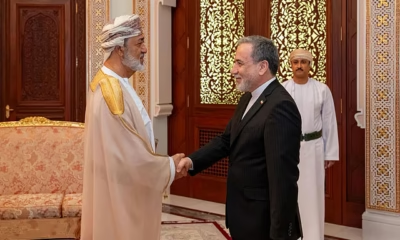
Araghchi, Oman Sultan discuss transit, stability in Muscat

UAE’s café culture keeps growing despite price pressure

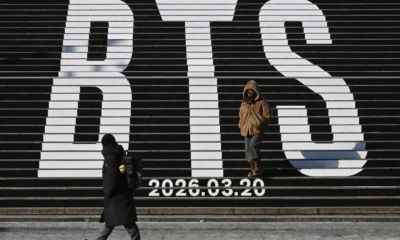
Netflix to Livestream BTS Comeback Concert
-
 politics6 months ago
Araghchi, Oman Sultan discuss transit, stability in Muscat
-
 UAE10 months ago
UAE’s café culture keeps growing despite price pressure
-
 Entertainment9 months ago
Netflix to Livestream BTS Comeback Concert
-
 Discover9 months ago
Is February 2026 really a once-in -283-years MiracleIn?
-
 Football10 months ago
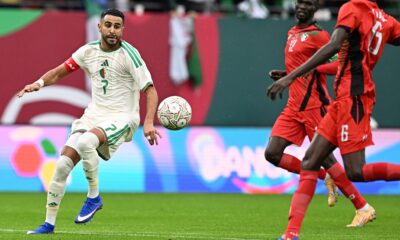
Algeria, Burkina Faso, Côte d’Ivoire win AFCON 2025 openers
-

 Health10 months ago
NMC Royal Hospital, Khalifa City, performs rare wrist salvage, restoring function for young patient
-
 Health10 months ago
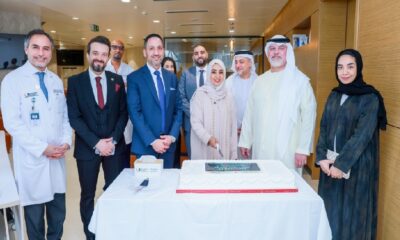
Bascom Palmer Eye Institute Abu Dhabi and Emirates Society of Ophthalmology Sign Strategic Partnership Agreement
-

 Health11 months ago
Emirates Society of Colorectal Surgery Concludes the 3rd International Congress Under the Leadership of Dr. Sara Al Bastaki