
Discover
GLP-1 diabetes drugs could stop anxiety and depression
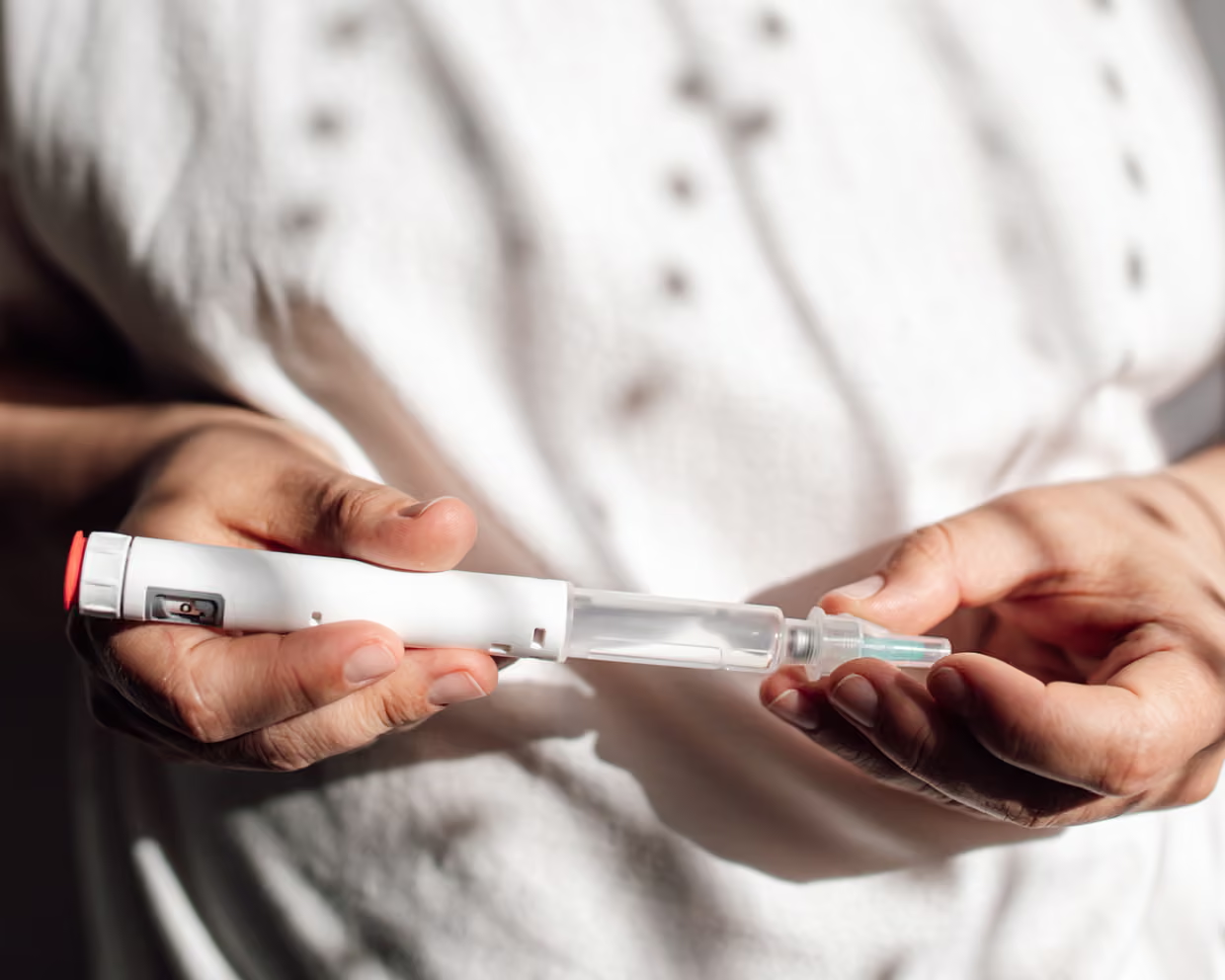
Diabetes drugs could prevent anxiety and depression from worsening, according to research.
Type 2 diabetes affects more than 800 million people globally and research shows that those with the condition are about twice as likely to have depression as the wider population.
GLP-1 receptor agonists such as semaglutide are commonly prescribed for diabetes and obesity. While studies have found other health benefits beyond weight loss and better blood sugar levels, the medications’ effects on mental health have been unclear.
International researchers examined Swedish health records of almost 95,000 people with a diagnosis of depression or anxiety who were also taking various diabetes medications between 2009 and 2022.
The study compared periods when patients were taking GLP1s, or other second-line diabetes medications, with when they were not taking them. Worsening mental health was assessed through data on psychiatric hospital admissions, sick leave from work due to mental health reasons, hospitalisation owing to self-harm and death by suicide. Published in the Lancet Psychiatry, the research also examined data on new diagnoses of anxiety and depression.
The authors found that semaglutide, the active ingredient in the drugs Ozempic for diabetes and Wegovy for weight loss, as well as liraglutide (Saxenda) were associated with a lower risk of worsening mental illness in those with anxiety and depression.
Semaglutide had a 42% lower risk of worsening mental health, while liraglutide was linked to an 18% lower risk. Other GLP-1 drugs, including exenatide and dulaglutide, did not show the same benefit.
Semaglutide was associated with a 44% lower risk of worsening depression, a 38% lower risk of worsening anxiety and a 47% lower risk of worsening substance use disorder.
“For anxiety and depression that co-occur with diabetes and obesity, semaglutide and, to a lesser extent, liraglutide might be useful dually effective therapeutic options,” the authors concluded.
Dr Markku Lähteenvuo, a research director at the University of Eastern Finland, said: “It is possible that, in addition to factors such as reduced alcohol consumption, weight loss-related improvements in body image, or relief associated with better glycaemic control in diabetes, there may also be direct neurobiological mechanisms involved, for example, through changes in the functioning of the brain’s reward system.”
Responding to the findings, experts urged caution, including Prof David Nutt, who is the head of the neuropsychopharmacology unit at Imperial College London and chair of the independent scientific committee Drug Science.
He said: “It is well established that better mental health tends to follow from better physical health and since the 1880s we have known that diabetes is associated with depression, although I think it’s unlikely that using GLP-1R agonists alone as treatments for depression or anxiety will work.”
Prof Eduard Vieta, a professor of psychiatry at the University of Barcelona and editor in chief of the European College of Neuropsychopharmacology journal, said: “From a clinical perspective, these findings are reassuring regarding the psychiatric safety of GLP-1 receptor agonists and suggest a potential role not only in preventing worsening but also, possibly, in improving mental health outcomes.
“However, they should not yet be interpreted as evidence of a direct therapeutic effect on depression or anxiety.”
The research came as a separate study found that women taking semaglutide for diabetes before they knew they were pregnant had a 84% higher relative risk of preterm birth, compared with those who did not take GLP-1 medication, while the risk was 70% higher with liraglutide.
Academics looked at Danish health registries for nearly 500,000 women, of whom 529 had been taking liraglutide or semaglutide when they became pregnant.
The study found that inadvertent exposure to GLP-1s in early pregnancy was associated with a higher risk of the baby being born before 37 weeks when the drugs were used for diabetes treatment, but not among those taking them for weight loss.
Taking semaglutide was associated with approximately a 11% higher absolute risk of preterm birth. Liraglutide showed a 9% increased risk.
The Guardian
Discover
Do Vitamin C Serums Boost Sun Protection?

Sunscreen does two important jobs. It is largely used for its UVB protection benefits – blocking the rays that cause sunburn and are a major contributor to the development of skin cancer. But it also blocks UVA radiation, filtering out the rays that lead to signs of ageing.
Vitamin C does neither of these things, says Rosalind Simpson, a professor of dermatology at the University of Nottingham. That said, it is thought to help prevent sun damage in a different way.
“Antioxidants such as vitamin C have become a hot topic,” Simpson says. “People are really interested in whether they can improve skin appearance by neutralising free radicals created by UV exposure and pollution. Those free radicals contribute to the breakdown of collagen and loss of skin firmness.”
Whereas sunscreen acts as a kind of UV filter, antioxidants are thought to provide an additional line of defence. UVA exposure generates unstable free radicals in the skin, which can damage cells by disrupting their structures, and Vitamin C is believed to stop them doing this.
A 1996 study examined the effectiveness of antioxidants, including vitamins C and E, with and without sunscreen, in protecting against UV-induced skin damage. It found that vitamin C appeared to enhance protection against UVA-induced skin damage, but only when used alongside sunscreen. The researchers concluded that antioxidants may provide additional protection when combined with established sun-protection products.
“Nothing is a substitute for a good quality, broad-spectrum sunscreen with UVA and UVB protection and sensible habits when in the sunshine,” says Simpson.
That means wearing sunscreen, reapplying it regularly, and limiting direct sun exposure during the hottest parts of the day.
The Guardian
Discover
Five-second rule is a myth

You drop a piece of cucumber on the floor. Do you immediately throw it in the bin or reassure yourself of the age-old “five-second rule” and reckon it’s fine to pop it in your mouth after a quick rinse?
If you fall into the latter camp, John Tregoning, professor of vaccine immunology at Imperial College London, has some bad news. He refers to three studies into bacteria transfer that all point towards the rule being false.
In the first, scientists looked at what happens when a range of foods (bread, buttered bread, watermelon and gummy bears) were dropped on a range of surfaces (tile, steel, wood, and carpet) that had been coated with bacteria. “They transferred almost immediately,” he says, adding that the worst combination for transfer happened when wet food hit a solid surface (watermelon on tile or steel).
Another study – where cooked sausage was dropped on to surfaces – showed that bacteria transferred on to the meat even if they had been applied to the surface hours earlier. It showed that “if you put a piece of contaminated chicken on to a work surface and then, two hours later, drop your piece of bread on to it, you can still pick up bacteria from it. It’ll be there for about 24 hours,” he says.
The final paper looked at the “five-second rule” for medical objects in the operating room. Perhaps unsurprisingly, it found that if surgeons drop something on the floor, they need to wash that instrument with detergent for it to be safe to use again.
What does all this mean for your fallen cucumber? “I think you have to accept it’s gone,” says Tregoning. Rinsing it with water won’t be enough to guarantee it’s clean. That’s especially the case if you’re particularly susceptible to infections, or if your dog might have walked something terrible through the house (even hours earlier).
THE GUARDIAN
Discover
Saudi Arabia’s Tawakkalna app offers Hajj services in 19 languages

Saudi Arabia’s national digital platform Tawakkalna is providing Hajj-related government services in 19 languages for pilgrims and workers during the 1447H Hajj season, as part of wider efforts to improve the pilgrimage experience through advanced digital solutions.
The initiative comes within the efforts of the Saudi Data and Artificial Intelligence Authority to strengthen integration between government service entities during Hajj and support pilgrims throughout their journey, from arrival in the Kingdom and entry into Mecca and the holy sites to visits to the Prophet’s Mosque in Madinah and departure back to their home countries.
The app supports Arabic, English, Indonesian, Hindi, Urdu, Turkish, French, Bengali, Persian, Malay, Russian, Chinese, Filipino, German, Dutch, Japanese, Italian, Spanish and Portuguese.
Pilgrims can access a range of services through the platform, including Hajj permits linked to the unified digital Hajj permit platform “Tasreeh”, as well as permits related to entering Mecca, work authorisations, volunteer permits and vehicle permits issued by various government entities.
According to officials, Tawakkalna is designed to serve as a trusted digital companion for pilgrims by supporting daily movement and offering a smoother and safer digital experience during Hajj and visits to Madinah after the pilgrimage.
The app also allows users to book visits to Al Rawdah Al Sharifah through the Nusuk gateway service integrated into the platform.
Additional services available during Hajj include multilingual access to the Arafah sermon, an emergency assistance service called “Assefni”, live weather updates for the holy sites, Qibla direction, prayer times and digital Quran services.
Saudi authorities said the services are part of broader efforts aligned with the Pilgrim Experience Programme under Saudi Vision 2030, which prioritises improving services for pilgrims and Umrah performers through smart technology solutions.
The Tawakkalna platform currently offers more than 1,300 services in cooperation with over 350 government entities across sectors including health, education, justice, tourism and professional services, with more than 35 million users registered on the app.
GN


Emirates Specialty Hospital Expands Cancer Care Services in Dubai with Opening of Dedicated Chemotherapy Unit

When Rheumatoid Arthritis Threatened Her Independence: How the Right Diagnosis Helped Her Get Her Life Back

Saudi German Hospital Dubai Launches Mental Health and Wellness Center for Children and Adolescents

Araghchi, Oman Sultan discuss transit, stability in Muscat

UAE’s café culture keeps growing despite price pressure

Netflix to Livestream BTS Comeback Concert
-
 politics6 months ago
Araghchi, Oman Sultan discuss transit, stability in Muscat
-
 UAE10 months ago
UAE’s café culture keeps growing despite price pressure
-
 Entertainment9 months ago
Netflix to Livestream BTS Comeback Concert
-
 Discover9 months ago
Is February 2026 really a once-in -283-years MiracleIn?
-

 Football10 months ago
Algeria, Burkina Faso, Côte d’Ivoire win AFCON 2025 openers
-

 Health10 months ago
NMC Royal Hospital, Khalifa City, performs rare wrist salvage, restoring function for young patient
-

 Health10 months ago
Bascom Palmer Eye Institute Abu Dhabi and Emirates Society of Ophthalmology Sign Strategic Partnership Agreement
-

 Health11 months ago
Emirates Society of Colorectal Surgery Concludes the 3rd International Congress Under the Leadership of Dr. Sara Al Bastaki