
Football
Saudi U-17 Team Faces Austria in the World Cup
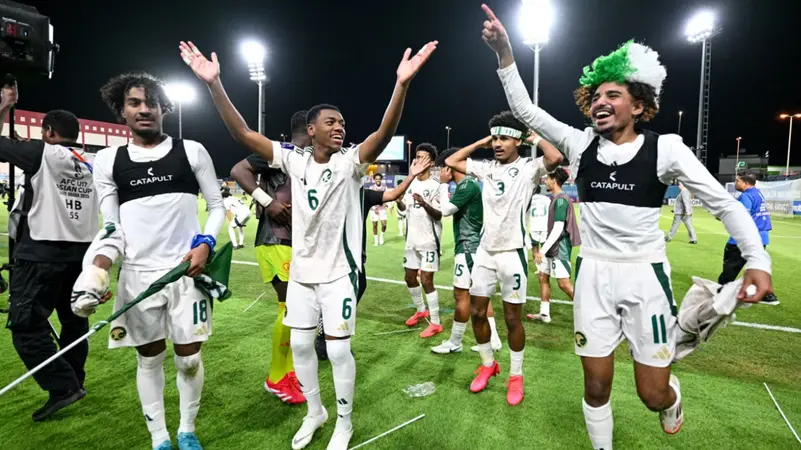
The Saudi national under-17 football team is looking to shine at the FIFA U-17 World Cup, which will be held in Qatar from November 3 to 27, after ending a 36-year wait to return to the global stage.
Saudi Arabia’s return to the tournament came after finishing runner-up to Uzbekistan in the AFC U-17 Asian Cup, which it hosted on home soil. That achievement secured the team’s place once again in the world competition a tournament it famously won in 1989.
Coach Abdulwahab Al-Harbi has retained the core of the squad that impressed during last April’s continental championship. Leading the attack is expected to be Abdulhadi Al-Mutairi, supported by talented playmaker Abdulrahman Al-Sufyani and the speed of Sabri Dahl on the wings.
Midfielder Abdulaziz Al-Fawwaz is considered one of the key players in the team, thanks to his dynamic presence both defensively and offensively a factor that could largely determine Saudi Arabia’s ability to advance deep into the tournament.
The Saudi team will begin its campaign against Austria on Wednesday, followed by a match against New Zealand on November 8, before concluding the group stage on November 11 against what is considered its toughest opponent Mali.
Saudi Arabia has participated in the U-17 World Cup three times before, with its most notable achievement being the 1989 championship title, which also marked the team’s last appearance in the tournament.
The Green Falcons’ participation this year revives memories of the historic 1989 triumph, when Saudi Arabia became the first Arab team to win a FIFA World Cup title at any age level a moment that remains one of the greatest milestones in Arab football history.
The 1989 Saudi squad featured several players who went on to become legends of Saudi football, many of whom later represented the national team in its first-ever senior World Cup appearance in the USA in 1994 including Mohammed Al-Deayea and Fouad Anwar.
The roster of the 1989 U-17 team included: Mohammed Al-Deayea, Mohammed Al-Timiyat, Khalid Al-Aboudi, Shaker Al-Alyan, Khalid Tamim, Abdullah Al-Thunayan, Suleiman Al-Quraini, Waleed Al-Turair, Saud Al-Hamali, Khalid Al-Ruwaikhi, Jabarti Al-Shamrani, Adnan Abdulshakour, Aref Bu-Rashid, Fouad Anwar, Salem Suroor, Suleiman Al-Rashoudi, Mansour Al-Mousa, and Abdullah Al-Ahmadi.
In that edition, the “Green Falcons” were drawn into Group D alongside Portugal, Guinea, and Colombia. Saudi Arabia opened its campaign against Portugal, led by its future legend Luís Figo, who scored once, but Saudi player Jabarti Al-Shamrani responded with two goals to earn a valuable 2–2 draw.
In their second match, the Saudis again drew 2–2 with Guinea, courtesy of an own goal and another strike from Khalid Al-Ruwaikhi. Al-Ruwaikhi then became the hero of the third group game, scoring the decisive goal in a 1–0 victory over Colombia a performance that made him one of Al-Ahli’s brightest stars in the 1990s.
At the end of the group stage, Saudi Arabia finished second with four points, behind Portugal on goal difference, advancing to the quarterfinals of the tournament held in Scotland. There, they defeated Nigeria on penalties after a goalless draw in regulation and extra time.
The semifinal saw a Gulf derby between Saudi Arabia and Bahrain, where the Green Falcons won thanks to a goal from Khalid Al-Ruwaikhi, booking a historic final against host nation Scotland, who had eliminated Portugal in the previous round.
In the final, Saudi Arabia produced a legendary comeback, overturning a 0–2 deficit to level the score through Suleiman Al-Rashoudi and Waleed Al-Turair. The match went to a penalty shootout, where the Saudis triumphed 5–4, claiming a historic title for Saudi, Arab, and Asian football alike.
Al Arabiya.net
Football
Cristiano Ronaldo sets record as Al Nassr FC go 5 clear
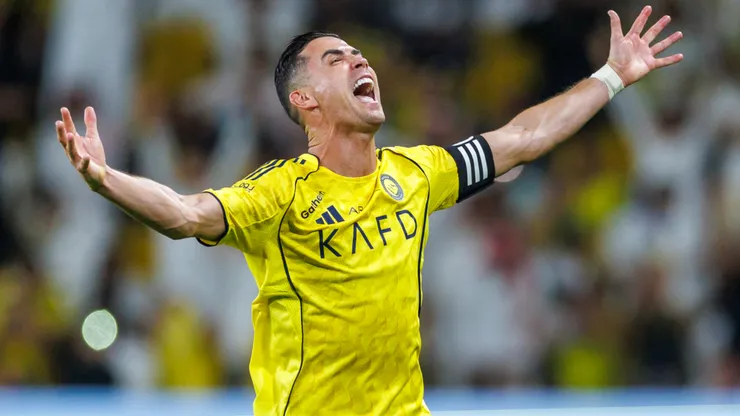
Six games to go. Al Nassr currently hold a five point lead over rivals Al Hilal in the title race, and the big question now is simple. Is Cristiano Ronaldo finally on course to win his first Saudi Pro League title?
They strengthened that grip with a 2–0 win over Al Okhdood, a result that was not just routine but historic. Ronaldo set the tone early with a composed finish in the 15th minute, once again stepping up in a big moment, before Joao Felix doubled the lead soon after halftime to seal the win.
That victory made it 14 straight league wins for Al Nassr, the longest winning streak in the club’s history, surpassing the previous record of 13 set in the 2013–14 season. More importantly, it pushed them to 73 points, keeping them five clear at the top and firmly in control of the title race.
The run in, however, is not simple. Al Nassr still have to face Ettifaq and Al Ahli at home, trips to Al Qadsiah and Al Shabab, a crucial clash against Al Hilal also at home, and then Damac on the final stretch. There are tough games ahead, especially the direct meeting with Al Hilal which could swing momentum .
But this Al Nassr side looks like a team peaking at the right time. 14 wins in a row is not something easy to achieve. So the momentum is with them. Can they cross the final hurdle? We have to wait and see
Ronaldo remains at the heart of everything. Even at 41, he is leading from the front and setting the standard week after week. He now has 24 league goals and is still very much in the Golden Boot race, with Al Ahli’s Ivan Toney leading on 27. Considering Ronaldo missed a few games through injury and suspension, the gap is far from decisive.
There is also the bigger milestone looming. Ronaldo is now 32 goals away from the 1000 goal mark, and every strike from here adds to that narrative alongside the title push.
For Al Nassr, the equation is clear. The title is in their hands. They just need to keep going.
For Ronaldo, it is shaping up to be a defining finish. A first Saudi league title within reach, the Golden Boot still in play, and history not far away.
GN
Football
Ranking football’s greatest one-club men
Every year at San Mames, the iconic home of Athletic Club in Bilbao, local fans pause to recognise and celebrate players not from their own club, but those who share a unique value with the Basque outfit – loyalty.
Athletic Club – famous for only fielding players born or raised in the region – introduced the One-Club Award in 2015, honouring those who dedicated their entire professional career to a single team.
“We wanted to create an award that recognised most kids growing up dream of playing for one club,” explains Dan Parry from the La Liga side’s communications department.
“On the other side, we wanted to show despite all the big-money transfers in modern-day football, there are top players all over the world who want to become one-club players.
“It’s an individual award, but it’s also an award that celebrates the union between the football team, fans and the player.”
Keeping those values in mind, then, this week I’m ranking football’s top 10 one-club men – you can have your say below, too.
Spending your entire career with one club is a curious phenomenon – in 20-plus years at the top you’re likely to outlast several managers, and how often do the player or club’s paths take different trajectories?
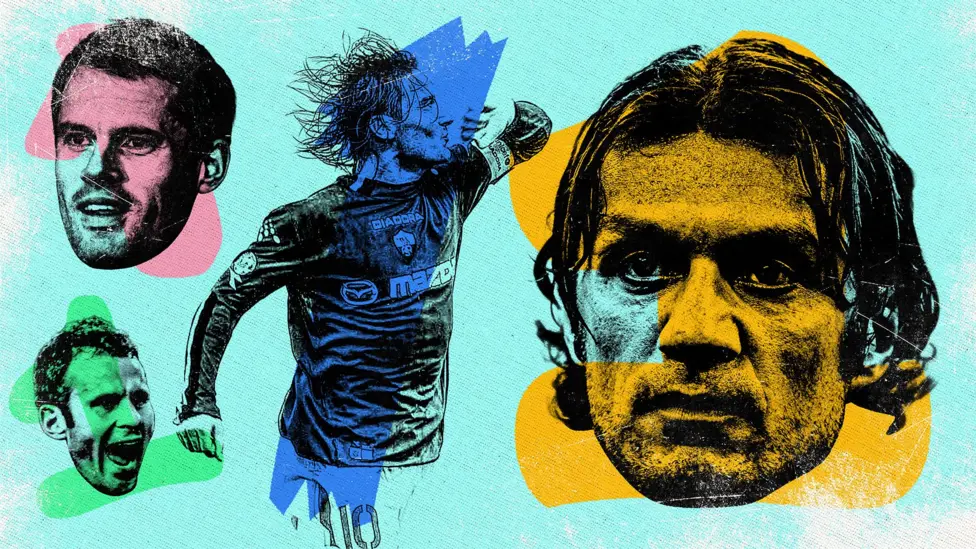
It’s not solely the player’s decision to stay, either – the club has to want them. And you have to forge a strong bond with the fans – from Tony Hibbert to Ledley King, and even aptly named Celtic stalwart Paul McStay, many become cult heroes or club legends.
Athletic Club could field teams of one-club players past and present, but they only give the award to retired players from other clubs.
“We look for players we feel embody the values of their club or fanbase,” adds Parry.
“Maybe the player isn’t necessarily the big superstar or most talented to have ever come from that club, but generally they tend to be a big fan favourite.
“The fans saw that player as a reflection of themselves on the pitch and quite often the players saw themselves as a reflection of the fan base as well.”
From Milan to Manchester United, some clubs could feature heavily here, so we’ve gone for one representative per team.
To kick things off, though, it only feels right to include an Athletic star – the only current player on the list embodies the club’s values and also has his own remarkable story.
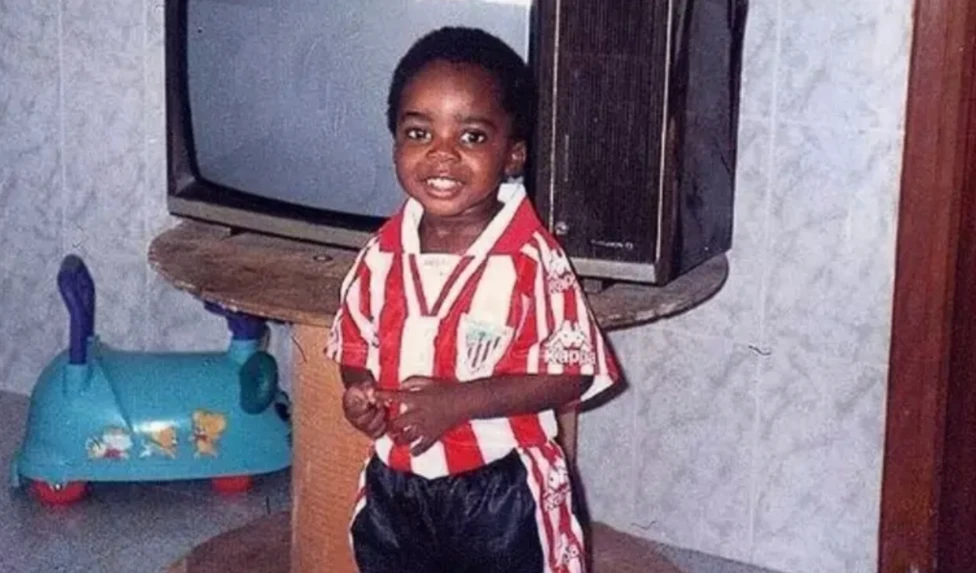
Inaki Williams would not be a legend in Bilbao if it wasn’t for the sacrifices made by his parents, who left Ghana in search of a better future while his mother, Maria, was pregnant, crossing part of the Sahara barefoot to settle in northern Spain.
“We had to suffer a lot,” Williams told me before helping Athletic to a first Copa del Rey triumph in 40 years. “Thanks to God we are all here together now, living a really good life.”
Growing up an Athletic fan, Williams was the first black player to score for the club and helped his brother Nico break through, too.
“Inaki Williams always says, ‘my dream is to be able to say I spent my entire career playing for my boyhood club’,” adds Parry.
At 31 and with more than 500 appearances for Athletic, including a La Liga record 251 in a row, the forward looks good to deliver on that dream.
There are plenty of worthy shouts for an older generation of stars – Jack Charlton at Leeds United, and Bolton Wanderers’ Nat Lofthouse among them – but with the commercialisation and globalisation of modern football making one-club wonders feel increasingly rare, we’ve not strayed too far into the past.
Apart from, that is, to include Lev Yashin – the Ballon d’Or-winning goalkeeper who spent his entire career between 1950 and 1970 with Dynamo Moscow (he also played ice hockey for them).
Yashin, at number nine, is also the only goalkeeper on this list, although honorable mentions go to 39-year-old Igor Akinfeev – into his 23rd season with CSKA Moscow – and Brazilian Rogerio Ceni, who played more than 1,000 times for Sao Paulo and remarkably scored 129 goals.
Giuseppe Bergomi sweeps in at eight, making his Inter debut shortly after turning 16 in 1980 and remaining the club’s youngest-ever player. Only Javier Zanetti has more appearances than the versatile Italian defender’s 519 for the Nerazzurri.
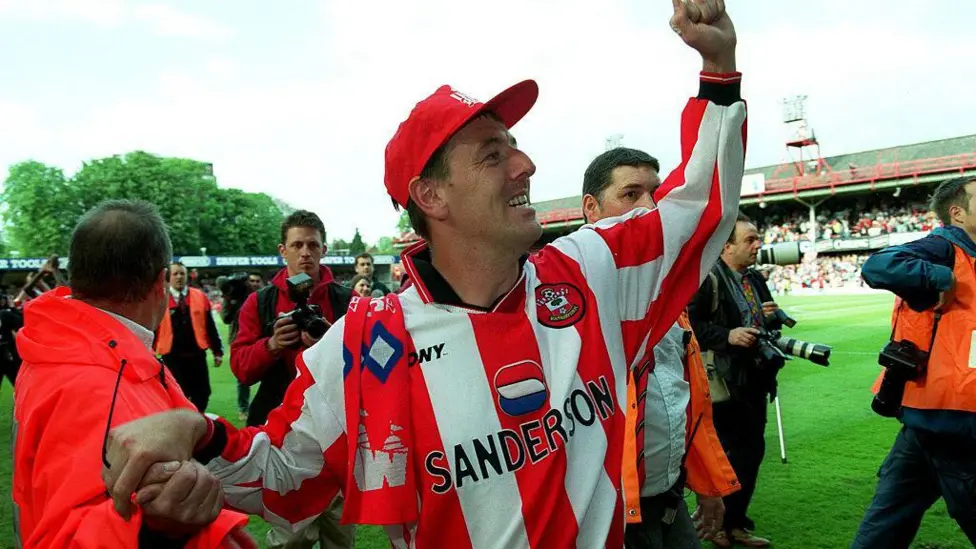
From San Siro to Southampton, where Matthew le Tissier spent his time sauntering around The Dell scoring worldies and tormenting goalkeepers from the penalty spot – Mark Crossley the only man to stop him from 48 attempts.
Le Tissier could have moved on to bigger pastures – Manchester United, Chelsea and Tottenham among those keen – but then he wouldn’t have made this list, or kept Saints in the top flight for so long.
There are players who have stood on the brink of one-clubmanship only to prolong their careers elsewhere – think Thomas Muller at Vancouver, Steven Gerrard in LA, John Terry in the Midlands.
But at number six is someone who committed themselves entirely to Merseyside.
When Jamie Carragher was invited to receive the One-Club Man award at San Mames, he said: “After winning the Champions League, being a one-club man is the biggest achievement of my career.”
Despite all their team silverware, players value the prize as a huge honour.
“They think their status as a one-club player is something that’s been undersung throughout their careers,” says Parry. “One thing that also strikes me is how humble they’ve been, which perhaps is quite telling considering the values of the award.”
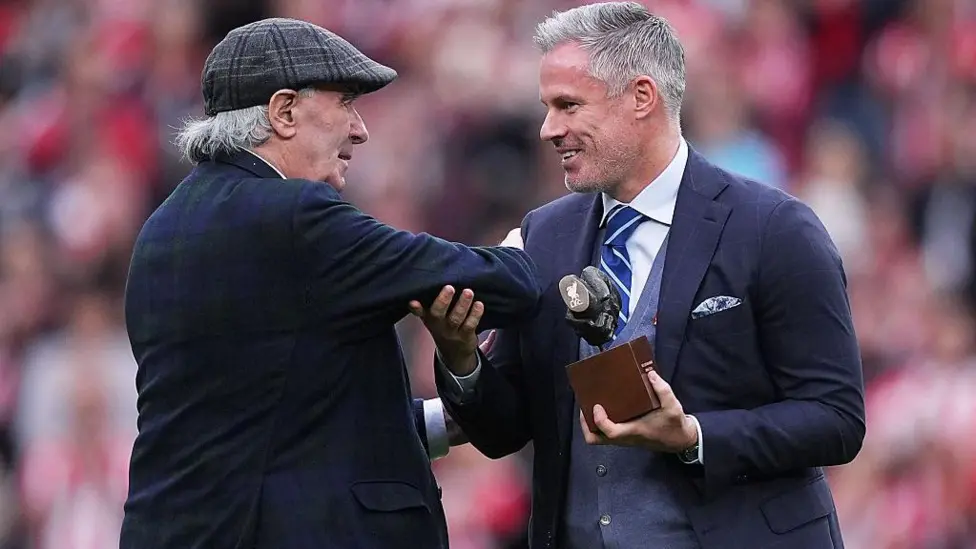
Carragher played under six managers during his 16-year career at Anfield, while Carles Puyol – coming it at number five – played under eight at Barcelona, who accepted an offer to sell the defender before he had even made his debut.
Puyol refused to leave, and then won the lot.
“It’s rare and a difficult achievement to be a one-club player at any club, not just a top club,” explains Parry. “Clubs are constantly pushing to improve and transfer strategies are a huge part of that.
“Carragher and Puyol mentioned they know different managers signed different players to try and replace them. It was a huge challenge they had to overcome.
“Maintaining the level required to play in a top-division football team over a sustained period comes with a lot of pressure and competition.”
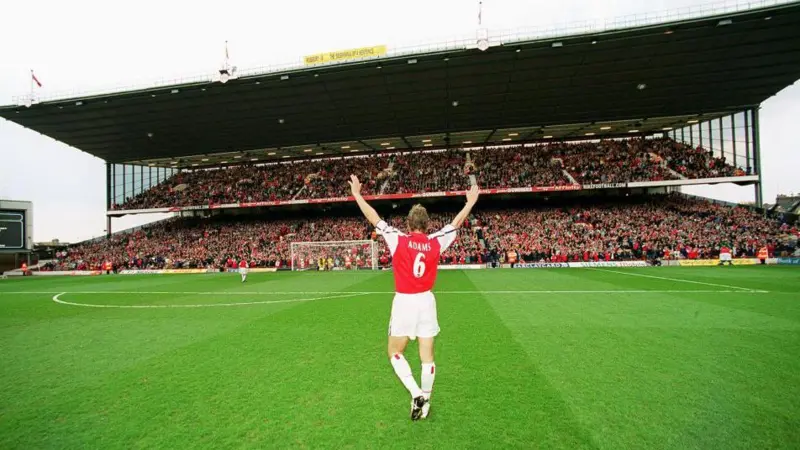
Tony Adams, at number four, was part of a transition from George Graham’s discipline to the progressive approach of Arsene Wenger – captaining Arsenal to league titles in three different decades.
Adams, meanwhile, had to overcome alcoholism – serving four months in prison in 1990 for drink-driving before founding the Sporting Chance Clinic in 2000.
The Romford-born centre-back made 672 appearances in a Gunners shirt – his defining moment striding on to, of all people, Steve Bould’s pass to score against Everton and put the icing on Arsenal’s title cake in 1998.
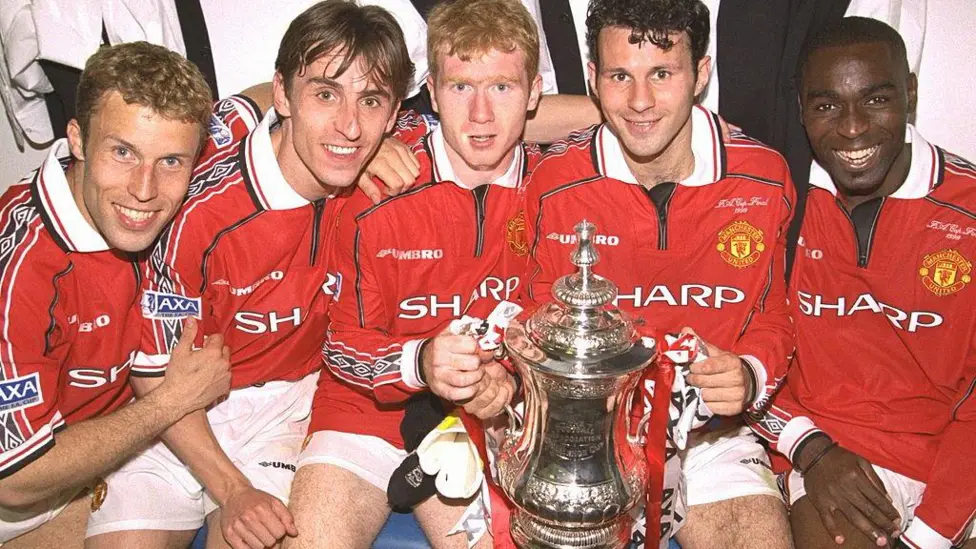
Ryan Giggs, at three, is unique in that 940 of his 963 games – and all of his 168 goals – for Manchester United came under one manager, Sir Alex Ferguson.
The Welshman won 13 Premier League titles and two Champions Leagues in a career that spanned 24 seasons and during which he evolved from marauding down the wing to central midfield and eventually the dugout during a brief stint as interim boss.
No-one, however, comes close to the top two.
No name is more synonymous with AC Milan than ‘Maldini’. Not just a one-club man, this is a line of succession.
Cesare played more than 400 games and later managed the Rossoneri, his grandson Daniel came through the ranks before moving on.
But Paolo Maldini? A Milan thoroughbred. Making his debut 16 years after being born in the city, he played in black and red until just shy of his 41st birthday.
Winning Scudetti and European Cups in three different decades, making more than 900 appearances, a legend at San Siro and beyond
Yet it’s one thing being among the world’s greatest defenders at one of Europe’s biggest clubs during a golden age of Italian football. That’s a natural fit.
It’s another to resist the lure of guaranteed success and riches to instead drag your boyhood side to glory.
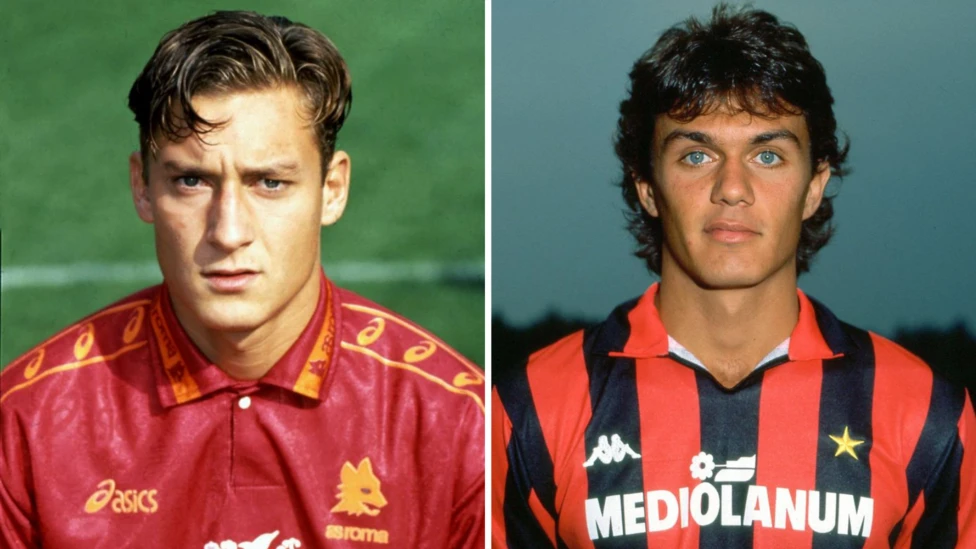
A seventh-generation Roman, Francesco Totti dreamed of sporting the same carmine red and gold as the heroes plastered across his childhood bedroom wall.
Rejecting advances from Italian giants when he was still an academy kid, turning down an unrelenting Florentino Perez, huge salary and Real Madrid’s number 10 shirt after becoming one of the globe’s greatest – the die-hard Roma fan grew up to become the club’s top goalscorer and record appearance maker.
Totti’s Roma career is a love story that peaked with only the club’s third-ever Scudetto, and first in 18 years, in 2001. Stadio Olimpico welcomed Totti as a 16-year-old debutant in 1993 and worshipped him until a tearful goodbye aged 40.
“Damned time,” Totti professed to his adoring faithful afterwards. A true one-club hero, a worthy number one on this list.
BBC Sport
Football
Man City beat Liverpool to reach FA Cup semis
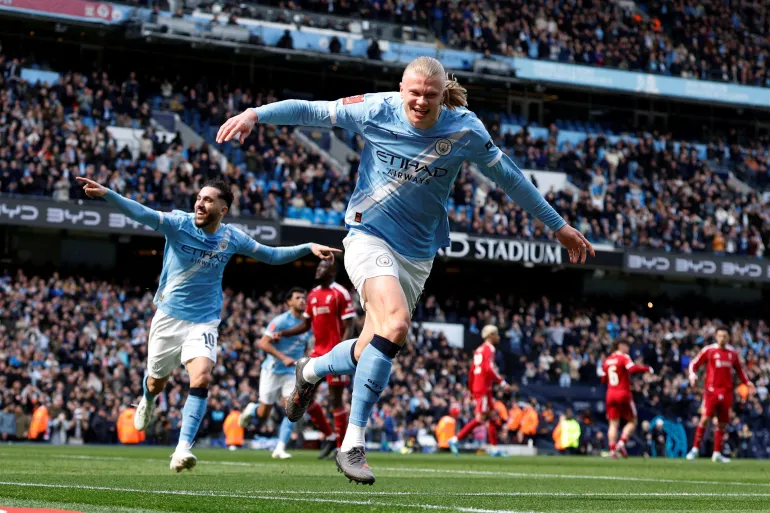
Erling Haaland scored a superb hat-trick to help Manchester City continue their formidable FA Cup run under Pep Guardiola by booking a record-extending eighth consecutive semi-final with a ruthless dismantling of insipid Liverpool.
Manager Guardiola had to watch from the stands as he served the second game of a touchline ban and he witnessed his team take apart toothless Liverpool in a result that will increase the pressure on boss Arne Slot.
City’s previous game was at Wembley, when they triumphed over Premier League leaders Arsenal in the Carabao Cup final, and the hosts backed that up with another impressive victory to close on a domestic cup double.
City had done little to threaten Giorgi Mamardashvili’s goal until taking the lead on 38 minutes when Haaland converted from the penalty spot, just as he did at Anfield in the league this season, following Virgil van Dijk’s clumsy trip on Nico O’Reilly.
The Norway striker had been on a relatively barren run in front of goal before this game but he then added a second by guiding a header into the far corner from Antoine Semenyo’s cross on the stroke of half-time.
Liverpool had played fluently earlier in the game at Etihad Stadium – with Florian Wirtz prominent – but their inability to convert the chances they created proved costly.
City failed to deal with a long ball over the top but Mohamed Salah, playing for the first time since announcing he will leave Anfield this summer, hesitated when through on goal and his effort was blocked wide.
He also later had a penalty saved by James Trafford while Hugo Ekitike’s strike from inside the area flew wastefully over.
City were much more clinical, as Semenyo clipped in a delightful finish early in the second half to make it 3-0 before Haaland completed his treble to seal City’s serene progression to the last four.
BBC


Emirates Specialty Hospital Expands Cancer Care Services in Dubai with Opening of Dedicated Chemotherapy Unit

When Rheumatoid Arthritis Threatened Her Independence: How the Right Diagnosis Helped Her Get Her Life Back

Saudi German Hospital Dubai Launches Mental Health and Wellness Center for Children and Adolescents

Araghchi, Oman Sultan discuss transit, stability in Muscat

UAE’s café culture keeps growing despite price pressure

Netflix to Livestream BTS Comeback Concert
-
 politics6 months ago
Araghchi, Oman Sultan discuss transit, stability in Muscat
-
 UAE10 months ago
UAE’s café culture keeps growing despite price pressure
-
 Entertainment9 months ago
Netflix to Livestream BTS Comeback Concert
-
 Discover9 months ago
Is February 2026 really a once-in -283-years MiracleIn?
-
 Football10 months ago
Algeria, Burkina Faso, Côte d’Ivoire win AFCON 2025 openers
-

 Health10 months ago
NMC Royal Hospital, Khalifa City, performs rare wrist salvage, restoring function for young patient
-
 Health10 months ago
Bascom Palmer Eye Institute Abu Dhabi and Emirates Society of Ophthalmology Sign Strategic Partnership Agreement
-

 Health11 months ago
Emirates Society of Colorectal Surgery Concludes the 3rd International Congress Under the Leadership of Dr. Sara Al Bastaki