Football
Saudi U-17 Team Faces Austria in the World Cup
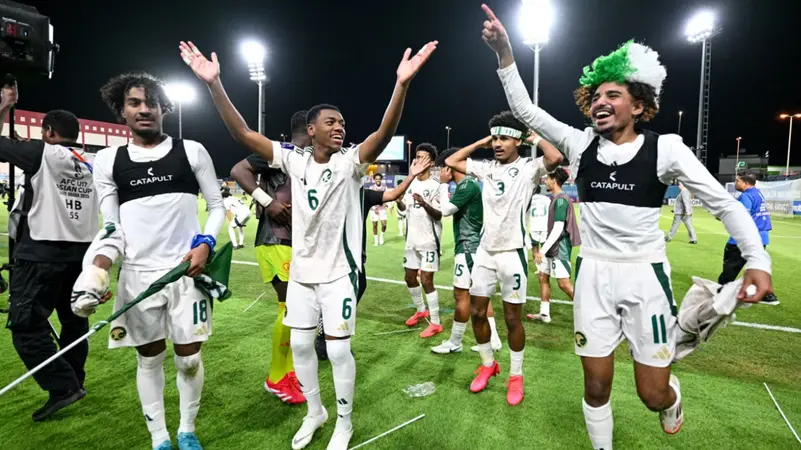
The Saudi national under-17 football team is looking to shine at the FIFA U-17 World Cup, which will be held in Qatar from November 3 to 27, after ending a 36-year wait to return to the global stage.
Saudi Arabia’s return to the tournament came after finishing runner-up to Uzbekistan in the AFC U-17 Asian Cup, which it hosted on home soil. That achievement secured the team’s place once again in the world competition a tournament it famously won in 1989.
Coach Abdulwahab Al-Harbi has retained the core of the squad that impressed during last April’s continental championship. Leading the attack is expected to be Abdulhadi Al-Mutairi, supported by talented playmaker Abdulrahman Al-Sufyani and the speed of Sabri Dahl on the wings.
Midfielder Abdulaziz Al-Fawwaz is considered one of the key players in the team, thanks to his dynamic presence both defensively and offensively a factor that could largely determine Saudi Arabia’s ability to advance deep into the tournament.
The Saudi team will begin its campaign against Austria on Wednesday, followed by a match against New Zealand on November 8, before concluding the group stage on November 11 against what is considered its toughest opponent Mali.
Saudi Arabia has participated in the U-17 World Cup three times before, with its most notable achievement being the 1989 championship title, which also marked the team’s last appearance in the tournament.
The Green Falcons’ participation this year revives memories of the historic 1989 triumph, when Saudi Arabia became the first Arab team to win a FIFA World Cup title at any age level a moment that remains one of the greatest milestones in Arab football history.
The 1989 Saudi squad featured several players who went on to become legends of Saudi football, many of whom later represented the national team in its first-ever senior World Cup appearance in the USA in 1994 including Mohammed Al-Deayea and Fouad Anwar.
The roster of the 1989 U-17 team included: Mohammed Al-Deayea, Mohammed Al-Timiyat, Khalid Al-Aboudi, Shaker Al-Alyan, Khalid Tamim, Abdullah Al-Thunayan, Suleiman Al-Quraini, Waleed Al-Turair, Saud Al-Hamali, Khalid Al-Ruwaikhi, Jabarti Al-Shamrani, Adnan Abdulshakour, Aref Bu-Rashid, Fouad Anwar, Salem Suroor, Suleiman Al-Rashoudi, Mansour Al-Mousa, and Abdullah Al-Ahmadi.
In that edition, the “Green Falcons” were drawn into Group D alongside Portugal, Guinea, and Colombia. Saudi Arabia opened its campaign against Portugal, led by its future legend Luís Figo, who scored once, but Saudi player Jabarti Al-Shamrani responded with two goals to earn a valuable 2–2 draw.
In their second match, the Saudis again drew 2–2 with Guinea, courtesy of an own goal and another strike from Khalid Al-Ruwaikhi. Al-Ruwaikhi then became the hero of the third group game, scoring the decisive goal in a 1–0 victory over Colombia a performance that made him one of Al-Ahli’s brightest stars in the 1990s.
At the end of the group stage, Saudi Arabia finished second with four points, behind Portugal on goal difference, advancing to the quarterfinals of the tournament held in Scotland. There, they defeated Nigeria on penalties after a goalless draw in regulation and extra time.
The semifinal saw a Gulf derby between Saudi Arabia and Bahrain, where the Green Falcons won thanks to a goal from Khalid Al-Ruwaikhi, booking a historic final against host nation Scotland, who had eliminated Portugal in the previous round.
In the final, Saudi Arabia produced a legendary comeback, overturning a 0–2 deficit to level the score through Suleiman Al-Rashoudi and Waleed Al-Turair. The match went to a penalty shootout, where the Saudis triumphed 5–4, claiming a historic title for Saudi, Arab, and Asian football alike.
Al Arabiya.net