
Health
US approves Wegovy, UAE patients may still wait
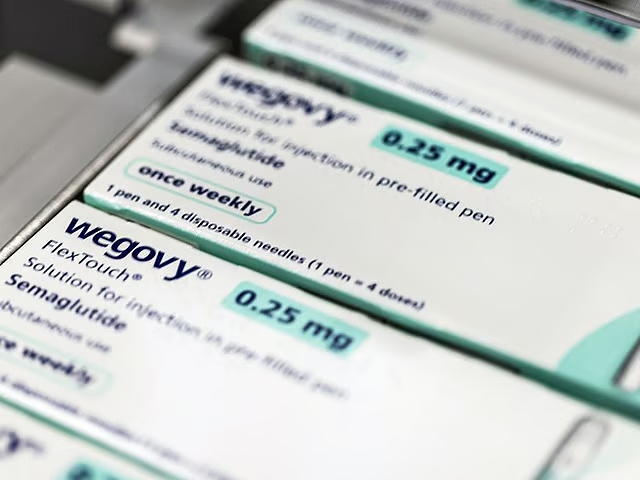
A pill version of the world’s most closely watched weight-loss drug is edging closer to global rollout, but patients in the UAE may still have to wait.
Novo Nordisk has secured US approval for a once-daily oral form of Wegovy, marking an expansion of its obesity treatment franchise and intensifying competition with Eli Lilly. While the drug is set to launch in the US in early January, the company confirmed to Gulf News that the pill is still pending marketing approval in the UAE.
“For now, we’re focused on the US market and have not announced any plans ex-US,” Novo Nordisk said in a statement. “The Wegovy pill is currently pending marketing approval from the EMA and other regulatory authorities, including in the UAE, where Novo Nordisk is in dialogue with the regulatory authorities.”
Until now, Wegovy has been administered as a weekly injection. The pill version offers a once-daily oral alternative for adults with obesity or those who are overweight with weight-related medical conditions, to be used alongside a reduced-calorie diet and increased physical activity. It is also approved in the US to reduce the risk of major cardiovascular events such as heart attack and stroke in certain high-risk patients.
Novo Nordisk’s green light was based on results from its Oasis 4 trial, which showed patients taking a 25 milligram pill once daily lost an average of 13.6% of their body weight over 64 weeks.
Demand for weight-loss drugs in the UAE is expected to surge following the US FDA’s approval of an oral version of Wegovy, say healthcare providers, even as they stress that the pill is not yet approved for local use.
Healthcare providers and pharmacies Gulf News spoke with across the UAE say interest in GLP-1 weight-loss medications is already high—and the arrival of a pill version could significantly expand demand once it clears local regulatory hurdles.
“Any new formulation must undergo a separate regulatory review before it can be marketed or dispensed in the country,” explained Dr Rania Alkhani, Pharmacy Manager at International Modern Hospital.
Because European pharmaceutical giant Novo Nordisk manufactures Wegovy, approval from the European Medicines Agency (EMA) is typically required before the product can be submitted for UAE registration.
“The process can take several months to up to a year, depending on the completeness of the dossier and alignment with UAE regulatory standards under authorities such as MOHAP or DHA,” Dr Alkhani explained.
Novo Nordisk has indicated it expects to launch the pill version in the US in early January 2026, according to Ravi Sharma, Chief Pharmacy Officer at Burjeel Holdings.
Soaring demand
Doctors and pharmacists say the pill format could be a turning point for obesity treatment in the UAE.
“Yes, demand is expected to be very high,” Sharma said. “Clinicians anticipate the pill will be a game-changer for people with needle phobia or those hesitant to commit to injections.” Clinical trial data show the oral version achieved approximately 16.6 per cent weight loss, comparable to injectable Wegovy — a factor expected to fuel interest further.
Dr Alkhani added that many patients prefer pills due to convenience, ease of use and reduced treatment anxiety, although physician guidance will remain essential.
Prescription-only — with strict checks
However, healthcare providers have reiterated that Wegovy, Ozempic and Mounjaro are strictly prescription-only medications in the UAE. Licensed pharmacies are required to verify: a valid prescription from a licensed physician, the prescriber’s credentials, the appropriate dosage, patient details, and proper counselling and dispensing records.
“There are serious penalties for selling or obtaining prescription-only medications without authorisation,” Sharma said. These can include fines, licence suspension and legal action.
How much will it cost?
There is no official pricing yet for the pill version in the UAE.
“Any pricing will follow the UAE MOH price list and approved distributor pricing once authorised,” Dr Alkhani said.
Sharma noted that oral formulations could be priced at or below injectables, depending on dosage, manufacturer strategy, and supply conditions — but stressed that regulators must approve final prices.
Out-of-pocket payments?
There’s a catch to acquiring the drug: insurance coverage remains limited.
“In most cases, weight-loss medications are paid for out of pocket,” Sharma said. Coverage is typically limited to approved medical indications, such as diabetes or metabolic disorders, though some premium plans may include weight-management benefits.
Dr Alkhani added that semaglutide is sold under different brand names in the UAE—some approved for diabetes treatment, others specifically for weight management—which affects insurance eligibility.
Ignore social media trends
Both pharmacy leaders confirmed rising off-label demand, particularly for diabetes drugs such as Ozempic, used for weight loss, driven in part by social media trends. This surge has led UAE authorities to issue warnings about counterfeit products, Sharma said. Perhaps the most eye-raising endorsements for the drug came from tennis superstar Serena Williams, who partnered with Ro, a telehealth company in which Williams’ husband, Alexis Ohanian, co-founder and former CEO of Reddit, is an investor. Other celebrities who endorsed the GLP-1 drugs include television personality Oprah Winfrey, pop stars Lizzo and Kelly Clarkson, and actors Rebel Wilson and Whoopi Goldberg.
Pharmacies have also experienced periodic shortages of injectable GLP-1 drugs, mainly due to global supply constraints rather than local demand alone. Hospitals and distributors work closely with health authorities to prioritise patients with approved medical needs.
Who should be using these drugs?
Consultant endocrinologists stress these medications are not for cosmetic weight loss. “GLP-1 medications like Wegovy are a major advancement, but lifestyle changes remain foundational,” said Dr Mervat Hussin, Consultant Endocrinologist at Burjeel Hospital, Abu Dhabi.
Clinical trials show semaglutide can lead to 15–20% weight loss over 68 weeks when combined with diet and exercise, compared to 2–5% with lifestyle changes alone.
Appropriate candidates include adults with a BMI ≥30, or a BMI ≥27 with at least one comorbidity such as diabetes, high cholesterol, hypertension or sleep apnoea “These drugs work best as part of a long-term therapeutic partnership, not a quick fix,” Dr Hussin said.
Benefits for common UAE health conditions
Doctors say GLP-1 drugs can be particularly beneficial for conditions prevalent in the UAE:
Type 2 diabetes: Improved blood sugar control and weight loss
PCOS: Better insulin sensitivity and metabolic outcomes
High cholesterol: Improved lipid profiles and reduced cardiovascular risk
Dr Nishara Asiger, Specialist Internal Medicine at Aster Cedars Hospital & Clinic in Jebel Ali, said GLP-1 drugs “show excellent results” when lifestyle measures alone have failed — but suitability must always be assessed case by case.
Story by Gulf News
Health
Safe Blood Donation Before, During, and After Ramadan – Medical Guidelines by Dr. Ganesh Dhanuka

By Dr. Ganesh Dhanuka
Specialist Internal Medicine and Nephrology
International Modern Hospital
Blood donation remains one of the most impactful humanitarian acts, capable of saving multiple lives with a single unit of blood. However, during the holy month of Ramadan, many individuals question whether it is safe to donate while fasting and how to properly prepare for donation.
From a medical standpoint, blood donation is generally safe for healthy individuals. Nevertheless, appropriate preparation — especially in the context of fasting — is essential to minimize risks such as dizziness, dehydration, or hypotension.
This article outlines evidence-based recommendations for blood donation before, during, and after Ramadan, along with its physiological, psychological, and societal benefits.
Preparing for Blood Donation Before Ramadan
Proper preparation significantly reduces the risk of adverse effects during donation. Individuals planning to donate should:
Nutritional Preparation
Consume a balanced meal rich in iron and protein approximately 2–3 hours before donating. Iron-rich foods such as lean red meat, spinach, lentils, beans, and fortified cereals help maintain adequate hemoglobin levels. Protein supports plasma volume and recovery.
Avoid donating on an empty stomach, as this increases the likelihood of lightheadedness and vasovagal reactions.
Hydration Status
Adequate hydration is critical. Donors should:
- Increase water intake the day before donation.
- Drink extra fluids on the day of donation.
Proper hydration helps maintain blood pressure and reduces the risk of fainting.
Sleep and Lifestyle Factors
- Ensure 6–8 hours of quality sleep the night before.
- Avoid alcohol for at least 24 hours prior to donation.
- Refrain from strenuous physical activity before donation.
Medical Disclosure
Bring valid identification and honestly disclose:
- Any chronic medical conditions.
- Current medications.
- Recent illnesses or procedures.
Transparency ensures donor safety and protects recipients.
What to Expect During Blood Donation
The blood donation process is generally straightforward and takes about 10–15 minutes for the actual collection.
During donation:
- Stay calm and breathe normally.
- Avoid sudden movements.
- Inform medical staff immediately if you experience dizziness, nausea, sweating, blurred vision, or weakness.
- Follow all staff instructions carefully.
Most temporary reactions, when they occur, are mild and resolve quickly with rest and hydration.
Post-Donation Care and Recovery
The post-donation period is crucial for safe recovery.
Immediate Aftercare
- Rest at the donation center for 10–15 minutes.
- Accept fluids and light refreshments provided.
- Avoid standing up abruptly.
The Next 24 Hours
- Increase fluid intake significantly.
- Consume iron-rich foods to replenish red blood cell production.
- Avoid heavy lifting for 24 hours.
- Avoid strenuous exercise on the same day.
- Avoid alcohol for several hours after donation.
If dizziness occurs, lie down and elevate your legs until symptoms resolve.
Food
Foods That Look Healthy for Weight Loss (But Actually Aren’t)

By Dr. Yara Husein (Food and Nutrition Expert)
Companies often use specific buzzwords on food labels to market products as healthy and weight-loss friendly options. In reality, these options can sometimes have the opposite effect. Here are some common foods and drinks that might be holding you back:
Fat-free dairy products
Many think that fat-free dairy products are ideal for dieting and do not contribute to weight gain. However, in truth, these products can cause weight gain because fat-free products are less satiating than their full-fat counterparts; fat is a nutrient that supports feelings of fullness and makes food more enjoyable. Furthermore, food manufacturers often replace fat with sugar in low-fat and fat-free products to compensate for the lost flavour. Beyond that, skimmed dairy products provide the body with fewer nutrients than full-fat products, because vitamins such as A, D, E, and K are fat-soluble vitamins that require fat to enter the body, be absorbed, and be utilized.
Gluten-free foods
While it is essential for people with gluten-related disorders to avoid gluten, gluten-free foods are not necessarily healthier than foods containing gluten. Some processed gluten-free foods and desserts contain the same amount of calories and added sugar—if not more—as other snacks. Studies, including a study published in the journal PeerJ, indicate that gluten-free snack foods tend to be lower in protein, fiber, and certain vitamins and minerals compared to their gluten-containing counterparts. They are also generally more expensive.
Breakfast cereals
Many people think that breakfast cereals are an ideal and healthy breakfast to start their day, but in reality, many cereals are made from refined grains that lack nutrients like protein and fiber, and they can contain a high percentage of added sugar. For example, Honey Nut Cheerios, which are marketed as heart-healthy, contain 12 grams of added sugar per cup. Eating large quantities of these and other cereals high in added sugar may lead to an increased risk of heart disease, high blood pressure, high triglyceride levels, and weight gain.
Energy and sports drinks
Companies market sports and energy drinks as ways to boost energy and athletic performance, but these drinks can contain a massive amount of sugar. Consequently, they can contribute to weight gain for people who consume them without performing intense physical exercise. For instance, a popular energy drink like Monster (473 ml) contains 54 grams of added sugar—a quantity much higher than the amount recommended by the American Heart Association (25g for women and 36g for men). Research, including a study published in the journal Pediatric Obesity, has linked the consumption of sweetened beverages to health problems, including high blood pressure, fatty liver, and obesity in children and adolescents.
Diet soda
When following a diet, many people may turn to sugar-free or calorie-free drinks, thinking they contribute to weight loss. However, studies indicate that diet soda may contribute to certain health problems by altering brain responses to food and increasing the desire to eat high-calorie foods such as sweets and fast food. A study published in the journal Nutrients linked the consumption of these drinks to a higher risk of metabolic syndrome, which is a group of symptoms that include increased belly fat, blood sugar, blood pressure, and blood lipid levels.
Health
Excessive Screen Time in Children: Digital Eye Strain, Myopia Risk, and Long-Term Vision Health

By Dr. Tahere Rezaei
Ophthalmologist
International Modern Hospital Dubai
In today’s digital era, children are spending unprecedented hours on tablets, smartphones, and social media platforms. From a clinical perspective, the impact of excessive screen exposure on pediatric eye health is becoming increasingly evident.
Ophthalmology clinics are witnessing a clear rise in complaints linked directly to prolonged device use. Children often hold screens very close to their eyes and remain intensely focused for extended periods without taking breaks. This sustained near work places continuous strain on the visual system, particularly on the eye muscles responsible for focusing.
The most immediate and common consequence is digital eye strain. Symptoms typically include:
- Headaches
- Eye fatigue
- Blurred vision
- Burning sensation
- Dryness due to reduced blinking
When children concentrate on screens, their blink rate significantly decreases. Reduced blinking leads to tear film instability, which contributes to dryness and irritation. Over time, persistent strain can affect visual comfort and academic performance.
Rising Concern: Childhood Myopia
Beyond temporary discomfort, there is a more serious long-term concern — the increasing prevalence of childhood myopia (short-sightedness).
Extended near work combined with limited outdoor exposure has been strongly associated with faster progression of myopia. Natural daylight and distance viewing play a protective role in visual development. When children spend most of their time indoors focusing on close objects, the eye adapts by elongating, leading to blurred distance vision.
Early-onset myopia is not simply about needing glasses. Higher degrees of myopia later in life increase the risk of:
- Retinal detachment
- Glaucoma
- Myopic macular degeneration
- Early cataracts
Preventing rapid myopia progression during childhood is therefore critical for long-term ocular health.
Screen Use and Sleep Disruption
Another clinically observed issue is the effect of screen exposure before bedtime. Blue light emitted from digital devices can suppress melatonin production, disrupting the natural sleep cycle. Poor sleep quality affects not only overall health but also visual comfort, concentration, and cognitive performance.
Children who use screens late at night frequently report:
- Difficulty falling asleep
- Morning eye discomfort
- Increased fatigue during the day
Sleep plays a vital role in ocular surface recovery and overall neurological health.
Supporting Healthy Visual Development
For optimal eye development, children require balanced visual habits. Key preventive measures include:
- Limiting continuous screen time
- Encouraging daily outdoor activity
- Maintaining proper room lighting
- Ensuring appropriate screen distance
- Practicing scheduled visual breaks (such as the 20-20-20 rule: every 20 minutes, look at something 20 feet away for 20 seconds)
Parents play a crucial role in modeling healthy screen behavior and establishing structured digital routines.
As Dr. Tahere Rezaei emphasizes, eye health in childhood directly influences long-term vision outcomes. Early awareness, prevention, and regular eye examinations are essential to protect children from avoidable visual complications in adulthood.
Healthy eyes today mean clearer vision for life.


Private Credit Investors Rush to Withdraw

UAE moves spring break for schools and universities

How Etihad Rail ferried 350+ UAE passengers back home with Saudi help

Is February 2026 really a once-in -283-years MiracleIn?

Algeria, Burkina Faso, Côte d’Ivoire win AFCON 2025 openers

Bascom Palmer Eye Institute Abu Dhabi and Emirates Society of Ophthalmology Sign Strategic Partnership Agreement
-
Discover1 month ago
Is February 2026 really a once-in -283-years MiracleIn?
-
 Football2 months ago
Algeria, Burkina Faso, Côte d’Ivoire win AFCON 2025 openers
-
 Health3 months ago
Bascom Palmer Eye Institute Abu Dhabi and Emirates Society of Ophthalmology Sign Strategic Partnership Agreement
-

 Health2 months ago
NMC Royal Hospital, Khalifa City, performs rare wrist salvage, restoring function for young patient
-

 Health4 months ago
Emirates Society of Colorectal Surgery Concludes the 3rd International Congress Under the Leadership of Dr. Sara Al Bastaki
-

 Football3 months ago
Globe Soccer Awards 2025 nominees announced as voting opens in Dubai
-

 Health4 months ago
Born Too Soon: Understanding Premature Birth and the Power of Modern NICU Care
-

 Health2 months ago
Decline in Birth Rate in the UAE