
COMMUNITY
Tabuk and Trojena Mountains turn icy white

Snowfall across parts of Tabuk and the Trojena Mountains has transformed the regions into an unexpected winter playground, prompting residents to step outside to ski, play, and capture the rare icy scenes.
The Trojena Highlands were draped in white, turning the rugged northern mountains into a striking winter landscape. Visitors shared videos and photos on social media, capturing snow settling on rocky slopes.
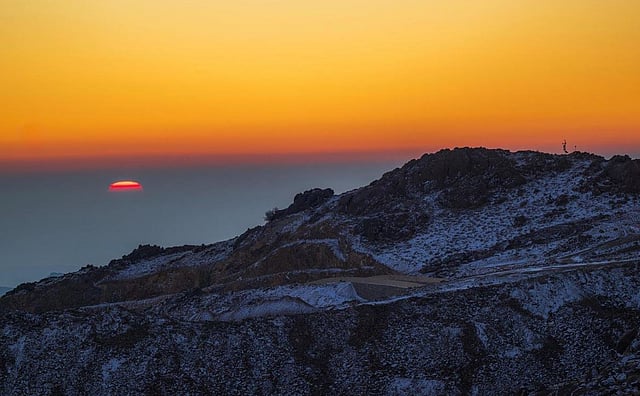
Rare snowy spectacle draws crowds
White blankets also spread across the mountains of Tabuk, drawing locals and tourists outdoors to witness the unusual sight.
Cold conditions at higher elevations offered a stark contrast to the Kingdom’s typical desert climate, highlighting Saudi Arabia’s diverse and dramatic landscapes.
Visitors gathered in picnic areas atop the mountains, taking photos and enjoying the snowy conditions.
The Saudi Press Agency (SPA) captured the joy on the faces of those exploring the snow-covered peaks. Social media clips have gone viral, including one showing a group of camels standing in a snow-covered desert beneath dark clouds — an extraordinary scene for the Kingdom
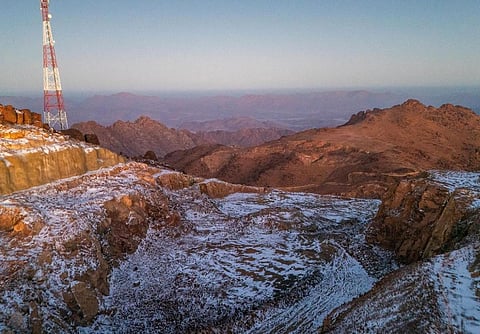
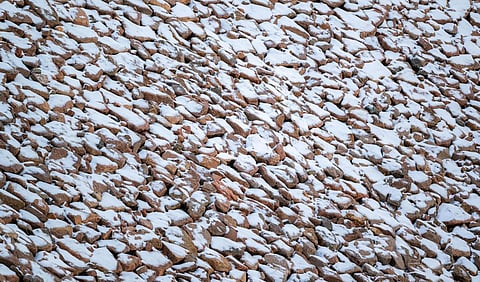
Trojena Mountains: A unique winter escape
The Trojena Mountains, part of NEOM, include some of Saudi Arabia’s highest peaks, rising around 2,600 meters above sea level. They are located about 50 kilometers from the Gulf of Aqaba, providing an accessible escape for residents and tourists eager to experience a rare winter scene in the Kingdom.
Saudi Arabia is known for its scorching heat and expansive deserts.
Northern Saudi Arabia saw snowfall that dramatically transformed the landscape of the Tabuk Province mountains.
Active weather continues across Saudi Arabia
Today, several regions are expected to experience thunderstorms, rain, and gusty winds. The most affected areas include Jazan, Asir, Al-Baha, Makkah, and Madinah, with fog possible in these regions as well as Riyadh, Eastern, Northern Borders, Al-Jawf, and Tabuk.
Red Sea forecast
- Surface winds: Northwesterly to northerly at 10–32 km/h in the north and central areas; southeasterly to easterly at 20–40 km/h in the south, reaching 50 km/h near Bab al-Mandab.
- Wave height: 0.5–1 meter in the north and central parts; 1–2 meters in the south, exceeding 2 meters near Bab al-Mandab.
- Sea state: Light waves in the north and central areas; moderate in the south, turning rough near Bab al-Mandab.
Arabian Gulf forecast
- Surface winds: Southwesterly to southerly in the north; northwesterly to northerly in central and southern areas at 10–30 km/h.
- Wave height: 0.5–1 meter.
- Sea state: Light waves across the Gulf.
Residents and visitors are advised to exercise caution, especially in coastal areas and regions prone to fog, heavy rainfall, or strong winds.
Excitement across the Kingdom
The cold wave and snowfall have sparked excitement and disbelief, with residents sharing images and videos of their cities and mountains blanketed in white. Residents and children alike enjoyed skiing, celebrating, and capturing landscapes rarely seen in Saudi Arabia, marking one of the Kingdom’s rarest winter events in recent years.
Story by Gulf News
COMMUNITY
AlUla Club Marks International Day of the Arabian Leopard
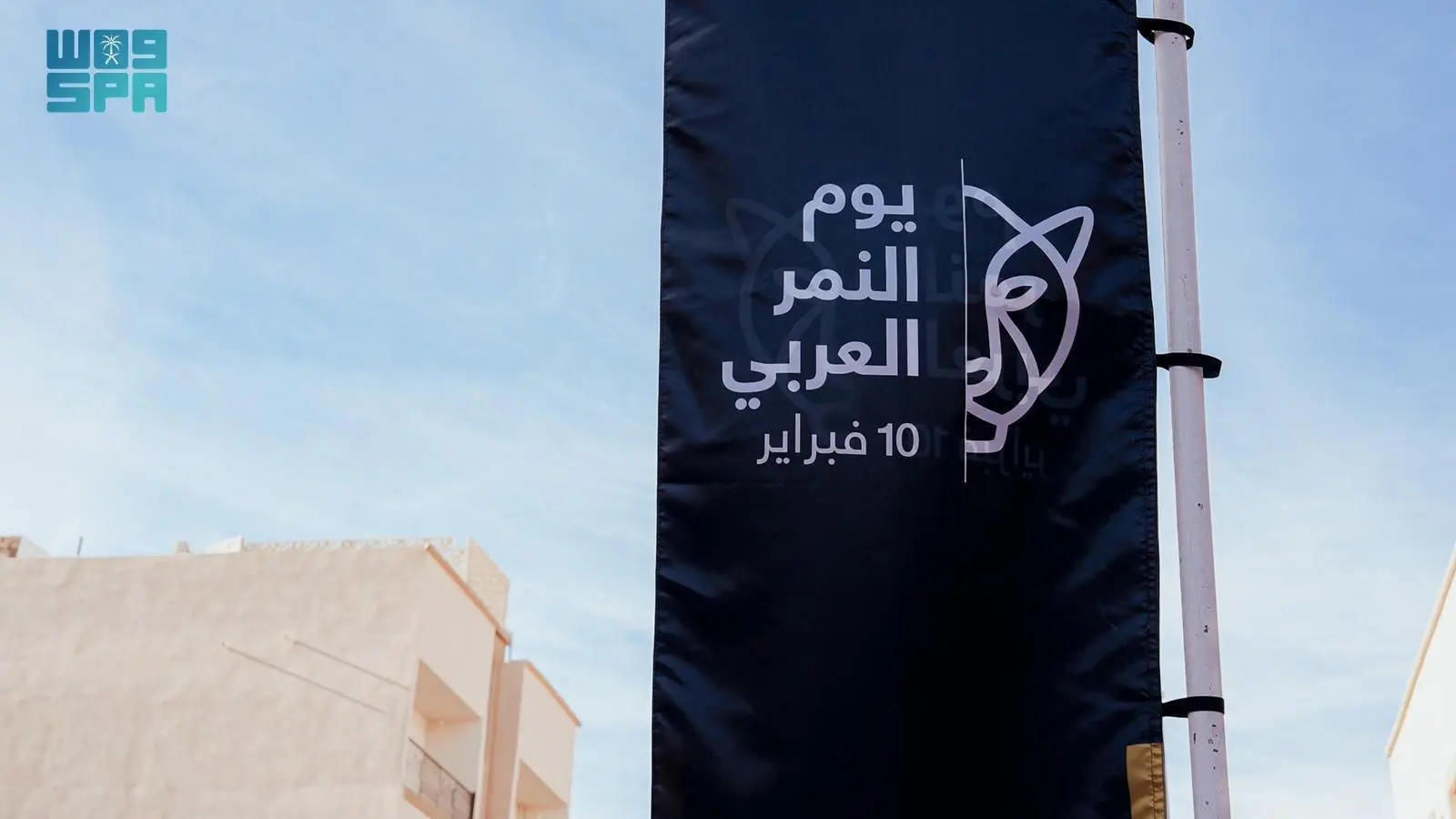
AlUla Club organized an awareness event yesterday to mark the International Day of the Arabian Leopard, with broad participation from residents of AlUla Governorate and visitors. The event is part of the club’s efforts to enhance environmental awareness and support wildlife protection initiatives.
The event aimed to educate youth and the community at large, and especially visitors to the governorate, about the importance of conserving biodiversity. It also sought to reinforce positive behaviors that support wildlife protection, underscoring the role of community initiatives in supporting national efforts to protect the environment, and sustain it.
— SPA
COMMUNITY
Saudi Arabia to issue passports for millions of camels
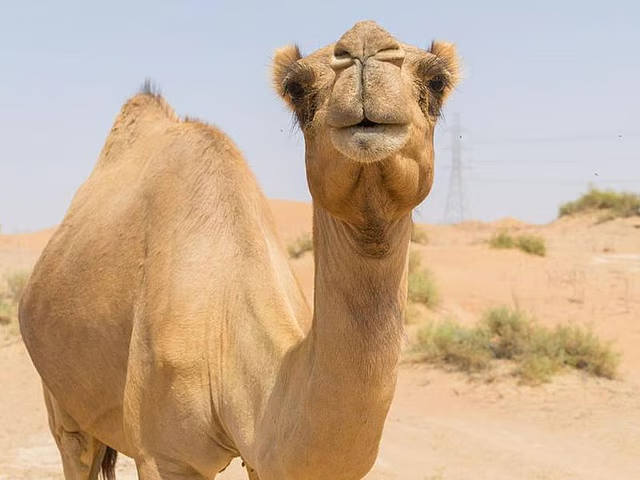
Saudi Arabia has announced plans to issue official passports for camels, a move aimed at better regulating and managing one of the kingdom’s most culturally and economically significant assets.
In a statement this week, Saudi Ministry of Environment, Water and Agriculture said the initiative would help improve oversight of camel ownership while enhancing ‘productivity and efficiency in the sector’ by creating a centralised and reliable reference database.
According to state-backed broadcaster Al Ekhbariya, the document will be used to regulate the sale, transport and trade of camels, while also helping protect owners’ rights and simplify proof of ownership.
Saudi authorities estimate that the kingdom is home to around 2.2 million camels, based on government figures released in 2024. The animals remain deeply embedded in Saudi society — historically as a primary means of transport and today as symbols of heritage, prestige and wealth.
In recent years, camels have also become central to a lucrative breeding and competition industry, particularly at large annual festivals such as the King Abdulaziz Camel Festival, where prize-winning animals can sell for hundreds of thousands of dollars.
That growing commercial value has prompted authorities to tighten oversight, especially after repeated scandals involving cosmetic manipulation of camels entered into beauty contests. Organisers have banned practices such as injections and fillers used to enhance lips, noses and humps, with offenders facing fines and disqualification.
Officials say the passport system is part of a broader effort to modernise agricultural governance while preserving traditional industries — using documentation, data and traceability to manage practices that once relied entirely on oral record and custom.
GN
COMMUNITY
Saudi Arabia suspends 1,800 foreign Umrah agencies after review
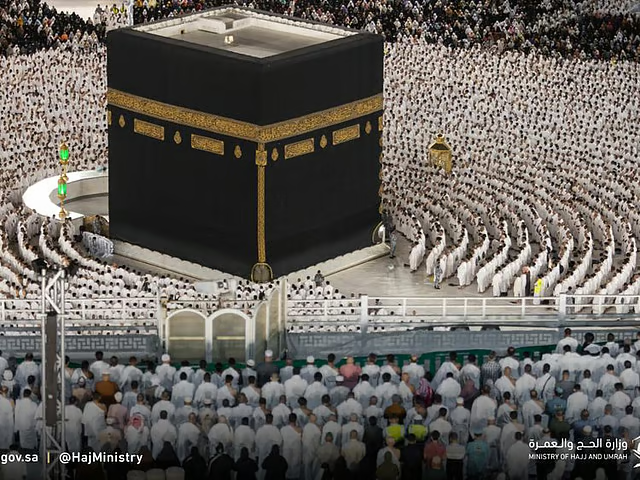
Saudi Arabia’s Ministry of Hajj and Umrah has suspended contracts with about 1,800 foreign travel agencies operating in the Umrah sector, giving them 10 days to rectify their status following a periodic performance review, the ministry said.
The affected agencies are among roughly 5,800 foreign firms authorised to provide Umrah services. The decision was taken after evaluations identified performance deficiencies and weak service quality, the Saudi Press Agency reported on Sunday
The ministry said the suspension applies only to the issuance of new Umrah visas and is intended as a regulatory measure to allow agencies to address classification issues and improve compliance with approved standards. Contracts will be reactivated once the requirements are met within the specified grace period, it added.
The ministry stressed that Umrah pilgrims holding valid visas or existing reservations will not be affected, confirming that services to them will continue without disruption.
Applying approved classification criteria and performance indicators is a core regulatory tool to raise compliance among service providers and ensure that services meet required standards, the ministry said, adding that protecting the rights of Umrah performers and ensuring service continuity remain central priorities.
Ghassan Alnwaimi, the ministry’s spokesperson, said regulatory action would be taken against any agency that fails to correct deficiencies by the deadline. He added that the ministry would continue to rely on monitoring and evaluation mechanisms to strengthen the reliability of the Umrah sector and safeguard pilgrims’ rights.
GN


Private Credit Investors Rush to Withdraw

UAE moves spring break for schools and universities

How Etihad Rail ferried 350+ UAE passengers back home with Saudi help

Is February 2026 really a once-in -283-years MiracleIn?

Algeria, Burkina Faso, Côte d’Ivoire win AFCON 2025 openers

Bascom Palmer Eye Institute Abu Dhabi and Emirates Society of Ophthalmology Sign Strategic Partnership Agreement
-
Discover1 month ago
Is February 2026 really a once-in -283-years MiracleIn?
-
 Football2 months ago
Algeria, Burkina Faso, Côte d’Ivoire win AFCON 2025 openers
-
 Health3 months ago
Bascom Palmer Eye Institute Abu Dhabi and Emirates Society of Ophthalmology Sign Strategic Partnership Agreement
-
 Health2 months ago
NMC Royal Hospital, Khalifa City, performs rare wrist salvage, restoring function for young patient
-

 Health4 months ago
Emirates Society of Colorectal Surgery Concludes the 3rd International Congress Under the Leadership of Dr. Sara Al Bastaki
-

 Health4 months ago
Born Too Soon: Understanding Premature Birth and the Power of Modern NICU Care
-

 Football3 months ago
Globe Soccer Awards 2025 nominees announced as voting opens in Dubai
-

 Health2 months ago
Decline in Birth Rate in the UAE