
Analytics
Should your next car be electric after the war?
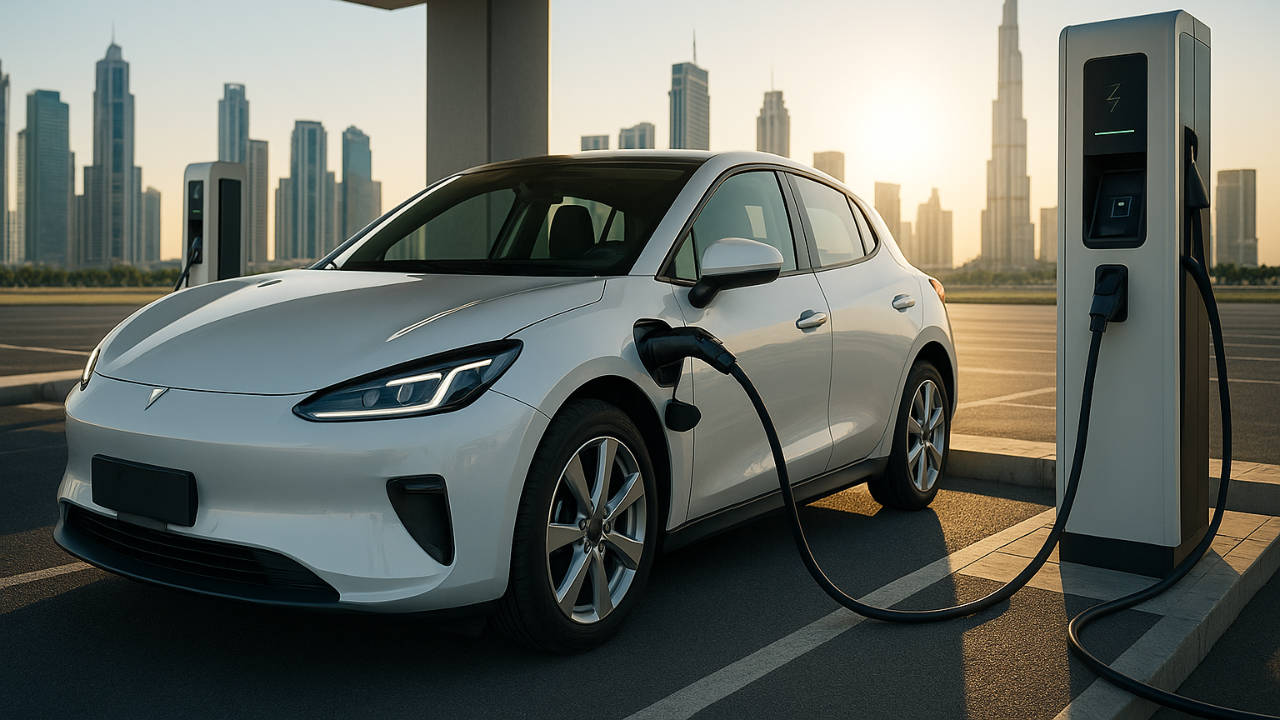
Disruptions to energy flows, especially through the Strait of Hormuz, have triggered one of the most significant shocks to global oil markets in recent years. Fuel costs are rising, and supply chains remain exposed.
“We are in the middle of the second energy shock in the 2020s,” said Kingsmill Bond. “It will flow into people’s decisions on what energy-hungry devices they buy.” For car buyers, that shift is already underway.
1. Fuel costs spike worldwide
The impact shows up immediately:
- Petrol and diesel prices are rising worldwide, with volatility complicating long-term budgeting
- Supply risks are adding uncertainty to everyday transport costs
In parts of Asia, fuel rationing and reduced mobility are already visible, accelerating demand for electric two-wheelers and rickshaws. For buyers, the implication is direct: running a petrol car is becoming harder to plan, while EVs offer more stable operating costs.
That cost gap is becoming clearer in the UAE. An analysis by NIO MENA reveals just how significant the gap has become. With Super 98 petrol at Dh3.39 per litre and Special 95 at Dh3.29, a typical petrol car averaging 12 km per litre costs roughly Dh275 to Dh280 to cover 1,000 km.
An electric vehicle charged at home covers the same distance for about Dh45 — a saving of more than Dh230, or up to 84%.
2. EV cost advantage widens
Even with public charging, the economics still favour EVs:
- Public AC charging: Dh120 per 1,000 km
- DC fast charging: Dh180 per 1,000 km
For fleet operators, these margins scale quickly. A vehicle covering 30,000 km a year could save between Dh2,700 and Dh6,900 annually depending on charging method. Lower maintenance costs — fewer moving parts, no oil changes — add to the advantage.
“When running an electric vehicle can save you up to 84% compared to petrol, this is no longer a debate about sustainability preferences. It is a bottom-line decision,” said Mohammad Maktari, CEO of NIO MENA.
3. People already shift to electric alternatives
The response extends beyond cars. In India, LPG delivery delays of up to 25 days have pushed households toward electric cooking, with induction stove sales rising as much as 30 times on some platforms.
In Europe, solar panel sales have more than doubled in Germany, and EV buyer interest in the UK has risen nearly 30% since the conflict began.
Households in several economies are reducing reliance on fossil fuels. Electrification is becoming a practical decision tied to cost and reliability.
4. Energy security become a priority
The latest shock is reinforcing a deeper shift. “The main driver will not be climate change, the main driver will be energy security,” said Fatih Birol of the International Energy Agency.
History supports this pattern:
- The 1970s oil shocks pushed fuel-efficient cars into the mainstream
- High oil prices in the 2000s accelerated solar and battery innovation
For today’s buyers, the takeaway is clear: EVs reduce exposure to global oil disruptions and offer a path toward greater cost control.
5. Emerging markets accelerate shift
The pressure is strongest in economies reliant on imported fuel. Countries across Asia and Africa — dependent on shipments through the Strait of Hormuz — are facing supply disruptions and rising costs.
In Nigeria, demand for rooftop solar is increasing despite high upfront costs. In Ethiopia, fuel shortages have led to long queues at petrol stations and renewed calls to accelerate EV adoption. Electrification is increasingly seen as a response to supply vulnerability, not just pricing.
Gulf News
Analytics
A Labubu movie is on its way
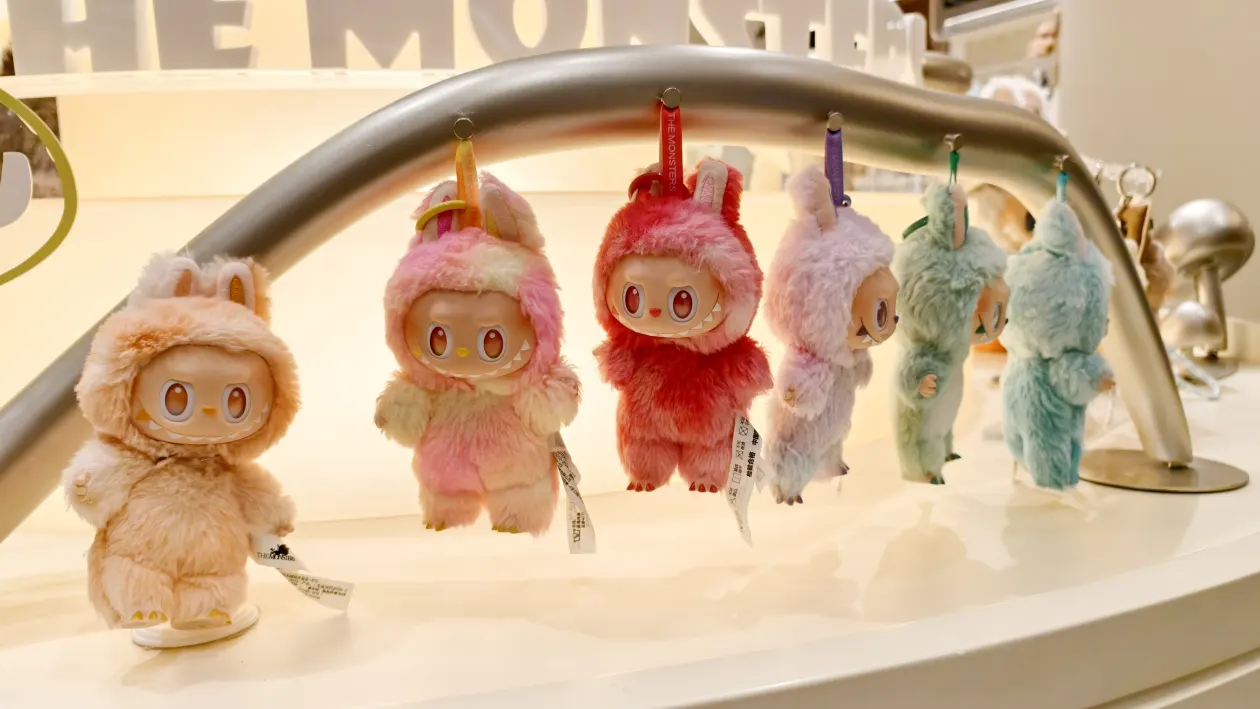
Collectible toy maker and IP powerhouse Pop Mart is teaming up with Sony Pictures to bring its wildly popular Labubu doll to movie theaters.
The live-action and CGI hybrid film is in early development, according to a press release on Thursday. Filmmaker Paul King, best known for 2014′s “Paddington” and “Wonka” from 2023, will produce, direct and co-write the script with screenwriter Steven Levenson.
The now-iconic Labubu character was created by artist Kasing Lung as part of “The Monsters” toy universe, and later became one of Pop Mart’s signature “blind box” hits, gifts packaged in such a way that shoppers don’t know exactly what they’re buying until after they’ve completed their purchase.
Labubu hit peak popularity in the summer of 2025 as sales on the secondary market skyrocketed. But the hype began to quickly fade as sales from resellers lost steam as Pop Mart — a Chinese company — ramped up toy production to meet consumer demand. At the time, Pop Mart told CNBC the fall in resale prices would benefit the company.
According to data supplied to CNBC by Pop Mart, in the first half of 2025, products from “The Monsters” series made up 34.7% of Pop Mart’s revenue, followed by the Molly series, a figurine of a wide-eyed, pouty-lipped girl at 9.8% and Skull Panda, a dark, gothic-themed character at 8.8%.
Franchise expansion
In a February 2026 report, HSBC analysts warned that the Labubu frenzy could lessen and Pop Mart’s earnings could fall, writing: “We expect 2026 growth to normalize after dissecting the Labubu growth risk, leading to 11% to 13% cut in 26-27 earnings.”
Now, as Pop Mart looks for ways to keep the franchise momentum going, the company says the collaboration marks a major step in expanding “The Monsters” from collectibles into a big-screen story.
Movies are not Pop Mart’s goal, according to Chief Operating Officer Si De, in an interview with CNBC’s Elaine Yu on March 1.
“What we look forward to more is using storytelling to help people fall in love with these IPs more deeply or find those points of connection. I think this is the core point of what we want to achieve with our content,” he said.
Si De said the benefits of movies or animation is twofold. “On one hand, it lets people see the [characters’] world more intuitively. On the other hand, it generates a large amount of material. Some of this material can become product designs, some can inspire our theme park design,” he said.
CNBC
Analytics
Why Iran’s Kharg Oil Hub Is Untouched

Kharg Island – through which 90% of Iran’s oil exports flow – is arguably the country’s most sensitive economic target but the export terminal has so far remained untouched throughout the US-Israel bombing campaign.
Experts say bombing or capturing the site with US forces would be likely to cause a sustained increase to already surging oil prices, as it would amount to taking the entirety of Iran’s daily crude exports offline.
“We may see the $120 a barrel price we saw on Monday heading to the $150 if Kharg were attacked,” said Neil Quilliam, with the Chatham House thinktank. “It’s too vital for global energy markets”.
Although the US has struck 5,000 targets in and around Iran, it has so far refrained from bombing the country’s oil infrastructure – though oil prices remain nearly $20 per barrel higher because the fear of Iranian retaliation has in effect closed the strait of Hormuz to tanker traffic.
Israel’s air force did strike two oil refineries and two depots on Saturday, plunging Tehran into what some residents described as an “apocalyptic” darkness as thick black smoke descended over the capital. But there have been no attacks since.
Kharg, a five-mile-long coral island in the Persian Gulf 27 miles from the mainland, is where pipelines from Iran’s oilfields in the centre and the west of the country terminate. Established by a US oil conglomerate, Amoco, it was seized by Iran during the 1979 revolution.
While most of Iran’s coastline is silty and too shallow for very large crude tankers used by the oil industry, Kharg is sufficiently close to deep waters. Satellite imagery reveals vast loading jetties emerging from its eastern shore.
Typically, between 1.3m and 1.6m barrels of oil a day pass through Kharg, though Iran increased volumes to 3m a day in mid-February, according to the investment bank JP Morgan, in anticipation of a US-led attack. A further 18m barrels are stored on Kharg as a backup, the bank added.
Media reports have hinted at White House interest, including a brief reference in an Axios report on Saturday that officials had considered “seizing Kharg”. The US defence secretary, Pete Hegseth, has not ruled out attacking Iran with ground forces, although there are not large numbers of US troops in the region.
Michael Rubin, a senior Pentagon adviser on Iran and Iraq in the George W Bush administration, said last week he had discussed the idea with White House officials, arguing it could be a way to cripple the Iranian regime economically. “If they can’t sell their own oil, they can’t make payroll,” he said.
Before the latest US-Israel offensive, most of Iran’s crude oil from Kharg was exported to China. But the interconnected nature of the market means a permanent loss in export supply would affect prices globally, at a time when a further 3.5m barrels a day, mostly from Iraq, are also offline because of the closure of Hormuz.
Destroying Kharg or damaging the export site “runs the risk of causing an economy-shaping increase in oil price that would not drop rapidly”, argues Lynette Nusbacher, a former British army intelligence officer. Israel did not attack it in last summer’s 12-day war, and its complex infrastructure could take years to repair.
There is also a longer-term political argument. “Kharg Island is sufficiently important to the Iranian economy that destroying its facilities would abandon any pretence of fighting a war to create a brighter future for Iran,” Nusbacher argues, because it would deny a successor regime vital oil income.
An effort to seize the island, given its size, would be likely to require a sizeable and sustained operation, greater than a typical special forces incursion. Though a US seizure would in theory give the White House leverage over Tehran, Quilliam argued it was very likely that such an effort would be self-defeating.
“If the US were to seize it, then you are separating the Iranian oil industry. Iran would have production but couldn’t export, while the US wouldn’t be able to produce. That would set markets in a tailspin; that’s a real standoff,” the analyst said.
The Guardian
Analytics
Why Markets Don’t Always React to Big News: A Baking Analogy
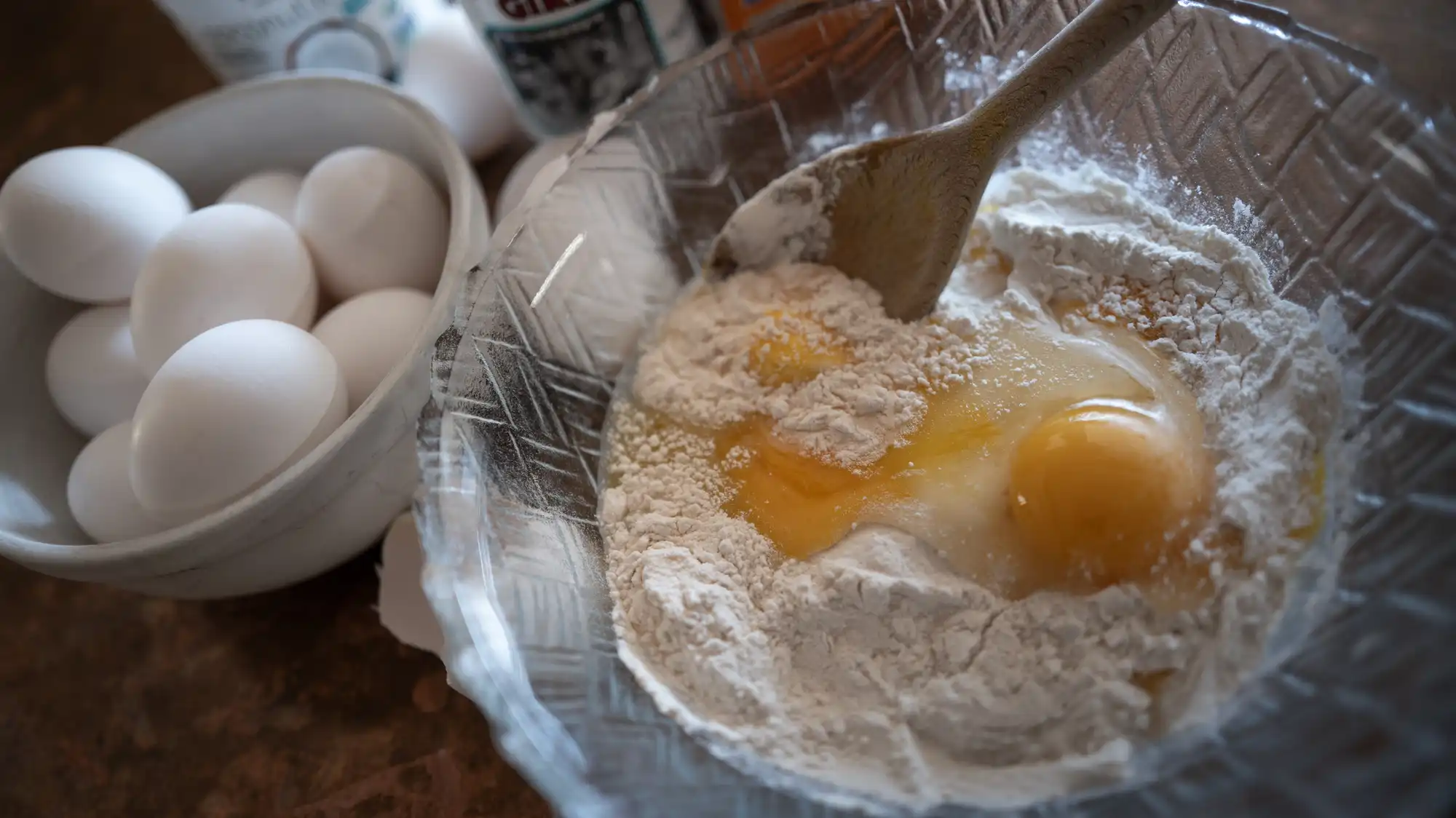
“It was already baked into the market reaction.” It’s something we at Marketplace, and other business news journalists, say when big news happens and the markets don’t seem to care.
But why not?
“I would say that the analogy to baking, when we talk about ‘baked in’ is pretty appropriate,” said Sasha Indarte, a professor of finance at the University of Pennsylvania’s Wharton School.
It’s a bit on the nose, but stay with us. Once all the ingredients are mixed together and the cake is in the oven, what’s going to come out when the timer goes off is already decided. It’s baked in.
The market works kind of the same way. Once news — or more accurately, anticipated news — is incorporated by stock market traders and other economic decision-makers, the news isn’t really new when it happens.
“For example, when the [Federal Reserve] makes its announcement about monetary policy rates and the path of monetary policy going forward, we don’t always see a big market reaction,” said Indarte. “Sometimes mortgage rates or stock prices don’t move a whole lot.”
Take the analogy just a hair further: When markets don’t move a whole lot on what otherwise would be big news, it means Wall Street has a pretty good recipe for what the future market is going to look like.
“What are the ingredients here? That would be the data that would be things like job reports, the latest inflation numbers,” Indarte said.
Right now, traders are baking in the January jobs report, the latest consumer price index, the personal consumption expenditures price index, and tons of other data points they might use to, say, take a guess at what the Fed is going to do in March at their next interest rate-setting meeting.
And all those ingredients taken together? When mixed, they make a forecast. And that’s kind of like the batter, Indarte said. So long as they get the batter right, when the Fed announces interest rates, there’s not going to be a big market reaction.
But, as anyone who’s baked can probably relate to, sometimes you get the batter wrong.
“If we forgot a crucial ingredient, maybe if we overlooked house prices, then our cake might fall flat,” Indarte said.
Get the ingredients wrong or leave one out, and what comes out of the oven might be a surprise. It happened at the beginning of the pandemic: Nobody had an emergency interest rate cut on their list of ingredients in March 2020, and traders reacted with extreme volatility.
But there’s nuance, too. Sometimes it’s not that you’ve got the wrong ingredients, it’s that the measurements aren’t right.
“You could have the same people looking at the same information, but if we can’t agree on how to put that information together, if we have different narratives about the significance of the jobs numbers versus consumer sentiment and so on, we can come up with different forecasts,” Indarte said.
And lately, between government shutdowns that have delayed the release of data reports and staffing cuts at the very agencies that produce those reports, we’re kind of just eyeballing the ingredients.
“If you don’t have a complete recipe — maybe you have all the right ingredients in front of you, but you don’t know the proportions,” said Indarte. “You might have had a chance to get to the right recipe, but if you’re if you’re missing maybe the knowledge or skills in order to get there, then it might not work out.”
That’s all to say, a cake is only as good as its recipe and a forecast is only as good as its parts. At the end of the day, it’s all about the quality of the ingredients.
Market place


What you need to know before taking weight-loss drugs

Should your next car be electric after the war?

Iranian drone targets ‘du’ telecom building in Fujairah
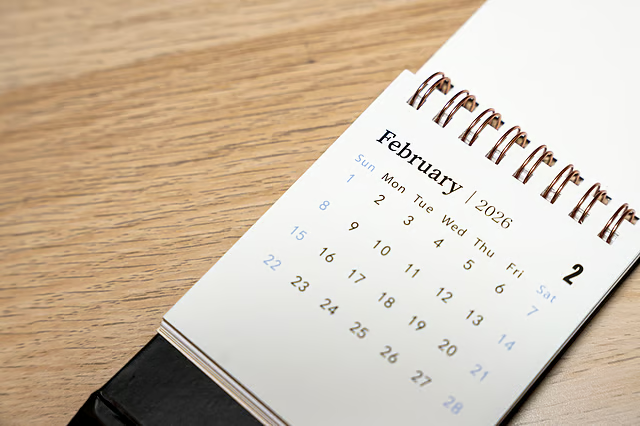
Is February 2026 really a once-in -283-years MiracleIn?

Algeria, Burkina Faso, Côte d’Ivoire win AFCON 2025 openers

NMC Royal Hospital, Khalifa City, performs rare wrist salvage, restoring function for young patient
-
Discover3 months ago
Is February 2026 really a once-in -283-years MiracleIn?
-
 Football3 months ago
Algeria, Burkina Faso, Côte d’Ivoire win AFCON 2025 openers
-
 Health3 months ago
NMC Royal Hospital, Khalifa City, performs rare wrist salvage, restoring function for young patient
-

 Health4 months ago
Bascom Palmer Eye Institute Abu Dhabi and Emirates Society of Ophthalmology Sign Strategic Partnership Agreement
-

 Health5 months ago
Emirates Society of Colorectal Surgery Concludes the 3rd International Congress Under the Leadership of Dr. Sara Al Bastaki
-

 Health5 months ago
Born Too Soon: Understanding Premature Birth and the Power of Modern NICU Care
-

 Lifestyle5 months ago
Saudi Arabia Lifestyle Trends 2025: What You Need to Know About Fitness, Wellness, Healthy Eating & Self-Care Growth
-

 Football4 months ago
Globe Soccer Awards 2025 nominees announced as voting opens in Dubai