
Business
Saudi Arabia to mandate e-salary system for domestic workers

Saudi Arabia will begin enforcing a mandatory system for paying the salaries of all domestic workers through official electronic channels starting January 1, 2026, a move aimed at strengthening wage protection and increasing transparency in employment relationships.
The decision, announced by the Ministry of Human Resources and Social Development, requires employers to transfer salaries via approved platforms rather than in cash.
The measure aims to safeguard the financial rights of domestic workers and ensuring clearer, more accountable contractual arrangements between employers and employees.
Under the system, salary payments will be processed electronically through the Musaned platform, using recognised channels such as participating banks and digital wallets.
The ministry said this approach would enhance the reliability of wage payments, reduce disputes, and streamline administrative procedures, while also contributing to the professionalisation and development of the domestic worker sector.
For domestic workers, the electronic transfer system provides documented proof of salary payments, simplifies procedures related to contract termination or travel, and ensures that wages are paid regularly and securely.
Workers will also be able to transfer their earnings to family members abroad through the same official channels. Where cash withdrawals are preferred, salaries can be accessed via approved outlets using a Mada card issued to the worker.
The policy, according to Okaz newspaper, has been rolled out in phases since mid-2024. The first phase, launched on July 1, 2024, applied to domestic workers arriving in Saudi Arabia for the first time, with the aim of reducing cash transactions and improving the reliability of payments.
A second phase, introduced in January 2025, extended the requirement to employers with four or more domestic workers, followed by a third phase in July 2025 covering those with three or more. A fourth phase, which came into effect on October 1, targeted employers with at least two domestic workers.
From January 2026, the system will apply universally, covering all domestic workers regardless of the number employed by a household.
According to guidelines issued through Musaned, salaries must be paid at the end of each Hijri month in line with the amount stipulated in the employment contract, unless both parties agree otherwise in writing and in accordance with wage protection regulations.
For workers outside the Wage Protection System’s scope, salaries may still be paid in cash or by cheque with written documentation, unless the worker requests an electronic transfer.
Story by Gulf News
Business
AI agents set to unlock US$450bn in economic value by 2028 as Outworks challenges Middle East institutions to go agentic in 30 days
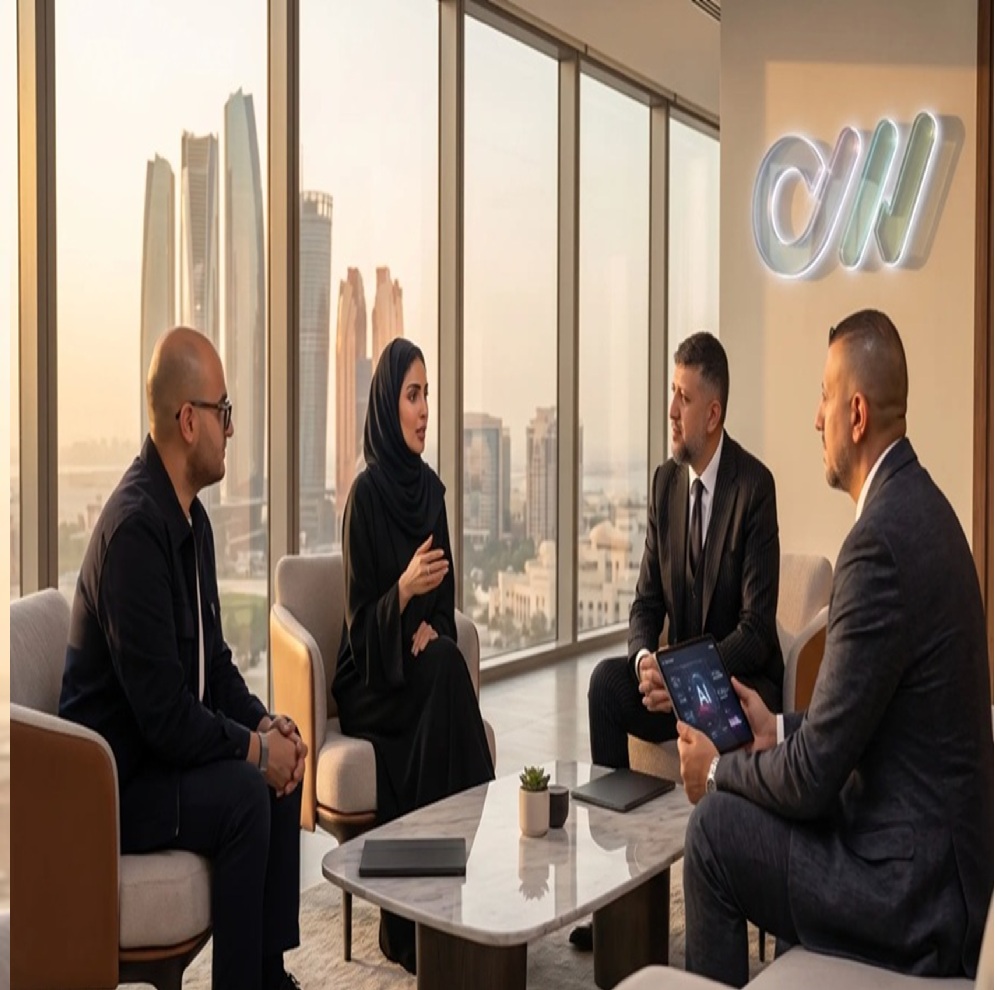
Abu Dhabi, United Arab Emirates
Artificial intelligence is entering a defining new era. Across the Middle East, the conversation has shifted from whether organisations should adopt AI to how quickly they can deploy it securely, responsibly and at scale.
The urgency is backed by compelling numbers. According to the Capgemini Research Institute, AI agents are expected to unlock up to US$450 billion in economic value globally by 2028 through increased productivity, operational efficiencies and new revenue opportunities. Yet despite this enormous potential, only 2% of organisations worldwide have successfully scaled AI agent deployments across their operations, highlighting a significant gap between AI ambition and real-world execution.
Against this backdrop, Outworks has introduced Sprint 30, a structured programme challenging governments and large enterprises across the Middle East and Africa to move from AI strategy to fully operational, governed AI agents within 30 days. Rather than focusing on lengthy pilots and proof-of-concept projects, Sprint 30 is designed to help organisations deploy AI agents inside live business environments, delivering measurable outcomes while maintaining security, governance and data sovereignty.
The initiative comes as the UAE continues to strengthen its position as one of the world’s leading AI economies through ambitious national strategies that are accelerating the adoption of advanced technologies across government and business. As organisations increasingly seek to operationalise AI, the emphasis has shifted from experimentation to enterprise-wide deployment.
“The Middle East is entering one of the most significant technology transformations in its history. The conversation has moved beyond whether organisations should adopt artificial intelligence; today the real question is how quickly they can put it to work,” said Hamda Al Mansoori, Founder & Chairwoman of Outworks.
“At Outworks, our mission is to help governments and enterprises transform AI from strategy into execution, delivering measurable impact in weeks rather than months. We believe the organisations that will lead the next decade are those that operationalise AI responsibly, securely and at scale—creating environments where people and intelligent agents work together to unlock entirely new levels of productivity, innovation and value.”
Sprint 30 has been engineered to eliminate many of the barriers that have traditionally slowed enterprise AI adoption. Instead of spending months developing infrastructure before deployment begins, organisations follow a structured implementation framework that moves from assessment and solution design to production-ready AI agents operating inside real workflows within just one month.
The programme enables organisations to deploy AI agents on infrastructure they own and control, ensuring compliance with data sovereignty requirements while maintaining governance, transparency and human oversight throughout the deployment lifecycle.
Ahmed Ashoor, Founder & Chief Technology Officer, said the programme reflects a fundamentally different approach to enterprise AI implementation.
“Thirty days is not a marketing promise. It is an engineering decision. We have already built the deployment architecture, governance framework and operating model, allowing organisations to focus on transforming their operations rather than spending months building technology foundations. By the end of Sprint 30, AI agents are already delivering measurable work inside production environments.”
Outworks operates through its integrated Advise, Build and Run transformation model, helping organisations identify high-impact AI opportunities, build secure technology foundations and operate intelligent systems that continue evolving alongside business requirements. Every deployment is designed around sovereign infrastructure, ensuring organisations retain full control of their data while meeting regulatory, security and compliance requirements.
The company believes the future of enterprise performance will depend not simply on adopting artificial intelligence, but on integrating it into the way organisations operate every day. Rather than replacing human expertise, AI agents are expected to augment decision-making, automate repetitive and complex processes, and enable employees to focus on higher-value work that drives innovation and growth.
Founded by four leaders with expertise spanning government transformation, enterprise technology, artificial intelligence, commercial development and strategic partnerships, Outworks is focused on helping governments and large enterprises across the Middle East and Africa accelerate their transition from AI ambition to enterprise-scale execution.
As organisations race to capture the economic value of artificial intelligence, initiatives such as Sprint 30 demonstrate how the competitive advantage of the coming decade will be determined not by who has access to AI, but by who can deploy it faster, govern it responsibly and translate it into measurable business outcomes.
About Outworks
Outworks is an AI-native transformation company headquartered in Abu Dhabi Global Market (ADGM), United Arab Emirates. The company helps governments and large enterprises across the Middle East and Africa move from AI ambition to production-ready intelligent systems through its integrated Advise, Build and Run model.
Founded by Hamda Al Mansoori (Founder & Chairwoman), Ahmed Ashoor (Founder & Chief Technology Officer), Islam Shaban (Founder & Chief Commercial Officer), and Ahmed Shaban (Founder & Chief Strategy Officer), Outworks combines expertise in artificial intelligence, enterprise transformation, technology and strategic partnerships to deliver sovereign, enterprise-scale AI solutions.
Business
White and Black Events & PR Announces New Expansion Phase Led by Nagham Amer, Including Regional Market Growth and the Launch of a Skincare Brand

Dubai, United Arab Emirates – Black & White PR & Events has announced the start of a new phase of growth and expansion as part of a strategic plan aimed at strengthening its presence across regional markets and broadening its portfolio of services in line with the rapidly evolving public relations and marketing landscape.
Nagham Amer, Founder and Managing Director of Black & White PR & Events, said that the company’s next chapter will focus on expanding into high-potential markets, particularly Saudi Arabia and Libya, while further strengthening its presence in the UAE. This will be achieved through strategic partnerships and the delivery of integrated solutions across public relations, influencer marketing, event management, and media production.
Amer said:
“We believe that real growth is not defined solely by geographical expansion, but also by continuously enhancing our services and developing innovative solutions that meet the evolving needs of the market. Our goal is to build a strong presence across regional markets while maintaining the quality and excellence that define everything we do.”
She added that the company is currently diversifying its service offering to include new areas within the beauty and lifestyle sectors, leveraging its extensive experience in managing marketing and communications campaigns for both regional and international brands.
Reflecting its long-term vision, Amer also revealed that the company is exploring the launch of its own skincare brand targeting the GCC and wider Arab markets. The initiative forms part of a broader strategy to evolve beyond providing marketing services into developing and managing proprietary brands, creating additional value and supporting sustainable long-term growth.
Over the past several years, Black & White PR & Events has successfully delivered integrated marketing and media campaigns for leading brands across the beauty, fragrance, healthcare, and jewellery sectors. The company has also managed high-profile events and collaborations with some of the region’s most prominent influencers and celebrities, further strengthening its position as a strategic communications partner for brands seeking to expand across the GCC and the Arab world.
Concluding her remarks, Amer emphasized that the company’s next phase will focus on innovation, expanding its regional partnership network, and investing in high-impact projects that reinforce Black & White PR & Events’ position as one of the region’s leading public relations and marketing firms.
Business
Adidas narrows gap with Nike in World Cup sales
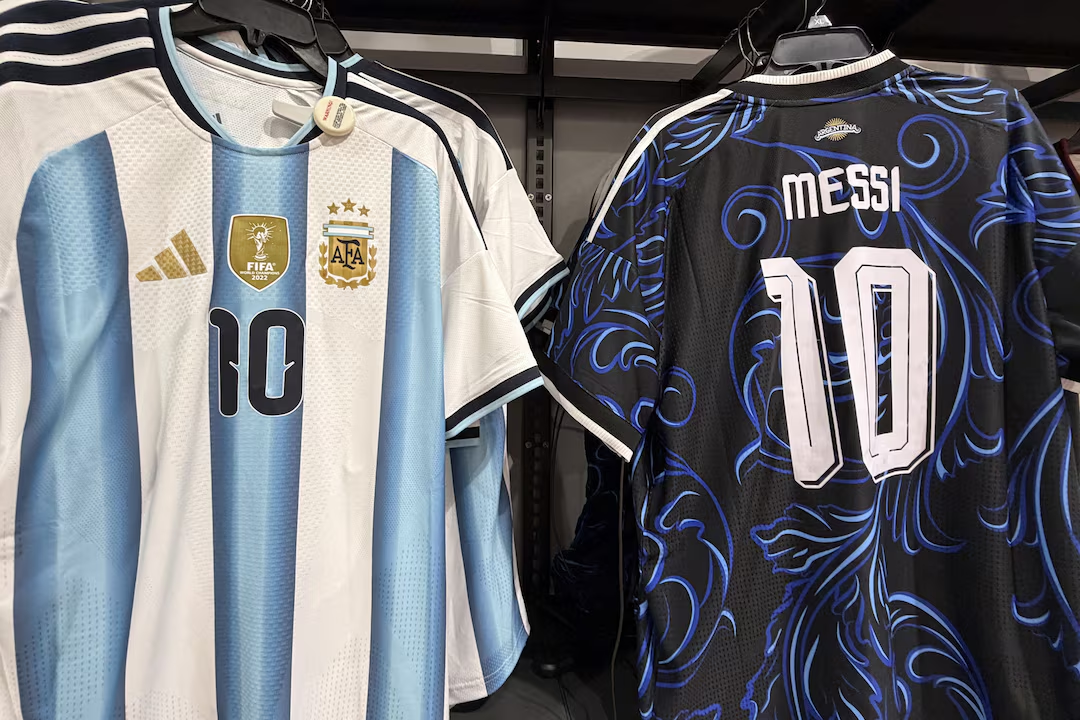
As the World Cup brand battle heats up, sportswear giant Adidas (ADSGn.DE), opens new tab appears to be getting a bigger boost than rival Nike, early data show.
Both companies are investing heavily in the tournament, but Nike (NKE.N), opens new tab is relying on it for sales and visibility as it tries to right its ship amid years of steadily leaking market share. Investors will be looking for signs of progress next week when Nike reports fourth-quarter earnings.
Adidas, an official World Cup sponsor and a brand long associated with soccer, is sponsoring 14 teams and supplying the coveted match ball.
Nike is outfitting 12 national teams, partnering with local street-wear designers, and refreshing soccer merchandise at more than 5,000 Nike and wholesale stores globally.
But while both brands are poised to get a World Cup boost to their apparel businesses, Adidas is benefiting “to a greater degree thus far,” said Drake MacFarlane, a research analyst at M Science.
Spending on Adidas apparel surged 70% in May from the previous year and stayed strong into June, according to M Science data. MacFarlane attributed the trend to “substantial growth” in jersey sales ahead of the World Cup.
Nike’s apparel business is growing as well, he added, but that growth is being outpaced by Adidas, which has “the right set of product for the consumer.”
Foot traffic data tell a similar story.
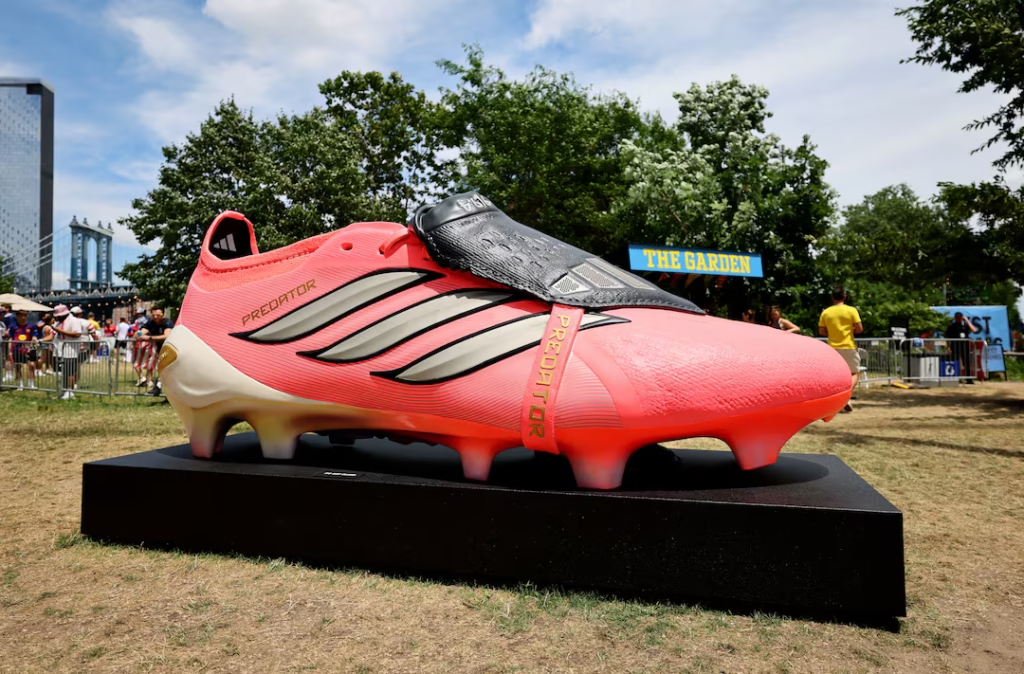
Visits to Adidas’ U.S. stores surged 47% during the first week of the World Cup compared to 2026 averages, versus an 11% jump at Nike’s U.S. factory stores, according to data from Placer.ai, shared with Reuters.
For Adidas, those visits represented a 16% jump versus the same week last year — but for Nike, they represented a drop, Placer.ai found.
While the Nike data only covers outlet stores, the overall findings still indicate that Adidas “has been top of mind for shoppers and may have done a good job in its store activation around the event,” said Elizabeth Lafontaine, Placer.ai’s director of research.
British retailer JD Sports (JD.L), opens new tab said Mexico jerseys – which are supplied by Adidas – were its best-selling team kit during the week beginning June 15. Nike’s U.S. team jerseys took the second spot in total sales, the retailer said.
A bright spot for Nike: 28% of its World Cup merchandise in the U.S. sold out during the first two weeks of the tournament – well above Adidas’ 7%, according to a report from LSEG this week.
FOOTWEAR IN FOCUS
Nike has had a strong presence at the World Cup.
A Reuters analysis found that 232 of the 528 World Cup starters so far have worn Nike boots, with Adidas close behind at 218. “Nike is right there” despite Adidas’ close association with FIFA, said David Swartz, an equity analyst at Morningstar. “Strong visibility … is good for its brand strength.”
World soccer’s governing body FIFA runs the tournament.
Nike could use the win: sales have fallen as demand for classic lines like Dunk and Air Jordan has cooled. Competition from newer players like On and Deckers (DECK.N), opens new tab has intensified, and analysts say the company has been slow to pivot to new styles.
While World Cup visibility can’t hurt, “at the end of the day it’s really all about the product,” said Mari Shor, senior equities analyst at Columbia Threadneedle, which holds Nike stock. “If [Nike’s] product isn’t resonating, the rest of it doesn’t matter.”
Nike’s share of the global sports footwear market has fallen from 29.2% in 2022 to 22.9% last year, according to Euromonitor International data, obtained by Reuters.
Nike and Adidas have lately traded blows.
In April, Nike entered exclusive talks to provide balls for certain UEFA soccer matches, a role that was Adidas’ for 25 years. Later that month, though, Kenyan Sabastian Sawe wearing new, ultra-light shoes from Adidas broke the two-hour marathon barrier, a coup as the two companies battle for sports innovation.
Nike CEO Elliott Hill, who took the helm in 2024, vowed to refocus Nike on key sports like soccer and running, saying the company had “lost its obsession with sport.”
Yet it remains the larger company by far, its footwear market share still nearly double second-place Adidas.
It’s “the biggest dog in the fight,” said Sarah Henry, a portfolio manager at Logan Capital Management. “It should be able to hit everybody else pretty hard.”
(Reuters)


UAE Cycling Federation and AB Investment Sign Partnership to Support National Teams and Emerging Talent

Emirati Women’s Day: Hamda Al Mansoori takes UAE-grown ventures from AI and manufacturing to cross-border partnerships

Beyond Uniforms and Lunchboxes: Is Your Child Healthy and Ready for School?

Araghchi, Oman Sultan discuss transit, stability in Muscat

UAE’s café culture keeps growing despite price pressure

Netflix to Livestream BTS Comeback Concert
-
 politics5 months ago
Araghchi, Oman Sultan discuss transit, stability in Muscat
-
 UAE9 months ago
UAE’s café culture keeps growing despite price pressure
-
 Entertainment8 months ago
Netflix to Livestream BTS Comeback Concert
-
 Discover8 months ago
Is February 2026 really a once-in -283-years MiracleIn?
-

 Football9 months ago
Algeria, Burkina Faso, Côte d’Ivoire win AFCON 2025 openers
-
 Health9 months ago
NMC Royal Hospital, Khalifa City, performs rare wrist salvage, restoring function for young patient
-
 Health9 months ago
Bascom Palmer Eye Institute Abu Dhabi and Emirates Society of Ophthalmology Sign Strategic Partnership Agreement
-
 travel9 months ago
Rail routes connecting Saudi Arabia, UAE, Oman, Qatar, Kuwait and Bahrain