
Culture
Peter Harrington showcases Shakespeare’s First Folio at Abu Dhabi Art
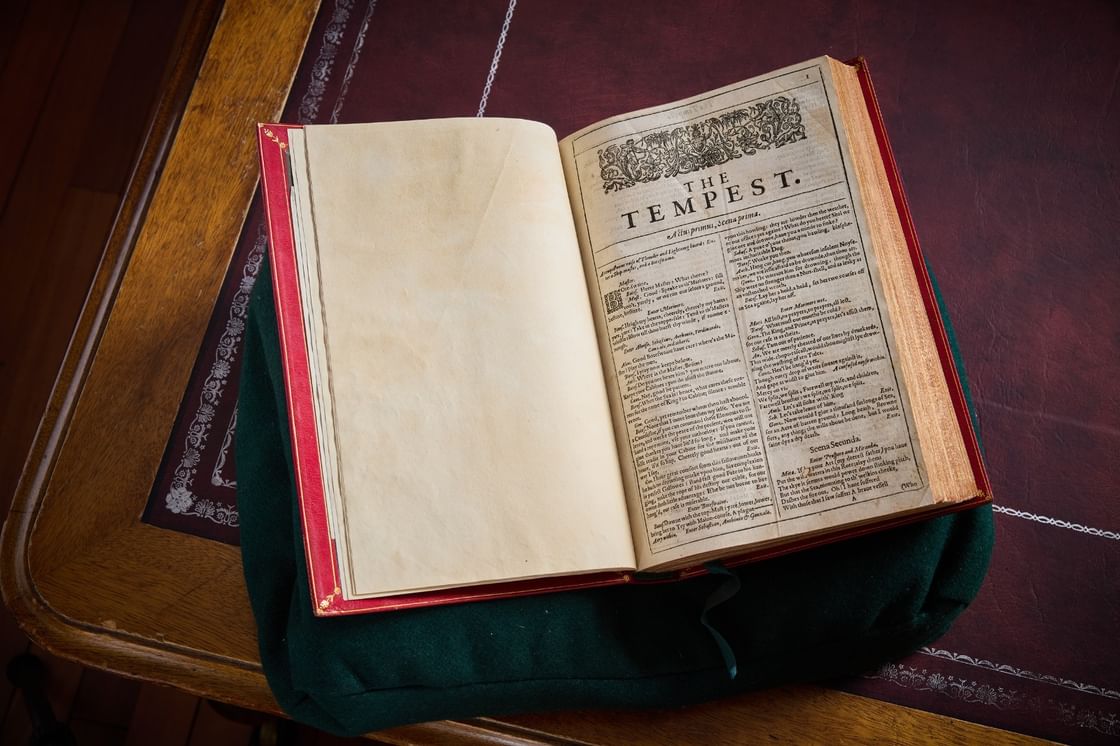
Scholars, collectors, and lovers of English literature will have the rare opportunity to view – and for interested institutions or a private collectors – acquire, one of the most important books ever printed, William Shakespeare’s First Folio (1623).
Presented by world-leading rare book firm Peter Harrington, a copy of this cornerstone literary work, will be offered for sale at £4.5 million at the upcoming Abu Dhabi Art fair, taking place from November 19–23 at Manarat al Saadiyat. It is one of only 24 copies to remain in private hands.
No institution, museum, or private collection in the Middle East currently holds a copy of the First Folio. Its appearance in Abu Dhabi represents an extremely rare opportunity for a regional collector or cultural institution to join the ranks of the world’s most prestigious libraries – from the Folger Shakespeare Library in Washington, D.C., to the British Library in London – in stewarding one of the world’s greatest literary treasures.
“Shakespeare’s work transcends time and geography,” says Pom Harrington, owner of Peter Harrington. “It has been credited as shaping and solidifying Shakespeare’s influence on the English language. But when you see the excitement the Folio generates wherever it travels – whether to Tasmania or Toronto – you’re reminded how extraordinary it is that a 17th-century book printed in England can still inspire wonder, centuries later and worlds away from where it was first printed.”
Printed in London in 1623 by Isaac Jaggard and Edward Blount, The First Folio is the first collected edition of Shakespeare’s plays, preserving thirty-six works – including eighteen that might otherwise have been lost forever. Without this volume, the world would have no Macbeth, Twelfth Night, Julius Caesar, or The Tempest.
It took nearly two years to print, with each page laboriously typeset by hand. Several compositors, each with their own quirks in spelling and punctuation, worked on the text, meaning no two copies are exactly alike. Even at the time, the Folio was an expensive, prestige object, with a bound folio costing up to two months’ wages of a skilled worker. Of the roughly 750 copies originally printed, only 233 are known to survive, with just 24 remaining in private hands worldwide.
Culture
Understanding My Autistic Son Through Doctor Who

The film Elf is a no-go in our house. My son interprets it as the psychological horror story of a man who is telling the truth but is constantly disbelieved. He loves The Traitors and rewatches entire series of it – knowing who the traitors are gives him an autonomy and comfort watching the game. Any other kind of conflict on screen and he’ll leave the room or wind it forward. I tried to explain that there are no stories without conflict. It made no difference.
My son is autistic and has ADHD – what’s sometimes referred to as AuDHD. We’ve always called him “fizzy”. He’s often the noisiest person in a room but hates too much noise. He’s incredibly sociable and wants so desperately to be part of the fun but finds the fun stressful. I had never seen anyone like him represented on screen.
And then I put on Doctor Who. It was a punt – my son was eight and he liked science. We went in at the David Tennant era – beginning with the episode The Christmas Invasion, where the Doctor doesn’t wake up till a third of the way through the episode. Suddenly there, standing in his pyjamas with a big boyish grin, was Tennant, describing a frightening alien with a weapon as a “big fella”. My son grinned back at the screen. When Tennant’s Doctor arrives properly, he barely stops talking or moving. He’s sword-fighting, then joking, then forgiving – and then he kills the baddy with a satsuma. All while repeating certain phrases to himself. My son laughed in recognition (he often repeats phrases to himself). He turned to me, eyes wide.
“He’s like me!” he said.
“You mean funny? Yes, you are very funny, luv.”
“No,” he insisted. “He’s fizzy. Like me.”
Watching Tennant’s Doctor was like watching an adult version of my son: the infectious joy, the righteous anger, veering so suddenly from one emotion to the other. A fierceness to it all – a fizz. I don’t think David Tennant purposely played the Doctor as AuDHD, or that Russell T Davies wrote him that way. But when we watched those episodes together, that’s what we saw. That’s who we saw. And my son saw himself.
He found comfort in the structure of it. Every episode there’d be a new problem and the Doctor would use his fizzy brain to solve it. It helped him understand that stories need conflict, and then resolution. That real life has conflict and resolution, too. It helped me find parallels between what happened in the episodes and what was happening in his life. “The Doctor really likes hanging out with humans even though he finds them a bit stressful, doesn’t he?” I’d say. “Do you think that’s a bit like you and your friends sometimes?”
One Friday afternoon, my son exploded about something I can’t even remember now. It was the week at school pouring out of him in a screaming, kicking tangle of limbs. In the remorse that followed, I said something I’d said many times before: “Your feelings and emotions are just so big for such a little person.”
But then I had a sudden realisation, from all the Doctor Who we’d been watching. I squeezed his hands in mine. “You’re like a Tardis. You’re just so much bigger on the inside than you are on the outside, my love.”
He nodded back. “I am like a Tardis.”
The Guardian
Culture
What is Hag Al Laila?
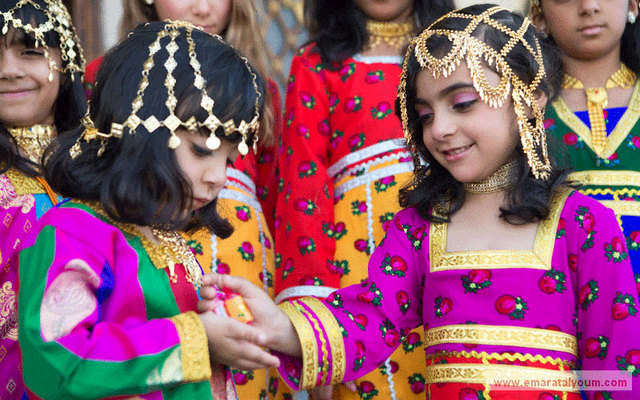
Fifteen days before Ramadan every year, children wear traditional clothes and carry colourful woven bags as they go door-to-door, singing in return for nuts and sweets. Hag Al Laila, which means “for this night”, usually begins after maghreb prayers and is a joyful way to remind communities that the holy month is just around the corner.
While popularly known as Hag Al Laila in countries including the UAE, the tradition is known by different names across the region. In Iraq, Kuwait, Qatar, Bahrain and some cities in Saudi Arabia, it is called gerga’aan and is celebrated on the 15th day of Ramadan instead. It is celebrated on the same day in Oman too, but is called qaranqasho.
Origins
While its actual origins are known, some trace the tradition to one of the earliest Ramadans, when Fatima, the daughter of the Prophet Mohammed, distributed sweets to people two weeks into the holy month. Others, however, suggest it predates Islam and could even be the basis for Halloween’s trick-or-treat tradition.
When is Hag Al Laila this year?
While the exact start of Ramadan will be dictated by the sighting of the new crescent moon, Ibrahim Al Jarwan, chairman of the board of directors of the Emirates Astronomy Society, told The National earlier that Ramadan was expected to begin on February 18.
This means Hag Al Laila would take place on February 3. However, some celebrations have already begun across the UAE. In Dubai, for example, bridges and lampposts have been decorated to mark the occasion. Malls in Abu Dhabi and Dubai have also launched a series of children’s activities, from traditional music performances to games and giveaways.
THE NATIONAL
Culture
Three Eid holidays in one year?
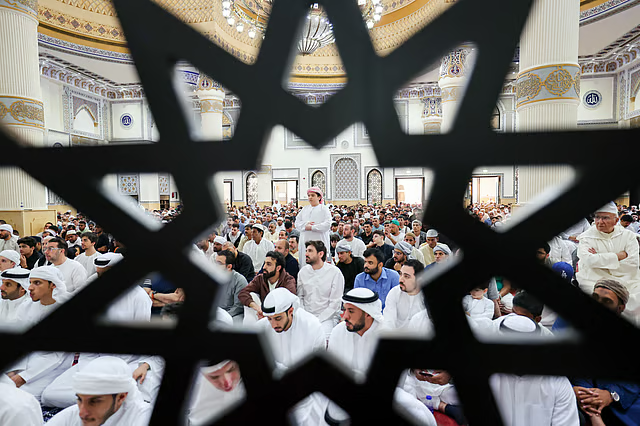
Residents in the UAE and the wider Muslim world are set to experience a rare astronomical alignment in 2039, with three Eid festivals falling within a single Gregorian calendar year.
According to renowned climate and astronomical expert Dr. Abdullah Al Misnad from Saudi Arabia, the unusual alignment stems from the way the Islamic lunar calendar gradually shifts against the solar Gregorian calendar, advancing by roughly 11 days each year.
Double Hajj and the Day of Arafat
The drift will lead to a remarkable convergence in 2039. The year will begin with the first Eid Al Adha falling on January 6, 2039, corresponding to 10 Dhul Hijjah 1460, the traditional culmination of Hajj and the major festival of sacrifice. But that won’t be the only one.
Nearly 12 months later, the lunar calendar will complete its full cycle again, and a second Hajj season will begin, culminating in another Eid Al Adha on December 26, corresponding to the 10th of Dhul Hijjah in the year 1461.
This means that two separate pilgrimages to Mecca will be performed within a single solar year, an exceedingly rare feat.
Even more unusual: both occasions will come with their own Day of Arafat, the spiritually charged day preceding the Eid, when pilgrims gather at Mount Arafat to pray.
Sandwiched between these two events will be Eid Al Fitr, expected to fall on October 19, 2039. Three Eids in a single year, two sacrificial and one celebratory, amount to an unparalleled spiritual cycle of fasting, pilgrimage, prayer, and festivity.
The lunar calendar’s shift is not limited to the Hajj season. Ramadan, the holiest month of fasting and spiritual reflection, will also experience a similar occurrence in the near future.
Two Ramadans in 2030
In 2030, Muslims will observe two Ramadans within the same Gregorian year, one beginning in January and another starting in December. This event will be the first double Ramadan in 33 years, following the last occurrence in 1997.
The Islamic Hijri calendar is based on the phases of the moon and consists of 354 or 355 days. The Gregorian calendar, which follows the solar cycle, consists of 365 or 366 days. This mismatch causes Islamic dates to shift earlier each year by approximately 10 to 11 days.
Gulf News


Emirates Specialty Hospital Expands Cancer Care Services in Dubai with Opening of Dedicated Chemotherapy Unit

When Rheumatoid Arthritis Threatened Her Independence: How the Right Diagnosis Helped Her Get Her Life Back

Saudi German Hospital Dubai Launches Mental Health and Wellness Center for Children and Adolescents

Araghchi, Oman Sultan discuss transit, stability in Muscat

UAE’s café culture keeps growing despite price pressure

Netflix to Livestream BTS Comeback Concert
-
 politics6 months ago
Araghchi, Oman Sultan discuss transit, stability in Muscat
-
 UAE10 months ago
UAE’s café culture keeps growing despite price pressure
-
 Entertainment9 months ago
Netflix to Livestream BTS Comeback Concert
-
 Discover9 months ago
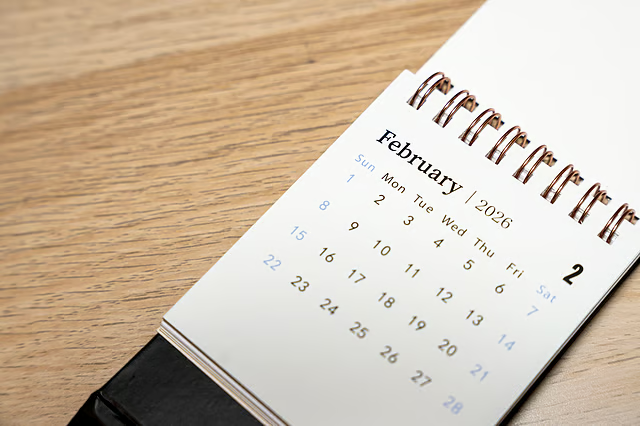
Is February 2026 really a once-in -283-years MiracleIn?
-
 Football10 months ago
Algeria, Burkina Faso, Côte d’Ivoire win AFCON 2025 openers
-
 Health10 months ago
NMC Royal Hospital, Khalifa City, performs rare wrist salvage, restoring function for young patient
-
 Health10 months ago
Bascom Palmer Eye Institute Abu Dhabi and Emirates Society of Ophthalmology Sign Strategic Partnership Agreement
-

 Health11 months ago
Emirates Society of Colorectal Surgery Concludes the 3rd International Congress Under the Leadership of Dr. Sara Al Bastaki