
Business
Major Developments and Mortix Mortgage Broker Join Hands to Make UAE Property Investment Simpler, Smarter, and More Accessible.

Dubai, UAE, 29 March 2026
Major Developments hosted the official partnership signing ceremony with Mortix Mortgage Broker at its Dubai headquarters, marking a strategic step toward making homeownership and real estate investment more seamless for clients across the world.
The partnership brings together Major Developments’ high-demand portfolio with Mortix’s mortgage expertise, allowing Major Developments’ clients to access free mortgage services as part of a broader, more investor-friendly purchase journey. Mortix is a digital mortgage and home finance platform in the UAE that supports both residents and non-residents, working with 20+ leading UAE banks across solutions, including home loans, refinancing, handover payments, and equity release. Its brokerage support is offered free of charge, making financing guidance more accessible at a crucial stage of the transaction.
For Major Developments, this collaboration reflects a larger vision: building an ecosystem around ownership, not merely developing property. As international demand continues to build around projects such as Manta Bay on Al Marjan Island and Colibri Views in RAK Central, the partnership is designed to help investors move from intent to action with greater speed and confidence.
The timing is especially significant. Mortix’s 2026 UAE mortgage market review highlights that Dubai recorded approximately 44,000 mortgage transactions in 2025, with total mortgage volumes reaching AED 89.6 billion, while fixed mortgage rates at the end of 2025 stood in the 3.75% to 4.25% range.
With another anticipated launch, Ice Beach on Marjan Beach, set to further expand Major Developments’ footprint in the UAE, this partnership stands as a meaningful bridge between aspiration and acquisition, helping investors enter fast-moving markets earlier and more efficiently.
Oleg Ilyin, CEO and Co-founder of Mortix Mortgage Broker, said, “This partnership reflects exactly where the UAE property market is headed, toward a more connected, transparent, and investor-ready experience. Major Developments has created projects that are drawing strong international attention, and Mortix is proud to support that momentum by making mortgage access simpler, faster, and more approachable for buyers across different markets.”
Andrei Charapenak, CEO of Major Developments, said, “At Major Developments, the vision has always been larger than delivering exceptional real estate. It has been about creating the right environment around ownership, one that makes the journey clearer, more supported, and more confidence-led for every investor who chooses to enter this market with us. The partnership with Mortix is a natural extension of that thinking. As interest in the UAE continues to grow, especially in high-potential destinations such as Ras Al Khaimah, this collaboration allows Major Developments to serve clients more meaningfully, not only by offering distinctive developments, but by helping simplify the path that leads to them.”
As the UAE continues to attract a new generation of globally minded investors, partnerships such as this underline a larger shift in the market, where the value lies not only in what is being developed, but in how thoughtfully the entire ownership journey is being shaped. For Major Developments, the partnership with Mortix signals a continued commitment to making investment in the UAE more intuitive, supported, and future-ready.
Business
Buffett may halt Gates donations over Epstein ties
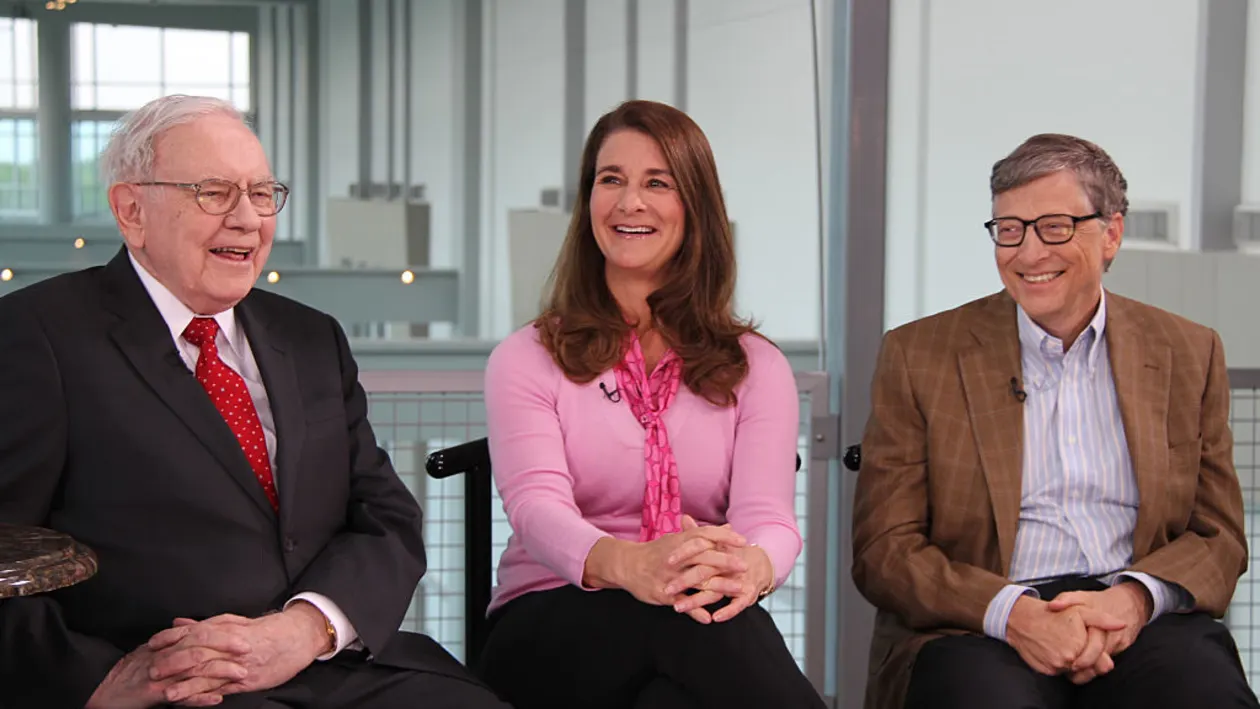
Revelations in the Jeffrey Epstein files about the notorious sex offender’s connections to Bill Gates have severely strained, and perhaps ended, the Microsoft co-founder’s famous friendship with Warren Buffett.
They could also prompt Buffett to cut off his annual multi-billion-dollar donations to the Gates Foundation.
In a one-hour-plus sit-down interview (full audio and transcript appear below) that aired on Tuesday’s “Squawk Box,” Buffett told Becky Quick he has not talked to Gates “at all since the whole thing was unveiled.”
Asked if he is still “good friends” with Gates, Buffett replied they’d had “great times together,” but “until it gets cleared up … I just don’t think it makes sense to do a lot of talking.”
Noting that his “memory is no good anymore,” Buffett added, “I don’t want to be under oath, in terms of trying to remember everything over 30 years, or 20 years, the foundation’s done, or anything like that.”
“I didn’t have anything to do with it, except I put money in it.”
In response to Quick’s question on whether he will continue to give money to the Gates Foundation, Buffett said, “I’ll wait and see what unfolds … I don’t have to make that decision today. And I haven’t made it today.”
“I’ve learned things I didn’t know about something for all these years.”
Buffett said he doesn’t think “Bill had anything to do with girls or the island or anything like that,” but he still wants to learn more as revelations continue.
Buffett is relieved he “never came near” Epstein, calling him a “sensational conman” who preyed on others’ weaknesses, although that “doesn’t excuse the people on the other end.”
In 2006, Buffett wrote to Bill and Melinda Gates that he was “irrevocably committing” to make annual gifts of Berkshire shares to their foundation “throughout my lifetime,” as long as at least one of them was actively involved, the gifts did not become subject to a tax, and the foundation actively spent the contributions on its philanthropic activities.
The letter also said Buffett’s will would “provide for a continuation of this commitment … after my death.”
Two years ago, however, Buffett confirmed to the Wall Street Journal the Gates Foundation “has no money coming after my death.”
The previous November, he had announced that his three children would be jointly responsible for giving away almost all his wealth after he dies.
Buffett: I sold Apple shares ‘too soon’
In the interview, Buffett conceded he started reducing Berkshire’s massive Apple stake “too soon,” but added with a laugh, “I bought it even sooner. So, it worked out.”
As of the end of December, the position had been cut by 75% since sales began in the fourth quarter of 2023.
Over that time, Apple’s stock price has increased by almost 50%.
Even after the selling, however, Apple remains Berkshire’s largest equity position with a market value of $58.3 billion, which is roughly 18% of the portfolio.
If Berkshire had kept the 915.6 million shares it held as of Sept. 30, 2023, the stake would be worth more than $234 billion.
In that hypothetical, it would be almost 48% of the portfolio.
Buffett said, “I’m very happy to have it be our largest holding. I was not happy to have it be as large as almost everything else combined.”
“It’s not impossible that Apple would get to a price [where] we would buy a lot of it,” he added. “But not in this market. I mean, it just isn’t going to happen in this market.”
Buffett still has a hand in Berkshire’s investing decisions
Buffett said that even though he stepped down as CEO at the end of last year, he still comes into Berkshire’s offices every day as chairman and is involved in some investing decisions.
But, he added, “I won’t make any that [new CEO] Greg [Abel] thinks are wrong.”
Buffett said he had made “one tiny purchase,” but he’s not finding many potential buys despite the stock market’s recent declines, which he said aren’t substantial and “nothing to make you excited.”
Fed should have a ‘zero’ inflation target
Buffett says he “wouldn’t want the responsibility” of running the Federal Reserve, but he wishes the central bank “had a zero inflation target” instead of its current goal of a 2% annual increase.
“Once you start saying you’re going to tolerate 2%, that compounds pretty dramatically over time… I don’t like that particular goal.”
In the government’s most recent report, the February consumer price index was up 2.4% versus the same month last year.
Buffett: Iranian atomic bomb would raise risk of nuclear catastrophe
For a long time, Buffett has been concerned about nuclear proliferation, calling it “the ultimate problem of mankind” in 2006.
While he doesn’t know how to fix the problem, he does know that “it’ll be more difficult if Iran has the bomb than [if] they don’t.”
Buffett, however, wouldn’t say whether he thinks the U.S. should try to seize Iran’s enriched uranium.
Buffett revives charity auction with NBA star, may get hoops lesson
Warren Buffett is teaming up with the Golden State Warriors’ Stephen Curry and his wife, lifestyle entrepreneur Ayesha Curry, for a charity auction.
The winning bidder for “A Seat at the Table,” and up to seven guests, will share a June 24 lunch in Omaha with the trio.
The eBay auction starts May 7 at 7:30 p.m. PT and ends exactly one week later.
Proceeds will be split between San Francisco’s Glide Foundation and the Currys’ Eat. Learn. Play. Foundation that is “working to transform the school experience for a generation of Oakland students.”
In his CNBC interview, Buffett revealed that he will personally make matching donations to the two groups.
“Steph is the hero of millions and millions of people. So, I really think it’ll work.”
AP reports that in a video call with reporters this week as he prepared to resume playing after missing more than two dozen games due to a knee injury, Curry, 38, said Buffett, 95, wants a lesson on how to shoot a basketball.
“If not a permanent basketball hoop, I’m pretty sure there’s going to be a mobile one out there so I can make good on my promise to teach him some form.
“We’ll see how he can do. I haven’t seen any video of a Warren Buffett jump shot, but we’ll see.”
Buffett’s lunch auctions raised more than $53 million for Glide over two decades. In 2022, what was then called the “grand finale” of the series was won by an anonymous bidder for $19 million.
In this week’s interview, Buffett said he had “run out of gas” but revived his participation in the auction, at least for this year, because it had “fizzled” without him and “it would have killed me to have it just die off.”
Berkshire shares start week with a win, ending 8-day losing streak
Shares of Berkshire Hathaway ended Monday with a 1.3% gain, breaking a string of eight consecutive daily losses that began on March 18.
It was their longest losing streak in more than seven years.
Both the Class A and Class B shares also advanced on Tuesday and fell Wednesday.
On Thursday, BRKA managed a very small gain, while BRKB dropped slightly.
The U.S. stock market was closed for Good Friday.
The eight-day losing streak pushed the A shares down 4.7% and the B shares fell 4.9%.
They erased a bit more than a third of those losses this week.
The full Buffett interview
The entire 70-minute interview with Buffett is available in video form for CNBC Pro subscribers.
There is also audio of the entire conversation in this episode of “Squawk Pod.”
CNBC
Business
Why China’s emotional economy is on the rise
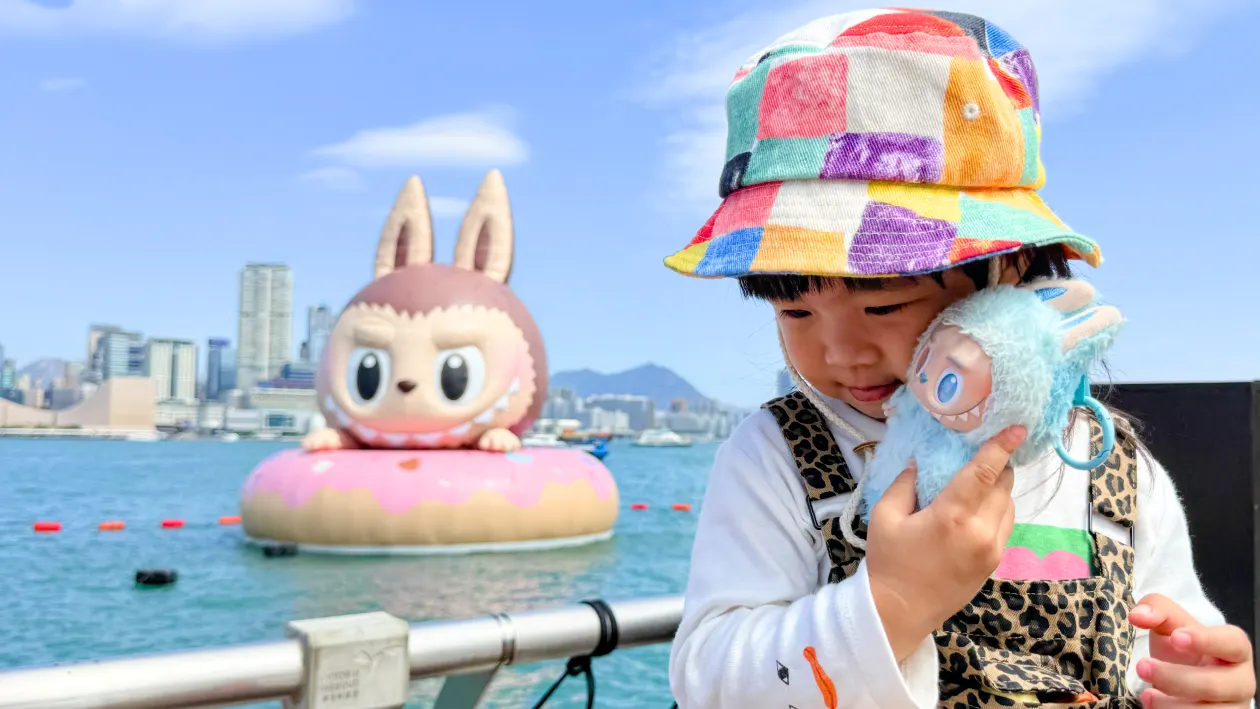
28-year-old Rebecca Zhou, born in China’s Sichuan province, owns an assortment of Moomin merchandise — bags, mugs, and figurines featuring the white hippo-looking cartoon character from Finland — that she has accumulated over the years.
By her own admission, many of these purchases may seem “childish”, but “it is [just] nice to treat yourself to something fun, even if it is not the most value-for-money,” Zhou said.
Zhou is not alone. Data from analysts and official sources show that Chinese consumers are increasingly spending on goods and experiences chosen for their emotional resonance over practical value — everything from theme parks to jewelry.
But what may once have been a fairly unsurprising consumer impulse is now being taken seriously by China’s business leaders and policymakers.
‘A sense of connection’
China’s “emotional economy” first entered into public discourse in 2024, after a craze over Pop Mart’s Labubu figurines appeared to signal shifts in Chinese consumer behavior, where a consumer group once characterized by norms of frugality and pragmatism appeared just as willing to splurge on self-indulgence.
“People are not just buying things,” said Ashley Dudarenok, founder of digital consultancy ChoZan told CNBC in a phone call. “They’re buying feelings, they’re buying identity, they’re buying a sense of connection.”
Over the recent Chinese New Year holiday, data from ChoZan shows that consumers spent significantly less on traditional staples like festive food gifts (known as nian huo), and more on unconventional expenses, like travel experiences and cosmetics compared to the same period in 2023.
“What people used to buy back in the day, like liquor and bulk nuts … were all about social obligations and tradition. Right now, people buy gift boxes, they buy designer toys … and people don’t frown upon that,” Dudarenok said.
This shift from obligatory to more discretionary spending over China’s largest holiday exemplified broader shifts in consumer norms, according to Dudarenok, with Chinese consumers increasingly looking to satisfy desires for personal fulfillment, over more “rational” purchases.
Beyond the Chinese New Year season, a February report from DaXue Consulting also highlighted tangible goods like aromatherapy candles and cosmetics, as growing segments in China’s emotional economy.
One estimate from the iiMedia Research Center projected China’s emotional economy to exceed a valuation of 4.5 trillion yuan ($655 billion) by 2029 — almost double its value in 2024 — as Chinese consumers seek ever-increasing “emotional relief and spiritual satisfaction”.
More stressed or just more comfortable?
But while many commentators have noted a growth in China’s emotion-driven spending, analysts are divided on what exactly is fueling this growth. The most common explanations see emotion-driven spending as a sort of stress response.
Traditional paths to happiness in China — buying a house and car, all while settling down and starting a family — have “grown increasingly expensive to follow,” Allison Malmsten, strategy consultant from DaXue Consulting, said by email.
In step with China’s ailing housing market — predicted to worsen in 2026, consumer inflation has also risen to a three-year high in February, according to China’s National Bureau of Statistics.
China’s rising costs of living have also dovetailed with record low birth rates in 2025, adding to a growing sense of loneliness among many in the country.
Compounded, these pressures have instilled in the average Chinese consumer “a sense of crisis,” Dudarenok said, pushing many to redirect spending toward things that “bring [them] joy.”
But for Bo Chen, senior research fellow from the National University of Singapore’s East Asian Institute, this sense of melancholy forms only part of the story.
For Chen, the structural legacy of China’s One-Child policy often concentrated familial resources from two parents (and four grandparents) on a generation of mostly single children.
This concentration of familial wealth — sometimes termed the “six pockets” effect — produced a younger cohort of Chinese consumers materially cushioned by their families in ways that previous generations were not, which gave them greater latitude to finance their material desires.
In a 2021 study, intergenerational income persistence — a measure of how the socioeconomic well-being of parents influenced those of their children — in China was found to have increased since 1979, particularly among China’s urban population.
Another study on homebuyers in Shanghai found that even those with considerable personal savings relied heavily on parental support to fund their purchases.
Such studies lend credence to Chen’s claims that, on average, younger Chinese consumers — one of the largest groups in China’s emotional economy — are increasingly buffered from the financial pressures of their forebears.
“This generation … they don’t need to worry about their lives that much,” Chen said in a call with CNBC.
Other macroeconomic trends, like the increased quality of China’s manufactured goods, has meant that nondiscretionary products and big-ticket items have longer replacement cycles for the average Chinese consumer, freeing up capital for other expenses.
With China’s thriving entertainment sector, Chinese consumers also have incentives to spend on entertainment like “Ne Zha 2”— the second installment of a Chinese movie franchise which broke records last year after coming in as the world’s highest-grossing animated film, Chen said.
Capitalizing on the emotional economy
What is unique about China’s emotional economy is how it is growing against a backdrop of slowing consumer spending.
In 2025, consumer spending in China grew by 2.3% from the year before, down from 5.2% in 2024, and 9.9% in 2023.
A People’s Bank of China survey further showed that for the fourth quarter of 2025, while interest in big-ticket purchases lagged pre-pandemic levels, the share of respondents willing to spend more on social and entertainment activities over the following three months reached an eight-year high over the same period.
In the U.S., where paid-for experiences are similarly accounting for a growing share of consumer spending, overall consumption has remained buoyant, posting quarterly growth between 0.5% and 0.9%. Unlike China, therefore, spending on emotional economy experiences in the U.S. is keeping pace with, rather than against, broader consumer spending.
This divergence has been noted by policymakers looking to spur consumer demand. Chongqing city government, for example, highlighted the role of the municipality’s emotional economy for the first time in its 2026 work report.
Businesses in China have also begun “reconsidering their value propositions,” according to DaXue’s Malmsten, with many looking into how they can lean into this trend of emotion-driven spending.
It taps into a feeling that consumers are demanding more of.
“For me, personally, buying these ‘childish’ items gives a comforting feeling of going back to childhood,” Zhou said. “It is a safe and nostalgic way of going back to adulthood.”
CNBC
Business
Iran war risks ‘catastrophic’ oil market impact: Aramco CEO
The Iran war threatens “catastrophic consequences” for the global oil market, the CEO of Saudi oil giant Aramco has warned.
Amin Nasser told an earnings call on Tuesday that the war had caused “a severe chain reaction” and “a drastic domino effect” beyond shipping, “on aviation, agriculture, automotive, and other industries.”
“There will be catastrophic consequences for the world’s oil market. The longer the disruption goes on and the more drastic the consequences for the global economy,” he said, adding that it was “by far the biggest crisis” faced by the region’s oil and gas industry.
Aramco’s Ras Tanura refinery was hit by a projectile last week, amid widespread Iranian drone and missile attacks on the Gulf states in response to U.S. and Israeli strikes on it.
The price of oil surged amid supply fears but fell after U.S. President Donald Trump said the U.S. would hit Iran “twenty times harder” if it attempted to halt oil flows through the Strait of Hormuz.
Speaking after Saudi Aramco reported full-year 2025 earnings that beat analysts’ estimate, Nasser warned: “With the current geopolitical crisis, global inventories, which are already at a five-year low, would see downwards at a faster rate.
“Global spare capacity is mostly concentrated in this region, so it is absolutely critical that shipping resumes in the Strait of Hormuz.”
On Monday, the spokesman for Iran’s Ministry of Foreign Affairs told CNBC that oil tankers passing through the Strait of Hormuz “must be very careful.”
“As long as the situation is insecure, I think all tankers, all maritime navigation, must be very careful,” said Esmail Baghaei, who is also head of the Center for Public Diplomacy.
Aramco’s full-year earnings
The Saudi state oil giant reported a full‑year adjusted net income of $104.7 billion, which it described as “robust growth” despite a year of oil‑price volatility.
Fourth‑quarter adjusted profit came in at $25.1 billion, slightly above the median consensus estimate of $24.8 billion compiled by the company.
Free cash flow for the year reached $85.4 billion.
The company also declared a base dividend of $21.89 billion for the fourth quarter, up 3.5% from a year earlier, to be paid in the first quarter of 2026. The company remains one of the world’s biggest dividend payers and a crucial source of income for the Saudi state.
Total shareholder distributions for the year reached $85.5 billion, as the company continued to prioritize payouts despite easing crude prices in 2025.
Aramco also announced a share buyback program of up to $3 billion over 18 months.
Shares of Aramco have risen sharply in recent sessions as oil prices surged amid fears of supply disruptions in the Middle East.
Cash flow
Aramco generated $136.2 billion in operating cash flow last year, driven by what the company said was steady production and strong downstream results. Capital investments totaled $52.2 billion, in line with company guidance and slightly below 2024 levels.
“Our disciplined capital allocation, combined with lower‑cost and highly reliable operations, drove strong financial performance in a year marked by price volatility,” Nasser said in the earnings release.
Crude prices during 2025 fell to $69.2 per barrel, from $80.2 in 2024, reflecting a softer oil market and rising global supply. In recent days, though, crude spiked to nearly $120 per barrel as war in the Middle East escalated.
CNBC


Shiloh Jolie, 19, looks strikingly like mom Angelina

US–Iran war Day 36: Crew search, 48-hour ultimatum

Buffett may halt Gates donations over Epstein ties

Is February 2026 really a once-in -283-years MiracleIn?

Algeria, Burkina Faso, Côte d’Ivoire win AFCON 2025 openers

NMC Royal Hospital, Khalifa City, performs rare wrist salvage, restoring function for young patient
-
Discover2 months ago
Is February 2026 really a once-in -283-years MiracleIn?
-
 Football3 months ago
Algeria, Burkina Faso, Côte d’Ivoire win AFCON 2025 openers
-
 Health3 months ago
NMC Royal Hospital, Khalifa City, performs rare wrist salvage, restoring function for young patient
-

 Health4 months ago
Bascom Palmer Eye Institute Abu Dhabi and Emirates Society of Ophthalmology Sign Strategic Partnership Agreement
-

 Health5 months ago
Emirates Society of Colorectal Surgery Concludes the 3rd International Congress Under the Leadership of Dr. Sara Al Bastaki
-

 Health5 months ago
Born Too Soon: Understanding Premature Birth and the Power of Modern NICU Care
-

 Lifestyle5 months ago
Saudi Arabia Lifestyle Trends 2025: What You Need to Know About Fitness, Wellness, Healthy Eating & Self-Care Growth
-

 Football4 months ago
Globe Soccer Awards 2025 nominees announced as voting opens in Dubai