
COMMUNITY
Hajj 2026: Registration, health and spiritual prep guide

With less than two months remaining until the start of Hajj 2026, preparations are accelerating across the Muslim world as millions prepare for the annual pilgrimage to Mecca, one of the largest religious gatherings on Earth.
Hajj, the fifth pillar of Islam, is an obligation upon every Muslim who is physically and financially capable of undertaking the journey at least once in their lifetime. More than just a series of rituals, it is considered a transformative experience that symbolises humility before God and unity among Muslims regardless of nationality, wealth or social status.
The pilgrimage takes place annually during the Islamic month of Dhul Hijjah, with Hajj 2026 expected to begin around May 25, corresponding to the 8th of Dhul Hijjah. The Day of Arafah is likely to fall on May 26, followed by Eid Al Adha on May 27, with the main Hajj rituals expected to conclude around May 29-30, although all dates remain subject to the official moon sighting.
Hajj history
The origins of Hajj trace back thousands of years to the time of Prophet Ibrahim (Abraham), whose devotion and sacrifices form the foundation of many of the rituals performed today. Muslims believe the pilgrimage commemorates key events in the lives of Prophet Ibrahim, his wife Hajar, and their son Ismail, while also following the practices established by Prophet Muhammad during his farewell pilgrimage more than 1,400 years ago.
Each year, the pilgrimage draws around two million people from across the globe, creating one of the largest annual gatherings anywhere in the world. Despite differences in language, culture and background, pilgrims dress in similar simple clothing, reinforcing the Islamic concept that all people stand equal before God.
The requirement to perform Hajj applies only to Muslims who are adults, mentally sound, and able to afford the journey without causing hardship to their families. Those who are ill, financially unable or otherwise incapable are exempt from the obligation.
Understanding the types of Hajj
While the goal of every pilgrim is the same, there are different ways in which Hajj can be performed. The most common form is known as Hajj Tamattu, in which pilgrims perform Umrah first, exit the state of Ihram temporarily, and then re-enter it to complete the Hajj rituals.
Another form, Hajj Qiran, involves performing Umrah and Hajj together without leaving the sacred state, while Hajj Ifrad involves performing only the Hajj rituals without Umrah.
Scholars often recommend Hajj Tamattu for first-time pilgrims because it allows greater flexibility and reflects the practice followed by the Prophet Muhammad during his farewell pilgrimage.
The beginning of the pilgrimage
The pilgrimage begins with pilgrims entering a sacred state known as Ihram before reaching Mecca. Men wear two simple white garments, while women dress modestly according to Islamic guidelines. The clothing is intentionally simple, symbolising the removal of worldly distinctions.
While in Ihram, pilgrims must avoid cutting their hair, using perfumes, engaging in arguments or harming others. The purpose of these restrictions is to promote patience, discipline and mindfulness throughout the journey.
Upon arrival in Mecca, pilgrims perform Tawaf, the act of circling the Kaaba seven times. This act symbolises the centrality of faith in a Muslim’s life. Many pilgrims also attempt to touch or gesture towards the Black Stone as part of the ritual, although this is not mandatory.
Following Tawaf, pilgrims perform Sa’i, walking seven times between the hills of Safa and Marwa, commemorating Hajar’s desperate search for water for her infant son.
The most important day: Arafah
The most significant moment of Hajj comes on the Day of Arafah, when pilgrims gather on the plains of Arafah in prayer and reflection. This day is considered the spiritual peak of the pilgrimage, and missing it invalidates the Hajj.
From Mina to Arafah and then to Muzdalifah, pilgrims follow a sequence of movements that reflect both the historical traditions of the pilgrimage and the spiritual journey of repentance and devotion. Pilgrims spend the night in Muzdalifah, collecting small stones used later in the symbolic stoning of the Jamarat, representing the rejection of evil.
The following days include the ritual stoning, the sacrifice of animals commemorating Prophet Ibrahim’s willingness to sacrifice his son in obedience to God, and the shaving or trimming of hair to mark spiritual renewal.
The pilgrimage concludes with a farewell Tawaf before pilgrims depart Mecca.
The practical side: registration and quotas
Behind the spiritual journey lies a complex logistical process. Each year, Saudi Arabia allocates country-specific quotas to manage the number of pilgrims. Registration procedures differ depending on where pilgrims live, but most involve applying through government-approved Hajj authorities or licensed travel operators.
International pilgrims often register through official platforms or authorised agencies, submit required documentation and select travel packages based on budget and services offered.
The cost of performing Hajj
The cost of Hajj varies significantly depending on the country of departure, package type and level of accommodation. Domestic Saudi packages can begin at roughly SAR 8,000 (Dh7,826 approx) for basic arrangements, while luxury domestic options may exceed SAR 52,000 (Dh50,869 approx). International packages are typically more expensive, with prices ranging from around $11,000 for economy options to more than $27,000 for premium experiences.
Packages are generally divided into standard, premium and luxury categories, with differences mainly relating to hotel quality, distance from holy sites, transport arrangements and duration of stay.
Preparing for the journey
Preparation for Hajj is often described as spiritual as much as logistical. Scholars advise pilgrims to learn the rituals thoroughly beforehand to avoid mistakes that could invalidate the pilgrimage. Physical preparation is also recommended, as pilgrims may walk long distances in high temperatures.
Health authorities typically require vaccinations and recommend carrying essential medications. Pilgrims are also advised to pack practical items such as comfortable footwear, unscented toiletries and copies of important documents.
Beyond logistics, however, many scholars emphasise that the most important preparation is sincerity of intention. Pilgrims are encouraged to focus on worship, avoid disputes and approach the journey with humility.
Common mistakes to avoid
Despite careful preparation, some pilgrims make avoidable errors, such as leaving Arafah early, misunderstanding certain rituals or focusing excessively on photography and social media rather than worship. Religious guides often stress the importance of patience, cooperation and respect for fellow pilgrims.
For millions of Muslims, Hajj is a dream they carry in their hearts for years, sometimes for a lifetime. It is a journey people save for, pray for, and wait patiently to experience. Those who perform it often describe it as a moment of spiritual cleansing, a chance to leave behind past mistakes and return with a lighter heart and stronger faith.
Muslims believe that Hajj is not the end of a journey, but the beginning of a new, more mindful chapter in their lives.
GN
COMMUNITY
King Fahd Causeway reopens

The King Fahd Causeway has reopened to traffic on Tuesday afternoon, following a brief closure implemented as a precautionary measure amid heightened regional security alerts.
The 25-kilometre series of bridges, which serves as the primary land link between Saudi Arabia and the island nation of Bahrain, resumed operations after authorities concluded a safety assessment. The General Authority for King Fahd Causeway confirmed the reopening in a brief update, stating that the flow of vehicles had returned to normal.
The suspension of movement earlier in the day followed the issuance of several security warnings in the area. At the time, the Authority had notified travellers that vehicle transit was being halted “as a precautionary measure” to ensure the safety of all commuters.
GN
COMMUNITY
US–Israel–Iran War Day 33: UAE update for April 1
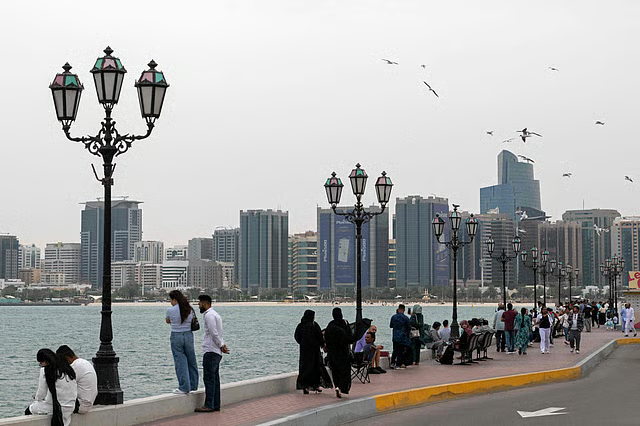
Regional tensions continue to shape daily life on day 33 of the US–Israel war with Iran, as authorities respond to air defence debris incidents, announce significant fuel price changes, and extend distance learning across the country. Here are the key developments UAE residents should know today.
One killed after drone debris falls on Fujairah farm
Authorities in Fujairah confirmed that one person was killed after debris from an intercepted drone fell on a farm in the Al-Rifa’a area. The Fujairah Government Media Office said UAE air defence systems successfully intercepted an unmanned aerial vehicle (UAV) over the emirate, but debris from the interception subsequently landed on the farm. A Bangladeshi national died as a result of the incident, authorities said.
Debris falls on Dubai homes, four Asian nationals injured
Authorities in Dubai confirmed on Tuesday that they responded to an incident in southern Dubai caused by debris from a successful air defence interception. The debris fell on residential houses, resulting in property damage and minor injuries to four Asian nationals. Officials also confirmed that the loud sounds heard across parts of the city earlier that day were linked to the same air defence operations.
UAE announces petrol and diesel prices for April 2026
The UAE Fuel Price Committee announced the retail prices for petrol and diesel for April 2026, with significant increases across all grades. Super 98 petrol will cost Dh3.39 per litre, up from Dh2.59 in March, while Special 95 petrol is now priced at Dh3.28 per litre, compared to Dh2.48 last month. E-Plus petrol will sell for Dh3.20 per litre, rising from Dh2.40 in March. Diesel prices have also risen sharply, now standing at Dh4.69 per litre, up from Dh2.72 previously.
Distance learning extended until April 17 for universities
The Ministry of Higher Education and Scientific Research, in coordination with the Education, Human Development and Community Development Council, announced the extension of remote learning at higher education institutions until April 17, 2026. The ministry said in-person classes will resume only for priority programmes requiring physical attendance, in strict adherence to approved safety measures. Institutions were urged to monitor developments and coordinate with local authorities to ensure continuity and maintain learning quality.
Dubai’s KHDA confirms two more weeks of distance learning
Dubai’s Knowledge and Human Development Authority confirmed that distance learning will continue across all private educational institutions in the emirate for an additional two weeks, from Monday, April 6 until Friday, April 17, 2026. The extension was made as authorities continue to prioritise the safety and wellbeing of students and academic and administrative staff across Dubai’s private education sector.
UAE school group waives transport fees for April
UAE education group Woodlem Education announced a waiver of transport fees across all its institutions in the country, effective from April 2026, describing it as a compassionate measure to support families during the current situation. The relief applies to parents of more than 20,000 students across 10 institutions, eight schools and two nurseries, following the authorities’ extension of distance learning until April 17, with possible further extensions if required. The group noted that transport fees for March had already been collected prior to the announcement.
Dubai and Abu Dhabi rank among world’s top 10 smartest cities
Dubai and Abu Dhabi have secured leading positions in the 2026 Smart City Index published by the International Institute for Management Development. Dubai ranked sixth globally, while Abu Dhabi placed tenth among 148 cities assessed. Zurich topped the global ranking, followed by Oslo, Geneva, London, and Copenhagen. The report highlighted the UAE’s model of government-led investment in digital technology as a global benchmark, noting strong public trust and significantly improved urban performance across the country.
GN
COMMUNITY
What UAE residents need to know on March 30
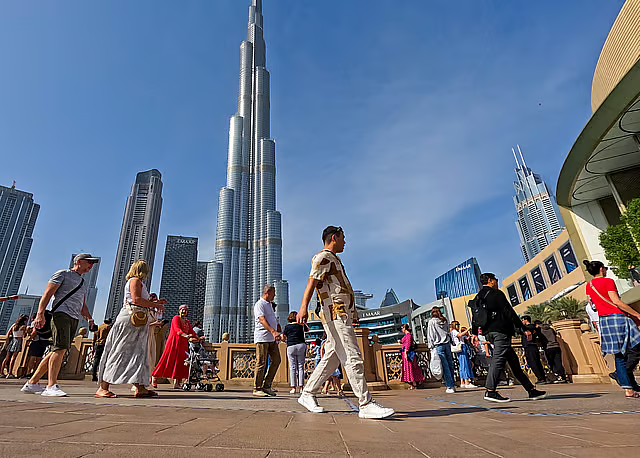
As the US–Israel war with Iran enters Day 31, developments across the region continue to impact security, travel, markets and daily life in the UAE. From air defence responses and diplomatic engagements to flight schedules and education updates, here’s a detailed round-up of what residents need to know today. UK forces destroy Iranian attack drones overnight
The UK Ministry of Defence confirmed that Royal Air Force units intercepted and destroyed seven Iranian one-way attack drones in a single night operation. The drones were taken down using ground-based counter-drone systems as part of ongoing defensive missions in the Middle East.
UAE air defences respond to missile threat
The UAE Ministry of Defence said air defence systems were activated in response to an incoming aerial threats, prompting precautionary alerts across the country. Authorities urged residents to remain indoors or in safe locations and to follow official updates as the situation was managed. Officials later reassured the public that defence systems are operating effectively to neutralise threats and maintain national safety amid continued regional escalation.
UAE–US talks focus on regional developments
UAE President His Highness Sheikh Mohamed bin Zayed Al Nahyan held a virtual meeting with Joni Ernst, where both sides discussed the evolving situation in the Middle East and its implications for regional and global security. The leaders also reaffirmed their commitment to strengthening UAE–US strategic ties across key sectors, emphasising cooperation that supports stability and mutual interests during a period of heightened geopolitical uncertainty.
Dubai gold prices see sharp correction
Gold prices in Dubai have undergone a significant correction in March after hitting record highs earlier in the month. The price of 24-karat gold dropped from above Dh640 per gram to the Dh520–Dh550 range, while 22-karat gold also declined notably. The shift has attracted renewed interest from buyers, with analysts suggesting the correction reflects broader global market adjustments linked to geopolitical tensions and fluctuating demand.
CBSE assessment changes affect UAE students
More than 10,000 CBSE Class 12 students in the UAE are navigating a new assessment system after exams were cancelled in several Middle Eastern countries due to the conflict. The revised approach relies on internal evaluations, including periodic tests and pre-board exams, to determine final grades. While some students have expressed relief, others remain concerned about whether the system will accurately reflect their academic performance.
Air India group schedules additional GCC flights
Air India and Air India Express announced plans to operate a total of 20 flights across the GCC on March 30, including 10 additional services to and from the UAE. These include both scheduled and non-scheduled flights, subject to slot availability and regulatory approvals. The move is aimed at easing travel disruptions and assisting passengers affected by ongoing airspace constraints and regional instability.
UAE condemns attacks on civilian infrastructure
Abdullah bin Zayed Al Nahyan strongly condemned the targeting of civilian infrastructure across the region, including schools, hospitals and energy facilities. He described such attacks as a serious violation of international law and stressed that they cannot be justified under any circumstances, particularly given their impact on civilian lives and essential services.
Gargash calls for guarantees from Iran
Anwar Gargash said any political resolution to the conflict must include clear guarantees from Iran to prevent future attacks on Gulf countries. He also emphasised the need for accountability and compensation for damage caused to civilian infrastructure, adding that long-term regional stability depends on firm commitments to non-aggression.
UAE resilience highlighted by global investor
Egyptian billionaire Naguib Sawiris highlighted the UAE’s resilience and stability despite ongoing geopolitical challenges. He pointed to the country’s strong economic fundamentals, leadership and infrastructure as key factors maintaining investor confidence, reinforcing the UAE’s position as a global hub for business and growth even during periods of uncertainty.
Trump says Iran has undergone ‘regime change’
US President Donald Trump has said he is considering seizing Iran’s Kharg Island amid rising oil prices, while Iran has warned it may expand retaliatory strikes against US and Israeli targets. Meanwhile, Pakistan’s foreign minister announced that the country is preparing to host peace talks “in the coming days.” In Kuwait, an Indian worker was killed in an Iranian attack on a power and desalination plant.
GN


Israel warns Iran on trains as Trump threatens infrastructure

Lauren Sanchez–Jeff Bezos romance not as spicy as it seems

Hajj 2026: Registration, health and spiritual prep guide

Is February 2026 really a once-in -283-years MiracleIn?

Algeria, Burkina Faso, Côte d’Ivoire win AFCON 2025 openers

Bascom Palmer Eye Institute Abu Dhabi and Emirates Society of Ophthalmology Sign Strategic Partnership Agreement
-
Discover3 months ago
Is February 2026 really a once-in -283-years MiracleIn?
-
 Football3 months ago
Algeria, Burkina Faso, Côte d’Ivoire win AFCON 2025 openers
-
 Health4 months ago
Bascom Palmer Eye Institute Abu Dhabi and Emirates Society of Ophthalmology Sign Strategic Partnership Agreement
-

 Health3 months ago
NMC Royal Hospital, Khalifa City, performs rare wrist salvage, restoring function for young patient
-

 Health5 months ago
Emirates Society of Colorectal Surgery Concludes the 3rd International Congress Under the Leadership of Dr. Sara Al Bastaki
-

 Health5 months ago
Born Too Soon: Understanding Premature Birth and the Power of Modern NICU Care
-

 Lifestyle5 months ago
Saudi Arabia Lifestyle Trends 2025: What You Need to Know About Fitness, Wellness, Healthy Eating & Self-Care Growth
-

 Football4 months ago
Globe Soccer Awards 2025 nominees announced as voting opens in Dubai