
Fashion
Golden Globes red carpet sees return of the classic black suit
Timothée Chalamet was the final clue. As he arrived in good time on the Golden Globes red carpet, the star of Marty Supreme put pay to speculation as to whether the chromatic marketing of the film’s ping pong balls would have him wearing orange. Instead, he wore a black T-shirt; vest, jacket and Timberland boots with silver buttons by Chrome Hearts, souped up with a five-figure Cartier necklace. Kylie Jenner, his partner and sartorial foil, was nowhere to be seen.
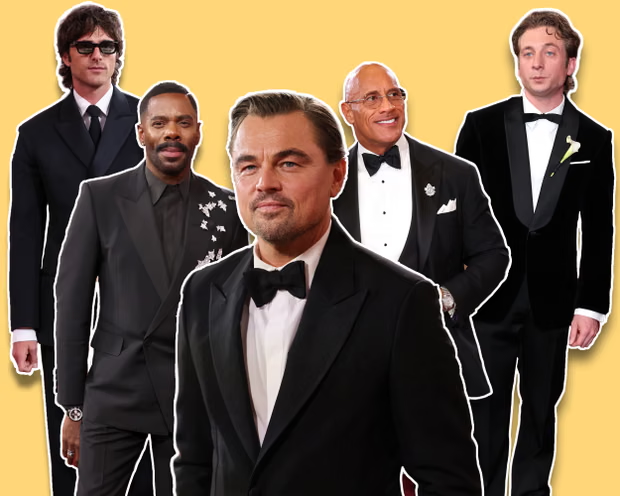
Styled by Taylor McNeill, who was also responsible for Chalamet’s wildly amusing if chaotic red carpet campaign for the film, the look was bad boy Bond. It also set the tone for an evening of subdued tones. If we thought the penguin suit had gone extinct, we were wrong. The performative male is over – welcome to the return of the staid suit.
The Guardian
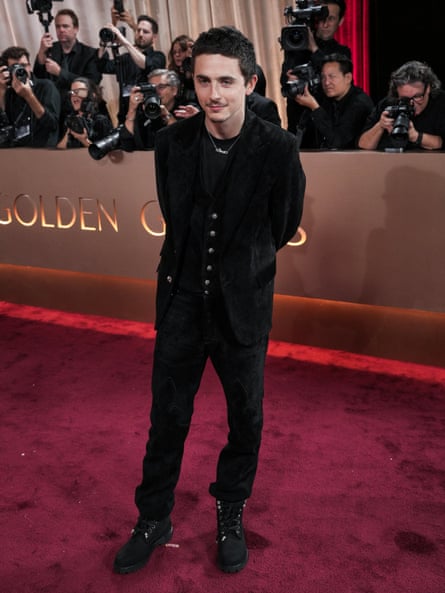
Black is the new orange: Timothée Chalamet on the red carpet. Photograph: Sthanlee Mirador/PA
The Globes are about the movies and winners, but its red carpet is a dry run for the Oscars, and traditionally an opportunity for celebrities and their all powerful stylists to choreograph something inventive.
There were exceptions, but they were not among the men. Bella Ramsey wore a Prada suit tied with a pink bow that was positively shocking. At her very first Golden Globes, Chalamet’s co-star Odessa A’zion went for a monochromatic trouser suit of sorts with a froufrou vintage Dolce & Gabbana jacket and satin gloves. A nice bit of era-dressing came from Sinners star Miles Caton’s chestnut pinstripe suit by Amiri. Still, the usual flies in the ointment – Jacob Elordi, Colman Domingo and Jeremy Allen White – towed the line in contemporary twists on ye olde tux by Bottega Veneta, Valentino and Louis Vuitton respectively. Between them, Globes newbie Dwayne Johnson and red carpet veteran Leonardo DiCaprio did little to temper the black tie stuffiness.
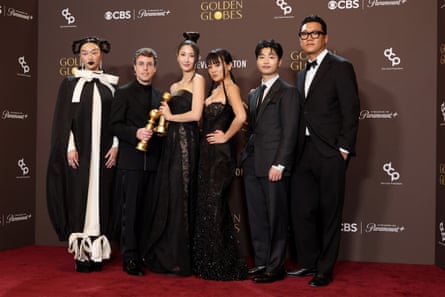
The KPop Demon Hunters team with their two Golden Globe awards. Photograph: Amy Sussman/Getty Images
Perhaps colour was the problem as black reigned supreme among women, too. Aimee Lou Wood in demure Vivienne Westwood looked straight from the Gilded Age. Best supporting actor winner Teyana Taylor opted for a cut out Schiaparelli dress flashing numerous body parts, albeit in inky black. Ayo Edebiri’s gorgeous black velvet panelled off-the-shoulder gown by new Chanel under Matthieu Blazy pushed classicism forward, but still felt alarmingly safe. Even the KPop Demon Hunters team, who won a for a song called Golden, wore all black.
To that end, moments of colour – when they happened – were all the more precious. There was a welcome flash of metallic from Elle Fanning, whose sparkly, embroidered Gucci gown looked very silver screen glamourpuss. Emily Blunt wore a perkily white asymmetric, one sleeve gown by Louis Vuitton, while Amanda Seyfried was a modern day Venus de Milo in white Versace.
The standout look was perhaps Wunmi Mosaku, the British Nigerian star of Sinners, one of two stars to reveal her pregnancy on the red carpet (the other being her Sinners co-star Hailee Steinfeld). The canary yellow of her bespoke gown and sheer veil by Matthew Reisman was a colour steeped in meaning. “In Yoruba, we say Iya ni Wúrà which means ‘mother is golden’,” she wrote in Vogue.
Mother is golden: Wunmi Mosaku on the red carpet. Photograph: Corine Solberg/PA
Historically, the red carpet is as much a venue for self expression as it is for showcasing the great fashion-celebrity industrial complex. But it’s also a peek at the trends of tomorrow. To that end, newly minted designers. Jessie Buckley trialled Jonathan Anderson’s Dior in an ice blue asymmetric gown; Tessa Thompson wore a custom sequined column from Balenciaga by Pierpaolo Piccioli and Rose Byrne wore emerald green Chanel by Matthieu Blazy.
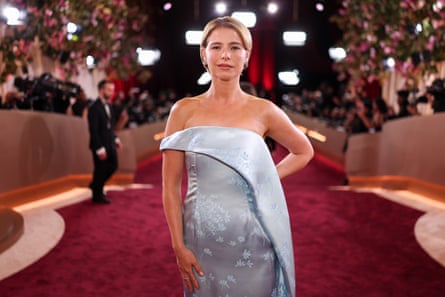
Jessie Buckley strikes a pose. Photograph: Christopher Polk/2026GG/Penske Media/Getty Images
The reaction to Chalamet’s look was generous, and broadly uncritical. If the peanut gallery were disappointed by the lack of peacocking, the insiders were not. Esquire UK’s style director Zak Maoui told the Guardian: “I believe the industry has made a slight shift back to nice regular clothing for men on red carpets. Men are starting to see power again in a well-executed and expertly-cut suit.
“It might reflect a wider sentiment in menswear, whereby the catwalks aren’t as flash or hype-y, and brands are presenting more subdued, wearable clothing.”
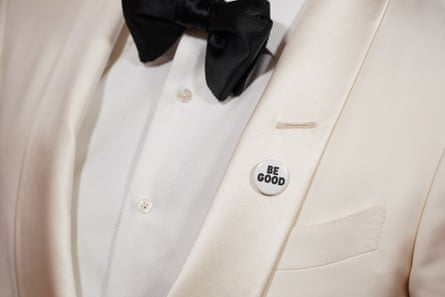
Mark Ruffalo’s ‘BE GOOD’ pin. Photograph: Jordan Strauss/Invision/AP
The devil – and the brand deals – were as ever in the details. Several “ICE OUT” and “BE GOOD” pins were worn by attendees, including Mark Ruffalo. In a world in which wearing a watch as part of your deal has become a foregone conclusion, it was a moment of political reprieve from a largely staid sartorial circus.
This article was amended on 12 January 2026. An earlier version suggested Bella Ramsey identified as a woman; they are non-binary. This has been corrected, and details of Timothée Chalamet’s stylist, Taylor McNeill, have also been added.
A new year’s resolution you can actually keep
These days I only have one rule when it comes to new year resolutions: do not, under any circumstances, write them down. Don’t put them on social media, or on a Post-it note stuck to your bathroom mirror, or in the notes section of your phone. Chances are high you won’t keep your resolutions, but as long as you don’t write them down chances are equally high you’ll have no memory of making them by next December.
I’ve learned there is simply no point in negotiating with future you – this person who no longer shares your goal to write a play, or to read 50 books in a year. Don’t let their failure be your failure. Besides: if you only manage to read nine books in 2026, you’ll still be nine books less stupid than you were in 2025.
In the meantime here’s something you can do right now to override future-you’s lack of commitment: support the Guardian’s work in 2026. You’ll be supporting independent journalism at a time when it’s more desperately needed than ever, and I promise that we will never send you an email reminding you to practise your Italian.
the Guardian
Fashion
47-year-old designer creates $8,000 Olympic skating dresses
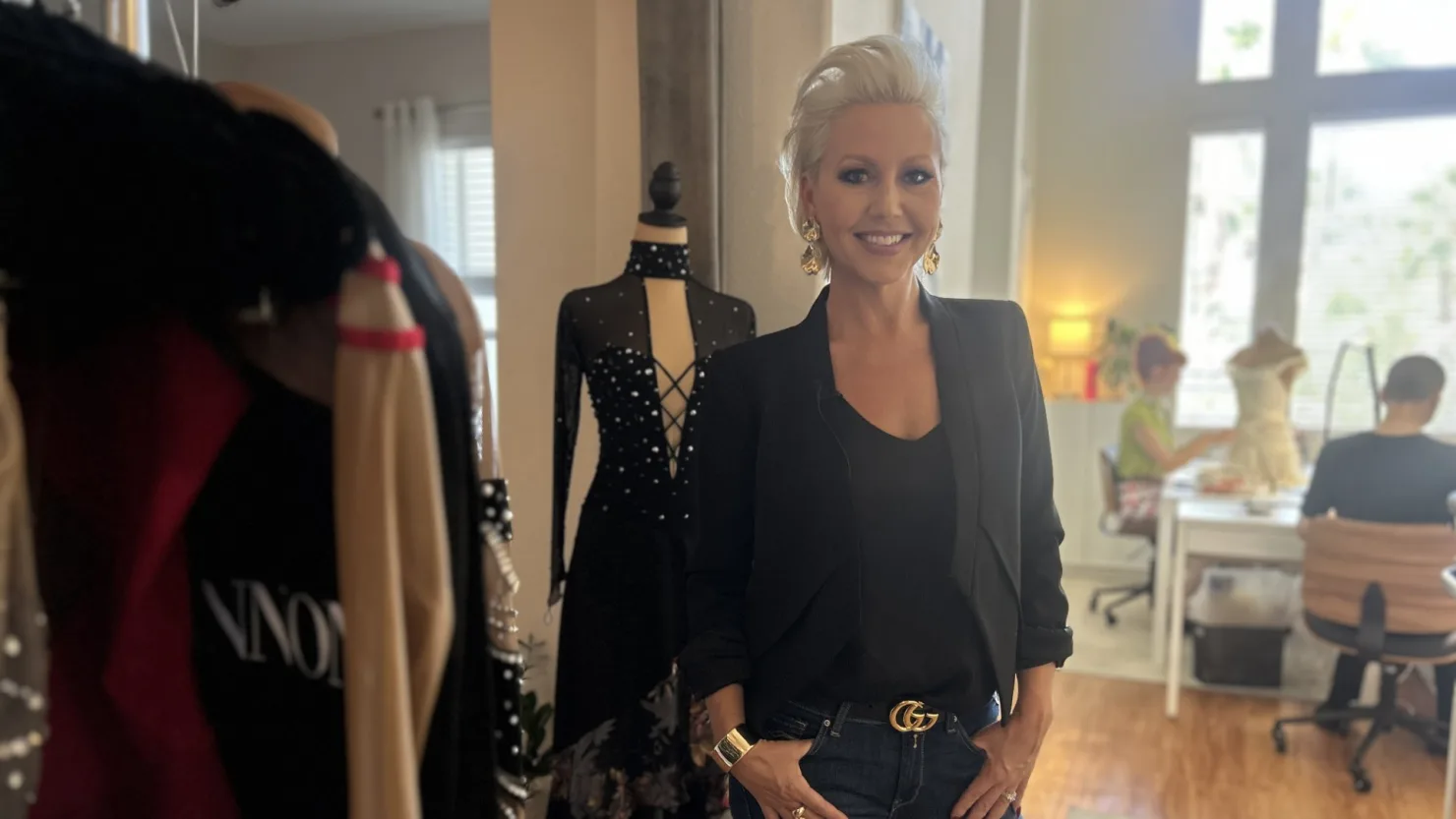
When U.S. figure skaters Amber Glenn, Alysa Liu and Isabeau Levito take to the ice to compete at the Milano Cortina Winter Olympics, they all wear dresses designed by the same woman.
The designer’s name is Lisa McKinnon, and she’s outfitted all three women competing for Team USA in singles figure skating events, plus two American ice dancers and two South Korean skaters at these Olympics. Collectively, the seven athletes are set to compete in at least 13 costumes from Lisa McKinnon Designs, a Los Angeles-based studio that McKinnon launched in 2014.
McKinnon works between 40 and 60 hours per week, regardless of the season, she tells CNBC Make It. She and her five employees handmade nearly 700 costumes, for skaters across every discipline and level, in 2025, she estimates. The business charges $90 per hour, and its custom costumes for high-level skaters typically cost between $4,000 and $8,000 apiece, she says. (McKinnon declined to share the business’s total annual revenue.)
Most clients, regardless of their desired final product, have to request costumes at least six months in advance, and McKinnon’s team often works on a costume up until the deadline, she says. The timeline is largely due to demand, and to budget time for costume emergencies or special requests.
One such special request: In December, Liu — the reigning world champion — asked McKinnon to design her a new dress for her Lady Gaga-themed program at the 2026 U.S. Figure Skating Championships in early January. McKinnon finished the dress in a hotel room in St. Louis on the day Liu competed in the costume, the designer says.
“I really care so much about every single project that I do. A little blood, sweat and tears are a totally common thing for me, [though] I don’t cry as much [these days]” says McKinnon, 47.
Skating is ‘in my blood’
McKinnon, born and raised in Sweden, grew up a figure skater and made her first competition costume for herself at age 15. She didn’t have any crystals, which are commonly glued onto skating dresses, so she hand-sewed paillettes — sequins secured onto the fabric with tiny beads, she says.
She began making costumes for other skaters later that year, after a request from a member of the Swedish national team, she says. But mostly, she pursued her own skating career — eventually performing in professional shows like Disney On Ice for eight years, then workingon them as a performance director for another eight years, she says.
McKinnon started spending her summers between shows in the U.S. starting in 2006, and after leaving the skating world, pursued jobs supervising costume departments in Las Vegas and then Los Angeles. In 2013, she was the costume supervisor at The Wallis Annenberg Center for the Performing Arts in Beverly Hills, California, when an old friend — who was a skating coach at a local rink — asked if she’d design a costume for a student, she says.
The dress was eye-catching enough for other local parents and athletes to start coming to McKinnon, she says. She quit her job in late 2014 to launch her business, she says, and has since built a reputation for making costumes that add storytelling to each individual skating routine’s theme.
Within a year, some of the country’s top stars living in or near Los Angeles, home to multiple high-level skating coaches, were competing in her costumes. One early Los Angeles-based client, Ashley Wagner, was already a multi-time U.S. national champion when she started working with McKinnon. Another, Karen Chen, later competed in multiple Olympic Games, winning a gold medal in the team event at the 2022 Winter Olympics.
McKinnon vividly remembers the first time she saw her designs on national television, she says: Wagner and Chen wore them on the podium after winning silver and gold at the 2017 U.S. National Figure Skating Championships.
“I drank a lot of champagne and I definitely shed some tears,” says McKinnon.
Her business is small, relative to its demand. To keep up, McKinnon arrives early in the morning to do paperwork and often stays late to tidy up, tossing scraps of fabric and reorganizing crystals, she says. Competitive skating and costume designing both require determination, resilience and ambition, she adds.
“I’m really competitive. I want to do the things I’m good at, and I want to be the best,” says McKinnon, adding: “Once you’ve skated, it’s always going to be a part of your life somehow. It sticks with you. It’s always been part of my life and I feel like it’s in my blood.”
CNBC
Entertainment
Taylor Swift’s fashion evolution
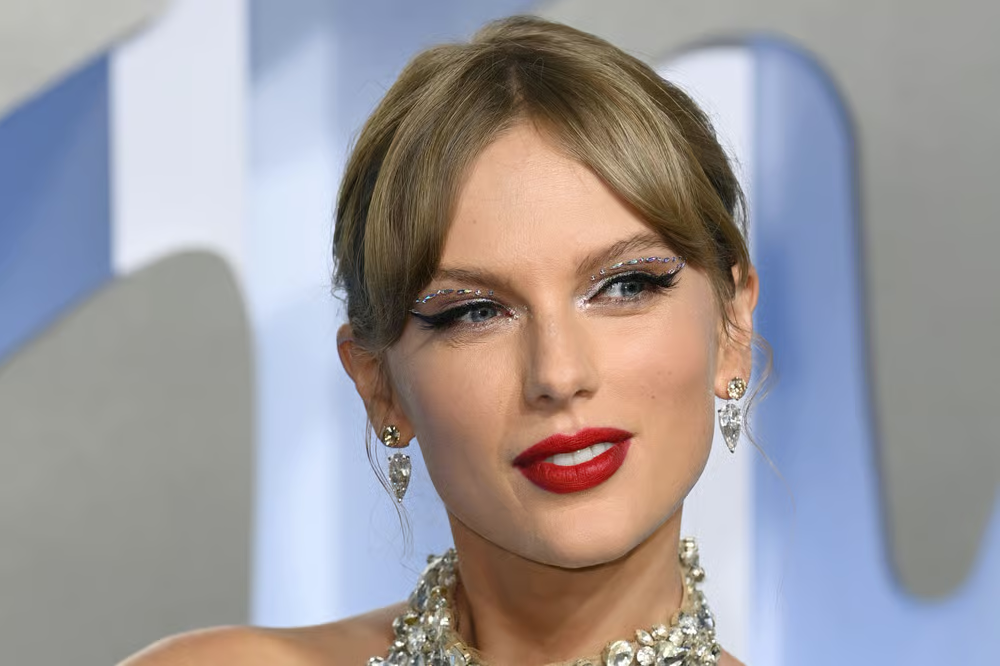
Her popularity has reached such a level that it feels like we know everything about her. Yet, since 2006 and the release of her self-titled debut album, Taylor Swift , the American singer has never ceased to surprise. Whether it’s through her extravagant tours, like her “Eras Tour” (2022-2024) which (truly) caused a sensation, her pro-Democrat political stances that broke the internet, or, more recently, the announcement of her engagement to football player Travis Kelce . The same goes for her fashion choices: in the space of twenty years, Taylor Swift’s appearances have more than once astonished us.
It must be said that today, the singer of “Anti-Hero” cultivates a style a world away from the one she sported in the 2000s. This is due to the cyclical nature of trends, which have reinvented themselves countless times in two decades, certainly, but also to her distancing herself from country music, a shift that began in 2014 following the release of 1989 , her first pop album and a massive hit. The images speak for themselves: between 2006 and 2009, Taylor Swift embraced a “girl next door” image built around cowboy boots, flowing bohemian dresses, a curly blonde blowout, and an acoustic guitar never far away. Like a new generation Dolly Parton , polished in every way.
Asserting oneself through clothing
This demure, almost intellectual image would stick with her for a long time. Even more so during the 2010s, a time when the female music industry was dominated by the colorful and eccentric worlds of Katy Perry, Lady Gaga , and Nicki Minaj. But Taylor Swift dared to be different and took advantage of the situation to impose her new artistic direction. More politically engaged, and deliberately sexier, her style traded her Stetson for sequins, took risks, and also helped her assert herself as a powerful woman. “I would describe my own style as something constantly changing, but rooted in a very feminine vibe,” she explained in a 2015 interview with Extra . She continued, “I think it’s important to experiment with different things. You know, I never would have thought I’d wear a crop top three years ago, but it seems like that’s all I wear now.”
Her look at the 2015 MTV Video Music Awards is the ultimate proof, a ceremony during which she got her revenge on Kanye West (the singer had humiliated her on stage six years earlier at the same event ) . On stage, Taylor Swift sported a houndstooth sequined ensemble, featuring a long-sleeved crop top, matching jogging pants, and gold strappy heels. It was reminiscent of ” Bad Blood ,” the song whose music video in 2014 transformed the singer and several of her celebrity friends (Selena Gomez, Gigi Hadid, etc.) into femme fatales.
Ten years after that event, Taylor Swift’s life has changed considerably, and her wardrobe has changed once again. Now a billionaire , with her discography recently expanded with a twelfth studio album titled * The Life of a Showgirl* , and about to marry an American football star, her personal wardrobe has acquired some luxury pieces. These include Gucci platform heels spotted on her feet during a recent outing in New York with Sabrina Carpenter , and a Miu Miu plaid jacket worth over €3,600 that she wore on December 7th at a football game in Kansas City. Could this be the start of a new era?
Story by Madame Figaro
Fashion
“I absolutely want it”: why is this Chanel jacket causing a social media frenzy?
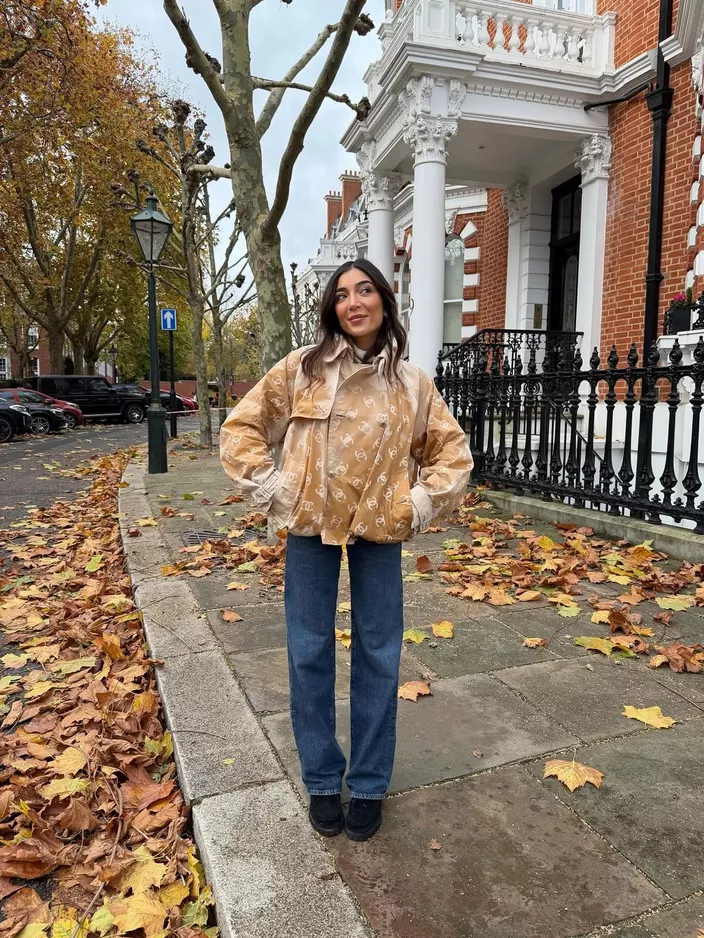
After the rain comes the beautiful… garment. On November 3rd, British influencer Amelia Liana, with half a million followers, posted a photo carousel of her latest look. Photographed on a London street, she poses in a short , beige trench coat that is almost entirely wet. On the damp patches of the fabric, several interlocking “C”s—the iconic Chanel logo — appear to magically emerge. “After the rain comes the Chanel CCs {the logos appear when wet},” the content creator captioned the post, which received over 11,000 likes.
This caused quite a stir among her followers: “I’m obsessed with this jacket,” “It’s so cool,” “Everything I was waiting for, amazing,” “I don’t need it, and yet I absolutely want it,” several users posted in the comments section. But it was especially on the influencer’s TikTok account , where she has over 690,000 followers, that the garment was the biggest hit.
Underneath a “test” video, we learn that the content creator actually had fun wetting her jacket with a friend using a water bottle . This caused the Chanel logos to appear in seconds, sending her followers into a frenzy: “Where can I buy it? What should I look for? Oh my God,” “Okay, now I want one,” “I absolutely need this jacket,” “I have to admit, it’s really amazing.”
A jacket that’s more scientific than magical. Taken from Chanel’s Coco Neige 2025-2026 collection —these sophisticated and technical collections unveiled annually since 2018 and entirely dedicated to winter sports—this short trench coat, crafted from cotton and silk faille, was created using a “hydrophobic” printing system, meaning it reacts to water. When the garment gets wet, the double C motif of the House of Chanel on Rue Cambon is revealed.
The garment is a prime example of Chanel’s commitment to innovative fashion. After experimenting with 3D printing in haute couture for its Fall/Winter 2015-2016 collection, the brand founded by Gabrielle Chanel is now exploring technical clothing. “While the collection incorporates Chanel’s iconic codes and emphasizes functionality, it also reveals an unexpected sense of freedom. What appeals to me is that it transcends stereotypes: it adapts just as naturally to the ski slopes as it does to the city,” explained Nana Komatsu, the face of the Coco Neige 2025-2026 collection, in a press release. This quality quickly went viral on social media, making it the must-have jacket of the winter.
MADAME FIGARO


Private Credit Investors Rush to Withdraw

UAE moves spring break for schools and universities

How Etihad Rail ferried 350+ UAE passengers back home with Saudi help

Is February 2026 really a once-in -283-years MiracleIn?

Algeria, Burkina Faso, Côte d’Ivoire win AFCON 2025 openers

Bascom Palmer Eye Institute Abu Dhabi and Emirates Society of Ophthalmology Sign Strategic Partnership Agreement
-
Discover1 month ago
Is February 2026 really a once-in -283-years MiracleIn?
-
 Football2 months ago
Algeria, Burkina Faso, Côte d’Ivoire win AFCON 2025 openers
-
 Health3 months ago
Bascom Palmer Eye Institute Abu Dhabi and Emirates Society of Ophthalmology Sign Strategic Partnership Agreement
-

 Health2 months ago
NMC Royal Hospital, Khalifa City, performs rare wrist salvage, restoring function for young patient
-

 Health4 months ago
Emirates Society of Colorectal Surgery Concludes the 3rd International Congress Under the Leadership of Dr. Sara Al Bastaki
-

 Health4 months ago
Born Too Soon: Understanding Premature Birth and the Power of Modern NICU Care
-

 Football3 months ago
Globe Soccer Awards 2025 nominees announced as voting opens in Dubai
-

 Health2 months ago
Decline in Birth Rate in the UAE