
Tech
ChatGPT-maker OpenAI releases browser in attempt to rival Google
BBC
ChatGPT-maker OpenAI has unveiled an artificial intelligence-powered web browser to challenge competitors like Google, which operates Chrome, the most popular browser in the world.
ChatGPT Atlas does away with the address bar that is a key feature in search, with boss Sam Altman saying it was “built around ChatGPT” as the company made the new browser available on Tuesday on Apple’s MacOS operating system.
The arrival of Atlas comes as OpenAI seeks new ways to monetise its massive bet on artificial intelligence (AI) and capitalise on its growing user base.
OpenAI said Atlas would also offer a paid agent mode that conducts searches on its own for users of its popular chatbot.
The agent mode feature will be available only to paying ChatGPT subscribers. It uses the chatbot to make “improvements that make it faster and more useful by working with your browsing context”.
The company has announced a slew of new efforts to corral users towards its online services, entering into partnerships with e-commerce sites like Etsy and Shopify, along with booking services like Expedia and Booking.com.
At OpenAI’s DevDay event earlier this month, Mr Altman announced that ChatGPT had reached 800 million weekly active users, up from 400 million in February, according to data and research firm Demandsage.
“I believe that early adopters will kick the tyres on the new OpenAI browser,” said Pat Moorhead, CEO and chief analyst at Moor Insights & Strategy.
But, he said, he was sceptical that Atlas would pose a serious challenge to Chrome or Microsoft Edge “as more mainstream, beginners, and corporate users will just wait for their favourite browsers to offer this capability.”
Microsoft Edge already provides many of these capabilities today, Mr Moorhead added.
OpenAI’s challenge comes a year after Google was declared an illegal monopolist in online search.
In a recent decision aimed at prescribing remedies for Google’s dominance, the search giant was not ordered to spin off its Chrome browser as US Justice Department lawyers had requested.
A growing number of internet users are opting to use large language models (LLMs) like ChatGPT as they search for answers and recommendations.
The research firm Datos said that as of July, 5.99% of search on desktop browsers went to LLMs – more than double the figure from a year earlier.
Google is also heavily invested in AI, and for the last year has prioritised AI-generated answers to queries in its search results.
Business
AI agents set to unlock US$450bn in economic value by 2028 as Outworks challenges Middle East institutions to go agentic in 30 days

Abu Dhabi, United Arab Emirates
Artificial intelligence is entering a defining new era. Across the Middle East, the conversation has shifted from whether organisations should adopt AI to how quickly they can deploy it securely, responsibly and at scale.
The urgency is backed by compelling numbers. According to the Capgemini Research Institute, AI agents are expected to unlock up to US$450 billion in economic value globally by 2028 through increased productivity, operational efficiencies and new revenue opportunities. Yet despite this enormous potential, only 2% of organisations worldwide have successfully scaled AI agent deployments across their operations, highlighting a significant gap between AI ambition and real-world execution.
Against this backdrop, Outworks has introduced Sprint 30, a structured programme challenging governments and large enterprises across the Middle East and Africa to move from AI strategy to fully operational, governed AI agents within 30 days. Rather than focusing on lengthy pilots and proof-of-concept projects, Sprint 30 is designed to help organisations deploy AI agents inside live business environments, delivering measurable outcomes while maintaining security, governance and data sovereignty.
The initiative comes as the UAE continues to strengthen its position as one of the world’s leading AI economies through ambitious national strategies that are accelerating the adoption of advanced technologies across government and business. As organisations increasingly seek to operationalise AI, the emphasis has shifted from experimentation to enterprise-wide deployment.
“The Middle East is entering one of the most significant technology transformations in its history. The conversation has moved beyond whether organisations should adopt artificial intelligence; today the real question is how quickly they can put it to work,” said Hamda Al Mansoori, Founder & Chairwoman of Outworks.
“At Outworks, our mission is to help governments and enterprises transform AI from strategy into execution, delivering measurable impact in weeks rather than months. We believe the organisations that will lead the next decade are those that operationalise AI responsibly, securely and at scale—creating environments where people and intelligent agents work together to unlock entirely new levels of productivity, innovation and value.”
Sprint 30 has been engineered to eliminate many of the barriers that have traditionally slowed enterprise AI adoption. Instead of spending months developing infrastructure before deployment begins, organisations follow a structured implementation framework that moves from assessment and solution design to production-ready AI agents operating inside real workflows within just one month.
The programme enables organisations to deploy AI agents on infrastructure they own and control, ensuring compliance with data sovereignty requirements while maintaining governance, transparency and human oversight throughout the deployment lifecycle.
Ahmed Ashoor, Founder & Chief Technology Officer, said the programme reflects a fundamentally different approach to enterprise AI implementation.
“Thirty days is not a marketing promise. It is an engineering decision. We have already built the deployment architecture, governance framework and operating model, allowing organisations to focus on transforming their operations rather than spending months building technology foundations. By the end of Sprint 30, AI agents are already delivering measurable work inside production environments.”
Outworks operates through its integrated Advise, Build and Run transformation model, helping organisations identify high-impact AI opportunities, build secure technology foundations and operate intelligent systems that continue evolving alongside business requirements. Every deployment is designed around sovereign infrastructure, ensuring organisations retain full control of their data while meeting regulatory, security and compliance requirements.
The company believes the future of enterprise performance will depend not simply on adopting artificial intelligence, but on integrating it into the way organisations operate every day. Rather than replacing human expertise, AI agents are expected to augment decision-making, automate repetitive and complex processes, and enable employees to focus on higher-value work that drives innovation and growth.
Founded by four leaders with expertise spanning government transformation, enterprise technology, artificial intelligence, commercial development and strategic partnerships, Outworks is focused on helping governments and large enterprises across the Middle East and Africa accelerate their transition from AI ambition to enterprise-scale execution.
As organisations race to capture the economic value of artificial intelligence, initiatives such as Sprint 30 demonstrate how the competitive advantage of the coming decade will be determined not by who has access to AI, but by who can deploy it faster, govern it responsibly and translate it into measurable business outcomes.
About Outworks
Outworks is an AI-native transformation company headquartered in Abu Dhabi Global Market (ADGM), United Arab Emirates. The company helps governments and large enterprises across the Middle East and Africa move from AI ambition to production-ready intelligent systems through its integrated Advise, Build and Run model.
Founded by Hamda Al Mansoori (Founder & Chairwoman), Ahmed Ashoor (Founder & Chief Technology Officer), Islam Shaban (Founder & Chief Commercial Officer), and Ahmed Shaban (Founder & Chief Strategy Officer), Outworks combines expertise in artificial intelligence, enterprise transformation, technology and strategic partnerships to deliver sovereign, enterprise-scale AI solutions.
Tech
The medieval secrets being revealed by AI
Historic messages and documents obscured by incomprehensible ciphers can be found in libraries and archives all over the world. Artificial intelligence is helping historians crack open these mysterious texts.
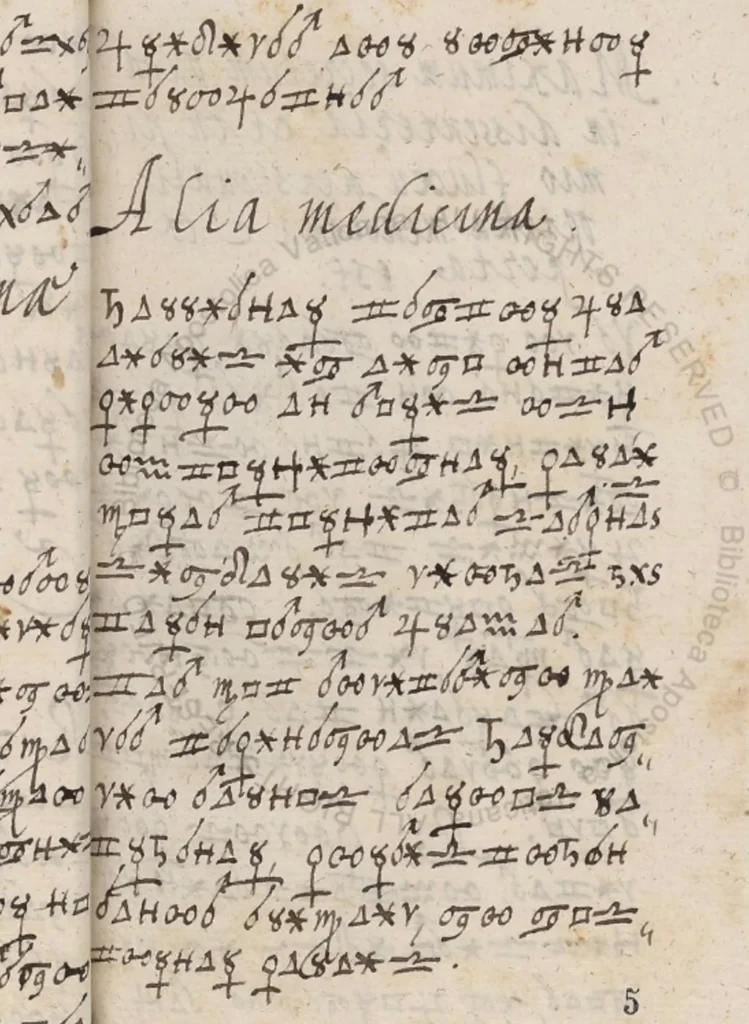
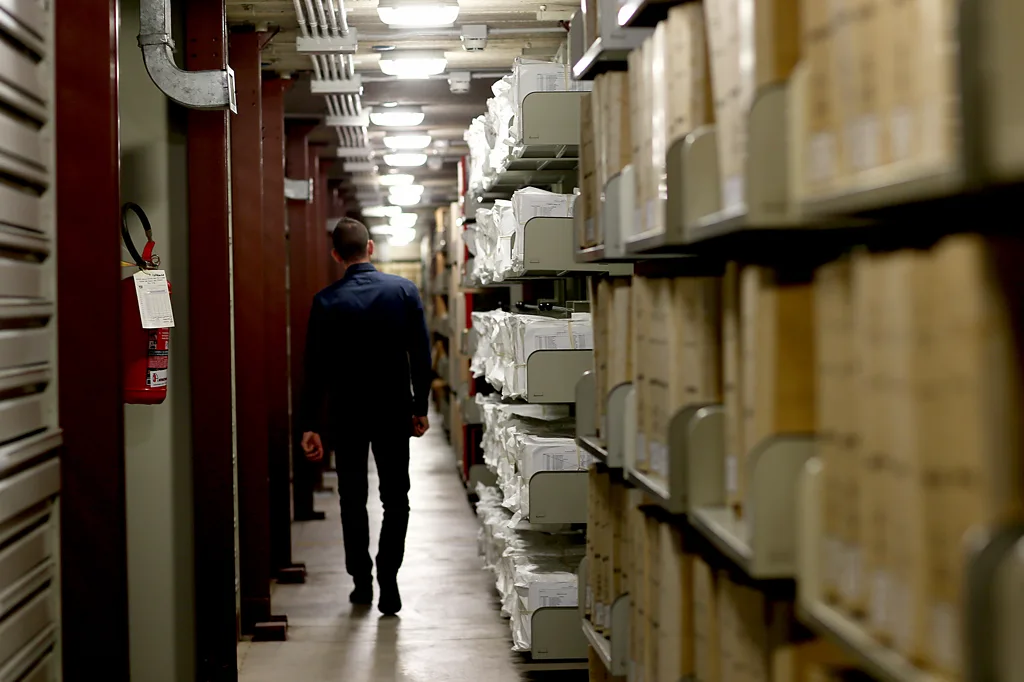
Deep in the archives of the Vatican library, a mysterious hand-written book, scrawled with strange symbols, had lain unread for more than 400 years. Its cryptic pages apparently concealed secret remedies “for affections of the human body”, according to some text scratched inside the cover. Such healing practices were kept under wraps at the time since they could attract suspicion or even accusations of witchcraft.
Known as the Borg cipher, the 408-page-long manuscript is mostly incomprehensible – coded using 34 obscure symbols with a few Roman letters and a front page written in Arabic. There was no known key to reveal what was encrypted. Some of the pages are also damaged due to their age, making the code even more challenging to read.
But with the help of machine learning – a form of artificial intelligence – researchers were able to unravel the code. They discovered the text was filled with thousands of bizarre treatments such as drinking several glasses of high-quality red wine or fermenting a nutmeg in some dough to combat dysentery.
“It is like detective work where every symbol, pattern, and partial solution may bring us closer to someone’s secrets and to a lost historical world,” says Beáta Megyesi, a professor in computational linguistics at Stockholm University in Sweden, who was part of the team who decoded the text. Even with the help of AI, the process of unlocking the cipher key was painstaking.
Now Megyesi and her colleagues are leading efforts to harness the power of AI to crack historic ciphers more efficiently, potentially unlocking a wealth of coded information from the past that has previously been uncrackable.
According to some estimates, around 1% of the material in archives and libraries around the world is fully or partially encrypted. Some of the earliest known ciphers date back to Ancient Greece and Rome.
Decoys, dead languages and bad handwriting
Together, coded historic documents conceal diplomatic intelligence, the rituals of secret societies, medical knowledge, love affairs or everyday details that people wanted to keep secret. This is information currently missing from historical narratives. In some cases, decoding these documents has the potential to rewrite what we know about a famous individual or an entire period of history. (One recent cipher to do this were a collection of coded letters that were found to have been written by Mary Queen of Scots during her long imprisonment in England. They revealed her involvement in plots to regain her throne and her tense relationship with her son, James VI of Scotland and future King James I of England.)
Historic ciphers can be relatively simple: the Borg cipher, for example, uses a simple substitution cipher, meaning that each symbol was swapped with a single Roman letter to hide what was written. Others, however, can be difficult to unravel. In some cases, nothing is known about the original language the uncoded text was written in. Extra, meaningless symbols can also be inserted as a decoy to throw off anyone hoping to snoop on the text. In other cases, several signs can be used to represent the same letter.
This can mean a huge amount of work – often involving trial and error – to decode even a small amount of text. It took Cecile Pierrot, a cryptologist at the French National Institute for Computer Science Research (INRIA) in Nancy, France, and her colleagues six months to gradually unravel the key to a 500-year-old letter from Charles V, the Holy Roman Emperor and King of Spain, that had been written using 120 different cipher symbols across three pages. (The decrypted letter revealed Charles V – one of the most powerful men of his time – undone by fear of a plot to kill him. The king was terrified that an Italian mercenary warlord serving the French king, Francis I, was about to assassinate him.)
Before code-breaking can begin, researchers must first painstakingly transform a handwritten cipher into a digital document that can be fed into code-cracking software. Bad handwriting and fading of the ink can make this task even harder.
Pierrot says it typically takes her a day just to transcribe a two-page letter containing symbols that are unfamiliar to her.
How AI is helping speed-read secrets
But AI is starting to speed up the process. Michelle Waldispühl, a professor of German linguistics at the University of Oslo in Norway and her colleagues, recently used an online AI platform called Transkribus to transcribe a secret letter written by nobleman Sigismund Heusner von Wandersleben to the Swedish Lord High Chancellor Axel Oxenstierna in 1637 at the height of the 30 Years’ War, a religious conflict that would ultimately claim millions of lives and devastate huge swathes of Europe.
The tool has been trained on various languages, scripts and handwriting styles that cover several centuries. After the image of a document is uploaded to the system, the AI detects blocks of texts and individual lines before scanning the whole text character by character to turn it into a digital form.
Although some manual corrections were needed, the tool worked quite well on Von Wandersleben’s letter as it was only partly encrypted using numbers separated by dots that were neatly written with clear spaces between them. Other parts were not coded and simply written in 17th-Century German script.
Existing AI transcription platforms often struggle when manuscripts are encrypted with unusual characters, such as invented signs, astrological symbols or numbers that are written in an odd way. But Megyesi, Waldispühl and their colleagues are developing their own AI tool to turn handwritten historical texts with obscure symbols or scripts into machine-readable documents as part of the multinational Descrypt project.
“We are developing more adaptable models trained and tested across a broad range of scripts, alphabets and symbolic repertoires,” says Megyesi.
Once a secret document has been transcribed, the detective work can begin. At the moment, cryptologists often use specially designed non-AI computer software to help with the task which harnesses algorithms to try to determine what cipher was used and break the code. Simple ciphers can often be cracked by analysing the frequency of symbols used and matching them to letters of the alphabet that appear at the same rate in a language. In English, for example, the letter E is the most common while Z, Q and X are the least frequent.
But in Von Wandersleben’s letter from the frontlines of the 30 Years’ War, for example, he used up to eight different symbols to represent the letter E. It meant trial and error, as well as Waldispühl‘s knowledge of old German, was needed to gradually unpick the code.
“It was very much back and forth between the machine and the human validator,” says Waldispühl. “Maybe at some point AI can do it completely independently.”
Hidden behind the cipher were Von Wandersleben’s warnings about the threat posed by factions of Sweden’s protestant allies in the war. He told Oxenstierna that he had been forced to make strategic retreats from the conflict after being told about a conspiracy among his allies, including Lord Franz Heinrich of Saxony.
Reopening cold case codes
Megyesi and her team are now exploring how AI could skip the transcription stage all together, simply by analysing photos of the pages to decipher secret messages. They recently showed how the approach could work for simple codes, where every letter is replaced by a single symbol.
They tested the system on a 105-page manuscript they had already decoded, known as the Copiale cipher, which details the rituals, rules and ideals of an 18th-Century German secret society. By training the AI on generic handwriting, followed by images of specific lines from the cipher and the corresponding, decoded German text, the system was able to accurately decipher parts of the text it hadn’t seen before.
Such a system could especially be useful when the underlying language of a cipher is unknown.
“This opens up exciting possibilities for rare and non-standard writing systems,” says Megyesi. “The ultimate goal is to combine transcription and decipherment in one single step.”
Waldispühl and her colleagues in the Descrypt project have been scouring old archives in search of cipher scripts to compile into a database. This could prove vital as a way of gathering sufficient data to train an AI capable of cracking codes. Large language models that underpin AI chatbots such as ChatGPT are trained on trillions of words from books, articles and websites. Finding equivalent amounts of data for code cracking is challenging.
Amongst the material they have collected are 400 mysterious postcards written in cipher script from the late 1800s to early 1900s. The few scraps decoded so far reveal some of these to be love letters written in German.
Megyesi’s team have used their work to create an AI chatbot-style tool that combines transcription and decryption in a single step. The chatbot combines algorithms for decryption trained on pairs of cipher characters and the text they represent with large language models trained on historical texts from different time periods to help provide clues about a code. Image recognition algorithms, trained on annotated handwriting, are also being incorporated. The AI tool will also be able to improve itself by incorporating corrections from experts that use it.
The idea would be that researchers, or even the public, could give the chatbot a coded, historical text and have it reveal what is written.
When the researchers tested their AI chatbot with the Borg cipher, Megyesi and her colleagues found it could translate and decode a 500 symbol extract in a little over 29 minutes. It even provided an English translation. It also documented the process and explained why the solution was plausible. This is important to make sure that the AI is not hallucinating or inventing interpretations.
The team also recently tested the system with two other ciphers they had previously decoded which represent different time periods, languages, types of secret codes and levels of complexity. It quickly decrypted them too, showing that it is capable of tackling a range of ciphers.
“AI helps most with scale, speed, pattern discovery and integration of tasks,” says Megyesi.
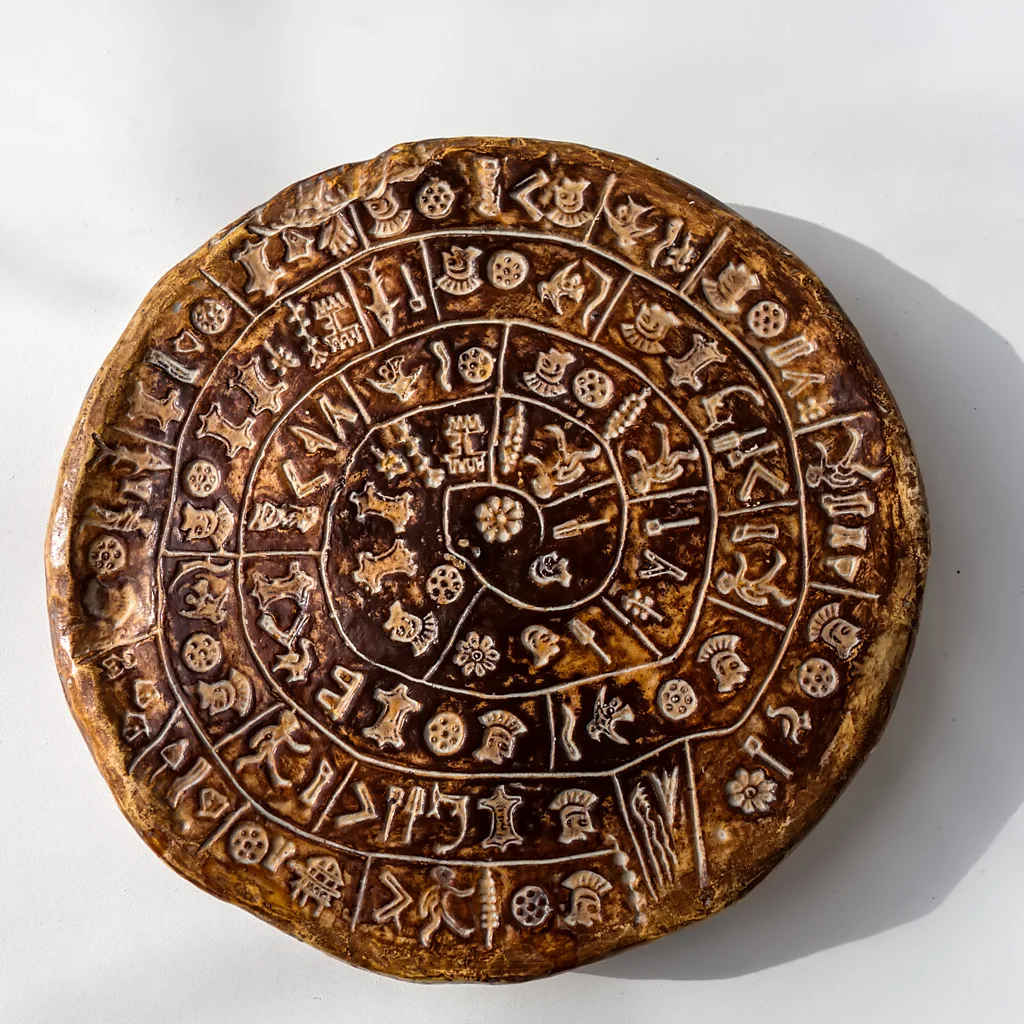
Such AI tools could be key to cracking historical ciphers that have been elusive to date. They will also help with ancient texts written in alphabets that nobody can read today. The 4,000 year old Phaistos Disc from Crete, for example, remains undeciphered as does the early Greek language “Linear A”.
“What excites me is not only the possibility of solving one specific historical puzzle, but the prospect of creating methods that can assist researchers across many different cases,” says Megyesi.
BBC
Business
EDECS and Assarain Group Awarded Strategic Dry Port & Veterinary Quarantine Development at EZAD IP3 by OPAZ in the Sultanate of Oman
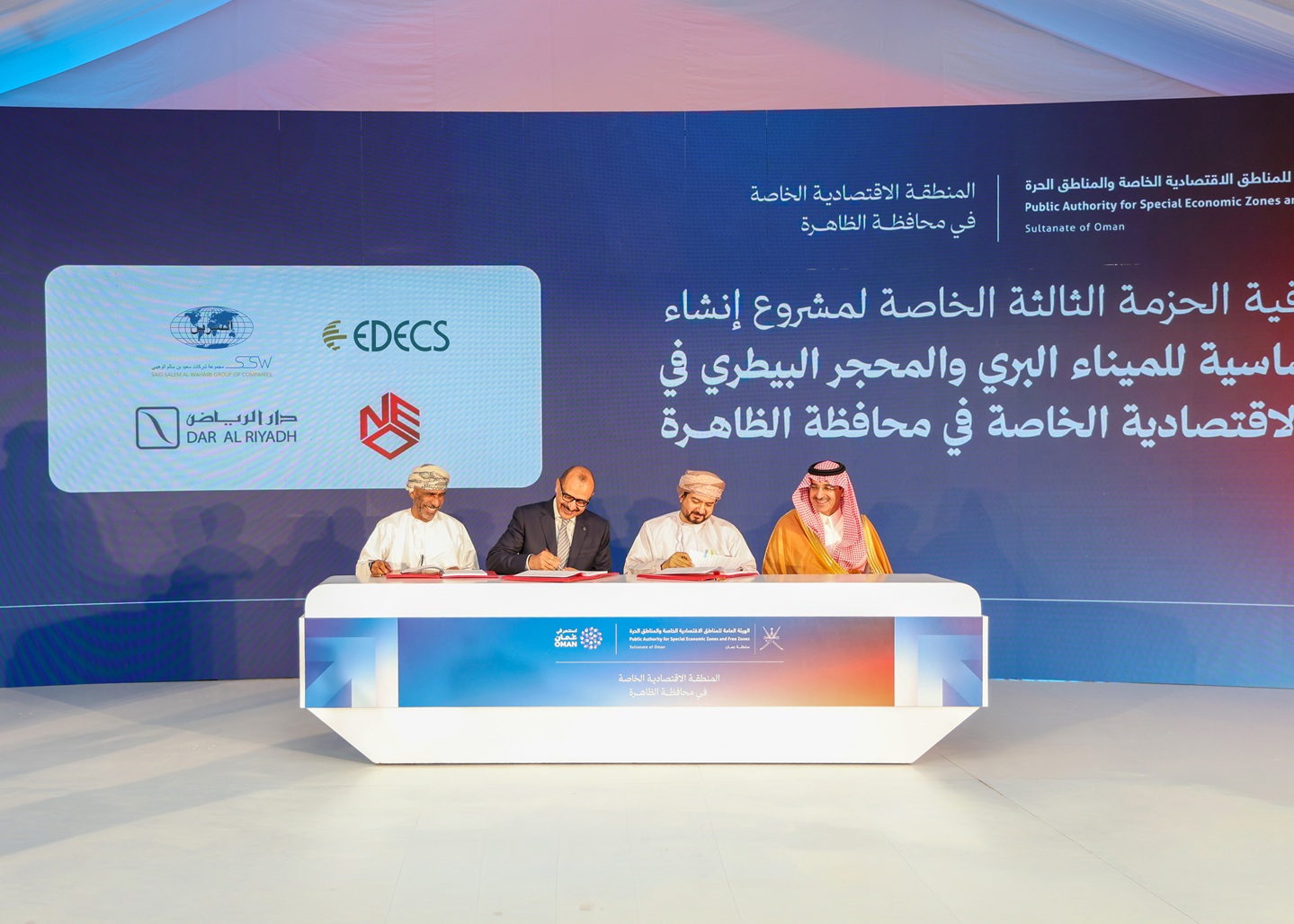
EDECS group, , a leading EPC contractor in the MEA region, has been awarded the Construction of the Dry Port and Veterinary Quarantine at the Economic Zone in Al Dhahirah (EZAD) – IP3,Ibri provence, Al Dhahirah Governorate, Sultanate of Oman, by the Public Authority for Special Economic Zones and Free Zones (OPAZ), one of the Sultanate of Oman’s strategic economic projects aimed at advancing the objectives of Oman Vision 2040, with Assarain Group (Said Salem Al Wahaibi Group) as EDECS’ local partner in Oman. The award marks a strategic milestone in EDECS Group’s continued expansion across the GCC region and reinforces the Group’s growing role in delivering large-scale logistics and infrastructure developments.
The signing attended by Saudi and Omani government ministers and authorities, prominent public and private sector representatives, and key stakeholders from across the region, reflecting the strategic importance of the project to Oman’s future economic and infrastructure landscape.
Located in Ibri provence, Al Dhahirah Governorate, the Economic Zone at Al Dhahirah spans approximately 388 square kilometers and enjoys a strategic location approximately 20 kilometers from the Rub Al Khali border crossing with the Kingdom of Saudi Arabia and around 105 kilometers from Ibri Industrial City. The project is designed to serve as a major economic and logistics gateway that strengthens regional trade connectivity and supports economic integration between Oman, Saudi Arabia, and neighboring markets.
The development of the integrated economic zone aligns closely with Oman Vision 2040, the Sultanate’s long-term roadmap for sustainable development and economic diversification. The project is expected to contribute significantly to enhancing trade movement, attracting investments, supporting industrial and logistics activities, and creating new economic opportunities that reduce dependence on oil revenues while driving sustainable growth across the Sultanate.
The scope of work encompasses the full development cycle of the Dry Port project within the Economic Zone at Ibri provence, Al Dhahirah (EZAD), including enabling works, earthworks, infrastructure development, utility networks, and the construction of all operational and supporting facilities such as administration buildings, X-ray facilities, accommodation buildings, and associated structures, through to testing, commissioning, and final fit-out, delivering a fully integrated and operational logistics asset.
Commenting on the signing, Eng. Hussein El Dessouky, Chairman and Managing Director of EDECS Group, said:
“We are proud of our partnership with our client, the Public Authority for Special Economic Zones and Free Zones in the Sultanate of Oman on this strategic project, which marks an important milestone in EDECS Group’s regional expansion and its long-term commitment to delivering transformative infrastructure projects across the GCC countries.
The Economic Zone at Al Dhahirah is a highly promising project with significant economic and logistical potential, and we are confident that this collaboration with OPAZ will contribute meaningfully to Oman Vision 2040 by enhancing trade connectivity, attracting investments, and creating sustainable economic opportunities for the Sultanate and the wider region.”
Al Sheikh Salem Bin Said Al Wahaibi, Chairman of Assarain Group, stated:
“This agreement reflects Assarain Group’s commitment to diversifying the Omani economy and strengthening the Sultanate’s position as a strategic regional commercial and logistics hub. As a diversified group that has played a vital role in the country’s economic and social development since 1975, we remain committed to delivering excellence and innovation across our various sectors, enhancing economic competitiveness, and fostering confidence and growth in economic, social, and developmental relations across the Sultanate.
Thanks to the wise leadership and clear strategic vision of His Majesty, Sultan Haitham bin Tariq, Oman has transformed global economic challenges into promising investment opportunities through flexible policies focused on diversification, financial sustainability, and empowering the private sector as a key partner in development.
We are also proud to collaborate with EDECS Group, an EPC leader in the MEA region with extensive experience in executing complex and high-value projects. EDECS brings strong technical capabilities that are essential for this development, and we take pride in this partnership as we work together to deliver a project that creates long-term value for Oman and supports the goals of Oman Vision 2040.”
This milestone reflects EDECS Group’s position as a Grade A, EPC contractor, recognized for its innovative engineering capabilities, strong execution expertise, and unwavering commitment to the highest safety standards. EDECS Group has been present in the KSA since 2013 across the Eastern and Western Provinces, and continues to deliver complex projects across the MEA region in line with its strategic vision of selectively pursuing high-impact developments that create long-term value and support sustainable economic growth.
- END –


Emirates Specialty Hospital Expands Cancer Care Services in Dubai with Opening of Dedicated Chemotherapy Unit

When Rheumatoid Arthritis Threatened Her Independence: How the Right Diagnosis Helped Her Get Her Life Back

Saudi German Hospital Dubai Launches Mental Health and Wellness Center for Children and Adolescents

Araghchi, Oman Sultan discuss transit, stability in Muscat

UAE’s café culture keeps growing despite price pressure

Netflix to Livestream BTS Comeback Concert
-
 politics6 months ago
Araghchi, Oman Sultan discuss transit, stability in Muscat
-
 UAE10 months ago
UAE’s café culture keeps growing despite price pressure
-
 Entertainment9 months ago
Netflix to Livestream BTS Comeback Concert
-
 Discover9 months ago
Is February 2026 really a once-in -283-years MiracleIn?
-

 Football10 months ago
Algeria, Burkina Faso, Côte d’Ivoire win AFCON 2025 openers
-

 Health10 months ago
NMC Royal Hospital, Khalifa City, performs rare wrist salvage, restoring function for young patient
-
 Health10 months ago
Bascom Palmer Eye Institute Abu Dhabi and Emirates Society of Ophthalmology Sign Strategic Partnership Agreement
-

 Health11 months ago
Emirates Society of Colorectal Surgery Concludes the 3rd International Congress Under the Leadership of Dr. Sara Al Bastaki