
Business
Why China’s emotional economy is on the rise
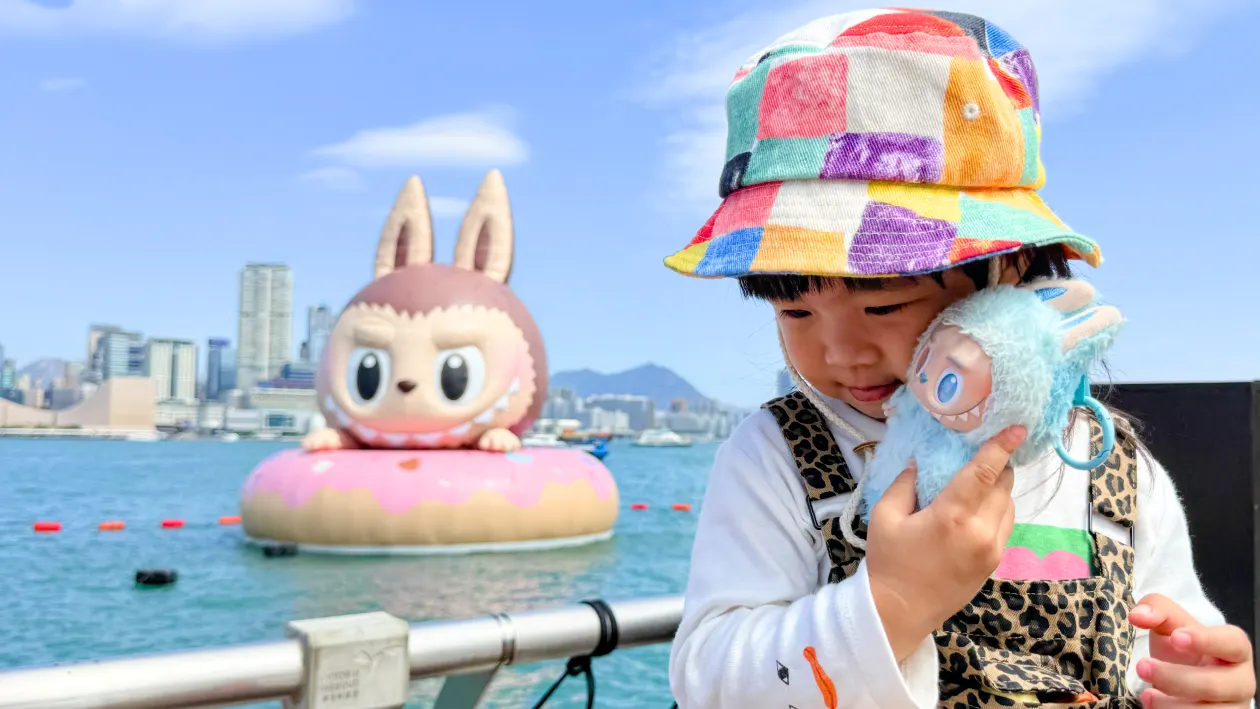
28-year-old Rebecca Zhou, born in China’s Sichuan province, owns an assortment of Moomin merchandise — bags, mugs, and figurines featuring the white hippo-looking cartoon character from Finland — that she has accumulated over the years.
By her own admission, many of these purchases may seem “childish”, but “it is [just] nice to treat yourself to something fun, even if it is not the most value-for-money,” Zhou said.
Zhou is not alone. Data from analysts and official sources show that Chinese consumers are increasingly spending on goods and experiences chosen for their emotional resonance over practical value — everything from theme parks to jewelry.
But what may once have been a fairly unsurprising consumer impulse is now being taken seriously by China’s business leaders and policymakers.
‘A sense of connection’
China’s “emotional economy” first entered into public discourse in 2024, after a craze over Pop Mart’s Labubu figurines appeared to signal shifts in Chinese consumer behavior, where a consumer group once characterized by norms of frugality and pragmatism appeared just as willing to splurge on self-indulgence.
“People are not just buying things,” said Ashley Dudarenok, founder of digital consultancy ChoZan told CNBC in a phone call. “They’re buying feelings, they’re buying identity, they’re buying a sense of connection.”
Over the recent Chinese New Year holiday, data from ChoZan shows that consumers spent significantly less on traditional staples like festive food gifts (known as nian huo), and more on unconventional expenses, like travel experiences and cosmetics compared to the same period in 2023.
“What people used to buy back in the day, like liquor and bulk nuts … were all about social obligations and tradition. Right now, people buy gift boxes, they buy designer toys … and people don’t frown upon that,” Dudarenok said.
This shift from obligatory to more discretionary spending over China’s largest holiday exemplified broader shifts in consumer norms, according to Dudarenok, with Chinese consumers increasingly looking to satisfy desires for personal fulfillment, over more “rational” purchases.
Beyond the Chinese New Year season, a February report from DaXue Consulting also highlighted tangible goods like aromatherapy candles and cosmetics, as growing segments in China’s emotional economy.
One estimate from the iiMedia Research Center projected China’s emotional economy to exceed a valuation of 4.5 trillion yuan ($655 billion) by 2029 — almost double its value in 2024 — as Chinese consumers seek ever-increasing “emotional relief and spiritual satisfaction”.
More stressed or just more comfortable?
But while many commentators have noted a growth in China’s emotion-driven spending, analysts are divided on what exactly is fueling this growth. The most common explanations see emotion-driven spending as a sort of stress response.
Traditional paths to happiness in China — buying a house and car, all while settling down and starting a family — have “grown increasingly expensive to follow,” Allison Malmsten, strategy consultant from DaXue Consulting, said by email.
In step with China’s ailing housing market — predicted to worsen in 2026, consumer inflation has also risen to a three-year high in February, according to China’s National Bureau of Statistics.
China’s rising costs of living have also dovetailed with record low birth rates in 2025, adding to a growing sense of loneliness among many in the country.
Compounded, these pressures have instilled in the average Chinese consumer “a sense of crisis,” Dudarenok said, pushing many to redirect spending toward things that “bring [them] joy.”
But for Bo Chen, senior research fellow from the National University of Singapore’s East Asian Institute, this sense of melancholy forms only part of the story.
For Chen, the structural legacy of China’s One-Child policy often concentrated familial resources from two parents (and four grandparents) on a generation of mostly single children.
This concentration of familial wealth — sometimes termed the “six pockets” effect — produced a younger cohort of Chinese consumers materially cushioned by their families in ways that previous generations were not, which gave them greater latitude to finance their material desires.
In a 2021 study, intergenerational income persistence — a measure of how the socioeconomic well-being of parents influenced those of their children — in China was found to have increased since 1979, particularly among China’s urban population.
Another study on homebuyers in Shanghai found that even those with considerable personal savings relied heavily on parental support to fund their purchases.
Such studies lend credence to Chen’s claims that, on average, younger Chinese consumers — one of the largest groups in China’s emotional economy — are increasingly buffered from the financial pressures of their forebears.
“This generation … they don’t need to worry about their lives that much,” Chen said in a call with CNBC.
Other macroeconomic trends, like the increased quality of China’s manufactured goods, has meant that nondiscretionary products and big-ticket items have longer replacement cycles for the average Chinese consumer, freeing up capital for other expenses.
With China’s thriving entertainment sector, Chinese consumers also have incentives to spend on entertainment like “Ne Zha 2”— the second installment of a Chinese movie franchise which broke records last year after coming in as the world’s highest-grossing animated film, Chen said.
Capitalizing on the emotional economy
What is unique about China’s emotional economy is how it is growing against a backdrop of slowing consumer spending.
In 2025, consumer spending in China grew by 2.3% from the year before, down from 5.2% in 2024, and 9.9% in 2023.
A People’s Bank of China survey further showed that for the fourth quarter of 2025, while interest in big-ticket purchases lagged pre-pandemic levels, the share of respondents willing to spend more on social and entertainment activities over the following three months reached an eight-year high over the same period.
In the U.S., where paid-for experiences are similarly accounting for a growing share of consumer spending, overall consumption has remained buoyant, posting quarterly growth between 0.5% and 0.9%. Unlike China, therefore, spending on emotional economy experiences in the U.S. is keeping pace with, rather than against, broader consumer spending.
This divergence has been noted by policymakers looking to spur consumer demand. Chongqing city government, for example, highlighted the role of the municipality’s emotional economy for the first time in its 2026 work report.
Businesses in China have also begun “reconsidering their value propositions,” according to DaXue’s Malmsten, with many looking into how they can lean into this trend of emotion-driven spending.
It taps into a feeling that consumers are demanding more of.
“For me, personally, buying these ‘childish’ items gives a comforting feeling of going back to childhood,” Zhou said. “It is a safe and nostalgic way of going back to adulthood.”
CNBC
Business
AI agents set to unlock US$450bn in economic value by 2028 as Outworks challenges Middle East institutions to go agentic in 30 days
Abu Dhabi, United Arab Emirates
Artificial intelligence is entering a defining new era. Across the Middle East, the conversation has shifted from whether organisations should adopt AI to how quickly they can deploy it securely, responsibly and at scale.
The urgency is backed by compelling numbers. According to the Capgemini Research Institute, AI agents are expected to unlock up to US$450 billion in economic value globally by 2028 through increased productivity, operational efficiencies and new revenue opportunities. Yet despite this enormous potential, only 2% of organisations worldwide have successfully scaled AI agent deployments across their operations, highlighting a significant gap between AI ambition and real-world execution.
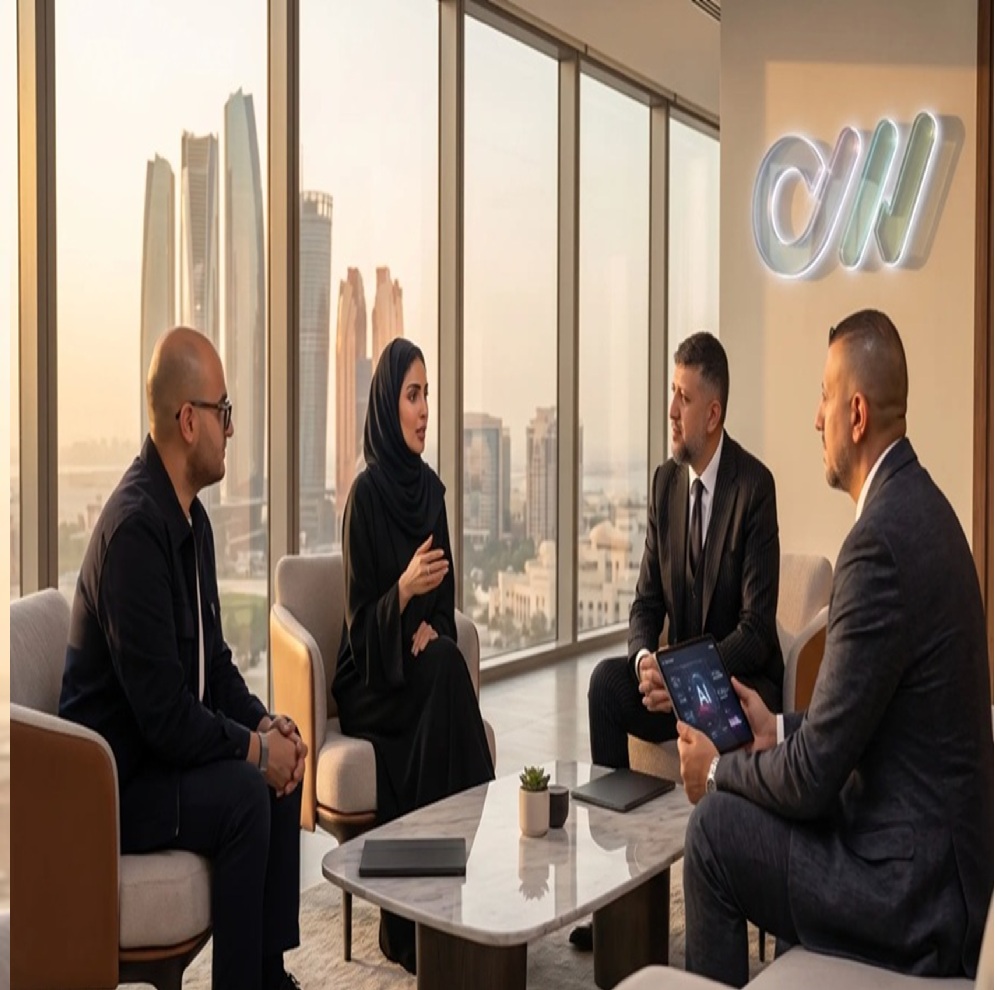
Against this backdrop, Outworks has introduced Sprint 30, a structured programme challenging governments and large enterprises across the Middle East and Africa to move from AI strategy to fully operational, governed AI agents within 30 days. Rather than focusing on lengthy pilots and proof-of-concept projects, Sprint 30 is designed to help organisations deploy AI agents inside live business environments, delivering measurable outcomes while maintaining security, governance and data sovereignty.
The initiative comes as the UAE continues to strengthen its position as one of the world’s leading AI economies through ambitious national strategies that are accelerating the adoption of advanced technologies across government and business. As organisations increasingly seek to operationalise AI, the emphasis has shifted from experimentation to enterprise-wide deployment.
“The Middle East is entering one of the most significant technology transformations in its history. The conversation has moved beyond whether organisations should adopt artificial intelligence; today the real question is how quickly they can put it to work,” said Hamda Al Mansoori, Founder & Chairwoman of Outworks.
“At Outworks, our mission is to help governments and enterprises transform AI from strategy into execution, delivering measurable impact in weeks rather than months. We believe the organisations that will lead the next decade are those that operationalise AI responsibly, securely and at scale—creating environments where people and intelligent agents work together to unlock entirely new levels of productivity, innovation and value.”
Sprint 30 has been engineered to eliminate many of the barriers that have traditionally slowed enterprise AI adoption. Instead of spending months developing infrastructure before deployment begins, organisations follow a structured implementation framework that moves from assessment and solution design to production-ready AI agents operating inside real workflows within just one month.
The programme enables organisations to deploy AI agents on infrastructure they own and control, ensuring compliance with data sovereignty requirements while maintaining governance, transparency and human oversight throughout the deployment lifecycle.
Ahmed Ashoor, Founder & Chief Technology Officer, said the programme reflects a fundamentally different approach to enterprise AI implementation.
“Thirty days is not a marketing promise. It is an engineering decision. We have already built the deployment architecture, governance framework and operating model, allowing organisations to focus on transforming their operations rather than spending months building technology foundations. By the end of Sprint 30, AI agents are already delivering measurable work inside production environments.”
Outworks operates through its integrated Advise, Build and Run transformation model, helping organisations identify high-impact AI opportunities, build secure technology foundations and operate intelligent systems that continue evolving alongside business requirements. Every deployment is designed around sovereign infrastructure, ensuring organisations retain full control of their data while meeting regulatory, security and compliance requirements.
The company believes the future of enterprise performance will depend not simply on adopting artificial intelligence, but on integrating it into the way organisations operate every day. Rather than replacing human expertise, AI agents are expected to augment decision-making, automate repetitive and complex processes, and enable employees to focus on higher-value work that drives innovation and growth.
Founded by four leaders with expertise spanning government transformation, enterprise technology, artificial intelligence, commercial development and strategic partnerships, Outworks is focused on helping governments and large enterprises across the Middle East and Africa accelerate their transition from AI ambition to enterprise-scale execution.
As organisations race to capture the economic value of artificial intelligence, initiatives such as Sprint 30 demonstrate how the competitive advantage of the coming decade will be determined not by who has access to AI, but by who can deploy it faster, govern it responsibly and translate it into measurable business outcomes.
About Outworks
Outworks is an AI-native transformation company headquartered in Abu Dhabi Global Market (ADGM), United Arab Emirates. The company helps governments and large enterprises across the Middle East and Africa move from AI ambition to production-ready intelligent systems through its integrated Advise, Build and Run model.
Founded by Hamda Al Mansoori (Founder & Chairwoman), Ahmed Ashoor (Founder & Chief Technology Officer), Islam Shaban (Founder & Chief Commercial Officer), and Ahmed Shaban (Founder & Chief Strategy Officer), Outworks combines expertise in artificial intelligence, enterprise transformation, technology and strategic partnerships to deliver sovereign, enterprise-scale AI solutions.
Business
White and Black Events & PR Announces New Expansion Phase Led by Nagham Amer, Including Regional Market Growth and the Launch of a Skincare Brand

Dubai, United Arab Emirates – Black & White PR & Events has announced the start of a new phase of growth and expansion as part of a strategic plan aimed at strengthening its presence across regional markets and broadening its portfolio of services in line with the rapidly evolving public relations and marketing landscape.
Nagham Amer, Founder and Managing Director of Black & White PR & Events, said that the company’s next chapter will focus on expanding into high-potential markets, particularly Saudi Arabia and Libya, while further strengthening its presence in the UAE. This will be achieved through strategic partnerships and the delivery of integrated solutions across public relations, influencer marketing, event management, and media production.
Amer said:
“We believe that real growth is not defined solely by geographical expansion, but also by continuously enhancing our services and developing innovative solutions that meet the evolving needs of the market. Our goal is to build a strong presence across regional markets while maintaining the quality and excellence that define everything we do.”
She added that the company is currently diversifying its service offering to include new areas within the beauty and lifestyle sectors, leveraging its extensive experience in managing marketing and communications campaigns for both regional and international brands.
Reflecting its long-term vision, Amer also revealed that the company is exploring the launch of its own skincare brand targeting the GCC and wider Arab markets. The initiative forms part of a broader strategy to evolve beyond providing marketing services into developing and managing proprietary brands, creating additional value and supporting sustainable long-term growth.
Over the past several years, Black & White PR & Events has successfully delivered integrated marketing and media campaigns for leading brands across the beauty, fragrance, healthcare, and jewellery sectors. The company has also managed high-profile events and collaborations with some of the region’s most prominent influencers and celebrities, further strengthening its position as a strategic communications partner for brands seeking to expand across the GCC and the Arab world.
Concluding her remarks, Amer emphasized that the company’s next phase will focus on innovation, expanding its regional partnership network, and investing in high-impact projects that reinforce Black & White PR & Events’ position as one of the region’s leading public relations and marketing firms.
Business
Adidas narrows gap with Nike in World Cup sales
As the World Cup brand battle heats up, sportswear giant Adidas (ADSGn.DE), opens new tab appears to be getting a bigger boost than rival Nike, early data show.
Both companies are investing heavily in the tournament, but Nike (NKE.N), opens new tab is relying on it for sales and visibility as it tries to right its ship amid years of steadily leaking market share. Investors will be looking for signs of progress next week when Nike reports fourth-quarter earnings.
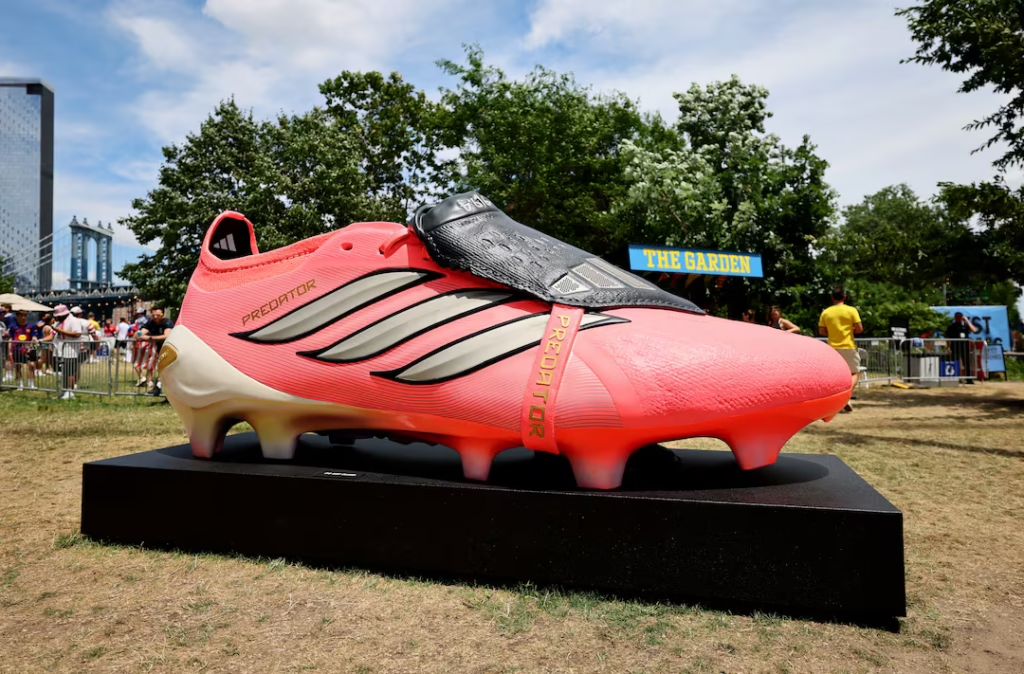
Adidas, an official World Cup sponsor and a brand long associated with soccer, is sponsoring 14 teams and supplying the coveted match ball.
Nike is outfitting 12 national teams, partnering with local street-wear designers, and refreshing soccer merchandise at more than 5,000 Nike and wholesale stores globally.
But while both brands are poised to get a World Cup boost to their apparel businesses, Adidas is benefiting “to a greater degree thus far,” said Drake MacFarlane, a research analyst at M Science.
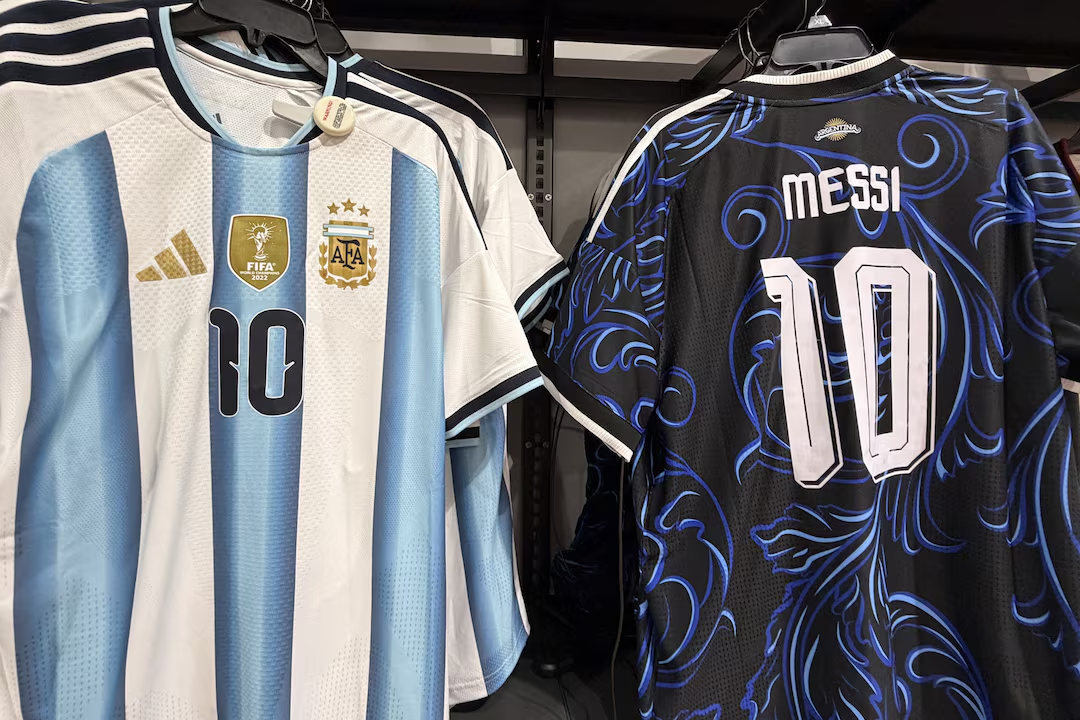
Spending on Adidas apparel surged 70% in May from the previous year and stayed strong into June, according to M Science data. MacFarlane attributed the trend to “substantial growth” in jersey sales ahead of the World Cup.
Nike’s apparel business is growing as well, he added, but that growth is being outpaced by Adidas, which has “the right set of product for the consumer.”
Foot traffic data tell a similar story.
Visits to Adidas’ U.S. stores surged 47% during the first week of the World Cup compared to 2026 averages, versus an 11% jump at Nike’s U.S. factory stores, according to data from Placer.ai, shared with Reuters.
For Adidas, those visits represented a 16% jump versus the same week last year — but for Nike, they represented a drop, Placer.ai found.
While the Nike data only covers outlet stores, the overall findings still indicate that Adidas “has been top of mind for shoppers and may have done a good job in its store activation around the event,” said Elizabeth Lafontaine, Placer.ai’s director of research.
British retailer JD Sports (JD.L), opens new tab said Mexico jerseys – which are supplied by Adidas – were its best-selling team kit during the week beginning June 15. Nike’s U.S. team jerseys took the second spot in total sales, the retailer said.
A bright spot for Nike: 28% of its World Cup merchandise in the U.S. sold out during the first two weeks of the tournament – well above Adidas’ 7%, according to a report from LSEG this week.
FOOTWEAR IN FOCUS
Nike has had a strong presence at the World Cup.
A Reuters analysis found that 232 of the 528 World Cup starters so far have worn Nike boots, with Adidas close behind at 218. “Nike is right there” despite Adidas’ close association with FIFA, said David Swartz, an equity analyst at Morningstar. “Strong visibility … is good for its brand strength.”
World soccer’s governing body FIFA runs the tournament.
Nike could use the win: sales have fallen as demand for classic lines like Dunk and Air Jordan has cooled. Competition from newer players like On and Deckers (DECK.N), opens new tab has intensified, and analysts say the company has been slow to pivot to new styles.
While World Cup visibility can’t hurt, “at the end of the day it’s really all about the product,” said Mari Shor, senior equities analyst at Columbia Threadneedle, which holds Nike stock. “If [Nike’s] product isn’t resonating, the rest of it doesn’t matter.”
Nike’s share of the global sports footwear market has fallen from 29.2% in 2022 to 22.9% last year, according to Euromonitor International data, obtained by Reuters.
Nike and Adidas have lately traded blows.
In April, Nike entered exclusive talks to provide balls for certain UEFA soccer matches, a role that was Adidas’ for 25 years. Later that month, though, Kenyan Sabastian Sawe wearing new, ultra-light shoes from Adidas broke the two-hour marathon barrier, a coup as the two companies battle for sports innovation.
Nike CEO Elliott Hill, who took the helm in 2024, vowed to refocus Nike on key sports like soccer and running, saying the company had “lost its obsession with sport.”
Yet it remains the larger company by far, its footwear market share still nearly double second-place Adidas.
It’s “the biggest dog in the fight,” said Sarah Henry, a portfolio manager at Logan Capital Management. “It should be able to hit everybody else pretty hard.”
(Reuters)


UAE Cycling Federation and AB Investment Sign Partnership to Support National Teams and Emerging Talent

Emirati Women’s Day: Hamda Al Mansoori takes UAE-grown ventures from AI and manufacturing to cross-border partnerships

Beyond Uniforms and Lunchboxes: Is Your Child Healthy and Ready for School?

Araghchi, Oman Sultan discuss transit, stability in Muscat

UAE’s café culture keeps growing despite price pressure

Netflix to Livestream BTS Comeback Concert
-
 politics5 months ago
Araghchi, Oman Sultan discuss transit, stability in Muscat
-
 UAE9 months ago
UAE’s café culture keeps growing despite price pressure
-
 Entertainment8 months ago
Netflix to Livestream BTS Comeback Concert
-
 Discover8 months ago
Is February 2026 really a once-in -283-years MiracleIn?
-

 Football9 months ago
Algeria, Burkina Faso, Côte d’Ivoire win AFCON 2025 openers
-

 Health9 months ago
NMC Royal Hospital, Khalifa City, performs rare wrist salvage, restoring function for young patient
-

 Health9 months ago
Bascom Palmer Eye Institute Abu Dhabi and Emirates Society of Ophthalmology Sign Strategic Partnership Agreement
-
 travel9 months ago
Rail routes connecting Saudi Arabia, UAE, Oman, Qatar, Kuwait and Bahrain