
Tech news
EssilorLuxottica triples Meta AI glasses sales in 2025
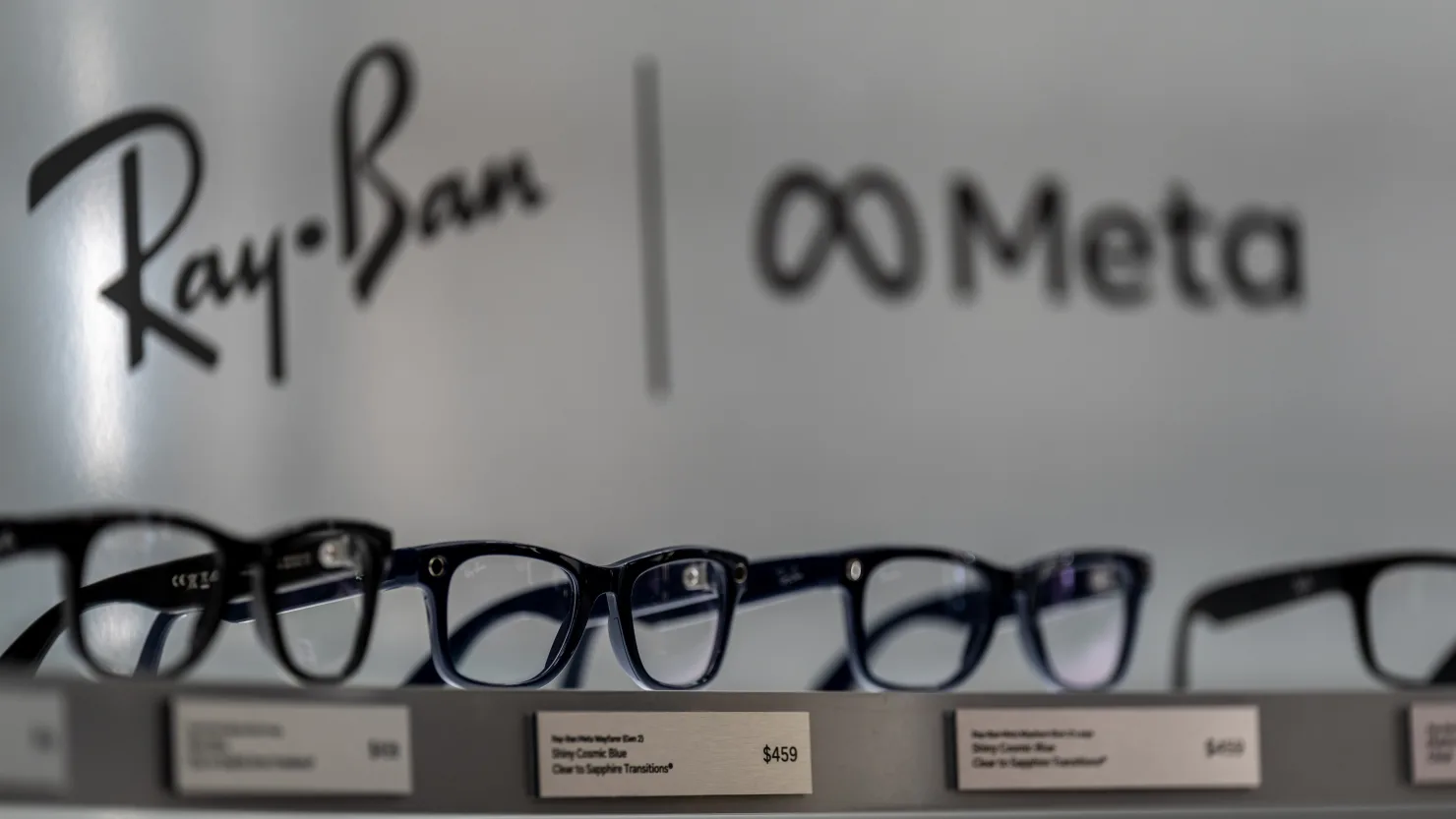
EssilorLuxottica’s more than tripled its Meta artificial intelligence glasses sales last year, the Ray-Ban maker said on Wednesday in its fourth-quarter results.
The French-Italian eyewear brand said it sold over 7 million AI glasses last year.
That’s up from the 2 million that the company sold in 2023 and 2024 combined, according to its quarterly report last February.
The figure reported Wednesday includes smart glasses sold under the brands for Ray-Ban and Oakley, the latter of which was unveiled in June.
The company’s smart glasses success is the latest sign that the adoption of wearable AI devices is gaining momentum with consumers.
“Our success in wearables is helping to propel the AI-glasses revolution, with our iconic brands being a powerful driver of demand,” the company said in a release.
EssilorLuxottica has been working on the wearable devices with the social media company since 2019, CNBC reported at the time. The two companies launched the first edition of the glasses in September 2021, but the device didn’t gain widespread attention until the second-generation launch in 2023.
In September, EssilorLuxottica and Meta introduced a new Ray-Ban iteration, controllable through hand gestures and neural technology. That device retails for $799 and features a small display in one of the lenses.
Meta in January said it would pushback the international launch of the Ray-Ban Display glasses, originally slated for early 2026, due to “unprecedented” demand in the U.S.
Last month, Bloomberg reported that Meta and EssilorLuxottica were discussing doubling production to at least 20 million by the end of this year to meet growing demand.
Meta has indicated its commitment to working with the glasses maker and extended a long-term partnership agreement to “collaborate into the next decade” in 2024.
— CNBC
Tech news
iPhone 18 Pro details leaked in Tata breach

Sensitive lists of components and suppliers, and photos of Apple’s upcoming iPhone 18 Pro models are part of files posted on the dark web by the ransomware group that stole data from the U.S. firm’s Indian supplier Tata Electronics, according to documents and a source.
The exposure threatens the carefully negotiated business of building the iPhone, which Apple assembles from a thicket of suppliers worldwide. It could also upset Apple and its relationship with Tata given most of the supplier arrangements are fiercely protected by Apple, and could also hand rivals, counterfeiters and its own vendors a view of who makes what.
Tata, which both supplies parts and assembles iPhones as a contract manufacturer, is emerging as one of Apple’s most important manufacturing partners outside China, an expansion that is a cornerstone of Prime Minister Narendra Modi’s push to make India an electronics manufacturing powerhouse.
Apple is reportedly on track to release its iPhone 18 Pro and Pro Max in September. The leak comes at a difficult time for Apple, which last week raised iPad and MacBook prices due to soaring memory and storage chip costs, with analysts expecting Apple to increase iPhone prices in the coming months.
Reuters has previously reported the Tata Electronics leak of more than 200,000 files on the dark web by World Leaks had files with purported component design papers of older iPhones and some parts of Tesla – both Tata clients. They also included documents of Taiwan Semiconductor Manufacturing Co (2330.TW), opens new tab and Qualcomm (QCOM.O), opens new tab, both of which make parts used in iPhones.
New documents reviewed by Reuters show there are at least six files that map many components in the iPhone 18 Pro models to the specific company that supplies them. These include details of chips on its main circuit board and parts of the battery and cameras.
Apple considers this detail sensitive and is concerned about the documents being shared on the dark web as they relate to unreleased models, according to the person familiar with the matter. The data maps suppliers to iPhone parts, which Apple does not disclose in its public database of suppliers, the person added.
In all, the documents detail hundreds of parts to be on the upcoming iPhone 18 Pro models.
The records also show where Apple draws a part from several suppliers and where it relies on just a few, laying bare both its bargaining leverage and its vulnerabilities.
Spokespeople for Apple and Tata did not respond to Reuters queries.
World Leaks has previously claimed responsibility for a Nike break-in. Reuters has not verified the authenticity of the data and could not immediately reach World Leaks for comment.
News website AppleInsider first reported last week that iPhone 18 Pro documents were part of the Tata leak.
Reuters has previously reported that Apple is investigating the matter and working with Tata on long-term measures. Tata has restricted internal access to sensitive systems as it investigates the leak, and hired a global consultant to conduct a forensic audit.
DROP-TEST IMAGES
Several of the leaked files carried Apple “confidential” watermarks and internal Apple code-names consistent with the iPhone 18 Pro generation, according to the source familiar with the matter.
Inside the folder for iPhone 18 Pro files are photographs of iPhones undergoing drop tests at one of Tata’s plants, dated early 2026. They depicted a conventional slab-shaped, grey handset with a three-rear-camera setup and the Apple logo.
Reuters could not with certainty identify the model number of the phone, but the source said the photos are of iPhone 18 Pro models.
For Apple and Tata, the breach cuts at the trust underpinning their partnership. Apple’s move into India rests on its newest major assembler Tata, just as the company increasingly diversifies beyond China.
The bet has fast paid off: India is on track to make 26% of the world’s iPhones in 2026, up from 6% four years ago, according to Counterpoint, a research firm.
Reuters
Tech news
Meta, Microsoft cuts spark AI job fears
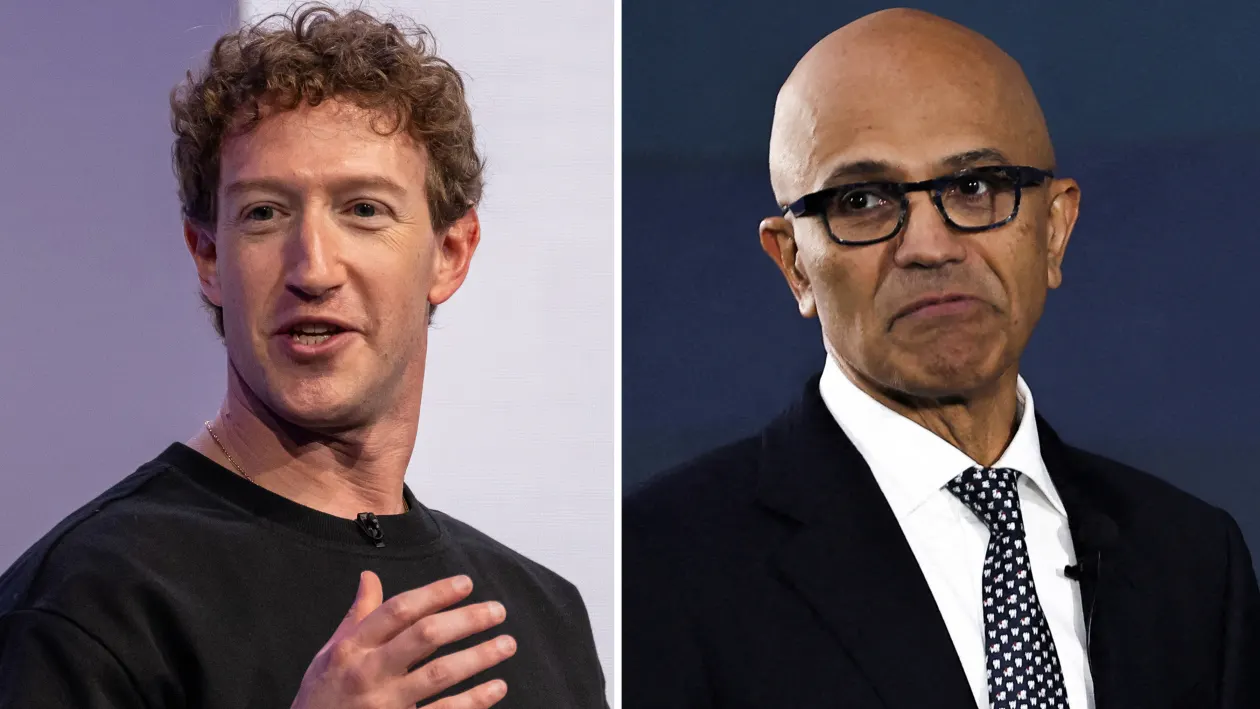
The more than 20,000 potential job cuts Meta and Microsoft revealed on Thursday, months after Amazon announced its most widespread layoffs ever, may only be the beginning.
The same companies that are collectively spending hundreds of billions of dollars a year to build out artificial intelligence infrastructure to meet soaring demand for AI services are seeking efficiencies from AI by slashing head count. They’re also still trying to rightsize from the pandemic-fueled overhiring.
Many economists and industry experts are fearful that a labor crisis may be upon us today — not coming sometime in the future — given how quickly AI is sweeping across corporate America. As of this week, over 92,000 tech workers have been laid off so far in 2026, according to Layoffs.fyi, bringing the total to almost 900,000 since 2020
“This represents a fundamental structural shift rather than a temporary market correction,” said Anthony Tuggle, an executive coach and leadership expert who previously worked in AI. “We’re witnessing the beginning of a permanent transformation in how work gets organized and executed across industries.”
Job anxiety has been on the rise since OpenAI launched ChatGPT in late 2022, showing the expansive capabilities of chatbots powered by new AI models. Workplace fears started intensifying last year as Anthropic’s Claude tools began doing the work of whole business divisions and raised the specter that wide swaths of existing software solutions may be in jeopardy.
Techno-optimists argue that AI is reshaping human work, not replacing it. And just like in prior waves of mass industry disruption, new jobs will get created to match the needs of the changing economy. Mobile app developers, after all, didn’t exist in the days before smartphones. And what use were IT administrators before we created servers?
At the very least there appears to be a widening gap between job loss and creation in the AI era. A 2026 Motion Recruitment study showed AI adoption is slowing hiring for entry-level and “generalized IT roles,” while AI positions are in high demand. Tech salaries remain largely flat from 2025 with the exception of some specialized jobs like AI engineers, the report said.
Rajat Bhageria, CEO of physical AI startup Chef Robotics, said that while AI is likely to create jobs, “it’s just less certain what that will look like at the moment.”
“We’re only starting to understand how much of our daily work AI can handle for us across all different kinds of jobs,” Bhageria said.
Meta only hinted at AI in its announcement on Thursday. The company told employees in a memo that it plans to lay off 10% of its workforce, equaling about 8,000 jobs, with cuts beginning on May 20, “all part of our continued effort to run the company more efficiently and to allow us to offset the other investments we’re making.” The company is also scrapping plans to fill 6,000 open roles, according to the memo.
Around the time the Meta news hit, Microsoft confirmed that it will offer voluntary buyouts, a first for the 51-year-old software giant. About 7% of U.S. employees are eligible, according to a person familiar with the plans who asked not to be named because the number isn’t being made public. With about 125,000 U.S. employees, that could add up to 8,750 cuts.
Nike too?
Tech jobs aren’t only at risk in the tech industry.
Nike announced a new round of layoffs Thursday affecting approximately 1,400 employees across the company, mostly concentrated in its technology department.
“These reductions are very hard for the teammates directly affected and for the teams around them, too,” Chief Operating Officer Venkatesh Alagirisamy told employees.
Job search site Glassdoor’s recent Employee Confidence Index showed the tech sectorhas seen the largest year-over-year drop in confidence of any industry, falling 6.8 percentage points in March from a year earlier to 47.2%.
Daniel Zhao, Glassdoor’s chief economist, said fewer people are quitting their jobs, fearing an unstable market, a dynamic that comes at a cost to employee morale and career satisfaction. It also means even more job cuts.
“Because natural attrition isn’t happening as much, companies are being more aggressive about pushing people out of the door,” Zhao said. “Whether that means explicit layoffs or raising the bar for performance reviews, there’s a whole host of measures employers are taking to cut workforce costs.”
Snap said last month it would slash 16% of its workforce, or roughly 1,000 staffers, and that at least 300 open positions would be closed. CEO Evan Spiegel cited AI-driven efficiencies in a letter to staff. Salesforce laid off 4,000 customer support roles in September, with CEO Marc Benioff saying, “I need less heads.”
Oracle said in March that it was laying off thousands of employees as it ramps up AI spending. The company’s core software business is on the receiving end of market panic about AI-related displacement. Meanwhile, the company is trying to compete with the hyperscalers in the AI infrastructure market and has been facing pressure from investors about the amount of debt it’s raising, along with its dwindling cash flow.
Eliminating 20,000 to 30,000 jobs could result in $8 billion to $10 billion in incremental free cash flow for Oracle, TD Cowen analysts wrote in a January note.
Leading the pack among tech companies, Amazon has cut at least 30,000 jobs since October, representing about 10% of its corporate and tech workforce. Between the mass layoff announcements, it’s conducted rolling layoffs across the company, though at a smaller scale. Google has also carried out small but regular cuts since 2023.
But the spending continues.
Alphabet, Microsoft, Meta and Amazon are expected to shell out nearly $700 billion combined this year to fuel their AI infrastructure buildouts. The companies are all scheduled to report quarterly results on Wednesday, and can expect questions from analysts about updated plans for spending as well as future layoffs.
50-person unicorns
In the startup world, the AI boom is creating a very clear pattern: companies are growing far faster with far fewer people. Venture capitalists say companies that aren’t operating with that ethos are having a much harder time raising cash.
Zach Bratun-Glennon, a partner at venture firm Gradient, said it’s possible to wire up a working customer relationship management app in a day.
“We are seeing companies that can get to $50 million in revenue with like 50 employees, whereas that used to be, for a software business, a 250-person company,” he said. “Do I think there are going to be 50- or 100-person unicorns and decacorns? Absolutely. Can you build a public company with 200 employees? Absolutely.”
Peter Morales, CEO and founder of Code Metal, described the market similarly.
“Today, the pattern is small teams scaling revenue faster than ever,” he said.
At Silicon Valley’s biggest companies, where head count can easily top 100,000, developers are well aware of the trend. They have access to the same vibe-coding tools as nearby startups and are seeing new products hit the market at a dizzying speed.
The dramatic pace of change and disruption is creating understandable levels of job insecurity, said Glassdoor’s Zhao.
“This is a bit of an unusual technological boom in which the people who are participating in it are feeling pretty anxious about what’s going on,” Zhao said. “Many workers do feel stuck right now.”
CNBC
Tech news
Elon Musk wants to be a trillionaire
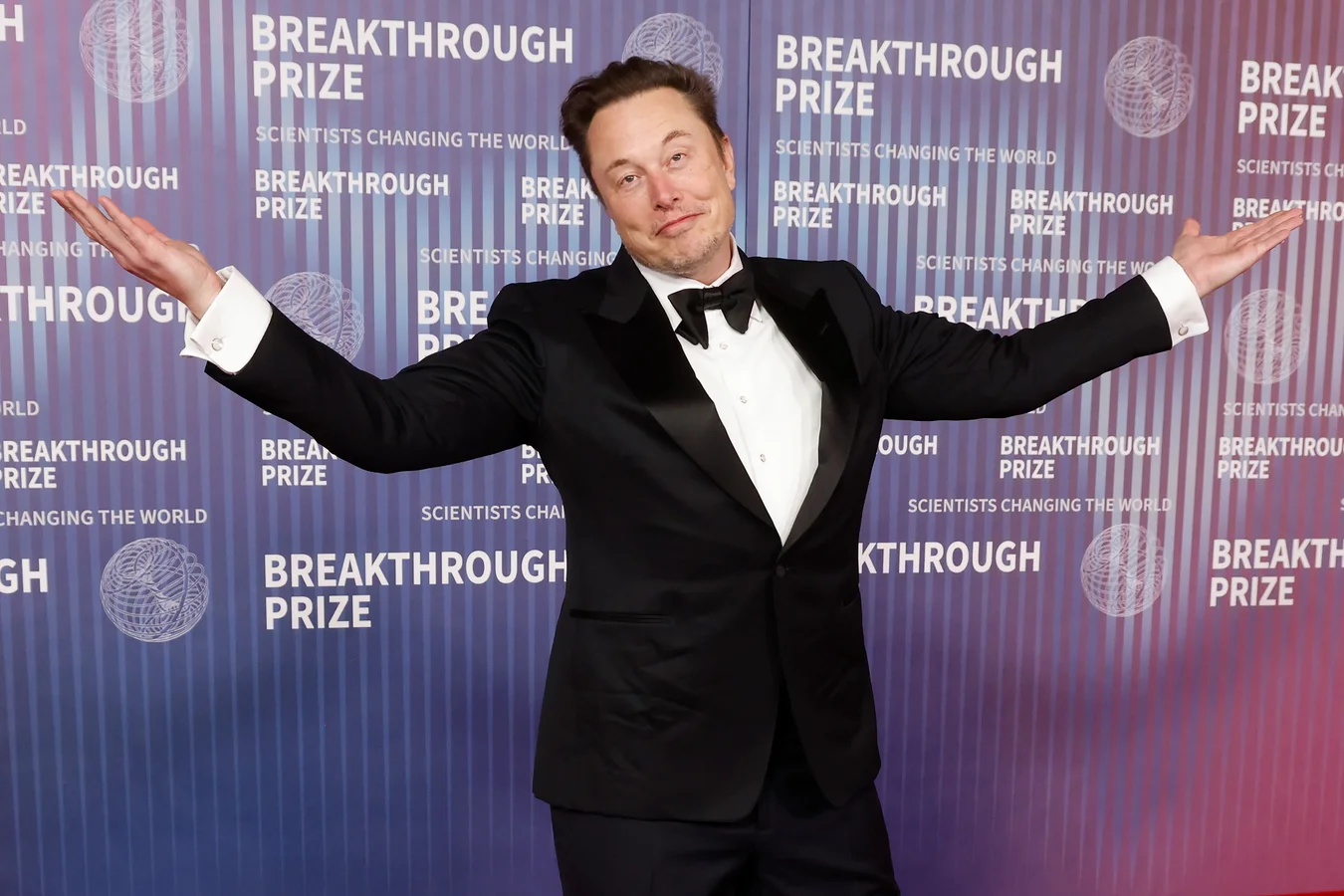
Elon Musk’s journey to becoming the world’s first trillionaire will likely be powered by rockets rather than cars, as SpaceX now accounts for nearly two-thirds of the Tesla CEO’s wealth.
Musk became the first person ever to top the $800 billion mark this week, with his net worth now around $845 billion, according to Forbes. He’s worth more than the next three richest people – Google co-founders Larry Page and Sergey Brin and Meta CEO Mark Zuckerberg – combined.
The tech magnate’s unprecedented wealth surged after his aerospace and defense company, SpaceX, acquired his artificial intelligence and social media company, xAI, this week in a deal that valued the merged entity at $1.25 trillion, according to financial documents reviewed by CNBC.
With Musk’s ownership estimated at around 43% in the combined company, his stake would be valued at over $530 billion, marking a rapid shift in his fortunes.
Musk’s priorities are also likely shifting his focus more to SpaceX than Tesla, a reality that the EV company acknowledged in its latest proxy filing, where it noted that “a majority of Mr. Musk’s wealth is now derived from other business ventures.”
Last year, Musk confirmed he wants to take SpaceX public in 2026, which would make Tesla a less prevalent component of his liquid wealth. But he still has to get buy-in from public market investors, who may be reluctant to pay up for a company that combines a defense contractor and satellite business with a cash-burning AI model developer that’s trying to take on Google, OpenAI and Anthropic.
SpaceX has received more than $20 billion from contracts with the federal government, according to research from FedScout, with more lucrative contracts on the way, and Musk has framed the acquisition as the next step towards “orbital data centers.”
“You’ve muddied up your story a little bit as a pure-play SpaceX shareholder, but the opportunity has gotten a lot bigger,” said Greg Martin, managing director at Rainmaker Securities, which works on transactions for pre-IPO companies. “It makes sense for them to access a much larger capital market, especially with xAI, which does have insatiable need for capital.”
XAI is currently being investigated by authorities in Europe, Asia, Australia and California, after the company’s Grok image generator let users create and share “deepfake” explicit images of children and women.
It’s not clear whether Musk’s merger will require any regulatory review. Democratic senators this week called for the Pentagon to investigate SpaceX over undisclosed Chinese investors in the company.
Musk still has a major incentive to stay focused on Tesla. Late last year, shareholders voted to approve a new pay package that could be worth $1 trillion, paid out in 12 tranches, if Tesla hits certain milestones, including market cap gains and operational achievements, over the next decade. The first tranche of stock gets paid out if Tesla hits a market cap of $2 trillion, about $460 billion more than the current valuation.
Tesla said in the proxy filing detailing the plan that the structure aims to “prevent him from prioritizing those other ventures.”
However, Columbia Law professor Dorothy Lund, a corporate and securities law expert, told CNBC in an email that the strategy may not work.
Musk is now “negotiating comp packages at each company, with each board trying to induce him to pay attention via comp,” Lund wrote. “If SpaceX/xAI gives him more money and a bigger share, that Tesla package may look less appealing.”
Before the xAI acquisition, Musk owned about 42% of SpaceX and controlled 80% of the votes, according to FCC reports. His current ownership in Tesla is between 11% and 15% of shares outstanding, depending on what’s included in his stake, according to public filings.
With Tesla’s brand value and core auto sales in decline, and its long-promised robotaxis and humanoid robots still in development, the company’s stock price is down about 9% this year.
Based on Musk’s ownership in SpaceX, and assuming Tesla shares are flat, the rocket and AI company would have to reach a valuation of about $1.6 trillion for the world’s richest person to reach trillionaire status.
Ross Gerber, CEO of investment firm Gerber Kawasaki, is betting that Musk won’t ever want to take SpaceX public as a standalone entity. Rather, he expects to see a merger of SpaceX and Tesla, and he speculated this week it would list on the New York Stock Exchange under ticker symbol X, which formerly belonged to U.S. Steel.
Gerber is a long-time Tesla investor and now holds shares in SpaceX after his firm previously backed Musk’s leveraged buyout of Twitter in 2022. Musk rebranded Twitter as X, and merged the social network with xAI last year.
Consolidating his empire makes sense, Gerber said, because it would allow Musk to fulfill his dream of running one big company under the brand name X. Following Alphabet’s announcement this week that it will spend up to $185 billion on capex this year, Gerber said Musk is going to have to be able to bring in massive sums of cash.
“This huge entity would make it easier for them to raise money and borrow,” he said. “How else is Musk supposed to compete and become a major AI player?”
Musk didn’t respond to a request for comment.
CNBC


Emirates Specialty Hospital Expands Cancer Care Services in Dubai with Opening of Dedicated Chemotherapy Unit

When Rheumatoid Arthritis Threatened Her Independence: How the Right Diagnosis Helped Her Get Her Life Back

Saudi German Hospital Dubai Launches Mental Health and Wellness Center for Children and Adolescents

Araghchi, Oman Sultan discuss transit, stability in Muscat

UAE’s café culture keeps growing despite price pressure

Netflix to Livestream BTS Comeback Concert
-
 politics6 months ago
Araghchi, Oman Sultan discuss transit, stability in Muscat
-
 UAE10 months ago
UAE’s café culture keeps growing despite price pressure
-
 Entertainment9 months ago
Netflix to Livestream BTS Comeback Concert
-
 Discover9 months ago
Is February 2026 really a once-in -283-years MiracleIn?
-

 Football10 months ago
Algeria, Burkina Faso, Côte d’Ivoire win AFCON 2025 openers
-

 Health10 months ago
NMC Royal Hospital, Khalifa City, performs rare wrist salvage, restoring function for young patient
-

 Health10 months ago
Bascom Palmer Eye Institute Abu Dhabi and Emirates Society of Ophthalmology Sign Strategic Partnership Agreement
-

 Health11 months ago
Emirates Society of Colorectal Surgery Concludes the 3rd International Congress Under the Leadership of Dr. Sara Al Bastaki