
Uncategorized
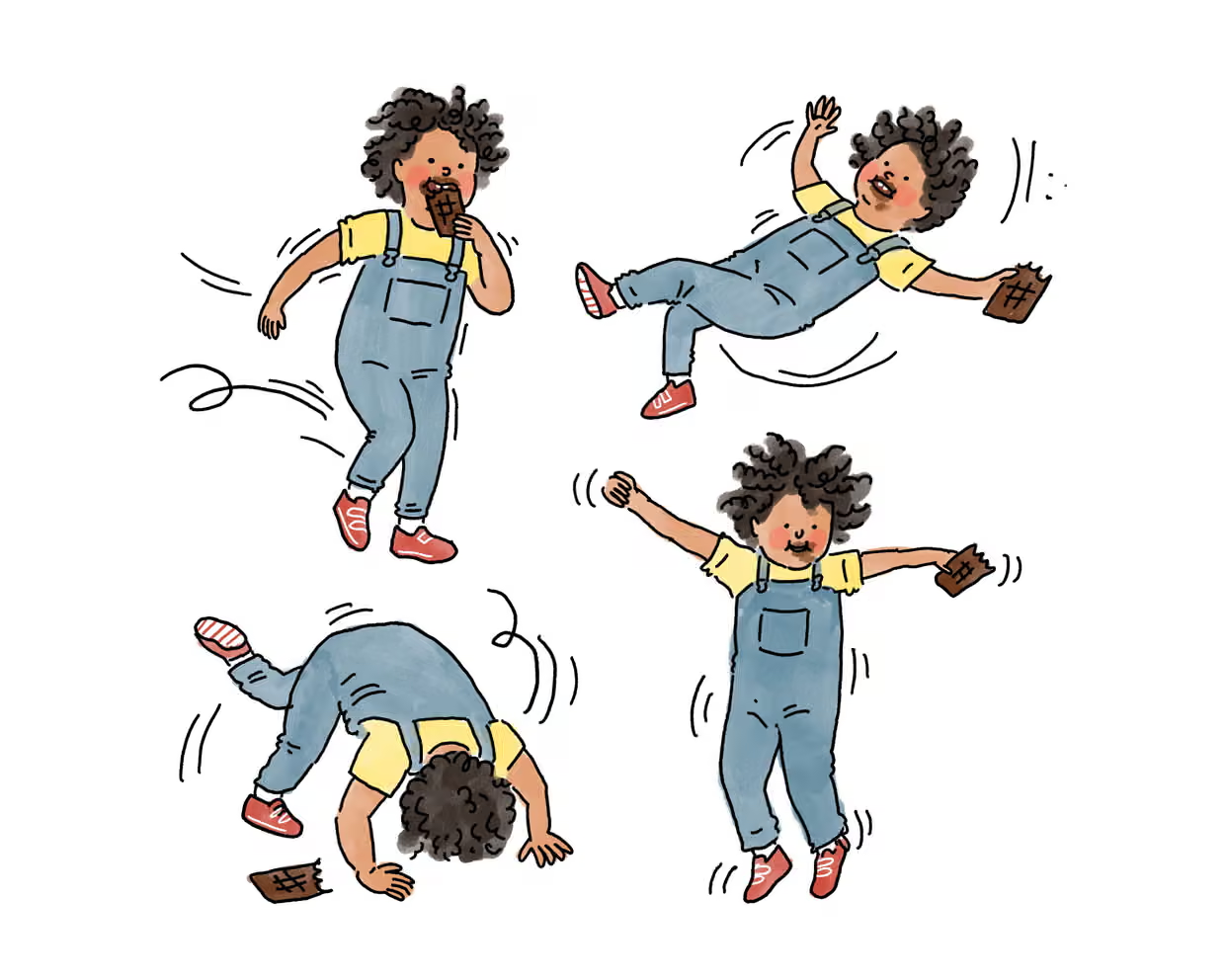
Does too much sugar cause hyperactivity?
There is no solid scientific proof, but it would do us all good to cut back on sweet treats
It’s a warning passed down the generations: give a child too many sweets and they’ll be bouncing off the walls. But is there any scientific proof that sugar sends us into overdrive? Not yet, says Amanda Avery, an associate professor in nutrition and dietetics at the University of Nottingham.
She says there are theories linking sugar to behavioural changes. One stems from how sugar activates the body’s reward system, triggering a burst of dopamine – the “feelgood” neurotransmitter. “Increases in dopamine levels can be linked to behavioural changes, which can include periods of hyperactivity,” says Avery.
Another theory focuses on how eating lots of sugar can cause blood glucose levels to spike and then drop quickly, which is known as reactive hypoglycaemia. This can cause behavioural changes, some of which could be interpreted as hyperactivity.
Hyperactivity is subjective: what one parent might call hyperactive, another might just see as energetic
There’s little evidence to prove these theories though. Not least because hyperactivity – outside its clinical context as a symptom of attention deficit hyperactivity disorder (ADHD) – is subjective: “What one parent might call hyperactive, another might just see as energetic.”
Research has so far found only limited links between sugar intake and hyperactive behaviour, mostly among children already diagnosed with ADHD. The strongest links appear with sweetened drinks containing seven or eight teaspoons of sugar in one serving, which also contain additives and caffeine, making it hard to isolate sugar as the culprit. Some studies on animals – but not humans – have shown that those fed high-sugar diets early in life were more likely to show hyperactivity later on.
So, does sugar make us hyper? So far, it hasn’t been proved to. Still, Avery says, most of us eat more sugar than is healthy and we should try to cut back.
Story by The Guardian
Uncategorized
Algeria, Iraq qualify for FIFA Arab Cup quarter-finals

Algeria qualified for the quarter-finals of the 2025 FIFA Arab Cup after defeating Iraq 2-0 today at Khalifa International Stadium in Doha, the capital of Qatar, in the third round of Group D.
With this result, Algeria raised its tally to seven points at the top of the group, while Iraq remained on six points, securing qualification to the same stage after finishing second in the standings.
In the group’s other match, Bahrain defeated Sudan 3-1 at Education City Stadium, with both teams exiting the tournament.
Story by WAM
Uncategorized
Severe storms to lash Saudi Arabia
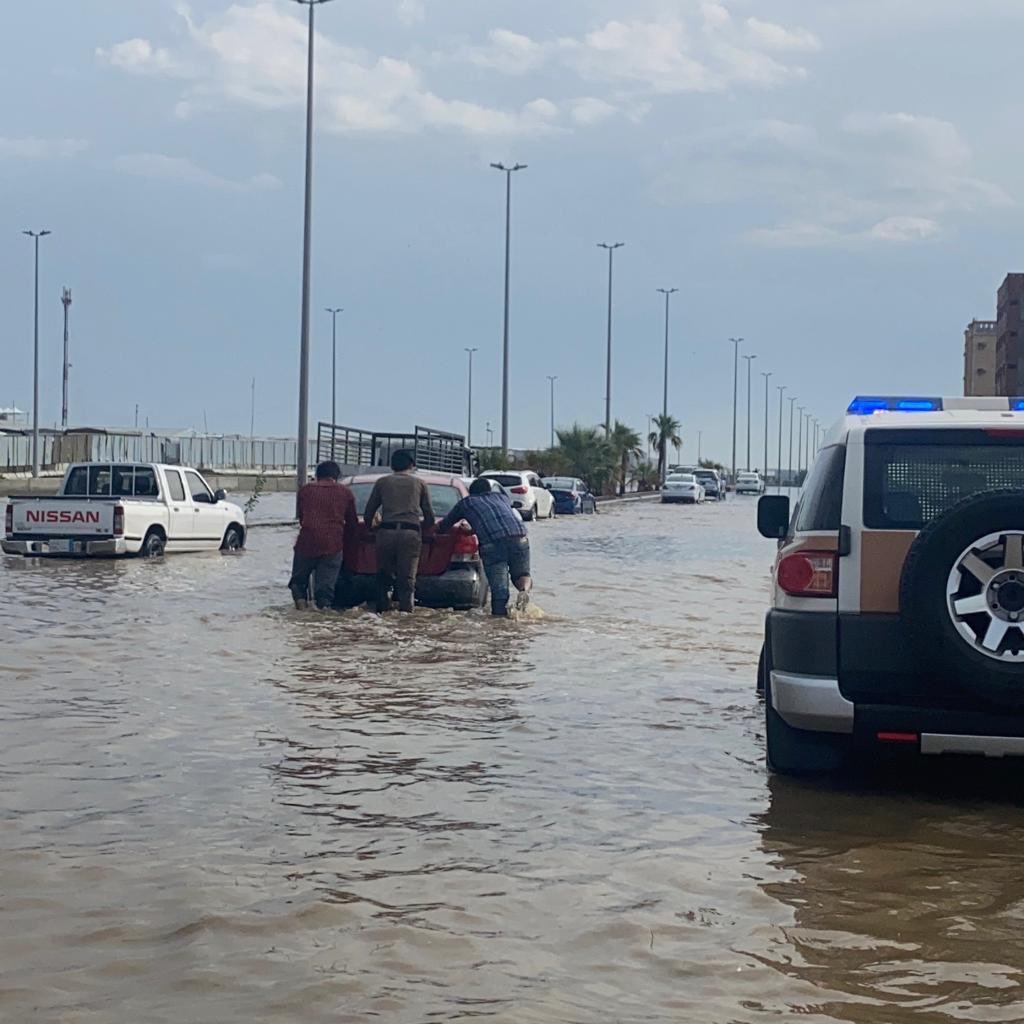
Heavy rainfall is set to continue across most regions of Saudi Arabia, the National Centre for Meteorology said in its forecast. Moderate to heavy thunderstorms, capable of triggering flash floods and accompanied by hail and strong winds, are expected over parts of Makkah, Madinah, Qassim, Riyadh, the Eastern Province and the Northern Borders.
Light to moderate rain is also likely in parts of Hail, Tabuk and Al Jouf, as well as across areas of the Kingdom’s southwestern highlands. Some regions may also experience patches of fog.
The NCM reported that surface winds over the Red Sea will blow from the northwest to north in the northern and central areas, and from the southeast to south in the south, at speeds of 18 to 40 km/h, increasing to 50 km/h. Conditions will be moderate to rough, with thunderstorms and rainfall expected near the Bab Al Mandeb Strait.
In the Arabian Gulf, winds will be southeasterly to southerly at 10 to 35 km/h, strengthening to more than 60 km/h. Wave heights will range from half a metre to one and a half metres, rising to over two and a half metres in places. Sea conditions will vary from slight to moderate and may become rough, with thunderstorms and rainfall particularly affecting the northern Gulf.
Story by Gulf News
Uncategorized
Roblox and the reality check: How safe is your child’s digital playground?
“Everyone’s fighting here and using bad language.”
Abu Dhabi-based Claire Holland would after hear her eight-year-old son muttering while playing online games. “One day, he refused to leave the game. He was aggressive, because somebody was challenging and abusing him. He wanted to keep fighting back, and was resorting to similar tactics, which really terrified us,” explains Holland.
She banned him from games, and he grew withdrawn and resentful. “He tried playing from his friends phones, and that’s when I knew that we had to sit and really sort this out, because it was getting worse,” she says.
It took a series of conversations. But, as Holland noted, there is something brutally intimidating about a bully that you cannot see. You don’t know who they are, and you might not even be able to track them down. “They say a couple of things, and they’re gone.”
He stopped playing for a while. And when he did, he preferred not to talk to anyone, she explains. “I’m not sure if that’s the best solution either, because I know that most of these games, too, offer good community support. But maybe, we’ll get him to play and enjoy, without engaging in such battles,” she says.
Holland’s uncertainty mirrors that of many parents today — unsure where to draw the line between protection and participation in their children’s digital worlds.
And few platforms capture that tension quite like Roblox.
The fear of Roblox
Roblox isn’t a single game . It’s an entire universe of them. When children log in, they’re stepping into a vast digital playground packed with over 11 million ‘experiences’ everything from obstacle courses (“obbys”) and flight simulators to waterparks, racetracks, and virtual schools. None of these worlds are made by Roblox itself.
Every experience is player-created, dreamed up, designed, and built by users of all ages. On Roblox, children can deliver pizzas, raise pets, chop down trees, or strut down a virtual runway — all in the same afternoon.
In 2024 alone, players spent a staggering 73.5 billion hours inside this ever-expanding metaverse. But Roblox is also a launchpad for creativity. Children can build their own games and learn the foundations of coding along the way, turning playtime into a hands-on lesson in digital design.
However, is it safe? Not entirely. Roblox comes with real risks — from exposure to explicit content to the ability to chat with strangers. Still, with proper parental controls and supervision, many parents see potential benefits: creativity, coding, and community.
The real question is — can the good outweigh the risks?
What does online safety mean in today’s world?
It’s more than just filters and bans. It’s preparing them to think, feel and act responsibly in digital spaces.
As Sarah Maamari, psychologist of children, adolescents, and families at Sage Clinics explains, monitoring alone, can give a false sense of security because children’s decision-making and self-control develop gradually, just like other life skills. “The real task is to coach rather than police,” she says. “That means creating ongoing, age-appropriate conversations about what your child is seeing online, exploring together how reliable content is, and how it makes them feel.”
Maamari recommends co-creating digital house rules as shared agreements rather than strict limits. You need to explain the ‘why’ behind your reasons, rather than just talking in restrictions and bans. “ “Instead of simply restricting screen time, talk about why balance matters and ask your child to notice how their mood or energy changes after a long online session,” she says.
Online safety in 2025 also encompasses mental well-being. In 2025, “online safety” goes beyond just privacy; it is about digital well-being, and emotional resilience. Constant exposure to advertisements, lifestyle content, and curated collections that showcase a specific way to look and act can be detrimental to their emotional development, explains Professor Mercedes Sheen, Head of Psychology at Heriot-Watt University Dubai.
Moreover, it’s far beyond keeping personal details private. It also means protecting mental health. Children’s brains and self-regulation skills are still developing, they’re more vulnerable to constant stimulation, unrealistic comparisons, and harmful communities,” explains Maamari.
Starting the right conversations
So, where do parents even begin? Experts agree that the first conversations about online safety should start with values, not fear.
The first conversations about online safety, experts agree, should start with values, not fear. Parents can begin with three key principles:
- Respect: Treat people online as you would in real life.
- Boundaries: Not all spaces or conversations are safe, and it’s okay to step away.
- Feelings as signals: If something makes you feel uneasy or pressured, share it with a trusted adult.
Maamari adds, “Children learn best when they feel safe and supported, not scared. Frame the internet as a ‘neighbourhood’ — with both safe parks and risky alleys.”
• Does it sound “too good to be true”?
• Does it make you feel uncomfortable or pressured?
By role-playing these scenarios with your child, you give them a chance to rehearse how they’d respond. Most importantly, reassure them that if they encounter something unsafe, they won’t be punished or shamed; they’ll be supported. This open-door approach encourages disclosure and keeps communication strong.
Tools that teach digital kindness
To make lessons stick, learning can also be fun. “Apps like Google’s Interland (Be Internet Awesome) turn online safety into interactive adventures,” says Maamari. “Others, like Digi Duck stories or Cyberwise resources, make these lessons engaging for younger children.”
Addressing bullying and screen balance
What do the mums of UAE feel? Some like Aatrayee Gopinath prefer to keep their children away from online gaming till they are at the age of 12. “Right now, I prefer they play some basic gaming, and that too supervised. Nothing that involves any online community, because I’m always worried about the people out there,” she says.
Others like Abu Dhabi’s Lavanya Munish have had conversations,as her children want to game just like their classmates. “My child has been bullied already so much, that I don’t wish for them to face the stress of invisible bullies,” she says.
So, how do you have these conversations, especially when there’s much resentment. “The best time to have these conversations is before children face these challenges,” says Sheen. “Parents can explain what bullying and hate speech look like online, using clear examples, and teach empathy by discussing how words affect others, even behind a screen.”
She adds that parents are the most powerful influence that a child can have. “It is therefore incumbent on the parents to model healthy screen habits for their children — by limiting their own screen time, avoiding devices during meals, and prioritising real-world connection.”
Gulf news


Emirates Specialty Hospital Expands Cancer Care Services in Dubai with Opening of Dedicated Chemotherapy Unit

When Rheumatoid Arthritis Threatened Her Independence: How the Right Diagnosis Helped Her Get Her Life Back

Saudi German Hospital Dubai Launches Mental Health and Wellness Center for Children and Adolescents

Araghchi, Oman Sultan discuss transit, stability in Muscat

UAE’s café culture keeps growing despite price pressure

Netflix to Livestream BTS Comeback Concert
-
 politics6 months ago
Araghchi, Oman Sultan discuss transit, stability in Muscat
-
 UAE10 months ago
UAE’s café culture keeps growing despite price pressure
-
 Entertainment9 months ago
Netflix to Livestream BTS Comeback Concert
-
 Discover9 months ago
Is February 2026 really a once-in -283-years MiracleIn?
-

 Football10 months ago
Algeria, Burkina Faso, Côte d’Ivoire win AFCON 2025 openers
-

 Health10 months ago
NMC Royal Hospital, Khalifa City, performs rare wrist salvage, restoring function for young patient
-

 Health10 months ago
Bascom Palmer Eye Institute Abu Dhabi and Emirates Society of Ophthalmology Sign Strategic Partnership Agreement
-

 Health11 months ago
Emirates Society of Colorectal Surgery Concludes the 3rd International Congress Under the Leadership of Dr. Sara Al Bastaki