
Entertainment
UAE winter tourism highlights culture, vitality, diverse experiences
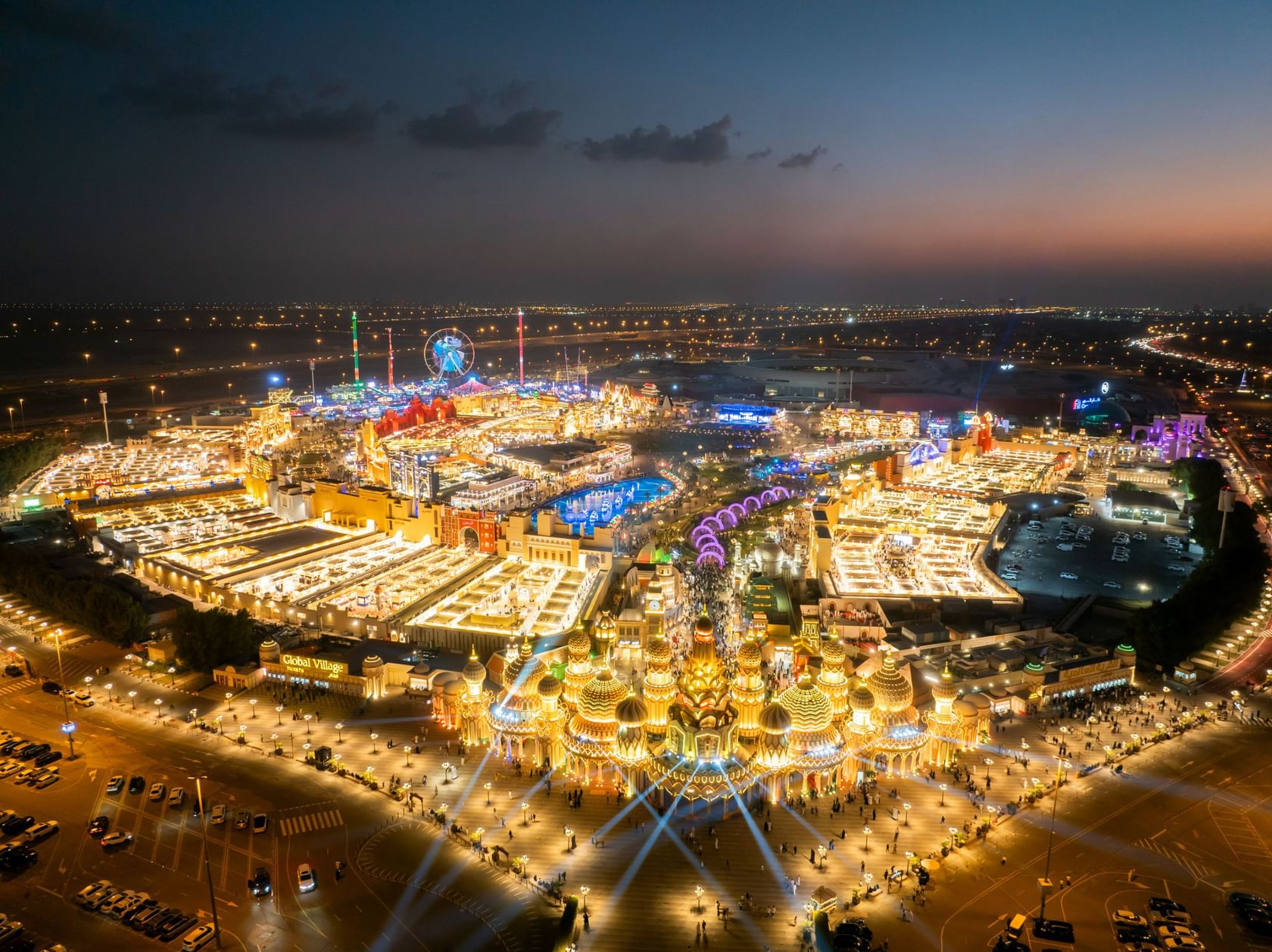
The UAE is witnessing the launch of the winter tourism season with growing momentum, underscoring its status as one of the world’s leading tourist destinations during the winter months. This comes amid milder temperatures and a rich diversity of experiences offered across the country’s emirates to visitors and residents alike.
This year’s season arrives with expectations of notable growth in both domestic and international tourism, driven by increased demand for outdoor activities, heritage festivals, entertainment shows, and winter camps. These have become key pillars of winter attraction in the UAE, further cementing the country’s position as a major hub for seasonal tourism in the region.
From mid-December through the end of April, the UAE hosts a wide array of winter events catering to diverse interests. Attention is drawn to major events taking centre stage nationwide, foremost among them the Liwa International Festival in Abu Dhabi’s Al Dhafra Region. Running for 23 days from 12th December to 3rd January, the festival features an expanded programme that includes heritage events, sporting showcases on the dunes of Tal Moreeb, artistic performances, music concerts, and shopping zones, reflecting the richness of Emirati heritage and the depth of the desert experience that appeals to winter visitors.
Abu Dhabi also offers several winter programmes, including the “Winter Season Programme at Umm Al Emarat Park,” which continues to provide family-oriented recreational activities through April 2026.
Yas Island is witnessing a strong turnout with the launch of winter events at its world-renowned theme parks, offering snow-themed experiences, festive celebrations, and live shows that reinforce the emirate’s standing as a leading family tourism destination. The island also hosts the “Yas Winter Festival,” open for ten days from 12th to 21st December.
In the same context, Dubai continues to attract visitors through a broad lineup of winter events. The season sees heightened activity at Global Village, featuring pavilions from countries around the world, alongside the Dubai Shopping Festival with its promotional offers, concerts, and fireworks displays—core highlights of the emirate’s winter calendar.
Dubai is also hosting drone shows as part of the Dubai Shopping Festival from 5th December to 11st January, with two evening performances at Bluewaters and The Beach opposite Jumeirah Beach Residence.
Other highlights include the Winter City event at Expo City Dubai and “Dubai’s Winter District” activities running until the end of April 2026. Meanwhile, winter markets at Madinat Jumeirah and Dubai Festival City welcome visitors with festive programmes and seasonal attractions.
Seasonal activity extends to the mountainous areas of Hatta, which hosts the “Hatta Winter Festival” from 5th to 28th December. The festival offers visitors a blend of mountain and cultural experiences that enhance the diversity of Dubai’s tourism offerings, including adventure activities, mountain biking trails, eco-tours, heritage markets, and local arts and crafts workshops, combining nature and culture in a single experience.
Sharjah is preparing to launch a series of winter events across its tourist destinations, such as Al Majaz Waterfront, Kalba, and Shees Park, featuring light shows, outdoor activities, and seasonal markets.
In Ajman, the season brings increased activity along waterfronts and cultural markets, while Umm Al Qaiwain offers winter camping experiences in its natural settings, now among the preferred destinations for those seeking tranquillity and open spaces. Fujairah and Ras Al Khaimah, meanwhile, are seeing strong tourism activity in mountainous areas and along beaches, alongside the organisation of sports and community events that take advantage of the moderate climate.
The winter season also benefits from notable contributions from Al Ain, which hosts a wide range of family and heritage events across its distinctive natural destinations. These include activities at Al Ain Oasis, events in parks and public squares, cultural programmes at palaces and museums, and growing demand for safari trips and mountain adventures on Jebel Hafeet, giving the city a significant presence on the UAE’s winter tourism map.
On another front, winter camps play a central role in boosting tourism activity. These include desert tourism camps in Abu Dhabi, Dubai, and Ras Al Khaimah, as well as educational and youth camps organised by government entities. Such programmes cover technology, innovation, sports, arts, and environmental challenges, transforming the season into a platform for skills development and the discovery of young talents.
Story by WAM
Entertainment
‘Hollywood ending’ takes on sad new meaning
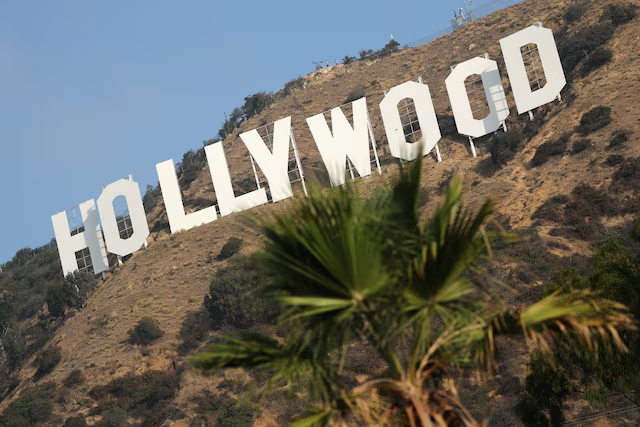
Even Hollywood is struggling to script a happier ending for itself. Artificial intelligence has injected fresh fear across an industry already grappling with the fallout from work stoppages, fewer scripted shows and corporate consolidation. Chances are fading fast for it to avoid becoming the next Motown or Madison Avenue.
Since the 1920s, Hollywood, and by extension Los Angeles, has been the beating heart of a $3 trillion worldwide entertainment market, opens new tab. Five big studios – Walt Disney, Universal Pictures, Sony Pictures Entertainment, Paramount and Warner Bros – are based in the second-largest U.S. city. Nearly a fifth of written projects were filmed there in 2024, permit agency FilmLA estimates, opens new tab. At almost $120 billion, show business accounts, opens new tab for about 12% of local gross domestic product, according to the Los Angeles Department of Economic Opportunity.
Hollywood’s influence also extends far beyond its landmark sign. Blockbusters like “Project Hail Mary” or “Ted Lasso” can be as powerful an ambassador as anyone at the U.S. Department of State. It’s an unrivaled export that quietly shapes public and political opinions across the planet. As the country’s allies and enemies alike increasingly sour on U.S. policies and posturing, it’s arguable that everyone from Oscar-winning director Steven Spielberg to “Euphoria” star Zendaya is more important than ever to the national brand.
This economic and reputational clout helps explain efforts to prop up Hollywood. California Governor Gavin Newsom last year more than doubled the state’s film and TV tax credit program to $750 million annually to compete with other domestic and international locations that have steadily lured productions with bigger financial incentives. A quest for federal handouts is now underway, with actor Jon Voight lobbying the White House earlier this year for a 20% U.S. tax credit for labor costs on homemade movies and programs.
President Donald Trump “is committed to make Hollywood great again,” a spokesman told Reuters, “and his administration continues to explore all possible policy options to ensure Hollywood remains a potent force of American culture.”
The situation keeps getting worse. A 2023 strike by actors and writers cost Los Angeles an estimated $1.5 billion, opens new tab, a UCLA analysis found. Mergers are also taking a toll. Walt Disney (DIS.N), opens new tab swallowed rival Twenty-First Century Fox and other assets in 2019, and now Paramount (PSKY.O), opens new tab is trying to wrap up a mega-deal for Warner Bros Discovery (WBD.O), opens new tab, with $6 billion of promised cost savings putting Tinseltown on edge.
There are significant knock-on effects, too. Part of the city’s tourist appeal is the chance of spotting A-list celebrities such as Charlize Theron and peeking into where “Friends” was shot. As Hollywood hollows out, with stars and productions moving elsewhere, local hotels, restaurants and other small businesses suffer.
Damage is evident from Los Angeles employment figures. Jobs in the motion picture and sound recording industries have collapsed 40% since 2022, according to the Federal Reserve Bank of St. Louis. The number of shooting days in and around the city has halved since 2021 to about 20,000. Studios greenlit just 428 scripted series last year, some 200 fewer than in 2022, according to data cruncher Ampere Analysis.
From Hollywood’s backlots to dining hotspots, conversations feature AI. Although some insiders brush off the threat, one investor who had a front-row seat for the music industry’s Napster disaster 25 years ago is ready to call it quits because of the technology-induced bad vibes in movie-making.
Once AI worms its way into special effects and beyond, it will be hard to stop. The fully AI-generated movie “Hell Grind” may only appeal to a small audience: its three-minute trailer, opens new tab is a compendium of clichés. Other initiatives are gaining credibility, though. “The House of David,” a TV series on Amazon, openly touts, opens new tab its use of AI. Filmmaker Doug Liman is incorporating it, opens new tab into his movie “Bitcoin,” which will feature “versions” of tech bosses Jeff Bezos and Mark Zuckerberg while slashing production costs by roughly 65%, trade publication Deadline Hollywood reported.
AI also threatens Hollywood’s lock on creative material. Seven companies, including Netflix (NFLX.O), opens new tab, are responsible for more than 80% of original-content spending in the United States, McKinsey senior partner Marc Brodherson says. His consultancy estimates that $60 billion in revenue could be redistributed within five years of AI adoption, a pot of money once guaranteed to traditional gatekeepers.
Tax incentives will be of limited use to combat AI and the geographic flexibility it affords. For one thing, they tend to trigger a race to the bottom. Nothing prevents other countries from enhancing their own financial enticements. Or for a director with a laptop poolside anywhere to create a hit TV show.
Other challenges are growing, too. The weather is a big Los Angeles attraction, but wildfires and water shortages weaken the case. Housing prices also have soared. At the end of 2019, the typical Los Angeles home was valued, opens new tab at about the same $720,000 as in New York, per Zillow; it’s now around $950,000, compared to $820,000 in the Big Apple. Last year’s population exodus from Los Angeles County also was higher, opens new tab than in any other U.S. metropolis.
City officials and residents don’t have far to look for places or metonyms that lost their swagger, or worse. The Motor City was once the country’s fifth largest metropolis thanks to Ford Motor, General Motors and Chrysler, with adjacent industries amplifying the effect. New technology and competition eroded the trio’s domestic market share, opens new tab from more than 90% in 1965 to less than 40%. After Detroit went bankrupt in 2013, the U.S. government led a $300 million aid package to help a recovery effort, one that continues even today.
Pittsburgh similarly hit hard times after losing its Steel City cachet. When sofa and table manufacturing migrated overseas, High Point, North Carolina had to reimagine its position as “Furniture Capital of the World.” Madison Avenue is hardly the advertising powerhouse it once was. In California, century-old infrastructure ensures that filmmaking’s epicenter will live on, albeit in notably diminished form. Even with additional financial relief, “Hollywood ending” will soon mean the opposite of what it does now.
Reuters
Entertainment
‘Toy Story 5’ Lands Year’s Biggest Box-Office Debut

NEW YORK: “Toy Story” still has a friend in moviegoers.
The fifth installment in the Pixar series debuted with $160 million in domestic ticket sales, according to studio estimates Sunday, easily setting a new franchise record and notching the biggest opening weekend of the year.
Launching 31 years after the original “Toy Story” first landed in theaters, “Toy Story 5” far surpassed the previous series-best debut: $120 million for “Toy Story 4” in 2019. Internationally, it was just as successful, with $152 million in opening-weekend sales, for a worldwide haul of $312 million.
The “Toy Story” franchise is one of the most profitable for The Walt Disney Co. Before “Toy Story 5” launched, the movies had collectively grossed more than $3 billion, while also pulling in billions from merchandising.
Though the series seemed to reach a conclusion with 2010’s “Toy Story 3,” the decision to revive the franchise almost a decade later — while controversial — has been extremely lucrative. “Toy Story 4” exceeded $1 billion in ticket sales, and “Toy Story 5” is all but certain to as well.
Among animated films, only 2018’s “Incredibles 2” had a bigger opening weekend ($182.7 million) than “Toy Story 5.”
These toys aren’t cheap
Keeping the “Toy Story” movies going has gotten more expensive, though.
The fifth movie cost $250 million to make, not including marketing. It returns a voice cast led by Tom Hanks (as Woody), Tim Allen (as Buzz Lightyear) and Joan Cusack (as Jessie).
In the sequel, the toys are pushed aside when Bonnie gets a new tablet. It’s directed by Andrew Stanton, the Pixar veteran who helmed “Finding Nemo” (2003) and “WALL-E” (2008). “Toy Story 5” also features a new song by Taylor Swift, “I Knew It, I Knew You.”
Reviews have been very good and audiences gave “Toy Story 5” an “A” CinemaScore, suggesting it should remain a force in theaters for weeks.
After its chart-topping debut, Steven Spielberg’s “Disclosure Day” slipped to second place with $17 million in its second weekend. That’s not the hold that Universal Pictures was hoping for. Dropping 61% from its first weekend suggests “Disclosure Day” might not find the legs Spielberg’s sci-fi thriller needs to break out this summer.
Still, the $115 million budgeted movie, starring Emily Blunt, Josh O’Connor and Colman Domingo, has grossed $160.4 million globally in two weeks. “Disclosure Day” stands a good chance of remaining the top adult-oriented option in theaters in the coming weeks.
“Toy Story 5” faced little competition from newcomers.
‘Robin Hood’ misses the bullseye
A24’s “The Death of Robin Hood,” a violent revisionist approach to the old legend, flopped with $2.6 million on 1,762 screens. The film, starring Hugh Jackman and directed by Michael Sarnoski, was modestly budgeted at $20 million. But after finding mixed reviews, audiences didn’t go for the movie, either. It earned a “C+” CinemaScore.
Neon’s “Leviticus” came out just ahead of “The Death of Robin Hood,” with $2.7 million from 1,076 theaters. Written and directed by Adrian Chiarella, the buzzy low-budget horror film is about two teen boys who meet at conversion therapy. It’s a fine start for an indie with a small budget of $3.5 million and good word-of-mouth. But “Leviticus” also faced unusually strong competition in the still-potent horror hits “Obsession” and “Backrooms.”
The top horror choice remained “Obsession,” the microbudget phenomenon by 26-year-old Curry Barker. In its sixth weekend, it nearly equaled its $17 million opening weekend from mid-May. The Focus Features release, which cost less than $1 million to make, added $14.2 million to bring its domestic total to $215.8 million and its global haul to $333.3 million.
With “Toy Story 5” and “Obsession” driving sales, the summer box office is up 15% from the 2025 summer, according to Rentrak. More impressively, summer ticket sales are nearly equal to the 2019 summer at the same point, not accounting for inflation. The summer to date is just 1.9% down from that year.
Paul Dergarabedian, head of marketplace trends for Rentrak, expects that Hollywood is heading for its best summer since before the pandemic. And the success is coming from both expected and unexpected places.
“To me, this is a hybrid summer and this could be the new blueprint for how you build the perfect summer box-office beast,” says Dergarabedian. “You throw in a mix of very eclectic films and not just the usual suspects — the big franchise films, the known brands — but also films like ‘Backrooms’ and ‘Obsession’ and original films like ‘Disclosure Day.’”
Top 10 movies by domestic box office
With final domestic figures being released Monday, this list factors in the estimated ticket sales for Friday through Sunday at U.S. and Canadian theaters, according to Rentrak:
1. “Toy Story 5,” $160 million.
2. “Disclosure Day,” $17 million.
3. “Obsession,” $14.2 million.
4. “Backrooms,” $7.3 million.
5. “Scary Movie,” $6.7 million.
6. “Masters of the Universe,” $5.6 million.
7. “Star Wars: The Mandalorian and Grogu,” $3.9 million.
8. “Leviticus,” $2.7 million.
9. “The Death of Robin Hood,” $2.6 million.
10. “Michael,” $2.2 million.
GN
Entertainment
JENNIFER LOPEZ IS LOVING HER POST-DIVORCE LIFE

After her most recent short-lived marriage, Jennifer Lopez has taken sly digs at ex-husband Ben Affleck more than once. The “Kiss of the Spider Woman” star appeared on “Jimmy Kimmel Live” in May 2026, where she was asked about her post-divorce love life. “You’re single right now,” Jimmy Kimmel noted, and Lopez gave an enthusiastic reply. “I should have done it sooner! I’ve been doing it all wrong!” she exclaimed while laughing. Kimmel had a recommendation for how Lopez could find her next beau, and playfully suggested she should sign up for “The Bachelorette.” The “Hustlers” star shot down that idea and explained that she enjoyed being single too much. “Are you crazy? I’m not doing anything to ruin how I feel right now,” she told Kimmel. Even though she seemed opposed to the idea of settling down again, Lopez didn’t completely rule out the idea of future romance. “I’ll meet somebody, somewhere, one day,” she said.
In 2025, rumors swirled that Lopez had potentially met her next somebody while filming the rom-com “Office Romance” with co-star Brett Goldstein. Lopez and Goldstein reportedly had terrific chemistry both on and off camera. “They’re both professional … when the cameras are rolling, but in between, it’s a flirt fest,” an inside source told InTouch in April 2025. Another insider claimed that while Goldstein seemed very into her, Lopez wasn’t interested in pursuing him as a proper boyfriend. “She had fun with him … but it was never going to turn into anything serious for her,” the source told InTouch in April 2026.
Jennifer Lopez has actually been quite frank about how her past husbands and partners fell short. While appearing on “The Howard Stern Show” in October 2025, Jennifer Lopez gave the inside story on her four divorces. Howard Stern asked her if she had ever “truly been loved,” and the actor didn’t mince words, responding, “No.” Going into further detail, Jennifer Lopez not-so-subtly confirmed that Ben Affleck was always the problem. “When I got divorced this last time, it was the best thing that ever happened to me,” she said. Her divorce from Affleck drove her to find various therapists to get to the root of why she had been married and divorced so many times. “What I learned, it’s not that I’m not lovable — it’s that they’re not capable,” Lopez said of her past partners’ ability to give true love. Though she said her past partners were very generous with material things, when it came to love and real intimacy, she said, “they don’t have it in them.”
It would seem that calling it quits with Affleck was the right decision for Lopez, and she has reportedly been thriving since finalizing her divorce in January 2025. “She’s been having the time of her life this summer,” a source told People in August 2025. Besides all the self-reflection that Lopez mentioned, the actor-singer also found joy performing throughout her “Up All Night” music tour. “It’s been a great focus for her. She’s been doing what she really enjoys,” the insider added. Given how happy and fulfilled she seems now, perhaps it may actually be a while until we hear that Lopez is set to walk down the aisle again.
Nicki Swift


Emirates Specialty Hospital Expands Cancer Care Services in Dubai with Opening of Dedicated Chemotherapy Unit

When Rheumatoid Arthritis Threatened Her Independence: How the Right Diagnosis Helped Her Get Her Life Back

Saudi German Hospital Dubai Launches Mental Health and Wellness Center for Children and Adolescents

Araghchi, Oman Sultan discuss transit, stability in Muscat

UAE’s café culture keeps growing despite price pressure

Netflix to Livestream BTS Comeback Concert
-
 politics6 months ago
Araghchi, Oman Sultan discuss transit, stability in Muscat
-
 UAE10 months ago
UAE’s café culture keeps growing despite price pressure
-
 Entertainment9 months ago
Netflix to Livestream BTS Comeback Concert
-
 Discover9 months ago
Is February 2026 really a once-in -283-years MiracleIn?
-

 Football10 months ago
Algeria, Burkina Faso, Côte d’Ivoire win AFCON 2025 openers
-

 Health10 months ago
NMC Royal Hospital, Khalifa City, performs rare wrist salvage, restoring function for young patient
-

 Health10 months ago
Bascom Palmer Eye Institute Abu Dhabi and Emirates Society of Ophthalmology Sign Strategic Partnership Agreement
-

 Health11 months ago
Emirates Society of Colorectal Surgery Concludes the 3rd International Congress Under the Leadership of Dr. Sara Al Bastaki