
politics
US-Iran War Day 22: Trump Eyes Drawdown, Eases Oil Sanctions
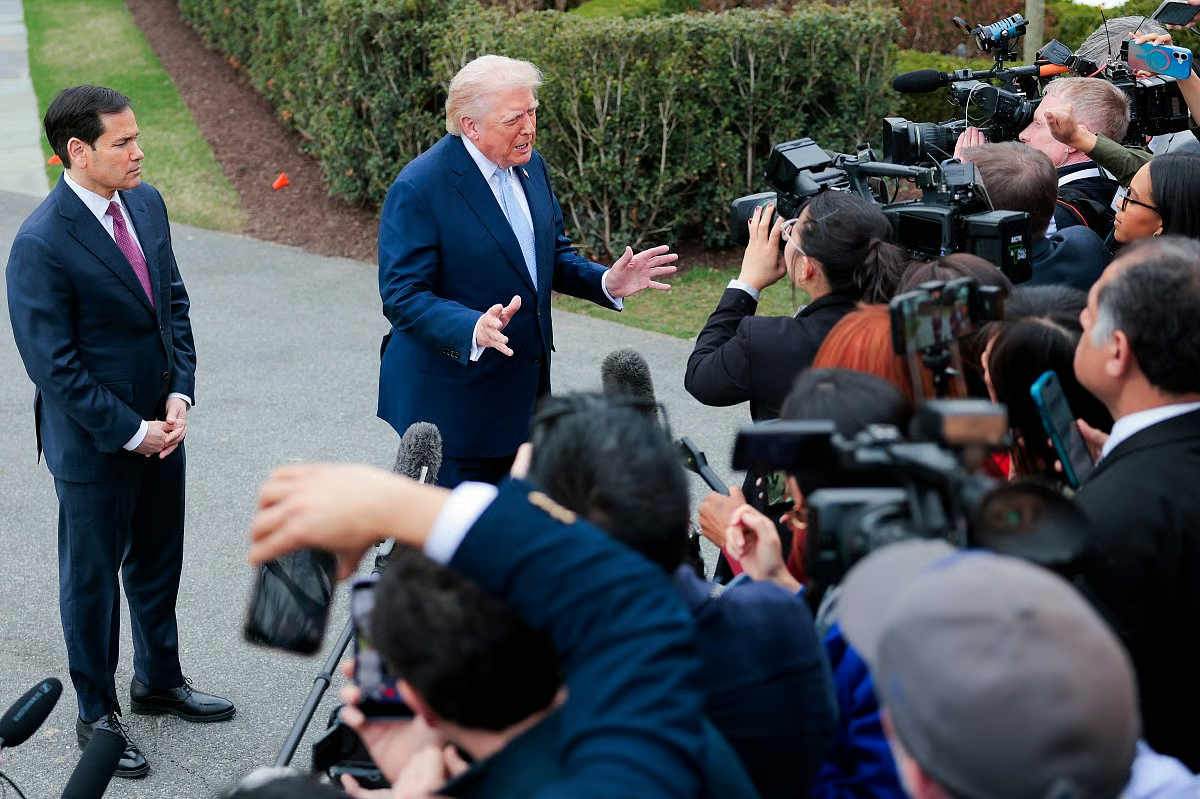
Donald Trump said the US may “wind down” its Middle East military operation, even as his administration deploys more troops and requests an additional $200 billion from Congress. The United Kingdom has approved the use of its bases for US strikes near the Strait of Hormuz, while Washington considers lifting sanctions on Iranian oil at sea to stabilise prices. Follow live updates on military actions, regional reactions and unfolding developments:
01:01 PM, 21 March 2026
War must end completely and permanently: Iran FM
Iran’s foreign minister, Abbas Araghchi, has expressed willingness to consider any initiative that could bring the ongoing Middle East conflict to a “complete end,” describing the war as one “imposed” on the country, according to the BBC.
Speaking to Japanese media outlet Kyodo, Araghchi said Iran is “ready to listen and to consider such proposals.” However, he added that while some nations are seeking solutions, “it does not appear that the United States is prepared to halt its aggression.”
Araghchi clarified that Iran is not calling for a ceasefire, but aims for “a complete, comprehensive, and lasting end to the war.”
The interview was shared on Araghchi’s Telegram account, and a transcript was published by Mehr News Agency, linked to the Islamic Propagation Organisation.
12:28 PM, 21 March 2026
Seoul signals support to reopen Strait of Hormuz
South Korea said it’s also in talks with Iran after the Islamic Republic’s foreign minister said Teheran may allow Japanese vessels to pass the Strait of Hormuz.
South Korea’s Foreign Ministry said in a statement that it was having “multifaceted” talks with Iran and other related nations to find ways to “protect our citizens and secure energy transport routes.”
12:23 PM, 21 March 2026
Iran president says no dispute with its neighbours
Addressing neighbouring countries Saturday, Iranian President Masoud Pezeshkian posted on social media that “the only beneficiary of our differences is the Zionist entity,” referring to Israel.
12:20 PM, 21 March 2026
Iran holds funeral for intelligence minister
Saturday’s funeral service for Minister of Intelligence Esmail Khatib was held in Iran’s holy city of Qom, the Islamic Republic’s state-run media reported.
11:56 AM, 21 March 2026
Iranians hold Eid prayers as Mideast war rages
Thousands of Muslims held Eid Al Fitr prayers in Iran on Saturday to mark the end of the Ramadan fast against the backdrop of the Middle East war, state television footage showed.
At dawn, a crowd of worshippers gathered at central Tehran’s Imam Khomeini grand mosque, named after the founder of the Islamic republic.
For lack of space, many worshippers followed the prayer outside, with state television showing images of crowded areas around the mosque, despite the risk of strikes.
Overnight strikes again targeted several districts of Tehran and its outskirts, as well as the central city of Isfahan, according to the Fars news agency.
Iranian television also showed prayer gatherings elsewhere in the country, including in Arak in the centre, Zahedan in the southeast and the western city of Abadan.
11:25 AM, 21 March 2026
Kurds in Iraq celebrate the new year festival of Nowruz
11:13 AM, 21 March 2026
Iran war halts Qatar helium output, risks tech chain
Iran’s attack this week on Qatar’s natural gas export facility threatens to disrupt not just world energy markets but also global technology supply chains because the helium it produces is crucial for a range of advanced industries.
Best known as the gas that makes party balloons float, helium is also a key input in chipmaking, space rockets and medical imaging.
Qatar supplies a third of the world’s helium, according to the US Geological Survey, but the nation had to halt production shortly after the war erupted three weeks ago. The latest Iranian strikes against the region’s energy producing infrastructure have added to supply worries, with Qatar’s state-owned gas company saying it would crimp helium exports by 14%.
10:54 AM, 21 March 2026
Israel says targeting Hezbollah in Beirut
The Israeli military said it launched a wave of strikes on Beirut claiming to target the Iran-backed militant group Hezbollah early Saturday, while Lebanese state media reported strikes in the country’s south.
In a brief statement on Saturday, the Israeli military said its forces were “currently striking Hezbollah terrorist organisation targets in Beirut”.
A military spokesman earlier issued a warning to residents of Beirut’s southern suburbs, a Hezbollah stronghold, to evacuate ahead of strikes.
09:51 AM, 21 March 2026
Middle East crude surges toward $150 as global oil prices rebound
Global oil prices rose again on Saturday as geopolitical tensions tightened supply flows, with Middle East crude leading gains.
Murban crude, a key UAE benchmark, surged 18% to $146.40 per barrel after jumping 6% to $131 a day earlier. Brent crude climbed back above $100 to $112 per barrel, up 3.3%, while West Texas Intermediate (WTI) rose into the low-$90s.
The rebound follows losses on Friday. The US has been worling to boost supply, while allies are coordinating efforts to stabilize flows through the Strait of Hormuz, including deploying additional troops to secure key shipping routes.
07:30 AM, 21 March 2026
Saudi Arabia condemns Israeli ‘aggression’ against Syria
Saudi Arabia’s foreign ministry condemned on Saturday Israel’s strikes on Syrian army camps as “aggression”, joining Turkey in calling on the international community to intervene.
The Saudi foreign ministry said in a statement that the Kingdom condemned “the blatant Israeli aggression… in flagrant violation of international law and Syrian sovereignty”.
It urged the international community “to put an end to Israel’s violations of international laws and norms”.
07:30 AM, 21 March 2026
Iran says ready to help Japan ships through Hormuz Strait
Iran is willing to help Japanese ships sail a vital route for global fuel supplies, Foreign Minister Abbas Araghchi told Kyodo News in an interview published on Saturday.
Japan depends on crude oil imports from the Middle East, most of which transits the Strait of Hormuz.
Iran has effectively closed the strait in retaliation for US-Israeli strikes, sending countries reliant on the shipping lane scrambling for alternative routes and tapping reserves.
In a telephone interview with Kyodo News on Friday, Araghchi denied closing the passageway, insisting instead that countries attacking Iran face restrictions, while others were being offered assistance.
“We have not closed the strait. It is open,” he said.
He added that Iran was prepared to ensure safe passage for Japan.
07:15 AM, 21 March 2026
United Airlines prepares for oil to reach $175 a barrel
The airline’s CEO said the company is also preparing for oil to not return to $100 a barrel until the end of next year.
Scott Kirby said in a message to United employees on Friday that jet fuel prices that have more than doubled in the last three weeks already would cost the airline $11 billion a year if they remain where they are now.
The price of Brent crude has zigzagged from roughly $70 per barrel before the Iran war began to as high as $119.50 this week.
Of United’s worst-case assumption, Kirby said, “I think there’s a good chance it won’t be that bad, but … there isn’t much downside for us to preparing for that outcome.”
07:10 AM, 21 March 2026
Friday briefing: Middle East conflict developments
Iran strikes: Israeli military launched attacks on Iranian government sites in Tehran; Ali Mohammad Naini, IRGC spokesman, was killed. Iran confirmed his death.
Iran’s leadership: New Supreme Leader Ayatollah Mojtaba Khamenei issued a statement; he has not been publicly seen since succeeding his father, Ali Khamenei.
Nowruz in Iran: Iranians marked the New Year amid mourning for those killed in protests and US-Israeli strikes; economic crisis and currency collapse overshadowed celebrations.
Hormuz tensions raise: US military intensified strikes against Iranian drones and naval vessels to secure the Strait of Hormuz amid soaring oil prices.
Gulf states under attack: Saudi Arabia, Kuwait, Bahrain, and UAE intercepted drone and missile strikes, reportedly launched from Iran; Kuwaiti refinery fires reported.
Lebanon: Eid Al Fitr celebrations disrupted as Israel and Hezbollah continued hostilities; hundreds of thousands remain displaced.
Israel: Iran launched missiles at Israel; fires reported in Haifa, missile fragments fell in Jerusalem including near Old City; no casualties reported.
US military moves: President Trump considers winding down operations in Iran, while sending 2,500 additional Marines to the region; wartime emergency declared to expedite $23B in weapons sales.
Death toll: Over 2,300 killed since the start of the war—mostly in Iran; 1,000+ in Lebanon; at least 13 US service members and 14 Israelis dead.
Indian casualty in Saudi Arabia: A second Indian national was killed in Riyadh after an Iranian missile attack on March 18, following an earlier Indian fatality on March 8
07:00 AM, 21 March 2026
Israel launches new strikes on Tehran, IDF says
The Israel Defence Forces says it has launched a fresh wave of airstrikes on “Iranian terror regime targets” in Tehran, targeting government and military infrastructure in the Iranian capital.
The announcement followed recent Israeli strikes in Beirut aimed at Hezbollah positions, after evacuation warnings were issued for several neighbourhoods in the south of the city.
06:39 AM, 21 March 2026
Iran fired missiles at joint US-UK base in Indian Ocean
Iran recently fired two ballistic missiles toward the joint US-UK military base at Diego Garcia in the Indian Ocean, The Wall Street Journal reported Friday, citing US officials.
Neither missile hit the target, which is around 2,500 miles (4,000 kilometers) from Iranian territory, but the launch suggests that Tehran has missiles with longer ranges than previously thought, the report said.
One of the missiles failed in flight, and the other was targeted by an interceptor fired from a US warship, though it was not clear if the missile was hit, The Journal reported.
Diego Garcia in the Chagos Islands is one of two bases Britain is allowing the United States to use for “defensive” operations in Iran.
05:40 AM, 21 March 2026
Israel military says striking Hezbollah targets in Beirut
The Israeli military said it launched a wave of strikes on Lebanon’s capital Beirut targeting Iran-backed militant group Hezbollah early Saturday, after calling on residents of several areas to evacuate.
In a brief statement, the military said its forces were “currently striking Hezbollah terrorist organisation targets in Beirut”.
A military spokesman earlier issued a warning to residents of Beirut’s southern suburbs, a Hezbollah stronghold, to evacuate ahead of strikes.
05:30 AM, 21 March 2026
Bahrain intercepts 143 missiles, 242 drones since escalation
The General Command of the Bahrain Defence Force announced today that its air defense systems intercepted and destroyed 143 missiles and 242 drones since the start of the brutal Iranian aggression against the country.
The General Command emphasized that the use of ballistic missiles and drones to target civilian objects and private property constitutes a flagrant violation of international humanitarian law and the United Nations Charter, and that these heinous and indiscriminate attacks represent a direct threat to regional peace and security.
05:20 AM, 21 March 2026
Targeting Iranian oil could hit other countries, Qatar warns
Qatar’s Minister of State for Energy Affairs Saad bin Sherida Al Kaabi said Qatar had warned the United States about the potential regional fallout if Iranian oil and gas facilities were targeted, urging Washington to exercise restraint.
He told Reuters that damage to facilities worth $26 billion could disrupt LNG shipments to Europe and Asia for up to five years. The recent attack on Ras Laffan halted 17% of Qatar’s LNG export capacity and may delay expansion projects that would have increased production from 77 mtpa to 126 mtpa by next year.
Al Kaabi said no casualties were reported, but the delay in North Field expansion could push back deliveries to countries including France, Germany, and China. Full resumption of QatarEnergy operations would take at least three to four months once hostilities cease.
He warned that the broader impact of the conflict could set back the Gulf region’s economy by 10–20 years.
04:33 AM, 21 March 2026
Saudi Arabia intercepts more than 20 drones in east
Saudi Arabia intercepted 22 drones in the east of the country, the defence ministry said on Saturday, as Iran continues striking Gulf nations.
“10 drones intercepted and destroyed in the eastern region,” the Saudi defence ministry posted on X.
The ministry later posted that its air defences had shot down 12 more drones, also in the east.
Iran has kept up retaliatory attacks on Saudi Arabia and nearby nations in response to US and Israeli strikes that have sparked a war that has spread across the Middle East since late last month.
04:30 AM, 21 March 2026
Baghdad International Airport targeted by 3 drones
An Iraqi security source announced today that Baghdad International Airport was targeted by three drones.
The source stated that two drones targeted the vicinity of the logistics support center surrounding Baghdad International Airport, adding that the attack was thwarted by air defenses.
In the same context, a security source also reported that the logistics support headquarters at Baghdad International Airport was targeted following the crash of a third drone in its vicinity.
In southern Kirkuk, northern Iraq, a medical source announced that an unidentified projectile killed two people and left others injured after it was tampered with by children
03:30 AM, 21 March 2026
US lifts sanctions on some Iranian oil
The move comes as the White House tries to bring down soaring oil prices.
The pause applies to Iranian oil loaded on ships as of Friday and is set to end on April 19.
Treasury Secretary Scott Bessent previously suggested the move as a way to prevent China from being the sole beneficiary of Iranian oil.
The Trump administration also eased sanctions on certain Russian oil shipments for 30 days as it looks for ways to boost global oil supplies during the Iran war.
The license has limits including a restriction on sales involving anyone in North Korea or Cuba.
02:08 AM, 21 March 2026
Trump adds new objective for the Iran war
Though his administration for weeks has maintained that its four objectives remained “unchanged, unambiguous, and consistent” since the operation began, Trump in his social media post added a fifth one.
The four objectives had been to block Iran’s path to a nuclear weapon, stop it from arming proxy militant groups, destroy its navy and destroy its ballistic missile capacity.
In his post Friday, Trump enumerated those and added a fifth: “Protecting, at the highest level, our Middle Eastern Allies” and listed America’s Gulf partners.
01:35 AM, 21 March 2026
Trump says US considers ‘winding down’ Iran military effort
Trump says he is considering ‘winding down’ Middle East military operation even as US sends more troops to region. The president made the comment in a post on social media Friday evening after another climb in oil prices sent the US stock market sharply lower.
Trump’s statement seemed at odds with his administration’s move to send more troops and warships to the region and request another $200 billion from Congress to fund the war.
In his post, the president also left a muddled picture of whether the US would police the vital Strait of Hormuz shipping lane. Trump had said this week that the US didn’t need help, while also complaining that other countries did not help.
12:44 AM, 21 March 2026
UAE residents alerted safe
UAE residents have received a new mobile alert from authorities confirming that the situation in the country is currently safe following earlier warnings about potential missile threats.
12:37 AM, 21 March 2026
Trump rules out ceasefire in Iran
US President Donald Trump on Friday ruled out reaching a ceasefire agreement with Iran, saying Washington has the upper hand in the three-week-old war
12:35 AM, 21 March 2026
Dubai authorities confirm air defence interception
Authorities in Dubai have confirmed that the sounds heard across parts of the city were the result of successful air defence interception operations.
In a statement, the Dubai Media Office said the noises reported by residents were linked to defensive measures carried out as part of security operations.
Officials urged the public to rely only on verified updates from official channels and avoid circulating unconfirmed information.
12:11 AM, 21 March 2026
UAE issues emergency alert
The UAE Ministry of Defence has issued an urgent alert, advising residents to take immediate shelter due to a potential missile threat.
The message, sent to mobile phones in multiple areas, instructed people to go to the nearest secure building and avoid windows, doors, and open spaces until authorities provide further guidance.
12:08 AM, 21 March 2026
Blasts, air raid sirens heard from Jerusalem
A series of blasts were heard from Jerusalem on Friday after sirens sounded in northern Israel, AFP journalists said, following a warning that Iran had fired missiles.
“A short while ago, the IDF identified missiles launched from Iran toward the territory of the State of Israel. Defensive systems are operating to intercept the threat,” the Israeli military said on its official Telegram channel.
12:04 AM, 21 March 2026
‘I may have a plan, I may not’ to attack Kharg Island: Trump
Trump was asked while leaving the White House on Friday afternoon about plans to have US forces further target Kharg Island in the Arabian Gulf, which is vital to Iran’s oil network.
He responded, “I may have a plan I may not” but said he wouldn’t tell reporters one way or the other.
“It’s certainly a place that people are talking about. But I can’t tell you that,” Trump added.
GULF NEWS
politics
Trump–Iran agree 2-week ceasefire, reopen Hormuz
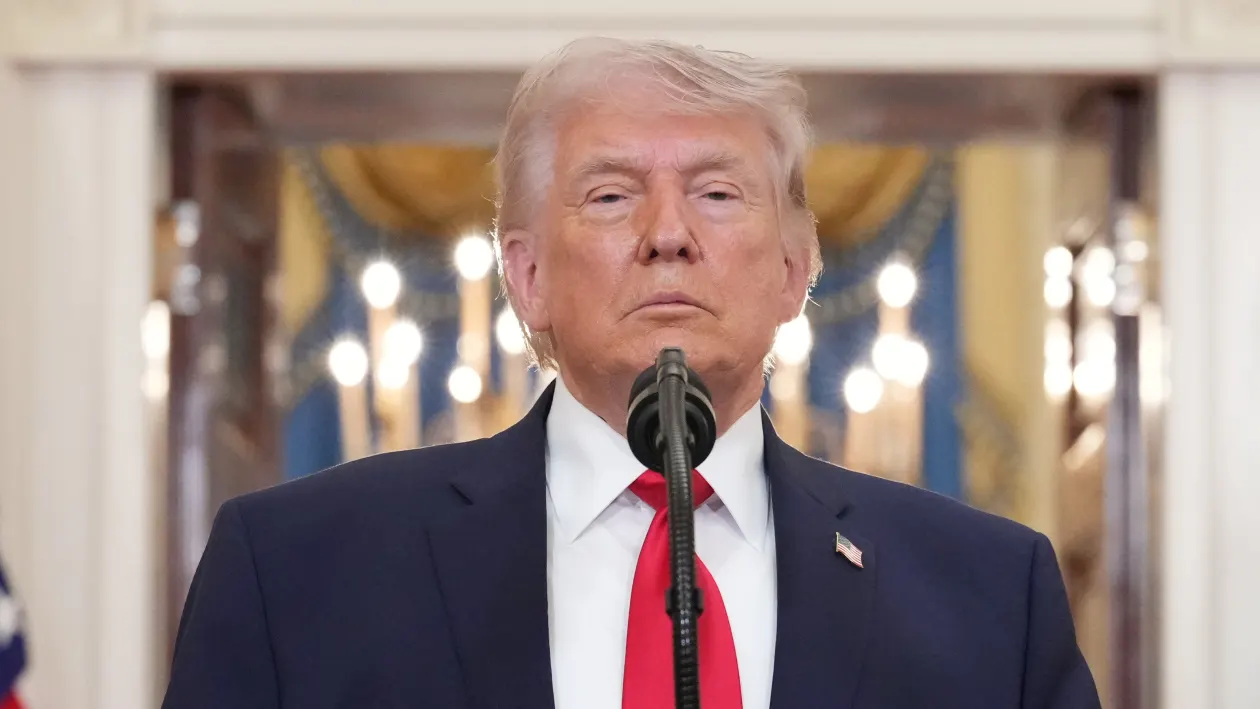
President Donald Trump on Tuesday said he agreed to suspend planned attacks on Iranian infrastructure for two weeks, backing off his shocking threats to imminently order the destruction of Iran’s “whole civilization.”
The move, more than five weeks after the U.S. and Israel launched the war, was “subject to the Islamic Republic of Iran agreeing to the COMPLETE, IMMEDIATE, and SAFE OPENING of the Strait of Hormuz,” he wrote on Truth Social.
The decision was “based on conversations with Prime Minister Shehbaz Sharif and Field Marshal Asim Munir, of Pakistan,” Trump wrote.
“This will be a double sided CEASEFIRE!” he declared.
Oil prices plunged as much as 16% following the announcement, while U.S. stock futures shot up.
Iran Foreign Minister Abbas Araghchi said in a separate statement that ships will be able to safely pass through the strait for the two-week interval “via coordination with Iran’s Armed Forces and with due consideration of technical limitations.”
Trump’s announcement came less than two hours before his deadline on Iran to either make a deal that includes opening the strait — a vital artery for global oil transit — or else face major attacks on its civilian infrastructure.
The 8 p.m. ET deadline — which Trump set Sunday after demanding in a belligerent social media post that Iran “Open the Fuckin’ Strait” — had caused panic in the U.S. and around the world.
Trump escalated matters dramatically on Tuesday morning, writing in another post, “A whole civilization will die tonight, never to be brought back again.”
Sharif on Tuesday afternoon had asked Trump for a two-week extension of his deadline for Iran. He also asked Iran’s leadership to agree to open up the strait for two weeks “as a goodwill gesture.”
“We also urge all warring parties to observe a ceasefire everywhere for two weeks to allow diplomacy to achieve conclusive termination of war, in the interest of long-term peace and stability in the region,” Sharif wrote in an X post.
Both the U.S. and Iran framed the development as a win.
Trump, in his post announcing the two-week delay, claimed the U.S. had agreed to halt its planned attacks because “we have already met and exceeded all Military objectives, and are very far along with a definitive Agreement concerning Longterm PEACE with Iran, and PEACE in the Middle East.”
“We received a 10 point proposal from Iran, and believe it is a workable basis on which to negotiate,” Trump wrote.
“Almost all of the various points of past contention have been agreed to between the United States and Iran, but a two week period will allow the Agreement to be finalized and consummated,” he wrote.
Iran’s Mehr News Agency later Tuesday posted a statement from the secretariat of the Islamic Republic’s Supreme National Security Council declaring that the U.S. “has accepted these principles as the basis for negotiations and has surrendered to the will of the Iranian people.”
“If the surrender of the enemy in the field becomes a decisive political achievement in the negotiations, we will celebrate this great historical victory together, otherwise we will fight side by side in the field until all the demands of the Iranian nation are achieved,” read a translation of the statement.
Iran will hold negotiations with the U.S. in Islamabad, the capital of Pakistan, for two weeks beginning in the coming days, according to the statement.
Iran’s 10-point proposal includes withdrawing U.S. combat forces from all regional bases, lifting all sanctions, releasing Iranian assets frozen abroad and full payment of Iran’s war-related damages. It would also establish a protocol for controlled passage through the Strait of Hormuz.
Trump, on Monday, said a ceasefire proposal put forward by Iran was “not good enough.” It was not immediately clear what in the intervening hours led him to accept Iran’s proposal as a “workable basis” for negotiations.
CNBC
politics
Israel warns Iran on trains as Trump threatens infrastructure
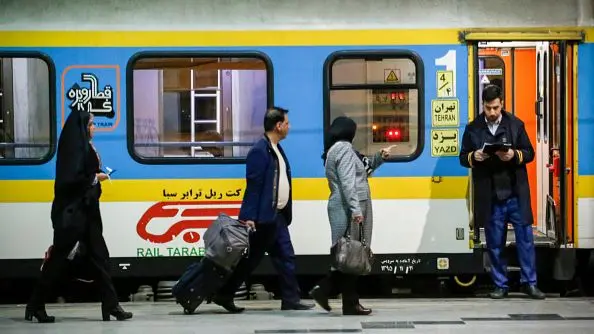
The Israel Defense Forces (IDF) is warning people in Iran not to take the train today.
In a post shared on the military’s Farsi social media account, it tells people in Iran “for the sake of your security” to “refrain from using and travelling by train” throughout the country “until 21:00 Iran time”.
It adds that “presence on trains and near railway lines endangers your life”.
It comes as US President Donald Trump threatens to strike civilian infrastructure targets across Iran, if the regime refuses to allow free passage through the Strait of Hormuz by 20:00 EDT Tuesday (01:00 BST Wednesday).
In updates issued overnight, the Israeli military also said it completed a wave of air strikes targeting “infrastructure in Tehran” linked to the regime, and killed people it said were members of Hezbollah.
Separately, the military also said it had intercepted missiles launched towards Israel by Iran.
Israel’s train travel warning comes as Trump threatens more infrastructure strikes
In a post in Farsi on social media this morning, the Israel Defense Forces gave what it described as an “urgent warning to train users and passengers in Iran”
The “warning” suggests imminent Israeli airstrikes on the Iranian rail network. But there is a weeks-long internet blackout in Iran, meaning social media posts will be seen by very few people.
The Iranian rail network is extensive and runs throughout the country. People will almost certainly already be travelling by rail this morning, travelling long distances, or be located near rail stations or lines.
Overnight, Israel carried out multiple airstrikes in Iran, with “regime infrastructure” described as the target.
BBC
Analytics
Should your next car be electric after the war?
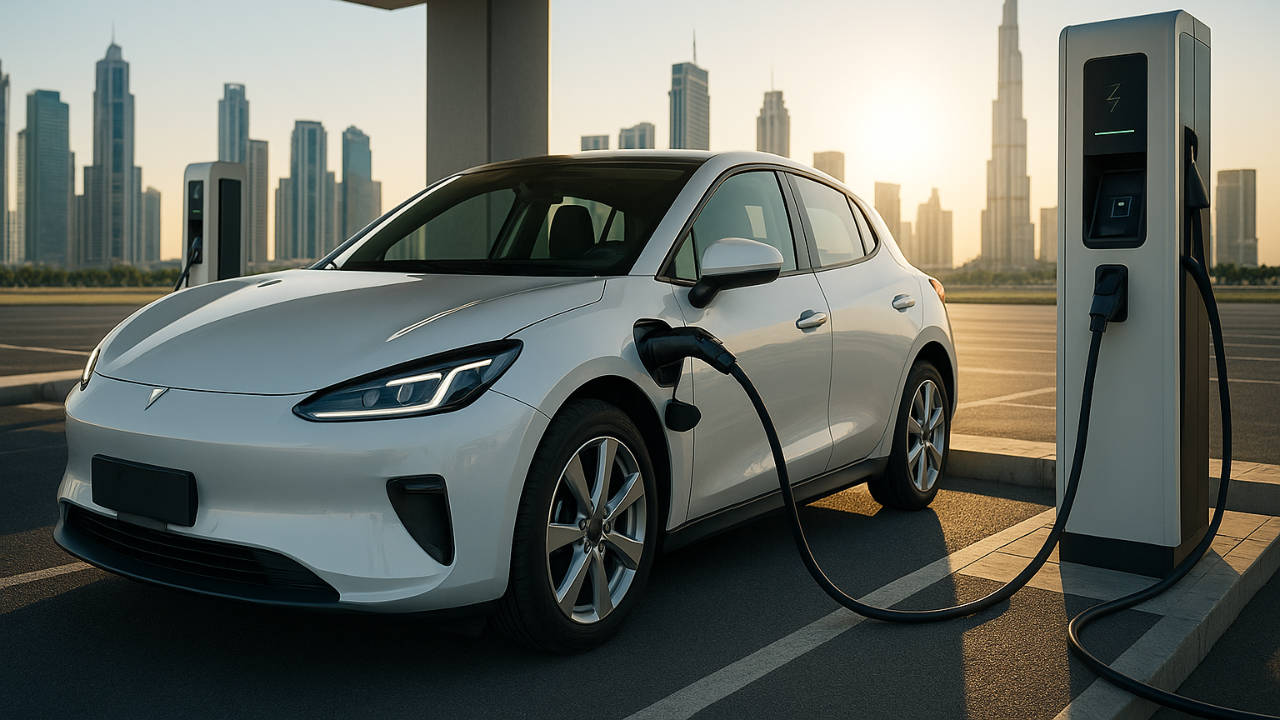
Disruptions to energy flows, especially through the Strait of Hormuz, have triggered one of the most significant shocks to global oil markets in recent years. Fuel costs are rising, and supply chains remain exposed.
“We are in the middle of the second energy shock in the 2020s,” said Kingsmill Bond. “It will flow into people’s decisions on what energy-hungry devices they buy.” For car buyers, that shift is already underway.
1. Fuel costs spike worldwide
The impact shows up immediately:
- Petrol and diesel prices are rising worldwide, with volatility complicating long-term budgeting
- Supply risks are adding uncertainty to everyday transport costs
In parts of Asia, fuel rationing and reduced mobility are already visible, accelerating demand for electric two-wheelers and rickshaws. For buyers, the implication is direct: running a petrol car is becoming harder to plan, while EVs offer more stable operating costs.
That cost gap is becoming clearer in the UAE. An analysis by NIO MENA reveals just how significant the gap has become. With Super 98 petrol at Dh3.39 per litre and Special 95 at Dh3.29, a typical petrol car averaging 12 km per litre costs roughly Dh275 to Dh280 to cover 1,000 km.
An electric vehicle charged at home covers the same distance for about Dh45 — a saving of more than Dh230, or up to 84%.
2. EV cost advantage widens
Even with public charging, the economics still favour EVs:
- Public AC charging: Dh120 per 1,000 km
- DC fast charging: Dh180 per 1,000 km
For fleet operators, these margins scale quickly. A vehicle covering 30,000 km a year could save between Dh2,700 and Dh6,900 annually depending on charging method. Lower maintenance costs — fewer moving parts, no oil changes — add to the advantage.
“When running an electric vehicle can save you up to 84% compared to petrol, this is no longer a debate about sustainability preferences. It is a bottom-line decision,” said Mohammad Maktari, CEO of NIO MENA.
3. People already shift to electric alternatives
The response extends beyond cars. In India, LPG delivery delays of up to 25 days have pushed households toward electric cooking, with induction stove sales rising as much as 30 times on some platforms.
In Europe, solar panel sales have more than doubled in Germany, and EV buyer interest in the UK has risen nearly 30% since the conflict began.
Households in several economies are reducing reliance on fossil fuels. Electrification is becoming a practical decision tied to cost and reliability.
4. Energy security become a priority
The latest shock is reinforcing a deeper shift. “The main driver will not be climate change, the main driver will be energy security,” said Fatih Birol of the International Energy Agency.
History supports this pattern:
- The 1970s oil shocks pushed fuel-efficient cars into the mainstream
- High oil prices in the 2000s accelerated solar and battery innovation
For today’s buyers, the takeaway is clear: EVs reduce exposure to global oil disruptions and offer a path toward greater cost control.
5. Emerging markets accelerate shift
The pressure is strongest in economies reliant on imported fuel. Countries across Asia and Africa — dependent on shipments through the Strait of Hormuz — are facing supply disruptions and rising costs.
In Nigeria, demand for rooftop solar is increasing despite high upfront costs. In Ethiopia, fuel shortages have led to long queues at petrol stations and renewed calls to accelerate EV adoption. Electrification is increasingly seen as a response to supply vulnerability, not just pricing.
Gulf News


Wall Street firm sends analyst to Hormuz, shares findings

Trump–Iran agree 2-week ceasefire, reopen Hormuz

Israel warns Iran on trains as Trump threatens infrastructure

Is February 2026 really a once-in -283-years MiracleIn?

Algeria, Burkina Faso, Côte d’Ivoire win AFCON 2025 openers

NMC Royal Hospital, Khalifa City, performs rare wrist salvage, restoring function for young patient
-
Discover3 months ago
Is February 2026 really a once-in -283-years MiracleIn?
-
 Football3 months ago
Algeria, Burkina Faso, Côte d’Ivoire win AFCON 2025 openers
-
 Health3 months ago
NMC Royal Hospital, Khalifa City, performs rare wrist salvage, restoring function for young patient
-

 Health4 months ago
Bascom Palmer Eye Institute Abu Dhabi and Emirates Society of Ophthalmology Sign Strategic Partnership Agreement
-

 Health5 months ago
Emirates Society of Colorectal Surgery Concludes the 3rd International Congress Under the Leadership of Dr. Sara Al Bastaki
-

 Health5 months ago
Born Too Soon: Understanding Premature Birth and the Power of Modern NICU Care
-

 Lifestyle5 months ago
Saudi Arabia Lifestyle Trends 2025: What You Need to Know About Fitness, Wellness, Healthy Eating & Self-Care Growth
-

 Football5 months ago
Globe Soccer Awards 2025 nominees announced as voting opens in Dubai