
Business
Saudi firms raise hiring and pay despite PMI dip
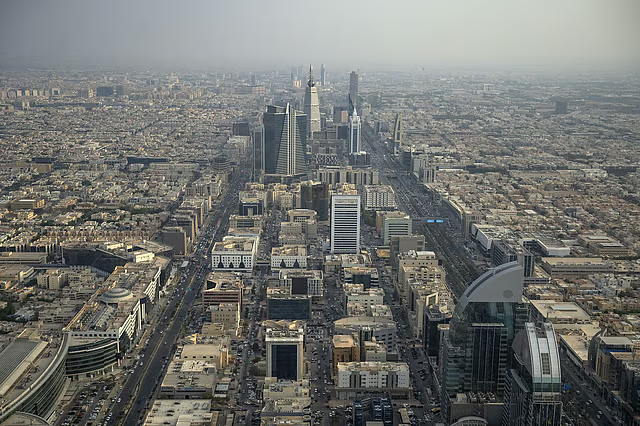
Saudi Arabia’s non-oil private sector lost a touch of speed in February, yet companies continued to hire aggressively and raise wages at the fastest pace since records began, signalling confidence that domestic demand remains intact.
The seasonally adjusted Riyad Bank Saudi Arabia Purchasing Managers’ Index slipped to 56.1 in February from 56.3 in January, marking the softest improvement in operating conditions for nine months. The index remains comfortably above the 50 neutral mark, indicating expansion across the non-oil economy even as momentum has cooled from last year’s peak.
Growth cools, but demand holds
Output growth eased to a six-month low, though businesses continued to report solid gains in activity. Survey respondents frequently cited stronger customer demand and new project approvals, alongside improved domestic sales and stepped-up marketing efforts. Competitive pressures in some markets tempered the pace of expansion, yet order books continued to rise.
New orders remained a central driver of activity, supported by government initiatives, digital development efforts and collaborative client projects. International sales also expanded for a seventh consecutive month, though at a slightly slower rate than earlier in the cycle.
Naif Al-Ghaith, Chief Economist at Riyad Bank, said, “Saudi Arabia’s non-oil private sector sustained its expansionary trajectory with a PMI reading of 56.1 in February, though the pace of output growth eased to its lowest level since last August. This performance was driven by robust domestic demand and a steady flow of new project approvals. Despite the moderation in momentum, the sector remains firmly in growth territory, supported by seven months of rising international sales and an improving volume of new orders.”
Businesses appear to be recalibrating after a period of rapid expansion, with the PMI on a gradual downward path since reaching one of its highest levels in over a decade last October. Conditions remain strong overall, but the data suggest a shift toward steadier, more measured growth.
Hiring surge drives record wage inflation
Employment rose sharply in February, with the job creation rate climbing to a four-month high and ranking among the strongest recorded in the survey’s history. Firms cited increased sales volumes and a build-up of outstanding orders as reasons to expand payrolls.
That hiring push has come at a cost. Staff expenses surged at the fastest pace since the survey began in August 2009, reflecting higher salaries offered to attract and retain workers, particularly in technical and sales roles. The sharp rise in wage bills marks a key feature of February’s data and signals growing competition for skilled labour.
Al-Ghaith said, “A key highlight of the February results was the sizeable increase in employment, as firms expanded their workforce to manage higher workloads and new business inflows. This acceleration in hiring signals confidence in near-term demand, even as overall output growth moderated. At the same time, supply chain performance improved further, with delivery times shortening amid better coordination and operational efficiencies.”
Prices climb amid cost pressures
Rising wage costs fed through to selling prices, which increased at the joint-fastest pace since May 2023, matching October’s recent high. Companies also reported higher supplier charges and increased metals prices. A reduction in fuel payments helped moderate overall purchase-price inflation, while some firms benefited from renegotiated vendor contracts.
Supply chains showed signs of improvement despite stronger input buying. Delivery times shortened to the greatest extent in nine months, reflecting operational gains and changes in vendor relationships. Companies continued to raise purchasing volumes in line with expanding workloads, while maintaining a balanced approach to inventory management.
Confidence steady into year ahead
Expectations for the next 12 months remained positive, with firms linking anticipated output growth to new client projects, firmer demand and supportive domestic economic conditions. The overall picture suggests an economy adjusting to a more sustainable pace after an extended period of rapid expansion.
Al-Ghaith said, “Overall, February’s results point to an economy that remains strong but is moving onto a more sustainable balance. Growth has moderated, yet demand and hiring activity continue to anchor the expansion. The broader trend remains positive, with businesses actively adjusting their capacity while maintaining a high degree of confidence in underlying market conditions. This balanced approach to inventory and staffing suggests the private sector is well positioned to navigate evolving economic dynamics throughout the remainder of the year.”
Consumers and businesses alike face a mixed environment. Growth remains solid, and hiring is robust, yet rising wages and selling prices could translate into firmer costs across parts of the economy. Saudi Arabia’s non-oil sector remains firmly in expansion mode, though the latest data indicate that the breakneck pace of last year is giving way to steadier, more sustainable momentum.
GN
Business
UAE gold prices jump more than Dh10
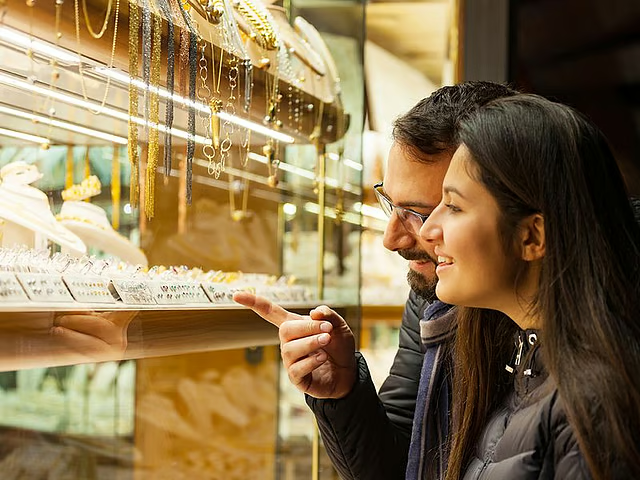
Gold prices in the UAE surged on Monday morning, extending their recent rally and reflecting a sharp global shift toward safe-haven assets following escalating conflict in the Middle East. The 24-karat rate climbed to Dh646.45 per gram at 8.43 am on March 2, up from Dh636 a day earlier, while the 22-karat variety rose to Dh592.58 compared with Dh589 previously. (Check latest UAE gold prices here, alongside prices in Saudi Arabia, Oman, Qatar, Bahrain, Kuwait, and India.)
This move marked one of the strongest single-day gains in recent weeks. It pushed local bullion back toward levels last seen during previous periods of geopolitical stress, signalling a renewed wave of risk aversion among investors and buyers.
Steady climb through February
Gold’s rise did not begin overnight. The market has been building momentum for weeks, driven by a mix of global economic uncertainty, strong central bank demand, and shifting investment flows. Local price trends illustrate how steadily the rally gathered pace.
At the start of February, 24-karat gold traded near Dh564 per gram. Prices moved gradually higher throughout the month, crossing Dh600 by mid-February before accelerating sharply in the final week. By February 27, the rate had already reached Dh629.50, and within days it surged above Dh646.
The pattern shows how gold’s trajectory has been shaped by both long-term structural demand and short-term geopolitical shocks, with the latest escalation acting as a catalyst rather than the sole driver.
War tensions trigger global surge
Global bullion prices jumped sharply in early trading, rising more than 2% before moderating later in the session. Investors responded quickly to heightened risk perceptions, shifting funds away from equities and currencies into gold, which historically performs well during periods of uncertainty.
Energy markets mirrored this reaction. Oil prices surged strongly at the open on Monday, reflecting concerns over potential supply disruptions, particularly around the Strait of Hormuz, one of the world’s most critical energy corridors. The simultaneous rise in oil and gold heightened systemic risk across global markets.
Structural drivers remain intact
Even before the latest conflict, gold had been on a sustained upward trend throughout the year. The metal has gained roughly a quarter so far in 2026, supported by persistent central bank purchases, ongoing diversification away from sovereign bonds, and continued investor demand for inflation protection
GN
Business
Dollar marks first monthly gain since October
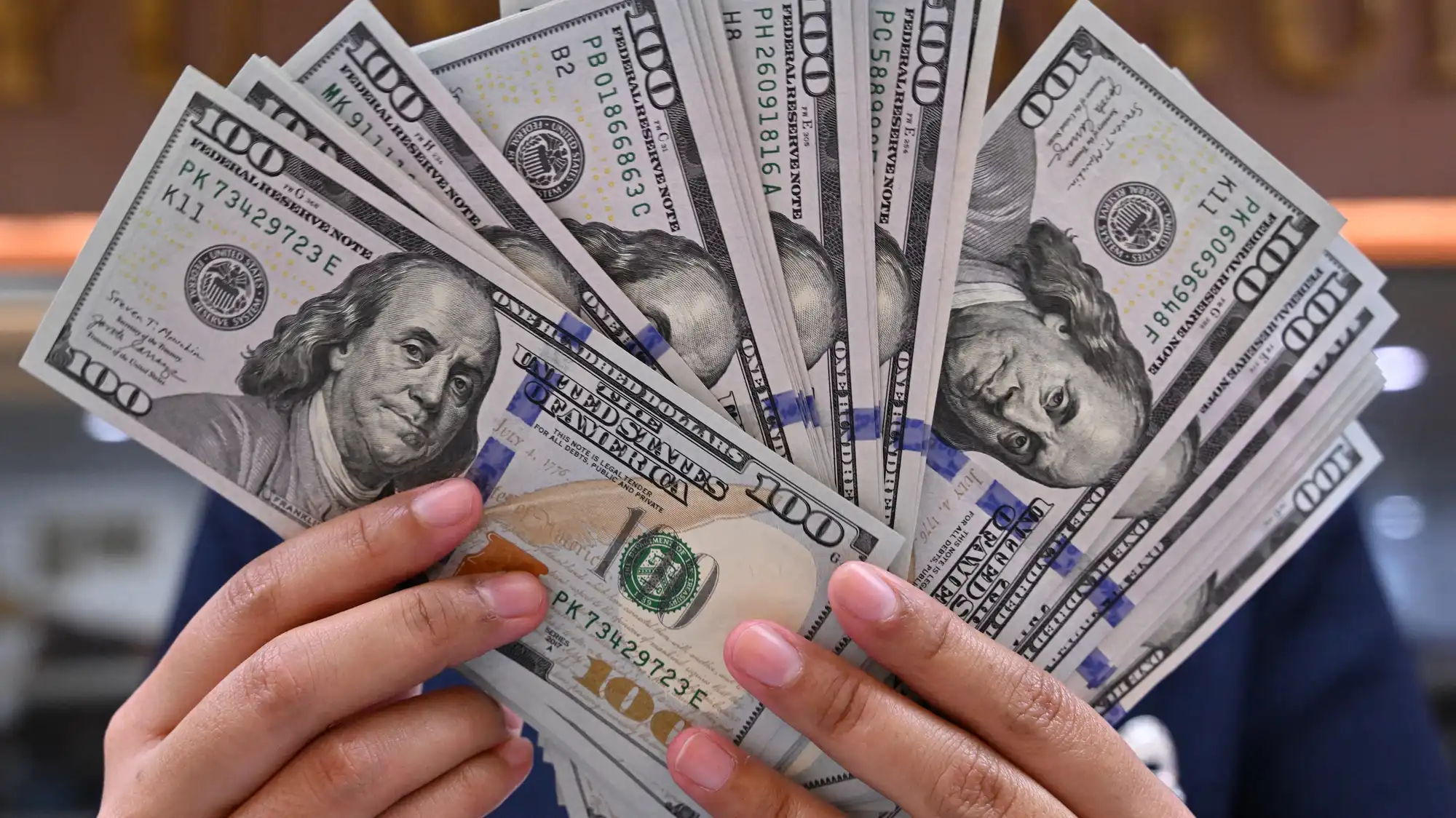
The US dollar is on track to record its first monthly gain since October, buoyed by shifting global economic expectations and resilient domestic data. The US Dollar Index (DXY), which measures the greenback against a basket of major currencies, stabilised near 97.74 on Friday.
This performance was bolstered by a strong chicago pmi reading of 57.7, which provided fundamental support for the currency’s strength throughout the period. Despite this upward trend, the dollar faced a key ceiling for the month as it encountered a notable resistance level at 98.00.
Within this context, the Chinese yuan fell 0.12% to 6.8581 per dollar, despite rising approximately 2% since the start of the year. The Australian dollar stabilised at 0.7121 dollars, heading toward its fourth consecutive monthly gain. In contrast, the yen dropped to 156.02 yen per dollar, and the British pound retreated to 1.3485 dollars, while the euro maintained its stability near 1.1823 dollars.
WAM
Business
Nvidia Forecast Signals Faster Growth as Vera Rubin Launches
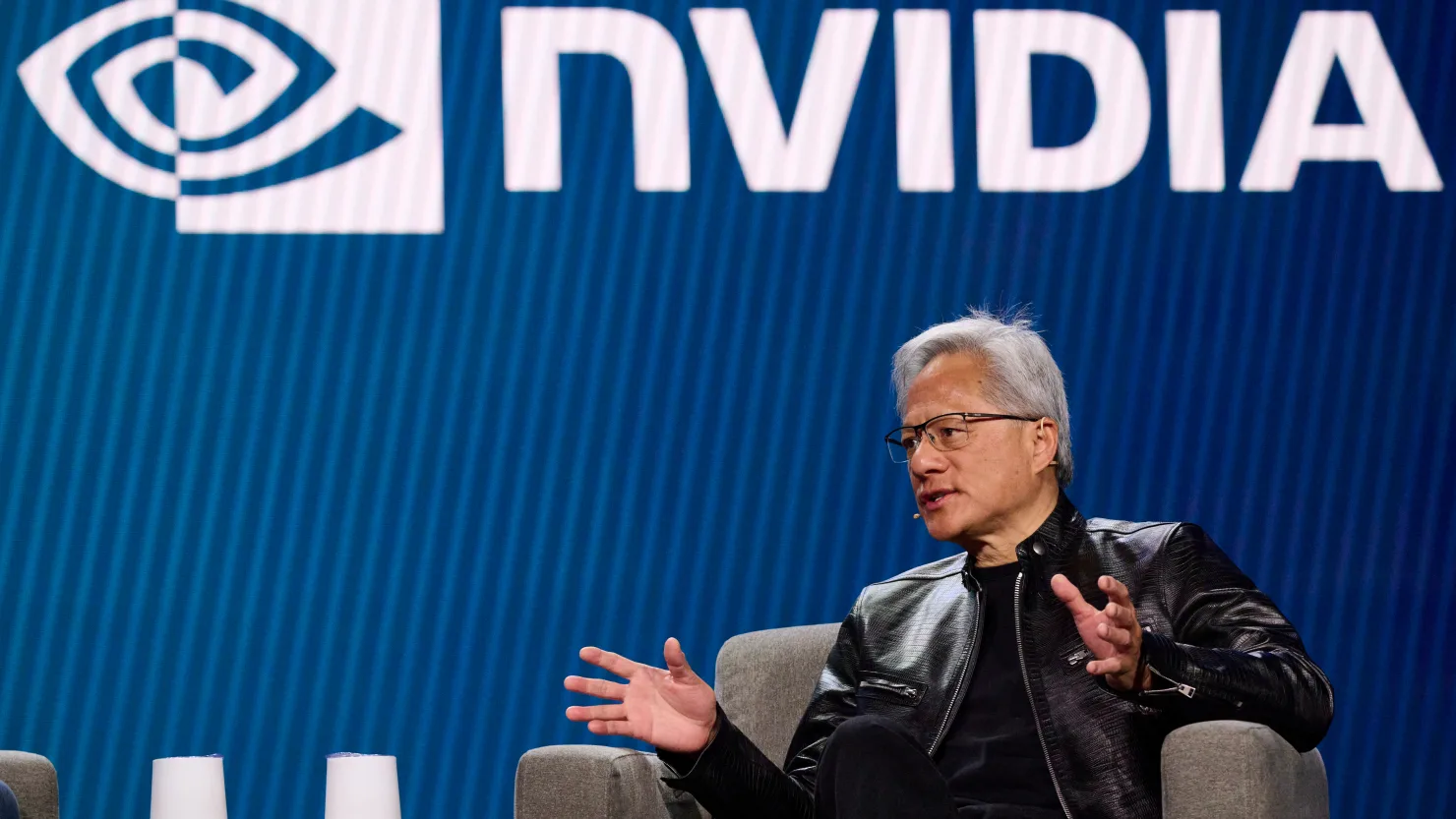
Nvidia just reported its 11th straight quarter of revenue growth above 55% as the leading tech names keep snapping up the company’s AI chips. Already the world’s most valuable public company, growth is now reaccelerating.
In its earnings report Wednesday, Nvidia said year-over-year revenue will surge about 77% this quarter to roughly $78 billion. That would mark the fastest growth rate for any period since the quarter ending January 2025, when expansion came in slightly higher at 78%. Its forecast sailed past the $72.6 billion average analyst estimate, according to LSEG.
Revenue in the fourth quarter jumped 73%, also topping estimates, following expansion of 62% in the prior period. The data center business, home to Nvidia’s AI graphics processing units, now accounts for over 91% of sales.
The chipmaker’s optimistic outlook comes as the company ramps production of Vera Rubin, its next rack-scale system for AI that will succeed Grace Blackwell. Nvidia says the system’s 72 next-generation Rubin graphics processing units (GPUs) are expected to deliver 10 times more performance per watt, compared to their predecessors.
Finance chief Colette Kress said on the earnings call after the report that the company shipped its “first Vera Rubin samples to customers earlier this week,” and that Nvidia expects every model builder and cloud provider to eventually deploy the system. She said the company now expects growth this year to exceed what was included in the company’s projection last year for a $500 billion revenue opportunity between Blackwell and Rubin.
“We believe we have inventory and supply commitments in place to address future demand, including shipments extending into calendar 2027,” Kress said.
Nvidia’s shares were little changed in extended trading after initially popping, reflecting investors’ lofty expectations for the company, which is valued at almost $5 trillion thanks to its dominance in AI processors.
There’s competition on the horizon, as smaller rival Advanced Micro Devices is set to release Helios, its first rack-scale system for AI, later this year. Earlier this week, Meta committed to deploying up to 6 gigawatts of AMD GPUs, with Helios shipments starting in 2026.
Nvidia also faces challenges from some of its biggest customers — namely Amazon and Google — making in-house AI chips to power their data centers. In its annual filing, Nvidia said a potential risk to future results is that “customers develop their own internal solution.”
Looking beyond fiscal 2027, growth is expected to slow dramatically, from 63% this year to 30%, 11.5% and 3% in the three subsequent years, according to LSEG.
‘Compute equals revenue’
But for now, Nvidia’s growth is far outpacing any of its competitors or peers as tech giants and AI model developers race to build out their infrastructure to meet soaring demand.
“In this new world of AI, compute equals revenues,” CEO Jensen Huang said on Wednesday’s earnings call. He repeated the phrase and variations of it several times during the call, in reference to the speedy adoption of agentic AI, which goes beyond early generative AI by allowing businesses to create and run applications with text prompts.
Anthropic’s Claude Cowork has quickly taken off in the enterprise by plugging into more applications. And earlier this month, OpenAI hired OpenClaw developer Peter Steinberger after his tool surged in popularity by automating tasks such as managing emails and calendars, browsing the web and interacting with online services.
“Between Claude Cowork and OpenClaw, compute demand is skyrocketing, and the ChatGPT moment of agentic AI has arrived,” Huang said on the call.
Not included in Nvidia’s first-quarter forecast is any potential data center revenue from China. A lack of clarity around export controls has kept Nvidia from selling into the world’s second-largest economy, even after President Donald Trump said in January that his administration would approve China sales of Nvidia’s H200 chip, with the U.S. government taking 25% of sales.
Huang said in May that China’s AI market would likely reach about $50 billion within two to three years, and that missing out on it would be a “tremendous loss.” It’s an opportunity that hasn’t yet opened up.
“While small amounts of H200 products for China-based customers were approved by the U.S. government, we have yet to generate any revenue and we do not know whether any imports will be allowed into China,” Kress said on the call. “We are not assuming any data center compute revenue from China in our outlook.”
CNBC


Demi Moore Sparks ‘Ozempic Ears’ Accusations At 2026 Actor Awards

Saudi firms raise hiring and pay despite PMI dip

UAE intercepts 9 ballistic missiles, 6 cruise missiles and 148 drones

Is February 2026 really a once-in -283-years MiracleIn?

Algeria, Burkina Faso, Côte d’Ivoire win AFCON 2025 openers

Bascom Palmer Eye Institute Abu Dhabi and Emirates Society of Ophthalmology Sign Strategic Partnership Agreement
-
Discover1 month ago
Is February 2026 really a once-in -283-years MiracleIn?
-
 Football2 months ago
Algeria, Burkina Faso, Côte d’Ivoire win AFCON 2025 openers
-
 Health3 months ago
Bascom Palmer Eye Institute Abu Dhabi and Emirates Society of Ophthalmology Sign Strategic Partnership Agreement
-
 Health2 months ago
NMC Royal Hospital, Khalifa City, performs rare wrist salvage, restoring function for young patient
-

 Health4 months ago
Emirates Society of Colorectal Surgery Concludes the 3rd International Congress Under the Leadership of Dr. Sara Al Bastaki
-

 Football3 months ago
Globe Soccer Awards 2025 nominees announced as voting opens in Dubai
-

 Health4 months ago
Born Too Soon: Understanding Premature Birth and the Power of Modern NICU Care
-

 Health2 months ago
Decline in Birth Rate in the UAE