
politics
Only one set of Iran’s 10-point proposal acceptable to the US
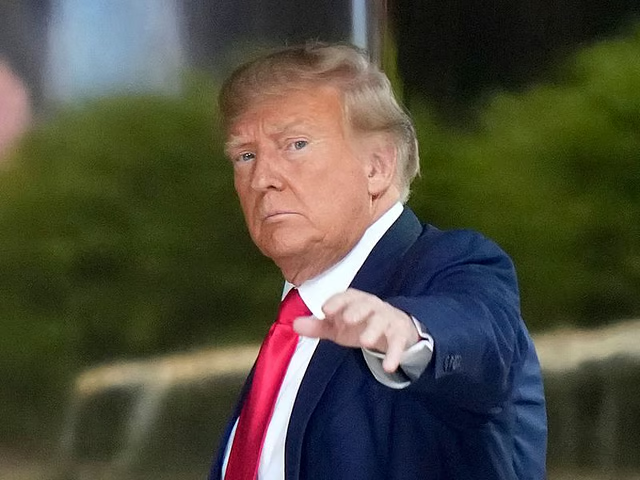
US President Donald J. Trump said Wednesday that only one set of proposed terms is acceptable to the United States as it negotiates with Iran to solidify a fragile ceasefire in the Middle East conflict.
In a statement released by the White House, Trump declared there is “only one group of meaningful ‘POINTS’” the U.S. will discuss behind closed doors.
Those points, he said, formed the basis for the two-week truce announced late Tuesday.
On Thursday, AFP reported that the details of the 10-point plan proposed by Iran that were published was not the one agreed to by the US.
“There is only one group of meaningful ‘POINTS’ that are acceptable to the United States, and we will be discussing them behind closed doors during these Negotiations…” – President Donald J. Trump pic.twitter.com/PP4jlW8LAJ
— The White House (@WhiteHouse) April 8, 2026
The remarks came hours after Iran publicly released what it called a 10-point peace framework.
Trump had earlier described a 10-point Iranian proposal as “a workable basis on which to negotiate.”
White House officials, however, said the version published by Tehran did not match the terms privately conveyed to the US and aligned with Washington’s own 15-point plan sent to Iran in March.
Trump dismissed other circulating documents as the work of “fraudsters, charlatans, and WORSE” with no role in the talks.
He said they would be exposed after a federal investigation.
The ceasefire halted active fighting that had disrupted shipping through the Strait of Hormuz.
Details of the agreement remain largely secret.
Negotiations start Friday
Trump has said he expects formal negotiations to begin Friday and move “quickly”.
He has stressed no uranium enrichment by Iran and the removal of buried nuclear material, Reuters reported.
The truce has shown early signs of strain.
Confusion persists over whether it covers Lebanon, where Israeli strikes continued.
GN
politics
UK PM arrives in Saudi Arabia, welcomes Iran war truce
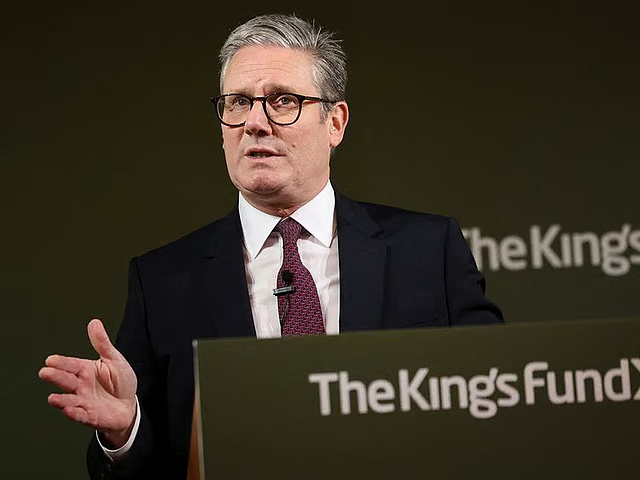
British Prime Minister Keir Starmer arrived Wednesday in Saudi Arabia, on the first stop of a Gulf tour aimed at bolstering the ceasefire in the Middle East war, Downing Street said.
Starmer — on his first visit to the region since the US-Israeli war against Iran started on February 28 — was expected to meet Saudi Arabia’s Crown Prince Mohammed bin Salman, later Wednesday.
As the British leader’s arrival was being announced, the Gulf kingdom’s defence ministry said it had intercepted nine drones targeting Saudi territory in recent hours, despite the ceasefire agreed overnight between the US and Iran.
The ministry’s post on X did not mention the location of the interceptions or any potential targets.
Earlier, Starmer welcomed the ceasefire deal, saying in a statement it “will bring a moment of relief to the region and the world”.
“Together with our partners we must do all we can to support and sustain this ceasefire, turn it into a lasting agreement and re-open the Strait of Hormuz,” he added.
Hours later, Starmer issued another joint statement with the leaders of Canada, Japan and various European countries, which said the goal must now be to negotiate an end to the war “within the coming days”.
“This can only be achieved through diplomatic means,” their statement added.
The UK leader’s Gulf tour follows a virtual meeting Tuesday of military planners from over 30 countries hosted by Britain.
It explored measures for an international coalition to make the Strait of Hormuz accessible and safe after a ceasefire, according to the Ministry of Defence.
Last week, a UK-led diplomatic virtual meeting of around 40 countries also discussed the critical waterway.
It has been largely closed since the war began, impacting global supplies of oil, liquified natural gas, and fertiliser.
UK armed forces personnel have intercepted more than 110 drone attacks in the region during the hostilities, while the Royal Air Force (RAF) have conducted more than 1600 hours of defensive operations, the Downing Street statement added.
GN
politics
Pakistan’s quiet diplomacy fuels US–Iran ceasefire breakthrough
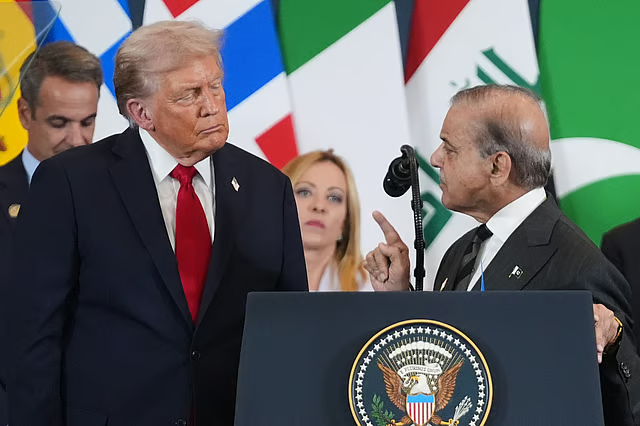
After weeks of intense behind-the-scenes diplomacy, Pakistan has emerged as a central player in brokering a fragile ceasefire between the United States and Iran, a breakthrough that diplomats say would not have been possible without Islamabad’s sustained efforts since the conflict began.
The two-week truce, announced on April 8, halts major hostilities in a war that has entered its sixth week and left a devastating humanitarian and economic toll across the region. According to official estimates and rights groups, more than 5,000 people have been killed in nearly a dozen countries, including over 1,600 civilians in Iran and more than 1,000 in Lebanon. Thousands more have been injured, while critical infrastructure including energy facilities, ports and transport networks, has suffered extensive damage.
I had a warm and substantive conversation with President Masoud Pezeshkian of Iran, this afternoon.
I conveyed my deep appreciation for the wisdom and sagacity of the Iranian leadership in accepting Pakistan’s offer to host peace talks in Islamabad later this week to work…
— Shehbaz Sharif (@CMShehbaz) April 8, 2026
Announcing the breakthrough on X, Pakistan Prime Minister Shehbaz Sharif said the United States and Iran, along with their allies, had agreed to an immediate ceasefire. “They have agreed to a ceasefire everywhere,” he said, adding that Pakistan would host the next phase of talks. “We welcome the delegations to Islamabad to negotiate a conclusive agreement to settle all disputes on April 10,” he said.
Big day
US President Donald Trump also confirmed the pause in hostilities, describing it as a step towards wider stability. “A big day for world peace,” he said, adding that both sides were ready to halt escalation. In a separate statement, he noted that the decision followed discussions with Pakistani leadership and was linked to reopening key maritime routes. “I agree to suspend the bombing … for a period of two weeks,” he said, calling it a “double-sided ceasefire.”
Pakistan’s military leadership also played a part. Chief of Army Staff Field Marshal Syed Asim Munir held conversations with senior US officials, including President Donald Trump, diplomatic sources said, reinforcing civilian diplomatic efforts at a critical juncture.
Visible phase
The most visible phase of this effort came in late March, when Islamabad hosted a high-level meeting of foreign ministers from Saudi Arabia, Turkey and Egypt. Led by Pakistan’s Deputy Prime Minister and Foreign Minister Ishaq Dar, the talks focused on de-escalation and laid the groundwork for a broader diplomatic push. Although immediate progress appeared limited, Pakistan quietly intensified its outreach in the days that followed.
Pakistan Prime Minister Shehbaz Sharif and senior officials held conversations with more than a dozen world leaders across Washington, Beijing, Moscow, Europe and the Gulf, seeking consensus on a limited ceasefire as a first step. At the same time, Pakistan’s military leadership engaged US counterparts, reinforcing the civilian diplomatic initiative at a critical moment.
Ceasefire proposal
Parallel contacts with Iranian officials ensured that communication channels remained open, even as tensions escalated. By early April, Islamabad had formalised a ceasefire proposal, calling for an immediate halt to hostilities followed by a defined window for negotiations, along with confidence-building measures around key flashpoints such as maritime routes.
As pressure mounted and fears of a wider regional war grew with threats of escalation that could have engulfed multiple countries, the proposal began gaining traction. The eventual agreement, a two-week ceasefire tied to the reopening of the Strait of Hormuz, reflected several elements of Pakistan’s framework.
Prime Minister Sharif announced that the truce would be followed by talks in Islamabad, inviting both US and Iranian delegations to begin negotiations on April 10. The capital is expected to host either direct or proximity talks, with Pakistan potentially acting as a go-between if face-to-face engagement proves difficult.
Analysts say Pakistan’s success lies in its ability to maintain trust across multiple fronts. Its close ties with regional players such as Saudi Arabia and Turkey, combined with support from China, Iran’s key economic partner, helped build momentum for de-escalation. At the same time, its working relationship with Washington provided crucial leverage at a decisive stage.
Direct risk
Economic considerations also shaped Islamabad’s urgency. With heavy reliance on energy imports passing through the Strait of Hormuz, Pakistan faced direct risks from prolonged disruption including fuel shortages, rising import costs and additional strain on its economy.
Despite the breakthrough, challenges remain. Differences persist over regional security arrangements and the scope of the ceasefire, with conflicting interpretations on whether it extends to areas like Lebanon. The coming days of negotiations will be critical in determining whether the temporary truce can evolve into a lasting settlement.
For now, however, the ceasefire marks a significant diplomatic win for Islamabad, underscoring how sustained, quiet engagement can influence the trajectory of a fast-moving and high-stakes conflict, even as the human and economic costs of the war continue to mount.
GN
politics
Trump–Iran agree 2-week ceasefire, reopen Hormuz
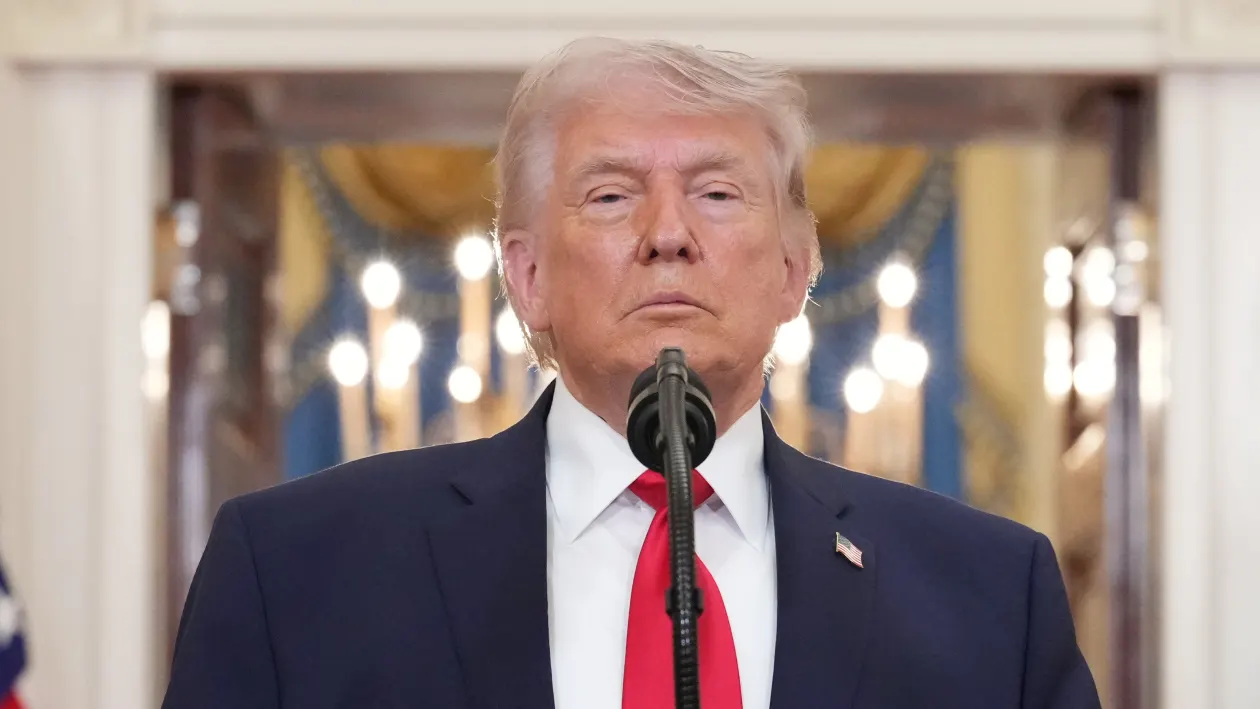
President Donald Trump on Tuesday said he agreed to suspend planned attacks on Iranian infrastructure for two weeks, backing off his shocking threats to imminently order the destruction of Iran’s “whole civilization.”
The move, more than five weeks after the U.S. and Israel launched the war, was “subject to the Islamic Republic of Iran agreeing to the COMPLETE, IMMEDIATE, and SAFE OPENING of the Strait of Hormuz,” he wrote on Truth Social.
The decision was “based on conversations with Prime Minister Shehbaz Sharif and Field Marshal Asim Munir, of Pakistan,” Trump wrote.
“This will be a double sided CEASEFIRE!” he declared.
Oil prices plunged as much as 16% following the announcement, while U.S. stock futures shot up.
Iran Foreign Minister Abbas Araghchi said in a separate statement that ships will be able to safely pass through the strait for the two-week interval “via coordination with Iran’s Armed Forces and with due consideration of technical limitations.”
Trump’s announcement came less than two hours before his deadline on Iran to either make a deal that includes opening the strait — a vital artery for global oil transit — or else face major attacks on its civilian infrastructure.
The 8 p.m. ET deadline — which Trump set Sunday after demanding in a belligerent social media post that Iran “Open the Fuckin’ Strait” — had caused panic in the U.S. and around the world.
Trump escalated matters dramatically on Tuesday morning, writing in another post, “A whole civilization will die tonight, never to be brought back again.”
Sharif on Tuesday afternoon had asked Trump for a two-week extension of his deadline for Iran. He also asked Iran’s leadership to agree to open up the strait for two weeks “as a goodwill gesture.”
“We also urge all warring parties to observe a ceasefire everywhere for two weeks to allow diplomacy to achieve conclusive termination of war, in the interest of long-term peace and stability in the region,” Sharif wrote in an X post.
Both the U.S. and Iran framed the development as a win.
Trump, in his post announcing the two-week delay, claimed the U.S. had agreed to halt its planned attacks because “we have already met and exceeded all Military objectives, and are very far along with a definitive Agreement concerning Longterm PEACE with Iran, and PEACE in the Middle East.”
“We received a 10 point proposal from Iran, and believe it is a workable basis on which to negotiate,” Trump wrote.
“Almost all of the various points of past contention have been agreed to between the United States and Iran, but a two week period will allow the Agreement to be finalized and consummated,” he wrote.
Iran’s Mehr News Agency later Tuesday posted a statement from the secretariat of the Islamic Republic’s Supreme National Security Council declaring that the U.S. “has accepted these principles as the basis for negotiations and has surrendered to the will of the Iranian people.”
“If the surrender of the enemy in the field becomes a decisive political achievement in the negotiations, we will celebrate this great historical victory together, otherwise we will fight side by side in the field until all the demands of the Iranian nation are achieved,” read a translation of the statement.
Iran will hold negotiations with the U.S. in Islamabad, the capital of Pakistan, for two weeks beginning in the coming days, according to the statement.
Iran’s 10-point proposal includes withdrawing U.S. combat forces from all regional bases, lifting all sanctions, releasing Iranian assets frozen abroad and full payment of Iran’s war-related damages. It would also establish a protocol for controlled passage through the Strait of Hormuz.
Trump, on Monday, said a ceasefire proposal put forward by Iran was “not good enough.” It was not immediately clear what in the intervening hours led him to accept Iran’s proposal as a “workable basis” for negotiations.
CNBC


Does more testosterone mean more muscle?

Anna Wintour’s Vogue cover is a power play
xAI sues Colorado over AI law

Is February 2026 really a once-in -283-years MiracleIn?

Algeria, Burkina Faso, Côte d’Ivoire win AFCON 2025 openers

NMC Royal Hospital, Khalifa City, performs rare wrist salvage, restoring function for young patient
-
Discover3 months ago
Is February 2026 really a once-in -283-years MiracleIn?
-
 Football4 months ago
Algeria, Burkina Faso, Côte d’Ivoire win AFCON 2025 openers
-
 Health3 months ago
NMC Royal Hospital, Khalifa City, performs rare wrist salvage, restoring function for young patient
-

 Health4 months ago
Bascom Palmer Eye Institute Abu Dhabi and Emirates Society of Ophthalmology Sign Strategic Partnership Agreement
-

 Health5 months ago
Emirates Society of Colorectal Surgery Concludes the 3rd International Congress Under the Leadership of Dr. Sara Al Bastaki
-

 Health5 months ago
Born Too Soon: Understanding Premature Birth and the Power of Modern NICU Care
-

 Lifestyle5 months ago
Saudi Arabia Lifestyle Trends 2025: What You Need to Know About Fitness, Wellness, Healthy Eating & Self-Care Growth
-

 Football5 months ago
Globe Soccer Awards 2025 nominees announced as voting opens in Dubai