
Culture
Inside Zayed National Museum: 6 must-visit galleries telling the UAE’s story
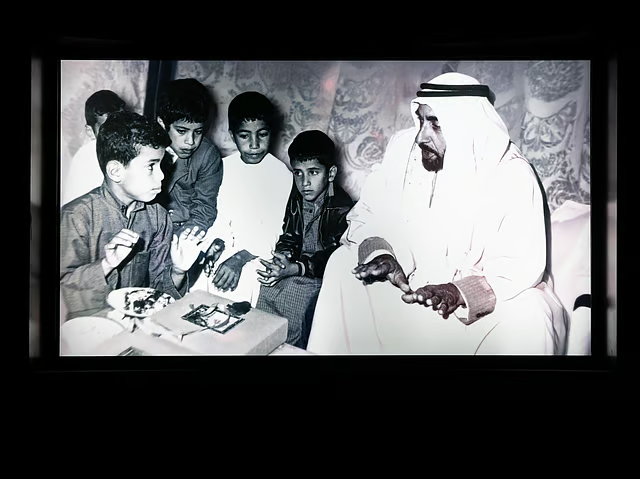
Zayed National Museum – the centrepiece of the Saadiyat Cultural District – opened its doors to the public, offering an immersive journey through the history, heritage and identity of the UAE. It was inaugurated on Tuesday during the National Day official ceremony.
From the earliest evidence of human habitation on the Arabian Peninsula to the formation of a modern nation, the museum weaves together archaeology, environment, leadership and culture into a powerful narrative that spans more than 300,000 years. As both a national landmark and cultural bridge linking the seven emirates, the museum underscores their shared past and collective vision for the future. Al Masar Garden
The visitor journey begins in the museum’s striking 600-metre outdoor gallery, the Al Masar Garden. This landscaped pathway sets the tone for the experience ahead, connecting visitors to the natural environment before leading into the indoor exhibitions, which explore Sheikh Zayed’s life, the natural landscapes of the UAE, ancient civilisations, maritime history and the traditions of inland communities. Together, the galleries reveal how geography, innovation, exchange and faith shaped Emirati identity over millennia.
Our Beginning
The first gallery, Our Beginning, introduces the formation of the UAE and offers an intimate look at the leadership, legacy and beliefs of Sheikh Zayed. Through a blend of storytelling and personal artefacts, the gallery presents the Founding Father not only as a statesman, but also as a visionary deeply rooted in the culture and landscape of his homeland.
One of the most striking highlights is a meticulously recreated Chrysler Newport in Formal Black. This vehicle mirrors the one Sheikh Zayed was seen driving in the 1968 documentary Farewell Arabia. A digital enhancement of the film confirmed it to be a 1966 model. An exact match was sourced from California and restored to reflect Sheikh Zayed’s original car, complete with a flag mount and larger wheels designed to withstand rough desert terrain.
Other significant items in the gallery include a foetal heart monitor used at Kanad Hospital in Al Ain in the 1960s, the graduation bisht of one of the first students of the United Arab Emirates University, crafted from goat and camel hair, cotton and gold thread. An asaa (camel stick) and a rich photographic archive – including rarely seen images of Sheikh Zayed, key development projects and everyday life in the newly unified nation – further enrich the narrative.
Through Our Nature
The gallery explores the profound and enduring relationship between the people of the UAE and their environment. It illustrates how dramatic landscapes, natural resources and human ingenuity shaped life in the region over millions of years.
At its centre is a three-metre-long, three-dimensional alabaster map of the UAE, accompanied by a projection that traces the geological evolution of the land. The display shows the ancient Tethys Ocean from 200 million years ago, the rise of the Hajar Mountains some 70 million years ago, and the gradual formation and filling of the Arabian Gulf, reaching its current shape around 6,000 years ago.
Five striking artistic dioramas depict the formation and use of the region’s natural resources, including fossil fuels represented by delicate glass microorganisms. Another diorama highlights Sheikh Zayed’s pioneering hydroponic farming experiments on Sadiyat Island in the early 1970s.
To Our Ancestors
The gallery examines evidence of human activity in the UAE dating back more than 300,000 years and explores early trade connections within the Arabian Gulf and beyond.
Among the most extraordinary objects is the Abu Dhabi Pearl, estimated to be around 8,000 years old – one of the oldest natural pearls ever discovered. Unearthed in 2017 at a Neolithic settlement on Marawah Island, approximately 20 kilometres off the UAE coast, it may have been used as an adornment and stands as a powerful symbol of the region’s ancient relationship with the sea.
Other artefacts include a Neolithic vase decorated with geometric patterns, a Palaeolithic stone tool dating back over 300,000 years, and a pendant adorned with mirrored animal motifs discovered in a communal tomb in Al Ain more than 3,000 years old. Through Our Connections
Spanning from the Iron Age around 3,000 years ago to the 1100s CE, the gallery explores the rise of trade, the development of the Arabic language and the arrival of Islam in the region. Rare manuscripts, multimedia displays and archaeological finds offer insight into how ancient societies adapted, communicated and prospered.
A standout piece is the Abiel Coin, an example of the earliest coinage used in the UAE, inspired by the currency of Alexander the Great in the 4th century BCE. It bears a stylised image of the Greek hero Herakles on one side and a seated figure with a horse on the other.
Additional highlights include a ceramic cup engraved with representations of ancient falaj irrigation channels, referenced by Pliny the Elder in Natural History, written nearly 2,000 years ago. The gallery also features folios from the legendary Blue Qur’an, now confirmed to have originated in Al Andalus, Spain.
By Our Coasts
This gallery traces more than five centuries of life along the Emirates’ shores – from advances in navigation in the 14th century to the decline of the pearling industry in the early 20th century.
Notable objects include a glazed Longquan porcelain dish from China (1300–1400 CE), prized for its distinctive green hue, and fragments of an Imperial Ming dynasty pomegranate dish (1426–1435 CE) discovered in Julfar, present-day Ras Al Khaimah, showcasing the region’s importance in global trade. Traditional boatbuilding tools from the 1970s – such as the judoom (axe), minqar (chisel) and maj’dah (bow drill) – highlight the craftsmanship that sustained coastal life.
To Our Roots
The final gallery, To Our Roots, shifts the focus inland, exploring how communities survived and thrived in the deserts, mountains and oases of the UAE. It sheds light on traditional knowledge, essential skills and the deep respect for the environment passed down through generations.
Among the poignant objects is the maenega, an aromatic necklace from the Al Dhafra region in the 1950s, traditionally placed around an infant’s neck for comfort and protection. Other highlights include the rababa, a single-stringed instrument central to Nabati poetry, an ancient ceramic incense burner from Al Ain dating between 1000 and 600 BCE, a wasem (cauterisation tool), a mikhala (kohl container) and an unglazed storage jar.
Together, these galleries form a compelling, sensory-rich narrative of a nation’s journey – from ancient seas to modern skylines, from tradition to innovation – honouring the past while inspiring future generations.
More details, entry tickets and annual memberships are available at zayednationalmuseum.ae.
Story by Gulf News
Culture
What is Hag Al Laila?
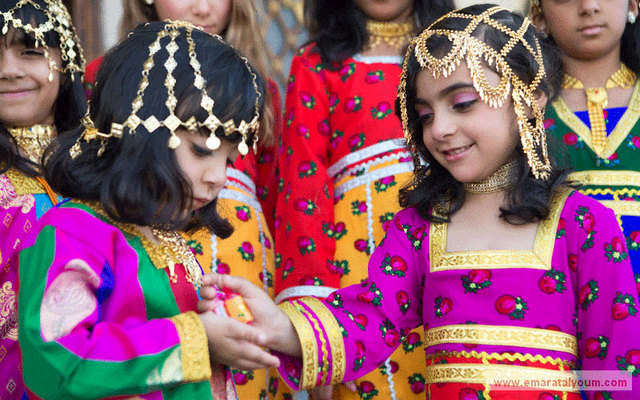
Fifteen days before Ramadan every year, children wear traditional clothes and carry colourful woven bags as they go door-to-door, singing in return for nuts and sweets. Hag Al Laila, which means “for this night”, usually begins after maghreb prayers and is a joyful way to remind communities that the holy month is just around the corner.
While popularly known as Hag Al Laila in countries including the UAE, the tradition is known by different names across the region. In Iraq, Kuwait, Qatar, Bahrain and some cities in Saudi Arabia, it is called gerga’aan and is celebrated on the 15th day of Ramadan instead. It is celebrated on the same day in Oman too, but is called qaranqasho.
Origins
While its actual origins are known, some trace the tradition to one of the earliest Ramadans, when Fatima, the daughter of the Prophet Mohammed, distributed sweets to people two weeks into the holy month. Others, however, suggest it predates Islam and could even be the basis for Halloween’s trick-or-treat tradition.
When is Hag Al Laila this year?
While the exact start of Ramadan will be dictated by the sighting of the new crescent moon, Ibrahim Al Jarwan, chairman of the board of directors of the Emirates Astronomy Society, told The National earlier that Ramadan was expected to begin on February 18.
This means Hag Al Laila would take place on February 3. However, some celebrations have already begun across the UAE. In Dubai, for example, bridges and lampposts have been decorated to mark the occasion. Malls in Abu Dhabi and Dubai have also launched a series of children’s activities, from traditional music performances to games and giveaways.
THE NATIONAL
Culture
Three Eid holidays in one year?
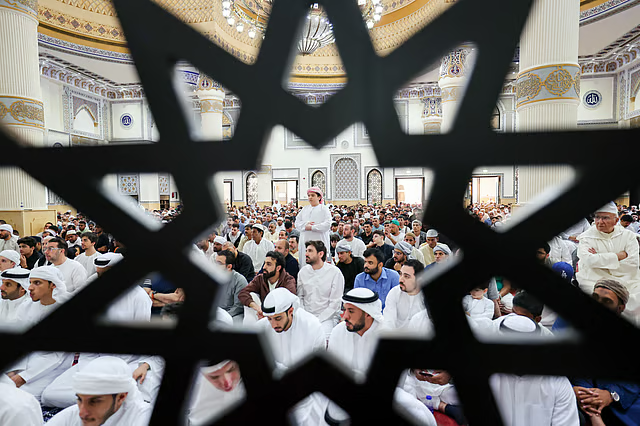
Residents in the UAE and the wider Muslim world are set to experience a rare astronomical alignment in 2039, with three Eid festivals falling within a single Gregorian calendar year.
According to renowned climate and astronomical expert Dr. Abdullah Al Misnad from Saudi Arabia, the unusual alignment stems from the way the Islamic lunar calendar gradually shifts against the solar Gregorian calendar, advancing by roughly 11 days each year.
Double Hajj and the Day of Arafat
The drift will lead to a remarkable convergence in 2039. The year will begin with the first Eid Al Adha falling on January 6, 2039, corresponding to 10 Dhul Hijjah 1460, the traditional culmination of Hajj and the major festival of sacrifice. But that won’t be the only one.
Nearly 12 months later, the lunar calendar will complete its full cycle again, and a second Hajj season will begin, culminating in another Eid Al Adha on December 26, corresponding to the 10th of Dhul Hijjah in the year 1461.
This means that two separate pilgrimages to Mecca will be performed within a single solar year, an exceedingly rare feat.
Even more unusual: both occasions will come with their own Day of Arafat, the spiritually charged day preceding the Eid, when pilgrims gather at Mount Arafat to pray.
Sandwiched between these two events will be Eid Al Fitr, expected to fall on October 19, 2039. Three Eids in a single year, two sacrificial and one celebratory, amount to an unparalleled spiritual cycle of fasting, pilgrimage, prayer, and festivity.
The lunar calendar’s shift is not limited to the Hajj season. Ramadan, the holiest month of fasting and spiritual reflection, will also experience a similar occurrence in the near future.
Two Ramadans in 2030
In 2030, Muslims will observe two Ramadans within the same Gregorian year, one beginning in January and another starting in December. This event will be the first double Ramadan in 33 years, following the last occurrence in 1997.
The Islamic Hijri calendar is based on the phases of the moon and consists of 354 or 355 days. The Gregorian calendar, which follows the solar cycle, consists of 365 or 366 days. This mismatch causes Islamic dates to shift earlier each year by approximately 10 to 11 days.
Gulf News
Culture
Al-Jouf to Launch 19th Olive Festival
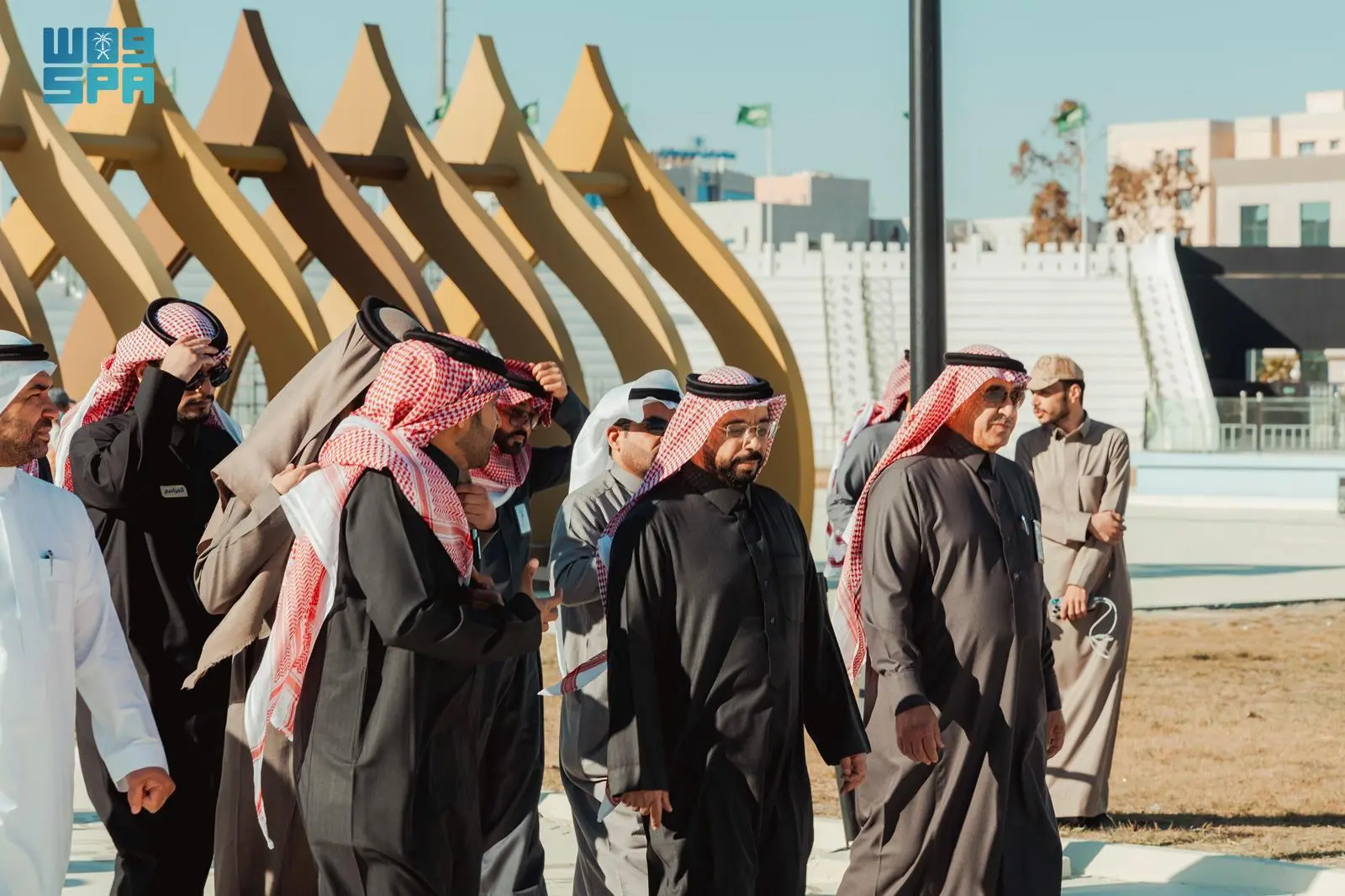
The digital media conference for the 19th Al-Jouf International Olive Festival 2026 unveiled today the highlights of the festival, showcasing innovative experiences that combine the richness of the olive world with the authenticity of Saudi culture.
Held annually under the patronage of Governor of Al-Jouf Region Prince Faisal bin Nawaf bin Abdulaziz, the festival, running from January 8 to 17 in Sakaka, will feature 45 olive farms, 10 agricultural companies, and participants from seven countries.
Secretary of the region and chairman of the festival’s higher committee Atef Al-Shar’an said that the festival helps empower farmers and promote the quality of olive oil locally and regionally.
This year’s festival will include a new operetta, an international olive kitchen with chefs from several countries, six play areas, and three musical zones.
— SPA


Private Credit Investors Rush to Withdraw
UAE moves spring break for schools and universities

How Etihad Rail ferried 350+ UAE passengers back home with Saudi help
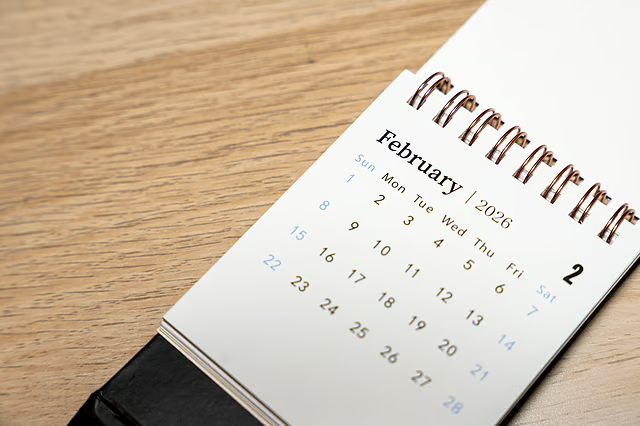
Is February 2026 really a once-in -283-years MiracleIn?

Algeria, Burkina Faso, Côte d’Ivoire win AFCON 2025 openers

Bascom Palmer Eye Institute Abu Dhabi and Emirates Society of Ophthalmology Sign Strategic Partnership Agreement
-
Discover1 month ago
Is February 2026 really a once-in -283-years MiracleIn?
-
 Football2 months ago
Algeria, Burkina Faso, Côte d’Ivoire win AFCON 2025 openers
-
 Health3 months ago
Bascom Palmer Eye Institute Abu Dhabi and Emirates Society of Ophthalmology Sign Strategic Partnership Agreement
-
 Health2 months ago
NMC Royal Hospital, Khalifa City, performs rare wrist salvage, restoring function for young patient
-

 Health4 months ago
Emirates Society of Colorectal Surgery Concludes the 3rd International Congress Under the Leadership of Dr. Sara Al Bastaki
-

 Health4 months ago
Born Too Soon: Understanding Premature Birth and the Power of Modern NICU Care
-

 Football3 months ago
Globe Soccer Awards 2025 nominees announced as voting opens in Dubai
-

 Health2 months ago
Decline in Birth Rate in the UAE