
COMMUNITY
Eid Al Etihad the UAE’s evolving national identity
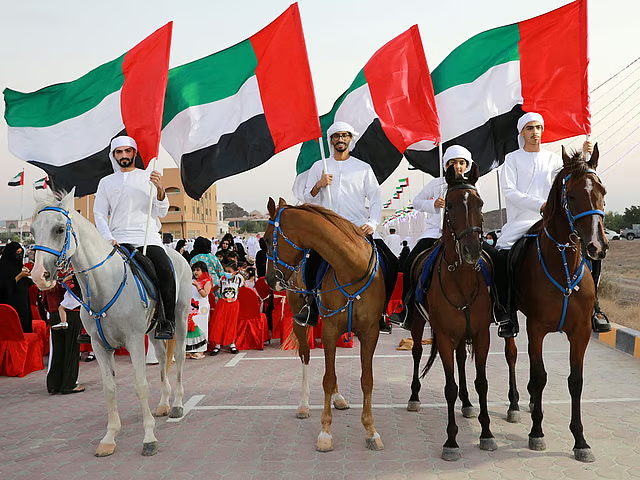
Every year on December 2, the United Arab Emirates marks Eid Al Etihad, its National Day, a moment that transcends commemoration. For Emiratis, it is not simply a historical anniversary as it is a living expression of national identity, unity, and purpose. While every country celebrates a national day, few do so with the same blend of cultural pride, inclusivity, and forward-looking confidence that the UAE projects. National Day in the Emirates is unique precisely because it captures a story still being written, one of nation-building, modernity, and social transformation.
A Union born of vision, not circumstance
The UAE is one of the few modern states whose national identity did not emerge from war, revolution, or political rupture. Instead, the Union was built through consensus, negotiation, and leadership foresight. The founding fathers, led by the late Sheikh Zayed bin Sultan Al Nahyan, imagined a federation grounded in cooperation and shared destiny at a time when such an idea was far from inevitable. This makes National Day not just a remembrance of 1971, but a celebration of a political culture that values stability, unity, and pragmatic statecraft. These qualities continue to define the UAE’s domestic and foreign policies today.
Tolerance and coexistence as cornerstones of identity
A defining feature of the UAE’s national identity is its commitment to tolerance, an element formally enshrined in national policy and reflected in everyday life. While many countries speak of coexistence, the UAE operationalises it. Mosques, churches, temples, synagogues, and gurdwaras stand alongside one another. Interfaith initiatives, dialogue centres, and a declared Year of Tolerance demonstrate that religious coexistence is not symbolic as it is structural. For Emiratis, tolerance is not simply a moral stance but a strategic one. In a country where expatriates vastly outnumber citizens, coexistence is a precondition for national cohesion. National Day, therefore, becomes an annual reminder that diversity is not a threat to the nation, but an anchor of its strength.
A multicultural society with an Emirati core
The UAE’s demographic reality is unmatched: more than 200 nationalities live, study, worship, and work within its borders. It is one of the most diverse societies per capita in the world. Unlike other global hubs, the UAE has maintained a clear and confident Emirati cultural core. National Day celebrations illustrate this balance vividly. Traditional Al Ayala dances, camel festivals, and heritage villages coexist with drone light shows, skyscraper illuminations, and public performances. This blending of worlds demonstrates that in the UAE, modernity does not erase tradition. It elevates it.
Emirati identity has therefore evolved into a hybrid, rooted in Bedouin values, maritime heritage, and Islamic principles, but comfortable with globalism, technology, and cosmopolitan lifestyles.
Modernity meets tradition — not in conflict, but in dialogue
Many societies frame modernity and tradition as opposing forces. The UAE does the opposite: it brings them into conversation. Architectural styles, social norms, and even fashion showcase this interplay. Majlis culture coexists with world-class universities; falconry is preserved while AI research labs expand; traditional dress remains iconic even as global luxury brands open flagship stores.
National Day captures this duality. Celebrations are both nostalgic and futuristic, such as heritage performances alongside advanced pyrotechnics, traditional food markets next to space-themed exhibitions. The message is clear: the UAE’s path to modernity does not require shedding its identity, but reinterpreting it for the future.
Family, women and national identity — A vision for 2026 and beyond
The UAE’s leadership has designated 2026 as the Year of the Family, underscoring how central families are to the country’s social fabric. In Emirati culture, the family is not merely a private institution as it is a foundation of national cohesion, moral values, and intergenerational continuity. National Day, with its emphasis on unity and belonging, reinforces this connection.
Family gatherings, public celebrations, and shared national rituals strengthen the bonds between generations, allowing grandparents, parents, and children to collectively remember the country’s past and imagine its future. The Year of the Family highlights these values at a time when the UAE is preparing for its next developmental phase, recognising that strong families are essential to a resilient society.
This national emphasis also aligns with the UAE’s long-standing commitment to women’s empowerment and gender inclusion. Emirati women today occupy leading roles in government, business, diplomacy, science, and the arts. Their success stories, celebrated every Emirati Women’s Day, are increasingly embedded into the country’s identity narrative. The government’s push to promote women’s leadership reflects the belief that national progress is a shared project and that gender equality strengthens, not dilutes, cultural authenticity.
The mandate for 50 per cent representation in the Federal National Council, alongside laws ensuring equal pay and protections against domestic violence, reflects a model of modernity firmly rooted in Islamic values of justice and equality. The Emirati woman, whether a minister shaping policy, an astronaut representing the nation in space, or an entrepreneur redefining industries, symbolises the UAE’s successful negotiation between tradition and contemporary necessity.
National Day therefore becomes a moment to acknowledge that the UAE’s identity is shaped not only by its founding fathers, but also by its families and the women who have driven forward its social and economic transformation
National Day as a social glue in a diverse population
In a society that is majority expatriate, National Day plays a crucial integrative role. The celebrations invite all residents, citizens and non-citizens alike, to participate, cultivating a sense of shared attachment. For many expatriates, National Day is often the moment when they feel most connected to the country that has become their home.
This inclusive approach distinguishes the UAE from many other nations. It reinforces the idea that national identity is not defined solely by ancestry, but also by contribution, respect, and belonging.
A nation built on ambition and possibility
Beyond culture and coexistence, National Day embodies the UAE’s ethos of ambition. Each year, the country celebrates new achievements, satellites launched, economic milestones reached, strategic partnerships strengthened, and innovations introduced.
The symbolism is powerful: the union is not static. It is dynamic. National identity in the UAE is tied not only to the past, but to an expectation of constant progress.
In many ways, National Day is a mirror reflecting what the UAE stands for: unity, tolerance, diversity, innovation, family cohesion, and gender inclusion. It reminds the world that Emirati national identity is not insular or defensive, but open, adaptable, and outward-looking.
In a region often marked by division and volatility, the UAE’s National Day stands as a symbol of unity, coexistence, and aspiration, a testament to a nation that has built its identity not on conflict, but on vision.
Gulf News
COMMUNITY
AlUla Club Marks International Day of the Arabian Leopard
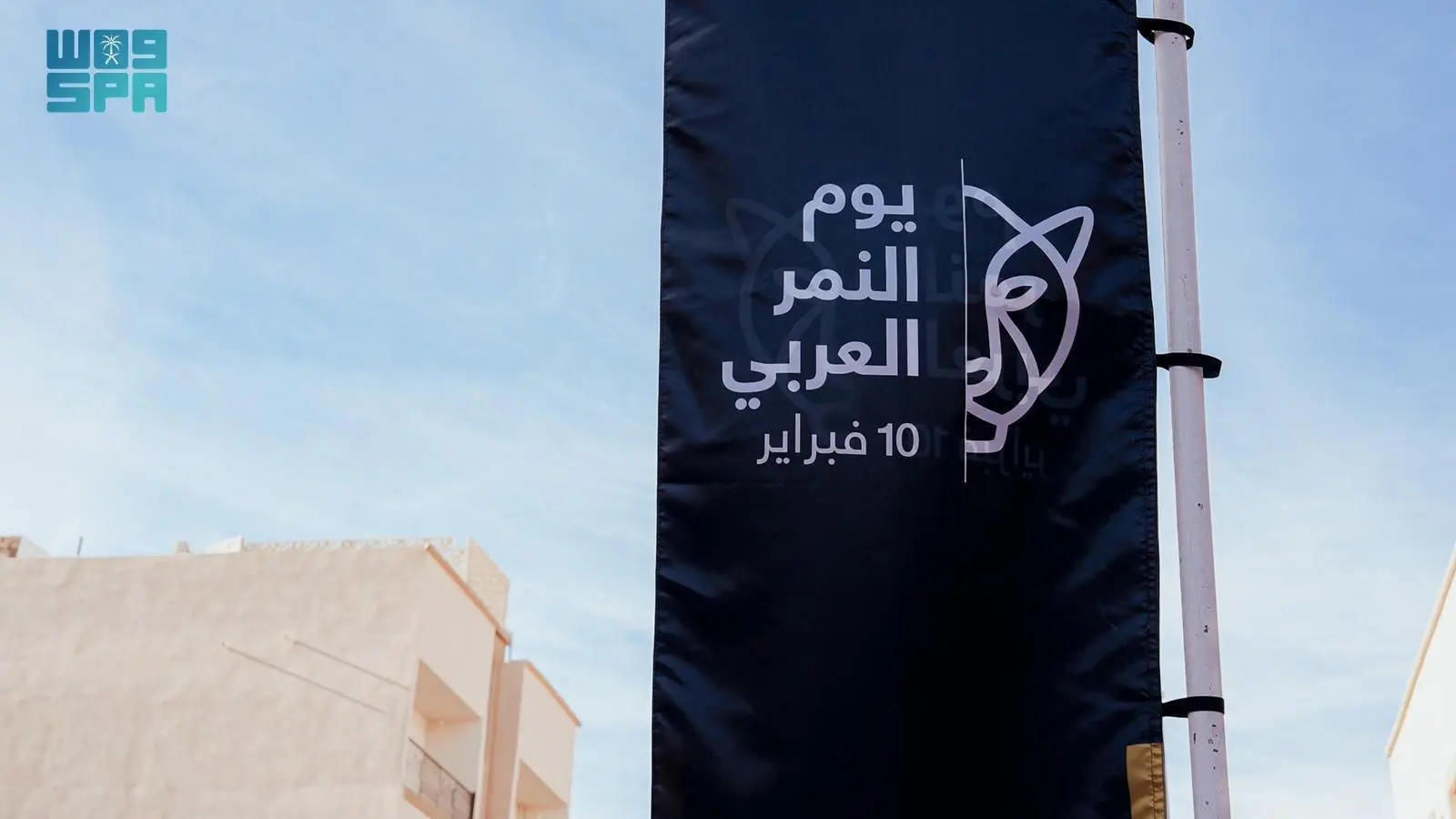
AlUla Club organized an awareness event yesterday to mark the International Day of the Arabian Leopard, with broad participation from residents of AlUla Governorate and visitors. The event is part of the club’s efforts to enhance environmental awareness and support wildlife protection initiatives.
The event aimed to educate youth and the community at large, and especially visitors to the governorate, about the importance of conserving biodiversity. It also sought to reinforce positive behaviors that support wildlife protection, underscoring the role of community initiatives in supporting national efforts to protect the environment, and sustain it.
— SPA
COMMUNITY
Saudi Arabia to issue passports for millions of camels
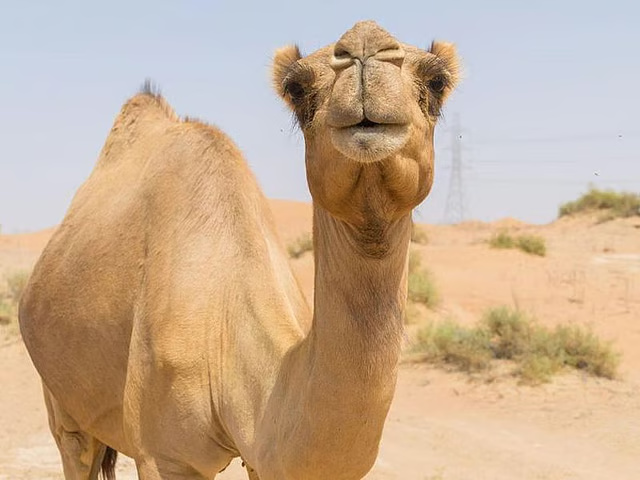
Saudi Arabia has announced plans to issue official passports for camels, a move aimed at better regulating and managing one of the kingdom’s most culturally and economically significant assets.
In a statement this week, Saudi Ministry of Environment, Water and Agriculture said the initiative would help improve oversight of camel ownership while enhancing ‘productivity and efficiency in the sector’ by creating a centralised and reliable reference database.
According to state-backed broadcaster Al Ekhbariya, the document will be used to regulate the sale, transport and trade of camels, while also helping protect owners’ rights and simplify proof of ownership.
Saudi authorities estimate that the kingdom is home to around 2.2 million camels, based on government figures released in 2024. The animals remain deeply embedded in Saudi society — historically as a primary means of transport and today as symbols of heritage, prestige and wealth.
In recent years, camels have also become central to a lucrative breeding and competition industry, particularly at large annual festivals such as the King Abdulaziz Camel Festival, where prize-winning animals can sell for hundreds of thousands of dollars.
That growing commercial value has prompted authorities to tighten oversight, especially after repeated scandals involving cosmetic manipulation of camels entered into beauty contests. Organisers have banned practices such as injections and fillers used to enhance lips, noses and humps, with offenders facing fines and disqualification.
Officials say the passport system is part of a broader effort to modernise agricultural governance while preserving traditional industries — using documentation, data and traceability to manage practices that once relied entirely on oral record and custom.
GN
COMMUNITY
Saudi Arabia suspends 1,800 foreign Umrah agencies after review
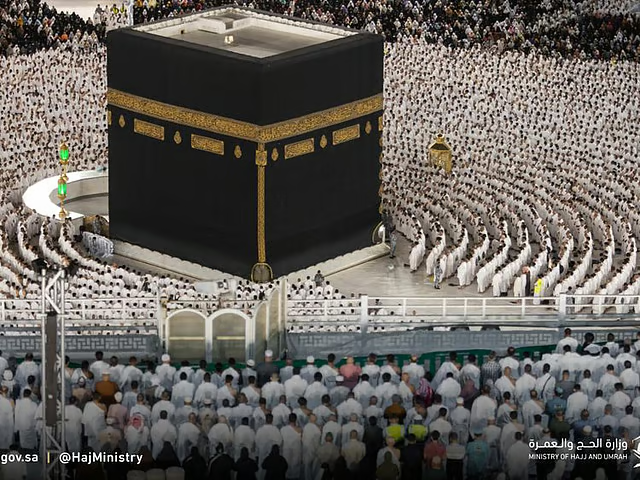
Saudi Arabia’s Ministry of Hajj and Umrah has suspended contracts with about 1,800 foreign travel agencies operating in the Umrah sector, giving them 10 days to rectify their status following a periodic performance review, the ministry said.
The affected agencies are among roughly 5,800 foreign firms authorised to provide Umrah services. The decision was taken after evaluations identified performance deficiencies and weak service quality, the Saudi Press Agency reported on Sunday
The ministry said the suspension applies only to the issuance of new Umrah visas and is intended as a regulatory measure to allow agencies to address classification issues and improve compliance with approved standards. Contracts will be reactivated once the requirements are met within the specified grace period, it added.
The ministry stressed that Umrah pilgrims holding valid visas or existing reservations will not be affected, confirming that services to them will continue without disruption.
Applying approved classification criteria and performance indicators is a core regulatory tool to raise compliance among service providers and ensure that services meet required standards, the ministry said, adding that protecting the rights of Umrah performers and ensuring service continuity remain central priorities.
Ghassan Alnwaimi, the ministry’s spokesperson, said regulatory action would be taken against any agency that fails to correct deficiencies by the deadline. He added that the ministry would continue to rely on monitoring and evaluation mechanisms to strengthen the reliability of the Umrah sector and safeguard pilgrims’ rights.
GN


Private Credit Investors Rush to Withdraw
UAE moves spring break for schools and universities

How Etihad Rail ferried 350+ UAE passengers back home with Saudi help

Is February 2026 really a once-in -283-years MiracleIn?

Algeria, Burkina Faso, Côte d’Ivoire win AFCON 2025 openers

Bascom Palmer Eye Institute Abu Dhabi and Emirates Society of Ophthalmology Sign Strategic Partnership Agreement
-
Discover1 month ago
Is February 2026 really a once-in -283-years MiracleIn?
-
 Football2 months ago
Algeria, Burkina Faso, Côte d’Ivoire win AFCON 2025 openers
-
 Health3 months ago
Bascom Palmer Eye Institute Abu Dhabi and Emirates Society of Ophthalmology Sign Strategic Partnership Agreement
-
 Health2 months ago
NMC Royal Hospital, Khalifa City, performs rare wrist salvage, restoring function for young patient
-

 Health4 months ago
Emirates Society of Colorectal Surgery Concludes the 3rd International Congress Under the Leadership of Dr. Sara Al Bastaki
-

 Health4 months ago
Born Too Soon: Understanding Premature Birth and the Power of Modern NICU Care
-

 Football3 months ago
Globe Soccer Awards 2025 nominees announced as voting opens in Dubai
-

 Health2 months ago
Decline in Birth Rate in the UAE