
COMMUNITY
Ancient cheetah mummies discovered in Saudi Arabia
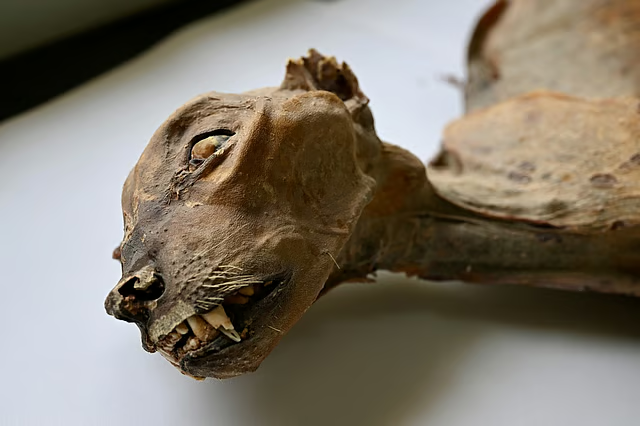
Scientists have uncovered the mummified remains of cheetahs from caves in northern Saudi Arabia.
The remains range from 130 years old to over 1,800 years old. Researchers excavated seven mummies along with the bones of 54 other cheetahs from a site near the city of Arar.
Mummification prevents decay by preserving dead bodies. Egypt’s mummies are the most well-known, but the process can also happen naturally in places like glacier ice, desert sands and bog sludge.
The new large cat mummies have cloudy eyes and shriveled limbs, resembling dried-out husks.
Mummification prevents decay by preserving dead bodies. Egypt’s mummies are the most well-known, but the process can also happen naturally in places like glacier ice, desert sands and bog sludge.
The new large cat mummies have cloudy eyes and shriveled limbs, resembling dried-out husks.
“It’s something that I’ve never seen before,” said Joan Madurell-Malapeira with the University of Florence in Italy, who was not involved with the discovery.
Researchers aren’t sure how exactly these new cats got mummified, but the caves’ dry conditions and stable temperature could have played a role, according to the new study published Thursday in the journal Communications Earth and Environment.
They also don’t know why so many cheetahs were in the caves. It could have been a denning site where mothers birthed and raised their young.
Scientists have uncovered the rare mummified remains of other large cats, including a saber-toothed cat cub in Russia.
It’s uncommon for large mammals to be preserved to this degree. Besides being in the right environment, the carcasses also have to avoid becoming a snack for hungry scavengers like birds and hyenas.
Cheetahs once roamed across most of Africa and parts of Asia, but now live in just 9% of their previous range and haven’t been spotted across the Arabian Peninsula for decades. That’s likely due to habitat loss, unregulated hunting and lack of prey, among other factors.
In a first for naturally mummified large cats, scientists were also able to peek at the cheetahs’ genes and found that the remains were most similar to modern-day cheetahs from Asia and northwest Africa. That information could help with future efforts to reintroduce the cats to places they no longer live.
GN
COMMUNITY
AlUla Club Marks International Day of the Arabian Leopard
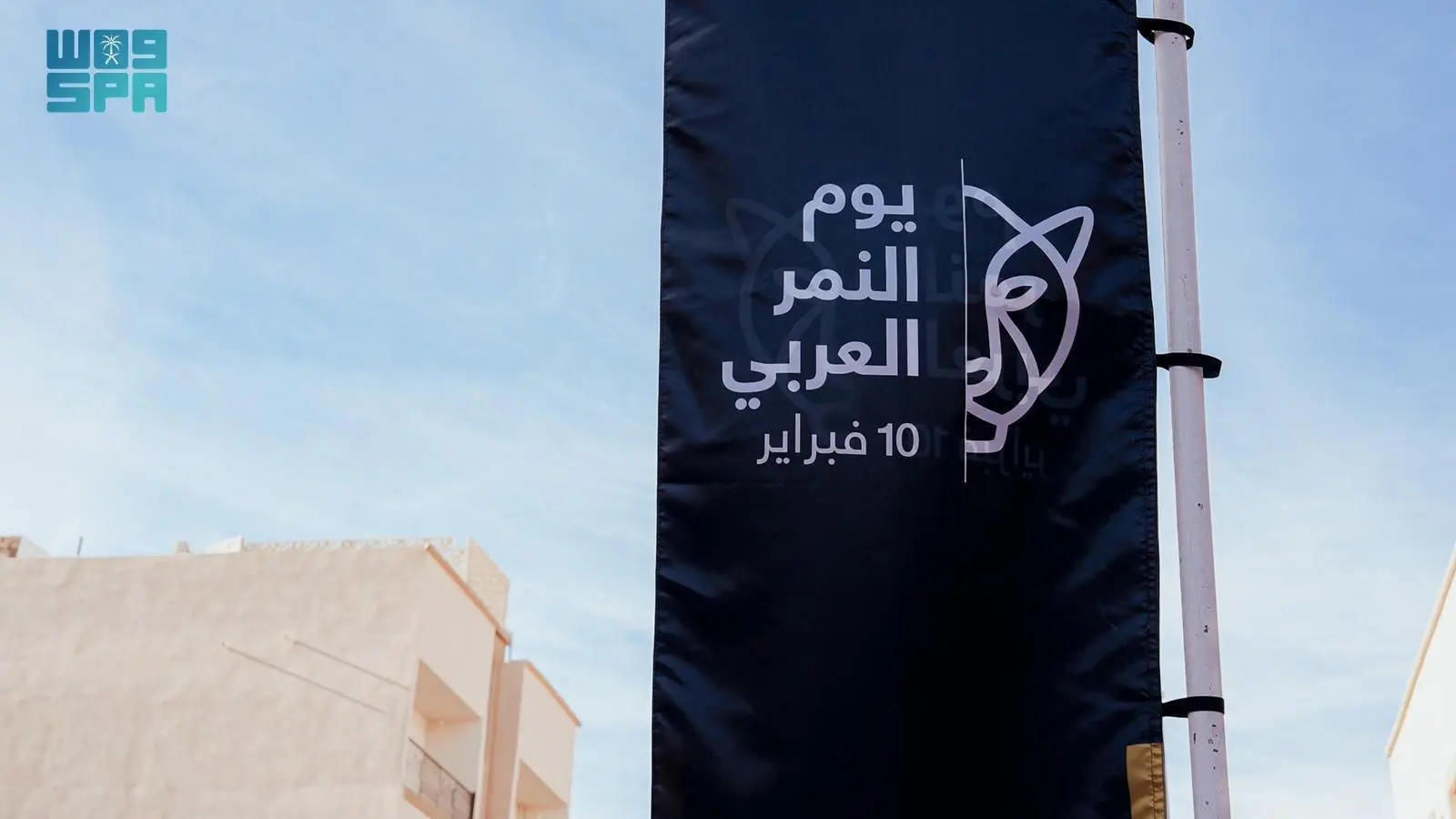
AlUla Club organized an awareness event yesterday to mark the International Day of the Arabian Leopard, with broad participation from residents of AlUla Governorate and visitors. The event is part of the club’s efforts to enhance environmental awareness and support wildlife protection initiatives.
The event aimed to educate youth and the community at large, and especially visitors to the governorate, about the importance of conserving biodiversity. It also sought to reinforce positive behaviors that support wildlife protection, underscoring the role of community initiatives in supporting national efforts to protect the environment, and sustain it.
— SPA
COMMUNITY
Saudi Arabia to issue passports for millions of camels
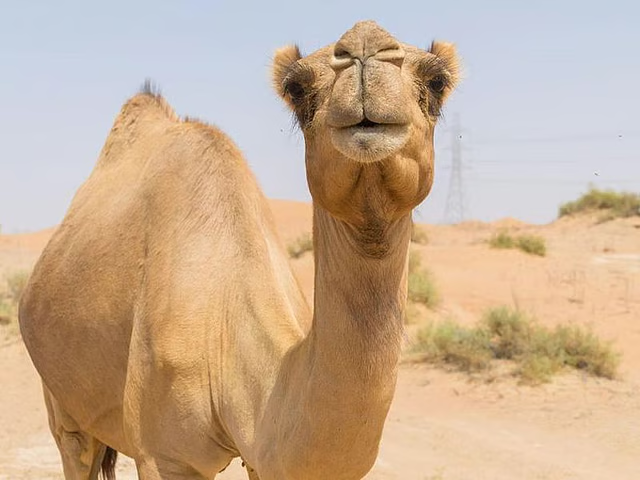
Saudi Arabia has announced plans to issue official passports for camels, a move aimed at better regulating and managing one of the kingdom’s most culturally and economically significant assets.
In a statement this week, Saudi Ministry of Environment, Water and Agriculture said the initiative would help improve oversight of camel ownership while enhancing ‘productivity and efficiency in the sector’ by creating a centralised and reliable reference database.
According to state-backed broadcaster Al Ekhbariya, the document will be used to regulate the sale, transport and trade of camels, while also helping protect owners’ rights and simplify proof of ownership.
Saudi authorities estimate that the kingdom is home to around 2.2 million camels, based on government figures released in 2024. The animals remain deeply embedded in Saudi society — historically as a primary means of transport and today as symbols of heritage, prestige and wealth.
In recent years, camels have also become central to a lucrative breeding and competition industry, particularly at large annual festivals such as the King Abdulaziz Camel Festival, where prize-winning animals can sell for hundreds of thousands of dollars.
That growing commercial value has prompted authorities to tighten oversight, especially after repeated scandals involving cosmetic manipulation of camels entered into beauty contests. Organisers have banned practices such as injections and fillers used to enhance lips, noses and humps, with offenders facing fines and disqualification.
Officials say the passport system is part of a broader effort to modernise agricultural governance while preserving traditional industries — using documentation, data and traceability to manage practices that once relied entirely on oral record and custom.
GN
COMMUNITY
Saudi Arabia suspends 1,800 foreign Umrah agencies after review

Saudi Arabia’s Ministry of Hajj and Umrah has suspended contracts with about 1,800 foreign travel agencies operating in the Umrah sector, giving them 10 days to rectify their status following a periodic performance review, the ministry said.
The affected agencies are among roughly 5,800 foreign firms authorised to provide Umrah services. The decision was taken after evaluations identified performance deficiencies and weak service quality, the Saudi Press Agency reported on Sunday
The ministry said the suspension applies only to the issuance of new Umrah visas and is intended as a regulatory measure to allow agencies to address classification issues and improve compliance with approved standards. Contracts will be reactivated once the requirements are met within the specified grace period, it added.
The ministry stressed that Umrah pilgrims holding valid visas or existing reservations will not be affected, confirming that services to them will continue without disruption.
Applying approved classification criteria and performance indicators is a core regulatory tool to raise compliance among service providers and ensure that services meet required standards, the ministry said, adding that protecting the rights of Umrah performers and ensuring service continuity remain central priorities.
Ghassan Alnwaimi, the ministry’s spokesperson, said regulatory action would be taken against any agency that fails to correct deficiencies by the deadline. He added that the ministry would continue to rely on monitoring and evaluation mechanisms to strengthen the reliability of the Umrah sector and safeguard pilgrims’ rights.
GN


Private Credit Investors Rush to Withdraw

UAE moves spring break for schools and universities

How Etihad Rail ferried 350+ UAE passengers back home with Saudi help

Is February 2026 really a once-in -283-years MiracleIn?

Algeria, Burkina Faso, Côte d’Ivoire win AFCON 2025 openers

Bascom Palmer Eye Institute Abu Dhabi and Emirates Society of Ophthalmology Sign Strategic Partnership Agreement
-
Discover1 month ago
Is February 2026 really a once-in -283-years MiracleIn?
-
 Football2 months ago
Algeria, Burkina Faso, Côte d’Ivoire win AFCON 2025 openers
-
 Health3 months ago
Bascom Palmer Eye Institute Abu Dhabi and Emirates Society of Ophthalmology Sign Strategic Partnership Agreement
-

 Health2 months ago
NMC Royal Hospital, Khalifa City, performs rare wrist salvage, restoring function for young patient
-

 Health4 months ago
Emirates Society of Colorectal Surgery Concludes the 3rd International Congress Under the Leadership of Dr. Sara Al Bastaki
-

 Health4 months ago
Born Too Soon: Understanding Premature Birth and the Power of Modern NICU Care
-

 Football3 months ago
Globe Soccer Awards 2025 nominees announced as voting opens in Dubai
-

 Health2 months ago
Decline in Birth Rate in the UAE