
Fashion
How to style leather trousers
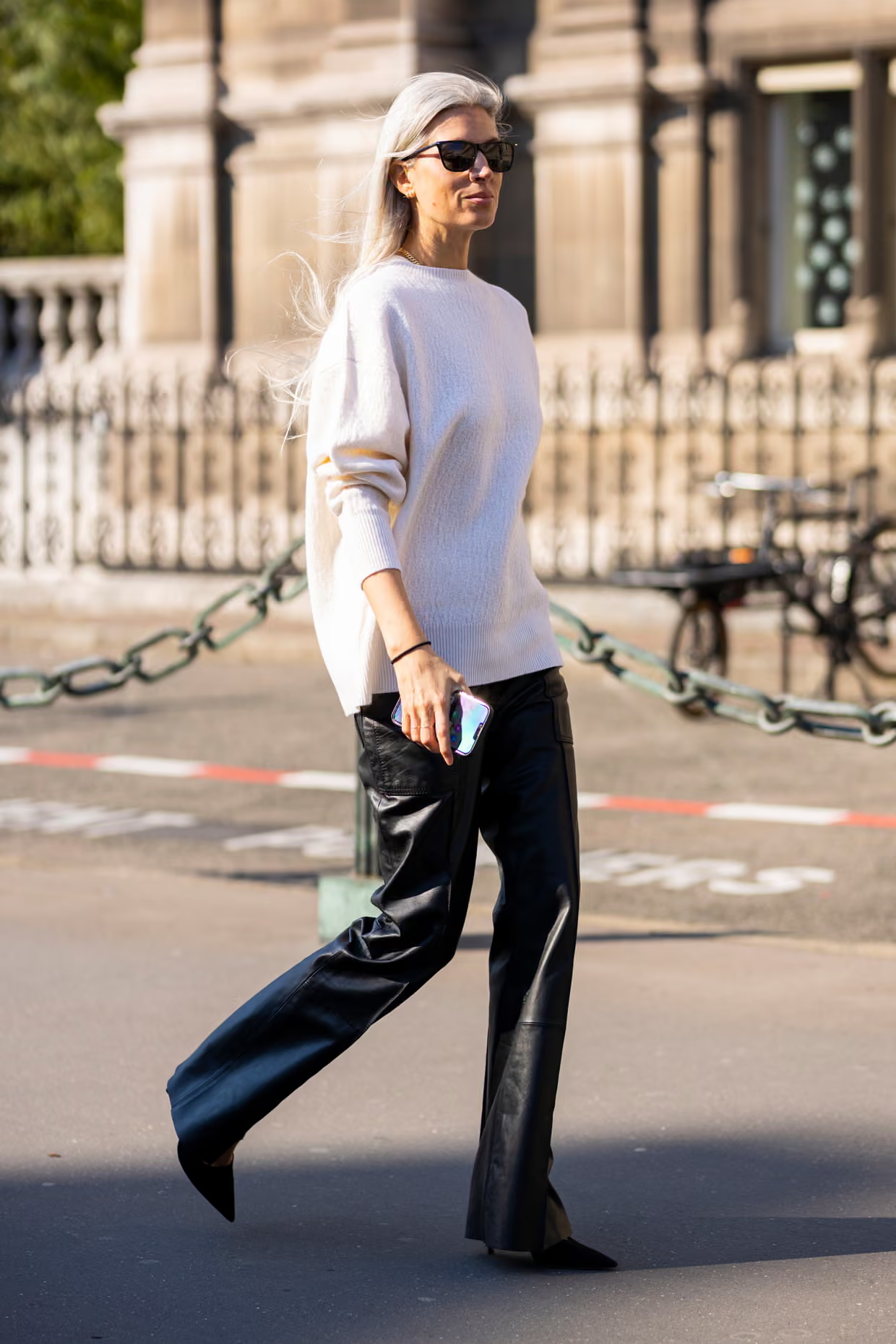
Leather trousers are not for the fainthearted. They come with … baggage? Mythology, perhaps, is a gentler way of putting it. Either way, you know what I mean. Leather trousers can be suggestive of pelvic-thrusting rock frontmen. Noisy motorbikes. They hint at midlife crisis or teenage rebellion. They are a lot.
But leather trousers – along with gym clothes in public and cancelling plans at the last minute – have been normalised in polite society. There is a new breed of leather trouser-wearer. You know who I mean: she looks as if she could be an architect, perhaps. She is chic and understated (neutral colours, not too much jewellery) and she’s wearing a nice pair of trousers that just happen to be leather, rather than wearing leather trousers in a let’s-get-the-shots-in kind of way. Again, if you know what I mean.
The thing is, when you get them right, leather trousers have a kind of magic. They have the power to make you look just that tiny bit cooler than everyone else in the room. They can be a brilliant style shortcut. They just need to be handled with care.
First, you need to make peace with the fact that people have opinions about leather trousers. Remember when Theresa May was photographed for a Sunday newspaper wearing a perfectly nice pair of chocolate brown trousers that happened to be leather? The world lost its mind about this for a good fortnight. If you wear leather trousers, the odds are high that someone will make a facetious comment about them being a bit racy. This is slightly irritating, but price it in, smile and move on.
Second, go for a generous cut. It will feel better, for a start. Nobody needs to be sweating and squeaking in their trousers. It will look better, too. At a basic level, there is something animalistic about the messaging of wearing leather. This is true to pretty much the same degree whether the leather is real or fake, since most of us can’t tell the difference. If the leather is second-skin tight, then it looks like a body part when it moves instead of like fabric. This means that when skinny-legged shapes are in, leather trousers look very raw and primal. But at a time like now, when generous cuts are in vogue, you can wear them without looking as if you are on the prowl.
What to wear with them? Don’t think about a specific style or colour, but rather a mood. That mood is calm. Leather trousers can feel a little theatrical, and what we are trying to do here is to chill them out. In fact, the best way to style a pair is to try to forget they are leather, and dress as if they were regular trousers. What this means, at a granular level, is that instead of scanning your wardrobe for a rock’n’roll, raunchy top to match the energy of your leather trousers, reach in the opposite direction.
The coolest partner is a top half that lowers the temperature a little. A fluffy knit is ideal, or a simple T-shirt. As a top layer, a wool peacoat or a chunky cardigan is a good bet. (It all gets a bit lord-of-darkness if you wear a big overcoat over leather trousers.) Be mindful of the accessories that will be part of your look, but which you won’t necessarily see in your bedroom mirror. For example: there is a very good chance that your handbag is black leather. And that your favourite loafers are black leather. If you are wearing black leather trousers, you might want to switch one of those accessories for a different colour or fabric, so as not to get too Matrix-coded.
They are just a great pair of trousers that happen to be leather. They look sharp late at night when lesser trousers have wilted. They make you look like you’re not trying, even when you’ve actually thought quite a lot about what you’re wearing, which is one of the best tricks any garment can pull off. All you need to do is play it cool.
The Guardian
Beauty
Dubai Gold Designers Business Group unveils strategy to expand global market access for Dubai-based jewellery designers
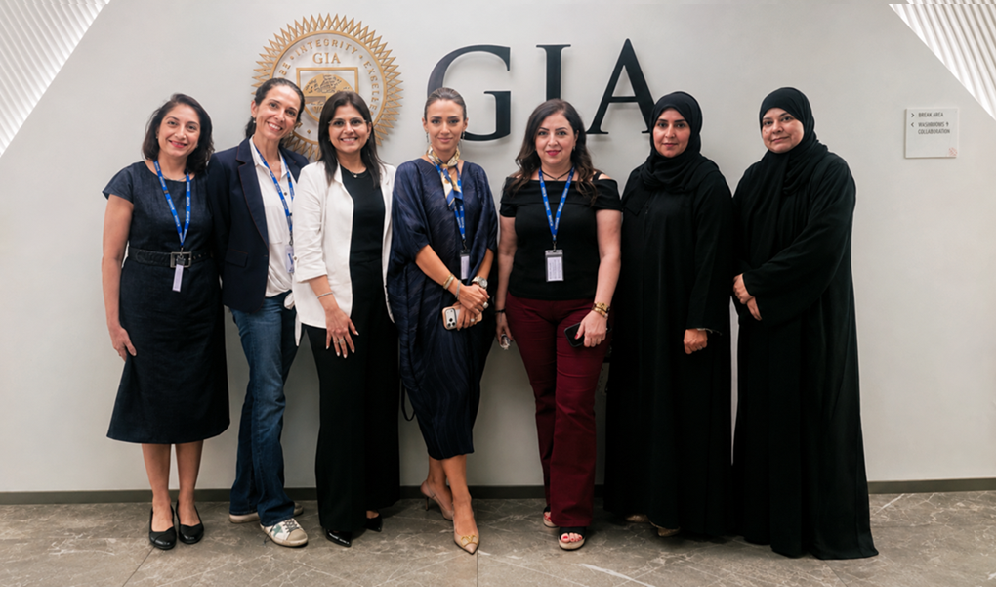
DUBAI, 25th September, 2026 – The Dubai Gold Designers Business Group, operating under the umbrella of Dubai Chamber of Commerce, has unveiled its strategic direction for the next phase of its development, with a focus on expanding international market access, strengthening professional capabilities and enhancing the global visibility of Dubai-based jewellery designers and entrepreneurs.
Representing 50 members across jewellery design, entrepreneurship and related creative businesses, the Group aims to support members in transforming creative talent into sustainable commercial growth through education, business development, industry partnerships, market access and local and international exposure.
The strategy is designed to preserve the commercial independence and individual identity of member brands while creating a stronger collective platform for Dubai-based jewellery businesses to access international opportunities.
A key priority will be strengthening the international presence of Dubai’s jewellery design community through selected exhibitions, trade events and professional platforms in priority markets.
The Group said its international activities will focus on measurable commercial outcomes, including introductions to qualified buyers, retailers and distributors, export opportunities, market intelligence, media exposure and long-term international partnerships.
Three-year international representation programme
As part of the strategy, the Group is exploring the introduction of a three-year International Representation Programme aimed at developing a sustainable model for the international promotion of Dubai-based jewellery businesses.
Under the proposed framework, the first year would focus on establishing the model, defining participation criteria and piloting collective international representation. The second year would expand partnerships and engagement with buyers and international media, while the third year would assess commercial and reputational impact and determine an appropriate long-term funding and expansion model.
International events would be selected according to criteria including buyer quality, market access, export potential, media reach, sector reputation, cost-effectiveness and alignment with Dubai’s international economic priorities.
Participation would also be linked to business readiness, product quality, professional standards, regulatory compliance and commitment to measuring commercial outcomes.
The strategy is centred around three pillars: education and member development; business development and partnerships; and international representation and visibility.
Through these pillars, the Group plans to provide workshops, masterclasses and professional development opportunities, facilitate business matchmaking and strategic collaborations, and create opportunities for selected members to participate in international platforms.
Building on international engagement
The new direction builds on the Group’s previous international and industry engagement, including activities linked to Mumbai, Jaipur and Bangkok, professional development initiatives in Bahrain and Florence, participation in UAE exhibitions, and relationships with gemological, educational and industry organisations.
The Group has also worked to increase member visibility through media engagement, digital platforms, member showcases and international industry connections.
Focus on measurable impact
The Group said future international initiatives will be evaluated through commercial and reputational indicators including qualified buyer meetings, retailer and distributor introductions, business leads and orders, export opportunities, international partnerships, media and digital exposure and member capability development.
The approach is intended to measure not only participation in international platforms but also the tangible business opportunities generated for members.
Maha Al Sibai, Chairwoman of the Dubai Gold Designers Business Group, said the strategy reflects the Group’s ambition to create stronger pathways between Dubai’s jewellery design community and international markets.
“Our ambition is to give Dubai-based jewellery designers and entrepreneurs greater access to the relationships, knowledge and international platforms that can help them grow sustainably. At the same time, we want the international presence of our members to reflect Dubai’s strength as a destination for creativity, entrepreneurship, craftsmanship and business,” she said.
The Group’s membership includes women founders, independent professionals and emerging entrepreneurs, with the strategy also seeking to strengthen opportunities for emerging talent to gain industry knowledge, develop professional standards and build international business networks.
The Dubai Gold Designers Business Group operates under the umbrella of Dubai Chamber of Commerce and supports jewellery designers, founders and entrepreneurs through collaboration, education, business development, industry connections and local and international market access.
Its long-term objective is to support UAE-based jewellery entrepreneurs in expanding into international markets while strengthening the global visibility of Dubai’s jewellery design ecosystem.
Fashion
Swatch-Audemars Piguet collab sparks frenzy — but who wins most?
One company sells millions of low-cost watches a year, the other makes luxury watches that have sold for millions. Together, Swatch and Audemars Piguet have sparked a “high-meets-low” retail frenzy that saw scenes of mayhem unfold in cities around the world over the weekend.
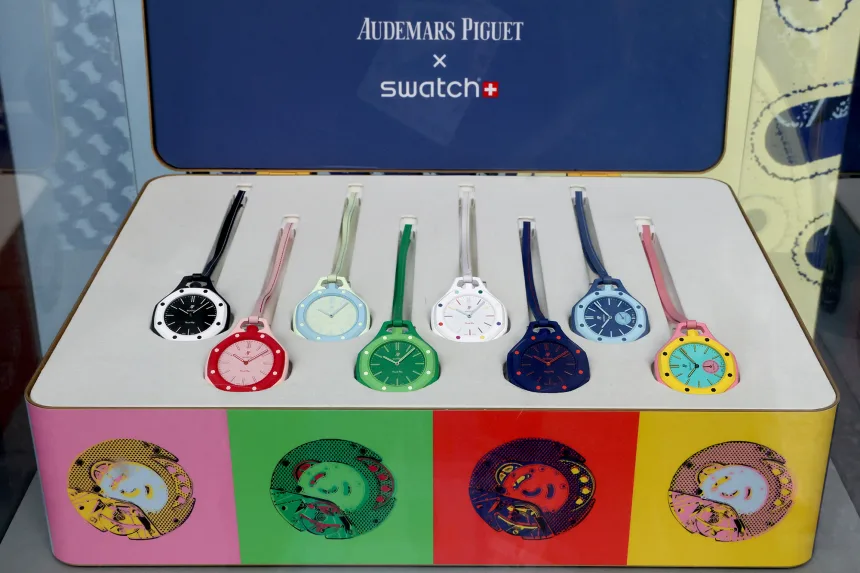
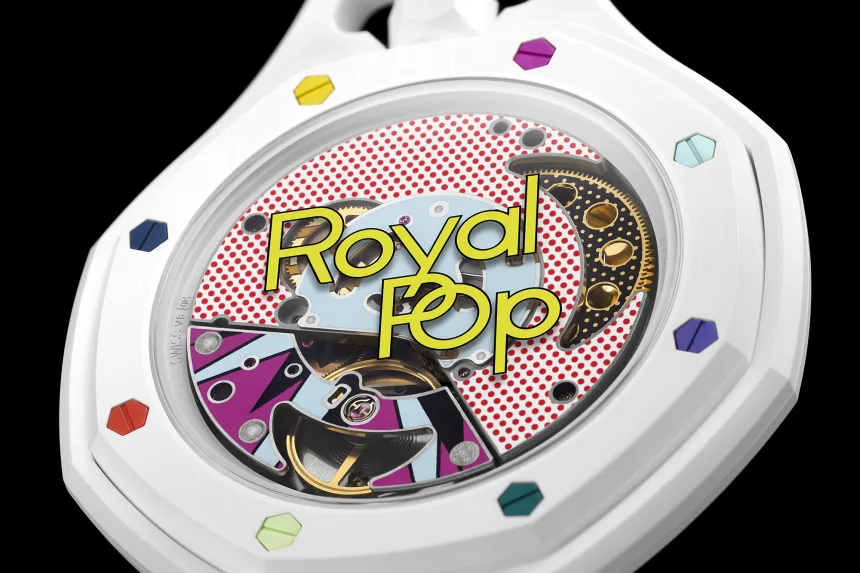
From Paris to Kuala Lumpur, long lines formed outside Swatch stores ahead of Saturday’s launch of “Royal Pop,” a series of cheerfully colored pocket watches modeled on AP’s iconic Royal Oak. Billed by the companies as “a disruptive collaboration between two icons of Swiss watchmaking,” hype around the long-anticipated collection exploded online after the designs were revealed last week.
But scenes turned ugly in several locations, with videos shared online showing fights breaking out and security guards struggling to contain large crowds.
In the US, 19 Swatch outlets were closed over safety concerns, and a police officer in Long Island, New York appeared to use pepper-spray on a crowd. Stores in several European cities were also temporarily shuttered, while Swatch preemptively canceled launch events in India and Dubai. Police in both the UK and US reportedly made arrests after crowds failed to disperse.
On Sunday, Swatch issued a social media statement urging customers “not to rush to our stores in large numbers,” citing concern for the safety of staff and shoppers. It added: “In some countries, queues of more than 50 people cannot be accepted, and sales may need to be paused.” On its website, Swatch meanwhile assured customers that the collection will “remain available for several months.”
Why the fuss?
The viral timepieces are designed in eight different colorways (from the monochrome “Ocho Negro” to the bright pink, yellow and teal “Otg Roz”) — a number referencing the Royal Oak’s distinctive octagonal case and eight-sided bezel. The pocket watches come with a calfskin lanyard, rather than a wrist strap, making them better suited to being worn around the neck or attached to a bag (earning them obvious comparisons to another recent viral craze: Labubu). In a joint press release, the two Swiss watchmakers boldly claimed the collection would “change the way we wear watches.”
Swatch’s policy of limiting purchase to one per customer did little to deter scalpers. The items immediately flooded resale sites over the weekend, with prices on watch marketplace Chrono24 ranging from around $1,200 to almost $6,000, at the time of writing.
Like other “high-low” collaborations — from Stella McCartney working with H&M to JW Anderson’s Uniqlo collections — the pitch to customers is clear: A chance to own an exclusive brand that might otherwise be out of reach. Costing either $400 or $420, depending on the model, Royal Pop offers an affordable take on an AP watch that typically costs — on the lower end — tens of thousands of dollars.
The appeal for Swatch is also self-evident. As well as attracting huge foot traffic to its stores, the company’s brand benefits from its association with one of the Switzerland’s most storied watchmakers. Parent company Swatch Group’s share price has jumped 15% in the last two weeks.
But what does Audemars Piguet stand to gain from the partnership?
Founded in 1875, AP is known for producing highly complex horological timepieces with limited production runs and notoriously long waiting lists. In December, one of its 1920s pocket watches, featuring a range of astronomical functions — including a display showing moon phases and a chart of constellations visible in the night sky — sold for over $7.7 million at Sotheby’s auction house.
Swatch, meanwhile, sells some entry-level models for less than $100, producing an estimated 3 million to 7 million watches a year, according to Swiss public broadcaster RTS. Founded in the 1980s, the brand is credited with saving the then-struggling Swiss watch industry by reinventing mechanical watches as reasonably priced fashion accessories amid competition from battery-driven quartz designs. The partnership may help AP grow awareness among new and future customers — including the Gen-Z shoppers with whom Swatch proves especially popular. But many watch aficionados have questioned whether the family-run business risks cheapening its brand by appealing to customers who are unlikely to ever spend a five-figure sum on a watch.
“I don’t see how this works for a company that sells $40,000 watches,” reads one popular post on Reddit’s watchHotTakes forum, which has been awash with discussion about the collaboration. “Once people mentally associate the brand with $500 (sic), they’ll think $40,000 is insane. Ironically, the more successful the collaboration is, the stronger the association will be.”
Rumors of a partnership had been building since 2023, when AP’s official Instagram account cryptically commented “When do we launch?” on a post about Swatch’s collaboration with another Swiss watchmaker, Blancpain. AP’s former CEO François-Henri Bennahmias, who was at the helm at the time, also publicly praised the Omega x Swatch MoonSwatch collection, which saw long lines forming outside Swatch boutiques in 2022. A proud Swatch fan (he previously revealed that he once owned a 1,200-strong collection of their watches before selling them back to the company in the 1990s), Bennahmias said in an interview with Luxury Tribune that the Omega collaboration was a “great idea” that did not “affect the integrity of Omega at all … because it educates the younger generation about the icons of watchmaking.”
Whether fights, mall frenzies and arrests change the calculation for AP is another matter altogether.
CNN
Fashion
Manager’s Wardrobe Beats Tactics
Last Tuesday, Manchester City manager Pep Guardiola lost to Real Madrid in a £270 shirt.
The grungy flannel number from the cult Swedish menswear brand Our Legacy was so noteworthy it consumed more post-match oxygen than the news that Manchester City had been dumped out of the Champions League before the quarter-finals. Never mind that Guardiola is beginning to look bereft of ideas for the first time in his career. All anyone cared about was whether he’d hired a stylist.
It’s hard to imagine a footballer’s outfit generating this much attention, but where male managers are concerned, certain rules are still very much in force. This week’s Carabao Cup final against Arsenal at Wembley saw Guardiola wearing a navy turtleneck and brown wool herringbone trousers, an outfit that waged a deliberate campaign of gen X reinvention. Having revolutionised basically every aspect of the English game in his decade at City, it seems his final revolution is changing what it’s possible for a manager to wear on the touchline.
But was Pep’s shirt a sign of a genuine shift? Rather than quiet quit with months of the season still ahead, and speculation growing that it would be his last, was he opting to embrace the din with a knowing smile and air of self-expression? Or had he simply given control of his wardrobe to his gen Z influencer daughter.
Traditionally, aspiring managers have two wardrobe options: the tracksuit and baseball cap of a training-ground drill sergeant, or the dark suit and tie of a man who sees himself at a remove from his players.
This binary began to crumble in the mid-90s with the arrival of Arsène Wenger. The debonair Frenchman married an air of sophistication with a bookish, bespectacled look that quickly earned him the nickname Le Professeur, only to be replaced by an insistence on wearing extremely long sports coats. The Wenger coat became a streetwear staple and, before Pep’s recent intervention, was undoubtedly the most iconic piece of managerial clobber in British sporting history.

Where Wenger’s look said cerebral, José Mourinho’s said something altogether more dangerous. The handsome Portuguese manager arrived at Chelsea in 2004 radiating a kind of louche authority that said: beneath the Armani suits and perfectly tied scarves, I am hard as nails. No wonder women loved him. His teams were ruthless, pragmatic and, in those early years at least, victorious. The sartorial peacocking was an alibi of sorts – a cover for the grim efficiency that characterised the way Chelsea played.
Guardiola has always been fashion aware. He briefly modelled for Catalan designer Antonio Miró, while starring in Barcelona’s midfield. As Barcelona manager, from 2008 to 2012, he wore dark, knife-sharp suits and a shaved head, lending him the look of a sort of footballing monk. At Bayern from 2013 to 2016, he largely disappeared into club kit, his personality subsumed to an extent by one of Germany’s most enduring cultural institutions. His arrival at Manchester City in 2016 brought fashion from Rick Owens, Stone Island and CP company – younger, more culturally fluent, but still utilitarian.
Daniel-Yaw Miller, fashion and sports journalist and founder of the SportsVerse newsletter, agrees the shift in Pep’s wardrobe this season is emblematic of a new phase in the legendary manager’s career. “He’s reached that point when people start thinking about the years beyond management and style is often a tool to communicate that – to signal that they’re ready to have a bit more fun,” he says. “With Pep specifically, it feels like the handbrake has come off. You see it in how he is with his players, in his press conferences, and now in what he’s wearing,” says Miller.

His changing looks are also in stark contrast to the younger managers in the premier league. Mikel Arteta, a former assistant of Guardiola’s at City, has spent his Arsenal tenure aggressively seeking gravitas through quarter-zips and cashmere sweaters. Liam Rosenior has been roundly mocked for his failure to bring coherence to a talented Chelsea side while wearing hoodies under his suit jacket and designer glasses. Brighton’s Fabian Hürzeler’s look is even more extreme. Just 31 and younger than several of his own players, he dresses less like a manager and more like a student swinging by the gym after lectures.
So, the question of whether any of this actually matters remains. “Football managers are the most neurotic, detail-obsessed people – they don’t leave a single thing in their preparation to chance. It would be naive to think what they wear doesn’t fall into that,” says Miller. He draws a parallel with Lewis Hamilton, a man who had a terrible season in Formula One last year but who remained central to the cultural conversation around his sport through savvy dressing at race weekends.
What a manager wears is ultimately a statement about how he sees the game, and his place within it. Wenger saw himself as an intellectual. Mourinho saw himself as a star. The tracksuit managers of yesteryear saw themselves as sergeants. Pep, it turns out, is something else entirely now – a man who has won everything there is to win, and knows that the conversation about what he’s wearing is probably more interesting than whether he’s any good at his job.
The Guardian


Emirates Specialty Hospital Expands Cancer Care Services in Dubai with Opening of Dedicated Chemotherapy Unit

When Rheumatoid Arthritis Threatened Her Independence: How the Right Diagnosis Helped Her Get Her Life Back

Saudi German Hospital Dubai Launches Mental Health and Wellness Center for Children and Adolescents

Araghchi, Oman Sultan discuss transit, stability in Muscat

UAE’s café culture keeps growing despite price pressure

Netflix to Livestream BTS Comeback Concert
-
 politics6 months ago
Araghchi, Oman Sultan discuss transit, stability in Muscat
-
 UAE10 months ago
UAE’s café culture keeps growing despite price pressure
-
 Entertainment9 months ago
Netflix to Livestream BTS Comeback Concert
-
 Discover9 months ago
Is February 2026 really a once-in -283-years MiracleIn?
-

 Football10 months ago
Algeria, Burkina Faso, Côte d’Ivoire win AFCON 2025 openers
-

 Health10 months ago
NMC Royal Hospital, Khalifa City, performs rare wrist salvage, restoring function for young patient
-

 Health10 months ago
Bascom Palmer Eye Institute Abu Dhabi and Emirates Society of Ophthalmology Sign Strategic Partnership Agreement
-

 Health11 months ago
Emirates Society of Colorectal Surgery Concludes the 3rd International Congress Under the Leadership of Dr. Sara Al Bastaki