
REAL ESTATE
Buying Property in Saudi Arabia: What to Know in 2026
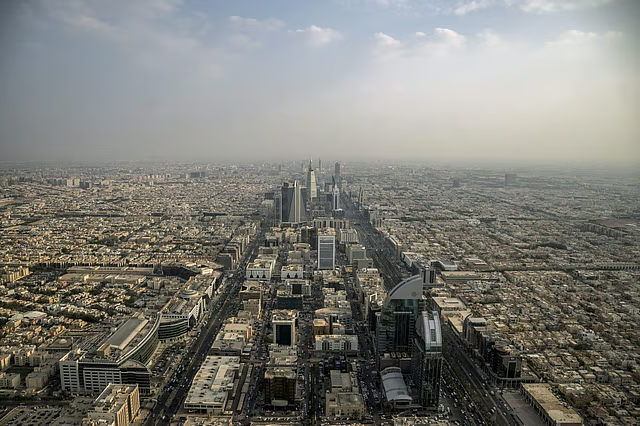
Foreigners, for the first time, are allowed to buy property in Saudi Arabia from January 2026, marking one of the most significant shifts in the Kingdom’s real estate policy in decades. The new law, approved in July 2025, permits non-Saudis to own property within designated zones, opening the door to expats, regional investors and international buyers who until now could only rent or access limited ownership structures.
Who moves first when ownership opens
Early demand is expected to come from expats already living and working in the Kingdom. High-income professionals in Riyadh and Jeddah face sustained rental pressure and now see a realistic path to ownership.
“The earliest beneficiaries are likely to be well-established expats already living and working in Saudi Arabia, particularly higher-income professionals in Riyadh and Jeddah who are facing sustained rental pressure and now have a viable path to ownership,” said Arran Summerhill, COO and co-founder of Holo.
This group already understands local neighbourhoods, employment conditions and regulatory expectations, lowering the friction that often slows first-time buyers in new markets. Rental pressures have been strong enough to prompt authorities to introduce a five-year rent cap in Riyadh, highlighting how tight the residential market has become.
A second wave is likely to include regional and international investors, particularly from the GCC, seeking early exposure to Saudi Arabia’s long-term growth under Vision 2030. These buyers are expected to move carefully, prioritising regulatory clarity, asset quality and long-term fundamentals over short-term gains.
A third segment includes Muslim buyers globally, where ownership in the Kingdom carries both financial and personal significance. “From our perspective, having been active in the Saudi market for over two years, early demand patterns point clearly toward capitalised, intentional buyers who value process certainty and asset quality over speed,” Summerhill said.
No rush, but steady uptake
Despite the scale of the policy shift, expectations of a sudden buying surge may be misplaced. The Saudi framework is more controlled, with ownership opening within designated zones rather than across wide swathes of the market.
“This is more likely to be a measured, selective uptake rather than a sudden surge,” Summerhill said. Resident expats with stable income streams are expected to lead during the first year, while international buyers observe how approvals, financing and resale rules function in practice.
Economic conditions support steady rather than speculative demand. The IMF forecasts Saudi Arabia’s real GDP growth at about 4.0% in 2026, driven largely by non-oil sectors. That backdrop supports household formation and long-term housing demand, rather than rapid trading activity.
Momentum could broaden in the second year if transaction processes smooth out and lenders become more comfortable offering mortgages to foreign buyers. Even then, demand is expected to remain fundamentals-led.
Riyadh first, Jeddah next
Geography will matter. Riyadh is widely expected to feel the earliest impact, combining job creation, income concentration, population growth and rental pressure. Residential momentum has already been strong, with villa prices rising more than 11% year on year in 2025 and transaction volumes increasing quarter on quarter.
Jeddah is likely to follow, appealing to lifestyle-driven buyers and international demand. Transaction volumes in the coastal city rose more than 10% year on year in 2025, while price growth remained more moderate, often making it an attractive entry point for foreign buyers.
Demand is expected to focus overwhelmingly on residential property, particularly homes within professionally managed communities. Commercial and mixed-use assets may draw institutional interest later, but individual expat buyers are likely to prioritise homes over income-producing assets in the early phase.
Designated zones matter
Foreign ownership will initially be limited to designated geographic zones overseen by the Real Estate General Authority. These zones act as a gateway, allowing Saudi Arabia to attract foreign capital while maintaining market stability and regulatory control.
Once the final list of zones and implementing regulations is confirmed, demand is expected to concentrate in a small number of locations offering transaction clarity, community standards and resale confidence. Broader expansion is likely to come gradually as the market matures.
Risks buyers should not ignore
Before making the purchase, the buyers should be aware of the process, as assumptions present the biggest risk. While the law creates a legal pathway, clarity around approvals, fees, ownership structures and resale rights will determine how smooth the experience is in practice.
Liquidity also deserves attention. Early-stage ownership markets tend to have thinner resale depth, making a longer-term holding horizon more realistic than quick exits. “This is where local execution experience matters,” Summerhill said, pointing to the importance of understanding how policy translates into transactions on the ground.
How it compares to the UAE
UAE citizens and expats are eligible to buy under the new framework, according to Zacky Sajjad, director of business development and client relations at Cavendish Maxwell. Ownership is permitted within approved areas, while certain locations, including Makkah and Madinah, remain subject to tighter restrictions.
“Saudi Arabia’s model is newer and more regulated,” Sajjad said. Buyers should expect greater emphasis on approvals, compliance checks and evolving guidance. The UAE, by contrast, offers a more mature and globally familiar investment environment.
Sajjad advises UAE-based buyers to approach Saudi Arabia with a long-term mindset. Due diligence remains critical, particularly around approved zones, resale rules, taxation, registration and financing availability.
A shift in how expats plan their lives
Ownership has the potential to reshape how expats think about living in the Kingdom. Property ownership shifts Saudi Arabia from a temporary posting to a place where longer-term wealth planning becomes viable.
This aligns with national goals. Saudi Arabia targets a 70% homeownership rate by 2030, with official data showing the figure reached about 65% by 2024. Foreign ownership adds market depth and supports a more institutionalised residential ecosystem.
“This reform should be viewed less as a short-term demand catalyst and more as a structural step in the long-term maturation of Saudi Arabia’s real estate market,” Summerhill said.
Saudi Arabia is expected to require more than 1.5 million new housing units by 2030, with nearly half of that demand concentrated in Riyadh. Clear zone definitions, consistent transaction processing and confidence in resale markets will matter a lot.
Handled carefully, foreign ownership could reposition Saudi Arabia as a credible long-term residential market for residents and international buyers alike, encouraging deeper settlement, capital formation and a more sustainable housing ecosystem over the next decade.
GN
REAL ESTATE
Dubai’s Shangri-La sold for Dh1.1b
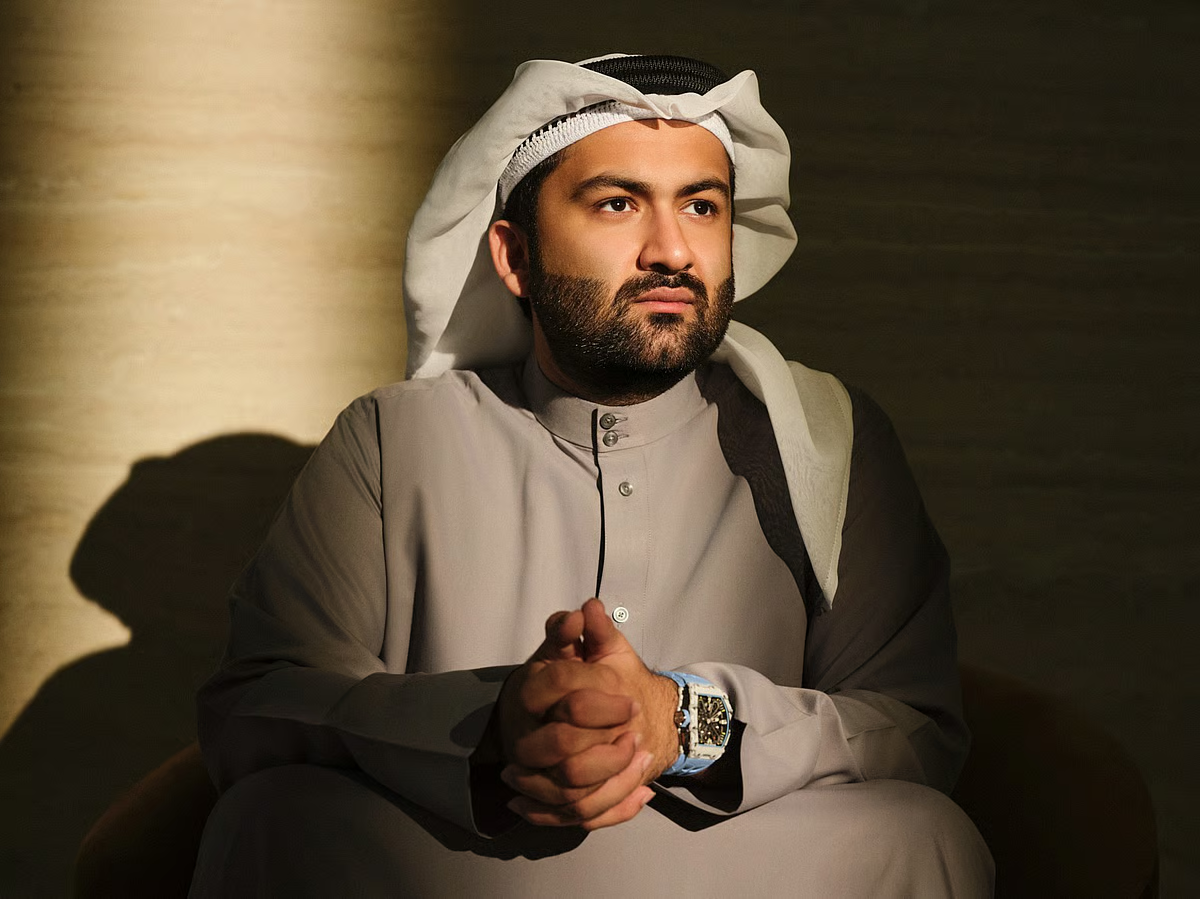
Dubai’s luxury real estate market has recorded another major deal after AHS Properties acquired the Shangri-La Dubai hotel property on Sheikh Zayed Road for an eye-watering Dh1.1 billion.
the acquisition marks one of Dubai’s largest single-asset real estate transactions in recent years, according to the company. The deal also highlights growing investor appetite for prime assets along Sheikh Zayed Road — one of the city’s most established commercial and luxury corridors.
The property was previously sold in 2020 for Dh700.2 million through an online auction linked to debt recovery proceedings involving the Al Jaber Group. The latest transaction reflects a roughly 57 per cent increase in value over six years.
The 42-storey mixed-use property includes a luxury hotel, apartments and office space.
The 26-year-old billionaire founder and CEO of AHS Properties said no final decision has been made on the future of the Shangri-La Dubai asset, although the company plans to upgrade and enhance parts of the building to improve its long-term value.
What happens to Shangri-La
Sajwani said the company has not yet finalised its long-term strategy for the Shangri-La Dubai asset, but plans to enhance and reposition parts of the mixed-use property to unlock additional value.
“AHS focus is luxury real estate, whether it’s residential, commercial, or hospitality,” he said. “We see how we can enhance the project the most, and how we can get the most value-added services from them.”
Sajwani said the company is evaluating several options for the property, including renovating offices, upgrading parts of the development and improving income generation.
“This project hit all those requirements,” he said. “The strategy has many different options of things we can do, so we’re still deciding on that, but the asset was key.”
He added that the company continues expanding its Sheikh Zayed Road presence, with AHS Tower under development and another major mixed-use project planned for launch later this year.
“We have another plot, which we own, which we will launch at the end of the year,” he said. “That will be the biggest project on Sheikh Zayed Road — it’s a Dh25 billion project.” He said details of this project will be announced later in the year.
Sheikh Zayed Road land scarcity
Sajwani also said that Dubai’s prime locations are expected to continue appreciating because of limited land availability. “Dubai will just continue to grow, and the prime will always stay prime,” he said.
“There’s no more lands on Sheikh Zayed Road, and you cannot come up with a new land. So, these assets will continue to rise long term,” said Sajwani. He added that demand for premium office and residential space in the area remains strong.
The acquisition strengthens AHS Properties’ growing footprint on Sheikh Zayed Road, where it already has projects including AHS Tower and AHS City.
Sajwani also confirmed the company plans to launch another mixed-use development on Sheikh Zayed Road later this year. He described it as a Dh25 billion project currently under design.
Under Sajwani’s leadership, the firm expanded into commercial real estate, acquiring and rebranding Dubai’s long-vacant “Big Ben” tower on Sheikh Zayed Road (now AHS Tower) for $120 million.
Mixed-use developments
While the Shangri-La Dubai acquisition includes hospitality assets, Sajwani said the company is not shifting solely into hotels.
“AHS focus is luxury real estate, whether it’s residential, commercial, or hospitality,” he said. He said the company is still evaluating different strategies for the property, including renovations and upgrades to improve long-term returns.
“This project hit all those requirements,” he said, adding that the company sees “huge potential” in the asset.
Founded in 2021, AHS Properties has rapidly expanded in Dubai’s ultra-luxury property market with projects focused on waterfront and premium urban locations.
Last year, the company launched Casa AHS, a Dubai Water Canal development valued at around $750 million, featuring ultra-luxury residences including Sky Villas and Sky Mansions.
Dubai luxury market
Sajwani said Dubai’s ultra-luxury market has seen buyers taking longer to make purchasing decisions in recent months, although demand remains intact.
“We still see transactions,” he said. “It is just people are taking longer to decide.”
He added that the summer period traditionally slows activity but expects demand to strengthen again after September.
According to Sajwani, wealthy international buyers continue relocating to Dubai because of the emirate’s infrastructure, lifestyle, education system and long-term economic policies.
“People are still moving to Dubai, people are still looking for investments and looking for opportunities,” he said.
He also said Dubai’s commercial real estate segment remains undersupplied, particularly for Grade A office space.
“Commercial is very strong,” Sajwani said. “There is currently a lack of supply.”
Prime Dubai districts expected to outperform
Sajwani said Dubai’s established luxury districts are likely to remain the strongest performers in the years ahead.
He identified Sheikh Zayed Road, Downtown Dubai, Dubai Water Canal, Palm Jumeirah and Bulgari Island among the locations expected to continue attracting luxury demand.
“I think the prime will continue to rise in a big way,” he said.
He added that Dubai’s long-term population growth and tourism expansion would continue supporting demand across residential, office and hospitality sectors.
AHS Properties expects its gross development value to reach around Dh50 billion by the end of this year, according to Sajwani.
Dubai’s real estate market has largely remained resilient — but the pace of transactions, especially in the luxury segment, has slowed compared to the rapid growth seen over the past three years.
Brokers and consultancies reported that high-net-worth investors began taking longer to close deals, particularly for ultra-luxury homes above Dh20 million. Many adopted a temporary “wait-and-watch” approach amid geopolitical uncertainty.
GN
REAL ESTATE
Dubai removes minimum property value for solo investor visas
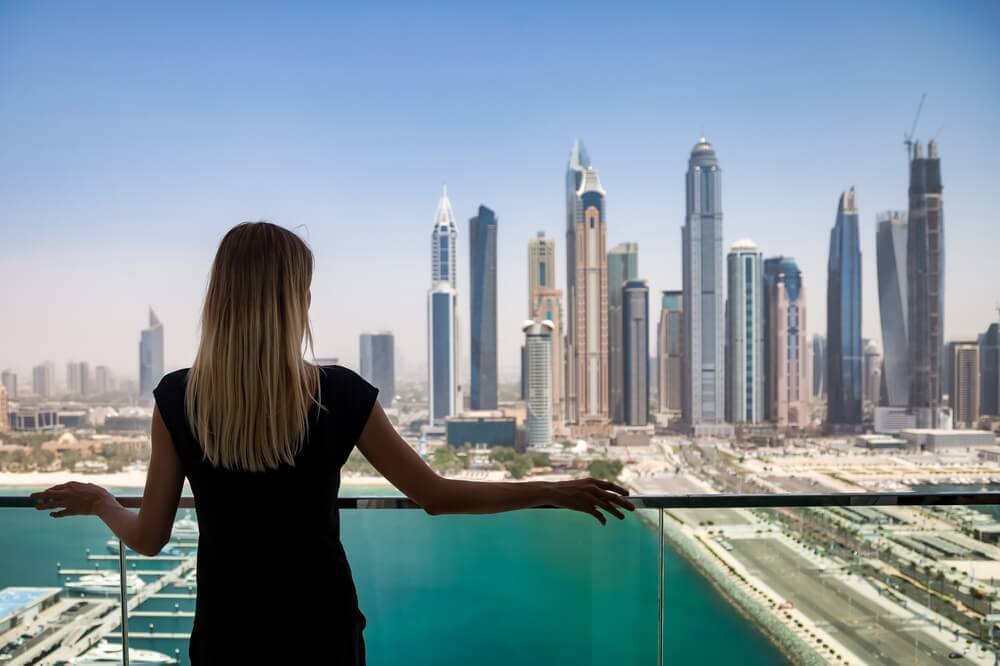
Dubai has eased requirements for its two-year property-linked residency visa, removing the minimum property value for sole owners while introducing a Dh400,000 minimum share per investor for jointly owned assets.
The update, issued by the Dubai Land Department (DLD) through its Cube platform, replaces the earlier Dh750,000 threshold for individual buyers with a more flexible ownership-based approach.
No minimum for sole ownership
Under the new rules, applicants who fully own a property can qualify for the two-year investor visa regardless of the asset’s value, provided ownership is clearly registered.
“If you are the sole owner of a property in Dubai, you can apply for the 2-year residence visa with no minimum property value requirement,” the DLD Cube website updated.
The shift opens the scheme to lower-budget investors and smaller property purchases that previously fell below the minimum requirement.
New joint ownership threshold
For jointly owned properties, authorities have set a Dh400,000 minimum stake per investor. The rule applies even in equal ownership splits, effectively requiring each partner’s share to meet the threshold independently.
“If the property is jointly owned, each owner must hold a minimum share of Dh400,000 to be eligible,” the DLD Cube website further detailed.
The change is expected to influence how investors structure joint property purchases, particularly where multiple buyers combine funds to meet residency criteria.
By setting a Dh400,000 minimum share per investor for jointly owned properties, each applicant must hold a stake above that level to qualify. Without such a floor, investors could divide ownership into smaller portions to meet residency requirements at lower individual cost. The threshold prevents that, ensuring each applicant maintains a minimum level of investment exposure.
Unified visa framework
The changes come as the UAE continues to streamline its property-linked residency framework under a unified digital platform managed by the General Directorate of Residency and Foreigners Affairs and the DLD.
- A 10-year Golden Visa requiring a minimum Dh2 million property investment, including off-plan and mortgaged assets, with no minimum stay requirement outside the UAE
- A two-year investor visa aimed at entry-level buyers, now updated to remove the minimum value for sole ownership
- A five-year retiree visa for individuals aged 55 and above, requiring Dh1 million in fully paid property or alternative financial criteria
As per federal policy circular issued in February 2026, authorities also removed the Dh1 million upfront payment requirement for Golden Visa eligibility, implemented by the DLD and the GDRFA. This allows investors to qualify based on total property value as recorded in title deeds or Oqood contracts.
Market implications
Dubai has steadily adjusted property visa rules to align with market conditions and attract a broader investor base, as competition among global real estate hubs intensifies.
The latest change reflects Dubai’s push to expand access while maintaining eligibility controls. It is expected to support demand in lower- and mid-tier property segments and influence how investors choose between sole ownership and joint structures under the new thresholds.
GN
Business
Major Developments and Mortix Mortgage Broker Join Hands to Make UAE Property Investment Simpler, Smarter, and More Accessible.

Dubai, UAE, 29 March 2026
Major Developments hosted the official partnership signing ceremony with Mortix Mortgage Broker at its Dubai headquarters, marking a strategic step toward making homeownership and real estate investment more seamless for clients across the world.
The partnership brings together Major Developments’ high-demand portfolio with Mortix’s mortgage expertise, allowing Major Developments’ clients to access free mortgage services as part of a broader, more investor-friendly purchase journey. Mortix is a digital mortgage and home finance platform in the UAE that supports both residents and non-residents, working with 20+ leading UAE banks across solutions, including home loans, refinancing, handover payments, and equity release. Its brokerage support is offered free of charge, making financing guidance more accessible at a crucial stage of the transaction.
For Major Developments, this collaboration reflects a larger vision: building an ecosystem around ownership, not merely developing property. As international demand continues to build around projects such as Manta Bay on Al Marjan Island and Colibri Views in RAK Central, the partnership is designed to help investors move from intent to action with greater speed and confidence.
The timing is especially significant. Mortix’s 2026 UAE mortgage market review highlights that Dubai recorded approximately 44,000 mortgage transactions in 2025, with total mortgage volumes reaching AED 89.6 billion, while fixed mortgage rates at the end of 2025 stood in the 3.75% to 4.25% range.
With another anticipated launch, Ice Beach on Marjan Beach, set to further expand Major Developments’ footprint in the UAE, this partnership stands as a meaningful bridge between aspiration and acquisition, helping investors enter fast-moving markets earlier and more efficiently.
Oleg Ilyin, CEO and Co-founder of Mortix Mortgage Broker, said, “This partnership reflects exactly where the UAE property market is headed, toward a more connected, transparent, and investor-ready experience. Major Developments has created projects that are drawing strong international attention, and Mortix is proud to support that momentum by making mortgage access simpler, faster, and more approachable for buyers across different markets.”
Andrei Charapenak, CEO of Major Developments, said, “At Major Developments, the vision has always been larger than delivering exceptional real estate. It has been about creating the right environment around ownership, one that makes the journey clearer, more supported, and more confidence-led for every investor who chooses to enter this market with us. The partnership with Mortix is a natural extension of that thinking. As interest in the UAE continues to grow, especially in high-potential destinations such as Ras Al Khaimah, this collaboration allows Major Developments to serve clients more meaningfully, not only by offering distinctive developments, but by helping simplify the path that leads to them.”
As the UAE continues to attract a new generation of globally minded investors, partnerships such as this underline a larger shift in the market, where the value lies not only in what is being developed, but in how thoughtfully the entire ownership journey is being shaped. For Major Developments, the partnership with Mortix signals a continued commitment to making investment in the UAE more intuitive, supported, and future-ready.


Emirates Specialty Hospital Expands Cancer Care Services in Dubai with Opening of Dedicated Chemotherapy Unit

When Rheumatoid Arthritis Threatened Her Independence: How the Right Diagnosis Helped Her Get Her Life Back

Saudi German Hospital Dubai Launches Mental Health and Wellness Center for Children and Adolescents

Araghchi, Oman Sultan discuss transit, stability in Muscat

UAE’s café culture keeps growing despite price pressure

Netflix to Livestream BTS Comeback Concert
-
 politics6 months ago
Araghchi, Oman Sultan discuss transit, stability in Muscat
-
 UAE10 months ago
UAE’s café culture keeps growing despite price pressure
-
 Entertainment9 months ago
Netflix to Livestream BTS Comeback Concert
-
 Discover9 months ago
Is February 2026 really a once-in -283-years MiracleIn?
-

 Football10 months ago
Algeria, Burkina Faso, Côte d’Ivoire win AFCON 2025 openers
-
 Health10 months ago
NMC Royal Hospital, Khalifa City, performs rare wrist salvage, restoring function for young patient
-
 Health10 months ago
Bascom Palmer Eye Institute Abu Dhabi and Emirates Society of Ophthalmology Sign Strategic Partnership Agreement
-

 Health11 months ago
Emirates Society of Colorectal Surgery Concludes the 3rd International Congress Under the Leadership of Dr. Sara Al Bastaki