COMMUNITY
UAE President honours 10 inspirational individuals with Abu Dhabi Awards
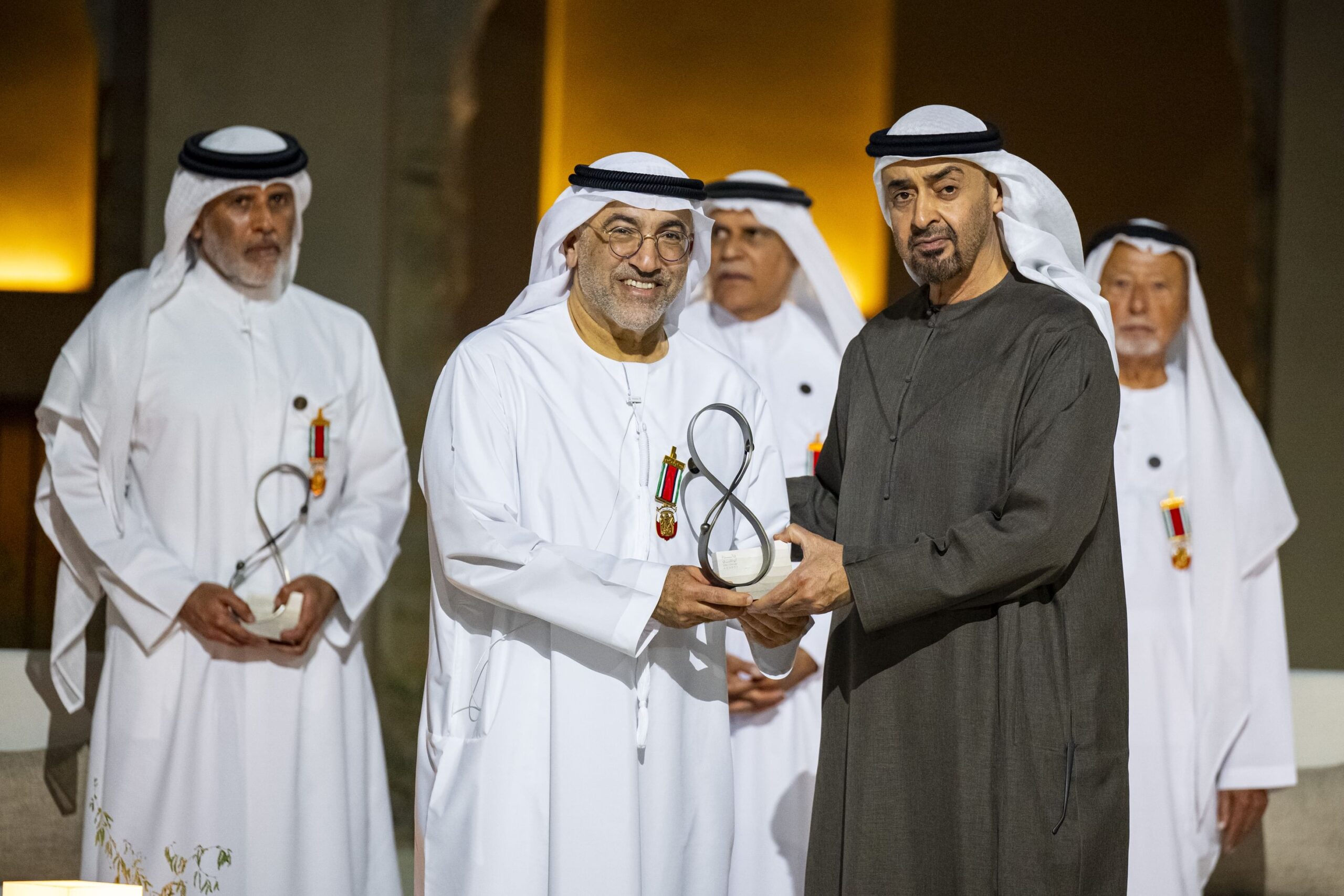
President His Highness Sheikh Mohamed bin Zayed Al Nahyan has honoured ten inspirational individuals whose selfless deeds have positively impacted the UAE community as part of the 12th edition of the Abu Dhabi Awards. The ceremony took place at Qasr Al Hosn in Abu Dhabi.
For the past two decades, the Abu Dhabi Awards has served as a national platform that embodies the UAE’s journey of giving, selflessness, and appreciation inspired by the legacy of the UAE’s Founding Father, the late Sheikh Zayed bin Sultan Al Nahyan, and carried forward under the leadership of H.H. Sheikh Mohamed bin Zayed Al Nahyan. The Abu Dhabi Awards reaffirms the deeply held belief that every act of generosity strengthens unity and social harmony.
Since its inception, the Abu Dhabi Awards has honoured 110 individuals from 18 nationalities whose contributions span diverse fields, including healthcare, volunteering, education, cultural preservation, environmental protection, and the empowerment of people of determination. Coinciding with the Year of Community, the Awards continues to uphold its humanitarian mission in reflecting the UAE’s enduring values of harmony and social responsibility.
During the ceremony, the inspiring stories of the honourees were showcased, highlighting that giving is not limited by age, nationality, or profession and represents a universal human value capable of creating positive change in society.
H.H. Sheikh Mohamed bin Zayed Al Nahyan congratulated the honourees and wished them continued success in their contributions to the UAE community and humanity at large. The President also affirmed that honouring these individuals reflects the nation’s commitment to recognising those who uphold integrity, unity, and social responsibility.
The ceremony was attended by H.H. Sheikh Khaled bin Mohamed bin Zayed Al Nahyan, Crown Prince of Abu Dhabi; H.H. Lt. General Sheikh Saif bin Zayed Al Nahyan, Deputy Prime Minister and Minister of the Interior; H.H. Sheikh Abdullah bin Zayed Al Nahyan, Deputy Prime Minister and Minister of Foreign Affairs; H.H. Sheikh Theyab bin Mohamed bin Zayed Al Nahyan, Deputy Chairman of the Presidential Court for Development and Fallen Heroes’ Affairs; H.H. Sheikh Hamdan bin Mohamed bin Zayed Al Nahyan, Deputy Chairman of the Presidential Court for Special Affairs; Sheikh Sultan bin Hamdan Al Nahyan, Advisor to the UAE President; Sheikh Nahyan bin Mubarak Al Nahyan, Minister of Tolerance and Coexistence; and Sheikh Mohammed bin Hamad bin Tahnoun Al Nahyan, Advisor to the UAE President, along with the families of the honorees, award partners, and supporters., along with the families of the honourees, a number of past Abu Dhabi Awards recipients, representatives of the Awards’ partners, and supporters.
This round’s Abu Dhabi Awards honoured ten distinguished individuals whose outstanding contributions have enriched and uplifted the UAE community, including:
-Obaid Kenish Al Hameli
A businessman and philanthropist, Obaid Kenish Al Hameli has made significant contributions to community development and charitable work. Despite losing his parents at a young age, he pursued his ambitions with determination.
Al Hameli began as a field guide for oil exploration teams and was an early advocate encouraging youth in the Al Dhafra region to continue their education. In 1998, he launched the Obaid Bin Kenish Al Hameli Award for Academic Excellence, the first of its kind in Al Dhafra, which has helped raise educational standards across the region.
-Moza Mohamed Al Hafiti
Moza Al Hafiti is a role model in education with more than two decades of service as a teacher at the Zayed Educational Complex in Dibba Al-Fujairah. She is known for innovative contributions that have enhanced the learning environment and for her commitment to nurturing an informed, creative generation grounded in strong values.
Two of her most notable initiatives include the Interactive Digital Prayer Rug for teaching prayer and a Digital Library launched during the COVID-19 pandemic. She has led numerous educational programmes to develop students’ skills, instil values, and train teachers through voluntary workshops.
Widely recognised for her impact, she was listed among the Top 50 nominees for the GEMS Education Global Teacher Prize and has received major honours, including the Khalifa Award for Education, the Hamdan Bin Rashid Al Maktoum Award for Distinguished Academic Performance, and the Sharjah Award for Educational Excellence.
-Rashid Abdullah Al Nuaimi
Rashid Abdullah Al Nuaimi is an accomplished national figure across a variety of fields, including government, culture, and philanthropy, whose journey of giving is deeply intertwined with the history of the nation.
Al Nuaimi has held several prominent leadership positions, including serving as Minister of State for Foreign Affairs from 1977 to 1990 and later as Minister of Foreign Affairs from 1990 to 2006, during which he played a key role in the implementation of the UAE’s foreign policy and the strengthening of its regional and international presence. Earlier in his career, he served as Undersecretary at the Ministry of Information and Tourism.
He also served as the first Commissioner General of the Abu Dhabi Pavilion at Expo 1970 in Osaka, Japan, where he represented the Emirate of Abu Dhabi. He played a pivotal role in laying the groundwork for bilateral ties with Japan and in opening new avenues for political and economic cooperation between the two countries. He successfully secured the necessary resources to deliver a remarkable pavilion that proudly represented the Emirate.
In addition to his distinguished government service, Al Nuaimi is well known for his commitment to the community and his dedication to humanitarian and charitable initiatives. Among his most notable contributions are the establishment of the Rashid Centre for Diabetes and Research in 2010 and the Rashid bin Abdullah Al Nuaimi Charitable Foundation in 2012.
Al Nuaimi has also made significant contributions to the cultural field. He authored what is widely considered to be the first modern Emirati novel, Shahenda, in 1971, and his book Zayed: From the City of Al Ain to the Presidency of the Union is an important national reference that documents aspects of the life and legacy of the late Sheikh Zayed bin Sultan Al Nahyan.
-Late Mohamed Ibrahim Obaidallah
A national figure whose life was defined by generosity, kindness, and service to others, the late Mohamed Ibrahim Obaidallah dedicated his efforts to humanitarian and charitable work and to advancing healthcare in the UAE. Notably, he founded the Obaidallah Geriatric Hospital in Ras Al Khaimah in 2009, the first specialised hospital of its kind in the country.
He also played a key role in developing healthcare facilities, including the Dialysis Centre in Ras Al Khaimah and the Oral and Maxillofacial Surgery Centre at Rashid Hospital in Dubai. His philanthropy extended to education through scholarships and support for students in need.
A founding member of Beit Al Khair Society, he championed medical, relief, and development programmes that improved healthcare for many. His honours include the UAE President Appreciation Award (2012), the UAE Pioneers Award (2017), and the Sheikh Hamdan Bin Rashid Al Maktoum Award for Medical Sciences (2009).
He passed away in 2025, leaving a powerful example of generosity, compassion, and humanitarianism.
-Salem Hamad Al Mansoori and Fatima Majed Al Mansoori
Following the passing of their five-year-old daughter Zahia, parents Salem and Fatima Al Mansoori selflessly chose to turn their profound grief into seeds of hope and new life for others through a humanitarian decision that reflects the generosity deeply rooted in Emirati society.
In a gesture of immense compassion, the Al Mansoori family decided to donate their daughter Zahia’s organs, a courageous act that saved the lives of three people, including two children and an adult, both within the UAE and abroad.
As the first Emirati family to take this noble step, Salem and Fatima Al Mansoori’s decision has set a remarkable precedent, contributing to greater public awareness of the UAE’s Hayat organ donation programme while demonstrating how loss can be turned into hope and how one brave act can help others and leave a positive impact on society.
Through their inspirational actions, the Al Mansoori family embodies an enduring message of selflessness, and their story is a testament to the highest values of humanity and a reminder that true generosity can live on, even after one’s passing.
-Hamama Obaid Khamis
Born in Al Dhaid, Hamama Obaid Khamis learned traditional healing from her parents and dedicated her life to serving her community through herbal remedies, cauterisation therapy, and traditional midwifery.
For more than seven decades, she welcomed thousands of patients into her home from across the Emirates and the region. She offered care without seeking payment, believing that healing is both a humanitarian mission and a social duty. Before the spread of modern hospitals, she practiced as a midwife and helped deliver many children. Through generosity, skill, and devotion, Hamama embodies the noblest values of service and giving.
-Abdelmonem Bin Eisa Alserkal
Abdulmonem Alserkal is a leading Emirati cultural figure who has enriched the arts and culture landscape in the UAE and the wider region.
His passion for culture and the creative arts took shape in Dubai’s Al Quoz with the founding of Alserkal Avenue, one of the region’s foremost cultural districts, home to galleries, performance spaces, creative institutions, and a vibrant hub for dialogue and innovation.
In 2019, he established the Alserkal Arts Foundation, a non-profit organisation supporting artists, researchers, and students through educational programmes, grants, and residencies, further cementing Dubai and the UAE’s position as a global destination for art and creativity.
Alserkal has served on advisory boards of leading international institutions, including Tate and the Solomon R. Guggenheim Foundation. His honours include the Ordre des Arts et des Lettres (France) and the UAE Medal for Culture and Creativity in recognition of his outstanding contributions to the cultural sector.
-Late David Heard
The late David Heard is closely associated with the modern history of the UAE. In the 1960s, he worked as an engineer in Abu Dhabi’s oil sector, helping develop the industry alongside Emirati colleagues and contributing to the foundational strategic policies that shaped the nation’s energy field.
Beyond his professional achievements, Heard quietly devoted himself to documenting the UAE’s transformation from a pearl diving economy to a modern, prosperous nation. A passionate historian and author, he wrote several notable works on the history of the UAE and the development of the region’s oil industry.
Out of his deep affinity for the UAE and its people, he generously donated to New York University Abu Dhabi’s library more than 440 archival units, collected over more than 50 years. Heard passed away in 2024, leaving a legacy in education, cultural exchange, and the preservation of the UAE’s history.
-Late Sultan Ali Al Owais
The late Sultan Ali Al Owais was a renowned patron of culture and philanthropy whose life and resources were dedicated to culture, knowledge, and charitable work in the UAE and the region.
Believing in culture’s role in advancing creativity and learning, he founded the Sultan bin Ali Al Owais Cultural Award in 1987, today one of the Arab world’s most prestigious literary prizes, honouring hundreds of writers and intellectuals.
His generosity extended to humanitarian and development initiatives, including the establishment of schools and hospitals and tangible support for education and healthcare locally and regionally. He also contributed to national infrastructure by funding five major dams in Fujairah and Ajman that continue to supply water for farmers.
In 1996, the late Sheikh Zayed bin Sultan Al Nahyan awarded him the Order of Zayed for his national and cultural service.
Al Owais passed away in 2000. In June 2025, UNESCO celebrated the centenary of his birth, recognising his distinguished impact on Emirati and Arab culture and literature and his embodiment of UNESCO’s values of culture and human identity.
-Khaldoon Khalifa Al Mubarak
Over the past two decades, Khaldoon Khalifa Al Mubarak has made notable contributions to the developmental journey of Abu Dhabi and the UAE. In every position he has held, he has exemplified the values of dedication, service to the nation, professionalism, and integrity, representing the UAE with distinction and setting a powerful example for current and future generations.
As an influential UAE government policymaker and international business leader, Al Mubarak continues to support the nation’s broader objectives of sustainable economic development and diversification, reflecting the UAE’s dynamic society and economy. Through his leadership, Al Mubarak oversees numerous strategic projects and initiatives that contribute to advancing the UAE leadership’s vision across diverse sectors, including strategic international relations, the economy, investment, infrastructure, energy, education, healthcare, advanced technology, and artificial intelligence.
In addition to his highly regarded professional accomplishments, His Excellency has served as an empowering leader, demonstrating the values of commitment, care, and respect. Within the organisations that he leads, Al Mubarak fosters a culture of support and excellence, inspiring others to perform at their best and nurturing a new generation of talented professionals committed to carrying the UAE’s pioneering vision forward.
Among a broad range of responsibilities, Al Mubarak currently serves as Managing Director and Group CEO of Mubadala Investment Company, a position he has held since the company’s inception in 2002. He is also Chairman of the Executive Affairs Authority and has served as a member of the Abu Dhabi Executive Council since 2004. Al Mubarak chairs and serves as a member on several national and international boards and higher committees, reflecting his extensive and diverse portfolio.
Al Mubarak embodies Emirati leadership by transforming ambition into achievement, challenge into opportunity, and ideas into reality, thereby contributing to the nation’s continued advancement and prosperity.
WAM

COMMUNITY
Makkah deputy governor launches 10 road projects
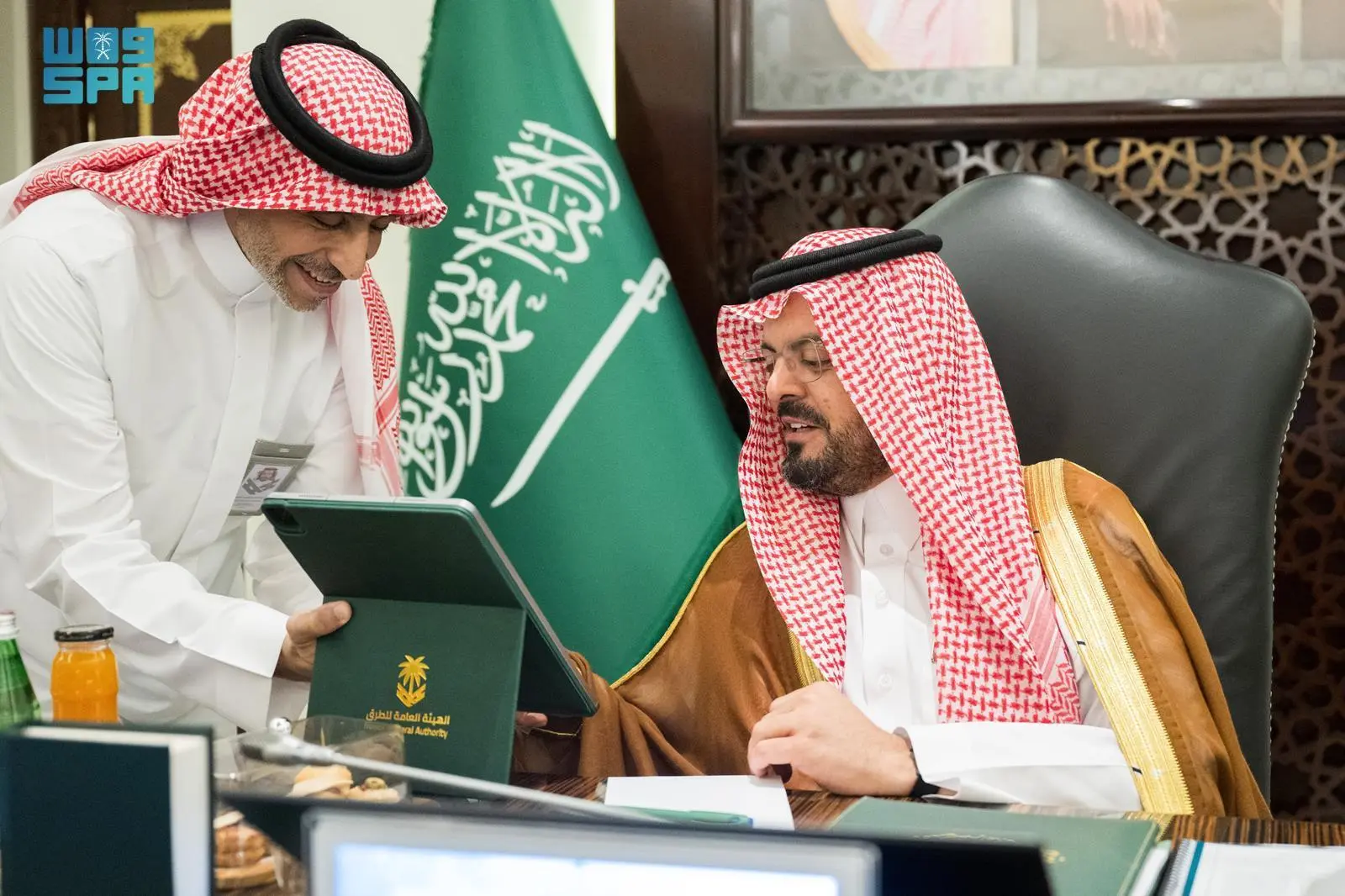
Deputy Governor of Makkah Region Prince Saud bin Mishaal bin Abdulaziz inaugurated 10 vital road projects in the region, with a total cost of SAR553 million and a combined length of 109 kilometers. The inauguration took place during a meeting attended by Minister of Transport and Logistic Services and Chairman of the Board of the Roads General Authority (RGA) Saleh Al-Jasser and several senior officials from the transport and logistics ecosystem.
The projects reflect the leadership’s support for the transport and logistics sector. They contribute to enhancing mobility across the region and serving visitors to the Grand Mosque. The projects were implemented according to the highest safety and quality standards and in line with the Saudi Road Code, supporting the region’s road network, which exceeds 8,623 kilometers.
During the meeting, the deputy governor also launched the region’s “Distinctive and Safe Roads” campaign. The initiative aims to conduct a comprehensive survey and assessment of road networks outside urban areas by identifying observations and addressing them in cooperation with government entities and the community.
He was briefed on the campaign, which targets road networks exceeding 8,600 kilometers. The campaign is implemented using one of the world’s largest surveying and evaluation fleets, supported by artificial intelligence technologies, drones, and geographic information systems (GIS), contributing to improved road efficiency and enhanced infrastructure quality and safety.
Previous editions of the campaign contributed to identifying and addressing more than 100,000 observations across the Kingdom. Related projects and initiatives also helped reduce road accident fatalities by around 60% and advanced the Kingdom to fourth place among G20 countries in the road quality index.
— SPA
COMMUNITY
Saudi warns visa overstayers face jail, fines, deportation
Saudi Arabia’s Ministry of Interior Saudi Arabia has reiterated that expatriates who overstay their entry visas will face strict penalties, including up to six months in prison, fines of up to SR50,000 and deportation.
In a statement, the ministry urged all visitors to comply with regulations governing this year’s Hajj season, underscoring the importance of cooperation with authorities to ensure the safety and security of pilgrims.
The ministry also called on the public to report violators by dialling 911 in the regions of Mecca, Medina, Riyadh and the Eastern Province, and 999 in other parts of the Kingdom.
GN
COMMUNITY
Hajj 2026: Registration, health and spiritual prep guide

With less than two months remaining until the start of Hajj 2026, preparations are accelerating across the Muslim world as millions prepare for the annual pilgrimage to Mecca, one of the largest religious gatherings on Earth.
Hajj, the fifth pillar of Islam, is an obligation upon every Muslim who is physically and financially capable of undertaking the journey at least once in their lifetime. More than just a series of rituals, it is considered a transformative experience that symbolises humility before God and unity among Muslims regardless of nationality, wealth or social status.
The pilgrimage takes place annually during the Islamic month of Dhul Hijjah, with Hajj 2026 expected to begin around May 25, corresponding to the 8th of Dhul Hijjah. The Day of Arafah is likely to fall on May 26, followed by Eid Al Adha on May 27, with the main Hajj rituals expected to conclude around May 29-30, although all dates remain subject to the official moon sighting.
Hajj history
The origins of Hajj trace back thousands of years to the time of Prophet Ibrahim (Abraham), whose devotion and sacrifices form the foundation of many of the rituals performed today. Muslims believe the pilgrimage commemorates key events in the lives of Prophet Ibrahim, his wife Hajar, and their son Ismail, while also following the practices established by Prophet Muhammad during his farewell pilgrimage more than 1,400 years ago.
Each year, the pilgrimage draws around two million people from across the globe, creating one of the largest annual gatherings anywhere in the world. Despite differences in language, culture and background, pilgrims dress in similar simple clothing, reinforcing the Islamic concept that all people stand equal before God.
The requirement to perform Hajj applies only to Muslims who are adults, mentally sound, and able to afford the journey without causing hardship to their families. Those who are ill, financially unable or otherwise incapable are exempt from the obligation.
Understanding the types of Hajj
While the goal of every pilgrim is the same, there are different ways in which Hajj can be performed. The most common form is known as Hajj Tamattu, in which pilgrims perform Umrah first, exit the state of Ihram temporarily, and then re-enter it to complete the Hajj rituals.
Another form, Hajj Qiran, involves performing Umrah and Hajj together without leaving the sacred state, while Hajj Ifrad involves performing only the Hajj rituals without Umrah.
Scholars often recommend Hajj Tamattu for first-time pilgrims because it allows greater flexibility and reflects the practice followed by the Prophet Muhammad during his farewell pilgrimage.
The beginning of the pilgrimage
The pilgrimage begins with pilgrims entering a sacred state known as Ihram before reaching Mecca. Men wear two simple white garments, while women dress modestly according to Islamic guidelines. The clothing is intentionally simple, symbolising the removal of worldly distinctions.
While in Ihram, pilgrims must avoid cutting their hair, using perfumes, engaging in arguments or harming others. The purpose of these restrictions is to promote patience, discipline and mindfulness throughout the journey.
Upon arrival in Mecca, pilgrims perform Tawaf, the act of circling the Kaaba seven times. This act symbolises the centrality of faith in a Muslim’s life. Many pilgrims also attempt to touch or gesture towards the Black Stone as part of the ritual, although this is not mandatory.
Following Tawaf, pilgrims perform Sa’i, walking seven times between the hills of Safa and Marwa, commemorating Hajar’s desperate search for water for her infant son.
The most important day: Arafah
The most significant moment of Hajj comes on the Day of Arafah, when pilgrims gather on the plains of Arafah in prayer and reflection. This day is considered the spiritual peak of the pilgrimage, and missing it invalidates the Hajj.
From Mina to Arafah and then to Muzdalifah, pilgrims follow a sequence of movements that reflect both the historical traditions of the pilgrimage and the spiritual journey of repentance and devotion. Pilgrims spend the night in Muzdalifah, collecting small stones used later in the symbolic stoning of the Jamarat, representing the rejection of evil.
The following days include the ritual stoning, the sacrifice of animals commemorating Prophet Ibrahim’s willingness to sacrifice his son in obedience to God, and the shaving or trimming of hair to mark spiritual renewal.
The pilgrimage concludes with a farewell Tawaf before pilgrims depart Mecca.
The practical side: registration and quotas
Behind the spiritual journey lies a complex logistical process. Each year, Saudi Arabia allocates country-specific quotas to manage the number of pilgrims. Registration procedures differ depending on where pilgrims live, but most involve applying through government-approved Hajj authorities or licensed travel operators.
International pilgrims often register through official platforms or authorised agencies, submit required documentation and select travel packages based on budget and services offered.
The cost of performing Hajj
The cost of Hajj varies significantly depending on the country of departure, package type and level of accommodation. Domestic Saudi packages can begin at roughly SAR 8,000 (Dh7,826 approx) for basic arrangements, while luxury domestic options may exceed SAR 52,000 (Dh50,869 approx). International packages are typically more expensive, with prices ranging from around $11,000 for economy options to more than $27,000 for premium experiences.
Packages are generally divided into standard, premium and luxury categories, with differences mainly relating to hotel quality, distance from holy sites, transport arrangements and duration of stay.
Preparing for the journey
Preparation for Hajj is often described as spiritual as much as logistical. Scholars advise pilgrims to learn the rituals thoroughly beforehand to avoid mistakes that could invalidate the pilgrimage. Physical preparation is also recommended, as pilgrims may walk long distances in high temperatures.
Health authorities typically require vaccinations and recommend carrying essential medications. Pilgrims are also advised to pack practical items such as comfortable footwear, unscented toiletries and copies of important documents.
Beyond logistics, however, many scholars emphasise that the most important preparation is sincerity of intention. Pilgrims are encouraged to focus on worship, avoid disputes and approach the journey with humility.
Common mistakes to avoid
Despite careful preparation, some pilgrims make avoidable errors, such as leaving Arafah early, misunderstanding certain rituals or focusing excessively on photography and social media rather than worship. Religious guides often stress the importance of patience, cooperation and respect for fellow pilgrims.
For millions of Muslims, Hajj is a dream they carry in their hearts for years, sometimes for a lifetime. It is a journey people save for, pray for, and wait patiently to experience. Those who perform it often describe it as a moment of spiritual cleansing, a chance to leave behind past mistakes and return with a lighter heart and stronger faith.
Muslims believe that Hajj is not the end of a journey, but the beginning of a new, more mindful chapter in their lives.
GN


UAE Cycling Federation and AB Investment Sign Partnership to Support National Teams and Emerging Talent

Emirati Women’s Day: Hamda Al Mansoori takes UAE-grown ventures from AI and manufacturing to cross-border partnerships

Beyond Uniforms and Lunchboxes: Is Your Child Healthy and Ready for School?

UAE’s café culture keeps growing despite price pressure

Araghchi, Oman Sultan discuss transit, stability in Muscat

Netflix to Livestream BTS Comeback Concert
-
 UAE9 months ago
UAE’s café culture keeps growing despite price pressure
-
 politics5 months ago
Araghchi, Oman Sultan discuss transit, stability in Muscat
-
 Entertainment7 months ago
Netflix to Livestream BTS Comeback Concert
-
 Discover8 months ago
Is February 2026 really a once-in -283-years MiracleIn?
-
 Football9 months ago
Algeria, Burkina Faso, Côte d’Ivoire win AFCON 2025 openers
-
 Health8 months ago
NMC Royal Hospital, Khalifa City, performs rare wrist salvage, restoring function for young patient
-
 Health9 months ago
Bascom Palmer Eye Institute Abu Dhabi and Emirates Society of Ophthalmology Sign Strategic Partnership Agreement
-
 travel9 months ago
Rail routes connecting Saudi Arabia, UAE, Oman, Qatar, Kuwait and Bahrain