
Beauty
Dubai Gold Designers Business Group unveils strategy to expand global market access for Dubai-based jewellery designers
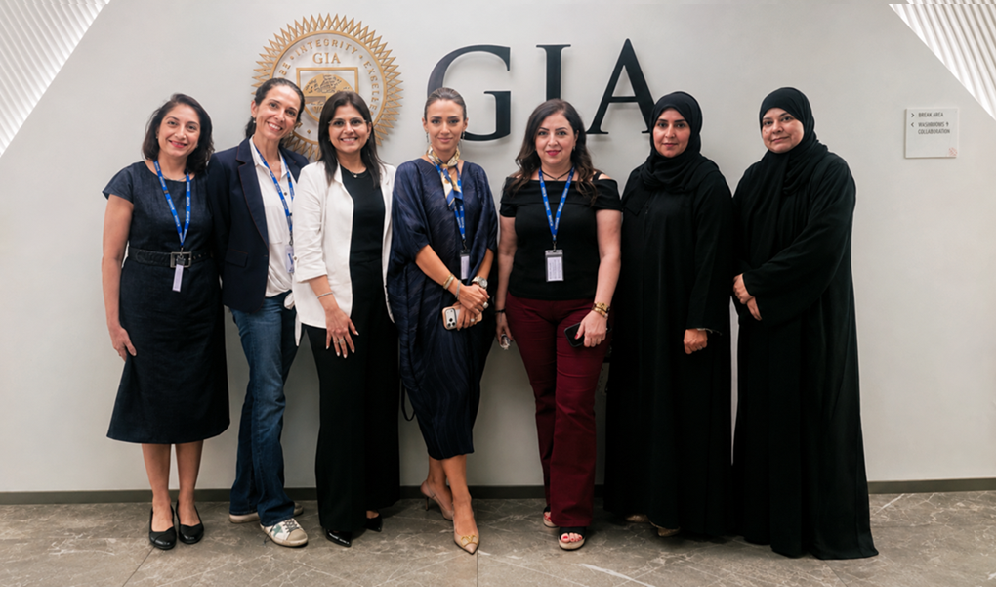
DUBAI, 25th September, 2026 – The Dubai Gold Designers Business Group, operating under the umbrella of Dubai Chamber of Commerce, has unveiled its strategic direction for the next phase of its development, with a focus on expanding international market access, strengthening professional capabilities and enhancing the global visibility of Dubai-based jewellery designers and entrepreneurs.
Representing 50 members across jewellery design, entrepreneurship and related creative businesses, the Group aims to support members in transforming creative talent into sustainable commercial growth through education, business development, industry partnerships, market access and local and international exposure.
The strategy is designed to preserve the commercial independence and individual identity of member brands while creating a stronger collective platform for Dubai-based jewellery businesses to access international opportunities.
A key priority will be strengthening the international presence of Dubai’s jewellery design community through selected exhibitions, trade events and professional platforms in priority markets.
The Group said its international activities will focus on measurable commercial outcomes, including introductions to qualified buyers, retailers and distributors, export opportunities, market intelligence, media exposure and long-term international partnerships.
Three-year international representation programme
As part of the strategy, the Group is exploring the introduction of a three-year International Representation Programme aimed at developing a sustainable model for the international promotion of Dubai-based jewellery businesses.
Under the proposed framework, the first year would focus on establishing the model, defining participation criteria and piloting collective international representation. The second year would expand partnerships and engagement with buyers and international media, while the third year would assess commercial and reputational impact and determine an appropriate long-term funding and expansion model.
International events would be selected according to criteria including buyer quality, market access, export potential, media reach, sector reputation, cost-effectiveness and alignment with Dubai’s international economic priorities.
Participation would also be linked to business readiness, product quality, professional standards, regulatory compliance and commitment to measuring commercial outcomes.
The strategy is centred around three pillars: education and member development; business development and partnerships; and international representation and visibility.
Through these pillars, the Group plans to provide workshops, masterclasses and professional development opportunities, facilitate business matchmaking and strategic collaborations, and create opportunities for selected members to participate in international platforms.
Building on international engagement
The new direction builds on the Group’s previous international and industry engagement, including activities linked to Mumbai, Jaipur and Bangkok, professional development initiatives in Bahrain and Florence, participation in UAE exhibitions, and relationships with gemological, educational and industry organisations.
The Group has also worked to increase member visibility through media engagement, digital platforms, member showcases and international industry connections.
Focus on measurable impact
The Group said future international initiatives will be evaluated through commercial and reputational indicators including qualified buyer meetings, retailer and distributor introductions, business leads and orders, export opportunities, international partnerships, media and digital exposure and member capability development.
The approach is intended to measure not only participation in international platforms but also the tangible business opportunities generated for members.
Maha Al Sibai, Chairwoman of the Dubai Gold Designers Business Group, said the strategy reflects the Group’s ambition to create stronger pathways between Dubai’s jewellery design community and international markets.
“Our ambition is to give Dubai-based jewellery designers and entrepreneurs greater access to the relationships, knowledge and international platforms that can help them grow sustainably. At the same time, we want the international presence of our members to reflect Dubai’s strength as a destination for creativity, entrepreneurship, craftsmanship and business,” she said.
The Group’s membership includes women founders, independent professionals and emerging entrepreneurs, with the strategy also seeking to strengthen opportunities for emerging talent to gain industry knowledge, develop professional standards and build international business networks.
The Dubai Gold Designers Business Group operates under the umbrella of Dubai Chamber of Commerce and supports jewellery designers, founders and entrepreneurs through collaboration, education, business development, industry connections and local and international market access.
Its long-term objective is to support UAE-based jewellery entrepreneurs in expanding into international markets while strengthening the global visibility of Dubai’s jewellery design ecosystem.
Beauty
Maha Al Sibai Jewellery Partners with Divine Solitaires to Elevate the Natural Diamond Experience
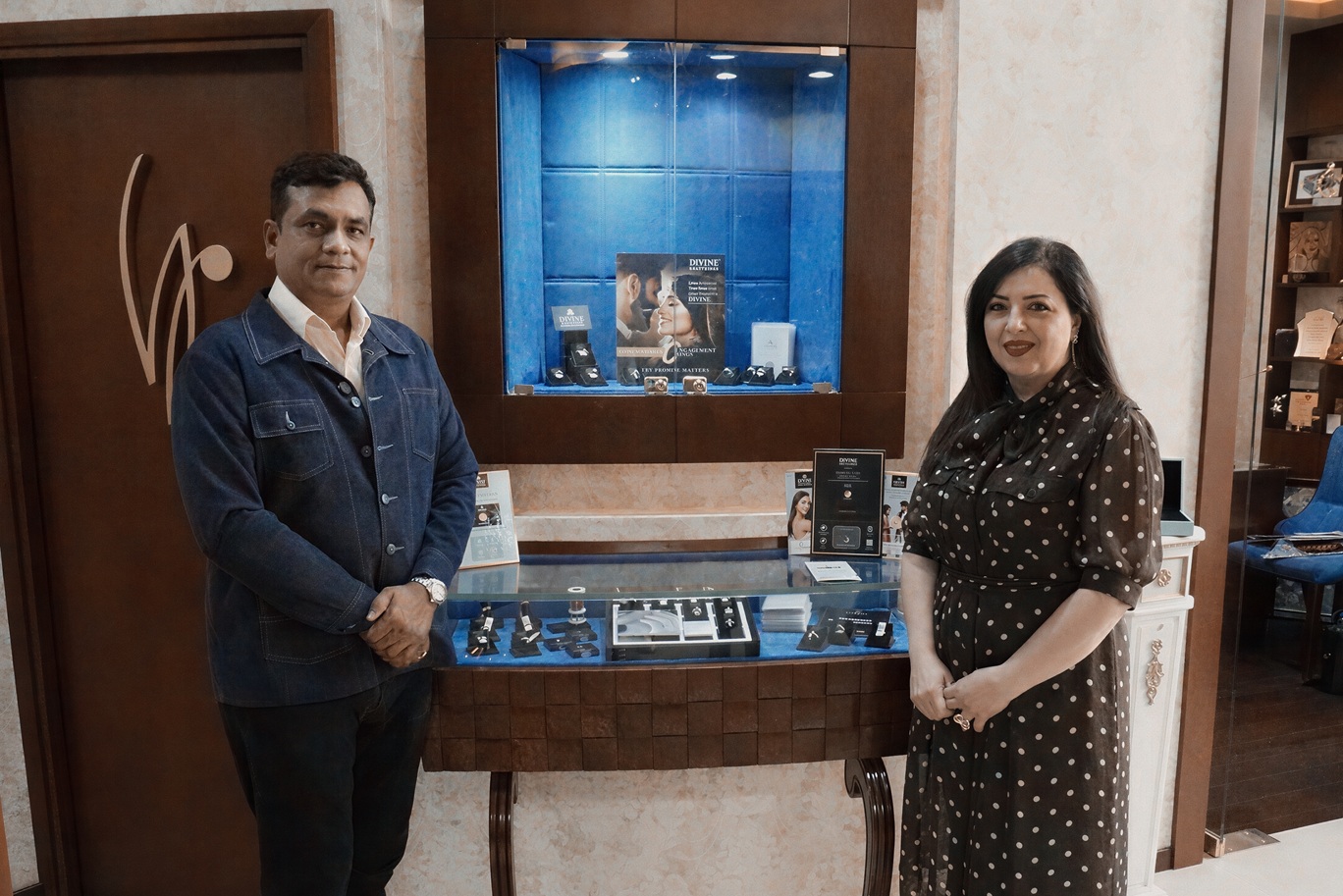
Dubai, UAE – 18th June 18, 2026
Maha Al Sibai Jewellery is proud to announce a strategic partnership with Divine Solitaires, the internationally recognized diamond company renowned for its commitment to transparency, exceptional quality, and lifetime value assurance.
Through this collaboration, clients of Maha Al Sibai Jewellery will gain access to Divine Solitaires’ premium natural diamonds, accompanied by a unique digital certification experience through the Divine App. The platform enables customers to view their diamond’s specifications, authenticity records, and current value at any time, while benefiting from lifetime buyback and exchange programmes that provide long-term confidence and peace of mind.
Maha Al Sibai Jewellery has always been known for carefully selecting partners who uphold the highest standards of credibility, transparency, and quality. This partnership reflects the brand’s ongoing commitment to offering discerning clients not only exquisite jewellery designs but also complete confidence in the value and provenance of every diamond.
“At Maha Al Sibai Jewellery, we are committed to offering our clients exceptional craftsmanship, timeless design, and complete confidence in every purchase,” said Maha Al Sibai, Founder and Creative Director of Maha Al Sibai Jewellery. “Our partnership with Divine Solitaires reflects these values perfectly. Their reputation for outstanding natural diamonds, combined with an unmatched commitment to transparency and lifetime value assurance, makes them an ideal partner. This collaboration allows us to pair our bespoke jewellery creations with some of the world’s finest natural diamonds, delivering an even more elevated experience for our clients.”
The partnership brings together Maha Al Sibai Jewellery’s distinctive design philosophy and Divine Solitaires’ expertise in premium natural diamonds, creating a unique offering for collectors and jewellery enthusiasts who seek beauty, authenticity, and lasting value. Together, the two brands share a commitment to excellence, innovation, craftsmanship, and customer trust, setting a new benchmark in the luxury jewellery sector.
About Maha Al Sibai Jewellery
Founded by renowned jewellery designer Maha Al Sibai, Maha Al Sibai Jewellery is a luxury jewellery house celebrated for its elegant creations, exceptional craftsmanship, and contemporary interpretation of timeless beauty. The brand specializes in bespoke fine jewellery and exclusive diamond pieces that combine artistic creativity with the finest materials and meticulous attention to detail.
With a passion for excellence and a commitment to authenticity, Maha Al Sibai Jewellery has established itself as a trusted destination for clients seeking distinctive jewellery that reflects individuality, sophistication, and enduring value. Through carefully curated international partnerships and a dedication to innovation, the brand continues to offer an elevated luxury experience for jewellery collectors and connoisseurs across the region and beyond.
For more information, visit:
https://mahaalsibai.com
For media contact please contact
Mourad Alsayed
General Manager
Awareness marketing management DWC LLC
Mobile: 0588144155
Murad.mustafa@awarenessupr.com
www.awarenessupr.com
Beauty
The 8 hairstyles we’ll see on everyone’s heads this summer 2026
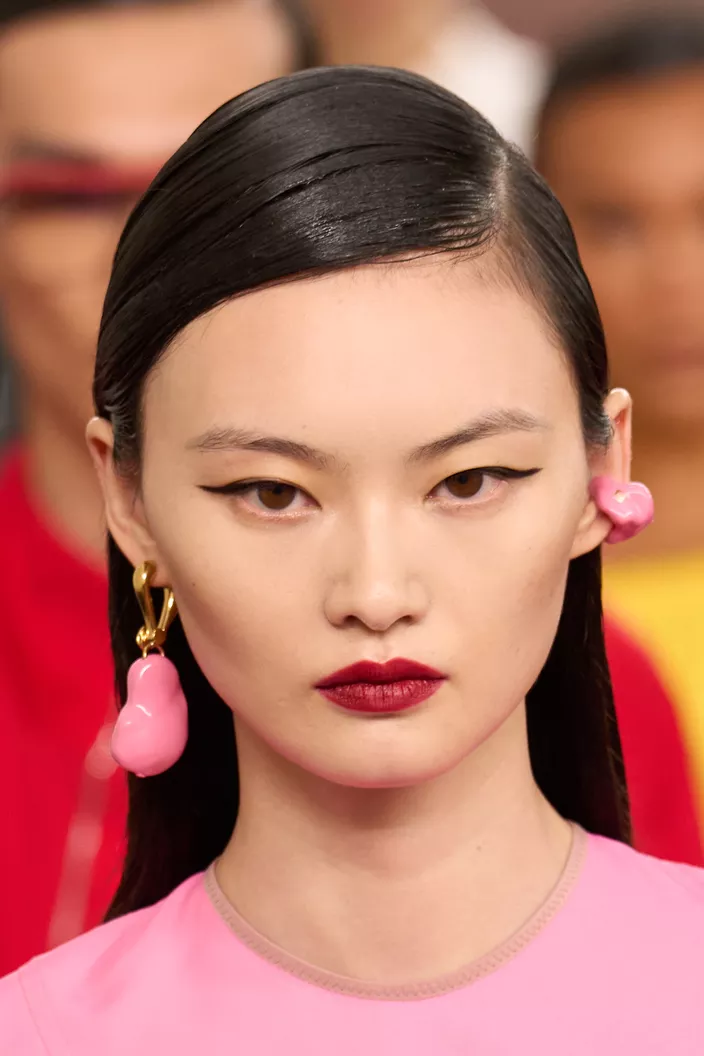
Spring is here, and with it, the desire for a hair makeover. After suffering through the winter months, between the cold, dry air, and the friction of scarves, hair is often at its wit’s end. Split ends multiply, lengths are duller, and the texture seems less healthy, less vibrant… So, it’s the perfect time of year to refresh your cut or change your look entirely. The last few months have seen the emergence of new trends, each more refreshing than the last: the bob in all its variations, the boom in XXL lengths, layered cuts with movement, and retro highlights… Spotted on the runways and on the most prominent celebrities, here are the 8 styles that should be everywhere on the beaches this summer .
The Butterfly Cut
For those with long hair, long layers are here to stay. At Zimmerman, a multi-layered cut, complemented by a wispy curtain fringe, brings a Californian vibe to the hairstyle. This cut is also a hit with celebrities: Kendall Jenner , Bella Hadid, Suki Waterhouse, and Jenna Ortega have all succumbed to this layered style that beautifully frames the face, ideal for adding volume to any hair type.
Hair jewelry
This was one of the most talked-about hairstyles during the Fall/Winter 2026/2027 Fashion Week, and it’s already inspiring us. Hairstylist Anthony Turner scattered gold jewels throughout the models’ hair, which was randomly tied into thin braids. The idea is to represent the concept of “souvenirs collected during a trip” that they might have tucked into their hair… A look you can easily recreate to add a touch of bohemian flair to your own hair.
The tight bun
Ideal for protecting against the heat – since no hair touches the skin – the bun always makes a statement. We take inspiration from the Spring/Summer 2026 Fashion Week runways. At Saint Laurent, the hair looks as if it’s been hastily tied up. A few strands escape, giving the overall look a soft, undone charm. Conversely, at Mugler and Celine, the hair was pulled back tightly, slicked back, and secured at the nape of the neck, under a generous amount of hairspray .
The side-swept fringe
It’s clear: summer 2026 will be, in many ways, a revival of 2016. Hence the abundance of side-swept bangs (Balmain, Fendi), reminiscent of the blowouts of the it girls of that era, Cara Delevingne and Alexa Chung leading the way. This style is expected to continue throughout the rest of the year, as evidenced by the Dior and Maitrepierre Fall/Winter 2026-2027 shows: a thick fringe swept across the models’ foreheads, tucked behind the ear on the opposite side, in true 2000s style.
The ponytail
Long neglected in favor of the bun , the ponytail is making a strong comeback in all its forms. No one missed Jacquemus ‘s palm tree hairstyle last January, pinned to the top of the head, inspired by his daughter’s haircut. To avoid a childish look, wrap the palm tree with a ribbon for a touch of couture. More understated, the low ponytails seen on the Bottega Veneta and Victoria Beckham runways are always a guarantee of elegance. The hair, playfully brushed, was simply tied with the most minimalist elastic possible. But the prize for the season’s most stylish ponytail goes to Dior, at the Fall/Winter 2026-2027 show. With a messy texture and an extremely off-center part, the hair is gathered at the nape of the neck, the overall effect slightly loose. Choose silk elastics, which are gentler on the hair, to avoid any breakage (those from Slip are excellent).
Natural lengths
A simple stroll through Paris is enough to confirm the resurgence of long, even very long, hair over the past few months. Summer is the perfect time to let it breathe, to stop blow-drying and the build-up of chemical products… And it’s perfect timing, as the trend is all about naturalness. We let the hair flourish, allowing it to move freely. A touch of oil on the ends daily is all it takes to nourish and tame the hair fiber. The idea is for the hair to be as raw, healthy, and vibrant as possible, as seen at Louis Vuitton, Aje, or Dolce & Gabbana.
Bixie
Perfect for adding a touch of lightness when temperatures rise, the Bixie , a combination of bob (short bob) and pixie (boyish cut), blends the best of both styles. On the one hand, it beautifully exposes the nape of the neck with a slightly playful feel, while on the other, it still allows you to wear your hair up. The most striking examples to date can be seen on Gracie Abrams and Emma Stone.
Madame Figaro
Beauty
Beauty industry targets ‘old lady hands’ fears with new treatments
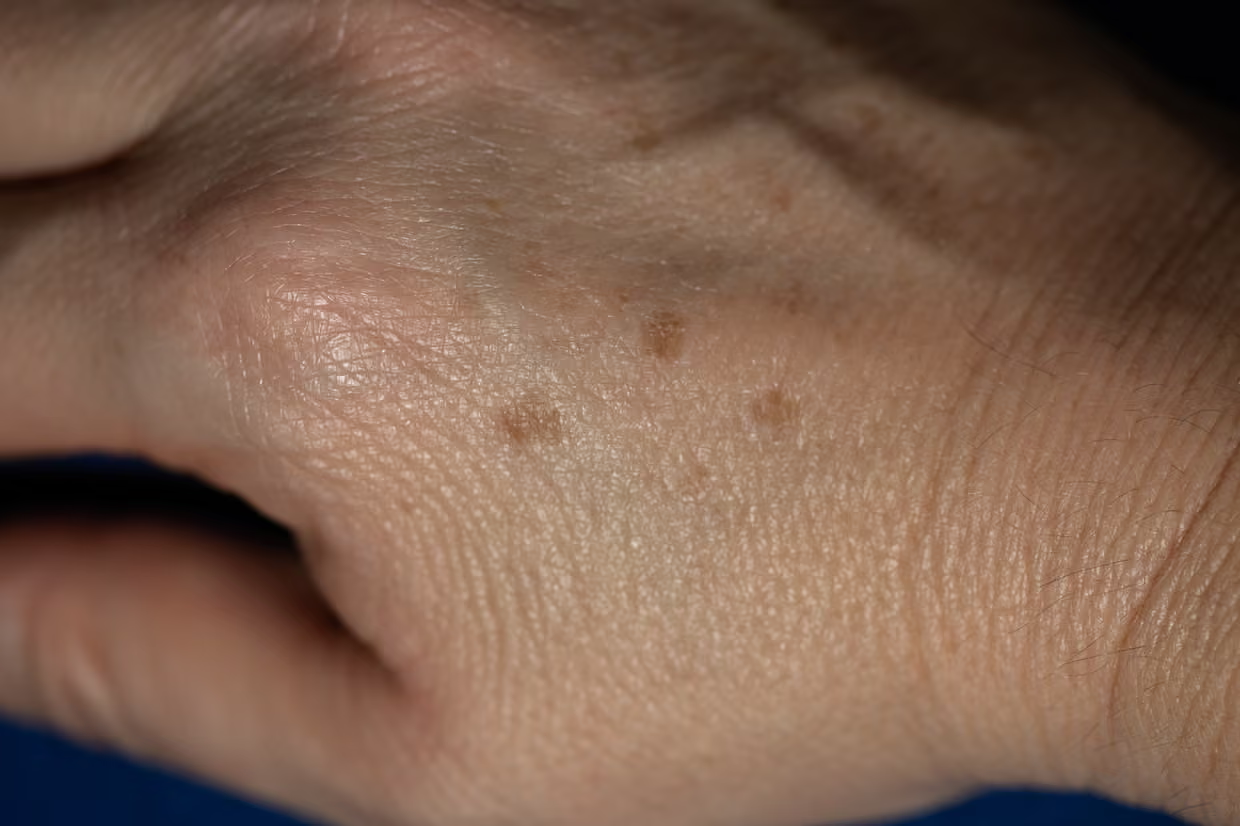
Ilay my hands on the table, palms down, for inspection. I’m in the consulting room of the president of the British College of Aesthetic Medicine (BCAM) in London. Like most people, I use my hands a lot. I type for hours a day. I go bouldering, which means I have a lot of calluses. I cook, clean, cup my chin while staring out the window. What I’ve never done is to look at my hands as objects of interest in their own right. They’re an afterthought. The means to an end. But now that Dr Sophie Shotter has picked them up in hers and is weighing my flesh and pushing at the skin with her thumbs to see how it moves, I can see faint ripples of diamonds, the texture of crepe paper.
“Your facial skin is very clear, very smooth. When we look at your hands, you’ve got a bit more of that laxity going on,” Shotter says. “You don’t have pigmentation. You’re not covered in sunspots. But the veins and tendons testify to a loss of volume. The extreme end of that is one day we get what people describe as ‘old lady hands’ – significant volume loss with skin fragility overlying it.”
This dissonance between a person’s “face age” and “hand age” has long captured the imagination. Tabloids have “hand-shamed” female celebrities for at least a decade. Not a huge amount has changed between tabloid photographs of Joan Collins, Madonna, Sarah Jessica Parker, showing their hands in shot with their faces, and the Daily Mail’s assertion in February that “hands don’t lie” but disclose our true, undoctored age. From here, it is a short hop to accusing women – Kris Jenner, for instance – of hiding their hands from public view to avoid the comparison.
The belief that our hands somehow give us away, tell the truth about us no matter how much care we take of our faces, is driving a kind of facialisation of handcare. Two years ago, Vogue reported that hand creams were “the new status symbol”. Increasingly, they boast the same premium ingredients as facial skincare: retinol, vitamin C, hyaluronic acid, collagen and PDRN (derived from salmon sperm), a trending ingredient in Korean beauty. They come in tactile packages shaped like pods or pebbles, crying out to be handled, or clipped on to a handbag. In 2022 global sales of premium handcare jumped to $724m (£544m), up 23.5% from $586m in 2019, according to Euromonitor.
There are also LED hand masks and mitts, microcurrent devices and gel gloves. Or, at the more extreme end, laser pigmentation removal for sunspots, and surgical “fat transfer” procedures – taking tissue from another part of the body and injecting it into the hands. This is more expensive, and carries a risk of infection or aesthetically displeasing results, but one cosmetic surgeon in the US told the Wall Street Journal recently that fat transfer to the hands “is now a near-constant add-on for his facelift patients, for an extra five-figure price”.
“One thing we can predict, from what we see in terms of launches and interest in aesthetic treatments, is more spending on hands,” says Georgia Stafford, a beauty analyst at Mintel, which estimated the UK handcare market at £174m in 2025.
“If you think beyond the face and neck, hands are the part of ourselves that are most on display. They’ve definitely entered consumer awareness more,” Shotter says. And Dev Patel, an aesthetic doctor based in the UK, agrees: “There’s a growing awareness that hands play into the perception someone is going to have when they’re judging your age,” he says.
There are biological reasons for this. The skin on our hands has fewer oil glands than the skin on our faces. It’s more prone to dryness, and that’s even without factoring in the multiple daily washes. The skin is thinner than on other parts of the body, because our hands need to be flexible. It also contains less collagen – the main protein that provides structure and support to our bodies.
When it comes to anti-ageing and rejuvenation treatments, “the magic word is harmony”, Patel says. “We have four faces: face, neck, chest and hands. There’s no point just working on one. If it’s not matching and there’s no harmony, then we pick up on something else, which is a lack of authenticity. I liken it to a car. You wouldn’t clean the front half of your car and leave the back half.”
Stafford says that ageing prevention is “one of the big trends in facial skincare” in the UK, especially among 25- to 44-year-old women. She thinks that consumers have learned about ingredients in facial skincare and are keen to “bring them down below the neck”.
Neither Patel nor Shotter will be drawn on my hand age v my face age, but Shotter suggests an injectable moisturiser and half a syringe of a filler containing collagen, fanned out “to help stimulate some skin tightening and give a very gentle volume”, which would supposedly make my hands harmonise better with my face. She also recommends potential patients use BCAM’s Vet It Before You Get It questionnaire to ensure the safety of any procedure considered.
The foundations for this market growth may have been laid during the pandemic, when sanitiser became a hero product, often in short supply – and alongside it came a growing awareness of the part our hands play in our health. We washed them observantly, slathered them in sanitiser, and became hypervigilant about where we put them. And the more sanitiser we applied, the drier the skin on our hands became.
The year before Covid struck, Amy Welsman, who founded the handcare brand Paume (French for palm), became a parent, and found herself pumping squirts of astringent sanitiser on to her hands dozens of times a day. She began to fantasise about a “luxurious hand sanitiser product that smelled really good and was skin-nourishing and had plant-based ingredients that were healthier for us”.
“I thought: there’s an opportunity to create products that are formulated like we would formulate products for our face.” Expensive hand cream used to be all about the perfume – Chanel launched its egg-shaped product in 2017, turning hand cream into an accessory in its own right – but now, Welsman says, “bodycare brands are leading with ingredients”.
The idea that our hands tell the truth about us is “everybody’s story”, she says. “That was certainly what inspired the line. They’re our second most exposed body part but we totally neglect them.”
Welsman would like us to approach our hands as mindfully, and with the same sense of ritual and benefit, as we do our faces. She performs her own routine nightly. First, she exfoliates. Sometimes a nail brush follows. Then comes Paume’s serum, followed by the cuticle and nail cream. Once a week, she slathers a mask all over her hands and sleeps in cotton gloves. If this sounds expensive, Welsman often uses her hand products on her face – they are cheaper than the facial equivalents.
But do consumers really have time to take on another self-care responsibility? At retailers Sephora and Cult Beauty, hand-specific products remain a lowly subcategory of bodycare, lumped in with feet.
Ah, feet. Less exposed than hands, granted – but for many of us they are even more of a dark secret, shrouded in socks for months at a time, a scaly hinterland that body lotion rarely reaches. It is only a matter of time.
The Guardian


Dubai Gold Designers Business Group unveils strategy to expand global market access for Dubai-based jewellery designers

UAE Cycling Federation and AB Investment Sign Partnership to Support National Teams and Emerging Talent

Emirati Women’s Day: Hamda Al Mansoori takes UAE-grown ventures from AI and manufacturing to cross-border partnerships

Araghchi, Oman Sultan discuss transit, stability in Muscat

UAE’s café culture keeps growing despite price pressure

Netflix to Livestream BTS Comeback Concert
-
 politics5 months ago
Araghchi, Oman Sultan discuss transit, stability in Muscat
-
 UAE9 months ago
UAE’s café culture keeps growing despite price pressure
-
 Entertainment8 months ago
Netflix to Livestream BTS Comeback Concert
-
 Discover9 months ago
Is February 2026 really a once-in -283-years MiracleIn?
-

 Football10 months ago
Algeria, Burkina Faso, Côte d’Ivoire win AFCON 2025 openers
-

 Health9 months ago
NMC Royal Hospital, Khalifa City, performs rare wrist salvage, restoring function for young patient
-

 Health10 months ago
Bascom Palmer Eye Institute Abu Dhabi and Emirates Society of Ophthalmology Sign Strategic Partnership Agreement
-

 Health11 months ago
Emirates Society of Colorectal Surgery Concludes the 3rd International Congress Under the Leadership of Dr. Sara Al Bastaki