Health
When Rheumatoid Arthritis Threatened Her Independence: How the Right Diagnosis Helped Her Get Her Life Back
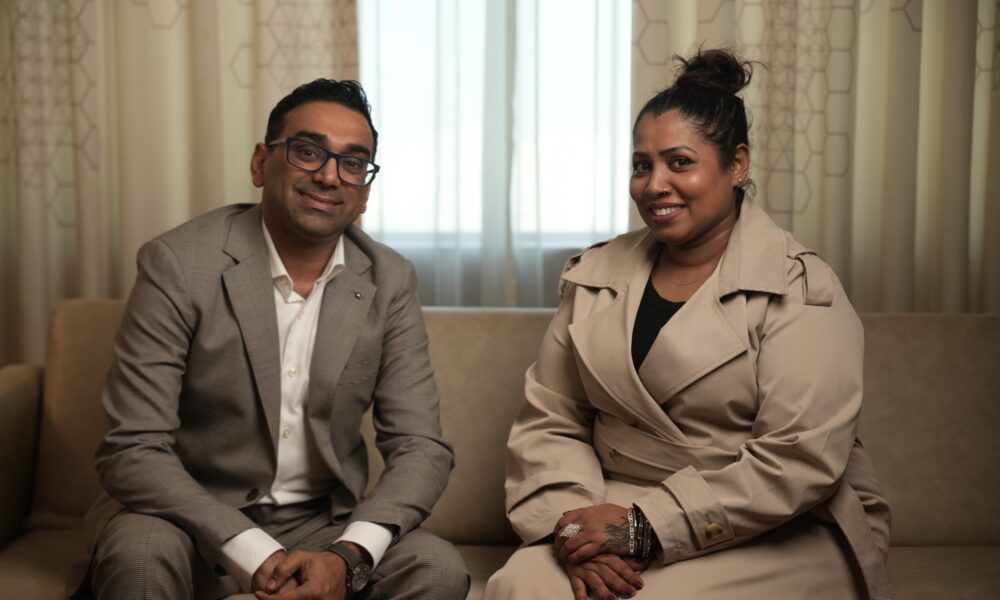
For a 45-year-old UAE resident, persistent pain and swelling turned out to be rheumatoid arthritis. Early recognition and treatment helped her return to work, driving and the family life she feared she might lose.
For Dilini Ayesha, driving is much more than a job.
For the 45-year-old mother of two, who has lived in the UAE for 16 years, driving is a profession she has built her independence around. For the past eight years, she has worked as a driving instructor at Emirates Driving Institute, including as a VIP instructor training people to drive larger vehicles and four-wheel drives.
She is also a mother to an adopted daughter and a five-year-old son.
So when unexplained pain and swelling suddenly began affecting her hands, her greatest fear was not simply the pain itself. It was the possibility that rheumatoid arthritis might prevent her from continuing to work and caring for her family independently.
Her journey began with what appeared to be an unrelated injury.
In December 2024, Dilini fell and injured her knee while helping a recovery truck load her vehicle. Several months later, she suffered another fall at home, causing a more significant knee injury. Following an MRI, she underwent ACL reconstruction and meniscal repair and spent around two and a half months recovering.
She was looking forward to returning to her normal routine.
But shortly after returning to work, she developed severe swelling and pain in both hands.
“At first, I thought it might be connected to my surgery or that it would settle down,” Dilini recalls. “But the pain kept getting worse.”
She was prescribed different painkillers, but the symptoms continued to progress. She eventually found herself struggling to grip a steering wheel or use her hands normally.
“For me, the pain felt like 15 out of 10,” she says. “I know that isn’t a normal pain scale, but that is honestly how it felt.”
The physical pain was accompanied by something else: fear.
“What if I can’t drive anymore? What if I can’t work anymore? How will I take care of my children?”
It was at this point that Dilini was referred to Dr Muhammad Azhar Abdullah, Consultant Rheumatologist at NMC Royal Hospital Sharjah.
Rather than assuming that the symptoms were simply part of her recovery from the knee injury, Dr Azhar investigated the underlying cause.
Clinical assessment and blood investigations pointed towards rheumatoid arthritis (RA) — a chronic autoimmune disease in which the immune system mistakenly attacks the lining of the joints, causing inflammation, pain and swelling.
“Rheumatoid arthritis is not simply wear and tear of the joints,” explains Dr Azhar. “It is an inflammatory autoimmune disease, and if the inflammation remains uncontrolled, it can progressively damage the joints. It can also be associated with problems affecting other parts of the body.”
For Dilini, receiving a diagnosis of rheumatoid arthritis finally provided an explanation for what was happening to her body.
“Having an answer was important to me,” she says. “When you don’t know what is happening to your own body, the fear becomes even bigger.”
Why recognising rheumatoid arthritis early matters
Rheumatoid arthritis can present differently from person to person, but persistent joint swelling, prolonged morning stiffness, pain and difficulty moving the affected joints should not simply be dismissed as ageing, overuse or ordinary aches and pains.
One important distinction is that not all arthritis is rheumatoid arthritis. Osteoarthritis, gout, psoriatic arthritis and other inflammatory rheumatic diseases can produce joint symptoms, but their causes and treatments are different.
That is why identifying the underlying condition matters.
In Dilini’s case, identifying rheumatoid arthritis allowed treatment to be started without waiting for further progression.
“Once we identified that she was dealing with rheumatoid arthritis, the priority was to control the inflammation and prevent further problems,” says Dr Azhar. “The aim of treatment in rheumatoid arthritis is not simply to reduce pain temporarily. It is to control the underlying disease, protect joint function and help the patient maintain her quality of life and independence.”
Her improvement was gradual rather than an overnight transformation.
Over the following weeks, the inflammation and pain began to settle. Her hand function and mobility improved, and by around the third week, Dilini was able to return to work.
She could once again hold the steering wheel.
She could work.
And she could return home and care for her children independently.
“I felt like I had been given my life back,” she says.
When treating rheumatoid arthritis means protecting a person’s dreams
This year’s World Arthritis Day campaign theme, “Achieve Your Dreams,” highlights the aspirations and goals of people living with rheumatic and musculoskeletal diseases. For Dilini, her dream was not complicated.
It was to continue working, driving and being there for her children.
Her experience demonstrates why early recognition of rheumatoid arthritis matters. The disease can cause permanent joint damage if inflammation remains uncontrolled, while it may also have effects beyond the joints.
“Patients sometimes wait because they think joint pain is something they simply have to live with,” says Dr Azhar. “Persistent swelling, prolonged morning stiffness or unexplained joint pain deserve medical assessment, particularly when symptoms are affecting everyday activities. The earlier we identify rheumatoid arthritis, the earlier we can discuss appropriate treatment and work towards controlling the disease.”
Today, Dilini is back behind the wheel and back to the life she feared she might lose.
“I am driving. I am working. I am taking care of my children,” she says. “I don’t take any of those things for granted anymore.”
Her message to others is simple:
“If you are experiencing unexplained pain, swelling or stiffness, please don’t ignore it. Get yourself checked. Sometimes, getting the right answer can be the beginning of getting your life back.”
For Dilini, that diagnosis did more than explain her symptoms.
It helped protect the life she had worked so hard to build.
Dr Muhammad Azhar Abdullah is Consultant Rheumatologist at NMC Royal Hospital Sharjah.