REAL ESTATE
UAE Property: Can rent in Abu Dhabi jump by Dh15,000?
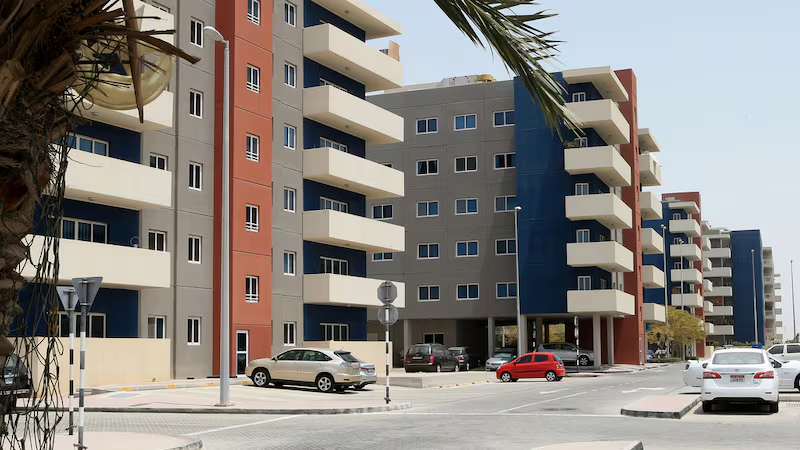
Question: I live in Al Reef Downtown in Abu Dhabi. My landlord wants to raise my rent from Dh63,000 ($17,154) to Dh78,000, claiming this is “fair market value” now. But when I check listings, I see everything from Dh60,000 to Dh75,000, nothing consistent. There’s also no rental index like Dubai’s to refer to. How do I know if this increase is reasonable, and what can I realistically negotiate? SP, Abu Dhabi
Answer: For several years, Abu Dhabi had a rent cap. This was abolished in November 2013, but as a result of resolution No 14, the annual 5 per cent cap was reintroduced with effect from December 2016. This means that a landlord in Abu Dhabi cannot raise the rent by more than 5 per cent at the time of renewal.
This cap applies regardless of where the broader market sits. So even if the market rate in Al Reef has risen sharply, your landlord cannot legally increase your rent from Dh63,000 to Dh78,000 in one renewal. That would equate to a 24 per cent jump, which is far outside what the law now permits.
All advertised listings will have a degree of variation, and remember that vacant rental listings will always be worth more than a property with an existing tenant. Online asking prices can fluctuate depending on how urgently a landlord wants to lease or how optimistic they might be, but when it comes to renewals, the only number that matters is the lawful maximum, not the highest figure a landlord can find online.
You are well within your rights to remind your landlord that your renewal rent can only be adjusted by 5 per cent. In your case, that means the new rent should be about Dh66,150, not Dh78,000.
I would suggest communicating this politely in writing and referencing the rent cap issued by the Abu Dhabi Department of Municipalities and Transport. Once the rule is pointed out, most landlords fall in line.
If the landlord insists on the higher figure or attempts to use the market argument to justify it, you can take the matter to the Abu Dhabi Rental Dispute Settlement Committee, which has been applying the 5 per cent cap consistently since the regulation took effect.
Q: I bought a two-bedroom apartment in Mina Al Arab, Ras Al Khaimah. Over the last two years, my service charges have gone up by nearly 20 per cent. I’m happy with the community, but these charges are starting to impact my rental yield. Is this trend happening across RAK, and do owners have any recourse when charges keep climbing? PG, RAK
A: Service charge increases aren’t unique to Mina Al Arab; they’ve been rising gradually across much of Ras Al Khaimah as communities mature and maintenance costs increase.
RAK’s market is still developing compared to Dubai and Abu Dhabi, which means that service providers sometimes adjust their cost structure as they better understand community requirements. The key is transparency.
You are entitled to request a detailed breakdown of how service charge budgets are allocated such as maintenance, landscaping, security, reserve fund contributions and so on. Most owners’ associations in RAK are open to sharing this information once asked.
If you feel the increase is unjustified, you can raise the issue with the RAK Municipality, which oversees owners’ associations and can review whether charges are aligned with the community’s actual needs. They typically intervene only when there is a clear imbalance.
While rising service charges can affect yields, they also often reflect improved upkeep, which supports long-term capital appreciation. It’s worth weighing both sides before making any decision.
Q: I’ve lived in a Jumeirah Village Circle apartment for five years and always had a good relationship with my landlord. Last week, his new property manager emailed me saying the landlord wants to sell and that I “must vacate within 60 days so viewings can begin”. No formal written notice has been served. I’m not against leaving if the property is eventually being sold, but don’t want to be pushed out unfairly or rushed into moving. What are my rights in this situation, and how should I handle it without damaging the relationship? MK, Dubai
A: This type of situation is becoming more common as prices rise, but the law remains clear. Your landlord cannot ask you to vacate within 60 days. Under UAE law, a landlord who wishes to sell must serve a 12-month notice to vacate, delivered either by notary public or registered mail, and the notice only becomes valid at the end of the current tenancy period. An email from a property manager carries no legal weight.
You are fully within your rights to remain in the property until such formal notice is served, and the 12-month period has elapsed. You can, however, agree to co-operate with viewings at mutually convenient times as a gesture of goodwill – provided you receive 24-hour notice. Check your tenancy contract for clauses about viewings.
Maintaining a good relationship is always beneficial, so I suggest replying politely to the property manager and reminding them of the correct procedure. Assure them you’re open to reasonable co-operation, but that you will follow the law in terms of vacating. Most landlords, once reminded of the legal requirements, adjust their expectations accordingly.
Story by The Ntional