Health
Johns Hopkins Aramco boosts US investments and Saudi healthcare
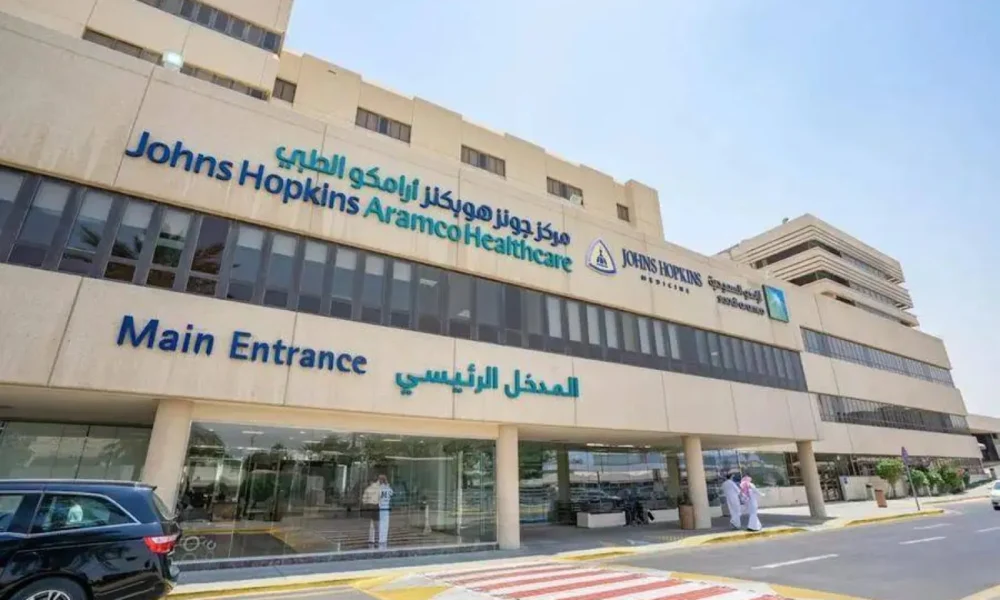
In the heart of Dhahran, in eastern Saudi Arabia, where foreign investments, especially advanced American expertise, intersect with “Vision 2030,” the Johns Hopkins Aramco Medical Center stands out as an advanced model of integrated healthcare.
The center combines Saudi Aramco’s long medical legacy with global expertise in clinical innovation and medical education to redefine healthcare standards and put the Eastern Province of Saudi Arabia on the map of regional and global destinations for advanced medical care.
The center is one of the leading healthcare providers in the country, and was established in 2014 as a partnership between Saudi Aramco and Johns Hopkins Medicine.
The center relies on combining local capabilities with the expertise of Johns Hopkins Medicine, through innovative care models that include telemedicine, home care, and AI-assisted diagnosis, to provide comprehensive health services that meet the needs of each individual patient.
It also focuses on developing precision medicine, promoting innovation in digital healthcare, and training capable national cadres to ensure the sustainability of the health transformation in the Kingdom.
Transfer of medical technologies
At the heart of this strategy, Dr. Nafisa Al-Fares, Director of the Oncology Center at Johns Hopkins Aramco Healthcare, emphasized that the center contributes to raising the level of competition within the health sector, and makes the Eastern Province a destination for medical care not only for local patients, but also for visitors from nearby Gulf countries, which benefits the local labor market.
The director of oncology told Asharq Al-Awsat that the center currently includes a Saudi elite of doctors, nurses, and administrators at various levels, with a focus on attracting more national talents and training them, which enhances localization and allows the transfer of the best global medical knowledge, experiences, and technologies to Saudi Arabia, thus raising the level of the labor market in the medical sector.
The Occupational Medicine Department at the center works closely with the National Council for Occupational Safety and Health of the Saudi Ministry of Human Resources and Social Development, and Dr. Nafisa Al-Fares attributed the reason to “the implementation of the decision to obligate companies to conduct occupational safety inspections.”
With over 50 years of experience in occupational medicine, the center contributes to developing the foundations of occupational health and safety locally, reducing losses resulting from injuries and occupational diseases, increasing the return on investment in corporate healthcare, and supporting the development of a healthier and more sustainable workforce that serves the Kingdom’s long-term development goals. This also includes advancements in medical innovation and scientific research.
Supporting medical tourism
The center’s role is not limited to providing healthcare, but it also seeks to promote practical research, transfer knowledge and medical experiences to Saudi Arabia, in cooperation with the governmental and private sectors, inspired by the Johns Hopkins Hospital model in the United States, which originated from the prestigious Johns Hopkins University.
Dr. Nafisa Al-Fares affirms that Saudi Arabia possesses a fertile environment for excellence in scientific research and medical innovation, making it a significant destination for researchers, healthcare investors, and those seeking information on the center’s role in supporting medical tourism.
The official at the center points out that the opening of a series of “Centers of Excellence” within various medical specialties, starting with the Oncology Center, gives the Eastern Province a competitive advantage in providing world-class healthcare that attracts patients from within Saudi Arabia, the Gulf countries, and the world, without the need to travel abroad.
She added that it is still too early to assess the direct economic return from this step, but it is the beginning of larger phases aimed at enhancing Saudi Arabia’s position as an ideal destination for high-level medical tourism.
Dr. Nafisa Al-Fares believes that the opening of the center contributes to achieving the goals of “Vision 2030” by localizing healthcare, empowering patients, and building a sustainable system for future generations.
The director of the Oncology Center highlighted the support for the health sector transformation program through increasing capacity, developing local competencies, and providing an advanced education and training platform to qualify the next generation of Saudi specialists, ensuring the protection of the workforce, raising its productivity, and promoting sustainable economic growth
AL SHARQ AL AWSAT