Business
Hormuz relief may take time for UAE shoppers
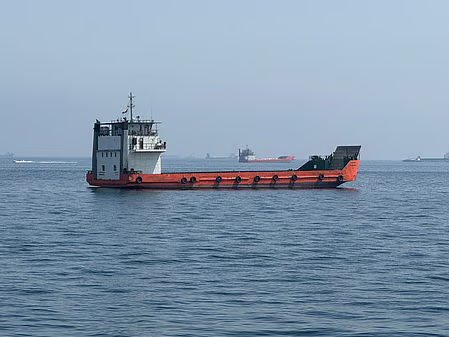
The impact of lower oil and shipping costs could begin to appear within a few weeks, but it may take several months for these savings to fully pass through to retail prices and consumer goods, depending on supply chains and existing contracts, industry experts said.
The reopening and stabilisation of shipping through the Strait of Hormuz is expected to ease pressure on energy and freight costs, giving UAE residents the prospect of more stable fuel prices and gradual relief on some imported goods.
Consumers, however, should not expect an immediate drop in supermarket bills or retail prices. Many businesses are still working through stock bought when shipping costs were higher, while suppliers, insurers and freight companies will want to see stability hold before fully resetting prices and operations.
Haris Shaikh, CEO of Gallop Shipping in Dubai, said the reopening of the Strait of Hormuz allows oil, gas and goods to move normally again through one of the world’s most important trade routes, reducing concerns about supply disruption and easing pressure on energy and shipping costs.
“The impact of lower oil and shipping costs could begin to appear within a few weeks. However, it may take several months for these savings to fully pass through to retail prices and consumer goods, depending on supply chains and existing contracts,” he said.
The first signs of relief are likely to be felt in fuel and shipping costs, followed by goods that depend heavily on transport and energy expenses. Food products, transportation services and travel costs could also see some benefit over time if lower oil and freight costs are sustained.
Shaikh said UAE consumers should expect greater market stability and less price volatility in the coming weeks, but not “immediate or significant reductions in all prices,” because lower costs take time to move through the wider economy.
UAE ports stand to benefit
The deal is also expected to support the UAE’s trade and logistics sector by making shipping routes in the Gulf safer and more reliable.
Hiba Alemadi, CEO and Founder of Queen Gulf Capital, said safer routes should help lower shipping costs and increase the amount of cargo moving through UAE ports, although the return to normal operations will be gradual.
“The deal is good news for the UAE because it makes shipping routes in the Gulf safer and more reliable. This should help lower shipping costs and increase the amount of cargo moving through UAE ports. However, things may not return to normal right away. Shipping companies, insurers, and businesses will want to see stability over time before fully restoring operations,” she said.
In the longer term, she said the UAE is in a strong position to benefit from higher trade volumes because of its ports and logistics network, which can support growing regional business activity.
Freight rates may not fall quickly
Freight rates have increased significantly since March as businesses dealt with regional uncertainty, higher risk costs and disruption-related charges. Even with Hormuz reopening, industry executives expect the adjustment to be slow.
Alemadi said some exceptional charges, including drop-off, internal shifting and related operational costs, could reduce gradually if the situation stabilises. A significant reduction in freight rates, however, is unlikely in the immediate future.
This significantly impacts retailers and shoppers, as higher shipping costs are already built into the prices of many goods on shelves. Importers and retailers may need several delivery cycles before lower freight costs begin to show up in consumer pricing.
“The reopening of the Strait of Hormuz is good news for UAE retailers and shoppers, but the benefits will not happen right away. Businesses need time to adjust, and many retailers are still selling products bought when shipping costs were higher. If the situation remains stable, shoppers could see more stable prices and better product availability over the next few months,” Alemadi said.
DP World prepares for higher vessel calls
DP World GCC said the de-escalation in regional tensions is an encouraging development for trade, with teams staying in contact with customers and shipping line partners as conditions evolve.
“At Jebel Ali, we have prepared extensively for the return of sea freight volumes through the Strait of Hormuz and our teams are primed and ready to manage the increase in vessel calls once shipping schedules begin to normalise,” said Ahmad Yousef Al-Hassan, CEO and Managing Director of DP World GCC.
He added that DP World’s immediate priority remains “keeping cargo moving safely and reliably” through its regional multimodal network, while giving customers the flexibility and visibility they need during this period.
A smoother return of vessels through Hormuz would support port activity, warehousing, trucking, re-exports and regional distribution, all of which are central to Dubai and the wider UAE’s role as a trade hub.
Oman and Iran back safe passage
The commercial outlook follows a joint statement issued by Oman and Iran after talks in Muscat during the visit of Iranian Parliament Speaker Dr. Mohammad Bagher Ghalibaf and Foreign Minister Dr. Abbas Araghchi.
Oman affirmed its support for the Islamabad Memorandum of Understanding signed between the United States and Iran, and said continued dialogue and coordination were important for its successful implementation.
Oman and Iran, the two coastal states bordering the Strait of Hormuz, reaffirmed their commitment to ensuring safe passage through the Strait in line with international law, while also stressing their sovereignty and sovereign rights over their respective territorial waters.
The two countries agreed to sustain dialogue through a joint working group between their foreign ministries. The group will discuss the future management of navigation in the Strait, including services and associated costs, while also engaging with littoral states in the region and other related parties.
What residents should expect now
The near-term impact for UAE residents is likely to be confidence and stability first, followed by gradual cost relief if the situation holds.
Lower uncertainty across global markets can support trade, investment and business planning. It can also help reduce pressure on household budgets if oil and shipping costs remain lower for an extended period.
The most evident consumer benefit over the next few months may be steadier prices and stronger availability, especially for imported goods that rely on shipping schedules. Significant price cuts will depend on how long the route remains stable, how quickly freight rates adjust, and when retailers replace higher-cost inventory with new shipments bought at lower logistics costs.
GN